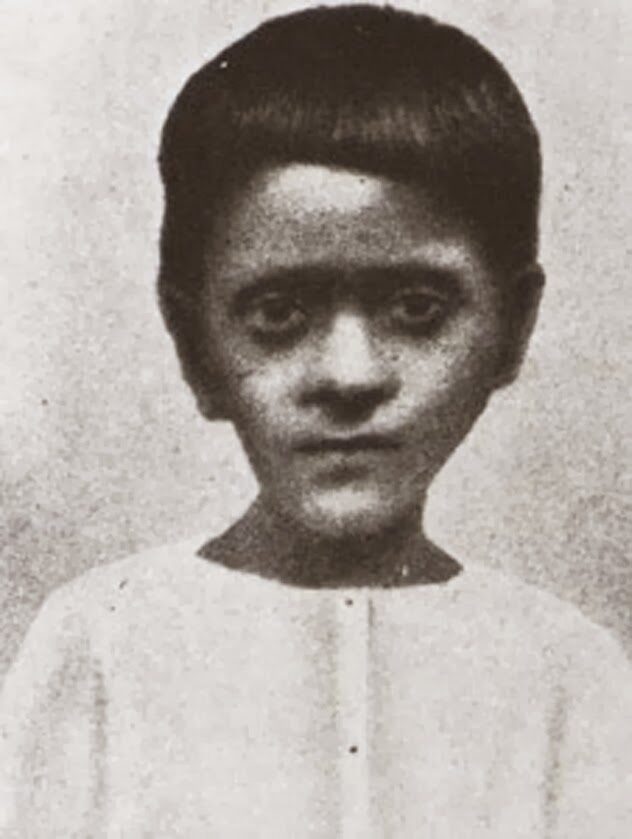
Srila Bhaktisiddhanta Sarasvati Thakura was born Bimala Prasad at 3:30 in the afternoon on 6 February 1874. The house was a few hundred meters from the Jagannatha Temple on Puri's Grand Road. This is the same road down which the deities of Jagannatha, Baladeva, and Subhadra are pulled each year during the Ratha-yatra festival. His father, Kedarnath Datta, was then posted in Puri as a deputy magistrate. In his off-duty hours Kedarnath studied Vaishnava scripture under local pandits, translated texts, and wrote on devotional theology. This work would later earn him the title by which history remembers him, Bhaktivinoda Thakura. Bimala Prasad's mother was Bhagavati Devi, Kedarnath's second wife. Her son's own biographers remember her as a quietly devout woman. So the child who would become Bhaktisiddhanta Sarasvati was born into a household that was already turned toward the disciplined study and practice of Gaudiya Vaishnavism. This was unusual for the family of a colonial civil servant.
An experienced astrologer who examined the infant's horoscope is remembered to have said, "I have done many horoscopes in my life, but I have never before seen such a horoscope filled with all the signs of a great personality. This child will become world famous as a brilliant teacher of life's ultimate goal." Vaishnava accounts record that all thirty-two bodily marks of a maha-purusha, a great personality, were found on the child, and that he was born with his umbilical cord wrapped around his neck like a brahmin's sacred thread.
| Birth name | Bimala Prasad Datta |
| Born | 3:30 pm, 6 February 1874, Puri (then Bengal Presidency, now Odisha) |
| Father | Kedarnath Datta, later Bhaktivinoda Thakura |
| Mother | Bhagavati Devi |
| Place in family | Sixth child born to Bhagavati Devi; seventh among Bhaktivinoda's fourteen children |
| Noted childhood feat | Memorized the Bhagavad-gita in Sanskrit as a young boy |
A Name Tied to a Vow #
Vaishnava biographers record that Kedarnath, after being posted to Puri, had a dream. In it Lord Jagannatha urged him to set aside the practice of law and give himself fully to the service of Vaishnavism. Kedarnath protested that he could not carry such a mission alone. Jagannatha is then said to have told him to pray for an assistant to the goddess Bimala Devi, whose shrine stands within the Puri temple complex. When a son was born soon after, Kedarnath connected the birth to the dream and named the child Bimala Prasad, "the mercy of Bimala Devi."
A related tradition, recorded by other biographers, places the moment of recognition later. In this version, the infant was carried before the Jagannatha cart during a Ratha-yatra, and he is said to have reached out and touched the deity's feet. A further account tells the story of that Ratha-yatra season in yet another way. When the child was six months old, the cart of Lord Jagannatha's Ratha-yatra procession stopped before Bhaktivinoda Thakura's house for three days. At Bhaktivinoda's instruction, Bhagavati Devi brought the boy before the cart. There a garland offered to the Lord fell from His neck and encircled the infant. Everyone present took this as a sign of special favor. The grain ceremony, marking the child's first taking of solid food, was performed on the cart itself, with Jagannatha's own prasadam. Then, as was the custom, various objects were placed before the child to test what his future work would be. He reached at once for the Srimad-Bhagavatam, and this foretold his life as a preacher. The accounts do not agree on every detail. But all of them express the same belief among Bhaktisiddhanta's followers: that from the very beginning, his birth was closely tied to his father's mission and to the deity of Puri.
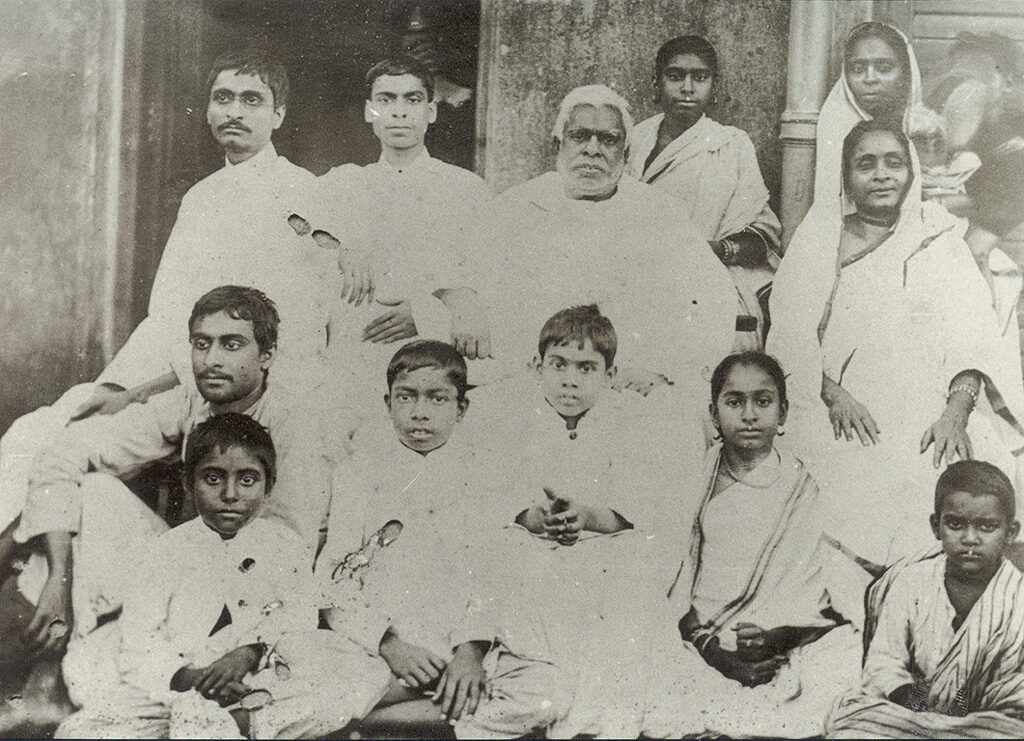
Whether these stories are read as history or as devotion, they point to a fact about the family that is well recorded. Bhaktivinoda had prayed for a capable son to help carry forward the revival of Gaudiya Vaishnavism that he had begun. This shaped how Bimala Prasad was raised from infancy. More about the household he was born into can be found on the page describing Bhaktivinoda Thakura's family and household life.
Childhood Between Puri and Bengal #
Bimala Prasad spent his first ten months in Puri. Then he was carried to Bengal by palanquin, on his mother's lap. He spent most of his infancy at Ranaghat in Nadia district. There, it is said, he took in stories of Krishna and Chaitanya as his mother recited them. His schooling changed each time Kedarnath's postings moved the family: an English-medium school at Ranaghat, the Oriental Seminary in Calcutta from 1881, and, after his father's transfer to Serampore as senior deputy magistrate in 1884, the Serampore High School. Bhaktivinoda and Bhagavati Devi raised their children under strict Vaishnava discipline. They allowed them to eat only food first offered to Krishna. One incident from this period became part of family memory. As a small child, no older than four, Bimala Prasad was gently corrected by his father for eating a mango that had not yet been offered to the deity. He took the correction to heart and resolved never to eat a mango again. His biographers say he kept this private vow for the rest of his life.
A Memory His Disciples Called Encyclopedic #
During these Bengal years, Bimala Prasad's gifts of mind became impossible to miss. Accounts vary on the exact age, but by the time he was somewhere between seven and nine years old, he had memorized the entire Bhagavad-gita in the original Sanskrit and could explain its verses in his own words. He became known for being able to recall whole passages from a book word for word after a single reading. In later years this ability earned him the name "living encyclopedia" among those who knew him. The same gift showed itself in other ways. While still a boy he composed his own poetry in Sanskrit. At age eleven, while in the fifth class, he invented a personal shorthand system that he called Bicanto.
Along with this early gift for language, he showed an early talent for mathematics and the other exact sciences. This would shape much of his reputation as an adult. While still a young student he began taking lessons in mathematics and jyotisha, the traditional Indian science of astronomy and calendar calculation. His two tutors were Pandit Mahesh Chandra Chauramani and Pandit Sundar Lal, and from them he would later earn the title Siddhanta Sarasvati. He liked these independent studies better than the standard school lessons. He also preferred reading devotional literature such as Narottama Dasa Thakura's Prarthana and Prema-bhakti-chandrika. This preference would show itself again throughout his student years. At eleven years of age he also went with his father on a tour of the places of Chaitanya Mahaprabhu's pastimes. This was the first of several such pilgrimages father and son would make together.
When Bimala Prasad was thirteen and in the seventh class, Bhaktivinoda Thakura brought him tulasi beads from Jagannatha Puri. Bhaktivinoda gave his son the name Hari and taught him a Nrisimha mantra to chant. The boy faithfully kept this early devotional discipline, along with his daily worship of the Kurma Deity. This was years before he would seek out a guru of his own.
Proofreader to a Reformer #
Bimala Prasad's education was not limited to a classroom. In 1885 Bhaktivinoda founded the Vishva Vaishnava Raj Sabha, an association of leading Bengali Vaishnavas. The following year he launched a Bengali monthly journal, Sajjana-toshani ("the source of pleasure for devotees"). It carried articles on Gaudiya Vaishnava history and philosophy, along with book reviews and poetry. From around the age of twelve, Bimala Prasad worked as his father's proofreader for this journal and for the Vaishnava Depository, the library and press Bhaktivinoda had established. In this way he gained an early, hands-on education in printing and publishing, and it would prove very important for his later work. Vaishnava biographers also record something from a few years earlier. Bhaktivinoda was building a devotional hall in Calcutta, and during the digging an ancient deity of Kurmadeva was found. The seven-year-old Bimala Prasad had recently received the sacred thread, and his father gave him the deity's daily worship. His biographers see this early responsibility as a sign of how much Bhaktivinoda trusted the seriousness of his son's devotion, even as a child.
By the end of this period, when he was still in his early teens, Bimala Prasad had already shown the combination that would mark the rest of his life. He had an extraordinary memory. He had a hunger for both scriptural and scientific learning. And he had firsthand experience of the printing press his father used to spread Gaudiya Vaishnava teaching. The formal recognition that followed, and a defining new name, came in the years described on the next page: Education and the Title Siddhanta Sarasvati.
