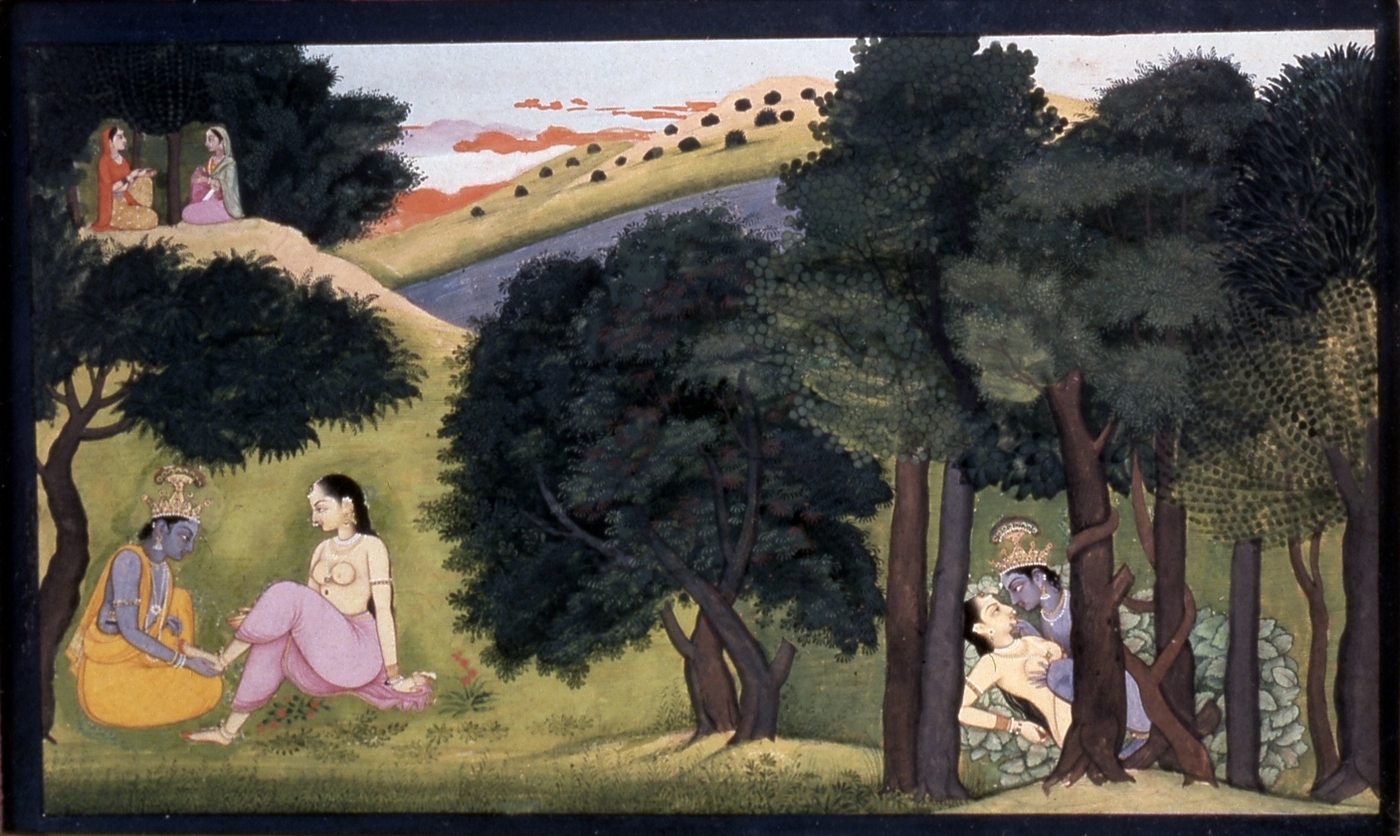
Very few Sanskrit poems written by one author have shaped as much devotional art, music, and worship as the Gita Govinda. Yet very little is recorded about the man who wrote it. Eight centuries after Jayadeva's lifetime, its reach is still visible, and still growing.
Sung Every Night in Puri #
At the Jagannatha temple in Puri, the Gita Govinda is sung as part of the nightly Badasinghara ritual. This is the Deities' final dressing before rest. Temple records describe this tradition as unbroken since a time within Jayadeva's own lifetime. For centuries it was performed by the temple's maharis. They were devadasi dancers trained specially to perform the ashtapadis in their assigned Odissi ragas and talas. The tradition continues today through Odissi musicians, even though the mahari lineage itself ended under British-era policy. During this same nightly ritual, the Deities are dressed in a special ikat-woven cloth called the Kenduli Khandua. Lines of the Gita Govinda are woven directly into it. This weaving tradition belongs to the Kenduli region and is just as old as the temple ritual it serves.
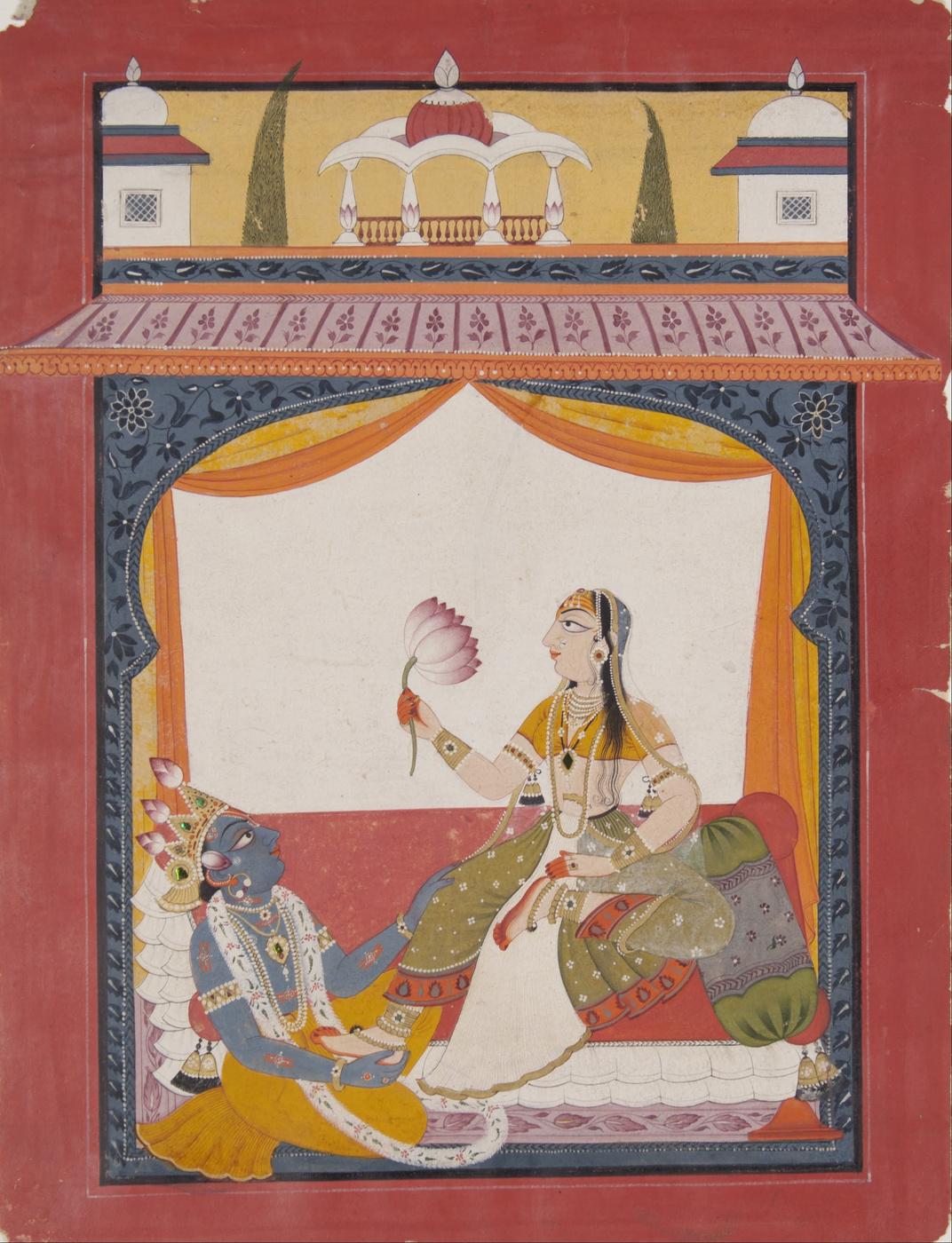
The poem was not sung only in Puri. Raghunatha Bhatta Gosvami was one of the Six Goswamis of Vrindavana, known for the sweetness of his voice. Sri Chaitanya-charitamrita records that he sang Gita Govinda verses in the gujjari raga so beautifully that the song "attracted the mind of the entire world," which gives a vivid picture of how far Jayadeva's ashtapadis had already travelled. It also shows how naturally later Gaudiya Vaishnavas made them part of their own devotional life.
An Ocean of Manuscripts and Miniatures #
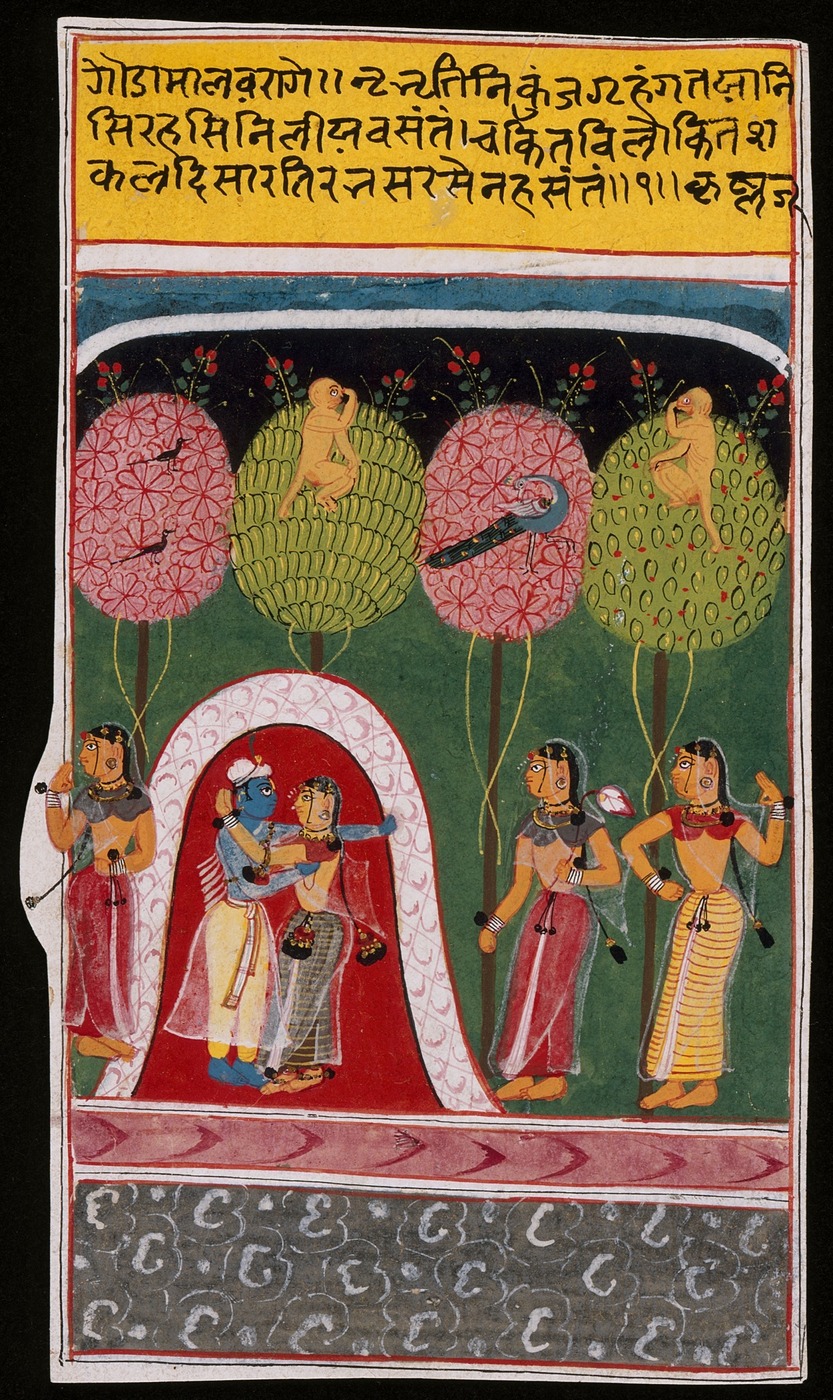
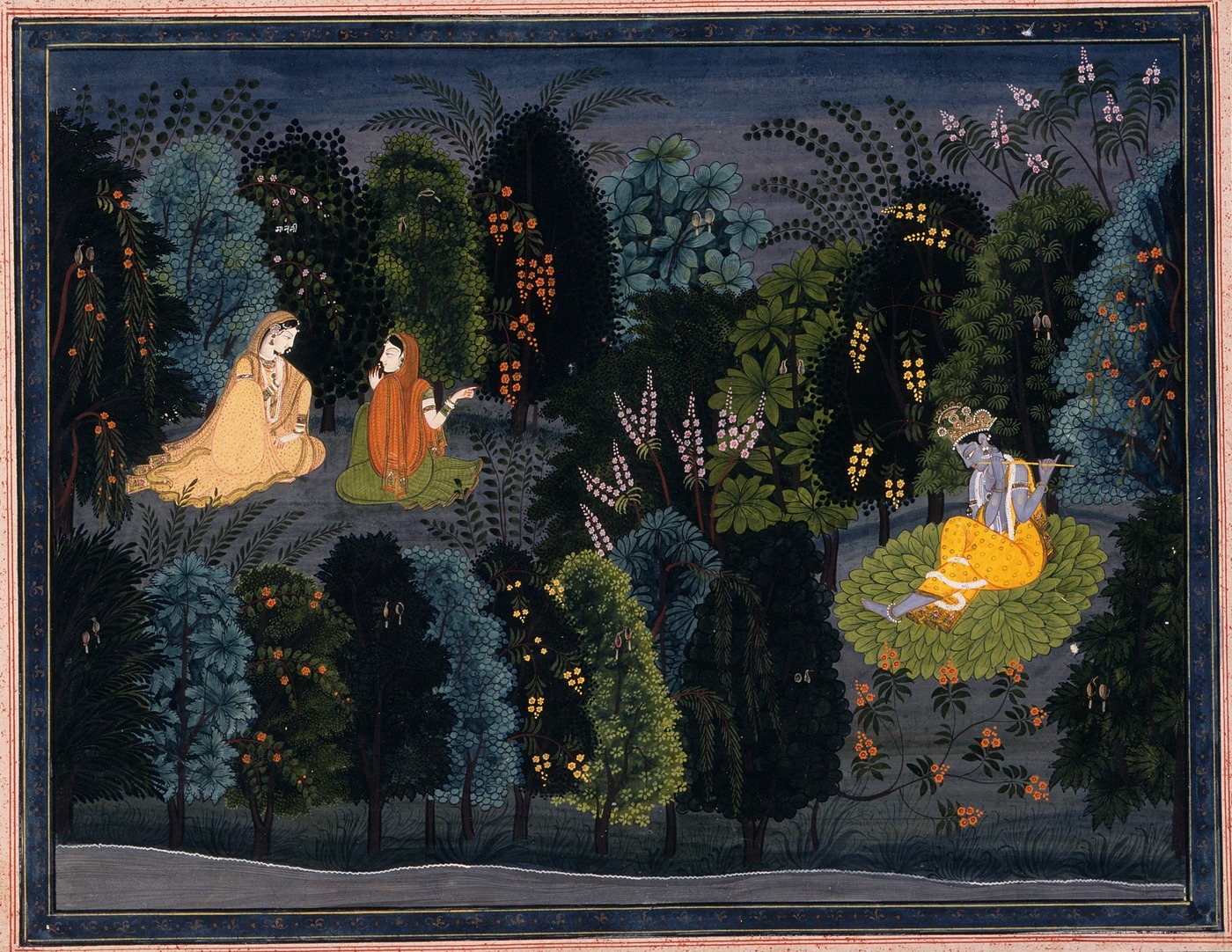
The Odisha State Museum in Bhubaneswar alone preserves around two hundred and ten manuscripts of the Gita Govinda. They are made of palm leaf, ivory, bamboo leaf, and paper. Their shapes range from ordinary pages to a garland of small round leaf-pieces, meant to be worn, or memorized while travelling. Beyond Odisha, the poem became one of the most illustrated texts in the whole history of Indian painting. Miniature workshops across Rajasthan and the Punjab Hills each produced their own painted series of Gita Govinda scenes. Among them were the Mewar, Basohli, Guler, Kangra, Mankot, Lambagraon, and Tehri Garhwal schools. Many of these paintings survive today in museum collections from Mumbai and New Delhi to London, Paris, and across the United States.
Beyond Bengal and Odisha #
The poem's influence reached beyond Vaishnavism itself. Two of Jayadeva's hymns were included in the Guru Granth Sahib, the central scripture of Sikhism. This makes him the earliest author in it whose date is known. Tradition also says that Guru Nanak came to know the Gita Govinda during his own visit to Jagannatha Puri, and was moved by it. In Kerala, temple musicians adapted the ashtapadis into a devotional musical form called sopana sangeetham, sung on the steps leading to the deity. Within Gaudiya Vaishnavism itself, the poem gave rise to its own line of formal commentaries. These include the Sri-Gita-Govinda-Vyakhyana of Prabodhananda Sarasvati and the Balabodhini-tika of Chaitanyadasa, also known as Sri Pujari Goswami. This line of commentary continues into recent decades with Bhaktivedanta Narayana Goswami's own Balabodhini-prakasa.
Carried Into Europe #
The Gita Govinda's reach eventually stretched well beyond South Asia. Sir William Jones, a British Orientalist scholar who studied the languages and books of Asia, produced the first English translation in 1792. In it he described Kenduli Sasan in Odisha as the poet's widely accepted birthplace. That translation was later put into German, and the poet Goethe himself is known to have read this German version. The translation helped to feed a wave of interest in Indian devotional poetry in Europe during the Romantic period. Later English translations kept introducing new generations of readers outside India to the poem. These include Edwin Arnold's Indian Song of Songs and, a century later, Barbara Stoler Miller's Love Song of the Dark Lord. Meanwhile, in one Odishan temple, the poem is still sung every night in its original Sanskrit.
Three Songs Still Sung Today #
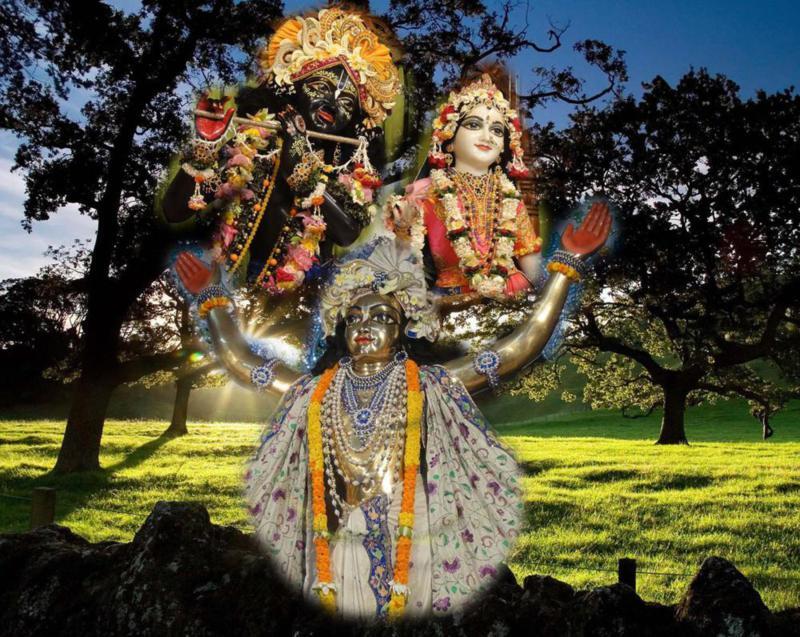
The Vaishnava Song Book preserves several compositions credited to Jayadeva Goswami, including these three. Pralaya Payodhi Jale is the opening hymn of his Dasavatara-stotra. It praises Krishna's ten incarnations, beginning with the fish who saved the Vedas from a cosmic flood. It is the same verse that Srila Prabhupada quoted from memory for George Harrison in 1973. It is also the verse that Srila Prabhupada's own purport to Srimad-Bhagavatam 5.18.25 names as Jayadeva's:
"Srila Jayadeva Gosvami sings: pralayo payodhi-jale dhrtavan asi vedam..."
Srita Kamala comes from the poem's own opening prayer, a Vishnu-stuti verse. Its refrain, jaya jayadeva hare, glorifies Krishna and at the same time plays on the poet's own name. He Govinda He Gopala Kesava Madhava has a different, simpler refrain that calls out Krishna's names. That style of refrain has long been linked with the ashtapadi singing tradition that grew up around Jayadeva's work. Jayadeva came from a village whose identity is disputed. Eight centuries after he first set these songs to music, they are still sung in Puri, and in temples very far from it.
