Srila Jayadeva Goswami

Gita Govinda and Sri Chaitanya Mahaprabhu

How a twelfth-century Sanskrit love poem became one of Sri Chaitanya Mahaprabhu's most cherished scriptures

Jagannatha Puri, early 16th century — roughly three centuries after Jayadeva

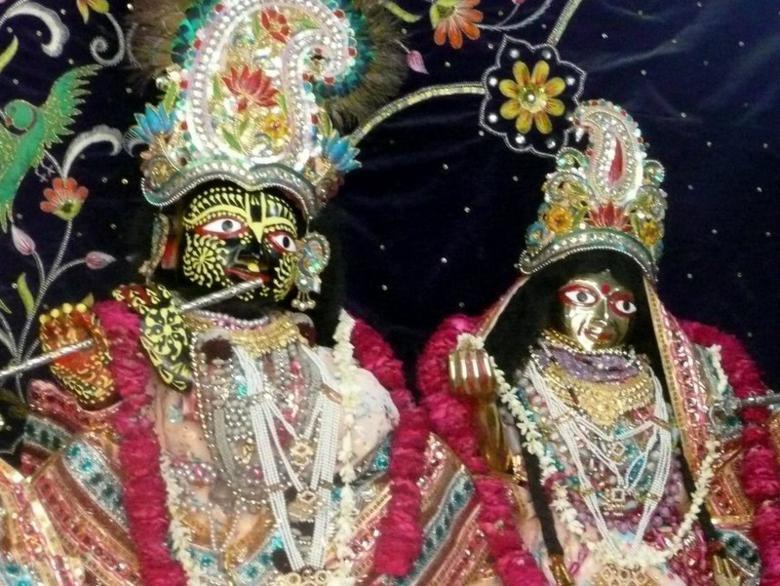
Deities of Sri Sri Radha-Madhava richly dressed, the form of the Lord whose pastimes Sri Chaitanya Mahaprabhu relished hearing described in Jayadeva's verses.
Deities of Sri Sri Radha-Madhava richly dressed, the form of the Lord whose pastimes Sri Chaitanya Mahaprabhu relished hearing described in Jayadeva's verses.gaudiyahistory.iskcondesiretree.com · ISKCON/BBT-affiliated devotional art, approved for use

Jayadeva died roughly three centuries before Sri Chaitanya Mahaprabhu was born, yet Sri Chaitanya-charitamrita returns to his poem more often than to the work of almost any other pre-Chaitanya writer. This page collects what that scripture, and Srila Prabhupada after it, actually say.

Read and Sung, Day and Night #

Chaitanya-charitamrita's Madhya-lila describes how Mahaprabhu spent His time at Puri in the company of two of His closest associates: Svarupa Damodara Gosvami and Ramananda Raya. Together, it says, they passed their days and nights reading the poetry of Chandidasa and Vidyapati, hearing quotations from Ramananda Raya's own drama Jagannatha-vallabha-nataka, and singing from Bilvamangala Thakura's Krishna-karnamrita and Jayadeva's Gita Govinda — "with great pleasure." A later chapter of Antya-lila repeats the same short list of favorite books, this time noting specifically that Krishna-karnamrita, Vidyapati's poetry, and the Gita Govinda were what Mahaprabhu "especially liked to hear." It is a small but telling detail that Jayadeva's book keeps appearing in the same breath as Bilvamangala Thakura's — two poet-saints who lived generations before Mahaprabhu, and whose very different books both became, in His hands, tools for tasting the same ecstatic love of Krishna.

Ramananda Raya's Recitations #

During the period of Mahaprabhu's life that Chaitanya-charitamrita calls His Gambhira-lila — the years of deepest, most consuming separation from Krishna, spent largely in seclusion at Puri — it was Ramananda Raya who is remembered as the one able to meet Him in that mood. Antya-lila records that Ramananda Raya would recite verses from Vidyapati, Chandidasa, and, above all, the Gita Govinda, choosing each verse to match whatever wave of ecstasy was passing through Mahaprabhu at that moment. One specific instance is preserved in detail: a Gita Govinda verse describing Radha remembering Krishna's playful teasing during the rasa dance is quoted directly in Antya-lila, with the note that this exact verse is "sung by Srimati Radharani" within the poem — meaning that when it was recited to Mahaprabhu, He was hearing, in the tradition's own understanding, Radharani's actual words returning to Her through Jayadeva's Sanskrit.

Later still, in the final chapters of Antya-lila, Chaitanya-charitamrita describes Mahaprabhu reading, together, verses from Jayadeva's Gita Govinda, from Srimad-Bhagavatam, from Ramananda Raya's own drama, and from Bilvamangala Thakura's Krishna-karnamrita — overwhelmed each time by whatever ecstatic emotion that particular verse carried.

Ranked Among India's Great Poets #

Chaitanya-charitamrita does not only quote Jayadeva devotionally — it also places him, quite deliberately, among Sanskrit literature's most celebrated names. In a passage weighing the poetic gifts of Rupa Gosvami against the wider Sanskrit tradition, Krishnadasa Kaviraja Goswami names Bhavabhuti, Jayadeva, and Kalidasa together as poets whose compositions, for all their brilliance, still contain occasional faults — the implicit comparison being to Rupa Gosvami's own verses, held up as free of any such flaw. Being placed in that company at all, alongside Kalidasa, generally regarded as classical Sanskrit's greatest poet, says a great deal about how seriously Jayadeva's craftsmanship was regarded within the Gaudiya Vaishnava tradition, quite apart from the devotional content of his verses.

A Caution From Krishnadasa Kaviraja Goswami #

Krishnadasa Kaviraja Goswami, the author of Chaitanya-charitamrita, does not present any of this as material for casual reading. In his purport-worthy comment on these very passages — recorded by Srila Prabhupada and attributed there to Srila Bhaktisiddhanta Sarasvati Thakura — such feelings of separation are described as reserved specifically for advanced souls like Ramananda Raya and Svarupa Damodara, not for ordinary devotees to imitate. The warning matters: Jayadeva's verses describe Krishna's most intimate pastimes, and Gaudiya Vaishnava tradition has always insisted that reading them as anything less than scripture — as merely erotic poetry, say — badly misses the point.

What Srila Prabhupada Said #

Srila Prabhupada returned to Jayadeva more than once outside his written purports. In a 1973 conversation in London, he identified the popular hymn Keshava dhrita mina-sharira jaya jagadisha hare, which George Harrison had been setting to music, as Jayadeva's own Dasavatara-stotra, and quoted its concluding verse from memory. In a 1969 conversation with the poet Allen Ginsberg, he named Jayadeva alongside Vidyapati and Chandidasa as one of Vaishnavism's great poets. And in a 1974 lecture on Bhagavad-gita 4.11, he quoted Jayadeva's own verse on the Buddha incarnation to explain why the Lord once taught nonviolence even at the apparent cost of Vedic sacrificial ritual — a use of Jayadeva's poetry not as devotional color, but as theological argument in its own right.

Scriptural sources for this pastime

bhavabhūti, jayadeva, āra kālidāsa
tāṅ-sabāra kavitve āche doṣera prakāśa

Word for word

bhavabhūti — Bhavabhūti; jayadeva — Jayadeva; āra — and; kālidāsa — Kālidāsa; tāṅ-sabāra — of all of them; kavitve — in the poetic power; āche — there is; doṣera — of faults; prakāśa — manifestation.

Even in the poetic compositions of such great poets as Bhavabhuti, Jayadeva and Kalidasa there are many examples of faults.

Adi 16.101 Sri Chaitanya-caritamrita

Krishnadasa Kaviraja Goswami ranks Jayadeva alongside Kalidasa and Bhavabhuti among Sanskrit literature's greatest poets, in a passage comparing them to Rupa Gosvami's flawless verse.

caṇḍīdāsa, vidyāpati, rāyera nāṭaka-gīti,
karṇāmṛta, śrī-gīta-govinda
svarūpa-rāmānanda-sane, mahāprabhu rātri-dine,
gāya, śune — parama ānanda

Word for word

caṇḍīdāsa — the poet Caṇḍīdāsa; vidyāpati — the poet Vidyāpati; rāyera nāṭaka-gīti — songs from the drama of Rāya Rāmānanda; karṇāmṛta — the Kṛṣṇa-karṇāmṛta of Bilvamaṅgala Ṭhākura; śrī-gīta-govinda — the Gīta-govinda of Jayadeva Gosvāmī; svarūpa-rāmānanda-sane — in the company of Svarūpa Dāmodara and Rāya Rāmānanda; mahāprabhu — Lord Caitanya Mahāprabhu; rātri-dine — day and night; gāya — sings; śune — hears; parama ānanda — with great pleasure.

He also passed His time reading the books and singing the songs of Chandidasa and Vidyapati, and listening to quotations from the Jagannatha-vallabha-nataka, Krishna-karnamrita and Gita-govinda. Thus in the association of Svarupa Damodara and Raya Ramananda, Sri Chaitanya Mahaprabhu passed His days and nights chanting and hearing with great pleasure.

Madhya 2.77 Sri Chaitanya-caritamrita

Shows the Gita Govinda as one of a small handful of books Mahaprabhu returned to daily with His closest associates at Puri.

karṇāmṛta, vidyāpati, śrī-gīta-govinda
ihāra śloka-gīte prabhura karāya ānanda

Word for word

karṇāmṛta — the book Kṛṣṇa-karṇāmṛta; vidyāpati — the author Vidyāpati; śrī-gīta-govinda — the book Śrī Gīta-govinda, by Jayadeva Gosvāmī; ihāra — of these; śloka-gīte — verses and songs; prabhura — for Śrī Caitanya Mahāprabhu; karāya — create; ānanda — happiness.

The Lord especially liked to hear Bilvamangala Thakura's Krishna-karnamrita, the poetry of Vidyapati, and Sri Gita-govinda, by Jayadeva Gosvami. Sri Chaitanya Mahaprabhu felt great pleasure in His heart when His associates chanted verses and sang songs from these books.

Antya 15.27 Sri Chaitanya-caritamrita

Names the Gita Govinda as one of Mahaprabhu's three most-loved devotional books during His Antya-lila years at Puri.

vidyāpati, caṇḍīdāsa, śrī-gīta-govinda
bhāvānurūpa śloka paḍena rāya-rāmānanda

Word for word

vidyāpati — the author Vidyāpati; caṇḍīdāsa — the author Caṇḍīdāsa; śrī-gīta-govinda — the famous book by Jayadeva Gosvāmī; bhāva-anurūpa — according to the ecstatic emotion; śloka — verses; paḍena — recites; rāya-rāmānanda — Rāmānanda Rāya.

To complement the ecstasy of Sri Chaitanya Mahaprabhu, Ramananda Raya would quote verses from the books of Vidyapati and Chandidasa, and especially from the Gita-govinda, by Jayadeva Gosvami.

Antya 17.6 Sri Chaitanya-caritamrita

Describes Ramananda Raya's role reciting Gita Govinda verses to match Mahaprabhu's changing ecstatic moods during His Gambhira-lila at Puri.

yei yei śloka jayadeva, bhāgavate
rāyera nāṭake, yei āra karṇāmṛte
sei sei bhāve śloka kariyā paṭhane
sei sei bhāvāveśe karena āsvādane

Word for word

yei yei — whatever; śloka — verses; jayadeva — Jayadeva Gosvāmī; bhāgavate — in Śrīmad-Bhāgavatam; rāyera nāṭake — in the drama composed by Rāmānanda Rāya; karṇāmṛte — in Kṛṣṇa-karṇāmṛta, by Bilvamaṅgala Ṭhākura; sei sei bhāve — in those ecstatic emotions; śloka kariyā paṭhane — reading regularly; sei sei bhāva-āveśe — in that ecstatic love; karena āsvādane — He tastes.

When Sri Chaitanya Mahaprabhu read the verses of Jayadeva's Gita-govinda, of Srimad-Bhagavatam, of Ramananda Raya's drama Jagannatha-vallabha-nataka, and of Bilvamangala Thakura's Krishna-karnamrita, He was overwhelmed by the various ecstatic emotions of those verses.

Antya 20.67-68 Sri Chaitanya-caritamrita

A late-life episode showing Jayadeva's Gita Govinda still central to Mahaprabhu's devotional reading, grouped with Bilvamangala Thakura's Krishna-karnamrita.

Srila Prabhupada on this pastime

George: But I was wondering during that song, finding out the ten incarnations... Prabhupada: That is Jayadeva's... It is composed by one Vaishnava poet... Jayadeva Gosvami... shri-jayadeva-kaver idam uditam udaram / shrnu sukha-dam shubha-dam bhava-saram / keshava dhrta dashya-vidha-rupa jaya jagadisha hare.

Conversation with George Harrison — Conversation, 1973-07-22, London

That is explained by Jayadeva Gosvami: nindasi yajna-vidher ahaha shruti-jatam sadaya-hrdaya darshita-pashu-ghatam, keshava dhrta-buddha-sharira jaya jagadisha hare. At that time, people were killing animals like anything in the name of yajna... So when Lord Buddha started this nonviolence...

Bhagavad-gita 4.11 — Lecture, 1974-03-31, Bombay
