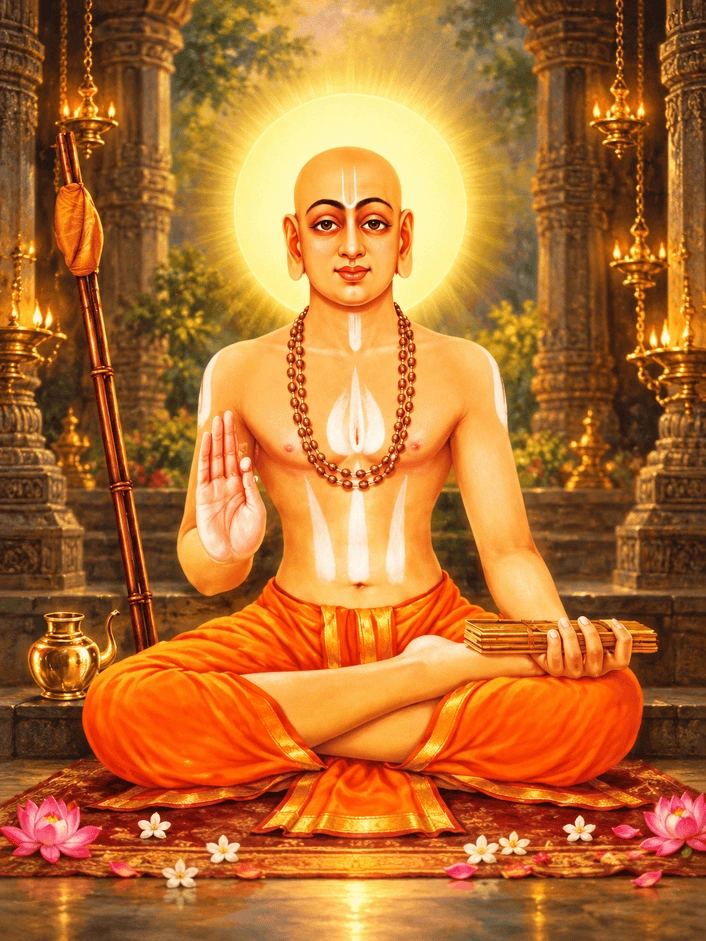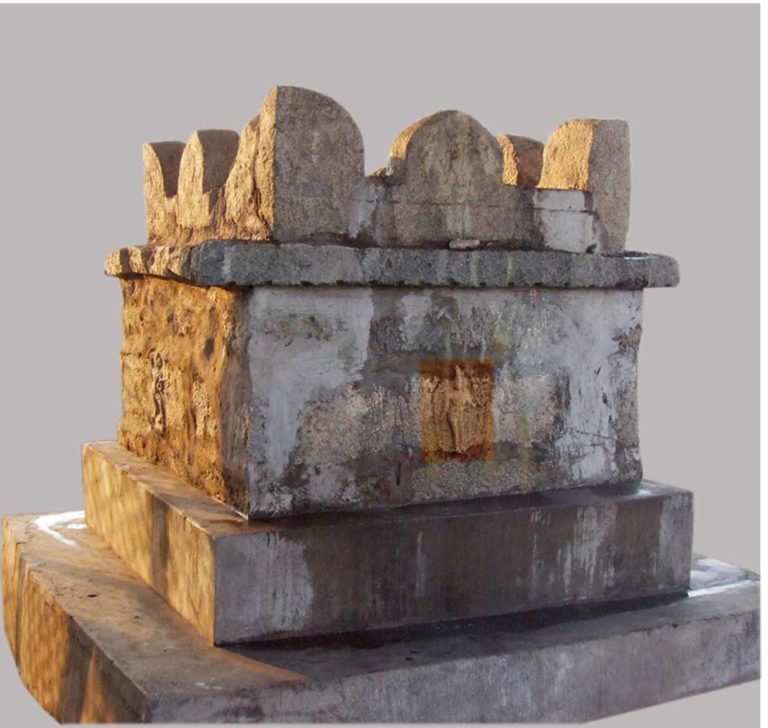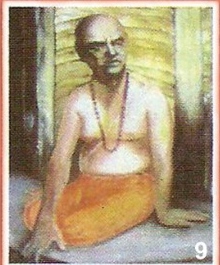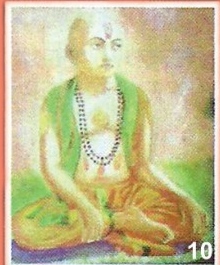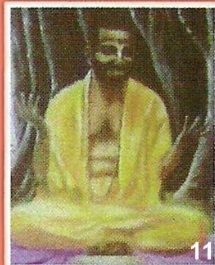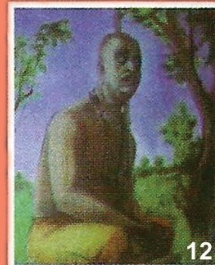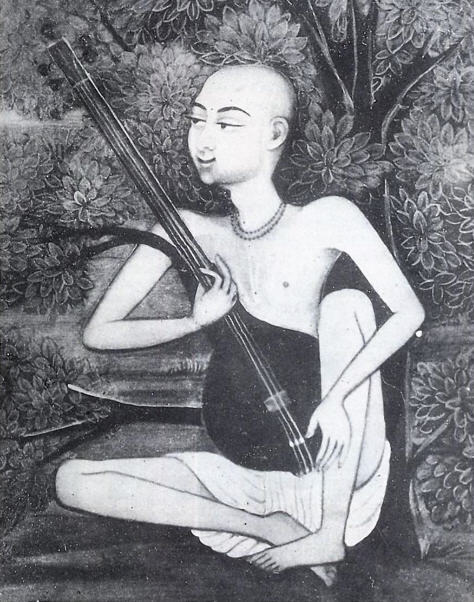
Srila Jayadeva Goswami
Author of the Gita Govinda
Also known as Jayadeva, Jaideva, Jaydev, Kavi Jayadeva
“Whatever is delightful in the varieties of music, whatever is graceful in the fine flow of poetry, and whatever is exquisite in the sweet art of love — let the happy and the wise learn all this from the songs of Jayadeva.”
Gita Govinda, opening verses, Jayadeva describing his own poem
Three hundred years before Sri Chaitanya Mahaprabhu ever walked the lanes of Nabadwip, a Bengali poet named Jayadeva sat down to write a love poem about Radha and Krishna. With it he gave Gaudiya Vaishnavism one of its most treasured scriptures. His Sanskrit masterwork, the Gita Govinda, fills barely two dozen pages. Yet it has been sung in the Jagannatha temple of Puri almost every night for eight centuries. Miniature artists in nearly every school of Indian art have painted it. And according to Sri Chaitanya-charitamrita, it could move Sri Chaitanya Mahaprabhu Himself to tears of ecstasy. Jayadeva belongs to a small circle of great devotee-poets who lived and wrote before Mahaprabhu's appearance. Even so, Mahaprabhu treasured their songs and verses as if they were scripture.
| Detail | Description |
|---|---|
| Lived | 12th century CE, during the reign of Maharaja Lakshmana Sena of Bengal |
| Birthplace | Disputed: the village of Kenduli/Kendubilva, claimed by both Birbhum district, West Bengal, and by Kenduli Sasan near Puri, Odisha |
| Parents | Father Bhojadeva, mother Vamadevi (Ramadevi in some sources) |
| Wife | Padmavati, a temple dancer traditionally said to have been given to him by arrangement of Lord Jagannatha |
| Chief work | Gita Govinda, a twelve-canto Sanskrit lyric poem on the love of Radha and Krishna |
| Disappearance | Accounts differ between Kendubilva, Jagannatha Puri, and Vrindavana |
At a Glance
- Lived in the twelfth century, in the era of King Lakshmana Sena of Bengal, though it is disputed how close the two actually were
- Married Padmavati, a temple dancer. Tradition traces the story of this marriage back to a vow made before Lord Jagannatha
- Wrote the Gita Govinda, a twelve-canto poem meant to be sung and danced, not just read
- Tradition holds that Krishna Himself once completed a line of the poem in Jayadeva's own hand, while the poet was away bathing
- Sri Chaitanya-charitamrita records Sri Chaitanya Mahaprabhu being moved to ecstasy by Gita Govinda verses recited to Him by Svarupa Damodara and Ramananda Raya
A Poet Between Bengal and Odisha #
Almost everything about Jayadeva's early life is caught up in a dispute between two regions that is still argued today. The Gita Govinda itself says only that its author came from a village called "Kindubilva." Bengali tradition, followed by Srila Prabhupada's own purport to Chaitanya-charitamrita, places this at Kenduli in the Birbhum district of West Bengal, on the banks of the Ajaya river. This tradition names his parents as Bhojadeva and Vamadevi. Odisha's tradition places the same village near Puri, at what is now called Kenduli Sasan. As evidence, it points to temple inscriptions, a huge number of surviving Gita Govinda manuscripts in the Odisha State Museum, and a living local performance tradition. Neither claim has been settled. Serious scholars on both sides have made their case, and the question is still open between the two states. The fuller account also looks at his schooling and his years near the royal court in Nabadwip.
Marriage to Padmavati #
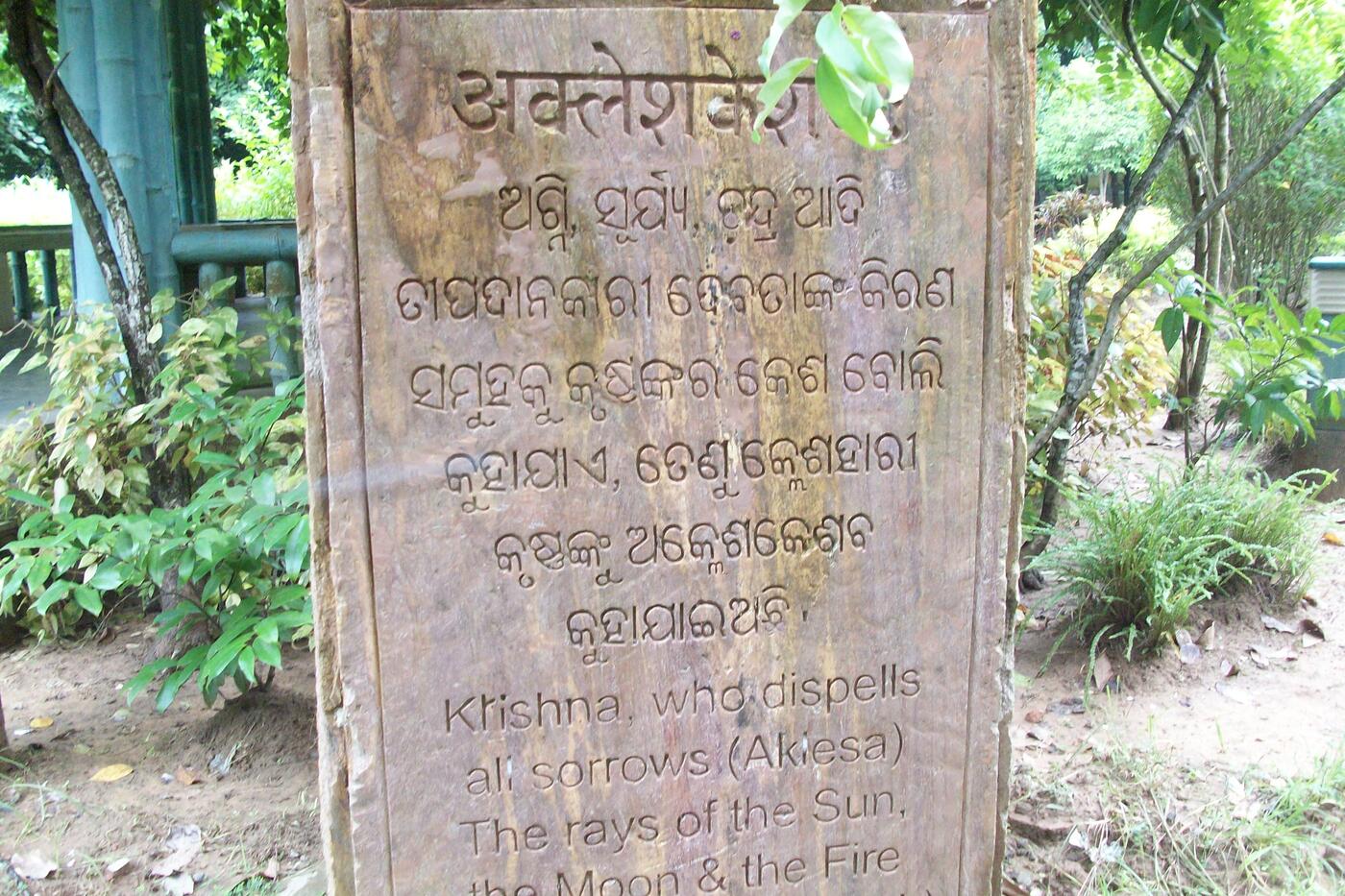
Jayadeva married a woman named Padmavati, remembered in Vaishnava tradition as a temple dancer devoted to Lord Jagannatha. The best-known version of the story is preserved in the old Gaudiya Vaishnava work called the Vishvakosa. In this version, Jagannatha Himself tells Padmavati's father to give her in marriage to Jayadeva. Jayadeva had renounced the world and was unwilling, but the Lord's instruction set his unwillingness aside. Some modern scholars consider this a later devotional tradition, not a fact supported by written records. This is worth keeping in mind, even though the story is still central to how Vaishnavas remember the couple. Padmavati went on to become part of the Gita Govinda's own legend, as the marriage story and the account of its most famous verse both describe.
The Gita Govinda #
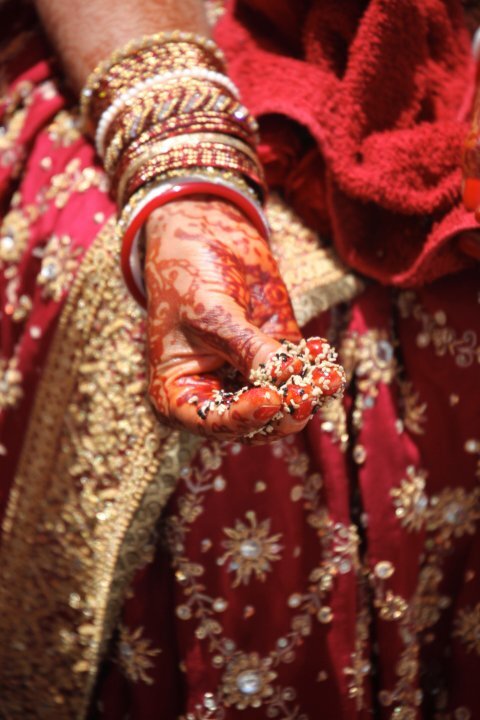
The Gita Govinda is a Sanskrit lyric poem in twelve cantos, called sarga. It tells of Krishna's love for Radha: His wandering after other gopis, the pain of Her separation from Him, and Their reunion at last. Each canto divides further into songs called ashtapadis, "eight-versed" pieces. Each song is set to its own raga and tala so that it could be sung and danced, not just recited. Sri Chaitanya-charitamrita compares the Gita Govinda's mood of viraha, separation, to the gopis' longing for Krishna described in Srimad-Bhagavatam before the rasa dance. This pain of separation deepens love instead of destroying it. It is what gives the poem its lasting place in Vaishnava bhakti literature. The full account of its composition tells how, according to tradition, Jayadeva came to write it. According to one Gaudiya telling, he wrote it in a cottage at Champahati near Nabadwip, and it was finished at Jagannatha Puri.
The Verse Krishna Himself Completed #
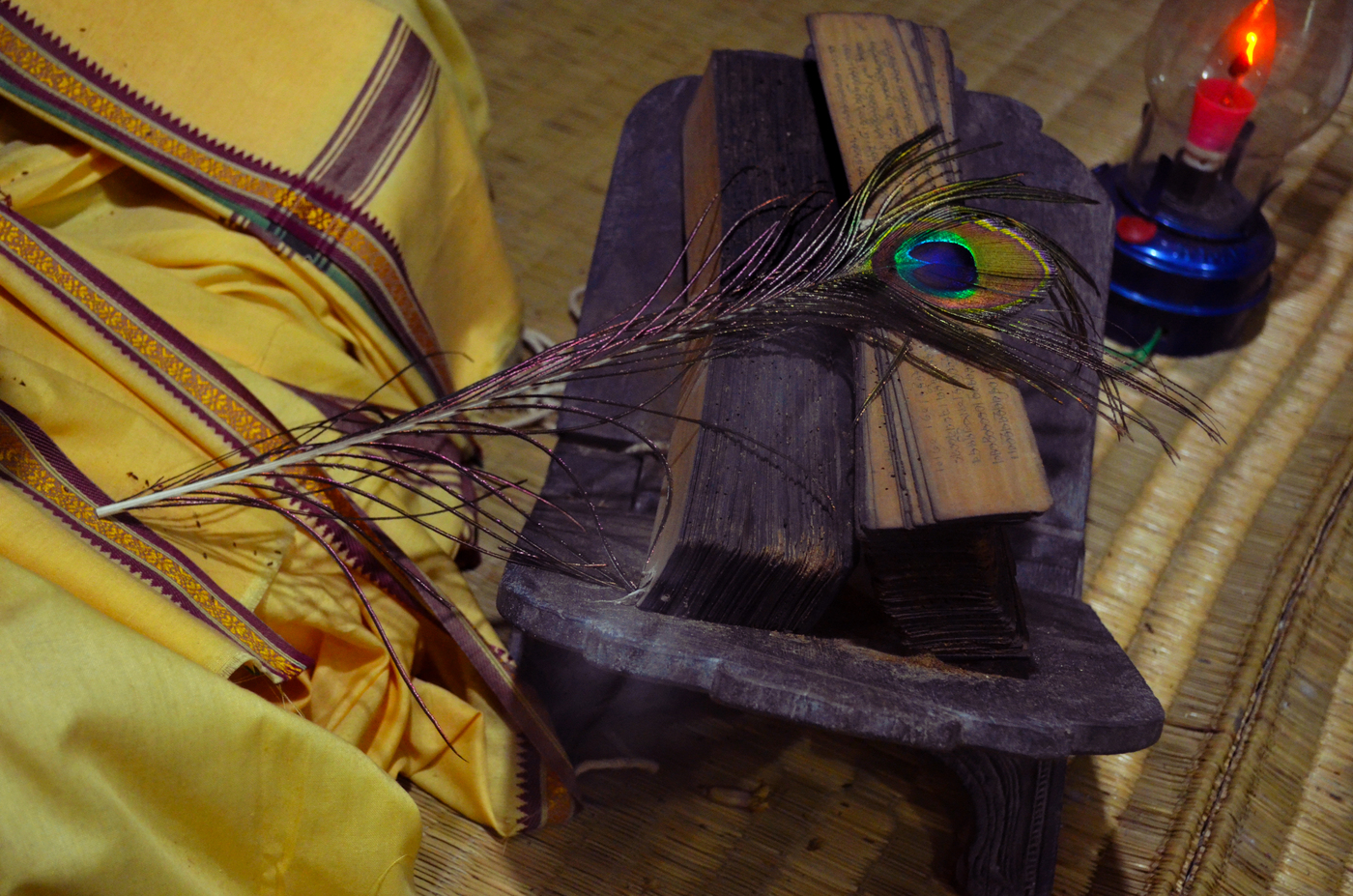
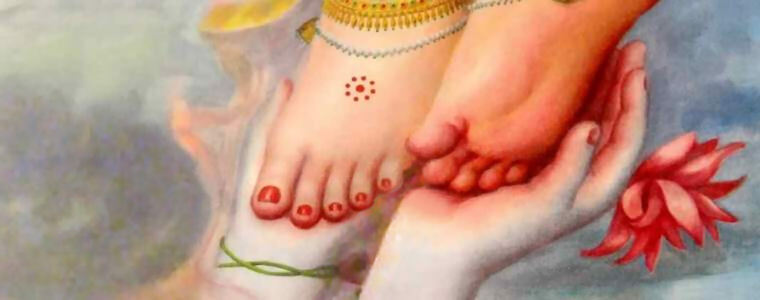
No story about the Gita Govinda is told and retold across Gaudiya Vaishnava tradition more than this one. Jayadeva was writing a verse in which Krishna Himself asks to place His head at Radha's feet. He grew hesitant, because the line seemed to lower Krishna's position as the Supreme Personality of Godhead. So he set his palm leaf aside and went to bathe in the Ganges. Krishna Himself then appeared in the form of Jayadeva and wrote the line dehi pada-pallavam udaram in the poet's own hand. He even accepted prasadam from Padmavati before leaving. Srila Prabhupada spoke of this same verse in a 1977 conversation in Bhubaneswar as "very confidential," since it shows Krishna begging pardon at Radharani's feet. The full story tells it in detail, along with how Padmavati discovered what had happened.
Chaitanya Mahaprabhu and the Gita Govinda #
Sri Chaitanya-charitamrita returns to the Gita Govinda again and again. In Madhya-lila it records that Sri Chaitanya Mahaprabhu spent His days and nights with Svarupa Damodara and Ramananda Raya, singing and hearing from Vidyapati, Chandidasa, Bilvamangala Thakura's Krishna-karnamrita, and Jayadeva's Gita Govinda, "with great pleasure." Antya-lila describes Mahaprabhu's most intense period of separation from Krishna at Puri. There, Ramananda Raya is described reciting Gita Govinda verses to match the Lord's changing moods. One particular ashtapadi verse is named, quoted and explained. Krishnadasa Kaviraja Goswami, who wrote Chaitanya-charitamrita, names Jayadeva's Gita Govinda side by side with Srimad-Bhagavatam among the verses that stirred these moods in Mahaprabhu. The dedicated page collects these episodes, along with what Srila Prabhupada himself said about the poem in his own lectures and conversations.
Final Years and Legacy #
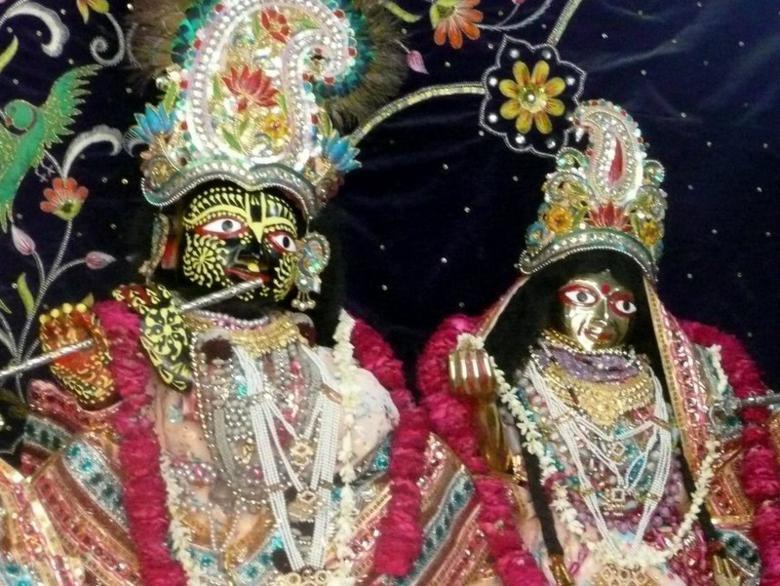
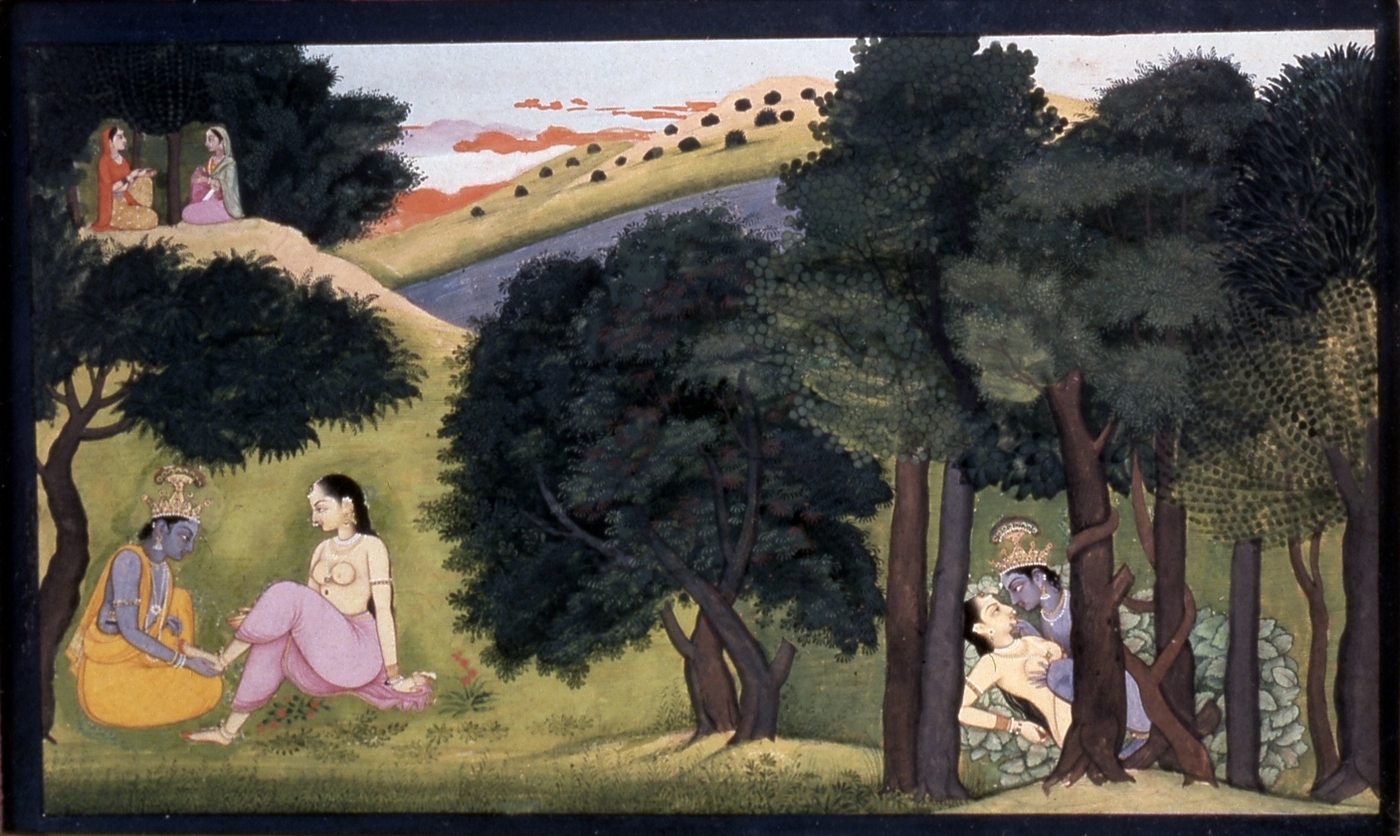
Like his birthplace, the place where Jayadeva spent his final years is something sources disagree on. Some accounts bring him back to Kendubilva. Others hold that he stayed at Jagannatha Puri. There he is said to have started the temple's practice of singing the Gita Govinda before the Deities each night, and Srila Bhaktisiddhanta Sarasvati Thakura held that his life ended there. Still others say he went on to Vrindavana. But the poem's reach is not in dispute. It shaped Odisha's Jagannatha temple worship and its Odissi music and dance tradition. It spread into miniature painting workshops from Rajasthan to the Punjab Hills. Remarkably, Jayadeva's own reach even extends to the Guru Granth Sahib, the scripture of Sikhism, which includes two of his hymns. The closing page of this set gathers that wider legacy, including three Gita Govinda songs still sung today and kept in this temple's own collection of Vaishnava songs.
Songs in the Vaishnava Song Book #
The Vaishnava Song Book carries several songs attributed to Srila Jayadeva Goswami. See the full author page here.
Scriptural evidence
vidyāpati, jayadeva, caṇḍīdāsera gīta
āsvādena rāmānanda-svarūpa-sahita
Word for word
vidyāpati: the author Vidyāpati; jayadeva: Jayadeva; caṇḍīdāsera: of Caṇḍīdāsa; gīta: their songs; āsvādena: tastes; rāmānanda: Rāmānanda; svarūpa: Svarūpa; sahita: along with.
The Lord used to read the books of Vidyapati, Jayadeva and Chandidasa, relishing their songs with His confidential associates like Sri Ramananda Raya and Svarupa Damodara Gosvami.
From the purport: Purport excerpt: "Jayadeva was born during the reign of Maharaja Lakshmana Sena of Bengal... His birthplace was in the Birbhum district, in the village Kendubilva."
The core Prabhupada purport identifying Jayadeva's era, parents, and disputed birthplace, and dating him to the reign of Lakshmana Sena.
Frequently asked
When was Srila Jayadeva Goswami born?
Srila Jayadeva Goswami appeared 12th century CE (disputed) in Kenduli/Kendubilva — claimed by both Birbhum district, West Bengal, and Kenduli Sasan near Puri, Odisha.
When and where did Srila Jayadeva Goswami disappear?
Srila Jayadeva Goswami disappeared 12th–13th century CE (accounts differ) at Kendubilva, Jagannatha Puri, or Vrindavana; sources disagree.
What are the main pastimes of Srila Jayadeva Goswami?
The pastimes covered here include: Birth and Early Life, Marriage to Padmavati, Writing the Gita Govinda, The Verse Krishna Himself Completed, Gita Govinda and Sri Chaitanya Mahaprabhu, Legacy in Vaishnava Devotion and Art.