Srila Jayadeva Goswami
Author of the Gita Govinda
The complete life, on one page: The main biography and every pastime page, in order, in one place
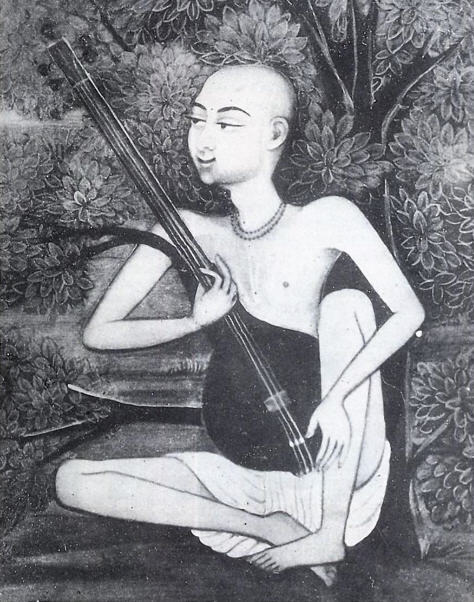
Introduction
Three hundred years before Sri Chaitanya Mahaprabhu ever walked the lanes of Nabadwip, a Bengali poet named Jayadeva sat down to write a love poem about Radha and Krishna. With it he gave Gaudiya Vaishnavism one of its most treasured scriptures. His Sanskrit masterwork, the Gita Govinda, fills barely two dozen pages. Yet it has been sung in the Jagannatha temple of Puri almost every night for eight centuries. Miniature artists in nearly every school of Indian art have painted it. And according to Sri Chaitanya-charitamrita, it could move Sri Chaitanya Mahaprabhu Himself to tears of ecstasy. Jayadeva belongs to a small circle of great devotee-poets who lived and wrote before Mahaprabhu's appearance. Even so, Mahaprabhu treasured their songs and verses as if they were scripture.
| Detail | Description |
|---|---|
| Lived | 12th century CE, during the reign of Maharaja Lakshmana Sena of Bengal |
| Birthplace | Disputed: the village of Kenduli/Kendubilva, claimed by both Birbhum district, West Bengal, and by Kenduli Sasan near Puri, Odisha |
| Parents | Father Bhojadeva, mother Vamadevi (Ramadevi in some sources) |
| Wife | Padmavati, a temple dancer traditionally said to have been given to him by arrangement of Lord Jagannatha |
| Chief work | Gita Govinda, a twelve-canto Sanskrit lyric poem on the love of Radha and Krishna |
| Disappearance | Accounts differ between Kendubilva, Jagannatha Puri, and Vrindavana |
At a Glance
- Lived in the twelfth century, in the era of King Lakshmana Sena of Bengal, though it is disputed how close the two actually were
- Married Padmavati, a temple dancer. Tradition traces the story of this marriage back to a vow made before Lord Jagannatha
- Wrote the Gita Govinda, a twelve-canto poem meant to be sung and danced, not just read
- Tradition holds that Krishna Himself once completed a line of the poem in Jayadeva's own hand, while the poet was away bathing
- Sri Chaitanya-charitamrita records Sri Chaitanya Mahaprabhu being moved to ecstasy by Gita Govinda verses recited to Him by Svarupa Damodara and Ramananda Raya
Scriptural evidence for the introduction (1)
vidyāpati, jayadeva, caṇḍīdāsera gīta
āsvādena rāmānanda-svarūpa-sahita
Word for word
vidyāpati: the author Vidyāpati; jayadeva: Jayadeva; caṇḍīdāsera: of Caṇḍīdāsa; gīta: their songs; āsvādena: tastes; rāmānanda: Rāmānanda; svarūpa: Svarūpa; sahita: along with.
The Lord used to read the books of Vidyapati, Jayadeva and Chandidasa, relishing their songs with His confidential associates like Sri Ramananda Raya and Svarupa Damodara Gosvami.
From the purport: Purport excerpt: "Jayadeva was born during the reign of Maharaja Lakshmana Sena of Bengal... His birthplace was in the Birbhum district, in the village Kendubilva."
The core Prabhupada purport identifying Jayadeva's era, parents, and disputed birthplace, and dating him to the reign of Lakshmana Sena.
Chapter 1
Birth and Early Life
A poet from a village called Kindubilva, claimed today by both Bengal and Odisha
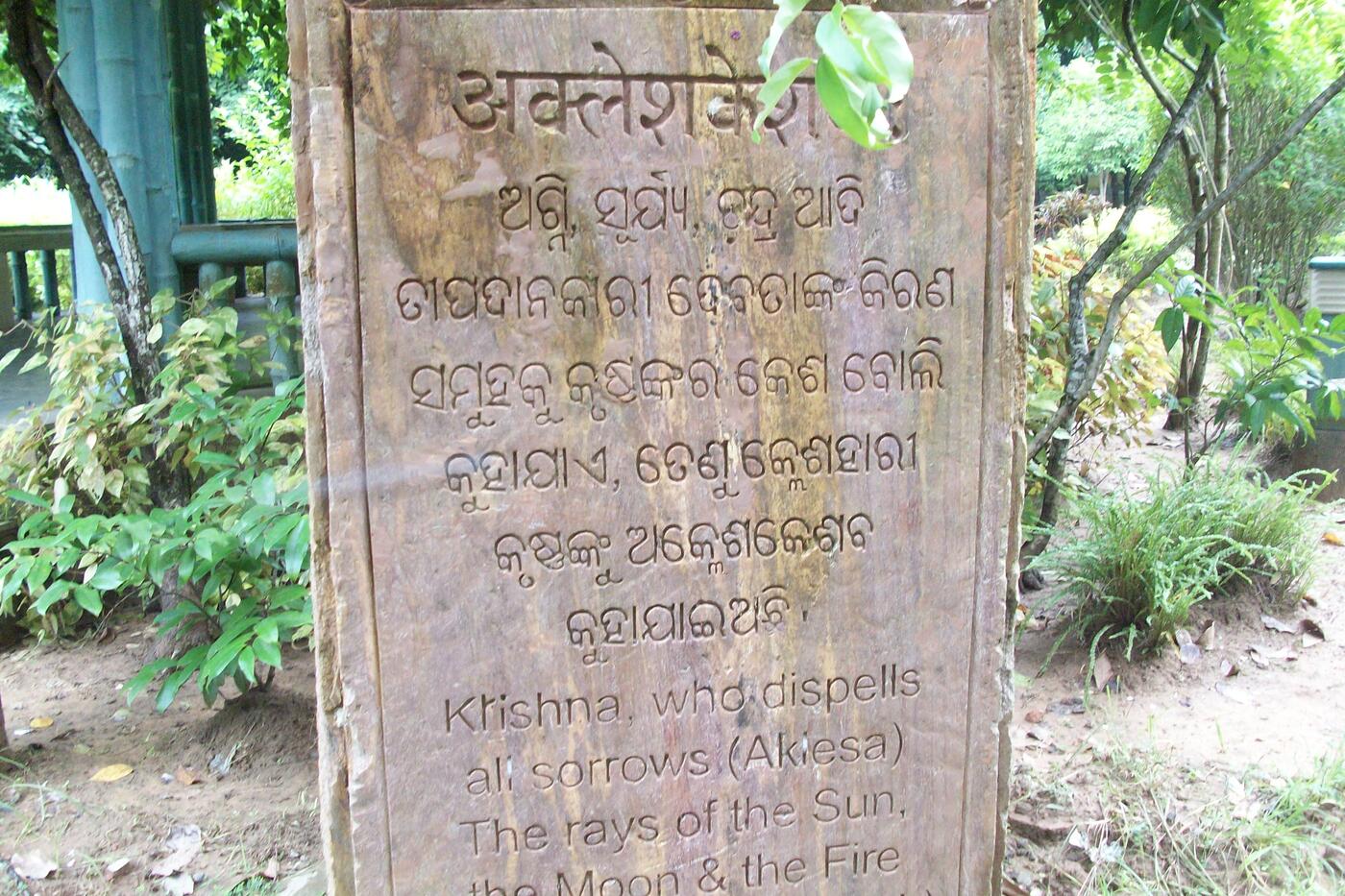
The Gita Govinda names its own author only once, and only in a puzzling way: a poet from a village called "Kindubilva." Eight hundred years later, that one word is still at the center of a real dispute between two regions of India, and it has not been settled.
Two Villages, One Name #
West Bengal's claim rests on Kenduli village in the Birbhum district, on the banks of the Ajaya river. Sri Chaitanya-charitamrita follows this view in Srila Prabhupada's purport. The purport names Jayadeva's birthplace as Birbhum and his parents as Bhojadeva and Vamadevi. The Gaudiya Vaishnava Abhidhana adds a devotional detail. It says that Jayadeva found his Radha-Madhava Deities in the waters of the Ajaya itself, and that he used to rest and worship at a nearby Shiva temple called Kusheshwar.
Odisha's claim rests on Kenduli Sasan, a village near Puri, and it is not a weak one. Temple inscriptions at the Lingaraja, Madhukeswara, and Simhachala temples were read and published by the scholar Satyanarayana Rajguru. They describe a Jayadeva who taught, and may have studied, at a school in nearby Kurmapataka. The Odisha State Museum in Bhubaneswar alone holds around two hundred and ten Gita Govinda manuscripts, more than anywhere else in India. They come in forms from ordinary palm leaf to ivory, bamboo, and paper. Some are shaped like a fish or a garland for easy carrying. The earliest known commentary on the poem was written in Odisha, around 1190, only a few decades after the poem itself. Also, Odisha's Jagannatha temple has sung the Gita Govinda every night, with no recorded break, since a time that tradition places within Jayadeva's own lifetime.
Serious scholars on both sides have argued their case for well over a century, and the question is still open. Gaudiya Vaishnava tradition, and Srila Prabhupada's purport to Sri Chaitanya-charitamrita, follow the Bengal telling, because it connects most directly to the sampradaya's own history. But the Odisha claim rests on real evidence of its own. It deserves to be remembered as an open question, not dismissed.
A Life Near the Royal Court #
Whichever village he was born in, Jayadeva lived during the reign of Maharaja Lakshmana Sena of Bengal. For a long stretch of his life he lived in Nabadwip, then Bengal's capital, not far from the royal palace. Later Gaudiya Vaishnava tradition, drawing on Srila Bhaktivinoda Thakura's Navadvipa-dhama-mahatmya, tells how the two men came to know each other. Lakshmana Sena's court scholar, Govardhan Acharya, heard the Dasavatara-stotra and told the king who had written it. This hymn to Krishna's ten incarnations opens with pralayo payodhi jale. It is the same hymn that this temple's own song collection still preserves as Pralaya Payodhi Jale. The king was curious, so he visited Jayadeva's house disguised as an ordinary visitor. He could see from Jayadeva's manner that he was a truly realized soul, and he invited him to live in the palace.
Sources also disagree about how close this royal connection really was. One account describes Jayadeva as Lakshmana Sena's actual court poet. Another source, independent of the first, is the preface to an old Calcutta edition of the Gita Govinda. This preface ties Jayadeva instead to "the king of Orissa's" court. It notes only that a courtier of Lakshmana Sena's named Shridhar Das included several of Jayadeva's verses in his own collection of poems, the Sad-ukti-karnamrta. Both accounts agree that Jayadeva and Lakshmana Sena's court belonged to the same time. They disagree on how official the connection was.
Turning Away From the Palace #
Jayadeva was already living a renounced life, and he had no wish to move into royal comfort. According to Gaudiya tradition, he asked instead to be allowed to live at Jagannatha Puri. Lakshmana Sena was disappointed but respectful. As a middle way, he offered Jayadeva a cottage in the nearby village of Champaka-hatta, known today as Champahati. The king said it was a place suited to a life of meditation, and he promised never to disturb Jayadeva there again. Tradition says that it was at Champahati that Jayadeva received a vision. First he saw Radha-Madhava, and then Their combined form as the golden, champa-flower-colored Gauranga Mahaprabhu. This vision foretold Sri Chaitanya Mahaprabhu's own appearance there centuries later. In this same vision, tradition holds, Jayadeva was told to go on to Jagannatha Puri, where he would later write his masterpiece. The next page tells this story in full, and it can be read alongside the story of his marriage to Padmavati.
Chapter 2
Marriage to Padmavati
A temple dancer given in marriage by Lord Jagannatha's own arrangement, in the tradition's telling
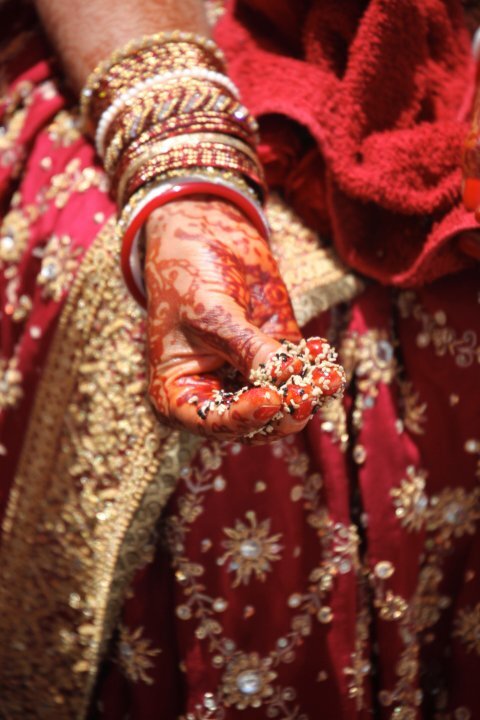
Jayadeva married a woman named Padmavati, and Gaudiya Vaishnava tradition tells her story in more than one way. We tell both versions honestly here, instead of smoothing them into one neat account.
A Daughter Promised to Jagannatha #
The fuller version, preserved in the old Gaudiya reference work called the Vishvakosa, begins with a childless brahmana couple who worshipped Lord Jagannatha for years, hoping for a son. A daughter was born instead, and they named her Padmavati. When she came of age, her father brought her to the Jagannatha temple to formally offer her at the Lord's feet, as he had long intended. Jagannatha, the story says, spoke to the brahmana directly: He had a servant, Jayadeva, who had renounced family life to chant His names, and the brahmana should give his daughter to him instead.
The brahmana obeyed at once and brought Padmavati to Jayadeva's door. Jayadeva, a genuine renunciate with no interest in marriage, tried to refuse. He told the girl to name any other place she wished to go, and he would personally take her there, but she could not stay with him. Before he could finish, her father had already left, telling him plainly that this was Jagannatha's own arrangement and there was no room to negotiate. Padmavati, left standing alone, told Jayadeva that her father had brought her there by Jagannatha's order, that Jayadeva was her only refuge, and that she would rather die at his feet than be turned away. Unable to send her away after that, Jayadeva accepted her, and became a householder.
A Simpler Telling #
Alongside this fuller account, a shorter version is also told. It describes Padmavati more simply as an expert dancer who worshipped Krishna with single-minded devotion together with Jayadeva. It leaves out the Vishvakosa's detailed story of the promise and the plea. Both versions agree on the main points: Padmavati was trained in temple dance, she was devoted to Krishna before she ever met Jayadeva, and the two of them understood their marriage as something arranged by the Lord, not by ordinary human choice.
We should be just as honest about how far this tradition can be checked. Some modern scholars do not accept the marriage to a dancer named Padmavati as established fact. They treat it instead as a later devotional tradition. However deeply Vaishnavas love the story, it cannot be confirmed from the earliest historical sources on Jayadeva's life. Gaudiya Vaishnava sources hold to the devotional account, even though scholars outside the tradition doubt that it really happened. Both of these things can be stated plainly at the same time.
Temple Dancers and the Gita Govinda #
Whatever the exact facts of how Jayadeva and Padmavati met, her background as a trained temple dancer is an important detail. For centuries, Odisha's Jagannatha temple kept an order of dancers called maharis. They were dedicated to the temple Deity and trained especially to perform devotional song and dance as ritual service. Temple records and inscriptions describe these dancers being taught to perform the Gita Govinda itself in the proper Odissi ragas. This is the very musical tradition that Jayadeva's ashtapadis were composed for. Padmavati was trained in exactly that art, and she was devoted to Krishna before she ever became a poet's householder partner. So she fits naturally into a life that would go on to produce a poem meant above all to be danced and sung, not read in silence.
Padmavati's Place in the Story #
Whichever version is closer to fact, Padmavati is never a minor character in what follows. She is present at Champahati, where Jayadeva is said to have lived and worshipped before composing his masterwork. Gaudiya tradition remembers her as an equal partner in that worship, not simply a wife in the background. Her most memorable moment in the whole tradition comes later, in the story of the Gita Govinda's most famous verse. There Padmavati serves prasadam to Krishna Himself without at first realizing it. She believes He is her own husband, returned early from his bath. That story cannot be told properly without her, and her part in it should be remembered along with Jayadeva's own.
Chapter 3
Writing the Gita Govinda
Twelve cantos of Radha and Krishna's love, composed to be sung and danced, not merely read
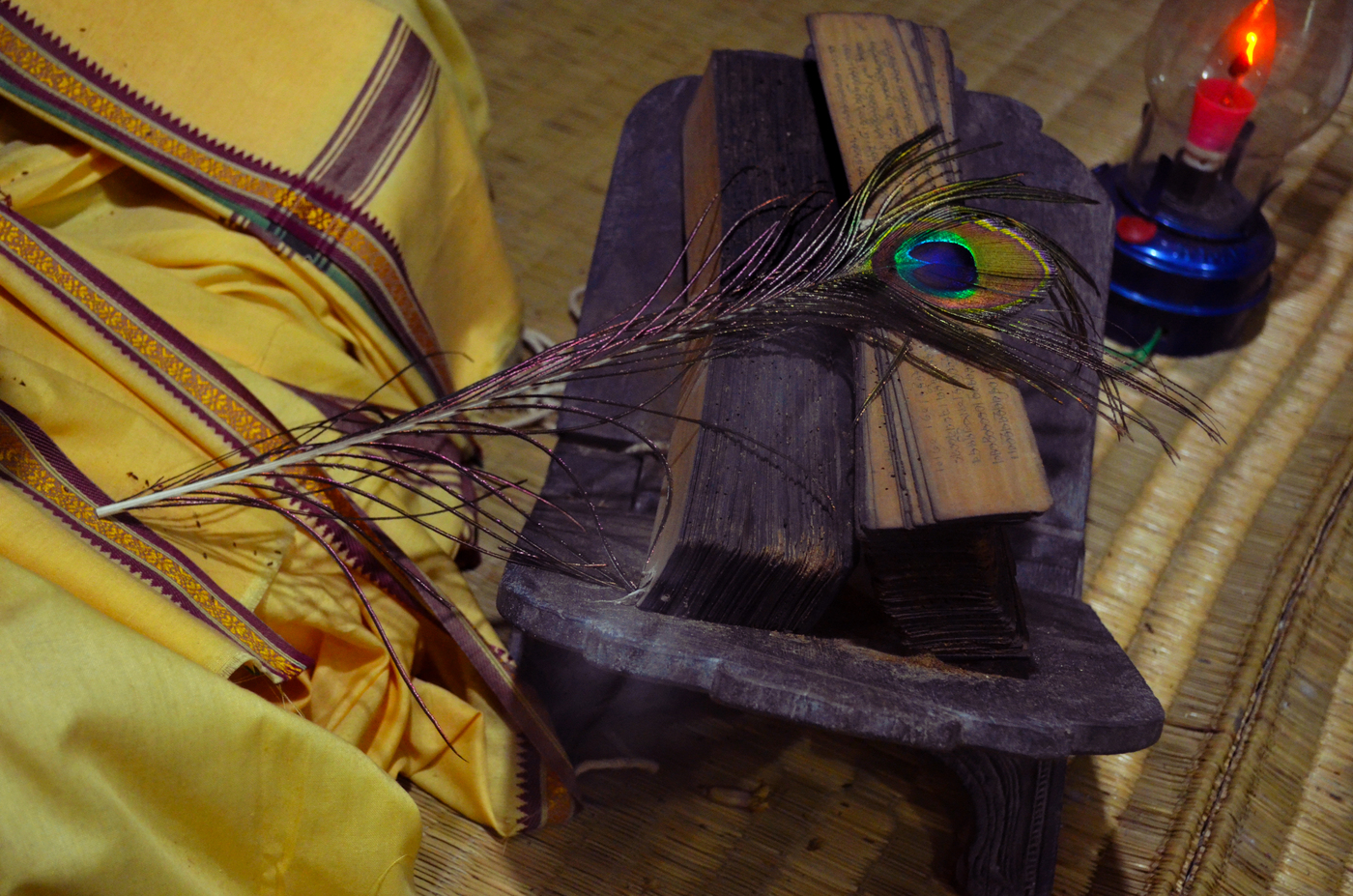
Jayadeva is famous for one book, the Gita Govinda. It is made up of twelve short cantos of Sanskrit verse. It took a story that was already ancient, Krishna's love for the gopis of Vrindavana, and gave it a form that nobody had quite given it before.
| Detail | Description |
|---|---|
| Language | Sanskrit |
| Structure | 12 cantos (sarga), divided into 24 songs (prabandha) |
| Verse form | Ashtapadis, songs of eight couplets each, set to a named raga and tala |
| Subject | Krishna's loving pastimes with the gopis, His separation from Radha, and Their reunion |
| Earliest known commentary | Bhavavibhavini-tika, by Udayanacharya, Odisha, c. 1190 |
| Ritual use | Sung nightly before the Deities at the Jagannatha temple, Puri, since Jayadeva's own era |
Where the Writing Happened #
Gaudiya Vaishnava tradition places the poem's composition at Champahati, the small cottage near Nabadwip that Lakshmana Sena built for Jayadeva after he turned down life at the royal palace. There, with Padmavati beside him, tradition says Jayadeva began writing the verses that would become the Gita Govinda. Odisha's tradition places the writing much further south instead, at Jagannatha Puri itself. This fits its claim that Jayadeva's whole life, not just his final years, was spent in that region. The two traditions cannot be fully brought into agreement. But both agree that Jayadeva finished the poem before his life ended, wherever it was written. Both also agree that its home ever since has been the Jagannatha temple. The Odisha State Museum's collection of some two hundred surviving manuscripts shows how deeply the text took root there.
Twelve Cantos of Love and Separation #
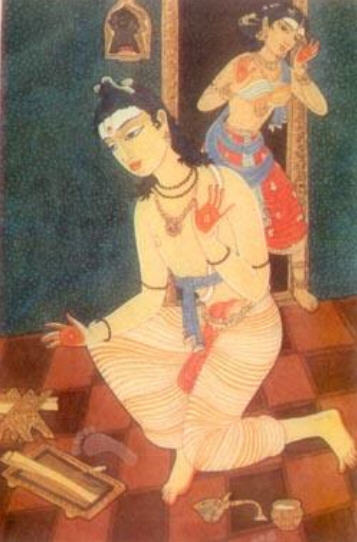
The poem's twelve cantos read almost like stage directions for Krishna's changing moods. In the earliest cantos Krishna is full of joy. Partway through, He is separated from Radha and asks Her forgiveness. Then He is bold, and by the poem's end He is joyful and reunited. Within each canto, the ashtapadis carry the main feeling. These are songs of eight couplets each, each set to its own raga and tala. They were composed to be sung and danced, not read in silence. This is part of what makes the Gita Govinda unusual even among great Sanskrit poems. Jayadeva was writing directions for performance as much as literature. Odisha's Jagannatha temple has followed those directions for about eight centuries, through its mahari dancers and Odissi musicians.
Before the twelve cantos even begin, the poem opens with a short set of prayer verses in Krishna's praise. These verses stand apart from the main story. Among them is a Vishnu-stuti verse whose refrain, jaya jayadeva hare, plays on the poet's own name. This temple's own song collection still preserves that verse today, under the title Srita Kamala, alongside two other compositions credited to Jayadeva.
Beneath its beautiful poetry, the poem is really about separation, viraha. Radha's deep pain when Krishna wanders among the other gopis, and the ache that stays even after He returns to Her, fill most of the twelve cantos before any reunion comes. Sri Chaitanya-charitamrita compares this mood directly to the gopis' longing for Krishna just before the rasa dance, as described in Srimad-Bhagavatam. That same ache lies at the heart of Krishna-bhakti itself. Jayadeva's special gift was to give that ache a complete musical and dramatic form of its own. He did this three centuries before Sri Chaitanya Mahaprabhu would make separation in love the emotional center of His own life and teaching.
To Vrindavana and Back #
One further episode, less often told, follows Jayadeva after the poem was written. According to the Bengal-Gaudiya tradition, he later carried his worshipable Deities of Radha and Madhava all the way to Vrindavana and settled near Keshi Ghat. Tradition says that the residents of the dhama were enchanted when they heard him sing his own Gita Govinda in his sweet voice, and that a merchant built a temple there for his Deities. After Vrindavana, the accounts differ again. Some say Jayadeva returned to Kendubilva for his final years. Others say he went on to Jagannatha Puri. There he is remembered for starting the daily recitation of the Gita Govinda before the Deities, a practice still unbroken today. But the episode Gaudiya Vaishnavas remember best of all belongs to the time when he was still writing the poem: the night Krishna Himself is said to have finished a line of the poem in Jayadeva's own hand.
Chapter 4
The Verse Krishna Himself Completed
Tradition holds that Krishna took Jayadeva's own form to finish a single line he hesitated to write
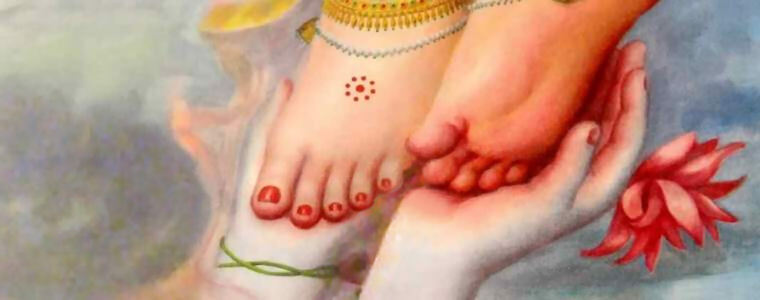
No episode in Jayadeva's life is told and retold within Gaudiya Vaishnavism as often as this one: the day, tradition says, that Krishna Himself picked up where the poet had stopped.
A Line Too Bold to Write #
Jayadeva was working on what would become one of the Gita Govinda's most tender passages. He reached a verse in which Krishna returns to beg Radha's forgiveness, after He had wandered among the other gopis and hurt Her. The line Jayadeva wanted to write had Krishna ask Radha to place Her foot on His head: dehi pada-pallavam udaram, "give me the tender blossom of Your foot." Jayadeva hesitated. Even to him, the poem's own author, it seemed that showing the Supreme Personality of Godhead bowing before a gopi's foot might lower Krishna's position. So he did not force the line. He set his palm leaf aside and left for his daily bath in the Ganges. He planned to come back to it, if at all, with a clearer mind.
Krishna Writes His Own Line #
Krishna did not wait for Jayadeva to decide. He appeared in the form of Jayadeva himself, sat down at the unfinished page, and wrote the line exactly as it stands today. Tradition says His handwriting could not be told apart from the poet's own. Before leaving, He also accepted prasadam that Padmavati served Him. She believed, and had no reason to doubt it, that her husband had simply come back early from his bath.
Padmavati Notices, Jayadeva Understands #
When the real Jayadeva returned home, he found the verse already finished. It read as though he himself had written it, but he knew he had not. His amazement turned to understanding only when Padmavati mentioned, in passing, that he had already eaten. Realizing what had happened, Jayadeva is remembered crying out in spiritual joy: Krishna Himself, he told her, had written this line and taken prasadam from her hand. A wife serving her husband a meal might otherwise seem an ordinary household detail. But in this telling, it becomes the moment the miracle is confirmed. Padmavati's small, simple remark is what reveals the whole story.
A Verse Vaishnavas Take Seriously #
Gaudiya Vaishnavas do not treat this story as a charming legend added on top of an ordinary poem. In 1977, in Bhubaneswar, Srila Prabhupada had a conversation with a film producer who wanted to adapt Krishna's pastimes for the screen. Without being asked, he brought up this very verse and called it "very confidential". He explained that Krishna is shown begging pardon at Radharani's feet. Outsiders, he said, easily mistake such deep humility for ordinary romance between a man and a woman, when it actually expresses the Lord's own surrender to His devotee's love. Sri Chaitanya-charitamrita treats the poem's other intimate verses just as seriously. In Antya-lila it quotes and explains one verse from this same canto, in which Radha remembers Krishna's playfulness during the rasa dance:
"Here in the arena of the rasa dance, I remember Krishna, who is always fond of joking and performing pastimes."
Chaitanya-charitamrita notes that in the poem this verse is actually sung by Radharani Herself. This means that Sri Chaitanya Mahaprabhu and His associates did not read Jayadeva's poetry as clever literature about Radha and Krishna. They read it as Radha and Krishna's own words.
How the Story Is Understood #
At the simplest level, the story explains why the verse sounds so exactly like something Krishna would say that Jayadeva himself could hardly believe he had written it. But read more carefully, it makes a point that Gaudiya Vaishnavism returns to again and again. A devotee may hesitate to glorify Krishna's devotees when doing so seems to place the Lord in a lower position. Even then, that hesitation can itself be a kind of mistake, because in pure love there is no question of higher or lower at all. Jayadeva's doubt was sincere and respectful, not careless. The tradition does not answer it by mocking that doubt. Instead, it shows Krishna Himself settling the doubt gently, without a word of blame. Krishna simply wrote the line and took a meal from Padmavati's hand, as if nothing unusual had happened. What this poem, and this way of reading it, meant to Sri Chaitanya Mahaprabhu Himself is a story that takes place about three centuries after Jayadeva's own lifetime.
Scriptural evidence for this chapter (1)
Quoted in the text above:
- Antya 15.84 Sri Chaitanya-caritamrita
Chapter 5
Gita Govinda and Sri Chaitanya Mahaprabhu
How a twelfth-century Sanskrit love poem became one of Sri Chaitanya Mahaprabhu's most cherished scriptures
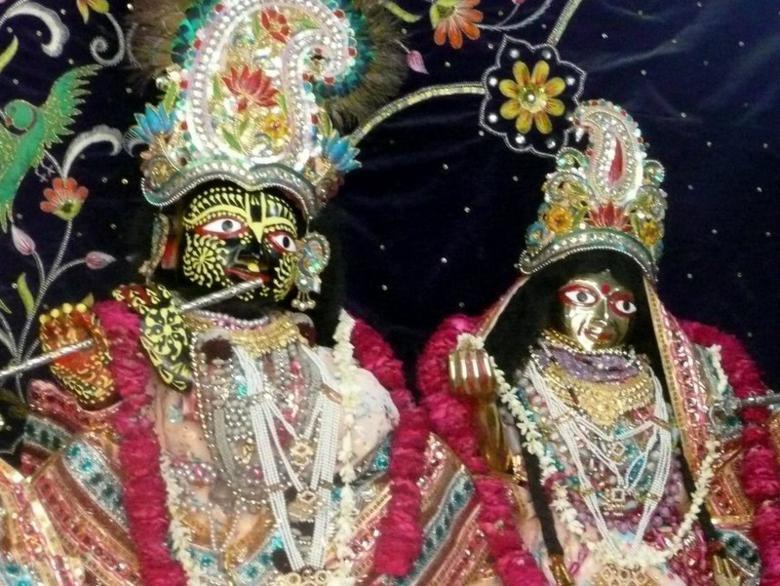
Jayadeva died roughly three centuries before Sri Chaitanya Mahaprabhu was born, yet Sri Chaitanya-charitamrita returns to his poem more often than to the work of almost any other pre-Chaitanya writer.
Read and Sung, Day and Night #
Chaitanya-charitamrita's Madhya-lila describes how Mahaprabhu spent His time at Puri in the company of two of His closest associates, Svarupa Damodara Goswami and Ramananda Raya. Together, it says, they passed their days and nights reading the poetry of Chandidasa and Vidyapati, hearing verses from Ramananda Raya's own drama Jagannatha-vallabha-nataka, and singing from Bilvamangala Thakura's Krishna-karnamrita and Jayadeva's Gita Govinda, "with great pleasure." A later chapter of Antya-lila repeats the same short list of favorite books. This time it notes that Krishna-karnamrita, Vidyapati's poetry, and the Gita Govinda were what Mahaprabhu "especially liked to hear." Again and again, Jayadeva's book appears together with Bilvamangala Thakura's. The two poet-saints lived generations before Mahaprabhu. Their books are very different, but in Mahaprabhu's hands both became ways of tasting the same ecstatic love of Krishna.
Ramananda Raya's Recitations #
Chaitanya-charitamrita calls one period of Mahaprabhu's life His Gambhira-lila. These were the years of His deepest separation from Krishna, which He spent mostly in seclusion at Puri. It was Ramananda Raya who could meet Him in that mood. Antya-lila records that Ramananda Raya would recite verses from Vidyapati, Chandidasa, and, above all, the Gita Govinda. He chose each verse to match whatever wave of feeling was passing through Mahaprabhu at that moment. One example is recorded in detail. Antya-lila quotes directly a Gita Govinda verse in which Radha remembers Krishna's playful teasing during the rasa dance. It notes that this exact verse is sung by Srimati Radharani within the poem. So, as the tradition understands it, when this verse was recited to Mahaprabhu, He was hearing Radharani's actual words. The tradition accepts Mahaprabhu as Krishna in the mood of Radharani, so through Jayadeva's Sanskrit, Her words were returning to Her.
Later still, in the final chapters of Antya-lila, Chaitanya-charitamrita describes Mahaprabhu reading verses from several books together. They were Jayadeva's Gita Govinda, Srimad-Bhagavatam, Ramananda Raya's own drama, and Bilvamangala Thakura's Krishna-karnamrita. Each time, He was overwhelmed by whatever feeling that particular verse carried.
Ranked Among India's Great Poets #
Chaitanya-charitamrita does not only quote Jayadeva devotionally. It also places him, quite deliberately, among Sanskrit literature's most celebrated names. In a passage weighing the poetic gifts of Rupa Gosvami against the wider Sanskrit tradition, Krishnadasa Kaviraja Goswami names Bhavabhuti, Jayadeva, and Kalidasa together:
"Even in the poetic compositions of such great poets as Bhavabhuti, Jayadeva and Kalidasa there are many examples of faults."
The comparison here is with Rupa Gosvami's own verses, which are presented as free of any such flaw. Kalidasa is generally regarded as the greatest poet of classical Sanskrit. Simply being named in that company, alongside Kalidasa, shows how highly the Gaudiya Vaishnava tradition valued Jayadeva's skill as a poet, apart from the devotion in his verses.
A Caution From Krishnadasa Kaviraja Goswami #
Krishnadasa Kaviraja Goswami, the author of Chaitanya-charitamrita, does not present any of this as material for casual reading. In his purport to these passages, Srila Prabhupada draws on Srila Bhaktisiddhanta Sarasvati Thakura. He explains that such feelings of separation are meant only for advanced souls like Ramananda Raya and Svarupa Damodara. They are not for ordinary devotees to imitate. This warning is important. Jayadeva's verses describe Krishna's most confidential pastimes. Gaudiya Vaishnava tradition has always insisted that they are scripture. Reading them as anything less, as only romantic poetry, badly misses the point.
What Srila Prabhupada Said #
Srila Prabhupada returned to Jayadeva more than once outside his written purports. In a 1973 conversation in London, he spoke about the popular hymn Keshava dhrita mina-sharira jaya jagadisha hare, which George Harrison was setting to music. He identified it as Jayadeva's own Dasavatara-stotra and quoted its opening verse, pralaya-payodhi-jale, from memory. In a 1969 conversation with the poet Allen Ginsberg, he named Jayadeva alongside Vidyapati and Chandidasa as one of Vaishnavism's great poets. And in a 1974 lecture on Bhagavad-gita 4.11, he quoted Jayadeva's own verse on the Buddha incarnation. He used it to explain why the Lord once taught nonviolence, even though this seemed to go against Vedic sacrifice. In this way he used Jayadeva's poetry not only for its devotional flavor, but also to make a real theological point.
Scriptural evidence for this chapter (5)
Quoted in the text above:
- Adi 16.101 Sri Chaitanya-caritamrita
Further verses:
caṇḍīdāsa, vidyāpati, rāyera nāṭaka-gīti,
karṇāmṛta, śrī-gīta-govinda
svarūpa-rāmānanda-sane, mahāprabhu rātri-dine,
gāya, śune — parama ānanda
Word for word
caṇḍīdāsa: the poet Caṇḍīdāsa; vidyāpati: the poet Vidyāpati; rāyera nāṭaka-gīti: songs from the drama of Rāya Rāmānanda; karṇāmṛta: the Kṛṣṇa-karṇāmṛta of Bilvamaṅgala Ṭhākura; śrī-gīta-govinda: the Gīta-govinda of Jayadeva Gosvāmī; svarūpa-rāmānanda-sane: in the company of Svarūpa Dāmodara and Rāya Rāmānanda; mahāprabhu: Lord Caitanya Mahāprabhu; rātri-dine: day and night; gāya: sings; śune: hears; parama ānanda: with great pleasure.
He also passed His time reading the books and singing the songs of Chandidasa and Vidyapati, and listening to quotations from the Jagannatha-vallabha-nataka, Krishna-karnamrita and Gita-govinda. Thus in the association of Svarupa Damodara and Raya Ramananda, Sri Chaitanya Mahaprabhu passed His days and nights chanting and hearing with great pleasure.
Shows the Gita Govinda as one of a small handful of books Mahaprabhu returned to daily with His closest associates at Puri.
karṇāmṛta, vidyāpati, śrī-gīta-govinda
ihāra śloka-gīte prabhura karāya ānanda
Word for word
karṇāmṛta: the book Kṛṣṇa-karṇāmṛta; vidyāpati: the author Vidyāpati; śrī-gīta-govinda: the book Śrī Gīta-govinda, by Jayadeva Gosvāmī; ihāra: of these; śloka-gīte: verses and songs; prabhura: for Śrī Caitanya Mahāprabhu; karāya: create; ānanda: happiness.
The Lord especially liked to hear Bilvamangala Thakura's Krishna-karnamrita, the poetry of Vidyapati, and Sri Gita-govinda, by Jayadeva Gosvami. Sri Chaitanya Mahaprabhu felt great pleasure in His heart when His associates chanted verses and sang songs from these books.
Names the Gita Govinda as one of Mahaprabhu's three most-loved devotional books during His Antya-lila years at Puri.
vidyāpati, caṇḍīdāsa, śrī-gīta-govinda
bhāvānurūpa śloka paḍena rāya-rāmānanda
Word for word
vidyāpati: the author Vidyāpati; caṇḍīdāsa: the author Caṇḍīdāsa; śrī-gīta-govinda: the famous book by Jayadeva Gosvāmī; bhāva-anurūpa: according to the ecstatic emotion; śloka: verses; paḍena: recites; rāya-rāmānanda: Rāmānanda Rāya.
To complement the ecstasy of Sri Chaitanya Mahaprabhu, Ramananda Raya would quote verses from the books of Vidyapati and Chandidasa, and especially from the Gita-govinda, by Jayadeva Gosvami.
Describes Ramananda Raya's role reciting Gita Govinda verses to match Mahaprabhu's changing ecstatic moods during His Gambhira-lila at Puri.
yei yei śloka jayadeva, bhāgavate
rāyera nāṭake, yei āra karṇāmṛte
sei sei bhāve śloka kariyā paṭhane
sei sei bhāvāveśe karena āsvādane
Word for word
yei yei: whatever; śloka: verses; jayadeva: Jayadeva Gosvāmī; bhāgavate: in Śrīmad-Bhāgavatam; rāyera nāṭake: in the drama composed by Rāmānanda Rāya; karṇāmṛte: in Kṛṣṇa-karṇāmṛta, by Bilvamaṅgala Ṭhākura; sei sei bhāve: in those ecstatic emotions; śloka kariyā paṭhane: reading regularly; sei sei bhāva-āveśe: in that ecstatic love; karena āsvādane: He tastes.
When Sri Chaitanya Mahaprabhu read the verses of Jayadeva's Gita-govinda, of Srimad-Bhagavatam, of Ramananda Raya's drama Jagannatha-vallabha-nataka, and of Bilvamangala Thakura's Krishna-karnamrita, He was overwhelmed by the various ecstatic emotions of those verses.
A late-life episode showing Jayadeva's Gita Govinda still central to Mahaprabhu's devotional reading, grouped with Bilvamangala Thakura's Krishna-karnamrita.
Chapter 6
Legacy in Vaishnava Devotion and Art
From nightly worship in the Jagannatha temple to Odissi dance, Rajasthani and Pahari miniatures, and the Guru Granth Sahib
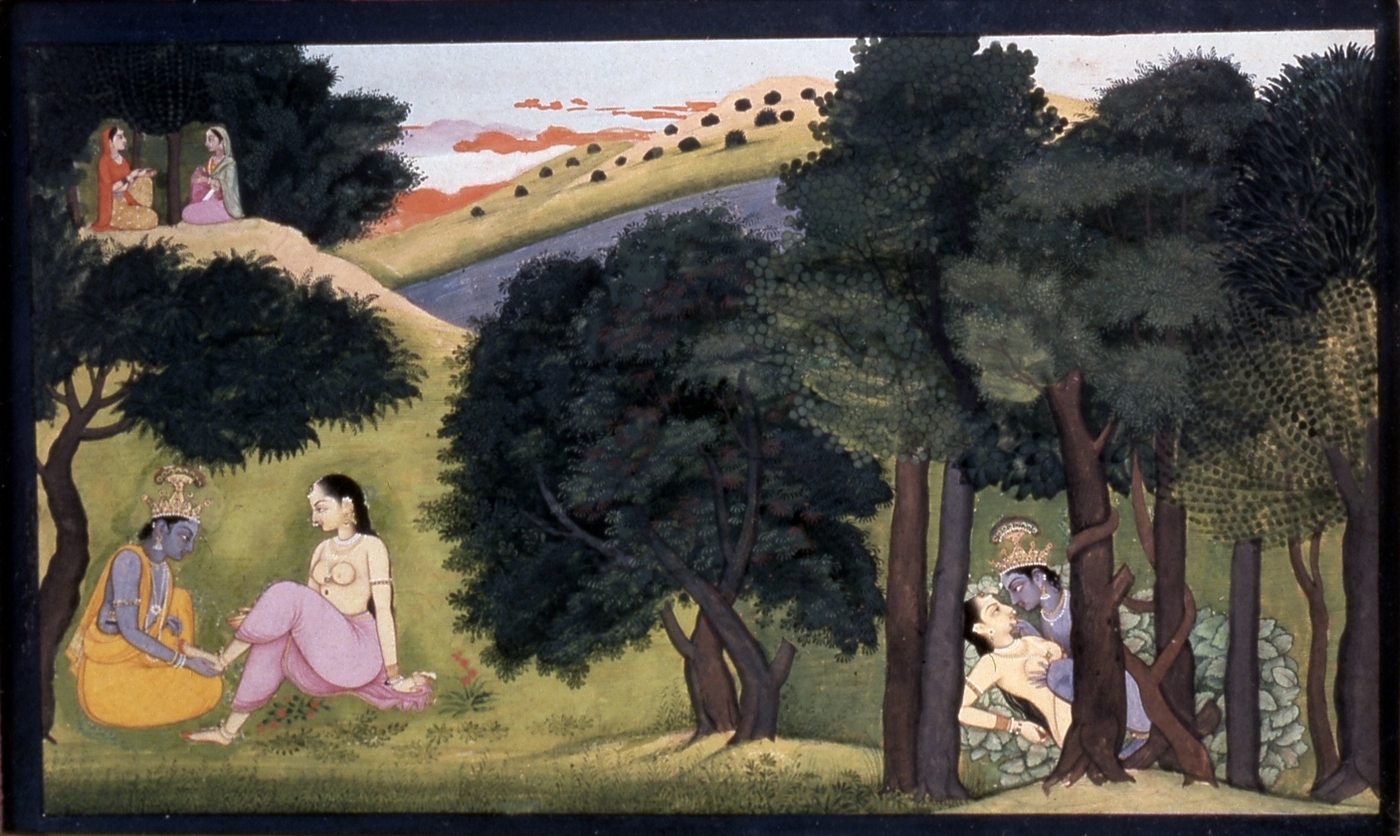
Very few Sanskrit poems written by one author have shaped as much devotional art, music, and worship as the Gita Govinda. Yet very little is recorded about the man who wrote it. Eight centuries after Jayadeva's lifetime, its reach is still visible, and still growing.
Sung Every Night in Puri #
At the Jagannatha temple in Puri, the Gita Govinda is sung as part of the nightly Badasinghara ritual. This is the Deities' final dressing before rest. Temple records describe this tradition as unbroken since a time within Jayadeva's own lifetime. For centuries it was performed by the temple's maharis. They were devadasi dancers trained specially to perform the ashtapadis in their assigned Odissi ragas and talas. The tradition continues today through Odissi musicians, even though the mahari lineage itself ended under British-era policy. During this same nightly ritual, the Deities are dressed in a special ikat-woven cloth called the Kenduli Khandua. Lines of the Gita Govinda are woven directly into it. This weaving tradition belongs to the Kenduli region and is just as old as the temple ritual it serves.
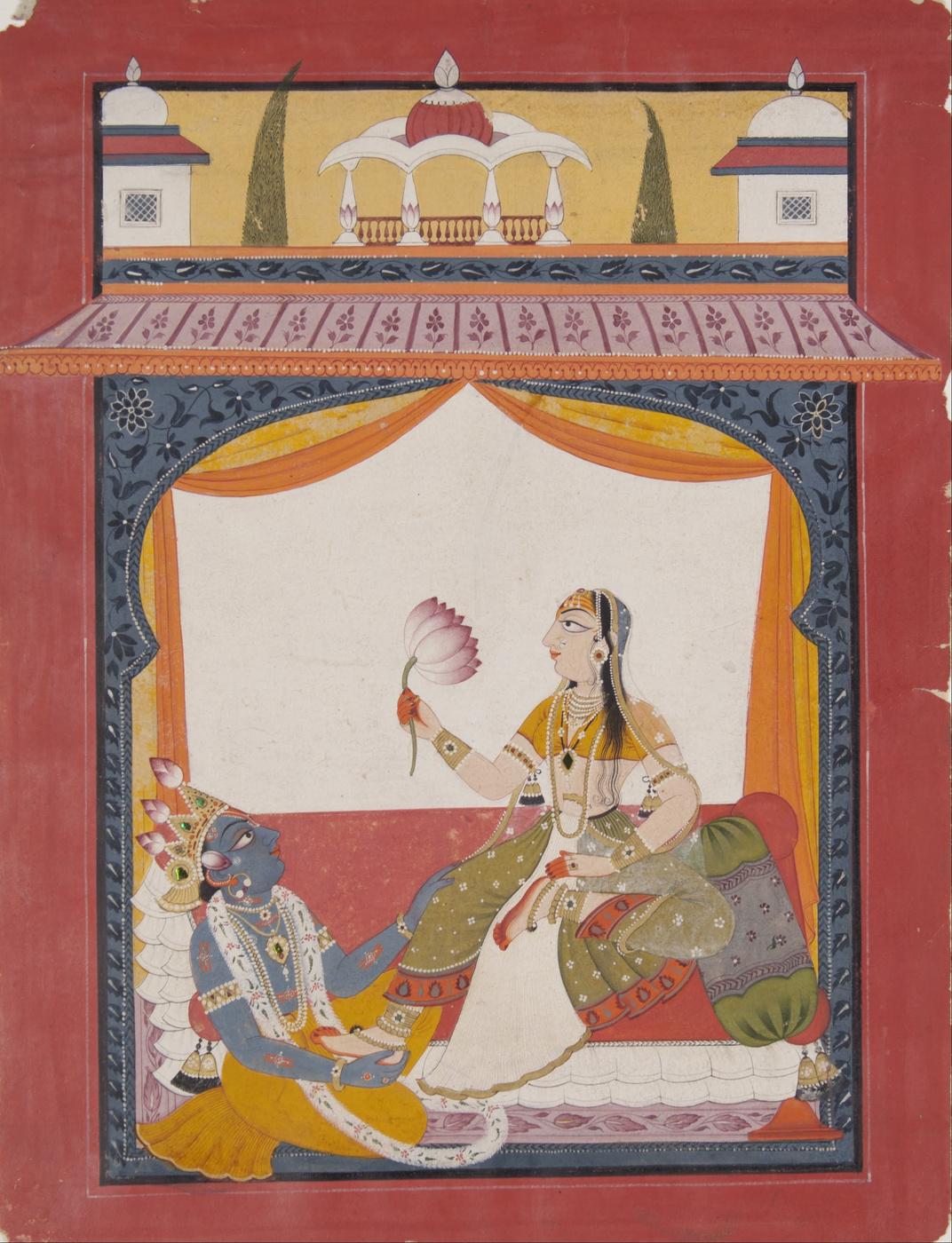
The poem was not sung only in Puri. Raghunatha Bhatta Gosvami was one of the Six Goswamis of Vrindavana, known for the sweetness of his voice. Sri Chaitanya-charitamrita records that he sang Gita Govinda verses in the gujjari raga so beautifully that the song "attracted the mind of the entire world," which gives a vivid picture of how far Jayadeva's ashtapadis had already travelled. It also shows how naturally later Gaudiya Vaishnavas made them part of their own devotional life.
An Ocean of Manuscripts and Miniatures #
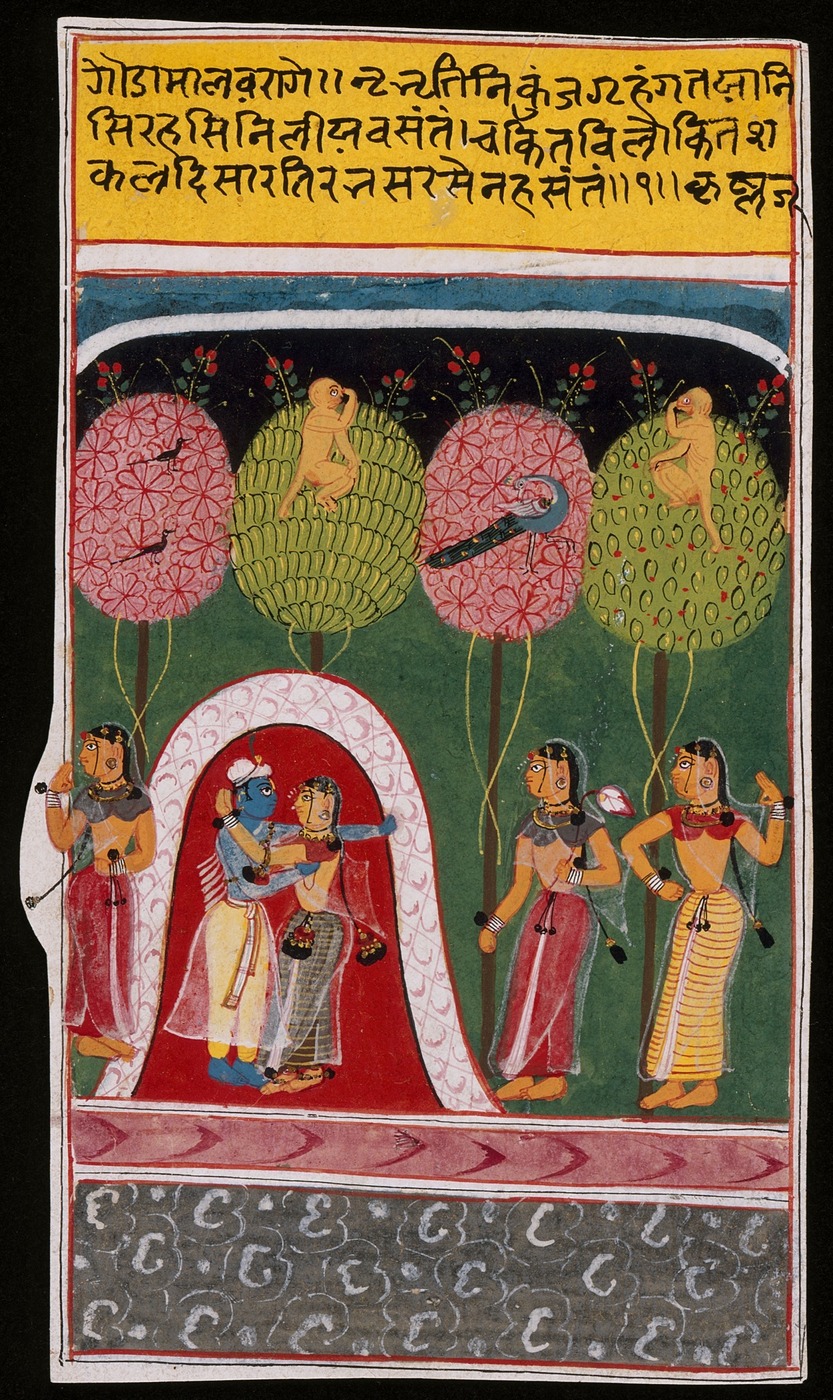
The Odisha State Museum in Bhubaneswar alone preserves around two hundred and ten manuscripts of the Gita Govinda. They are made of palm leaf, ivory, bamboo leaf, and paper. Their shapes range from ordinary pages to a garland of small round leaf-pieces, meant to be worn, or memorized while travelling. Beyond Odisha, the poem became one of the most illustrated texts in the whole history of Indian painting. Miniature workshops across Rajasthan and the Punjab Hills each produced their own painted series of Gita Govinda scenes. Among them were the Mewar, Basohli, Guler, Kangra, Mankot, Lambagraon, and Tehri Garhwal schools. Many of these paintings survive today in museum collections from Mumbai and New Delhi to London, Paris, and across the United States.
Beyond Bengal and Odisha #
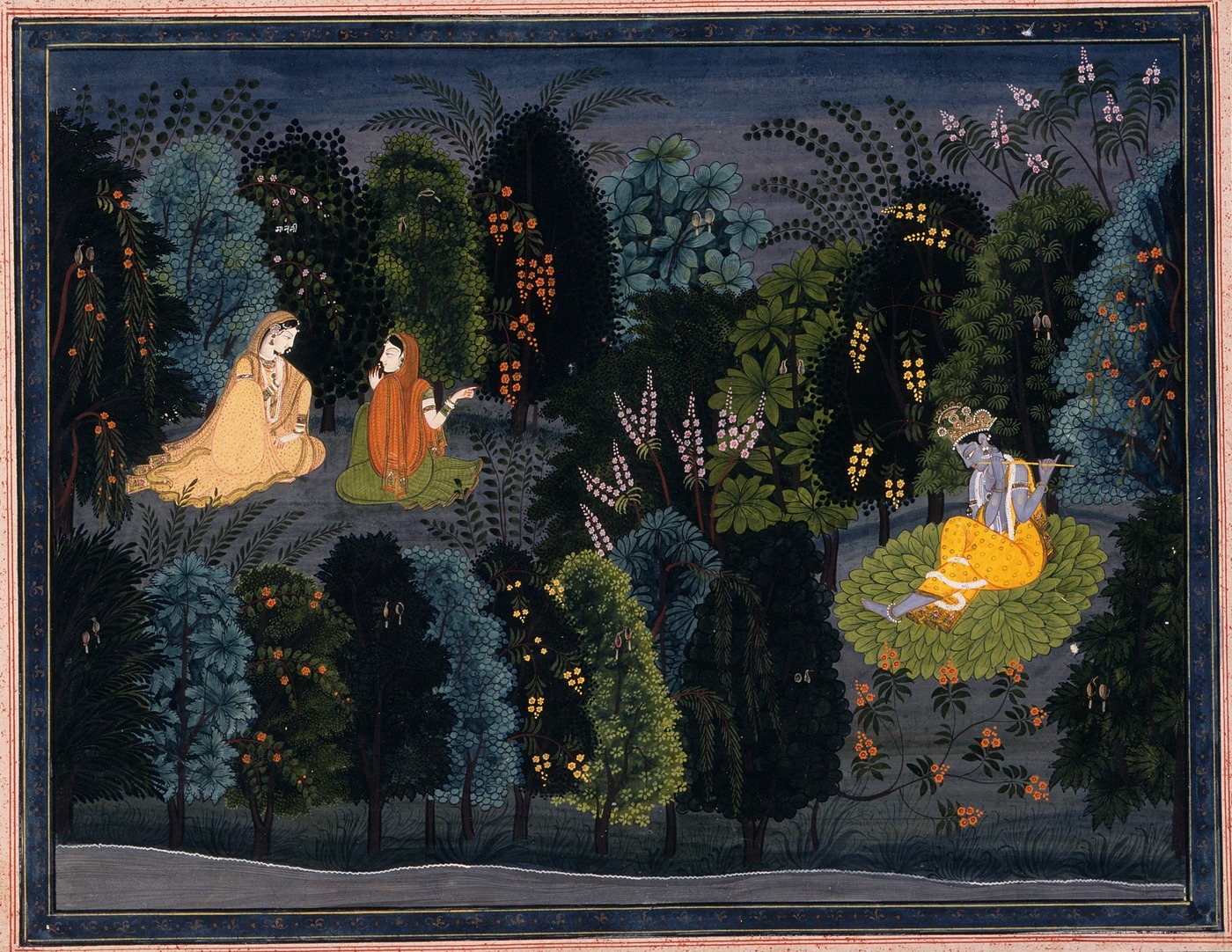
The poem's influence reached beyond Vaishnavism itself. Two of Jayadeva's hymns were included in the Guru Granth Sahib, the central scripture of Sikhism. This makes him the earliest author in it whose date is known. Tradition also says that Guru Nanak came to know the Gita Govinda during his own visit to Jagannatha Puri, and was moved by it. In Kerala, temple musicians adapted the ashtapadis into a devotional musical form called sopana sangeetham, sung on the steps leading to the deity. Within Gaudiya Vaishnavism itself, the poem gave rise to its own line of formal commentaries. These include the Sri-Gita-Govinda-Vyakhyana of Prabodhananda Sarasvati and the Balabodhini-tika of Chaitanyadasa, also known as Sri Pujari Goswami. This line of commentary continues into recent decades with Bhaktivedanta Narayana Goswami's own Balabodhini-prakasa.
Carried Into Europe #
The Gita Govinda's reach eventually stretched well beyond South Asia. Sir William Jones, a British Orientalist scholar who studied the languages and books of Asia, produced the first English translation in 1792. In it he described Kenduli Sasan in Odisha as the poet's widely accepted birthplace. That translation was later put into German, and the poet Goethe himself is known to have read this German version. The translation helped to feed a wave of interest in Indian devotional poetry in Europe during the Romantic period. Later English translations kept introducing new generations of readers outside India to the poem. These include Edwin Arnold's Indian Song of Songs and, a century later, Barbara Stoler Miller's Love Song of the Dark Lord. Meanwhile, in one Odishan temple, the poem is still sung every night in its original Sanskrit.
Three Songs Still Sung Today #
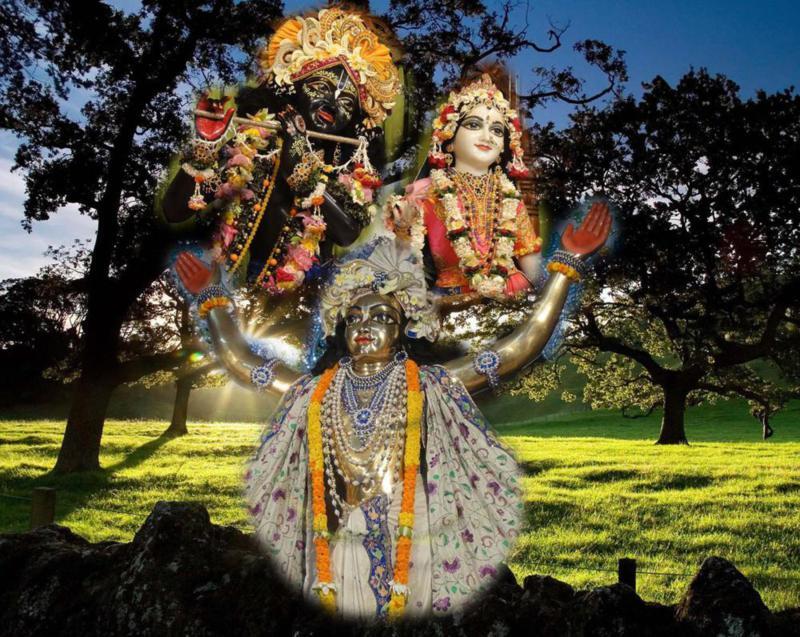
The Vaishnava Song Book preserves several compositions credited to Jayadeva Goswami, including these three. Pralaya Payodhi Jale is the opening hymn of his Dasavatara-stotra. It praises Krishna's ten incarnations, beginning with the fish who saved the Vedas from a cosmic flood. It is the same verse that Srila Prabhupada quoted from memory for George Harrison in 1973. It is also the verse that Srila Prabhupada's own purport to Srimad-Bhagavatam 5.18.25 names as Jayadeva's:
"Srila Jayadeva Gosvami sings: pralayo payodhi-jale dhrtavan asi vedam..."
Srita Kamala comes from the poem's own opening prayer, a Vishnu-stuti verse. Its refrain, jaya jayadeva hare, glorifies Krishna and at the same time plays on the poet's own name. He Govinda He Gopala Kesava Madhava has a different, simpler refrain that calls out Krishna's names. That style of refrain has long been linked with the ashtapadi singing tradition that grew up around Jayadeva's work. Jayadeva came from a village whose identity is disputed. Eight centuries after he first set these songs to music, they are still sung in Puri, and in temples very far from it.
Scriptural evidence for this chapter (2)
gujjarī-rāgiṇī lañā sumadhura-svare
‘gīta-govinda’-pada gāya jaga-mana hare
Word for word
gujjarī-rāgiṇī: the gujjarī mode of singing; lañā: accompanied by; sumadhura-svare: in a very sweet voice; gīta-govinda-pada: verses of the Gīta-govinda; gāya: sings; jaga-mana: the mind of the entire world; hare: attracts.
He sang a gujjari tune in a very sweet voice, and because the subject was Jayadeva Gosvami's Gita-govinda, the song attracted the attention of the entire world.
Describes Raghunatha Bhatta Gosvami singing Gita Govinda verses, showing the poem already woven into the devotional life of the Six Goswamis of Vrindavana.
pralayo payodhi-jale dhṛtavān asi vedaṁ
vihita-vahitra-caritram akhedam
keśava dhṛta-mīna-śarīra jaya jagad-īśa hare
"O Kesava! O Lord of the universe! O Lord Hari, who have taken the form of a fish! All glories to You! You easily assumed the form of a fish in order to protect the Vedas, which had been lost in the deep waters of the pralaya, and thus performed a wonderful and glorious act."
From the purport: Purport excerpt: "Srila Jayadeva Gosvami sings: pralayo payodhi-jale dhṛtavān asi vedaṁ..."
Srila Prabhupada's own purport identifying this verse, sung on this temple's own song list as Pralaya Payodhi Jale, as Jayadeva's, from the Dasavatara-stotra opening the Gita Govinda.
Closing
Songs in the Vaishnava Song Book #
The Vaishnava Song Book carries several songs attributed to Srila Jayadeva Goswami. See the full author page here.
