A Question His Own Family Would Not Answer #
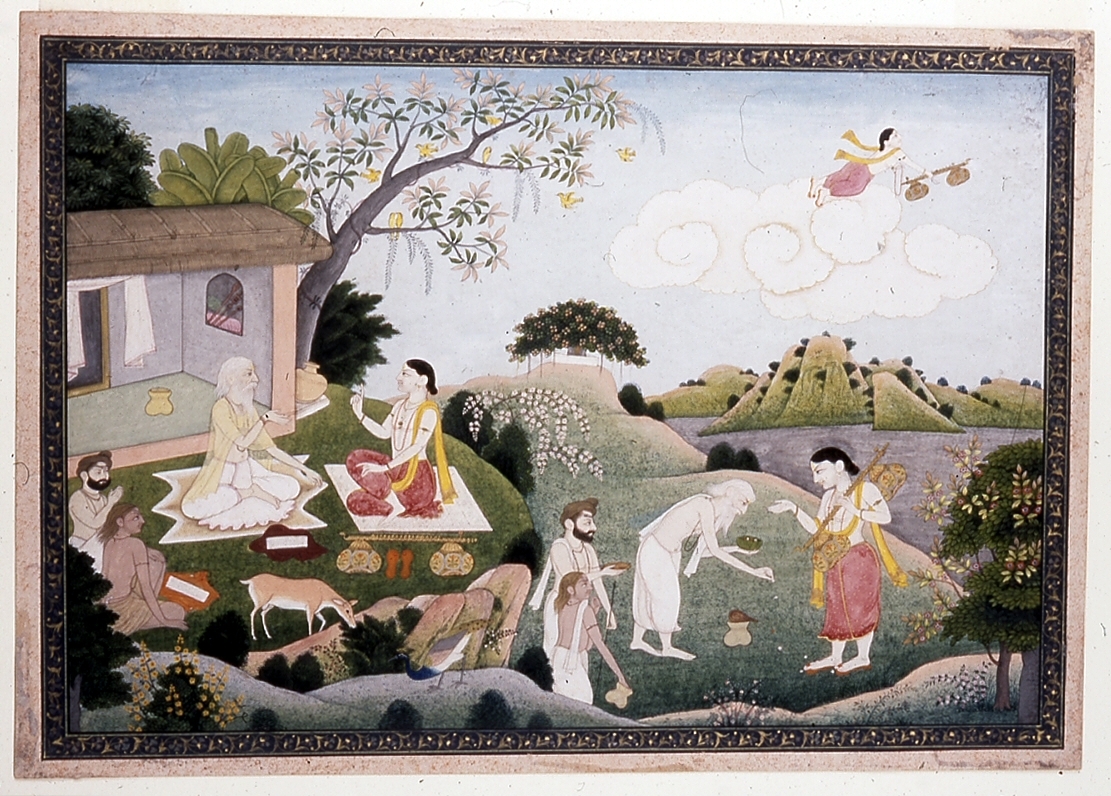
Vaishnava tradition holds that the sage later known as Valmiki began his life as a highway robber named Ratnakara. He fed his family by robbing travellers passing through the forest. This is recorded, among other places, in the retellings of how the Ramayana itself came to be written. One day he tried to rob Narada Muni. Narada did not resist. He offered to give him everything he wanted, on one condition. Go home, he said, and ask your family a single question: are they willing to share the sin of the crimes that feed them, the way they share the food and money those crimes buy? Trusting they would say yes, Ratnakara went home and asked.
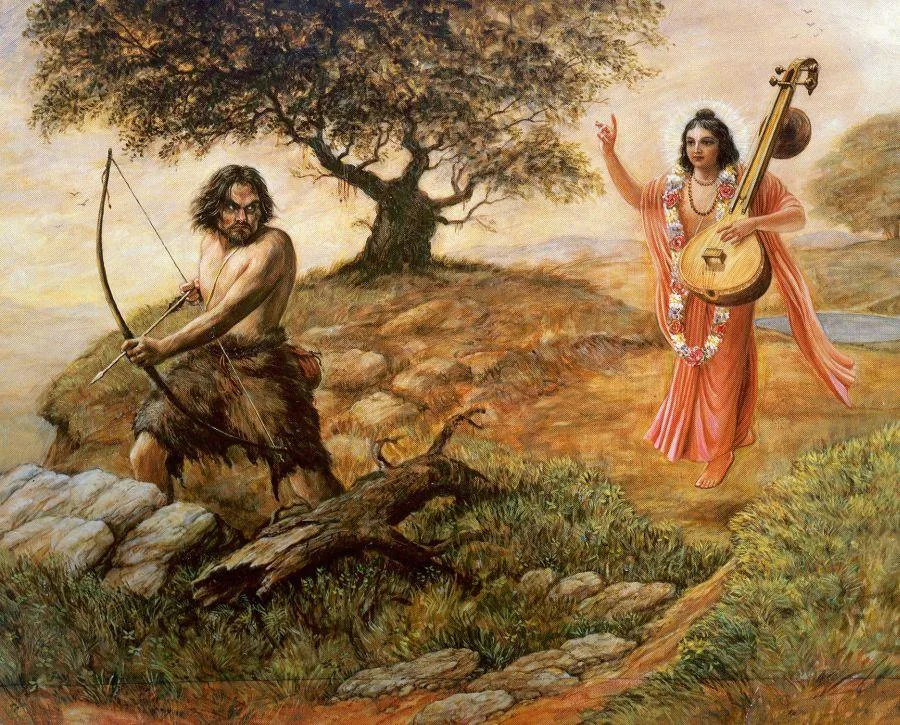
They refused outright. His wife and children told him they were glad to eat what he brought them, but the sin of getting it was his alone to carry. They wanted no part of it. Ratnakara returned to Narada in disgust. This refusal, more than any sermon, broke his attachment to the life he had been living.
The Word Hidden Inside a Name #
Narada then told him to give up that life and gave him a word to repeat instead: the word *mara*, meaning "death." It was meant to shock him into seeing how short the life he had spent robbing others really was. Ratnakara sat down and repeated it without pause, mara, mara, mara. He did this for so long that, without realising it, he was also repeating the reversed syllables of Rama's own name. He remained in that meditation so long that an anthill, a *valmika*, grew up around his motionless body. When he finally came out of it, transformed, the name Valmiki was the one that stayed with him.
Prabhupada on Valmiki #
Srila Prabhupada returned to this story often. He did so because it shows something he wanted every disciple to understand about how devotional association really works. A single meeting with a genuine devotee, even a meeting the person did not want, can reform even a lifelong criminal. In a 1966 lecture on Chaitanya-charitamrita he held Valmiki up as living proof that Narada's mercy reaches even a dacoit. Two years later, in Montreal, a student asked him how Krishna consciousness first came to this earth. In his answer he named Valmiki together with Dhruva Maharaja, Prahlada Maharaja, and Vyasadeva. These were four completely different men, in four completely different situations, delivered by the same guru.
Two Sages, Two Separate Gifts #
Vaishnava tradition gives two different sages two different roles in this story, and it is important not to mix them up. Narada Muni changed Ratnakara's character. He is the one who turned a robber's heart around and gave him a mantra to meditate on. The actual order to write the Ramayana itself came later, and from a different source entirely. Tradition holds that Lord Brahma personally visited the now-purified sage in his forest ashrama and instructed him to compose Lord Ramachandra's history. Brahma promised that everything he needed to know about Rama, Sita, Lakshmana, and every other figure in that history would become known to him, even though he had not seen it with his own eyes. Narada made Valmiki a sage; Brahma made him a poet. Through these two sages, Vedic literature gained one of its two great itihasas.
Valmiki went on to compose the Ramayana itself, twenty-four thousand Sanskrit verses telling the life of Lord Ramachandra. Later Gaudiya Vaishnavas study this work for its own devotional value. According to this tradition's own account, the Ramayana exists only because a forest robber once tried to rob Narada Muni.
