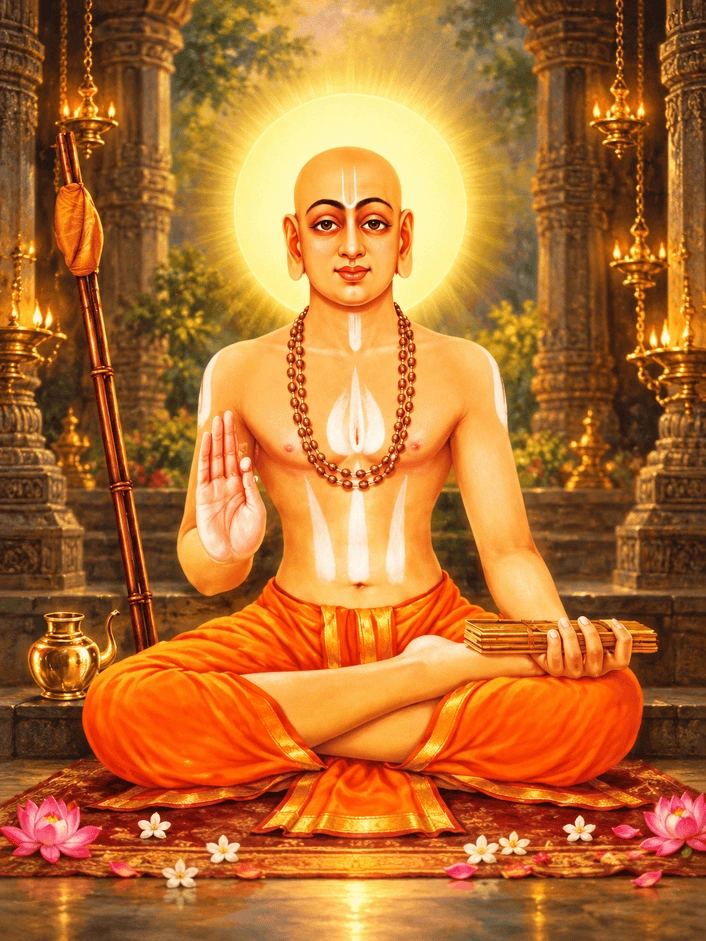
Srila Vyasadeva
Compiler of the Vedas, Author of Srimad-Bhagavatam
Also known as Krishna-Dvaipayana, Veda-Vyasa, Badarayana, Vedavyasa
“I am feeling incomplete, though I myself am fully equipped with everything required by the Vedas. This may be because I did not specifically point out the devotional service of the Lord, which is dear both to perfect beings and to the infallible Lord.”
Vyasadeva's own self-reflection at Shamyaprasa, Srimad-Bhagavatam 1.4.30-31
Śrīla Vyāsadeva compiled the four Vedas, the eighteen Purāṇas, the Mahābhārata, and the Vedānta-sūtra. Later, as the final and greatest work of his long life, he composed Śrīmad-Bhāgavatam. The Gauḍīya Vaiṣṇava tradition does not see these works simply as the achievement of an unusually talented man. Śrīmad-Bhāgavatam itself describes Vyāsadeva as an incarnation of Nārāyaṇa, who appeared at the beginning of Kali-yuga to arrange Vedic knowledge in a form that ordinary people could still understand and receive. In the Brahma-Madhva-Gauḍīya sampradāya, he stands third in the disciplic succession, after Lord Brahmā and Nārada Muni, and before Madhvācārya and the later ācāryas.
| Detail | Description |
|---|---|
| Also known as | Krishna-Dvaipayana, Veda-Vyasa, Badarayana |
| Born | On a river island, traditionally at the junction of Dvapara-yuga and Kali-yuga; exact site disputed |
| Parents | The sage Parashara and Satyavati, later queen of King Shantanu |
| Guru | Narada Muni, who instructed him to compile Srimad-Bhagavatam |
| Chief works | The four Vedas (as divided), the Mahabharata, eighteen Puranas including Srimad-Bhagavatam, the Vedanta-sutra |
| Ashrama | Shamyaprasa, on the bank of the river Sarasvati |
| Position in parampara | Third acharya of the Brahma-Madhva-Gaudiya sampradaya, after Lord Brahma and Narada Muni |
At a Glance
- Born on a river island to the sage Parāśara and Satyavatī, the daughter of a fisherman. Śrīmad-Bhāgavatam describes him as the seventeenth incarnation of Godhead.
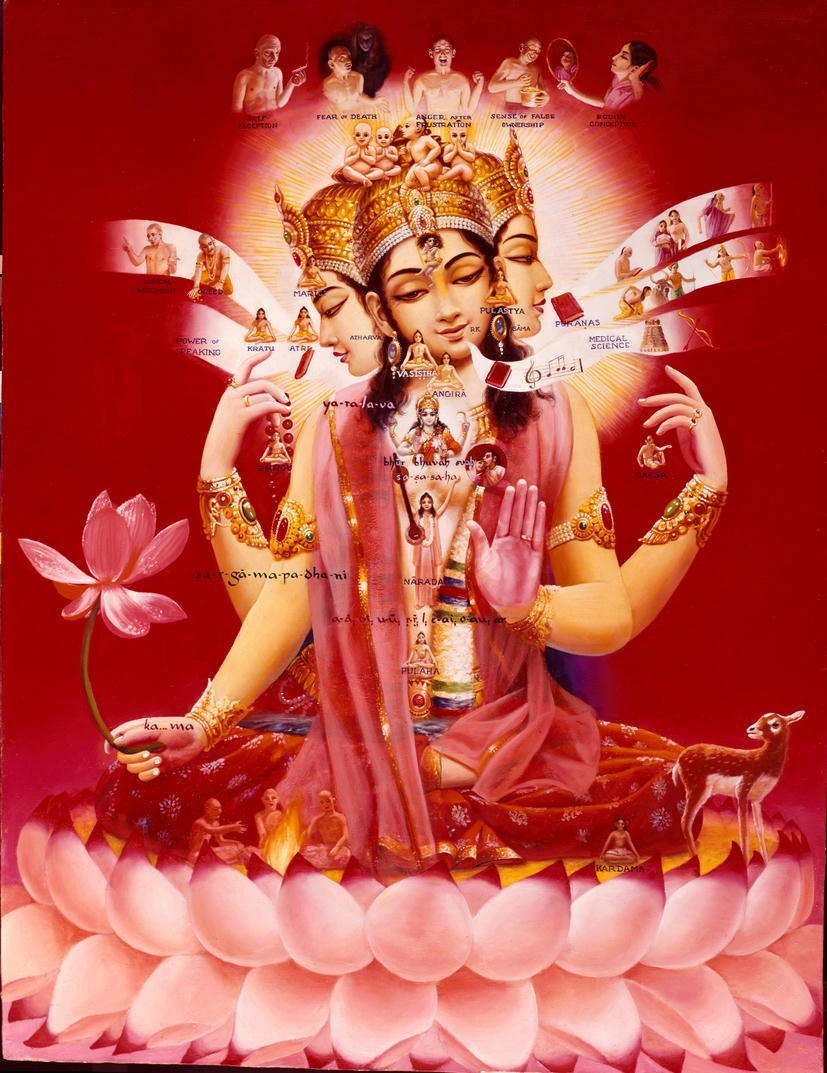
- Divided the original Veda into four parts because people in Kali-yuga would have less memory and shorter lives. He gave each part to a different disciple.
- Composed the Mahābhārata and the eighteen Purāṇas so that more people could understand Vedic knowledge.
- Wrote the Vedānta-sūtra, which gives the main teachings of Vedānta in short statements. Later ācāryas, including Madhvācārya, wrote commentaries on it.
- Even after writing so many books, he was not satisfied. His guru, Nārada Muni, told him to directly describe the Supreme Lord and His pastimes.
- Taught Śrīmad-Bhāgavatam to his son, Śukadeva Gosvāmī. Śukadeva later spoke it to King Parīkṣit on the bank of the Ganges.
- Vyāsa-pūjā is named after him. On this day, disciples honor their spiritual master. This tradition is still followed in Gauḍīya Vaiṣṇavism and ISKCON.
A Sage Born on a River Island #
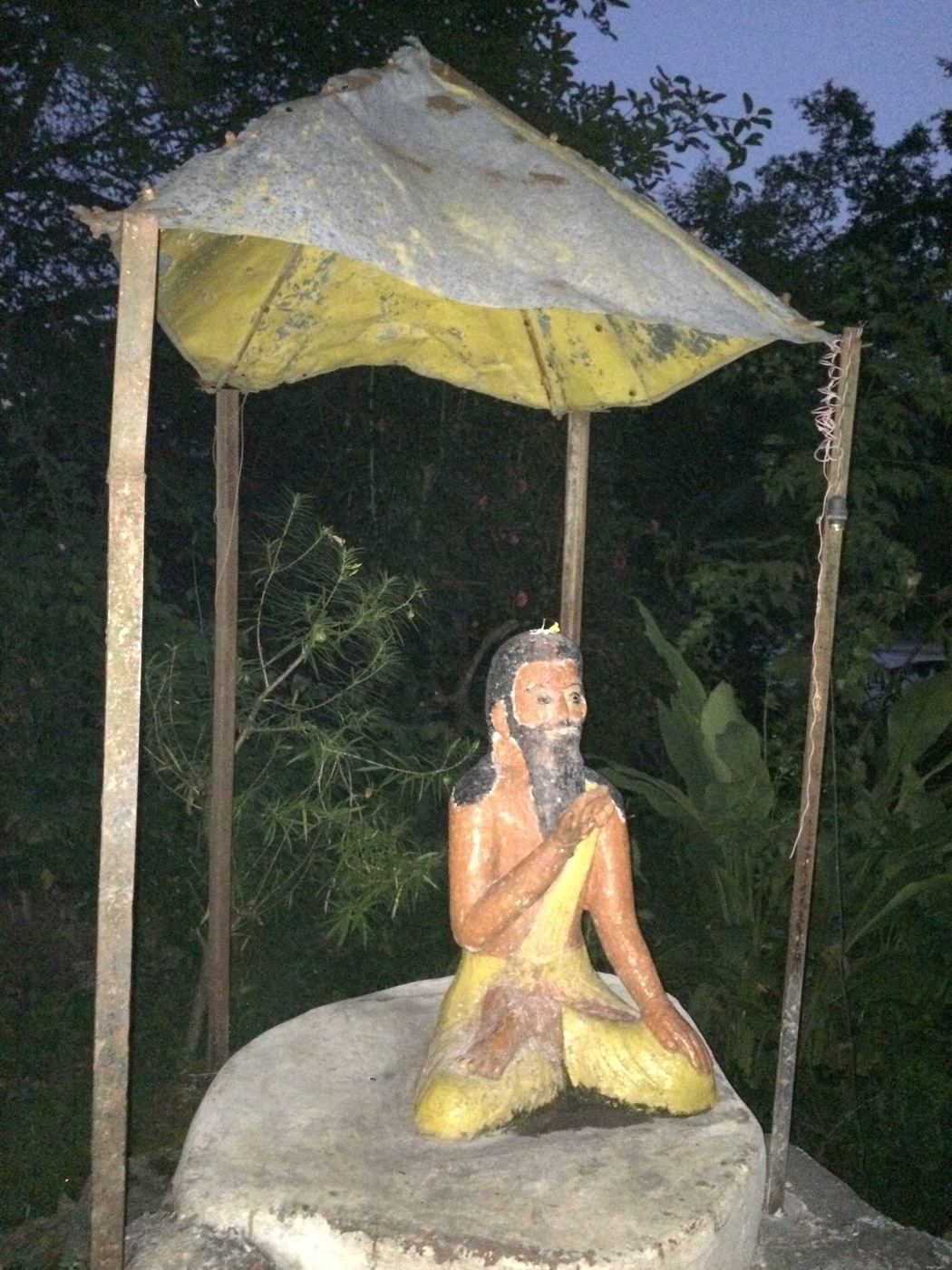
Vyāsadeva was born to the sage Parāśara and Satyavatī, the adopted daughter of a fisherman. He was born on an island in a river. This was before Satyavatī married King Śantanu of the Kuru dynasty. He was called Kṛṣṇa because of his dark complexion and Dvaipāyana, meaning "island-born," because he was born on an island. Śrīmad-Bhāgavatam does not describe his birth as ordinary. It names him as the seventeenth incarnation of Godhead: "Thereafter, in the seventeenth incarnation of Godhead, Śrī Vyāsadeva appeared in the womb of Satyavatī through Parāśara Muni, and he divided the one Veda into several branches and subbranches, seeing that the people in general were less intelligent" (Śrīmad-Bhāgavatam 1.3.21). The exact place of his birth is not certain. Some traditions say he was born on an island in the Yamunā, while others point to a cave near present-day Damauli in Nepal. Both accounts are mentioned here without choosing one. The fuller story, including how Satyavatī met Parāśara, is told on Birth of Kṛṣṇa-Dvaipāyana.
Editor of the Vedas for a Failing Age #
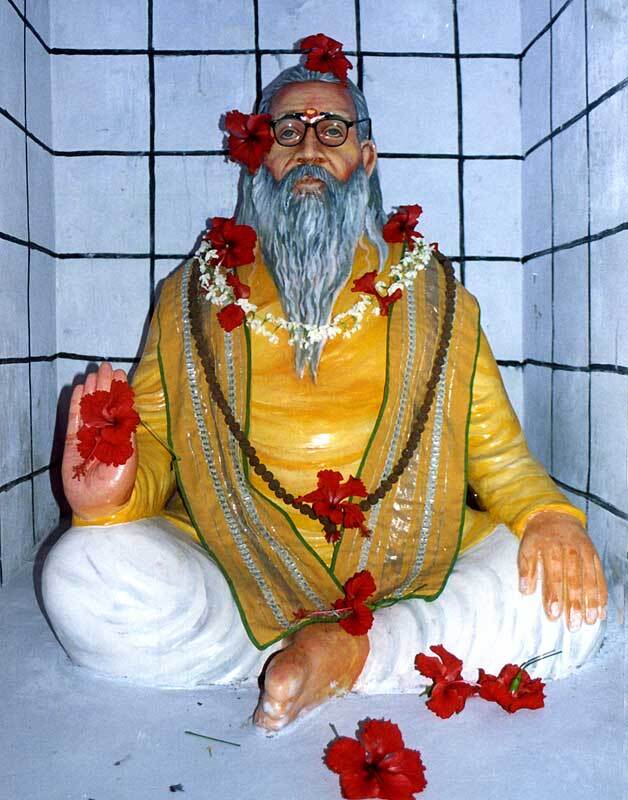
Vyāsadeva's first major work was to divide the Vedic knowledge, which until then had been one. He understood that people in Kali-yuga would have shorter lives, weaker memories, and less discipline than people in earlier ages. Therefore, he divided the Veda into four parts: Ṛg, Yajur, Sāma, and Atharva. He gave each Veda to a different disciple to preserve and teach. Paila received the Ṛg Veda, Jaimini the Sāma Veda, Vaiśampāyana the Yajur Veda, and Sumantu the Atharva Veda. A fifth disciple, Romaharṣaṇa, received the historical works and Purāṇas, which are sometimes called the "fifth Veda." Each of these disciples then taught further disciples. In this way, Vedic knowledge was passed down through many branches of teachers and disciples. The full account, along with Śrīmad-Bhāgavatam's explanation of why this division was necessary, is given on Dividing the Single Veda into Four.
The Mahabharata and the Eighteen Puranas #
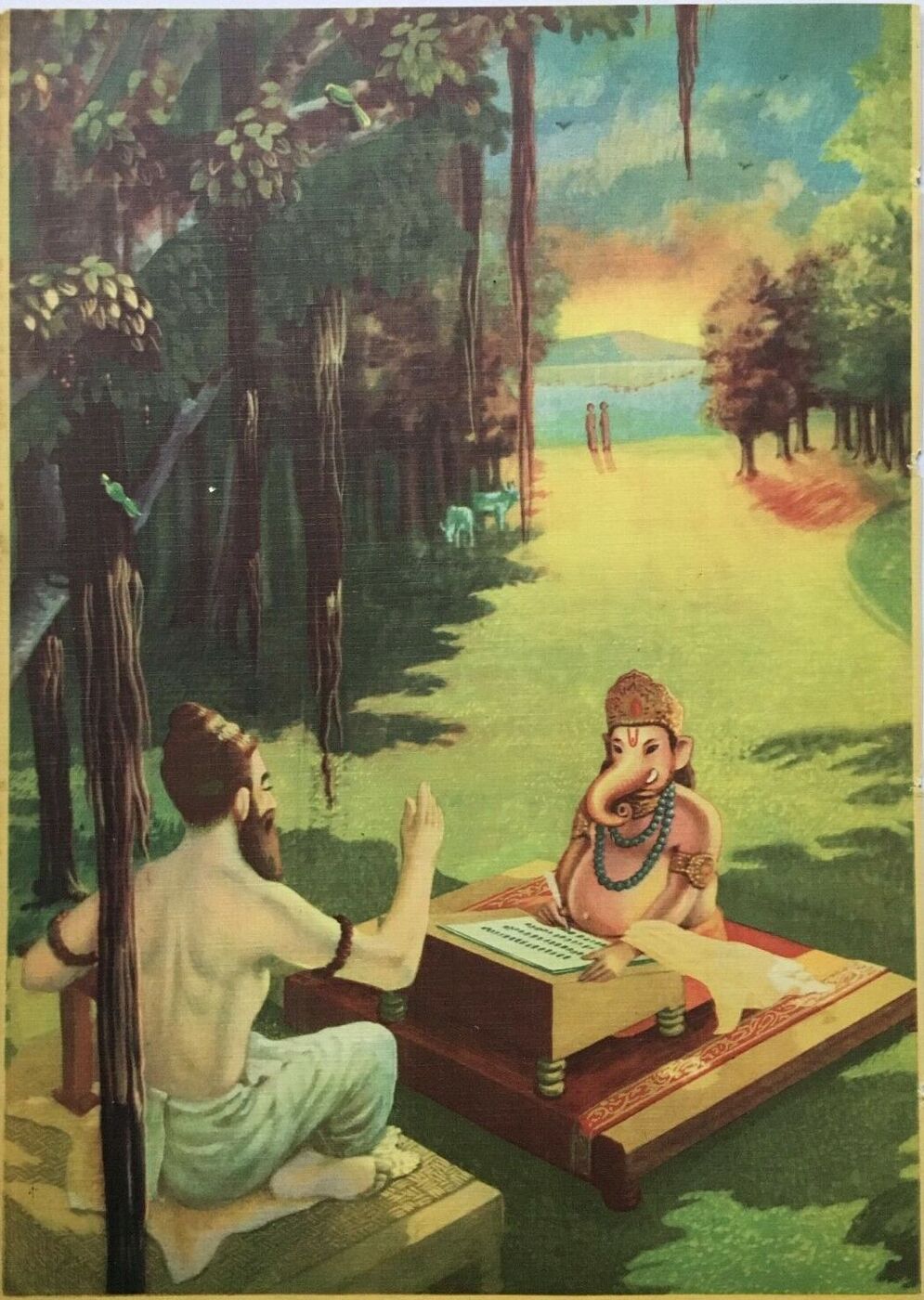
Even after Vyāsadeva divided the Vedas into four parts, most people still could not study them directly. Vedic study was restricted to the twice-born classes and required many years of training. Therefore, Vyāsadeva composed the Mahābhārata, a historical work based on the Kurukṣetra war and the Pāṇḍavas. Tradition also says that he composed the eighteen major Purāṇas. These scriptures teach Vedic truths through stories. Śrīmad-Bhāgavatam explains why he wrote the Mahābhārata: "Out of compassion, the great sage thought it wise that this would enable men to achieve the ultimate goal of life. Thus he compiled the great historical narration called the Mahābhārata for women, laborers and friends of the twice-born" (Śrīmad-Bhāgavatam 1.4.25). In simple words, he wanted Vedic knowledge to reach people who could not study the Vedas directly. Vyāsadeva also appears in the Mahābhārata. Through the custom of niyoga, he became the father of Dhṛtarāṣṭra, Pāṇḍu, and Vidura. He also gave Sañjaya special vision so that he could see the battle of Kurukṣetra and describe it to King Dhṛtarāṣṭra. The story of Gaṇeśa writing the Mahābhārata, the eighteen Purāṇas, and Vyāsadeva's role in the Mahābhārata are explained in full on Compiling the Mahābhārata and the Puranas.
The Vedanta-Sutra Every School Must Answer #
Vyāsadeva's main book on philosophy is the Vedānta-sūtra, also called the Brahma-sūtra. It is made of very short statements that explain the teachings of the Upaniṣads about Brahman. The Vedānta-sūtra became very important in Indian philosophy. Every major school of Vedānta wrote its own commentary on it. Śaṅkarācārya wrote for Advaita, and Madhvācārya wrote for Dvaita. According to tradition, Madhvācārya travelled to Badarikāśrama and met Vyāsadeva there. It is said that Vyāsadeva approved his unfinished Gītā-bhāṣya and later gave him the śālagrāma-śilā called Aṣṭamūrti. For about two and a half centuries after Śrī Caitanya Mahāprabhu, the Gauḍīya sampradāya did not have its own direct commentary on the Vedānta-sūtra. Later, Baladeva Vidyābhūṣaṇa wrote the Govinda-bhāṣya at Jaipur. Gauḍīya Vaiṣṇava tradition also teaches that Śrīmad-Bhāgavatam is the natural commentary on the Vedānta-sūtra. In this way, Vyāsadeva explained his own philosophy through bhakti. The full account, including questions raised by historians about the authorship of so many large works, is explained on Writing the Vedānta-sūtra.
Still Unsatisfied at Heart #
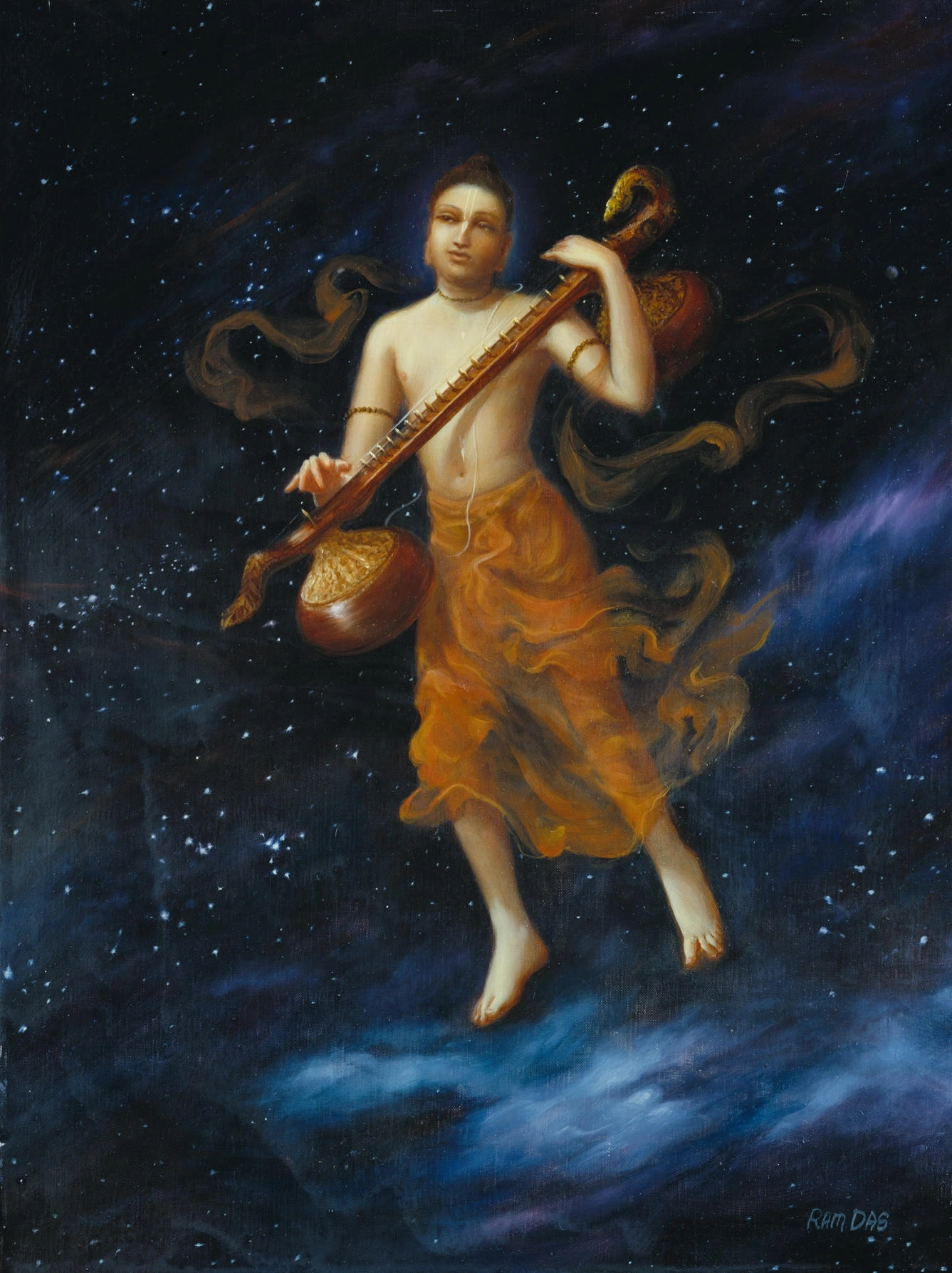
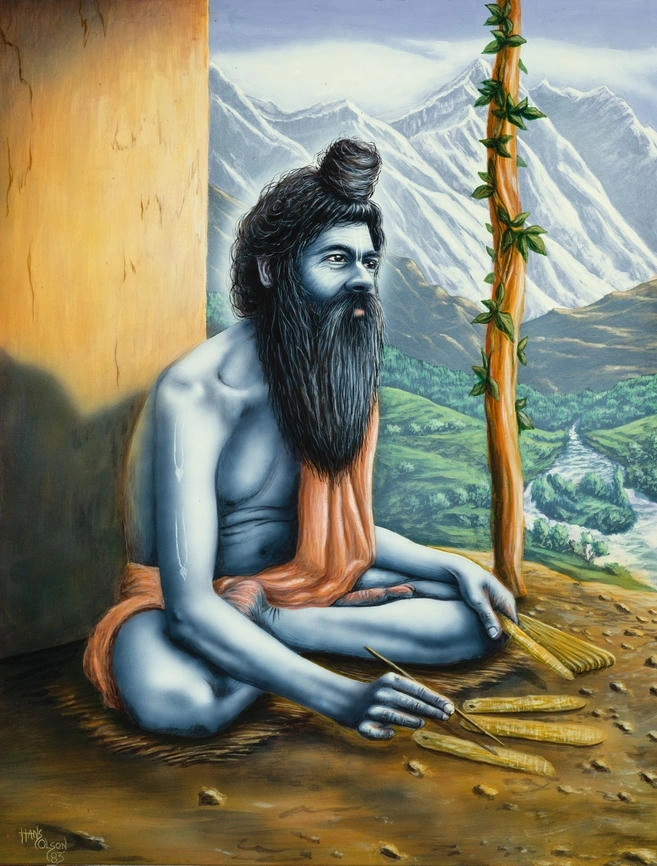
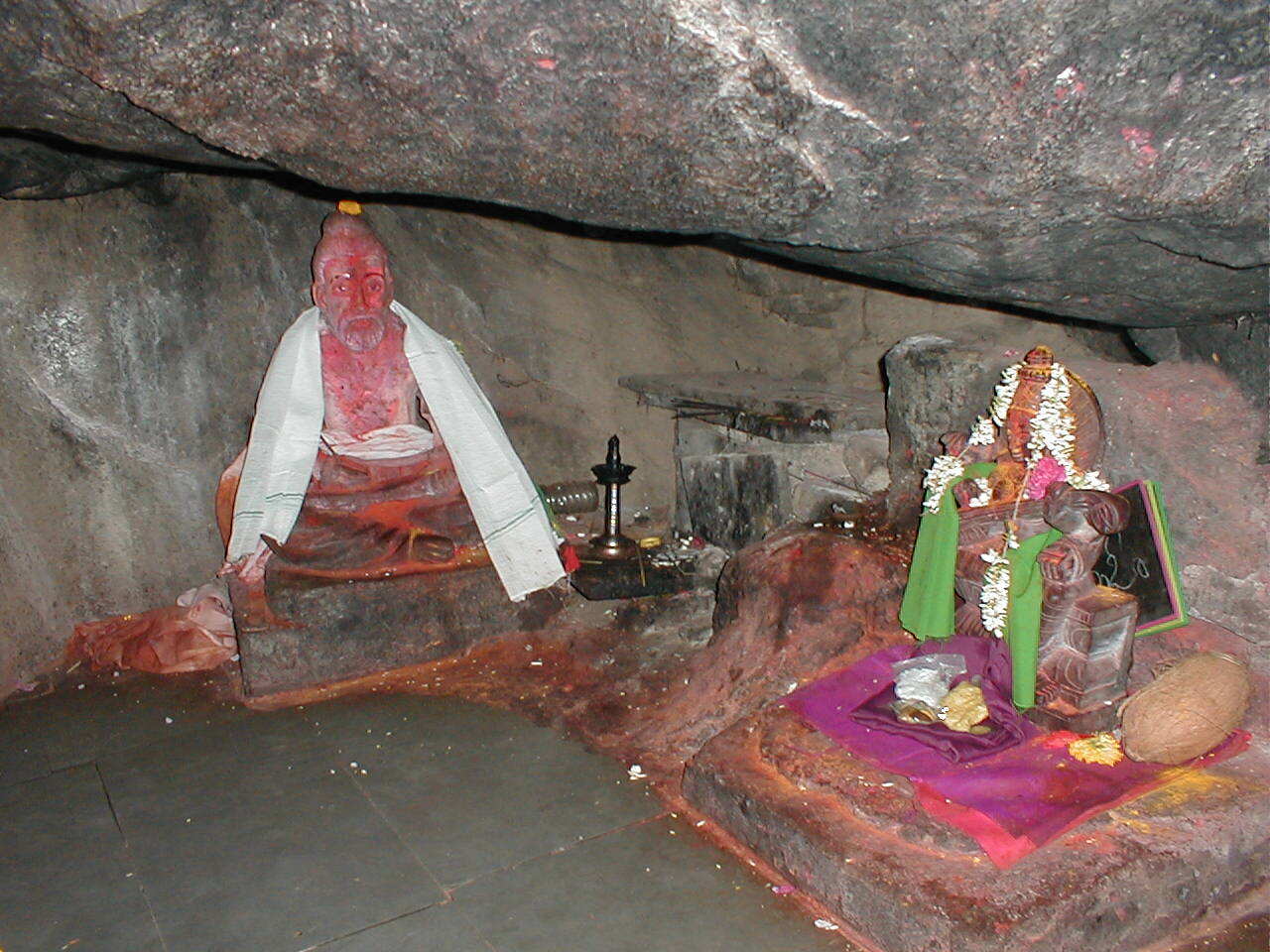
Vyāsadeva had already completed many great works. He had divided the Vedas, written the Mahābhārata and the Purāṇas, and composed the Vedānta-sūtra. Still, Śrīmad-Bhāgavatam says that he felt dissatisfied while sitting at his āśrama in Śamyāprāsa, on the bank of the Sarasvatī River. Then his guru, Nārada Muni, came to see him. Nārada explained why he was unhappy. Vyāsadeva had written about religion, wealth, sense enjoyment, and liberation, but he had not directly described the Supreme Lord's personal pastimes and glories. This conversation is explained in full on The Dejection of Vyāsadeva and Nārada's Instruction and the Writing of Śrīmad-Bhāgavatam.
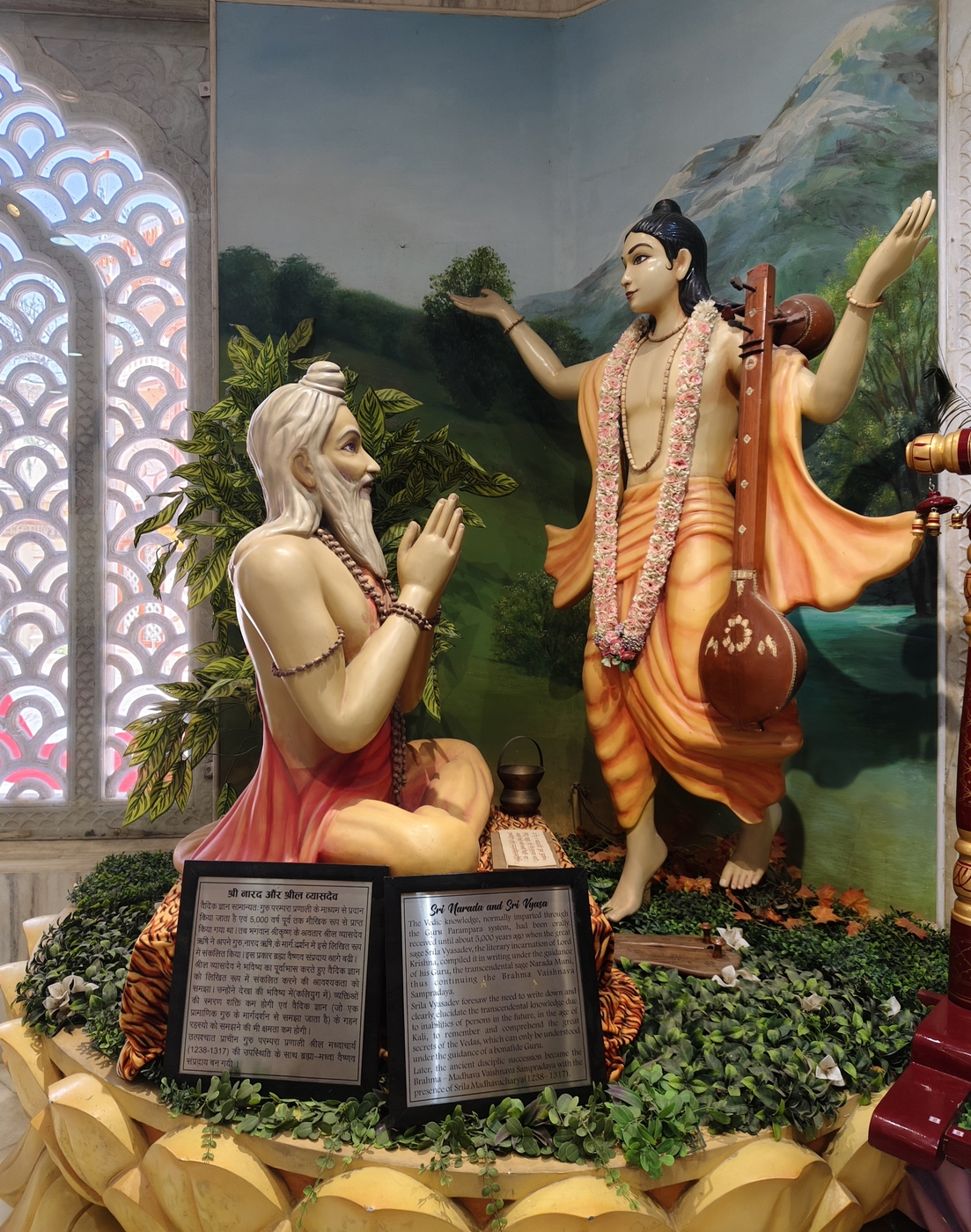
Srimad-Bhagavatam and the Ripened Fruit #
Following Nārada Muni's instruction, Vyāsadeva sat again at Śamyāprāsa and fixed his mind on the Lord through bhakti-yoga. Tradition says that he directly saw the Supreme Personality of Godhead and His energy. After this, he composed Śrīmad-Bhāgavatam, which has twelve cantos and about eighteen thousand verses. Śrīla Prabhupāda writes: "Śrīmad-Bhāgavatam is the natural commentation on the Brahma-sūtras compiled by the same author" (purport to Śrīmad-Bhāgavatam 1.7.8). Śrīmad-Bhāgavatam also calls itself "the mature fruit of the desire tree of Vedic literatures" (Śrīmad-Bhāgavatam 1.1.3). Vyāsadeva taught Śrīmad-Bhāgavatam to his son, Śukadeva Gosvāmī. Later, Śukadeva spoke it to King Parīkṣit. Many centuries later, Śrīla Prabhupāda brought this same Śrīmad-Bhāgavatam from India and translated it into English.
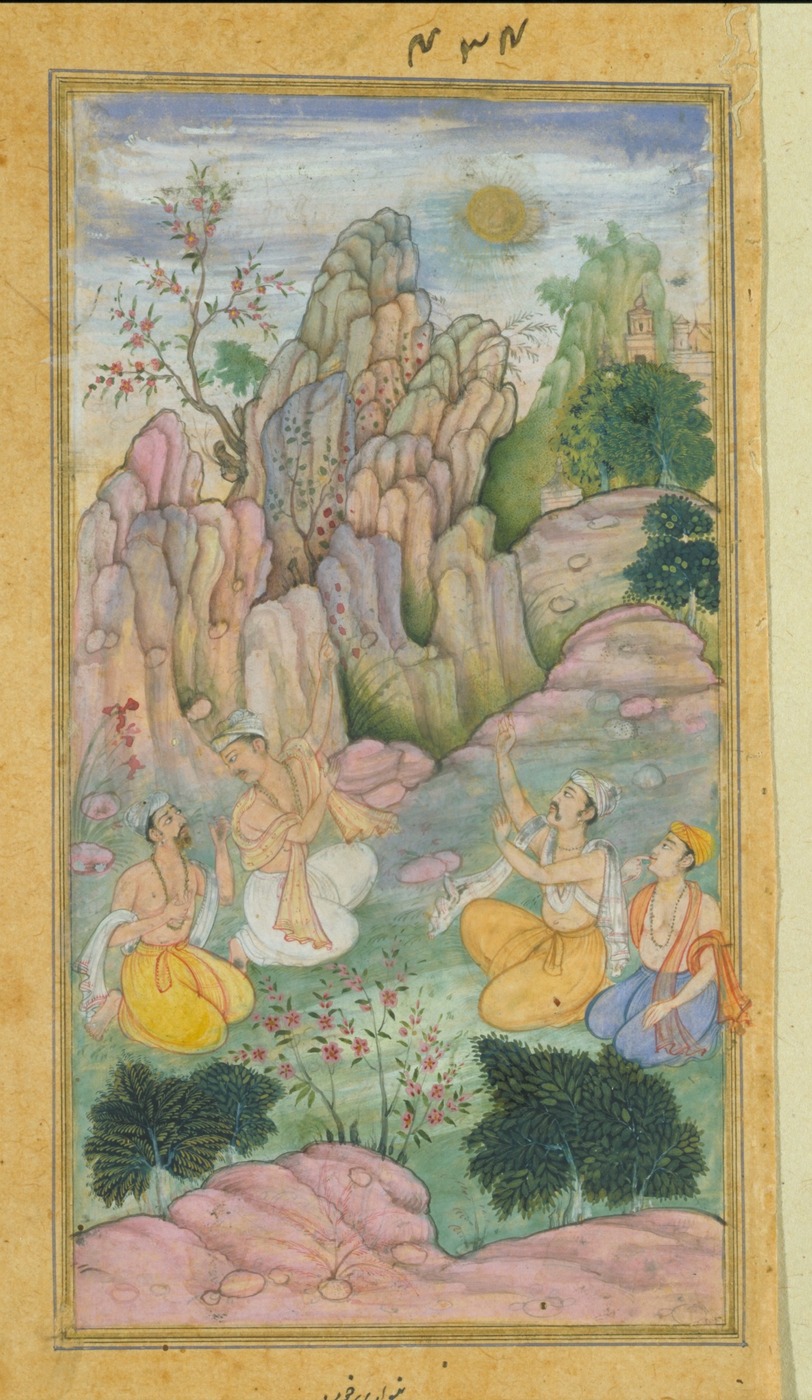
Vyasa-Puja and a Name Still Invoked Today #
Gauḍīya Vaiṣṇavas remember Vyāsadeva every year through Vyāsa-pūjā. The seat of the spiritual master is called the vyāsāsana. Śrīla Prabhupāda explained: "The guru is the representative of Vyāsadeva... therefore his birthday anniversary is accepted as Vyāsa-pūjā." The spiritual master is honored because he passes on the same spiritual knowledge given by Vyāsadeva. More about Vyāsa-pūjā, its place in ISKCON's calendar, and Śrīla Prabhupāda's own words about it is given on Vyasa-Puja and Living Legacy.
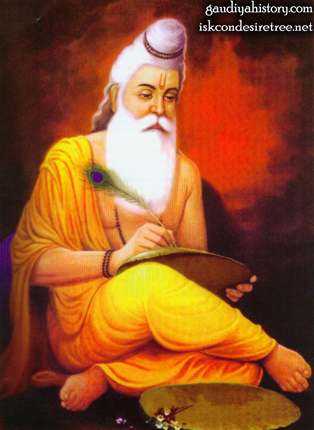
His Place at the Source of the Parampara #
The Vaiṣṇava tradition describes “Vyāsa” as both a person and a position or title. In the Brahma-Madhva-Gauḍīya lineage, this particular Vyāsa has a fixed place. He is the third link in the Brahma-sampradāya, following Lord Brahmā and Nārada Muni.
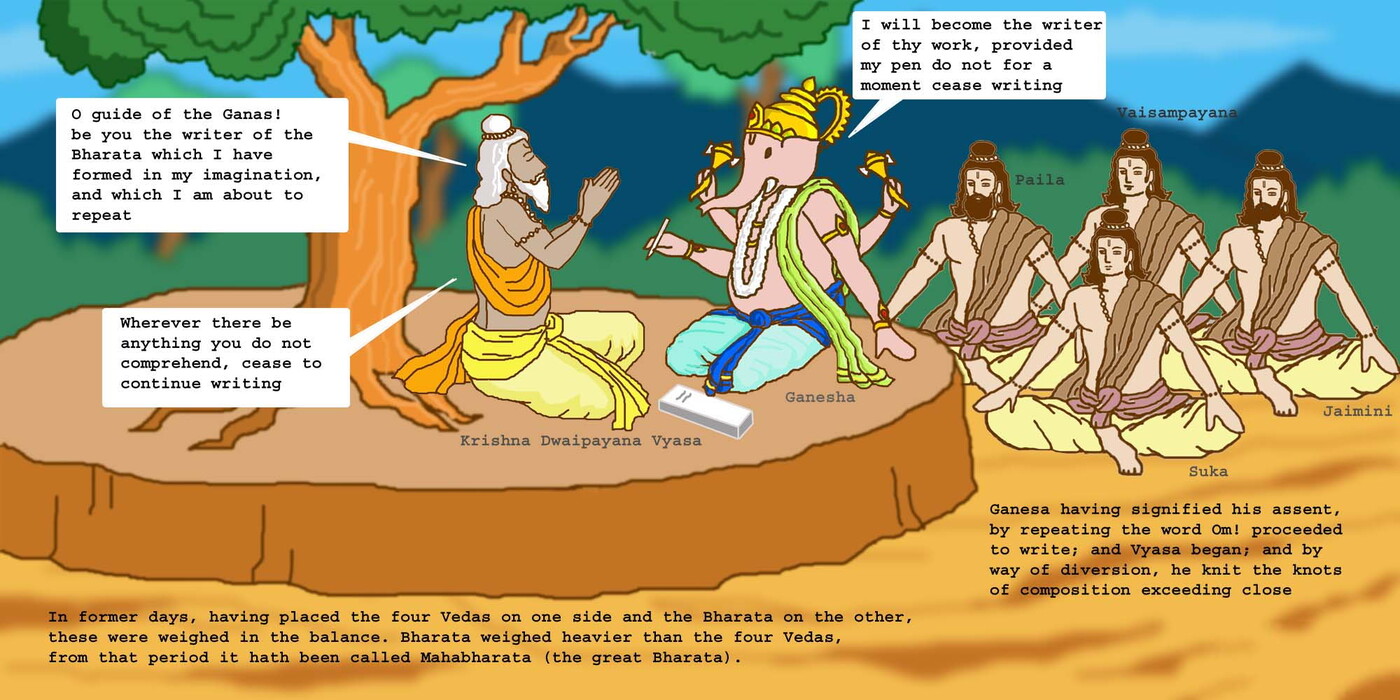
Many generations later, the disciplic line continues through Madhvācārya and develops into what is known as the Brahma-Madhva-Gauḍīya sampradāya. Every ācārya in this lineage who has commented on scripture, quoted the Bhagavad-gītā, or recited the Śrīmad-Bhāgavatam before an audience has built upon the foundation laid by Vyāsadeva. This remains true whether or not that connection is directly mentioned.
Scriptural evidence
ततः सप्तदशे जातः सत्यवत्यां पराशरात् ।
चक्रे वेदतरोः शाखा दृष्ट्वा पुंसोऽल्पमेधसः ॥
tataḥ saptadaśe jātaḥ
satyavatyāṁ parāśarāt
cakre veda-taroḥ śākhā
dṛṣṭvā puṁso 'lpa-medhasaḥ
Word for word
tataḥ: thereafter; saptadaśe: in the seventeenth incarnation; jātaḥ: appeared; satyavatyām: in the womb of Satyavatī; parāśarāt: by Parāśara Muni; cakre: made; veda-taroḥ: of the desire tree of the Vedas; śākhāḥ: branches; dṛṣṭvā: by seeing; puṁsaḥ: the people in general; alpa-medhasaḥ: less intelligent.
Thereafter, in the seventeenth incarnation of Godhead, Sri Vyasadeva appeared in the womb of Satyavati through Parashara Muni, and he divided the one Veda into several branches and subbranches, seeing that the people in general were less intelligent.
From the purport: "Originally the Veda is one. But Srila Vyasadeva divided the original Veda into four, namely Sama, Yajur, Rg, Atharva, and then again they were explained in different branches like the Puranas and the Mahabharata."
The Bhagavatam's own catalogue of incarnations names Vyasadeva directly, giving the theological basis for treating him as an incarnation of Godhead rather than an unusually gifted historical author.
Disciples
Frequently asked
When was Srila Vyasadeva born?
Srila Vyasadeva appeared Traditionally at the junction of Dvapara-yuga and Kali-yuga (exact site and era disputed) in On a river island (Yamuna, by most accounts); a cave near Damauli, Nepal, by local tradition.
Who was the guru of Srila Vyasadeva?
The spiritual master of Srila Vyasadeva was Narada Muni.
When and where did Srila Vyasadeva disappear?
Srila Vyasadeva disappeared Not dated; tradition holds he remains present in the world at Traditionally still resides at Badarikashrama in the Himalayas.
What are the main pastimes of Srila Vyasadeva?
The pastimes covered here include: Birth of Krishna-Dvaipayana, Dividing the Single Veda into Four, Compiling the Mahabharata and the Puranas, Writing the Vedanta-Sutra, The Dejection of Vyasadeva, Narada's Instruction and the Writing of Srimad-Bhagavatam, Shukadeva Goswami and the Recitation to Parikshit, Vyasa-Puja and Living Legacy.