Entering the Universe Through Brahma's Breath #
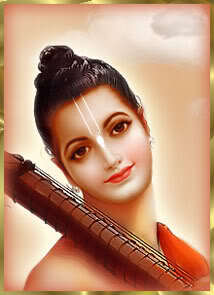
Narada tells Vyasadeva that after his single death as the maidservant's son, his devotion carried him somewhere unusual. At the end of that millennium, Lord Narayana lay down in the water of universal devastation. Then Brahma began to merge into the Lord along with every element of creation. Narada merged along with him. In his own words, he entered through the Lord's breathing. For 4,300,000,000 solar years he remained in that dissolved state. When Brahma awoke to create the universe again, the Lord's transcendental body produced the great rishis, among them Marichi, Angira, and Atri. Narada appeared among them as one more of Brahma's mind-born sons.
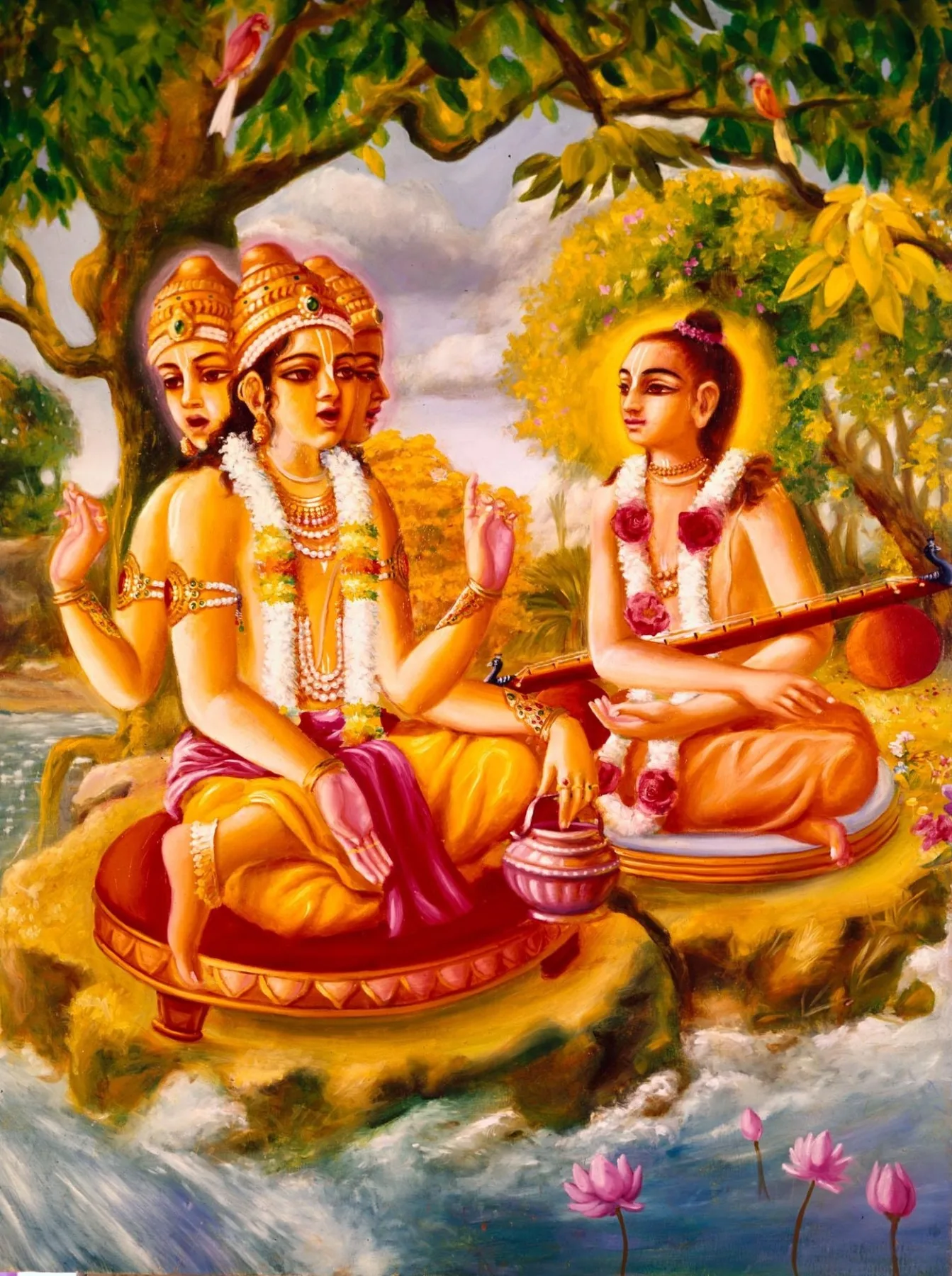
This is why Vyasadeva, throughout their conversation, addresses him simply as "son of Brahma." It is also why Lord Brahma is remembered in this tradition as both Narada's father and his first teacher in the present creation. Even so, as Narada's own account makes clear, the devotion he carried into that birth had already been earned across an entire previous age, in the life described here.
A Devotee Given Permission to Travel Anywhere #
Narada's position is truly unusual, even among liberated souls, because of what he says happened next. From that point on, by the grace of Lord Vishnu, he has travelled without restriction through both the material universe and the spiritual sky. The three modes of nature, which limit every other embodied being, do not bind him. Srila Prabhupada's purport explains how great this freedom really is. Vedic cosmology divides the material spheres into three regions: the topmost planetary systems, the middle systems, and the lower ones. Beyond even the topmost of these, above Brahmaloka itself, lies the covering of the universe. Beyond that again is an unlimited spiritual sky filled with self-illuminated Vaikuntha planets. An ordinary rishi, however advanced, cannot cross from the material universe into that spiritual sky. But Narada can, and he does so freely, exactly as he himself tells Vyasadeva: "Since then, by the grace of the almighty Vishnu, I travel everywhere without restriction both in the transcendental world and in the three divisions of the material world. This is because I am fixed in unbroken devotional service of the Lord" (Srimad-Bhagavatam 1.6.31). That is why Prabhupada describes him as a liberated being who is free to go anywhere at all. In his purport to this same verse, Prabhupada cites a statement of the Narasimha Purana. It says that sages like Marichi are authorities within fruitive ritual, and sages like Sanaka and Sanatana within philosophical speculation. But Narada alone is the chief authority for bhakti, devotional service itself. Every serious devotee in the material world follows, directly or indirectly, the path that his own Narada-bhakti-sutra lays down.
The Vina Named for Its Giver #
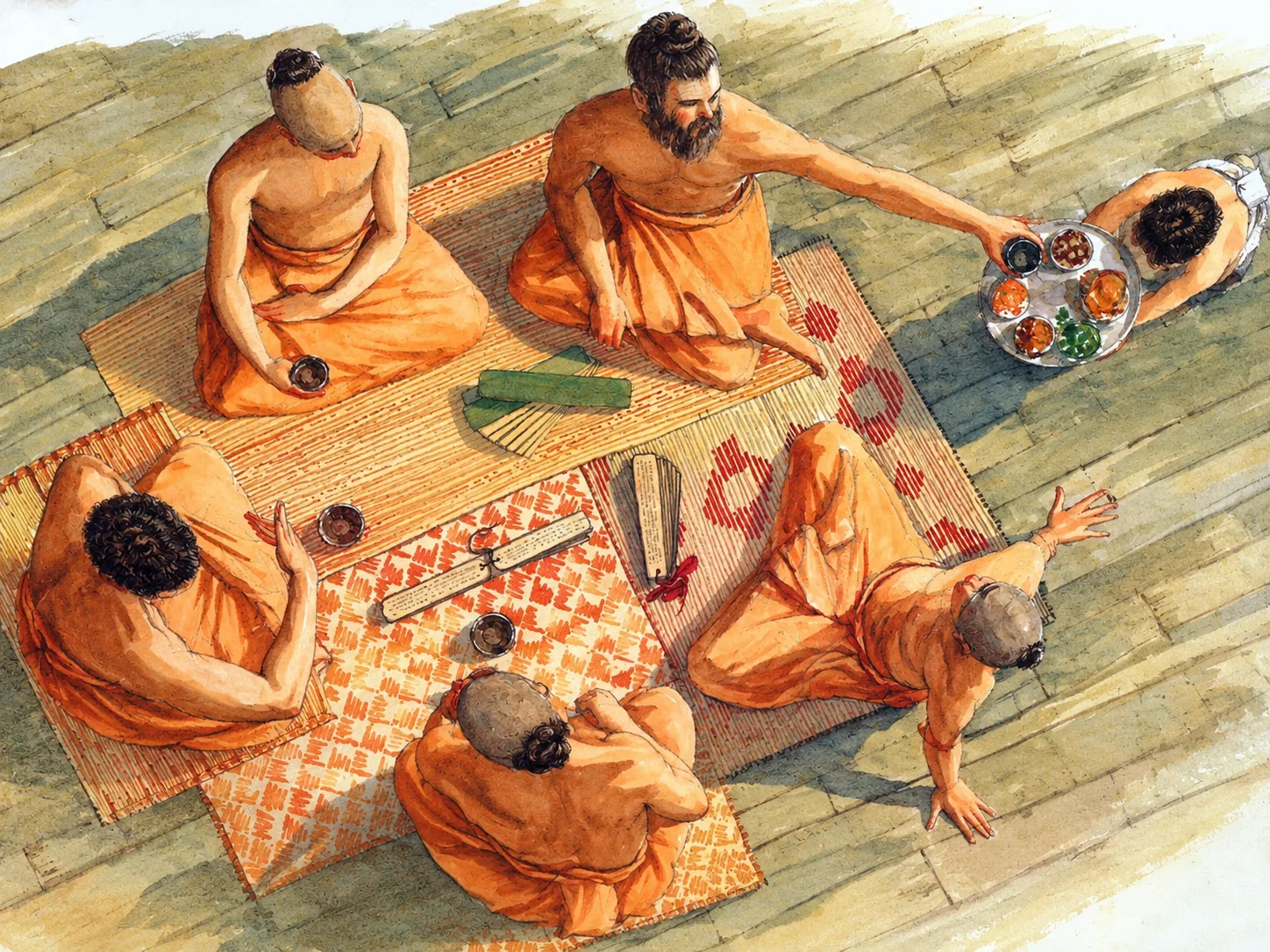
Narada's other constant companion is his vina, and Srimad-Bhagavatam is clear about where it came from. Narada says the instrument was given to him by Lord Krishna himself. Srila Prabhupada's purport cites the Linga Purana and Srila Jiva Gosvami on this point. Because the vina came directly from Krishna, it belongs to the same transcendental category as Krishna and Narada both. This means the sound it produces is never ordinary material vibration. Narada plays it with every step he takes, and every note carries the same glorification of the Lord that fills his conversation. Traditional Vaishnava art always shows him this way: walking, vina carried over one shoulder, chanting as he goes.
In Sri Chaitanya-charitamrita, Chaitanya Mahaprabhu himself includes Narada in a short list of shaktyavesha-avataras. These are souls specially empowered by the Lord with a particular opulence. He explains to Sanatana Gosvami that the Lord gave the special power of devotional service to Narada, exactly as He gave Brahma the power to create, and gave Ananta Shesha the power to support every planet. Vaishnava teachers say this same empowerment let a boy who once served sages for four rainy months become the guru of some of the greatest devotees in Vedic history. That story is the subject of the pages that follow.
