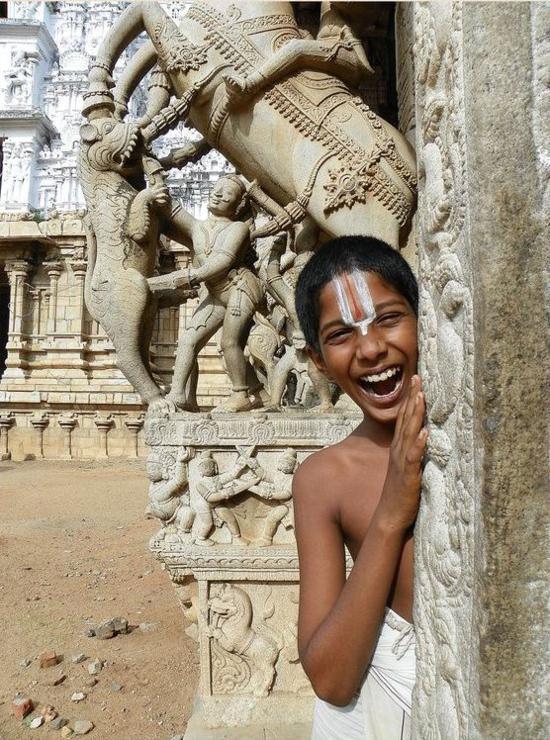
Sri Ranganathaswamy temple at Srirangam, on an island in the Kaveri River in what is now Tamil Nadu, is the largest active Sanatana Dharma temple in India. For centuries it has been one of the great strongholds of Sri Vaishnavism, the devotional tradition founded on the teachings of Ramanujacharya. Prabodhananda Saraswati was born into a brahmana family serving this tradition. No record gives his birth year or his name before he took sannyasa. What is known is that he was already a mature acharya of his community, a generation senior to his own nephew, by the time the events described here took place.
| Detail | Description |
|---|---|
| Place | Srirangam, on the Kaveri River, South India |
| Family tradition | Sri Vaishnavism, the Ramanuja sampradaya |
| Brothers | Tirumalaya Bhatta (elder) and Venkata Bhatta (younger) |
| Nephew | Gopala Bhatta Goswami, son of Venkata Bhatta |
| Worship, before conversion | Lakshmi and Narayana |
| Birth year and given name | Not recorded in any known source |
Three Brothers of the Sri Sampradaya #
Srila Prabhupada's purport to Sri Chaitanya-charitamrita states that Prabodhananda Sarasvati had two brothers, Venkata Bhatta and Tirumalaya Bhatta, and that all three were Vaishnavas of the Ramanuja sampradaya settled at Srirangam. Srila Bhaktisiddhanta Sarasvati Thakura's own introduction to Sri Chaitanya-chandramrita adds another detail. It says that the brothers were Andhras rather than native Tamils, and that the family had moved to Srirangam from further north not long before the events that would change their lives. Each brother was truly respected as an acharya within the Sri Vaishnava community there. Venkata Bhatta, the youngest brother, was already a father. His young son, born around 1503, was the boy who grew up to become Sri Gopala Bhatta Goswami, one of the Six Goswamis of Vrindavana. The fullest account of this same household, told from the nephew's side, is in Gopala Bhatta Goswami's own biography, and the two accounts agree closely.
A Family Known for Learning and Devotion #
Sri Chaitanya-charitamrita itself describes Venkata Bhatta's devotion to Lakshmi and Narayana as so pure that it satisfied Sri Chaitanya Mahaprabhu the moment the Lord came to stay in his house. This detail speaks for the whole family's reputation, since Prabodhananda and Tirumalaya shared the same training and the same sincerity. Prabodhananda and his brothers were devout Vaishnavas of the Ramanuja line, and at this point in their lives they were still grihasthas. For years they were absorbed in Vedanta, in the Sri Vaishnava tradition of commentaries, and in worship of the Lord in His four-armed form as Narayana. It was a life of real discipline and real devotion, even though it was not yet the devotion to Radha and Krishna for which Prabodhananda would later become famous. Srila Bhaktisiddhanta Sarasvati Thakura's own commentary on Sri Chaitanya-charitamrita adds one more detail. Venkata Bhatta belonged to the Vadagalai branch of the Ramanuja sampradaya, one of the two major schools within Sri Vaishnavism. The family's own names point the same way. Venkata and Tirumalai are South Indian names with a clearly Andhra or Karnataka flavor, not native Tamil ones. This suggests that the family had settled at Srirangam from further north only shortly before the events described next.
Grihastha and Later Sannyasi #
Srila Prabhupada's purport to Sri Chaitanya-charitamrita, Madhya-lila 17.104, adds one more precise detail: in his grihastha life, before he ever took sannyasa, Prabodhananda Sarasvati was himself a resident householder of Sri Ranga-kshetra. Only afterward, following his own meeting with Sri Chaitanya Mahaprabhu, did he accept the sannyasa order and the name by which history remembers him. What that meeting was, and how it changed the whole household's direction, is the subject of Conversion to Gaudiya Vaishnavism.
