Srila Prabodhananda Saraswati
Author of Sri Radha-rasa-sudha-nidhi, Uncle and Guru of Gopala Bhatta Goswami
The complete life, on one page: The main biography and every pastime page, in order, in one place
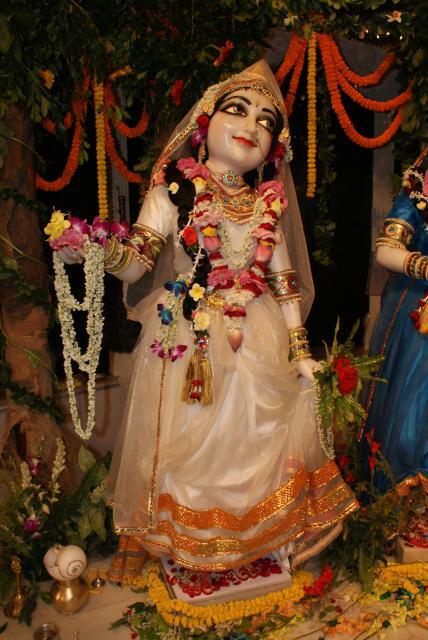
Introduction
Srila Prabodhananda Saraswati was a Sri Vaishnava scholar of Srirangam in South India. Sri Chaitanya Mahaprabhu personally converted him to Gaudiya Vaishnavism, and he went on to become one of the most celebrated Sanskrit poets of the entire Gaudiya tradition. He is remembered above all for two things. First, he was the uncle and initiating guru of Sri Gopala Bhatta Goswami, one of the Six Goswamis of Vrindavana. Second, he wrote Sri Radha-rasa-sudha-nidhi, a poem on the glories of Srimati Radharani. Later Vaishnavas have treasured this poem so much that its verses are still used for songs and study today.
| Detail | Description |
|---|---|
| Family | Younger brother of Tirumalaya Bhatta and elder brother of Venkata Bhatta; uncle and guru of Gopala Bhatta Goswami |
| Identity | Tungavidya, one of Sri Radha's eight chief sakhis in Vraja (Gaura-ganoddesha-dipika 163) |
| Original home | Srirangam, South India, a Sri Vaishnava priestly family of the Ramanuja sampradaya |
| Converted by | Sri Chaitanya Mahaprabhu, during the Lord's four-month stay at Srirangam, 1433 Sakabda / A.D. 1511 |
| Later home | Kamyavana, in the Vraja-mandala near Mathura, then Vrindavana |
| Chief works | Sri Radha-rasa-sudha-nidhi, Sri Chaitanya-chandramrita, Sri Vrindavana-mahimamrita, Navadvipa-shataka |
| Disciple | Gopala Bhatta Goswami, one of the Six Goswamis of Vrindavana |
| Samadhi | Vrindavana, behind Kaliya Ghat |
Scriptural evidence for the introduction (2)
acaitanyam idaṁ viśvaṁ yadi caitanyam īśvaram
na viduḥ sarva-śāstra-jñā hy api bhrāmyanti te janāḥ
Word for word
acaitanyam - devoid of Krishna consciousness; idam viśvam - this material world; caitanyam īśvaram - the Lord Krishna consciousness personified; na viduḥ - do not understand; sarva-śāstra-jñāḥ - those learned in all scripture; api bhrāmyanti - still wander uselessly
This material world is without Krishna consciousness. Lord Chaitanya Mahaprabhu is Krishna consciousness personified. Therefore if a very learned scholar or scientist does not understand Sri Chaitanya Mahaprabhu, certainly he is wandering uselessly in this world.
One of three consecutive Chaitanya-chandramrita verses Srila Prabhupada quotes together in this purport, illustrating how highly Srila Prabhupada valued Prabodhananda's poetry as a teaching tool.
तुङ्गविद्या व्रजे यासीत्सर्वशास्त्रविशारदा ।
सा प्रबोधानन्दयतिर्गौरोद्गानसरस्वती ॥१६३॥
tuṅgavidyā vraje yāsīt sarva-śāstra-viśāradā |
sā prabodhānanda-yatir gaurodgāna-sarasvatī ||163||
Tungavidya-gopi, who lived in Vrajabhumi and was learned in all the scriptures, appeared later as Prabodhananda Sarasvati, the poet who eloquently glorified the transcendental qualities of Lord Caitanya.
Kavi Karnapura records that Tungavidya, the sakhi of Vraja learned in all the scriptures, appeared as the sannyasi poet Prabodhananda Sarasvati. Sanskrit: diacritic edition of the Gaura-ganoddesha-dipika; English translation as published at bvmlu.org.
Chapter 1
Birth and Life in South India
A brahmana family of temple priests at Srirangam, and the boy who would one day carry their name into Vrindavana.
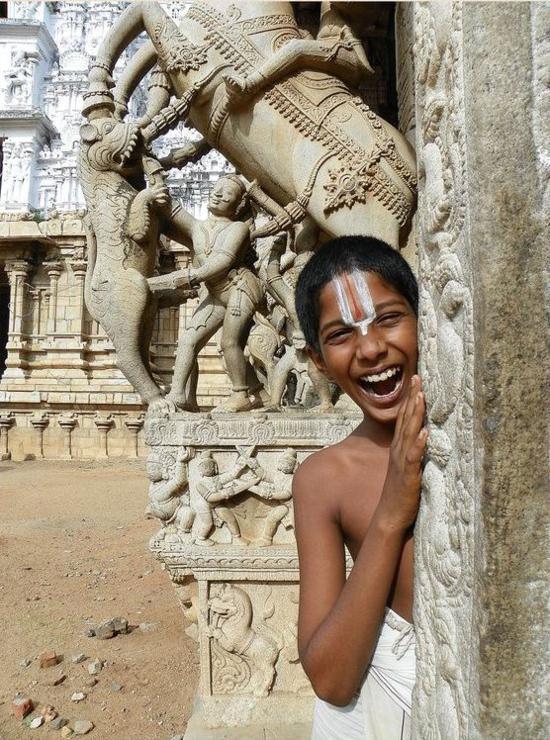
Sri Ranganathaswamy temple at Srirangam, on an island in the Kaveri River in what is now Tamil Nadu, is the largest active Sanatana Dharma temple in India. For centuries it has been one of the great strongholds of Sri Vaishnavism, the devotional tradition founded on the teachings of Ramanujacharya. Prabodhananda Saraswati was born into a brahmana family serving this tradition. No record gives his birth year or his name before he took sannyasa. What is known is that he was already a mature acharya of his community, a generation senior to his own nephew, by the time the events described here took place.
| Detail | Description |
|---|---|
| Place | Srirangam, on the Kaveri River, South India |
| Family tradition | Sri Vaishnavism, the Ramanuja sampradaya |
| Brothers | Tirumalaya Bhatta (elder) and Venkata Bhatta (younger) |
| Nephew | Gopala Bhatta Goswami, son of Venkata Bhatta |
| Worship, before conversion | Lakshmi and Narayana |
| Birth year and given name | Not recorded in any known source |
Three Brothers of the Sri Sampradaya #
Srila Prabhupada's purport to Sri Chaitanya-charitamrita states that Prabodhananda Sarasvati had two brothers, Venkata Bhatta and Tirumalaya Bhatta, and that all three were Vaishnavas of the Ramanuja sampradaya settled at Srirangam. Srila Bhaktisiddhanta Sarasvati Thakura's own introduction to Sri Chaitanya-chandramrita adds another detail. It says that the brothers were Andhras rather than native Tamils, and that the family had moved to Srirangam from further north not long before the events that would change their lives. Each brother was truly respected as an acharya within the Sri Vaishnava community there. Venkata Bhatta, the youngest brother, was already a father. His young son, born around 1503, was the boy who grew up to become Sri Gopala Bhatta Goswami, one of the Six Goswamis of Vrindavana. The fullest account of this same household, told from the nephew's side, is in Gopala Bhatta Goswami's own biography, and the two accounts agree closely.
A Family Known for Learning and Devotion #
Sri Chaitanya-charitamrita itself describes Venkata Bhatta's devotion to Lakshmi and Narayana as so pure that it satisfied Sri Chaitanya Mahaprabhu the moment the Lord came to stay in his house. This detail speaks for the whole family's reputation, since Prabodhananda and Tirumalaya shared the same training and the same sincerity. Prabodhananda and his brothers were devout Vaishnavas of the Ramanuja line, and at this point in their lives they were still grihasthas. For years they were absorbed in Vedanta, in the Sri Vaishnava tradition of commentaries, and in worship of the Lord in His four-armed form as Narayana. It was a life of real discipline and real devotion, even though it was not yet the devotion to Radha and Krishna for which Prabodhananda would later become famous. Srila Bhaktisiddhanta Sarasvati Thakura's own commentary on Sri Chaitanya-charitamrita adds one more detail. Venkata Bhatta belonged to the Vadagalai branch of the Ramanuja sampradaya, one of the two major schools within Sri Vaishnavism. The family's own names point the same way. Venkata and Tirumalai are South Indian names with a clearly Andhra or Karnataka flavor, not native Tamil ones. This suggests that the family had settled at Srirangam from further north only shortly before the events described next.
Grihastha and Later Sannyasi #
Srila Prabhupada's purport to Sri Chaitanya-charitamrita, Madhya-lila 17.104, adds one more precise detail: in his grihastha life, before he ever took sannyasa, Prabodhananda Sarasvati was himself a resident householder of Sri Ranga-kshetra. Only afterward, following his own meeting with Sri Chaitanya Mahaprabhu, did he accept the sannyasa order and the name by which history remembers him. What that meeting was, and how it changed the whole household's direction, is the subject of Conversion to Gaudiya Vaishnavism.
Chapter 2
Conversion to Gaudiya Vaishnavism
How a Sri Vaishnava acharya of Srirangam became one of Sri Chaitanya Mahaprabhu's most devoted followers - and how history later confused him with someone else entirely.
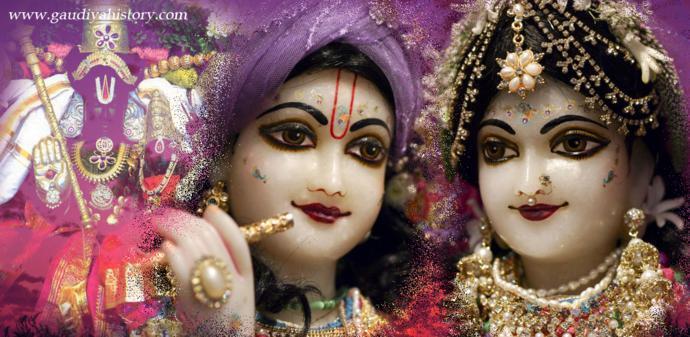
In the year Srila Prabhupada records as 1433 Sakabda, corresponding to A.D. 1511, Sri Chaitanya Mahaprabhu reached Srirangam on his long pilgrimage through South India. He stayed the full four months of Chaturmasya as a guest in the home of Venkata Bhatta. That visit, and the theological conversation between Mahaprabhu and Venkata Bhatta over Lakshmi-Narayana and Radha-Krishna, is told in detail on Sri Gopala Bhatta Goswami's own pages. What follows here is the same story, from Prabodhananda's side.
| Detail | Description |
|---|---|
| Visit | Chaturmasya, 1433 Sakabda / A.D. 1511 |
| Place | Srirangam, at the home of Venkata Bhatta |
| Converted | Prabodhananda, Venkata Bhatta and Tirumalaya Bhatta, all three brothers |
| From | Sri Vaishnava worship of Lakshmi-Narayana |
| To | Gaudiya devotion to Radha-Krishna |
| Later confused with | Prakashananda Sarasvati of Kashi (a distinct, unrelated person) |
Three Brothers Won Over #
According to the Bhakti-ratnakara of Narahari Chakravarti, quoted in later Gaudiya histories, the three brothers were heartbroken at the thought of Mahaprabhu leaving after the four months. They wondered who would now joke with them, and who would go with them to bathe in the Kaveri each morning. Mahaprabhu himself embraced them and tried to console them as he departed. Tradition also records that during this same visit Prabodhananda was given the title "Sarasvati," to honour the eloquence and learning that had impressed everyone around him. This became the name by which he was known ever after. The exact order of events may not be certain, but the outcome is not in doubt. By the end of these four months, a family of Sri Vaishnava priests, devoted for generations to Lakshmi and Narayana, had turned to the worship of Radha and Krishna.
From Householder to Sannyasi #
Srila Prabhupada's purport to Chaitanya-charitamrita states that in his earlier grihastha life Prabodhananda had been a resident of Sri Ranga-kshetra belonging to the Ramanuja-sampradaya. After this meeting with Mahaprabhu, he accepted tridandi-sannyasa, the renounced order followed by Vaishnavas. A few years later he left Srirangam altogether and settled at Kamyavana, one of the twelve forests of Vraja near Mathura. By his own account, he did this so that he could absorb himself completely in the most intimate teachings Mahaprabhu had given him. His nephew Gopala Bhatta, still a boy at the time, would later follow the same road to Vraja, as told in Life Among the Goswamis of Vrindavana.
A Case of Mistaken Identity #
One persistent confusion deserves to be cleared up directly, because Srila Prabhupada himself took care to correct it more than once in his own purports. A Mayavadi sannyasi named Prakashananda Sarasvati, the leader of the impersonalist sannyasis of Kashi (Benares), appears elsewhere in Sri Chaitanya-charitamrita and Sri Chaitanya-bhagavata as an opponent whom Mahaprabhu eventually converted. Some readers have mistaken this Prakashananda for Prabodhananda, simply because the names sound alike. Srila Prabhupada notes that this error began among sahajiya-influenced writers and entered even the Bhaktamal. His purport to Chaitanya-charitamrita, Madhya-lila 17.104, states the correction plainly:
Prabodhananda Sarasvati was the uncle and spiritual master of Gopala Bhatta Gosvami. In his grihastha life, Prabodhananda Sarasvati was a resident of Sri Ranga-kshetra, and he belonged to the Vaishnava Ramanuja-sampradaya. It is a mistake to consider Prakashananda Sarasvati and Prabodhananda Sarasvati the same man.
The two men held completely opposite theological views. One was a Vaishnava of the Ramanuja line who became one of Mahaprabhu's most devoted followers. The other was a Mayavadi philosopher of the Shankara line, whom the Lord first rebuked and only later delivered. Srila Prabhupada also points out that the two men's own recorded meetings with Mahaprabhu show that they could not have been the same person at all. Mahaprabhu met Prabodhananda and his brothers as fellow Ramanuja Vaishnavas at Srirangam in 1433 Sakabda. Two years later, in 1435 Sakabda, He could not have met that very same man again in Kashi as the head of an entirely different, rival school of Mayavadi sannyasis.
Scriptural evidence for this chapter (2)
sei haite sannyāsīra phiri gela mana
'kṛṣṇa' 'kṛṣṇa' nāma sadā karaye grahaṇa
Word for word
sei haite - from that time; sannyāsīra - all the Mayavadi sannyasis; phiri gela mana - turned back their minds; krsna krsna nama - the holy name Krishna, Krishna; sadā karaye grahaṇa - always accept
From that moment when the Mayavadi sannyasis heard the explanation of the Vedanta-sutra from the Lord, their minds changed, and on the instruction of Chaitanya Mahaprabhu, they too chanted "Krishna! Krishna!" always.
From the purport: Purport excerpt: "Prabodhananda Sarasvati was a great Vaisnava devotee of Lord Caitanya Mahaprabhu, but Prakasananda Sarasvati, the head of the Mayavadi sannyasis in Benares, was a different person."
Srila Prabhupada's purport here directly refutes the sahajiya-influenced confusion between Prabodhananda Sarasvati and the Mayavadi Prakashananda Sarasvati, naming Prabodhananda's brothers and his nephew Gopala Bhatta Goswami.
prakāśānanda śrīpāda sabhāte vasiyā
'vedānta' paḍāna bahu śiṣya-gaṇa lañā
Word for word
prakāśānanda śrīpāda - the great sannyasi Prakashananda; sabhāte vasiyā - sitting in the assembly; vedānta paḍāna - instructs on Vedanta philosophy; bahu śiṣya-gaṇa lañā - taking many disciples
There was a great Mayavadi sannyasi named Prakashananda Sarasvati, who used to teach Vedanta philosophy to a great assembly of followers.
From the purport: Purport excerpt: "Prabodhananda Sarasvati was the uncle and spiritual master of Gopala Bhatta Gosvami. In his grhastha life, Prabodhananda Sarasvati was a resident of Sri Ranga-ksetra, and he belonged to the Vaisnava Ramanuja-sampradaya. It is a mistake to consider Prakasananda Sarasvati and Prabodhananda Sarasvati the same man."
Srila Prabhupada's second, independent correction of the same mistaken identity, confirming Prabodhananda's grihastha life at Sri Ranga-kshetra and his role as Gopala Bhatta Goswami's uncle and diksha guru.
Chapter 3
Life Among the Goswamis of Vrindavana
How Prabodhananda's own move to Vraja set the stage for his nephew's arrival, and for the guru-disciple bond that shaped one of Gaudiya Vaishnavism's most important books.
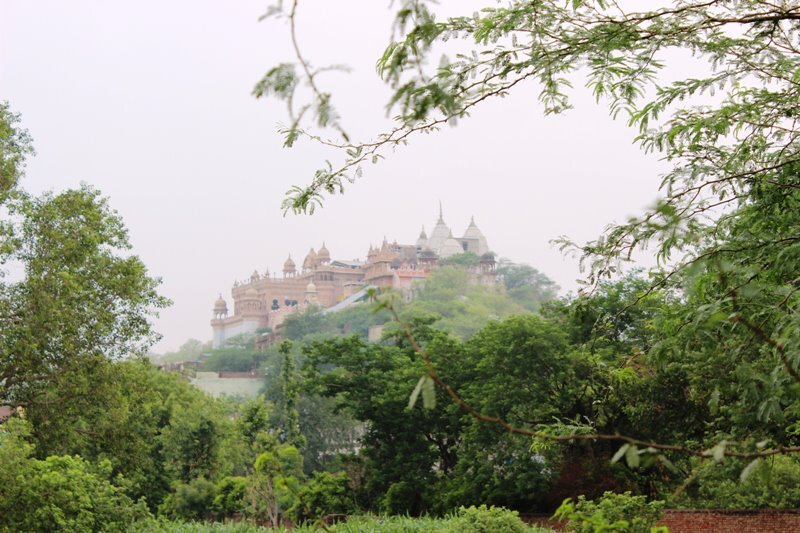
A few years after Sri Chaitanya Mahaprabhu returned from South India to Puri, Prabodhananda left Srirangam for good and settled at Kamyavana, one of the twelve sacred forests of Vraja near Mathura. There he lived the rest of his years as one who had renounced the world, devoted entirely to Radha-Govinda. He was absorbed in the most intimate teachings Mahaprabhu had given him during those four months at Srirangam. His young nephew, Gopala Bhatta, would later follow this same road to Vraja.
| Detail | Description |
|---|---|
| Place | Kamyavana, then Vrindavana |
| Disciple | Gopala Bhatta Goswami |
| Association | Rupa Gosvami, Sanatana Gosvami and the other Goswamis of Vrindavana |
| Named as guru in | Sri Hari-bhakti-vilasa, opening verses |
| Character trait most remembered | Deep personal humility |
Guru to His Own Nephew #
Sri Gopala Bhatta Goswami's own biography records that he received his formal diksha initiation from his uncle Prabodhananda Sarasvati. It uses Srila Prabhupada's own words for this, and this account agrees with it fully. Before that formal initiation ever took place, Prabodhananda had already spent years teaching his young nephew Srimad-Bhagavatam and the other core texts of devotional life. When the initiation came, it was a formal ceremony. It simply confirmed a relationship of study and guidance that had begun much earlier in the household at Srirangam. The clearest written proof of this bond survives in the opening pages of the Hari-bhakti-vilasa itself. This is the great Gaudiya Vaishnava code of devotional conduct that Gopala Bhatta is remembered for compiling. Its second verse identifies its author as "the disciple of Prabodhananda who is dear to the Lord," and says that the book was compiled to please Raghunatha Dasa Goswami, Rupa Gosvami and Sanatana Gosvami.
Among the Goswamis #
Prabodhananda himself was highly respected among the Goswamis of Vrindavana. Kavi Karnapura's Gaura-ganoddesha-dipika is the traditional key that identifies the eternal spiritual forms of Mahaprabhu's associates. It names Prabodhananda as Tungavidya, one of the eight principal gopi-companions of Srimati Radharani. This shows how highly the Gaudiya tradition regards him among its own early leaders. Later Gaudiya histories describe him as a rasika acharya with no equal in his generation in describing the intimate pastimes of Radha and Krishna in the groves of Vraja. They record that he was handsome and dignified, skilled as a singer, dancer and poet, and full of overflowing affection for other devotees. All this left a deep impression on everyone who knew him. By the time his nephew reached Vraja, Prabodhananda was already an established figure among its devotees. So it was natural for him to introduce the newly-arrived Gopala Bhatta into that same circle, and especially into the close company of Rupa Gosvami and Sanatana Gosvami. In this way he simply continued the guidance that had begun years earlier at Srirangam.
A Humility That Ran in the Family #
One small but meaningful story belongs here. Readers of Sri Chaitanya-charitamrita sometimes ask a question. By every account, Mahaprabhu held Prabodhananda in the highest regard. So why is he barely mentioned anywhere in Krishnadasa Kaviraja Goswami's great work? The Bhakti-ratnakara gives the answer. It records that Prabodhananda himself, through Gopala Bhatta, asked that his own activities not be included in Krishnadasa Kaviraja Goswami's Chaitanya-charitamrita. It also records that Krishnadasa Kaviraja felt unable to refuse the request. Gopala Bhatta Goswami's own biography records the same humility in the nephew himself. He made an almost identical request, that his own name should appear only rarely in the same text. We may not know their exact reasons. But later Gaudiya writers have generally read this as a mark of unusually deep humility running through the whole family line, in uncle and nephew alike. What Prabodhananda left behind is found in his writings, not in the record of his own life. These writings are the subject of Literary Works and Radha-rasa-sudha-nidhi.
Scriptural evidence for this chapter (1)
bhakter vilāsāṁś cinute prabodha-
nandasya śiṣyo bhagavat-priyasya
gopāla-bhaṭṭo raghunātha-dāsaṁ
santoṣayan rūpa-sanātanau ca
Word for word
bhakteḥ vilāsān - the pastimes of devotional service; cinute - gathers; prabodhanandasya śiṣyaḥ - the disciple of Prabodhananda; bhagavat-priyasya - dear to the Lord; gopāla-bhaṭṭaḥ - Gopala Bhatta Gosvami; santoṣayan - pleasing; rūpa-sanātanau ca - Rupa and Sanatana Gosvami
Gopala Bhatta, the disciple of Prabodhananda who is dear to the Lord, has compiled these devotional activities to satisfy Raghunatha Dasa, Rupa and Sanatana Gosvamis.
The Hari-bhakti-vilasa's own second verse, naming Prabodhananda directly as the diksha guru of the book's compiler, Gopala Bhatta Goswami.
Chapter 4
Literary Works and Radha-rasa-sudha-nidhi
The poems that made Prabodhananda Saraswati one of the most quoted Sanskrit authors in the whole Gaudiya tradition, and how Srila Prabhupada himself drew on them.
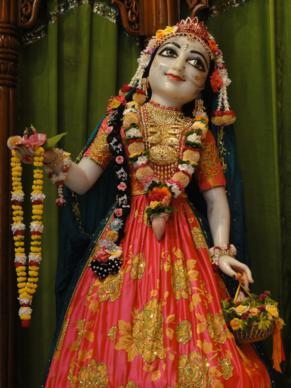
Gaudiya Vaishnavas honour Prabodhananda Saraswati as much for his writings as for his life. His two best-known works are Sri Radha-rasa-sudha-nidhi and Sri Chaitanya-chandramrita. Five centuries later, they are still read and quoted, and their verses are still used in songs. Srila Prabhupada himself came back to both again and again in his own purports and lectures.
| Detail | Description |
|---|---|
| On Radha's glories | Sri Radha-rasa-sudha-nidhi |
| On Sri Chaitanya Mahaprabhu | Sri Chaitanya-chandramrita |
| On the holy land of Vraja | Sri Vrindavana-mahimamrita |
| Other works | Navadvipa-shataka, Sangita-Madhava, Sri Nityanandastakam, and commentaries on Shruti-stuti and the Gopala-tapani Upanishad |
| Quoted by Srila Prabhupada in | Sri Chaitanya-charitamrita and Srimad-Bhagavatam purports, and numerous recorded lectures |
Sri Radha-rasa-sudha-nidhi #
Sri Radha-rasa-sudha-nidhi means "the nectar-ocean of the rasa of Radha." It is a Sanskrit poem devoted entirely to Srimati Radharani's own transcendental beauty, character and moods of love for Krishna. Gaudiya writers describe it as unequalled among Prabodhananda's works for the sheer sweetness of its poetry, and its verses have supplied lyrics still used in devotional song today.
There is one difficulty that we should record honestly. In 1992, J. K. Brzezinski published an academic study in the Bulletin of the School of Oriental and African Studies. It looks at a different claim about the poem's author, found within the separate Radhavallabha sampradaya. That sampradaya was founded by Sri Hita Harivamsa, a younger contemporary of Prabodhananda. This claim credits the same work, at least in part, to Harivamsa, not to Prabodhananda. Gaudiya Vaishnava tradition itself has always been firm on this point. Srila Prabhupada's own purports name Radha-rasa-sudha-nidhi as Prabodhananda's, alongside Sangita-Madhava, Vrindavana-shataka and Navadvipa-shataka. This page follows that view, though not all scholars agree.
There is also a related debate within the Gaudiya tradition itself. Some Gaudiya readers have noticed that Prabodhananda's poetry leans toward the svakiya idea of Radha and Krishna's love, the view that treats them as eternally married. Most Gaudiya Vaishnavas consider the parakiya mood, not the svakiya, to be the highest expression of Vraja-prema. Because of this, a few devotees in the past have read his books with less enthusiasm than they might otherwise deserve. Later Gaudiya commentators, however, have generally set this concern aside as a matter of personal taste, not an error in doctrine. They still count Radha-rasa-sudha-nidhi among the tradition's finest devotional poetry.
Sri Chaitanya-chandramrita #
Sri Chaitanya-chandramrita means "the moonlight-nectar of Lord Chaitanya." It is a long devotional poem in praise of Sri Chaitanya Mahaprabhu, and it is the single work of Prabodhananda's that Srila Prabhupada quoted most often.
Its most famous verse, kaivalyam narakayate, describes how, for a soul touched by Mahaprabhu's mercy, even liberation into impersonal Brahman looks like hell. The heavenly planets look like a flower imagined in an empty sky, and the poison fangs of the senses are pulled out. Srila Prabhupada quoted this verse in his purports to both Sri Chaitanya-charitamrita and Srimad-Bhagavatam, and explained it at length in at least one recorded lecture on the Nectar of Devotion.
A second verse from the same work is dante nidhaya trnakam. In it Prabodhananda speaks of "taking a straw between my teeth and falling at your feet a hundred times," and so it describes the humble, gentle mood he adopted when he approached learned men to speak to them about Krishna. Srila Prabhupada quoted this verse again and again throughout his own preaching career. He gave it as a model for how his own students should approach people with Krishna consciousness, through humility, not argument or force.
In one 1972 lecture on the Nectar of Devotion, Srila Prabhupada worked through the kaivalyam narakayate verse phrase by phrase. He explained that the senses are compared there to serpents whose bite is deadly. But for a devotee touched by Mahaprabhu's mercy, he said, those same serpents' fangs have already been pulled out, protkhata-damstrayate. So for such a soul, engaging the senses fully in Krishna's service holds no danger.
Vrindavana-mahimamrita and the Rest #
Sri Vrindavana-mahimamrita glorifies the holy land of Vrindavana itself, and it is counted among Prabodhananda's other major works. Alongside it are the shorter Navadvipa-shataka in praise of Mahaprabhu's own birthplace, the musical drama Sangita-Madhava, and commentaries on the Shruti-stuti hymn of Srimad-Bhagavatam and on the Gopala-tapani Upanishad. One more of his compositions survives in an unexpected place. The songs section preserves his Sri Nityanandastakam, an eight-verse hymn with a few additional verses added later. It glorifies Nityananda Prabhu as Mahaprabhu's constant companion and the deliverer of the fallen souls of this age. Devotees still sing it today.
Scriptural evidence for this chapter (2)
kaivalyaṁ narakāyate tridaśa-pūr ākāśa-puṣpāyate
durdāntendriya-kāla-sarpa-paṭalī protkhāta-daṁṣṭrāyate
viśvaṁ pūrṇa-sukhāyate vidhi-mahendrādiś ca kīṭāyate
yat kāruṇya-kaṭākṣa-vaibhava-vatāṁ taṁ gauram eva stumaḥ
Word for word
kaivalyam - merging into the impersonal Brahman; narakāyate - appears like hell; tridaśa-pūḥ - the heavenly planets; ākāśa-puṣpāyate - appears like a flower in the sky; durdānta-indriya-kāla-sarpa-paṭalī - the multitude of uncontrollable senses, like deadly serpents; protkhāta-daṁṣṭrāyate - appears with fangs pulled out; viśvam - the whole universe; pūrṇa-sukhāyate - appears full of happiness; vidhi-mahendra-ādiḥ - Brahma, Indra and other demigods; kīṭāyate - appear like insects; yat kāruṇya-kaṭākṣa-vaibhava-vatām - by whose glance of mercy, so glorious; tam gauram eva stumaḥ - we simply glorify that Lord Gaurachandra
We simply worship Lord Gaurachandra, by whose merciful glance liberation appears hellish, the heavenly planets appear like a flower imagined in the sky, the poisonous fangs of the senses are pulled out, the whole universe appears full of bliss, and even great demigods like Brahma and Indra appear no more than insects.
From the purport: Purport excerpt: "For one who becomes a pure devotee through devotional service to great personalities like Caitanya Mahaprabhu, kaivalya, or merging into Brahman, appears no better than hell."
Prabodhananda's single most quoted verse in Srila Prabhupada's own writings, used here as the pull-quote for his biography page.
dante nidhāya tṛṇakaṁ padayor nipatya
kāku-śataṁ kṛtvā cāhaṁ bravīmi
Word for word
dante nidhāya tṛṇakam - taking a straw between the teeth; padayor nipatya - falling at the feet; kāku-śatam kṛtvā - making a hundred humble pleas; ca aham bravīmi - and I say
Taking a straw between my teeth and falling at your feet a hundred times, I humbly submit: O great personality, please give up all mundane knowledge that you have learned and just submit yourself at the lotus feet of Lord Chaitanya Mahaprabhu.
Prabodhananda's own teaching on the humble mood required to preach effectively; Srila Prabhupada quoted this verse in numerous lectures as a model for how his own students should approach people about Krishna consciousness.
Chapter 5
Disappearance and Legacy
What is - and is not - known about Prabodhananda Saraswati's final years, and how his teaching still reaches devotees today.
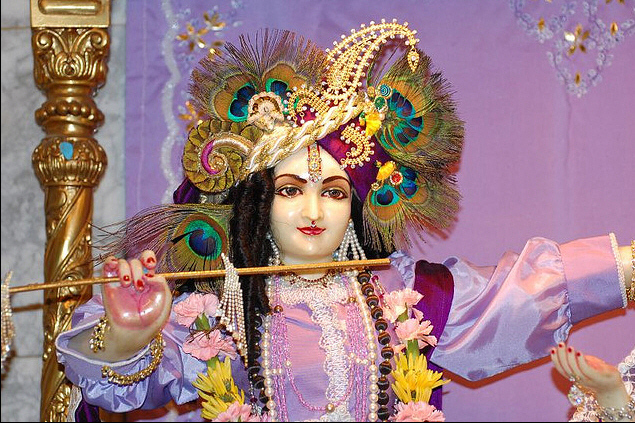
No known record gives the year of Prabodhananda Saraswati's disappearance from this world. This is a real gap in the record, and we should not try to guess the date. What has been preserved instead is the place. His samadhi stands today in Vrindavana behind Kaliya Ghat, near the kadamba tree associated with Krishna's punishing of the Kaliya serpent. The spot is one of the holy sites still visited by pilgrims who walk the parikrama path around the town. Even the disappearance of his nephew, Gopala Bhatta Goswami, is dated with some confidence to 1578. But Prabodhananda was the elder of the two, and his own passing has left no such record anywhere. This gap fits the same humility that led him, during his own lifetime, to ask that his activities be left out of Sri Chaitanya-charitamrita altogether.
| Detail | Description |
|---|---|
| Year of disappearance | Not recorded in any known source |
| Samadhi | Vrindavana, behind Kaliya Ghat |
| Eternal identity | Tungavidya, one of Radha's eight principal sakhis (per Gaura-ganoddesha-dipika) |
| Disciple and heir | Gopala Bhatta Goswami |
| Verses still in use | Sri Nityanandastakam (songs section); verses of Chaitanya-chandramrita quoted in Srila Prabhupada's own lectures |
A Life Measured in Influence, Not Dates #
We can say with confidence that Prabodhananda Saraswati's influence reached far beyond his own lifetime, through his nephew and disciple, Gopala Bhatta Goswami. The Hari-bhakti-vilasa that Gopala Bhatta compiled is still the standard Gaudiya Vaishnava guide to deity worship and devotional conduct. It opens by naming Prabodhananda as its author's own guru. In his Sri Vaishnava training in South India, Prabodhananda had absorbed a tradition of careful and strict study of scripture. This training is widely credited with making the Hari-bhakti-vilasa so thorough in dealing with questions of Vaishnava practice. Through that same line, Prabodhananda's influence touches even the worship of Sri Radha Raman. This is the self-manifested Deity that Gopala Bhatta installed in Vrindavana, and His worship continues unbroken to this day. The place of Prabodhananda's own samadhi is also fitting. His most quoted verse compares the uncontrolled senses to a poisonous serpent whose fangs are pulled out by Mahaprabhu's mercy. Today he rests within sight of the very ghat where Krishna Himself once subdued the serpent Kaliya in the waters of the Yamuna.
Still Quoted, Still Sung #
More than four centuries later, Srila Prabhupada kept Prabodhananda's own words alive among his students. In many recorded lectures, in San Francisco, New Vrindaban and Gorakhpur among other places, Srila Prabhupada returned again and again to Prabodhananda's teaching that a preacher of Krishna consciousness should approach others with humility, not argument. He quoted the dante nidhaya trnakam verse from Chaitanya-chandramrita as a model for his own movement's preaching style. In this style one takes a straw in the mouth, which in Indian custom is a sign of genuine humility. One asks for a hearing instead of demanding one. That same humility marked Prabodhananda's own life as much as his teaching. He asked that his activities be left out of Sri Chaitanya-charitamrita. And the quiet end of his life is remembered only by the place of his samadhi, not by the date of his passing. His verses continue to be sung. The songs section preserves his Sri Nityanandastakam glorifying Nityananda Prabhu. Through this small but living link, a South Indian Sri Vaishnava scholar of five hundred years ago is still joined to devotees chanting the same words today.
- Sri Chaitanya-charitamrita, Adi-lila 7.149 and purport (Bhaktivedanta VedaBase)
- Sri Chaitanya-charitamrita, Madhya-lila 17.104 and purport (Bhaktivedanta VedaBase)
- Sri Chaitanya-charitamrita, Adi-lila 13.123 and purport (Bhaktivedanta VedaBase)
- Srimad-Bhagavatam 9.5.25, purport (Bhaktivedanta VedaBase)
- Prabodhananda Saraswati - Biography, Gaudiya History
- Prabodhananda Saraswati, Gaudiya History
- Sri Gopala Bhatta Goswami's biography, this site
- Brzezinski, J.K. (1992), "Prabodhananda, Hita Harivamsa and the Radharasasudhanidhi", Bulletin of the School of Oriental and African Studies 55(3), pp. 472-497
