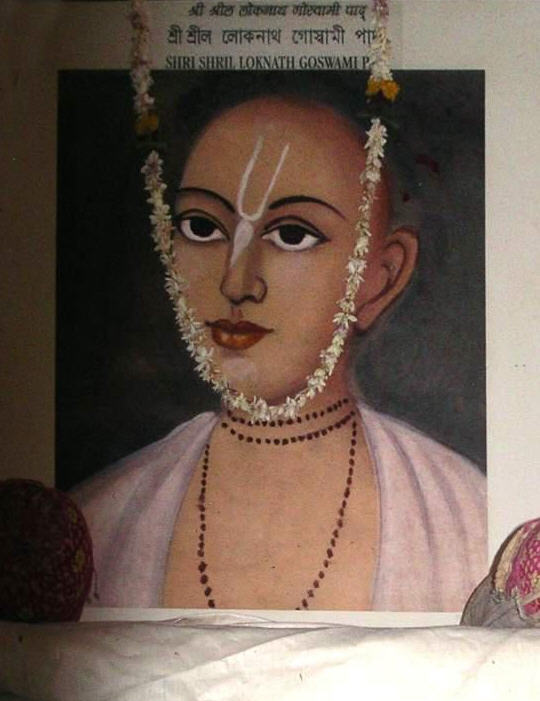
Srila Venkata Bhatta
Sri Vaishnava Host of Mahaprabhu at Srirangam, Father of Gopala Bhatta Goswami
Also known as Vyenkata Bhatta, Venkatta Bhatta, Venkatanatha, Venkata Bhattacharya
“According to transcendental realization, there is no difference between the forms of Narayana and Krishna. Yet in Krishna there is a special transcendental attraction due to the conjugal mellow, and consequently He surpasses Narayana. This is the conclusion of transcendental mellows.”
Venkata Bhatta's own reply to Sri Chaitanya Mahaprabhu at Srirangam, quoting the same verse later found in Bhakti-rasamrta-sindhu 1.2.59, Sri Chaitanya-charitamrita, Madhya-lila 9.117
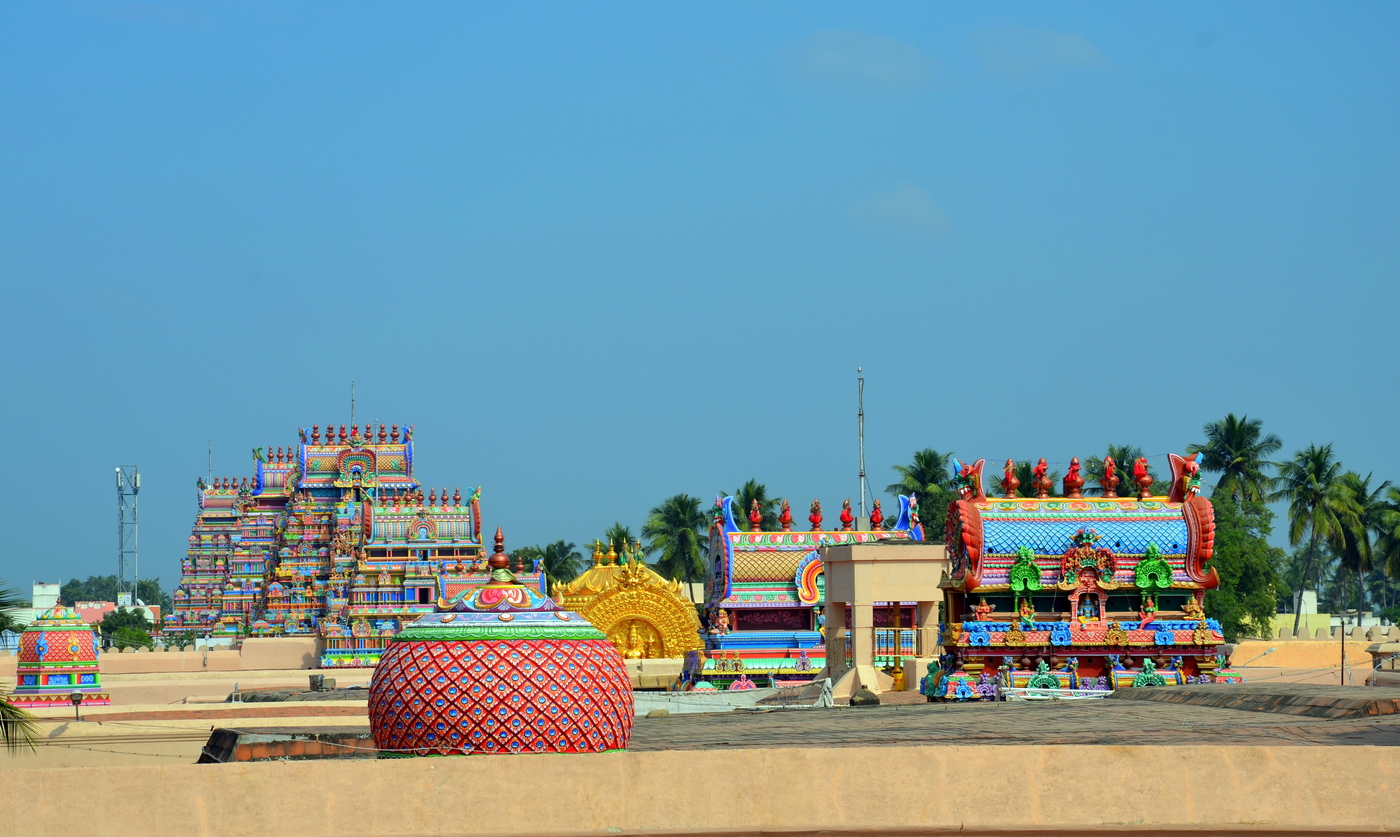
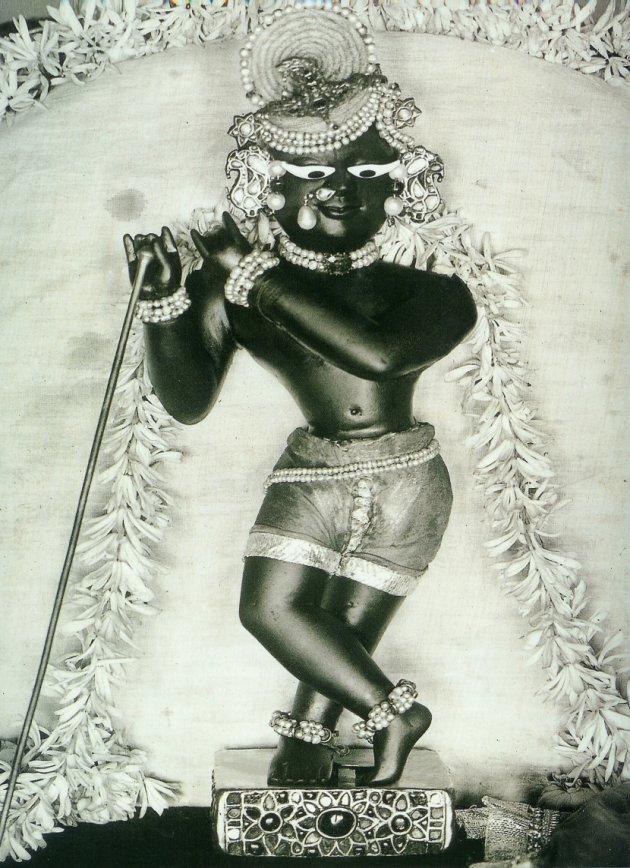
Srila Venkata Bhatta was a Sri Vaishnava brahmana and scholar of Srirangam in South India. He was already respected in his own community for his worship of Lakshmi and Narayana. In A.D. 1511 Sri Chaitanya Mahaprabhu arrived at his door, asking for shelter through the four months of Chaturmasya. What began as simple hospitality to a guest grew into one of the most fully recorded conversations in the whole of Sri Chaitanya-charitamrita. By the time the rains ended, Venkata Bhatta's household, meaning himself, his two brothers and his young son, had turned from the worship of Vishnu's four-armed form toward the cowherd boy of Vrindavana. That son grew up to be Gopala Bhatta Goswami, one of the Six Goswamis of Vrindavana. Venkata Bhatta's elder brother became the poet-sannyasi Prabodhananda Saraswati.
| Detail | Description |
|---|---|
| Home | Srirangam, on the Kaveri River, Tamil Nadu, South India |
| Sampradaya before conversion | Sri (Ramanuja) sampradaya, Vadagalai branch |
| Brothers (both elder) | Tirumalaya Bhatta (the eldest) and Prabodhananda Saraswati |
| Son | Gopala Bhatta Goswami, one of the Six Goswamis of Vrindavana |
| Meeting with Mahaprabhu | Four-month Chaturmasya stay, 1433 Sakabda / A.D. 1511 |
| Textual source | Sri Chaitanya-charitamrita, Madhya-lila 9.82-165 |
| Later life | No source records his own disappearance; the family remained at Srirangam |
A Scholar of the Sri Sampradaya #
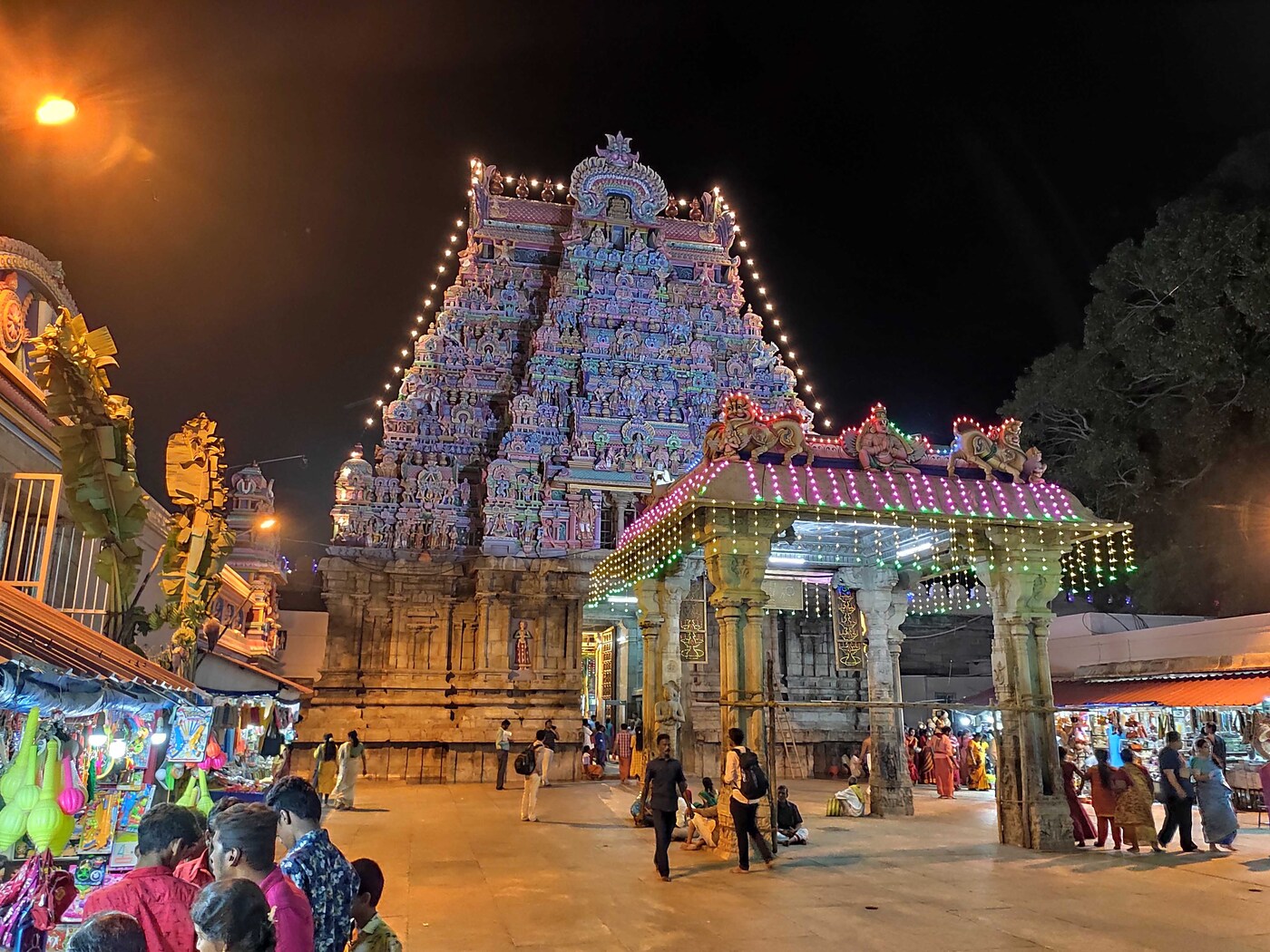
Long before Mahaprabhu ever reached South India, Venkata Bhatta already held a settled, respected place in the religious life of Srirangam, the great temple town of Sri Ranganatha on the Kaveri River. He belonged to the disciplic line of Ramanujacharya, and more exactly to its Vadagalai branch. This was one of the two schools, Vadagalai and Tengalai, into which the Sri sampradaya had by then divided over questions of grace, scripture, and practice. Srila Prabhupada's own purport to Sri Chaitanya-charitamrita adds an interesting point here. He notes that the name Venkata was not typically kept by families native to that Tamil-speaking region. This suggests that Venkata Bhatta's own family may have settled at Srirangam from elsewhere generations earlier, and had not always been there. It is a small open question that historians have not fully settled. Later tradition (repeated on Wikipedia, drawing on the Bhakti-ratnakara) simply describes the family as Tamil Iyengars of Srirangam. What is certain is his standing. He was the youngest of three brothers. The eldest was Tirumalaya Bhatta, the head of the family, and the second was the future Prabodhananda Saraswati. All three served as acharyas of their local Sri Vaishnava community. His own household was also mature and established. By the time Mahaprabhu's tour reached the far south, his son was already a young child. The fuller picture of his life and reputation before Mahaprabhu's visit is told in Life as a Sri Vaishnava Scholar at Srirangam.
Four Months of Hospitality and Friendship #
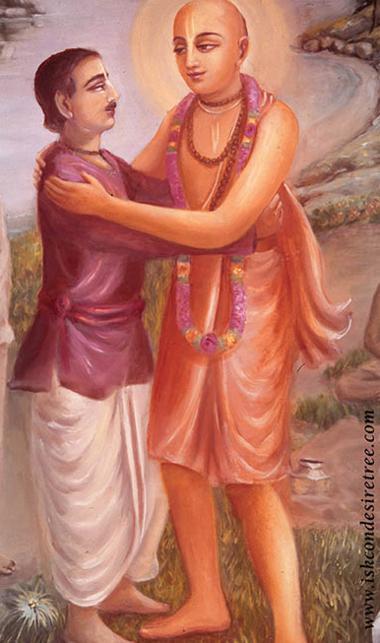
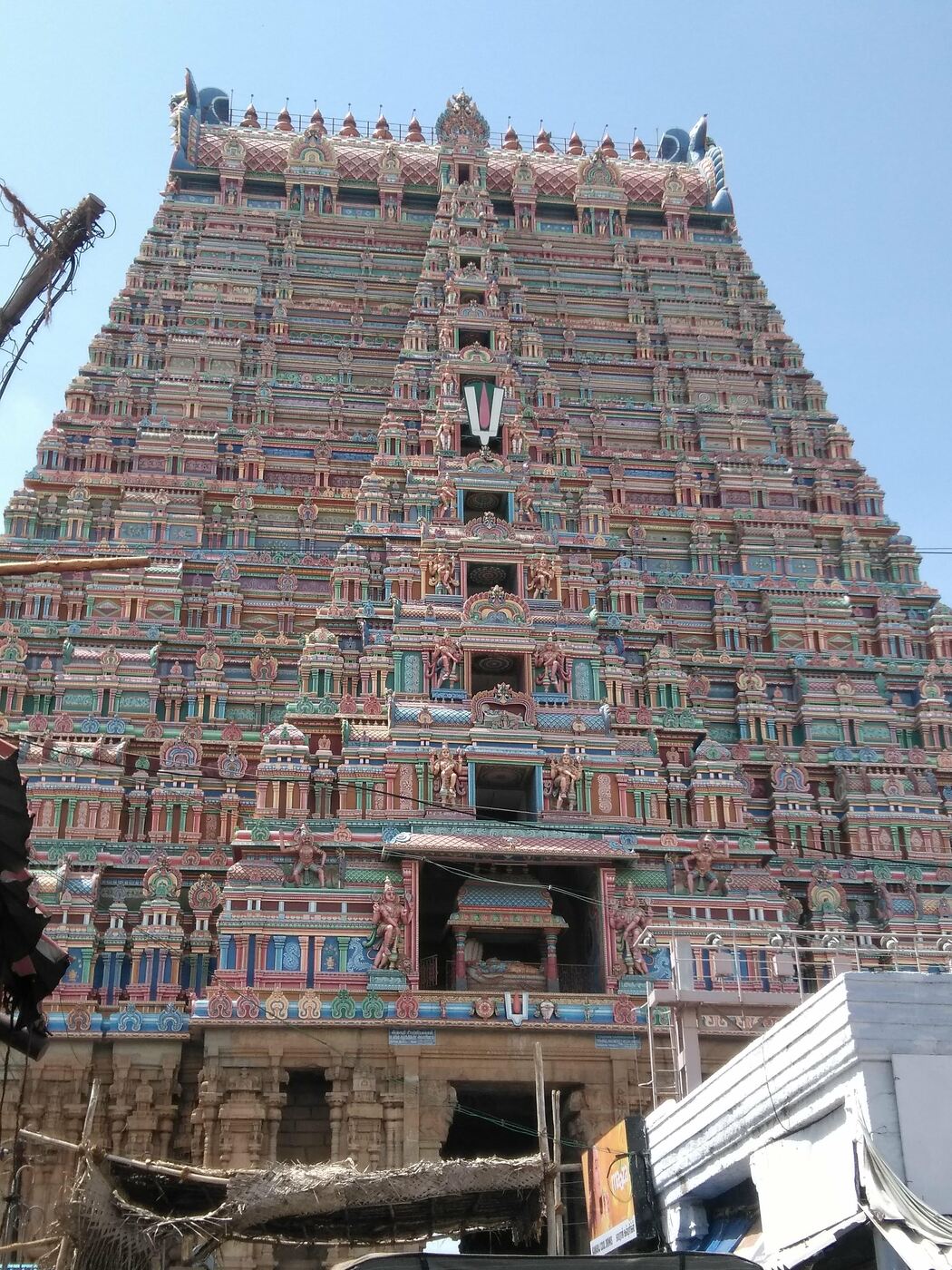
Venkata Bhatta invited Mahaprabhu to his home with real reverence. What followed was the longest single stay of the Lord's entire South Indian tour. Gopala Bhatta Goswami's own page already tells this from the side of the seven-year-old son. From Venkata Bhatta's own side, the four months were more like a slow awakening than a single dramatic event. There was constant talk of Krishna, and an easy friendship that included ordinary laughter and joking. According to Sri Chaitanya-charitamrita's own account, there was also a series of spontaneous devotional experiences. These softened his heart well before the famous theological exchange ever began. That fuller account is given in Mahaprabhu's Four-Month Stay.
The Question About Lakshmi and Krishna #
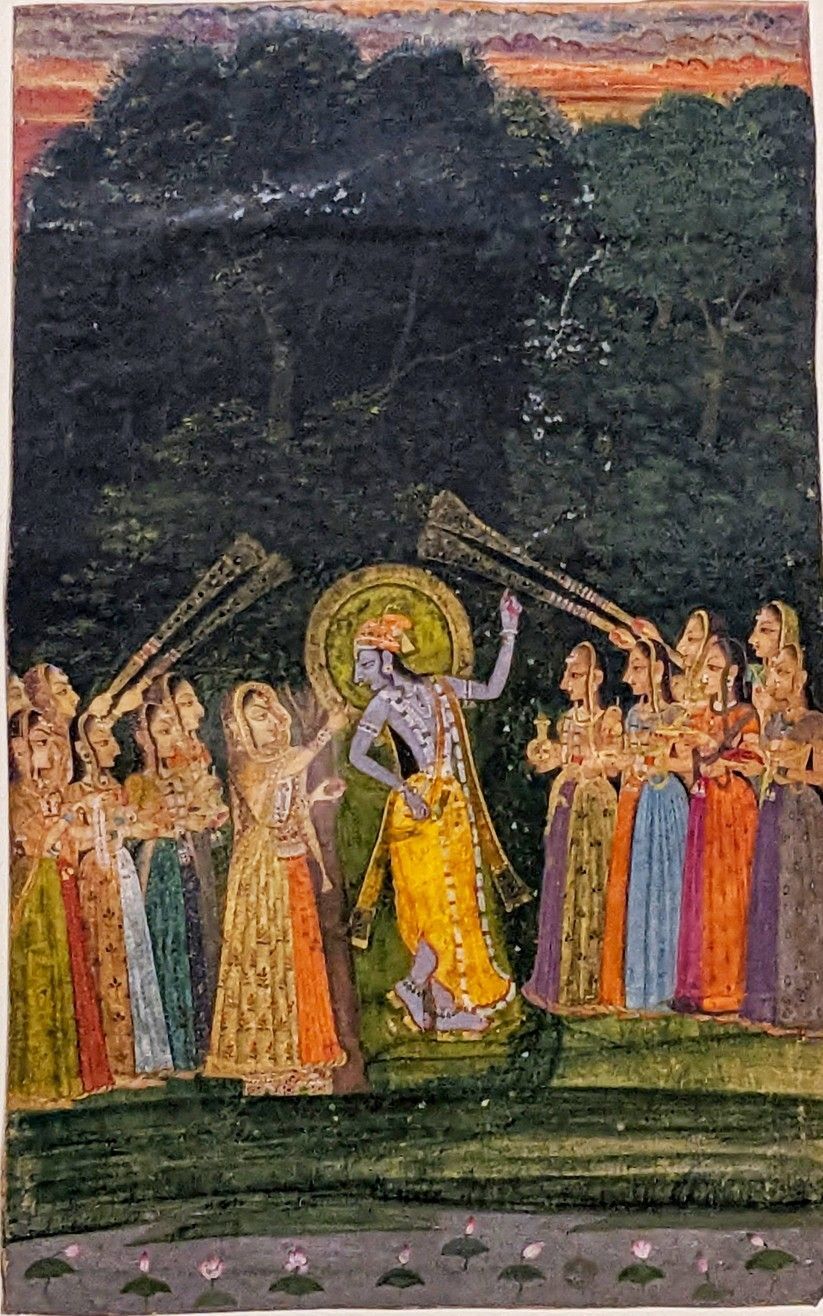
The heart of the whole episode is a conversation spread across dozens of verses of Chaitanya-charitamrita. In it Mahaprabhu gently pressed Venkata Bhatta on a single, sharp question. If Lakshmi and Narayana are truly identical to Radha and Krishna, why did the goddess of fortune have to leave Vaikuntha and perform long austerities just for a chance to enter Krishna's rasa dance in Vraja? Venkata Bhatta answered as a trained Sri Vaishnava scholar would, and he answered well. His answer was good enough that Krishnadasa Kaviraja Goswami notes his verse was the very same one Rupa Gosvami would later place in his own Bhakti-rasamrta-sindhu. But Mahaprabhu kept pressing, gently, until Venkata Bhatta's scholarly certainty turned into something closer to wonder. The Conversation on Krishna and Lakshmi-Narayana sets out that exchange verse by verse, with what it says about rasa, gopi-bhava, and Krishna's own supremacy.
A Family's Turn to Krishna Bhakti #
By the time Mahaprabhu's Chaturmasya stay drew to a close, Venkata Bhatta had fallen at his guest's feet in full surrender. In their own time, so had his brothers. Prabodhananda Saraswati's own biography already records that "by the time the four months ended, all three brothers... had made that same turn" from Lakshmi-Narayana worship toward Radha-Krishna bhakti. A Household Transformed tells, honestly and carefully, what that turn actually meant in practice for a working Sri Vaishnava priestly household. It also tells what the turn did not mean for the great public temple of Sri Ranganatha itself.
What Became of Him #
Venkata Bhatta himself appears never to have left Srirangam. In this he was unlike his brother Prabodhananda, who left for Vraja within a few years, and his son Gopala, who was sent to Vrindavana only after both his parents had died. No source records a year or place of his disappearance. But Mahaprabhu's own instruction was that young Gopala should first "serve his parents," and this strongly suggests that Venkata Bhatta lived out a full householder's life exactly where Mahaprabhu had found him. For readers who want more of the original record, Srila Prabhupada's purport points to the Bhakti-ratnakara of Narahari Chakravarti as the fuller traditional source on Gopala Bhatta's family. Remarkably, a family line traceable to Venkata Bhatta was still serving as priests of the Sri Ranganatha temple more than four and a half centuries later, in a house still called Mahaprabhu-shala. That story, along with a clearer look at his family's exact relationships, is told in Legacy and Family.
- Sri Chaitanya-charitamrita, Madhya-lila, Chapter 9 (vedabase.io)
- Srila Prabhupada, purport to CC Madhya 9.82 (family background, Vadagalai branch)
- Srila Prabhupada, Lecture, Srimad-Bhagavatam 1.5.8-9, New Vrindaban, May 24, 1969
- Srila Prabhupada, Morning Walk conversation, Mayapur, February 18, 1976
- Venkata Bhatta - Gaudiya History (ISKCON Desire Tree)
- Vyenkatta Bhatta - Biography - Gaudiya History (ISKCON Desire Tree)
Frequently asked
When was Srila Venkata Bhatta born?
Srila Venkata Bhatta appeared Not recorded (a generation senior to his son Gopala Bhatta Goswami, born c. 1503) in Traditionally Srirangam, South India (Srila Prabhupada's purport notes the name is not native to that Tamil-speaking region).
When and where did Srila Venkata Bhatta disappear?
Srila Venkata Bhatta disappeared Not recorded at Presumed Srirangam, South India (no source records his departure for Vrindavana).
What are the main pastimes of Srila Venkata Bhatta?
The pastimes covered here include: Life as a Sri Vaishnava Scholar at Srirangam, Mahaprabhu's Four-Month Stay, The Conversation on Krishna and Lakshmi-Narayana, A Household Transformed, Legacy and Family.