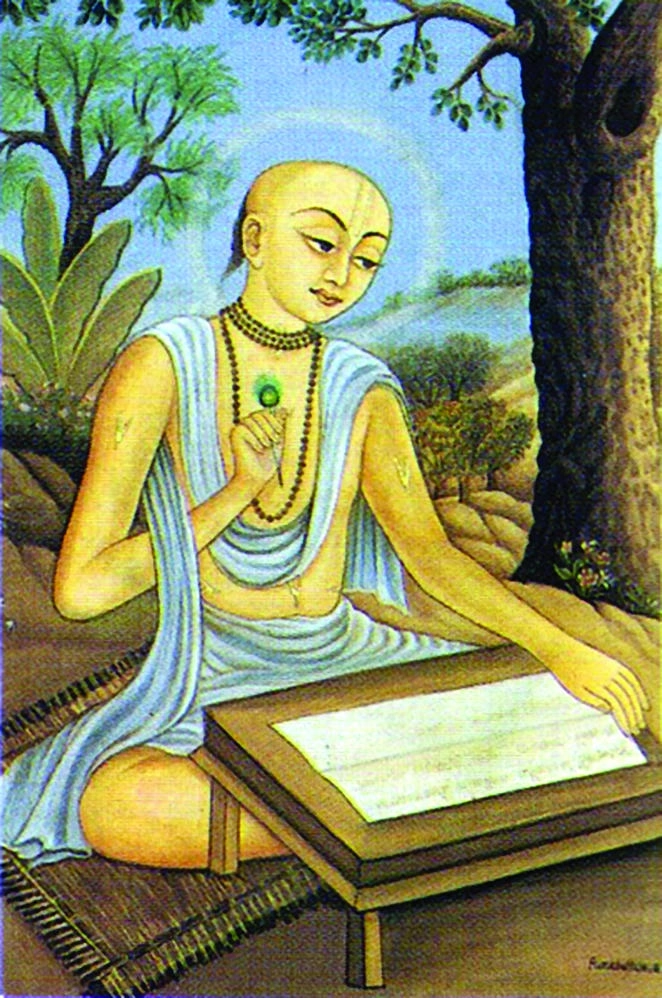
Sri Gopala Bhatta Goswami
Compiler of the Hari-bhakti-vilasa and Discoverer of Sri Radha Raman
Also known as Gopal Bhatta Gosvami, Gopal Bhatta Goswami, Sri Gopala Bhatta Gosvamipada
“Sri Gopala Bhatta Gosvami, the forty-seventh branch, was one of the great and exalted branches of the tree. He always engaged in discourses about love of Godhead in the company of Sri Rupa Gosvami and Sri Sanatana Gosvami.”
Sri Chaitanya-charitamrita, Adi-lila 10.105 - Krishnadasa Kaviraja Goswami's own verse naming him among the branches of the Lord's devotee-tree.
anaṅga-mañjarī yāsīt sādya gopāla-bhaṭṭakaḥ
bhaṭṭa-gosvāminaṁ kecid āhuḥ śrī-guṇa-mañjarī
"Ananga-manjari appeared as Srila Gopala Bhatta Gosvami. Some say that Gopala Bhatta Gosvami was actually the incarnation of Sri Guna-manjari." (Gaura-ganoddesha-dipika 184)
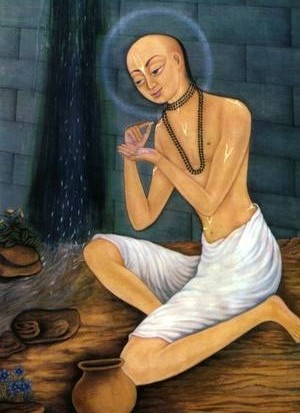
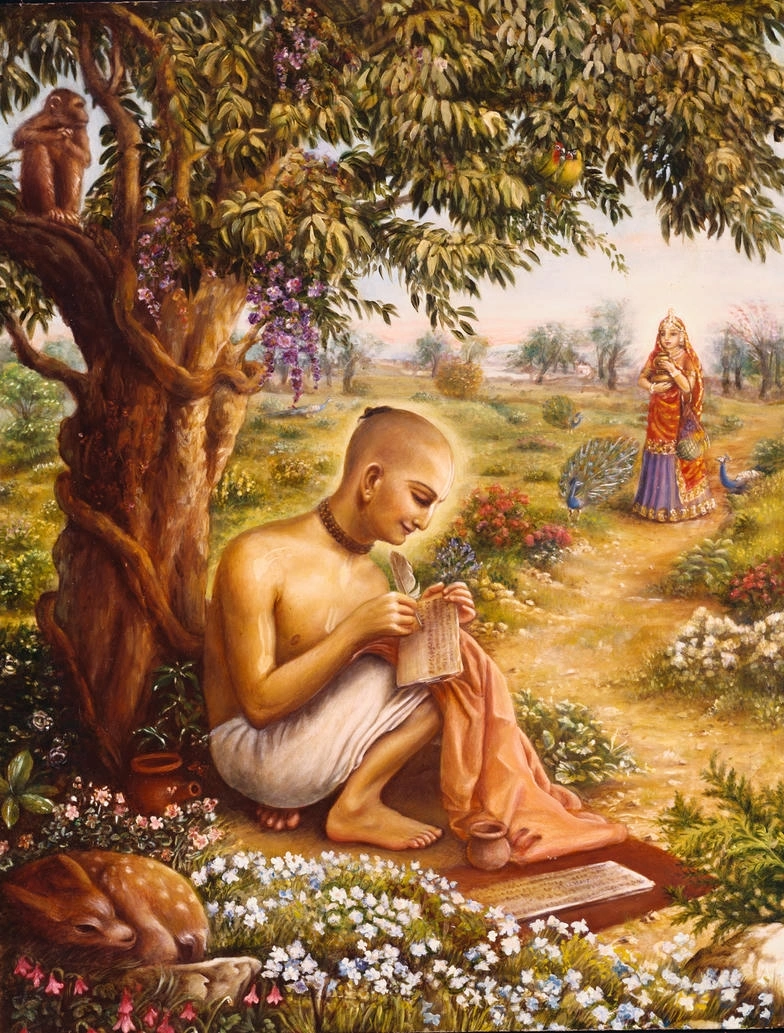
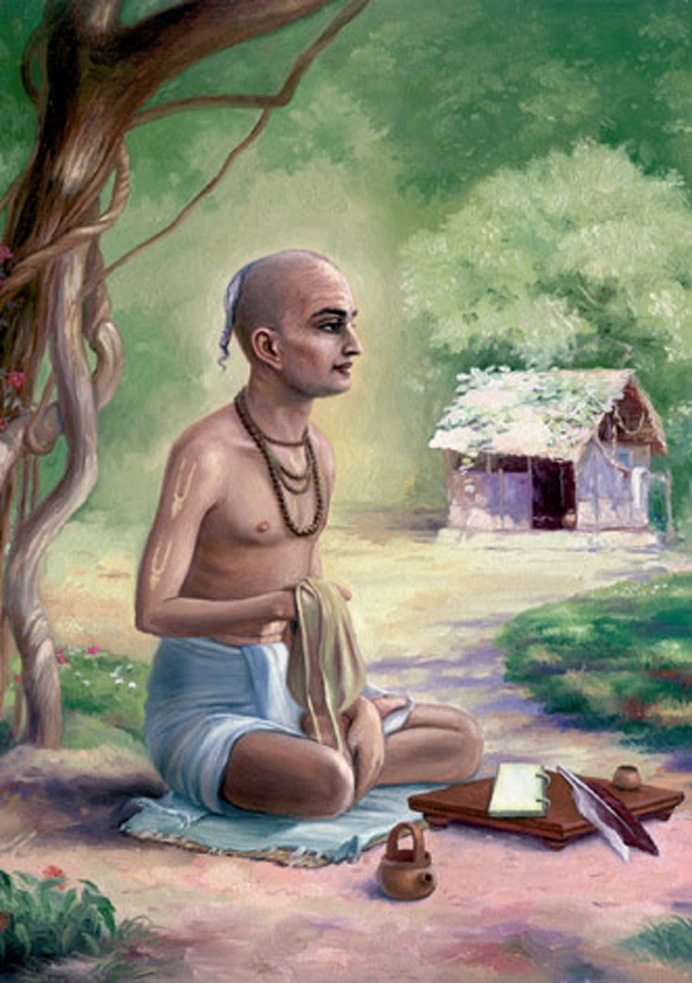
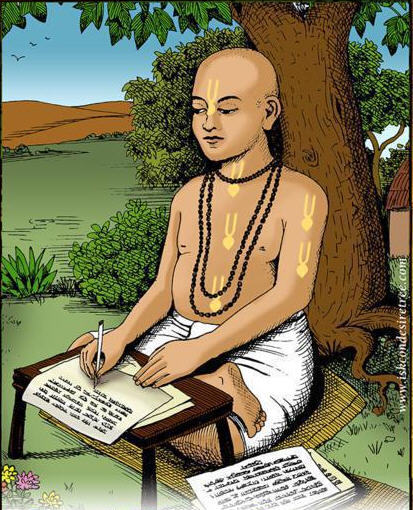
Sri Gopala Bhatta Goswami is remembered among the Six Goswamis of Vrindavana as a bridge between two great Vaishnava worlds. He was born into a family of Sri Vaishnava priests at the temple town of Srirangam in South India, and he grew up worshipping Lakshmi-Narayana in the Ramanuja tradition. As a young man, he joined the Gaudiya sampradaya founded by Sri Chaitanya Mahaprabhu. In Vrindavana he became one of the closest companions of Rupa Gosvami and Sanatana Gosvami. He is remembered above all for two things. First, he compiled the Hari-bhakti-vilasa, which is still the standard Gaudiya Vaishnava guide to devotional conduct and deity worship. Second, he installed the self-manifested Deity of Sri Radha Raman, who has been worshipped in Vrindavana without a single break since the sixteenth century.
| Detail | Description |
|---|---|
| Full name | Gopala Bhatta Goswami |
| Born | c. 1503, Srirangam, South India |
| Family | Son of Venkata Bhatta, a Sri Vaishnava priest connected to the Sri Ranganathaswamy temple; nephew of Prabodhananda Sarasvati |
| Identity | In Krishna-lila: Ananga-manjari; some say Guna-manjari (Gaura-ganoddesha-dipika 184; Chaitanya-charitamrita Adi 10.105 purport) |
| Guru | Formally initiated by his uncle Prabodhananda Sarasvati; accepted in Vrindavana as a younger brother by Rupa Gosvami and Sanatana Gosvami |
| Chief works | Editor/compiler of the Hari-bhakti-vilasa; author of Sat-kriya-sara-dipika and a commentary on Krishna-karnamrita |
| Best known for | Installing the self-manifested Deity of Sri Radha Raman in Vrindavana |
| Disappeared | Traditionally 1578, Vrindavana, at about 75 years of age |
Birth in a Family of Temple Priests #
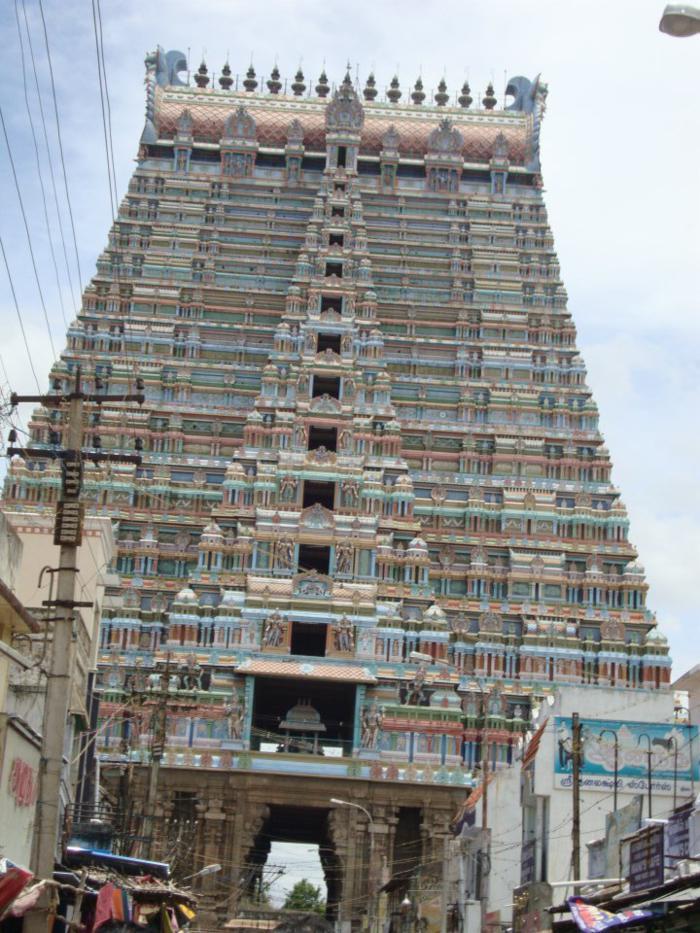
Gopala Bhatta was born around 1503 in Srirangam, the great temple island town on the Kaveri River. His family had served South India's Sri Vaishnava tradition for generations. His father, Venkata Bhatta, was a brahmana of the Ramanuja sampradaya who worshipped the Deities of Lakshmi and Narayana with deep devotion. Sri Chaitanya-charitamrita itself later describes his bhakti as pure enough to satisfy Mahaprabhu on sight. Venkata Bhatta had two brothers, Tirumalla Bhatta and the famous sannyasi Prabodhananda Sarasvati. Later, Prabodhananda Sarasvati shaped Gopala Bhatta's scriptural education and formally initiated him. The fuller story of this South Indian childhood is told in Birth and Early Life in South India.
In Sri Chaitanya-charitamrita (Adi 10.105), Krishnadasa Kaviraja Goswami counts him among the greatest branches of the Chaitanya tree:
śrī-gopāla bhaṭṭa eka śākhā sarvottama
rūpa-sanātana-saṅge yāṅra prema-ālāpana
"Śrī Gopāla Bhaṭṭa Gosvāmī, the forty-seventh branch, was one of the great and exalted branches of the tree. He always engaged in discourses about love of Godhead in the company of Rūpa Gosvāmī and Sanātana Gosvāmī." (Chaitanya-charitamrita Adi 10.105)
In his purport Srila Prabhupada gives his eternal identity from the Gaura-ganoddesha-dipika: "In the Gaura-gaṇoddeśa-dīpikā (184) it is mentioned that his previous name in the pastimes of Lord Kṛṣṇa was Anaṅga-mañjarī. Sometimes he is also said to have been an incarnation of Guṇa-mañjarī."
A Boy at Mahaprabhu's Feet #
When Sri Chaitanya Mahaprabhu passed through South India on his long pilgrimage, he stayed for four months of Chaturmasya at Venkata Bhatta's own house in Srirangam. This was the single longest stop of the entire tour. There Mahaprabhu had a long and often playful exchange with Venkata Bhatta, which is recorded in Sri Chaitanya-charitamrita's Madhya-lila. Mahaprabhu gently explained the philosophical difference between Sri Vaishnava devotion to Lakshmi-Narayana and the Gaudiya vision of Krishna as a cowherd boy in Vraja. He teased his host and then reassured him, until Venkata Bhatta's whole household turned to the worship of Radha-Krishna. Gopala Bhatta, then a boy of about seven, served Mahaprabhu continuously throughout the visit, and that early closeness stayed with him all his life. The theological conversation and the household's conversion are told in full in Mahaprabhu's Visit and a Father's Hospitality.
Leaving for Vrindavana #
Srila Prabhupada notes in his own Chaitanya-charitamrita purport that both of Gopala Bhatta's parents dedicated their remaining years entirely to Sri Chaitanya Mahaprabhu. Only after they had passed away did their son finally leave for Vrindavana. There Rupa Gosvami and Sanatana Gosvami received him. When Mahaprabhu heard the news he was overjoyed, and he instructed the two brothers to treat the newcomer as their own younger brother, not merely as an associate. Of the two brothers, Gopala Bhatta's Sri Vaishnava training in the method of studying scripture fitted most closely with Sanatana Gosvami. Sanatana Gosvami was already deeply engaged in setting down the rules of Gaudiya Vaishnava practice from the Puranas and dharma-shastras. The journey and the bond that followed are described in Arrival in Vrindavana.
Compiling the Hari-bhakti-vilasa #
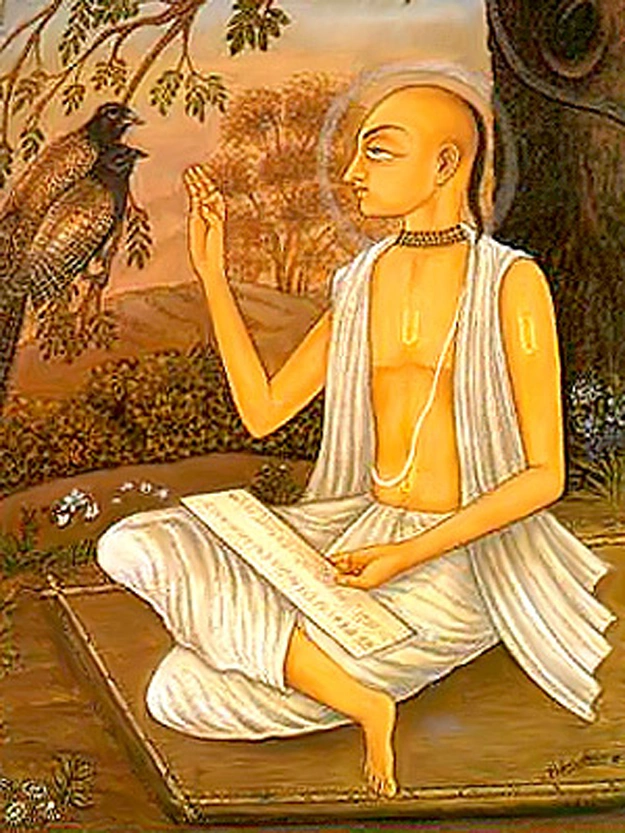
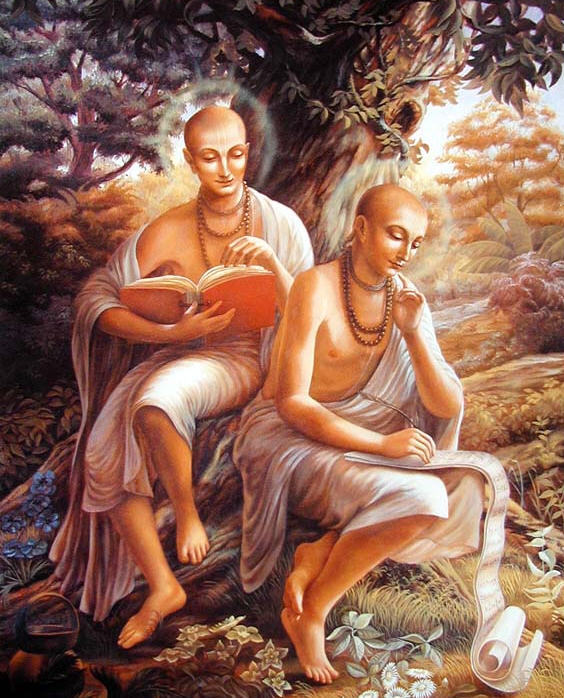
The book most connected with Gopala Bhatta's name is the Hari-bhakti-vilasa. Behind this book lies one of the most quietly generous arrangements in Gaudiya Vaishnava literature. Srila Prabhupada states in his purport to Chaitanya-charitamrita that Sanatana Gosvami, "out of his great affection for Gopala Bhatta Gosvami, compiled" this vast Vaishnava smriti and published it under his younger companion's name. In the very same passage, Srila Prabhupada also credits Gopala Bhatta himself with editing the finished work. Exactly how the labor was divided between them can no longer be fully known, and the tradition has honestly never claimed to know. But it is certain that the book has carried Gopala Bhatta's name for five centuries. It still shapes how Gaudiya Vaishnavas conduct deity worship and daily devotional life. The full picture, including a verse from the Hari-bhakti-vilasa's own opening pages, is explained in Compiling the Hari-bhakti-vilasa.
The Deity Who Stepped Out of a Stone #
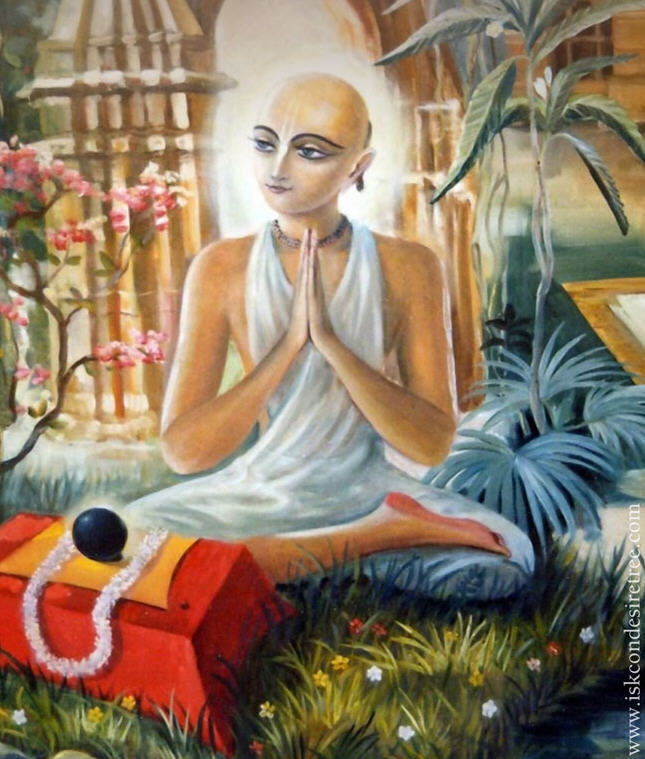
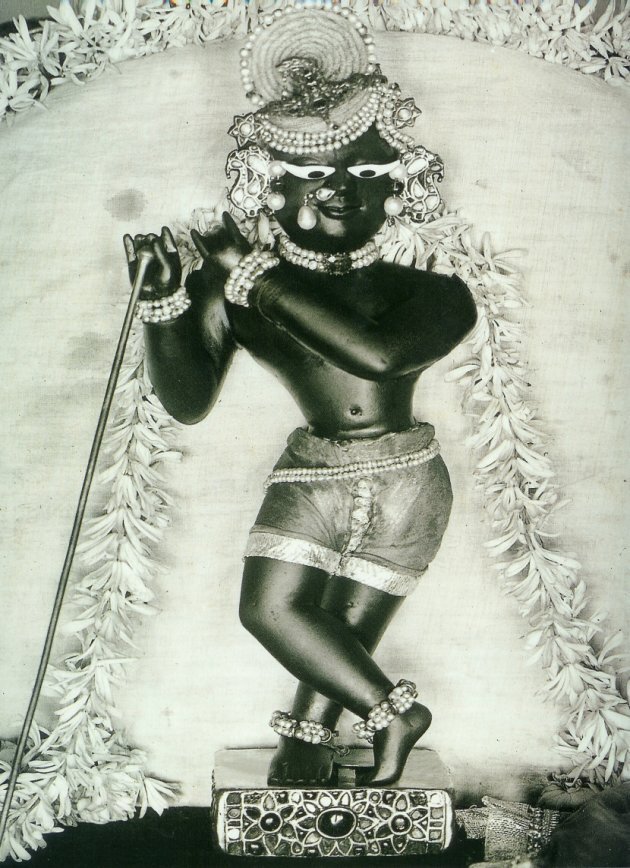
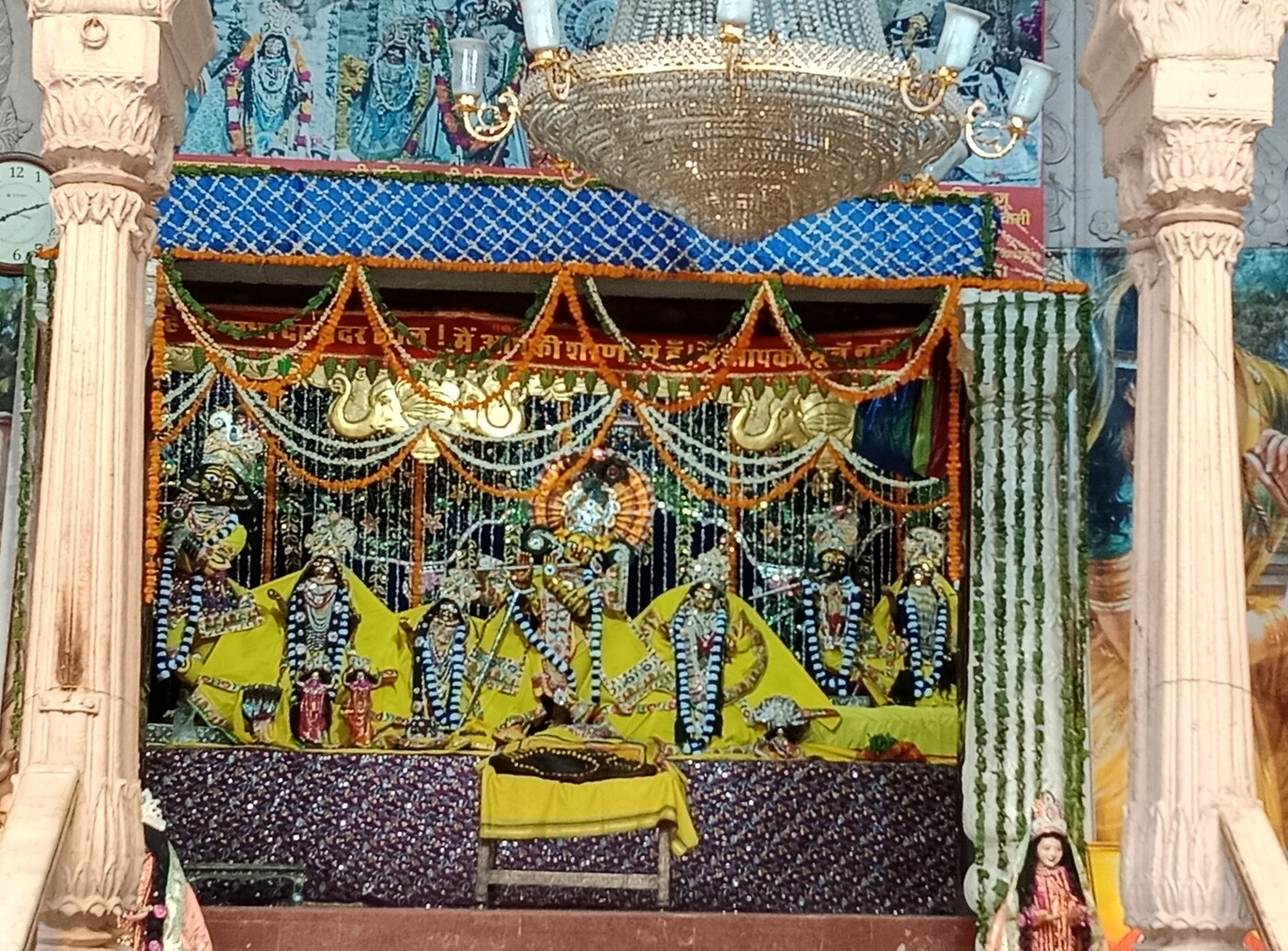
Gopala Bhatta carried twelve shalagram-shilas, which he had gathered during a pilgrimage to the Gandaki River in Nepal. These are the small, dark ammonite stones that Vaishnavas worship as a direct form of Vishnu. One night, absorbed in an old longing to serve the Lord in a form with arms, legs and a smiling face, he covered his shilas as usual and went before dawn to bathe in the Yamuna. He returned to find that one of the twelve had become a living form of Krishna playing the flute. His community named this Deity Sri Radha Raman. Radha Raman was installed under the direct instruction of Rupa Gosvami and Sanatana Gosvami. He is one of Vrindavana's seven original principal Deities. He is also the only one of the seven that was never carried off to Jaipur for safekeeping during the Mughal period. The complete account is told in The Self-Manifested Deity of Radha Raman.
Disappearance and Legacy #
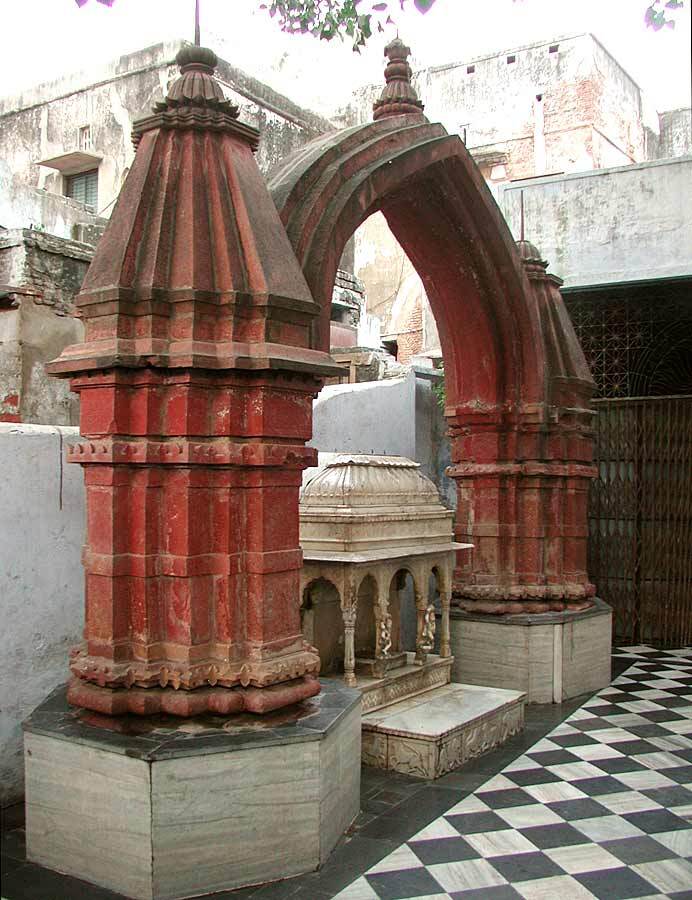
Gopala Bhatta Goswami is traditionally said to have left this world in 1578, at around seventy-five years of age. His samadhi stands today inside the Radha Raman temple complex he founded. His disciples Srinivasa Acharya and Gopinatha Pujari continued his service. Srinivasa Acharya later carried Gaudiya Vaishnava literature to Bengal and composed the daily prayer glorifying all Six Goswamis. Goswami families descended from that same circle still perform the temple's worship today. Decades later, when Krishnadasa Kaviraja Goswami was compiling Sri Chaitanya-charitamrita, he asked for and received Gopala Bhatta's blessing for the work. But at Gopala Bhatta's own request, his name appears only a few times in its pages. This small detail is typical of the humility that ran through his whole life. Like Raghunatha Dasa Goswami, his fellow Goswami of Vrindavana, Gopala Bhatta is remembered less for any single dramatic act than for a lifetime of quiet, thorough service. Fuller detail on his final years and the temple's unbroken worship appears in Disappearance and Legacy.
Scriptural evidence
Quoted in the text above:
- Adi 10.105 Sri Chaitanya-charitamrita quoted above ↑
- Verse 184 Gaura-ganoddesha-dipika
What Srila Prabhupada said
"Vande rupa-sanatanau raghu-yugau sri-jiva-gopalakau. So Sanatana Gosvami, Rupa Gosvami, and two Raghunatha Gosvami, and three, four, and then Jiva Gosvami and Gopala Bhatta Gosvami. Six Gosvamis... On the basis of those eight verses [Siksastaka], the Gosvamis wrote literatures, volumes of books."
Six Gosvamis Lecture, Sri Sri Sad-gosvamy-astaka: Lecture, 1968-11-18, Los Angeles
- Sri Chaitanya-charitamrita, Adi-lila 10.105 and purport (Bhaktivedanta VedaBase)
- Sri Chaitanya-charitamrita, Madhya-lila 9.100-165 (Bhaktivedanta VedaBase)
- Gopala Bhatta Goswami - Biography, Gaudiya History
- Sri Gopala Bhatta Goswami, Gaudiya History
- Gopala Bhatta Goswami - Pastimes, Gaudiya History
- Venkatta Bhatta, Gaudiya History (tag page)
- Sri Hari-bhakti-vilasa (full text), Internet Archive
- The Seven Goswami Temples of Vrindavan, The Hare Krishna Movement
- Srila Prabhupada lecture, Six Gosvamis Lecture (Sri Sri Sad-gosvamy-astaka), Los Angeles, November 18 1968
Disciples
Frequently asked
When was Sri Gopala Bhatta Goswami born?
Sri Gopala Bhatta Goswami appeared c. 1503 (traditionally the 13th day of the dark half of Pausha) in Srirangam, South India.
Who was the guru of Sri Gopala Bhatta Goswami?
The spiritual master of Sri Gopala Bhatta Goswami was Srila Prabodhananda Saraswati.
When and where did Sri Gopala Bhatta Goswami disappear?
Sri Gopala Bhatta Goswami disappeared Traditionally 1578 (6th day of the dark half of Sravana), at about 75 years of age at Vrindavana (Radha Raman temple).
What are the main pastimes of Sri Gopala Bhatta Goswami?
The pastimes covered here include: Birth in a Family of Temple Priests, Mahaprabhu's Visit and a Father's Hospitality, Arrival in Vrindavana, Compiling the Hari-bhakti-vilasa, The Self-Manifested Deity of Radha Raman, Disappearance and Legacy.