Srila Sarvabhauma Bhattacharya
The Royal Pandit Converted by Sri Chaitanya Mahaprabhu
The complete life, on one page: The main biography and every pastime page, in order, in one place
Introduction
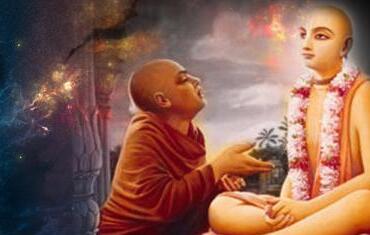
Long before he ever saw Sri Chaitanya Mahaprabhu, Sarvabhauma Bhattacharya was already one of the most famous men in eastern India. He was chief pandit of the Jagannatha Puri royal court and, by common consent, the finest Vedanta scholar and logician of his generation. In early 1510 a young sannyasi collapsed in ecstasy before the Deity of Jagannatha, and it was Sarvabhauma who carried Him home and nursed Him back to consciousness. Within a few months, the same man who had planned to correct this promising but over-emotional young monk was falling at His feet. He was convinced that he had been in the presence of Krishna Himself. Few conversions in the history of Gaudiya Vaishnavism are as fully recorded, and few had such far-reaching results. Through Sarvabhauma the sankirtana movement gained its first firm footing in Odisha. Through him it was also introduced to Ramananda Raya, and in time it won the devotion of Maharaja Prataparudra himself.
| Detail | Description |
|---|---|
| Position | Chief royal pandit of Vedanta at the Jagannatha Puri court of Maharaja Prataparudra |
| Identity | Incarnation of Brihaspati, the learned scholar of the heavenly planets (Gaura-ganoddesha-dipika 119; Chaitanya-charitamrita Adi 10.130 purport) |
| Training | Nyaya logic under Pakshadhara Mishra at Mithila; Vedanta in the line of Sankaracarya |
| Turning point | Seven days of Vedanta discourse with Sri Chaitanya Mahaprabhu at Jagannatha Puri, early 1510 |
| Literary works | The Sarvabhauma-shataka (also called the Chaitanya-shataka) and the Advaitashtakam |
| Disappearance | Not recorded; he lived out his life at Jagannatha Puri |
Scriptural evidence for the introduction (3)
I offer my respectful obeisances unto Lord Gauracandra, the Supreme Personality of Godhead, who converted the hardhearted Sarvabhauma Bhattacharya, the reservoir of all bad logic, into a great devotee.
Krishnadasa Kaviraja Goswami's own opening verse of the chapter narrating Sarvabhauma's conversion, showing how starkly the tradition frames his pre-conversion character.
Sarvabhauma Bhattacharya perfectly knows the six philosophical theses. He is therefore the spiritual master of the entire world in teaching the six paths of philosophy. He is the best of devotees. Sarvabhauma Bhattacharya has shown Me the limit of devotional service. Only by his mercy have I understood that devotional service to Krishna is the essence of all mystic yoga.
Chaitanya Mahaprabhu's own later assessment of Sarvabhauma, spoken to the scholar Vallabha Bhatta years after the conversion.
भट्टाचार्यः सार्वभौमः पुरासीद्गीष्पतिर्दिवि ॥११९॥
bhaṭṭācāryaḥ sārvabhaumaḥ purāsīd gīṣpatir divi ||119||
Sarvabhauma Bhattacarya had formerly been Brhaspati, the foremost scholar in the heavenly planets.
From the purport: The Gaura-gaṇoddeśa-dīpikā (119) states that Sārvabhauma Bhaṭṭācārya was an incarnation of Bṛhaspati, the learned scholar from the celestial planets.
Kavi Karnapura identifies Sarvabhauma Bhattacharya with Brihaspati (gishpati, lord of speech), the scholar and teacher of the devas. Srila Prabhupada cites this verse in his purport to Chaitanya-charitamrita Adi 10.130. Sanskrit: diacritic edition of the Gaura-ganoddesha-dipika; English translation as published at bvmlu.org.
Chapter 1
The Logician of Nabadwip and Mithila
How a village Brahmana's son became the most feared naiyayika in Bengal and chief Vedanta pandit of the Puri court.
Nearly everyone who met Sarvabhauma Bhattacharya after 1510 knew him as a devotee of Sri Chaitanya Mahaprabhu. But for decades before that, he was known across Bengal and Odisha for something quite different. Most people agreed that he was the most powerful master of nyaya, formal logic, that Nabadwip had ever produced. Later he became the chief scholar of Vedanta at the royal court of Jagannatha Puri.
| Detail | Description |
|---|---|
| Birth name | Vasudeva Bhattacharya |
| Birthplace | Vidyanagara, close to Nabadwip, Nadia district, Bengal |
| Father | Mahesvara Visarada, a respected local scholar |
| Teacher of logic | Pakshadhara Mishra, head of the nyaya school at Mithila (disputed by some historians) |
| Later post | Chief pandit of Vedanta, royal court of Maharaja Prataparudra, Jagannatha Puri |
A Scholar's Household in Nadia #
Vasudeva Bhattacharya, as he was originally named, grew up in Vidyanagara, a village a short walk from Nabadwip, where his father Mahesvara Visarada had a name of his own as a Sanskrit scholar. According to tradition Vasudeva learned grammar and literature at his father's feet before setting out, as a young man, for Mithila in Bihar, then the acknowledged capital of Indian logic.
The School of Pakshadhara Mishra #
At Mithila, tradition holds, Vasudeva joined the academy of Pakshadhara Mishra, the leading teacher of nyaya of his day. He studied so hard that it became legendary. The Mithila school guarded its texts closely and did not allow foreign students to copy its manuscripts. So when Vasudeva's studies were complete, he is said to have memorised the entire Tattva-chintamani and the verse portions of the Nyaya-kusumanjali, so that he would not leave empty-handed. He was tested in a public examination called the Shalaka Pariksha. In this test, a scholar has to explain, leaf by leaf, whatever part of a manuscript is placed in front of him. Vasudeva is said to have explained a hundred leaves without hesitation. For this his teacher gave him the title Sarvabhauma, "lord of the whole earth," and he was known by this title for the rest of his life. From Mithila he is said to have gone on to Kashi to study Vedanta before returning home.
Not every historian accepts this account as simple fact. The scholar Dinesh Chandra Bhattacharya argued that the Mithila journey and the feat of memorisation are later legend. He said that Vasudeva Sarvabhauma in fact learned the new method of logic, navya-nyaya, directly from his father Visarada, and never travelled to Bihar at all. But both versions agree on the main point. Whichever way he learned, Sarvabhauma became a logician without rival in Bengal.
Moving the Centre of Nyaya to Nabadwip #
Whichever account is correct, Sarvabhauma returned to Nadia and opened his own school of logic there. Students came from across Bengal to study under him. Among the names later connected with his teaching is Raghunatha Shiromani, author of the Didhiti, who would go on to become one of the greatest logicians nyaya ever produced. This had a lasting effect on Indian scholarship. Until then Nabadwip had been a small provincial town. But in Sarvabhauma's own lifetime it became known as the leading centre of nyaya learning, ahead even of Mithila. The town still has this reputation centuries later.
Chief Pandit of the Puri Court #
Word of Sarvabhauma's learning eventually reached Maharaja Prataparudra, the Gajapati ruler of Odisha. The king invited him to Jagannatha Puri to serve as the court's chief authority on Vedanta. There Sarvabhauma taught Sankaracarya's Sariraka-bhasya, the great impersonalist commentary on the Vedanta-sutra. His audience included many sannyasis of the Sankara order itself. This was an unusual position for a householder scholar to hold, because he himself never took sannyasa. Instead, according to a summary attributed to Bhaktisiddhanta Sarasvati Thakura, he took a personal vow called kshetra-sannyasa. By this vow he would never again set foot outside the sacred district of Jagannatha Puri. He kept that vow for the rest of his life.
A Reputation Waiting to Be Tested #
So when Sri Chaitanya Mahaprabhu reached Puri in early 1510, Sarvabhauma Bhattacharya was not a minor local pandit. He was one of the most respected scholars in eastern India. Even the king accepted his judgment on Vedanta philosophy. This reputation, and the firm impersonalist belief behind it, make what happened next so striking. It is told in The Fall at the Temple Gate and Seven Days of Silence. A scholar who had spent a lifetime defeating other logicians in debate was about to meet someone he could not defeat with logic at all.
Chapter 2
The Fall at the Temple Gate
How an unconscious stranger at the Jagannatha temple became a houseguest Sarvabhauma Bhattacharya was determined to correct.
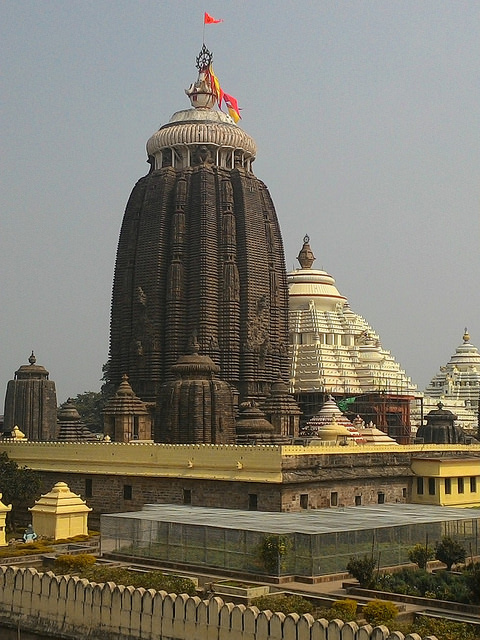
Sarvabhauma Bhattacharya did not go looking for Sri Chaitanya Mahaprabhu. Their first meeting happened because Sarvabhauma was, as usual, near the Jagannatha temple, and a stranger fell unconscious in front of him.
An Unknown Sannyasi Collapses #
Early in 1510, a young sannyasi walked into the Jagannatha temple, saw the Deity, ran toward the altar to embrace Him, and collapsed on the floor. To the temple watchmen He looked like a wandering beggar who was about to be beaten and thrown out. Sarvabhauma happened to be present. Something about the fall made him stop. He had already noticed the beauty of the young man, and the visible changes in the body that come with ecstatic love of God. He stepped in before the guards could act. Then, with the help of his own students and the temple guards, he had the unconscious sannyasi carried to his own house.
A Physician's Test #
Once home, Sarvabhauma did what any careful scholar of the scriptures would do before coming to a conclusion. He checked. He watched for movement in the abdomen and found none. He checked the breathing and found none either. Only when he held a wisp of cotton before the nostrils and saw it move faintly did he relax. Sitting beside the still body, he recognised the symptoms. The Chaitanya-charitamrita later names them suddipta-sattvika, a technical term for ecstatic transformation. The scriptures describe such symptoms as appearing only in eternally liberated souls. So Sarvabhauma could not understand how such a thing could appear in an ordinary human body (Chaitanya-charitamrita, Madhya-lila 6.9-12).
An Old Family Connection #
While Sarvabhauma looked after the unconscious sannyasi, word reached Nityananda Prabhu and the devotees travelling with the Lord that He had been carried to a house near the temple. The person who found the group at the temple gate and led them there was Sarvabhauma's own brother-in-law, Gopinatha Acharya. He was married to Sarvabhauma's sister. He was also a Nadia man, and he already knew exactly who this sannyasi was. Once the devotees began chanting the holy names, the Lord returned to external consciousness. Sarvabhauma was delighted to be host to visitors from his own home region. He fed everyone generously and sent them to bathe in the sea. Then he learned the young man's family background. He was the grandson of Nilambara Chakravarti, a scholar whom Sarvabhauma's own father Mahesvara Visarada had respected. He was the son of Jagannatha Mishra, and His own former name was Vishvambhara Mishra. Now Sarvabhauma's interest turned personal. He was old enough to be the young sannyasi's father, and he began to feel exactly that kind of protective affection.
A Well-Meant, Mistaken Plan #
That affection led to a plan that Sarvabhauma was sure was sound. Here was a very beautiful young man of about twenty-four who wept, fainted and danced at the sight of a Deity. He had newly taken sannyasa under Keshava Bharati, and in Sarvabhauma's own ranking of sannyasa lineages this was only an ordinary line. To a lifelong logician, this combination did not look like holiness. It looked more like a fine mind about to be ruined by uncontrolled emotion. Sarvabhauma even offered, quite sincerely, to arrange for Him to be initiated again into a higher sannyasa order. The remedy he chose was to recite Vedanta philosophy to the Lord all the time, until calm renunciation took the place of so much emotion.
Gopinatha Acharya's Objection #
Gopinatha Acharya understood exactly who was staying in his brother-in-law's house. He argued against the plan as strongly as politeness allowed. The Supreme Lord, he said, is known only by His own mercy, never by reasoning or scholarship. And Sarvabhauma, in spite of all his learning, was blind to what was directly in front of him. Sarvabhauma was not moved. He replied that scripture itself denies any incarnation of Vishnu in the current age of Kali. When the exchange was reported to Sri Chaitanya Mahaprabhu, He refused to hear a word said against Sarvabhauma. The Bhattacharya, He told His devotees, was acting purely out of a father's affection, and He fully accepted him as a spiritual master. That prepared the way for the seven days of one-sided Vedanta lectures told in Seven Days of Silence.
Scriptural evidence for this chapter (1)
Examining the body of Sri Chaitanya Mahaprabhu, Sarvabhauma saw that His abdomen was not moving and that He was not breathing... The Bhattacharya then took a fine cotton swab and put it before the Lord's nostrils. When he saw the cotton move very slightly, he became hopeful.
Sarvabhauma's own careful, almost clinical examination of the unconscious Lord, before he had any inkling of who he was dealing with.
Chapter 3
Seven Days of Silence
A famous logician spends a week lecturing a silent sannyasi on Vedanta, then loses the argument of his life.
Sarvabhauma Bhattacharya's plan was simple. He would recite the Vedanta-sutra according to Sankaracarya's commentary, day after day, until sober renunciation settled into this brilliant, overly emotional young sannyasi. Sri Chaitanya Mahaprabhu agreed at once, out of respect for a senior scholar He had already accepted as His elder. What Sarvabhauma had not planned for was silence.
A Sannyasi Who Would Not Interrupt #
Out of respect for a sannyasi's position, Sarvabhauma sat on the floor of the Jagannatha temple, with the Lord seated above him. In this way he explained the Sariraka-bhasya for seven days in a row. Chaitanya Mahaprabhu did not object, did not agree and did not ask a single question. To a teacher used to sharp students and sharper debate, this was impossible to understand. On the eighth day Sarvabhauma finally stopped and said what had been troubling him. He could not tell whether the Lord was understanding any of it.
Clouds Over the Sun #
Mahaprabhu's first answer was a humble one, the kind He gave throughout His life. He was a fool, He said, who understood nothing of Vedanta, and He listened only because a sannyasi has a duty to. Sarvabhauma did not accept this. Even someone who understands nothing, he said, usually asks questions. This time he got the real answer. The Lord understood the sutras perfectly. It was Sarvabhauma's commentary that He could not follow. Vyasadeva's short sutras, He said, carry their own clear meaning, as plain as sunlight. Explanations like Sarvabhauma's had simply covered that meaning over, the way a cloud covers the sun (Chaitanya-charitamrita, Madhya-lila 6.131, 6.138).
Reading the Veda as It Stands #
That single sentence turned seven days of polite lecturing into the argument the tradition still remembers. Chaitanya Mahaprabhu's position was that the direct meaning of a Vedic statement must be accepted as it stands. The moment an interpreter puts in a meaning of his own choosing, the Veda loses its own authority as a witness. He pointed out that the Veda calls conch shell and cow dung pure, though in ordinary terms they are bone and stool. No one tries to explain that away, so why explain away the Veda's description of the Absolute Truth? Sometimes the Vedic literature describes the Supreme in negative terms, as without hands and without feet. There it is denying material limitation, not personality. The same passage that denies hands and feet elsewhere says that He walks swiftly and accepts what is offered to Him. When the Veda is read carefully, it shows that Sarvabhauma had built a school of thought on missing this point.
An Absolute Truth Full of Energies #
As the Lord explained it, the heart of the disagreement was about energy. Mayavada philosophy denies that the Absolute has any potencies at all. Chaitanya Mahaprabhu argued that this was its basic error, because the Vedic literature everywhere describes the Supreme as inconceivably powerful. He has an internal spiritual potency, which is itself eternity, knowledge and bliss. He has a marginal potency, which is the individual living being. And He has an external potency of illusion, which covers the living being's constitutional position (Chaitanya-charitamrita, Madhya-lila 6.169-172). Because the living entity belongs to that marginal potency, he is not one with the Lord, as monism holds, and he is not absolutely separate from Him either. Gaudiya Vaishnava theology later formalised this position as achintya-bheda-abheda-tattva, inconceivable oneness and difference at once. The Lord explained it with the example of a touchstone. A touchstone turns iron into gold by touching it, without itself changing. In the same way, the Supreme shows the entire cosmos through His potency while He Himself remains unchanged. Sankaracarya, the Lord argued, found this transformation of energy hard to accept. He judged that Vyasadeva had made a mistake, and he replaced it with a doctrine of illusion. But illusion properly describes the soul's mistake of identifying itself with the body. It does not describe the cosmos itself, which is temporary but real.
Defeated by His Own Discipline #
Krishnadasa Kaviraja records that Chaitanya Mahaprabhu found hundreds of specific faults in the Sariraka-bhasya during the argument. Sarvabhauma defended it with everything that seven days and a lifetime of training could give him, and still he lost. His whole public name rested on never losing an argument, so for him this was as complete a defeat as possible. But what broke him fully was not this argument about doctrine. It was a single verse of the Bhagavatam that came next. This is told in The Atmarama Verse Explained Eighteen Ways.
Scriptural evidence for this chapter (3)
The meaning of the aphorisms in the Vedanta-sutra contain clear purports in themselves, but other purports you presented simply covered the meaning of the sutras like a cloud... One who tries to interpret its meaning simply covers that sunshine with a cloud.
The line that turned Sarvabhauma from teacher into student, spoken after seven days of silent listening.
The Vedanta-sutra aims at establishing that the cosmic manifestation has come into being by the transformation of the inconceivable potency of the Supreme Personality of Godhead... The touchstone, after touching iron, produces volumes of gold without being changed. Similarly, the Supreme Personality of Godhead manifests Himself as the cosmic manifestation by His inconceivable potency, yet He remains unchanged in His eternal, transcendental form.
The touchstone analogy at the heart of Chaitanya Mahaprabhu's argument for achintya-bheda-abheda-tattva against Sarvabhauma's Mayavada reading of the Vedanta-sutra.
Conchshells and cow dung are nothing but the bones and the stool of some living entities, but according to the Vedic version they are both considered very pure.
The conch-shell and cow-dung example Chaitanya Mahaprabhu used to show that a Vedic statement's direct sense must be accepted even when it defies ordinary experience, the same principle He then applied to the Vedic description of the Absolute Truth.
Chapter 4
The Atmarama Verse Explained Eighteen Ways
A single Bhagavatam verse, and a display of scholarship that finally breaks a lifelong Mayavadi's pride.
Sarvabhauma Bhattacharya had lost the argument about philosophy point by point, but he was not yet a devotee. He was a defeated logician, which is a different thing. His change was not completed by another argument. It was completed by a single verse of the Srimad-Bhagavatam, and by a display of scholarship that even he could not equal.
A Verse About Self-Satisfied Sages #
After days of hard debate, Chaitanya Mahaprabhu spoke more gently and quoted a well-known Bhagavatam verse, the famous atmarama verse (Chaitanya-charitamrita, Madhya-lila 6.185-186, quoting Srimad-Bhagavatam 1.7.10). It says that even sages who are fully self-satisfied and free of material desire are drawn to the loving service of Krishna, whose qualities are transcendental and whose activities are wonderful. Sarvabhauma was still a scholar through and through, so he asked to hear it explained. The Lord, with perfect courtesy, asked him to go first.
Nine Explanations, Then Eighteen More #
Sarvabhauma did not disappoint. Using all his skill in nyaya and his knowledge of the scriptures, he explained the verse in nine different ways. Chaitanya Mahaprabhu praised the performance fully. No one in the world, He said, could explain a verse like that. Then He took each of the verse's eleven Sanskrit words in turn, without touching a single one of Sarvabhauma's nine readings. He combined each word with the word atmarama, and produced eighteen further explanations of His own (Chaitanya-charitamrita, Madhya-lila 6.195). All his life Sarvabhauma had been the person in the room whom nobody could out-argue. Now he watched someone double his own best effort without repeating a single point. This was not a defeat he could explain away.
Four Arms, Two Arms and a Flute #
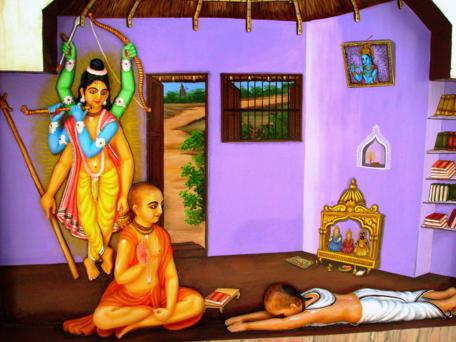
Sarvabhauma broke completely. The tradition records that in that moment he understood who stood before him. He condemned himself aloud as an offender blinded by his own learning, and fell at the Lord's feet. Chaitanya Mahaprabhu then showed him, one after the other, the four-armed form of Vishnu and then His own original form of Krishna, dark-complexioned with a flute at His lips (Chaitanya-charitamrita, Madhya-lila 6.203). A six-armed vision is also remembered in this pastime. It combines the forms of Rama and Krishna with Chaitanya's own sannyasi form. It is still a special image of worship in Gaudiya Vaishnava art to this day, including at Sarvabhauma's own house in Puri.
A Hundred Verses Faster Than Brihaspati #
Sarvabhauma fell flat on the ground, rose, and began to compose. In a very short time he produced a hundred Sanskrit verses in praise of the Lord. Krishnadasa Kaviraja remarks that not even Brihaspati, the learned priest of the demigods, could have composed them so quickly (Chaitanya-charitamrita, Madhya-lila 6.206-207). Those hundred verses would later circulate on their own as the Sarvabhauma-shataka, sometimes also called the Chaitanya-shataka. Mahaprabhu embraced him, and the man remembered as the greatest logician in Odisha wept, trembled, perspired and danced. This was the beginning of a devotional life, told further in The Two Verses on the Palm Leaf.
A six-armed Deity in memory of this darshan is still worshipped today. He is worshipped both at the Jagannatha temple in Puri and at Sarvabhauma's own former house nearby. At the house there is also a painted scene of the vision. It shows Sarvabhauma seated in prayer, with the six-armed form in the air before him, and the Lord's own sannyasi body lying flat on the floor beside him. This is one of the most often copied images of this entire episode in Gaudiya Vaishnava devotional art.
Why the Argument Had to Be Won #
Gaudiya Vaishnava tradition, following the Gaura-ganoddesha-dipika, identifies Sarvabhauma Bhattacharya as an incarnation of Brihaspati. He was sent specifically to give Chaitanya Mahaprabhu a worthy opponent for this pastime. In it the Lord defeated Mayavada philosophy with its own methods, not by miracle alone. Whether or not a reader accepts that identification, the story itself explains why this conversion has kept its place at the centre of Gaudiya Vaishnava memory. Sarvabhauma was not won over by a display of power he could not match. He was out-reasoned and out-explained in the very field where he had never once been beaten before, the explaining of Sanskrit scripture.
Scriptural evidence for this chapter (2)
atmaramas ca munayo nirgrantha apy urukrame / kurvanty ahaitukim bhaktim itthambhuta-guno harih
Even those silent sages who are fully self-satisfied and freed from bondage perform causeless devotional service to Lord Hari, whose pastimes are wonderful, for such is the glorious nature of His qualities.
The atmarama verse Sarvabhauma explained nine ways before Chaitanya Mahaprabhu explained it eighteen more ways without repeating him, the turning point of the whole conversion.
Sarvabhauma Bhattacharya composed one hundred verses in a very short time. Indeed, not even Brihaspati, the priest of the heavenly planets, could compose verses as quickly.
The hundred verses composed in the moments after Sarvabhauma's conversion, later known as the Sarvabhauma-shataka or Chaitanya-shataka.
Chapter 5
The Two Verses on the Palm Leaf
Sarvabhauma Bhattacharya's first acts as a devotee: a hidden poem, a plate of prasadam, and one word he could not bring himself to keep.
A convinced devotee still had to learn how to behave like one. Sarvabhauma Bhattacharya's first lessons in devotional life were practical and personal. The debate that led to them had been about ideas.
Maha-Prasadam Before the Morning Bath #
Early one morning, Chaitanya Mahaprabhu arrived at Sarvabhauma's house carrying garlands and food remnants from the Jagannatha temple, and placed them directly in his hands. Sarvabhauma had not yet washed his mouth, bathed or done any of the daily ritual duties expected of a brahmana of his position. For a scholar of Sarvabhauma's rank, eating anything before the morning bath was unthinkable, by every rule he had followed his whole life. He quoted two verses on honouring maha-prasadam no matter what the time or situation, and ate it on the spot, without hesitation. Chaitanya Mahaprabhu embraced him, and the two of them danced together. The Lord later said that on that day He had conquered the three worlds, simply because Sarvabhauma had developed faith in Jagannatha's prasadam.
A Question About Worship #
On another day Sarvabhauma asked the Lord directly what the single most important item of devotional service was. Chaitanya Mahaprabhu's answer was chanting the holy name of Krishna. This answer became the seed of everything Sarvabhauma would teach for the rest of his life. For decades he had taught Sankaracarya's Vedanta. Now he taught the maha-mantra instead. The Lord explained at length how the practice of chanting alone slowly removes the deep-rooted idea that we are the body. Until only weeks earlier, that bodily idea of life had been the unquestioned starting point of Sarvabhauma's own philosophy.
Two Verses Composed in Secret #
Sanskrit verse was still the only form of expression that Sarvabhauma fully trusted. So some days later he composed two Sanskrit verses on a palm leaf and sent them to the Lord through Jagadananda Pandit. Mukunda Datta took the leaf before it could be delivered and copied both verses onto the wall outside the room. Only then did Jagadananda hand it over. Chaitanya Mahaprabhu read the two verses and at once tore the leaf up. But the devotees had already read them from the wall and kept them in their hearts (Chaitanya-charitamrita, Madhya-lila 6.250-253).
In the first verse, Sarvabhauma declared that the Supreme Personality of Godhead had descended in the form of Chaitanya Mahaprabhu to teach real knowledge, detachment and devotional service to Himself. He called Him an ocean of transcendental mercy, to whom he now surrendered. In the second verse, he declared that this same Lord had appeared to restore an ancient system of devotional service that had nearly been lost with the passage of time. His own mind, like a honeybee, now wished only to drink in this system at His lotus feet (Chaitanya-charitamrita, Madhya-lila 6.254-255). Krishnadasa Kaviraja records that these two verses would go on to announce Sarvabhauma's name as loudly as a beaten drum. Devotees treasured them like pearls worn around the neck.
The Word He Could No Longer Say #
The clearest sign of how far Sarvabhauma had travelled came in a much smaller exchange. He was reciting a verse of Lord Brahma's from the Bhagavatam that describes the Lord as mukti-pada, the shelter of liberation. But Sarvabhauma quietly put in bhakti-pada, the shelter of devotion, in its place. Chaitanya Mahaprabhu noticed the change at once and asked why. The original word, He pointed out, refers directly to Krishna, at whose feet every form of liberation already stands, so there was no need to change it. Sarvabhauma agreed that the Lord's reading was correct, but he still kept his changed word. He knew mukti-pada was accurate, he said, but the very sound of the word "liberation" had come to disturb him, while "devotion" filled his mind with joy. A pure devotee, he added, would sooner go to hell than merge into the impersonal effulgence (Chaitanya-charitamrita, Madhya-lila 6.262-274). Chaitanya Mahaprabhu laughed and embraced him. All his career this man had taught that merging into Brahman was the goal of life. Now, within weeks, he drew back from the very word liberation. And the other scholars of Jagannatha Puri, watching this, began taking shelter of the Lord themselves.
Scriptural evidence for this chapter (1)
vairagya-vidya-nija-bhakti-yoga- / shikshartham ekah purushah puranah / shri-krishna-caitanya-sharira-dhari / kripambudhir yas tam aham prapadye
Let me take shelter of the Supreme Personality of Godhead, Sri Krishna, who has descended in the form of Lord Caitanya Mahaprabhu to teach us real knowledge, His devotional service and detachment... Let my consciousness, which is like a honeybee, take shelter of the lotus feet of the Supreme Personality of Godhead, who has just now appeared as Sri Krishna Caitanya Mahaprabhu to teach the ancient system of devotional service to Himself.
The two verses Sarvabhauma composed on a palm leaf and tried to send privately to the Lord; Mahaprabhu tore up the leaf, but the devotees had already copied the verses from the wall.
Chapter 7
The House That Remembers Him
No date survives for Sarvabhauma Bhattacharya's disappearance. But his house at Jagannatha Puri remains, and so do Chaitanya Mahaprabhu's own words about him.
Because of his own kshetra-sannyasa vow, we know where Sarvabhauma Bhattacharya's story ends. After the Lord converted him at Jagannatha Puri, he never again set foot outside the holy district. What is missing is a date.
No Recorded Year of Disappearance #
None of the available sources gives a year, or even a decade, for Sarvabhauma Bhattacharya's disappearance. These sources are the Chaitanya-charitamrita itself, the Gaudiya History biography based on the Gaudiya Vaishnava Abhidhana, and the available Wikipedia material. We say this plainly instead of hiding it. He is so central to the tradition that this is a real gap in the historical record. It is not a detail simply left out here to save space. This much can be said. He continued serving, teaching and hosting Chaitanya Mahaprabhu at Puri for years after his conversion in 1510, well into the period covered by the Antya-lila of the Chaitanya-charitamrita. And no source records him leaving Odisha again, or passing away before the Lord's own disappearance.
A Birth Year Just as Uncertain #
The year of his birth is no clearer. The reference work Gaudiya Vaishnava Abhidhana places his birth in the first half of the fourteenth century of the Shaka calendar. We have not tried to convert this into an exact common-era date, because it would only be a guess. A Wikipedia article under his own name gives a clearly impossible date in the thirteenth to fourteenth century. This is apparently because it mixes him up with an unrelated Assamese scholar of the same title, who debated the philosophy of Sankaradeva. That scholar belonged to a completely different tradition, centuries apart. One thing is certain, whatever the calendar, and it comes from the Chaitanya-charitamrita itself. Sarvabhauma was old enough to have known Chaitanya Mahaprabhu's own grandfather's generation by reputation. He was also old enough that the young Lord's devotees naturally treated him as a father figure well before his conversion.
The House Beside the Sweta Ganga #
What has survived is a real place. Sarvabhauma Bhattacharya's house stood a short walk south of the Jagannatha temple, on the bank of the Sweta Ganga tank in Puri, and its site still stands. It was here that the seven days of Vedanta discourse took place. Here the Lord showed him the four-armed and six-armed forms. And here Sarvabhauma's household fed and sheltered the Bengali devotees through years of Chaitanya Mahaprabhu's stay at Puri. Later tradition holds that the house fell into ruin after Sarvabhauma's family line ended. Then, in the early seventeenth century, Gangamata Goswamini restored it. She was a woman who had renounced the world and been trained in Vrindavana. She started again the worship of the Radha-Damodara deities that Sarvabhauma had himself worshipped there. The site is known today as Gangamata Math. Jagannatha's own maha-prasadam is still offered there daily, in her memory as much as in his.
What the Record Does Support #
The dates may be few, but the main facts of Sarvabhauma Bhattacharya's later life are not in doubt. As far as the available record goes, he remained a working Vedanta scholar to the end. But he now used every skill of his training for devotion. The same memory that had once mastered the Sariraka-bhasya now produced Sanskrit poetry in praise of Krishna. The same authority that had once made him the Puri court's final word on impersonalist philosophy now made him Sri Chaitanya Mahaprabhu's most trusted go-between with a king. At the very start of the sixth chapter of the Chaitanya-charitamrita, Krishnadasa Kaviraja sums him up. He bluntly calls him "the reservoir of all bad logic" before his conversion. This is an unusually harsh line for such an honoured devotee. It shows how complete the tradition considers the change to have been.
A Debated Identity, A Settled Legacy #
Gaudiya Vaishnavas following the Gaura-ganoddesha-dipika identify Sarvabhauma Bhattacharya as Brihaspati, priest of the demigods. They say he took birth specifically to give Chaitanya Mahaprabhu a scholar equal to the task of defeating Mayavada philosophy on its own ground. That identification is a matter of faith, not history, and we keep the two separate throughout. What history does support, from the Chaitanya-charitamrita's own verses onward, is simpler, but just as wonderful. A royal pandit who had spent a lifetime as the most feared logician in eastern India spent his last years as one of Chaitanya Mahaprabhu's dearest devotees. He left behind his own hundred verses and the memory of a house beside a Puri tank. These are evidence enough that the change was real.
Closing
A Householder Scholar in the Court of Puri #
Sarvabhauma was born Vasudeva Bhattacharya at Vidyanagara, a village a short distance from Nabadwip in the Nadia district of Bengal. His father was a respected scholar named Mahesvara Visarada. Tradition says Vasudeva travelled to Mithila in Bihar, then India's leading centre for nyaya, the discipline of formal logic. There he studied under its head professor, Pakshadhara Mishra. He is said to have memorised the entire body of texts taught there. He is also said to have passed a famously difficult oral examination, explaining a hundred manuscript leaves one after another. That is where the title Sarvabhauma ("lord of the whole earth," in the sense of a master of all learning) came from. Not every scholar accepts this journey as fact. The historian Dinesh Chandra Bhattacharya has argued that it is legend. In his view, Vasudeva Sarvabhauma actually learned the new logical method, navya-nyaya, from his own father and never left Bengal. Either way, he returned to Nabadwip and opened a school of logic that drew students from across the region. Among them, by some accounts, was the celebrated logician Raghunatha Shiromani. In effect, that school shifted the centre of Indian nyaya studies from Mithila to Nabadwip, and the town still carries that reputation. Maharaja Prataparudra later brought him to Jagannatha Puri as the court's chief pandit in Vedanta. Sarvabhauma was a householder, not a renounced monk. But he took a personal vow called kshetra-sannyasa, never to set foot outside the holy district of Puri again. There he taught Sankaracarya's impersonalist reading of the Vedanta-sutra to a following that included many sannyasis of his own Sankara order.
- Sri Chaitanya-charitamrita, Madhya-lila 6 (The Liberation of Sarvabhauma Bhattacharya), via vedabase.io
- Sri Chaitanya-charitamrita, Madhya-lila 7 (The Lord Begins His Tour of South India), via vedabase.io
- Sri Chaitanya-charitamrita, Antya-lila 7, via vedabase.io
- Sarvabhauma Bhattacharya - Gaudiya History (ISKCON Desire Tree)
- Sarvabhauma-shataka - Wisdomlib
