Srimati Sita Thakurani
The Wife Whom Mahaprabhu Called Mother
The complete life, on one page: The main biography and every pastime page, in order, in one place
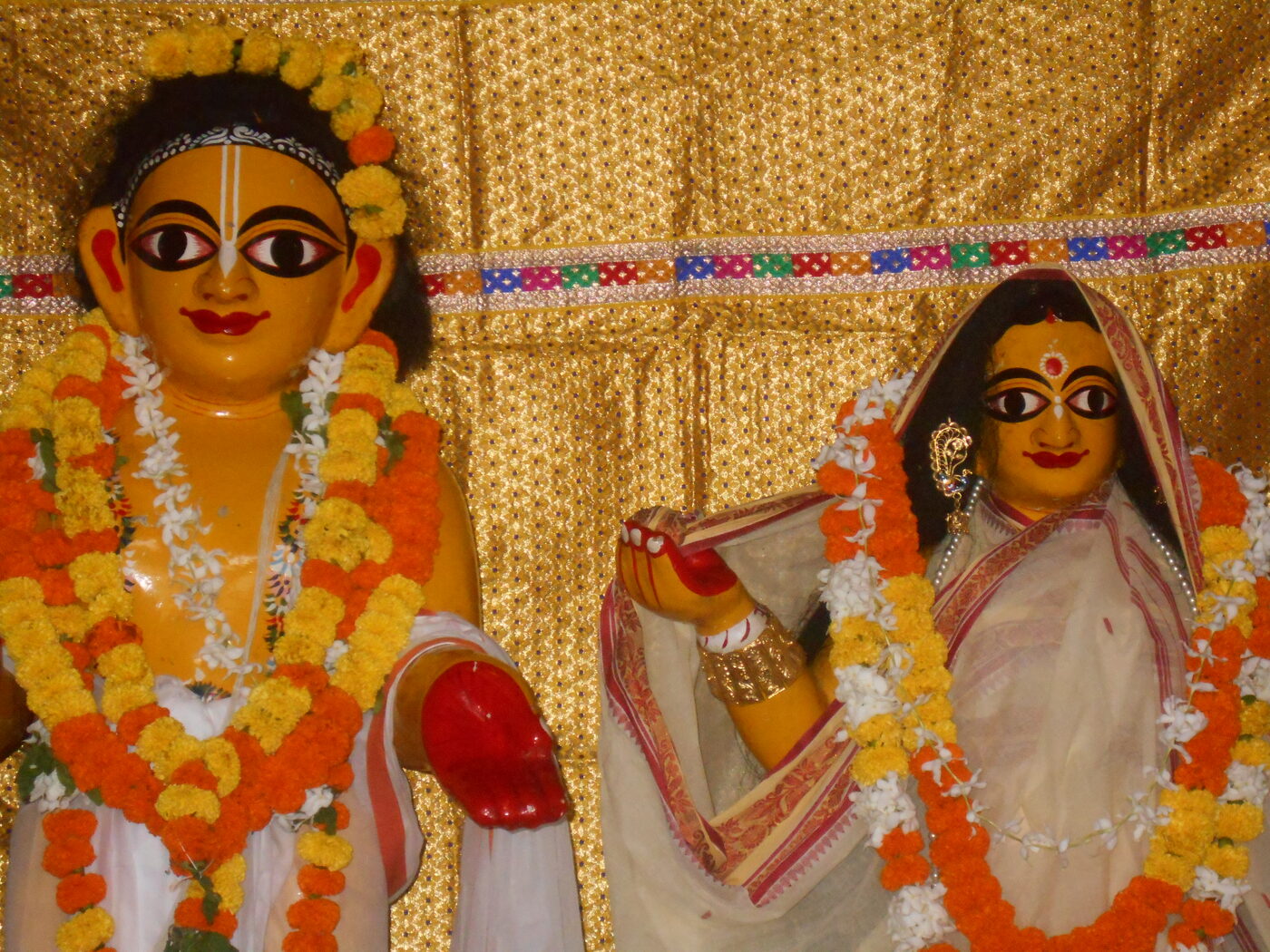
Introduction
Srimati Sita Thakurani was the wife of Sri Advaita Acharya, one of the most senior associates of Sri Chaitanya Mahaprabhu. Yet all through Bengal she is honoured for her own devotion and character, not only as her husband's wife. Sri Chaitanya-charitamrita introduces her, the very first time she appears in the story, as a woman "worshiped by the whole world." Her whole life, read carefully, shows why that was never empty praise.
| Detail | Description |
|---|---|
| Relationship | Wife of Sri Advaita Acharya |
| Father | Nrsimha Bhaduri, of a respected Nadia-district family |
| Married | At Phuliya Nagar; the couple then made their home at Shantipura, Nadia |
| Sons | Acyutananda, Krishna Mishra, Gopala and others; Acyutananda became a noted devotee |
| Identity | Yogamaya, the Supreme Lord's own potency, appearing as Advaita Acharya's wife (Gaura-ganoddesha-dipika 86) |
| Best known for | Naming the infant Chaitanya Mahaprabhu "Nimai"; a lifetime of cooking, hospitality and service to Him |
| Samadhi | Shantipura, Nadia, beside Sri Advaita Acharya's own samadhi |
This page traces her own side of the story. The fuller household story is already told on Sri Advaita Acharya's page and on Sita Thakurani and the Family at Shantipura, so it is not repeated here. That story includes the naming of the infant Lord, the family at Shantipura, the sons, and the difficult division that later split the family. Here we look instead at her own character, her direct bond with Sri Chaitanya Mahaprabhu, and what the tradition honestly says about her place as a devotee and a teacher, including the gaps in the record.
Scriptural evidence for the introduction (3)
advaita-ācārya-bhāryā, jagat-pūjitā āryā, nāma tāṅra 'sītā ṭhākurāṇī'
ācāryera ājñā pāñā, gela upahāra lañā, dekhite bālaka-śiromaṇi
Word for word
advaita-ācārya-bhāryā: the wife of Advaita Ācārya; jagat-pūjitā: worshiped by the whole world; āryā: the most advanced cultured lady; nāma: name; tāṅra: her; sītā ṭhākurāṇī: mother Sītā; ācāryera ājñā pāñā: taking the order of Advaita Ācārya; gela: went; upahāra lañā: taking presentation; dekhite: to see; bālaka-śiromaṇi: the topmost child.
One day shortly after Lord Chaitanya Mahaprabhu was born, Advaita Acharya's wife, Sitadevi, who is worshipable by the whole world, took her husband's permission and went to see that topmost child with all kinds of gifts and presentations.
From the purport: Purport excerpt: "It appears that Advaita Acharya had two different houses, one at Shantipura and one at Navadvipa... from Advaita's old paternal house in Shantipura, Sita came to Navadvipa to present gifts to the newborn child."
The verse that introduces Sita Thakurani by name, and the specific phrase ("worshiped by the whole world") that the epithet and quick-facts above draw on directly.
durvā, dhānya, dila śīrṣe, kaila bahu āśīṣe, cirajīvī hao dui bhāi
ḍākinī-śāṅkhinī haite, śaṅkā upajila cite, ḍare nāma thuila 'nimāi'
Word for word
durvā: fresh grass; dhānya: paddy; dila śīrṣe: placed on the head; kaila bahu āśīṣe: gave much blessing; cira-jīvī hao: become long-lived; dui bhāi: two brothers; ḍākinī-śāṅkhinī: ghosts and witches; haite: from; śaṅkā upajila cite: doubt grew in the heart; ḍare: out of fear; nāma thuila: kept the name; nimāi: Nimai.
She blessed the newborn child by placing fresh grass and paddy on His head and saying, "May You be blessed with a long duration of life." But being afraid of ghosts and witches, she gave the child the name Nimai.
From the purport: Purport excerpt: "Because of all the antiseptic effects of the nima tree and because Lord Chaitanya was born beneath a nima tree, Sita Thakurani gave the Lord the name Nimai. Later in His youth He was celebrated as Nimai Pandita... although His real name was Vishvambhara."
Her own recorded blessing, used as the quote on the main record, and the verse in which she names the infant Lord.
योगमाया भगवती गृहिणी तस्य साम्प्रतम् ।
सीतारूपेणावतीर्णा श्रीनाम्ना तत्प्रकाशतः ॥८६॥
yogamāyā bhagavatī gṛhiṇī tasya sāmpratam
sītā-rūpeṇāvatīrṇā śrī-nāmnā tat-prakāśataḥ
The Supreme Lord's yogamaya potency appeared in Lord Caitanya's pastimes as Sri Sita-devi, the wife of Lord Advaita Acarya.
Kavi Karnapura's identification of Sita Thakurani as the Lord's yogamaya potency; the verse's last words add that Sri appeared as her manifestation (the bvmlu translation leaves these words out). Sanskrit: diacritic edition of the Gaura-ganoddesha-dipika; English translation as published at bvmlu.org.
Chapter 1
Her Life and Marriage to Advaita Acharya
A daughter of Nadia, a marriage at Phuliya, and a woman Sri Chaitanya-charitamrita calls "worshiped by the whole world" the moment she appears
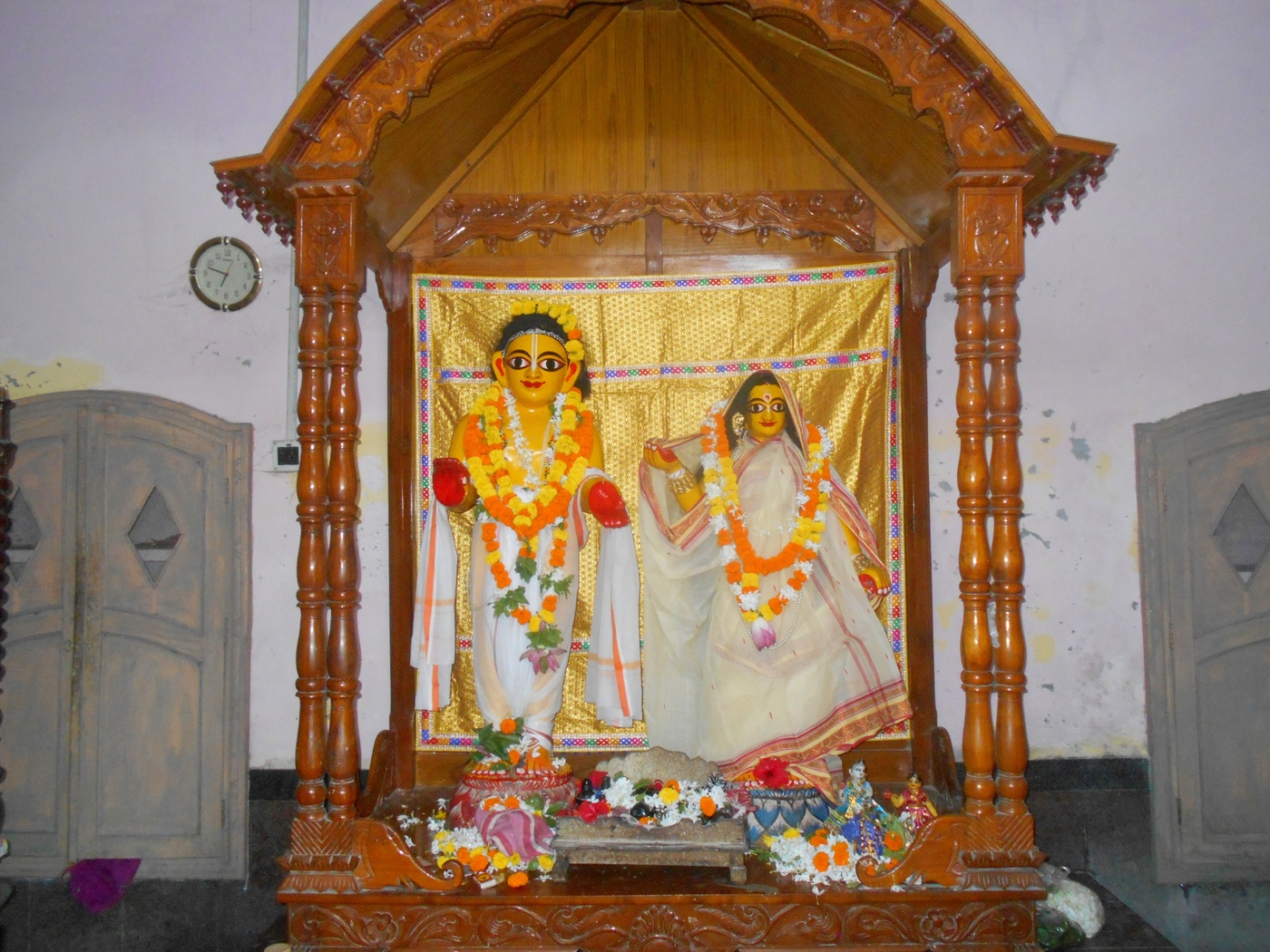
Sita Thakurani enters the story of Gaudiya Vaishnavism in the same way that most women of fifteenth-century Bengal enter their family's records. She appears through her marriage, when she joins a household, and almost nothing is preserved about the years before it. She was the daughter of Nrsimha Bhaduri, and tradition places her wedding to Sri Advaita Acharya at Phuliya Nagar. After the wedding the couple made their home at Shantipura, on the bank of the Ganges in Nadia district. That house would later become one of the two or three central gathering places of the whole sankirtana movement.
| Detail | Description |
|---|---|
| Father | Nrsimha Bhaduri |
| Marriage | At Phuliya Nagar, Bengal; exact year not recorded |
| Household | Shantipura, Nadia, on the Ganges |
| Sister | Sri, herself identified in Gaudiya theology as a further manifestation of Yogamaya |
| Spiritual identity | Yogamaya, the Lord's potency of arrangement and concealment, per Gaura-Ganoddesha-Dipika |
| Recognition | One of four leading women Vaishnava devotees around Sri Chaitanya Mahaprabhu, with Sachi Devi, Vishnupriya Devi and Malini Devi |
That is nearly everything the sources say about her life before the sankirtana movement began. No birth year survives. No account tells of her childhood or her education. Advaita Acharya was already a famous scholar and worshiper of Vishnu, but no account tells how her marriage to him came about. We know only the bare fact that it happened at Phuliya. The tradition does not remember her through a biography in the ordinary sense. It remembers her through a role, the kind of wife, mother and devotee she was after the household at Shantipura was set up. Above all, it remembers what she became once Sri Chaitanya Mahaprabhu came into the world.
Worshiped By The Whole World #
Sri Chaitanya-charitamrita introduces her by name only once. This is at the exact moment she first acts in the story, when she goes to Mayapur to see the newborn Lord. Krishnadasa Kaviraja Goswami chooses these words: advaita-acarya-bharya, jagat-pujita arya, "the wife of Advaita Acharya, worshiped by the whole world, the most advanced and cultured lady." The text does not use this phrase for every devotee's wife. It is a special and serious description. It also shows how she is treated in the rest of the literature, as someone honoured for her own devotion, not simply as a reflection of her husband's devotion.
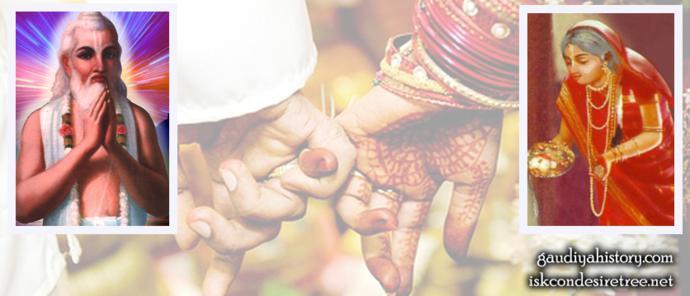
Bengali Vaishnava theology gives a reason why she is so highly honoured. The Gaura-Ganoddesha-Dipika is the traditional record of who each of Sri Chaitanya Mahaprabhu's associates had been in Krishna's own pastimes. According to this book, Sita Thakurani is Yogamaya. Yogamaya is the Lord's internal potency that arranges His activities and, when needed, hides them. A verse quoted from this text in later Vaishnava writing puts it directly: yogamaya bhagavati, grihini tasya sampratam, sita rupenavatirna, "the goddess Yogamaya has now descended in the form of Sita, as his [Advaita Acharya's] wife." The same source extends this to her sister Sri. It calls her a further manifestation, a prakasha, of that same potency. This is a theological claim, not a historical one. It should be read as the tradition presents it, as a statement about who Sita Thakurani is understood to be in the deepest sense. Gaudiya Vaishnavism has held this view of her since at least the sixteenth century, and still does.
One Of Four #
The biographical writing collected at gaudiyahistory.iskcondesiretree.com places Sita Thakurani in a special group. Along with Sachi Devi (Sri Chaitanya Mahaprabhu's mother), Vishnupriya Devi (His wife) and Malini Devi (the wife of Srivasa Thakura), she is remembered as one of four leading women devotees who supported and gave strength to Mahaprabhu's mission during His lifetime. It is a small detail, but it shapes how the tradition sees her. She is not seen as one woman among many attached to famous husbands. She is one of four whose own devotion the movement singled out by name.
A Household Waiting To Become Something Larger #
None of this by itself explains why Shantipura became so important, or why a woman with almost no personal biography came to be remembered by later generations as "mother of all Vaishnavas." That story begins with what she did after the Lord Himself was born nearby. It is told in full on Mother of All Vaishnavas and Daily Devotion and Legacy. The fuller story of the household itself is told on Sri Advaita Acharya's own page and on Sita Thakurani and the Family at Shantipura, so it is not repeated here. That story includes the naming of Nimai, the sons born to Sita Thakurani and Advaita Acharya, and the division that later split the family.
Scriptural evidence for this chapter (3)
putramātā-snānadine, dila vastra vibhūṣaṇe, putra-saha miśrere sammāni'
śacī-miśrera pūjā lañā, manete hariṣa hañā, ghare āilā sītā ṭhākurāṇī
Word for word
putra-mātā-snāna-dine: on the day the mother and child bathed; dila vastra vibhūṣaṇe: gave cloth and ornaments; putra-saha miśrere sammāni': honouring Jagannātha Miśra together with the child; śacī-miśrera pūjā lañā: receiving the honour of Śacī and Miśra; manete hariṣa hañā: becoming pleased at heart; ghare āilā: returned home; sītā ṭhākurāṇī: Sita Thakurani.
On the day the mother and son bathed and left the maternity home, Sita Thakurani gave them all kinds of ornaments and garments and then also honored Jagannatha Mishra. Then Sita Thakurani, being honored by mother Sachidevi and Jagannatha Mishra, was greatly happy within her mind, and thus she returned home.
From the purport: Purport excerpt: "That was the system in respectable families of Bengal" — Srila Prabhupada, noting the mutual courtesy exchanged between Sita Thakurani and Sachi Devi's household.
Confirms the reciprocal honour shown between Sita Thakurani and Sachi Devi's family, cited here for her standing rather than repeated as narrative, since the fuller episode is told on Sri Advaita Acharya's own page.
yogamaya bhagavati, grihini tasya sampratam, sita rupenavatirna, "Shri" namni tat prakashatah
The goddess Yogamaya has now descended in the form of Sita, as the wife of Advaita Acharya; her manifestation appears under the name of Shri [as Sita's sister].
Gaura-Ganoddesha-Dipika has no standalone English corpus available online; this verse is reported here as it is quoted, in translation, on gaudiyahistory.iskcondesiretree.com, and should be read as a secondary citation rather than a direct primary-text check.
Along with Sachi Mata, Vishnupriya Devi and Malini Thakurani, Sita Thakurani forms the quartet of leading women Vaishnava devotees of Sri Gauranga who supported and gave impetus to the mission of Mahaprabhu during His lifetime.
A grouping preserved in the gaudiyahistory.iskcondesiretree.com biographical tradition rather than in Sri Chaitanya-charitamrita itself; cited here as devotional tradition, not scriptural text.
Chapter 2
Mother of All Vaishnavas
The meal that broke a three-day fast, a yearly journey to Puri, and a story of her mercy that the sources could not confirm
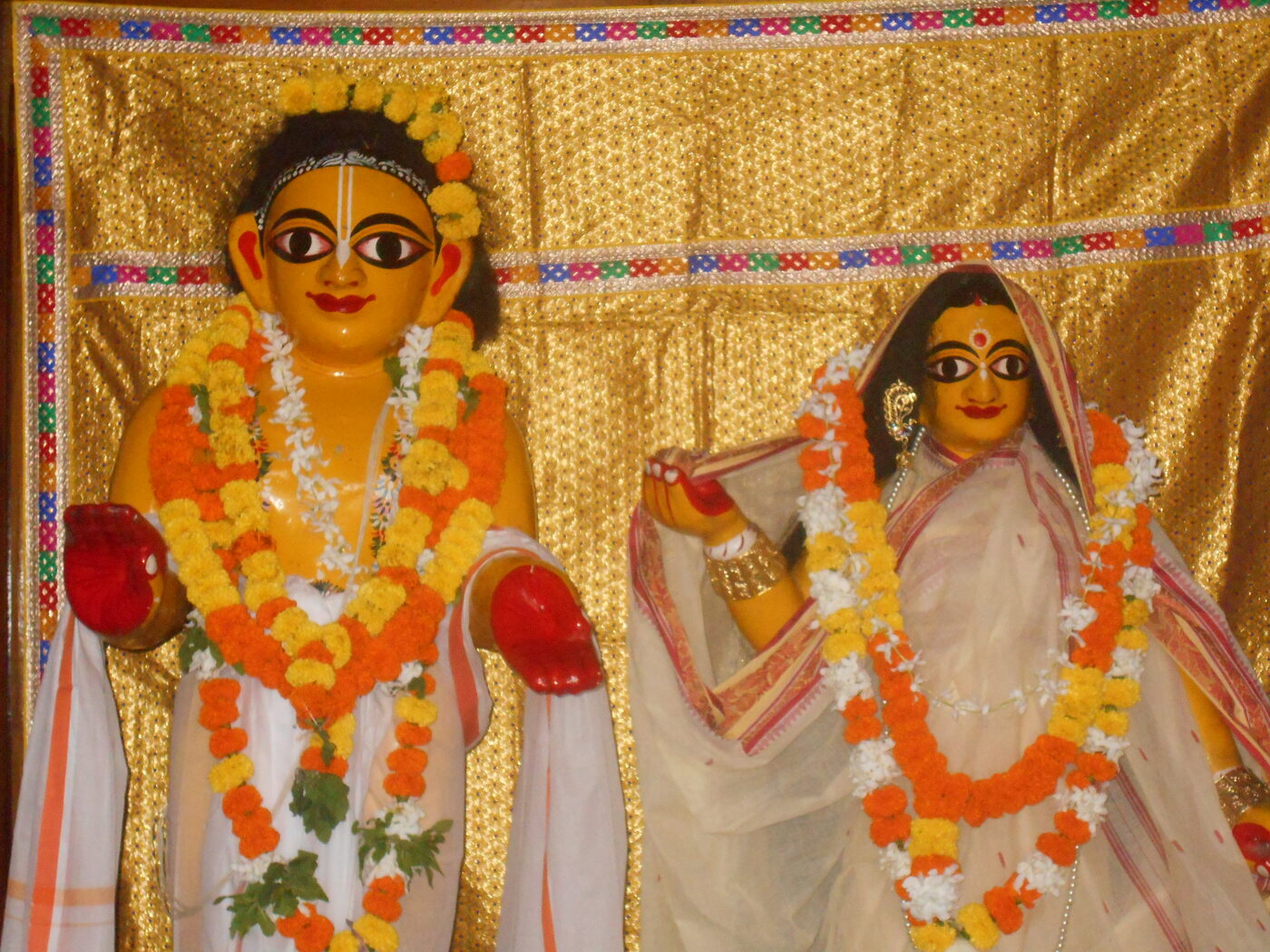
Two things show most clearly Sita Thakurani's direct, personal bond with Sri Chaitanya Mahaprabhu, apart from her place in the wider household at Shantipura. The first is a single day in Sri Chaitanya-charitamrita. The second is a devotional memory, repeated across many later sources, of what she did every year afterward.
| Detail | Description |
|---|---|
| Direct address | Devotional tradition holds that Mahaprabhu called her Mother, and she loved Him with a mother's vatsalya-prema |
| Key episode | Personally cooked the meal that broke Mahaprabhu's three-day fast, the day He took sannyasa and came to Shantipura (Sri Chaitanya-charitamrita, Madhya-lila 3) |
| Annual practice | Traditionally accompanied Advaita Acharya and their son Acyutananda to Jagannatha Puri every year, cooking Mahaprabhu's favourite foods for Him there |
| Possible connection | Shivananda Sena led the yearly Bengali pilgrimage party to Puri that regularly included Advaita Acharya |
| Epithet | Remembered as "worshiped by the whole world" and "mother of the universe"; some devotional writers call her mother to the whole Vaishnava community |
The Meal That Broke A Three-Day Fast #
After accepting the sannyasa order at Katwa, Sri Chaitanya Mahaprabhu set out toward Vrindavana in an ecstasy of love so complete that He barely knew where He was going. He wandered for three days through Radha-desa without eating. Nityananda Prabhu, through a gentle deception, brought Him instead to the bank of the Ganges at Shantipura, where Advaita Acharya was waiting with a boat. "You have been fasting continuously for three days," Advaita Acharya told Him. "I therefore invite You to My home, where You may kindly take Your alms." He added, with the humility of a poor householder rather than the wealthy scholar he actually was, "At My home I have just cooked one palmful of rice. The vegetables are always very simple."
What happened next is recorded in a single, easily missed verse: "All the eatables were first cooked by the wife of Advaita Acharya. Then Srila Advaita Acharya personally offered everything to Lord Vishnu." So Sita Thakurani's cooking, and no one else's, broke the three-day fast that the Lord Himself had kept in a state of spiritual ecstasy. In fact, it was a full and rich meal. A few verses later the text describes it as filling three full plates of rice, dal and vegetables. It was prepared with real care, even though Advaita Acharya had modestly warned that the food was simple. Srila Prabhupada's purport to this verse calls the scene "the ideal householder's life," where "the wife at home cooks a variety of foods for Lord Vishnu, and the husband offers it to the Deity." The verse itself calls her only "the wife of Advaita Acharya," and does not give her own name, because at that point the text simply speaks of her in this plain way. But the act it records belongs to her alone.
The Yearly Journey To Puri #
Sri Chaitanya Mahaprabhu settled at Jagannatha Puri for the rest of His manifest life. After that, several devotional sources say, Advaita Acharya and Sita Thakurani travelled there every year with their son Acyutananda. Among these sources are gaudiyahistory.iskcondesiretree.com and the biographical literature of the Sri Chaitanya Saraswat Math. On these visits, the tradition says, Sita Thakurani would personally prepare Mahaprabhu's favourite dishes and invite Him to take lunch at their lodging. He accepted, out of the same affection He held for Sachi Devi. Unlike the Madhya-lila 3 episode above, this detail does not appear to rest on a specific verse of Sri Chaitanya-charitamrita itself. It comes from the wider devotional tradition, and we report it as tradition, not as a scriptural episode that can be directly cited.
That yearly journey suggests one more possible connection, and we offer it with care. Shivananda Sena is remembered in Sri Chaitanya-charitamrita as the devotee who organized and funded the annual pilgrimage that carried Bengal's devotees to Jagannatha Puri "every year," and Advaita Acharya is named as one of the regular members of that party. Devotional tradition holds that Sita Thakurani travelled with her husband on these yearly visits. If she did, she likely went within Shivananda Sena's annual pilgrimage, not through some separate arrangement. No available source states this connection directly using her name. So it is offered here only as a reasonable conclusion from two facts that are each well supported on their own. It is not a settled fact in itself.
Mother Of The Universe #
Gaudiya tradition remembers Sita Thakurani with titles that reach beyond her own household. Sri Chaitanya-charitamrita calls her "worshiped by the whole world," and later devotional writing says she is owed the same worship as Sachi Devi, "the mother of the universe." Titles like these might suggest that there is a single, specific story behind them. We might expect a named episode in which she showed mercy to one particular person of low birth. The tradition tells this kind of story about several other great Vaishnavas.
No such specific, named episode could be found for Sita Thakurani. It could not be found in Sri Chaitanya-charitamrita itself, in the biographical accounts published at gaudiyahistory.iskcondesiretree.com, in the Sri Chaitanya Saraswat Math's devotional literature, in Jagadananda Das's survey of Gaudiya women saints, or in the Vaniquotes archive of Srila Prabhupada's own words. But again and again, independent sources record something broader and just as real. In the tradition's own telling, her vatsalya-prema reached the whole Vaishnava community, not her family alone. The sources also record her title, "worshiped by the whole world," a title never limited by caste or class. That is a true and well supported claim about her character. It is simply not the same as one documented act of mercy toward one named person. It is better to say so than to invent such a story.
Scriptural evidence for this chapter (5)
Quoted in the text above:
- CC Madhya 3.41 Sri Chaitanya-charitamrita
Further verses:
premāveśe tina dina ācha upavāsa
āji mora ghare bhikṣā, cala mora vāsa
Word for word
prema-āveśe: in the ecstasy of love; tina dina: three days; ācha upavāsa: You are fasting; āji: today; mora ghare: at My house; bhikṣā: alms; cala mora vāsa: kindly come to My residence.
Advaita Acharya said, "You have been fasting continuously for three days in Your ecstasy of love for Krishna. I therefore invite You to My home, where You may kindly take Your alms. Come with Me to My residence."
Sets up the fast that Sita Thakurani's cooking, two verses later, will break.
eka-muṣṭi anna muñi kariyāchoṅ pāka
śukhārukhā vyañjana kailuṅ, sūpa āra śāka
Word for word
eka-muṣṭi anna: one palmful of rice; muñi kariyāchoṅ pāka: I have cooked; śukhā-rukhā vyañjana: simple, not luxurious vegetables; kailuṅ: I have done; sūpa āra śāka: liquid vegetable and spinach.
Advaita Prabhu continued, "At My home I have just cooked one palmful of rice. The vegetables are always very simple. There is no luxurious cooking — simply a little liquid vegetable and spinach."
Advaita Acharya's humble understatement of the meal his wife had actually prepared, for contrast with the elaborate feast described a few verses later.
prati-varṣe prabhu-gaṇa saṅgete lā-iyā
nīlācale calena pathe pālana kariyā
Word for word
prati-varṣe: every year; prabhu-gaṇa saṅgete lā-iyā: taking along the Lord's devotees; nīlācale calena: goes to Jagannatha Puri; pathe pālana kariyā: maintaining them on the road.
Every year he took a party of devotees from Bengal to Jagannatha Puri to visit Lord Chaitanya. He maintained the entire party as they journeyed on the road.
Establishes that Shivananda Sena's annual pilgrimage party was a real, yearly institution that regularly included Advaita Acharya: the basis for the carefully qualified suggestion here that Sita Thakurani's own yearly visits to Puri may have taken place within that same party.
After Sri Chaitanya Mahaprabhu took sannyasa and went to live in Jagannatha Puri, Sri Advaita Acharya and Sita Thakurani used to go and visit Him each year, bringing their son Achyutananda with them. On one such occasion, Sita Thakurani prepared some of the Lord's favorite preparations for Him and invited Him to their home to take lunch.
Reported in gaudiyahistory.iskcondesiretree.com's biographical tradition and echoed independently by Vrindavan Chandrodaya Mandir and Sri Chaitanya Saraswat Math sources; no specific Sri Chaitanya-charitamrita verse for this exact claim could be located, so it is presented as devotional biographical tradition rather than a directly cited scriptural episode.
Chapter 3
Daily Devotion and Legacy
The kitchen behind the worship, a disciple named Jangali, the guru role she declined, and where she is remembered today
The sources record less about Sita Thakurani's daily religious life than the phrase "mother of the universe" might suggest. So it helps to say plainly which parts of this picture are well documented and which are reasonable guesses.
| Detail | Description |
|---|---|
| Household worship | Ran the kitchen that fed the daily Deity worship of Lord Vishnu at Shantipura alongside Advaita Acharya |
| Hospitality | Personally cooked for Sri Chaitanya Mahaprabhu and for the many Vaishnava guests the household received |
| After Advaita Acharya's passing | Later biographical works describe her taking on real leadership within the Vaishnava community |
| Disciples | Prema-vilasa (vilasa 24) names two servants, Nandini and Jangali, whom she initiated with the krishna-mantra |
| A guru declined | Directed the young Virabhadra, Nityananda Prabhu's son, to seek a guru elsewhere rather than accepting the role herself |
| Legacy | Samadhi at Shantipura; Deities of the couple worshiped today at the Sitanath Advaita Mandir, Nabadwip |
The Kitchen Behind The Worship #
Sri Chaitanya-charitamrita describes the meal Sita Thakurani cooked on the day Mahaprabhu took sannyasa. (The full story is told on Mother of All Vaishnavas.) In his purport to that verse, Srila Prabhupada describes this as "the ideal householder's life." The wife cooks for the Deity, and the husband offers the food in worship. Then the household feeds any guest who arrives, because "according to Vedic principles, there must always be a guest in a householder's house." This is what the sources actually support about Sita Thakurani's daily religious practice. It was not one dramatic episode. It was the steady, everyday work of running a Vaishnava kitchen. That kitchen fed both the Deities and a constant stream of visiting devotees at one of the movement's central households.
We should be just as clear about what is not confirmed for her specifically. Popular retellings of Bengali Vaishnava women's lives often describe activities like grinding rice by hand or personally tending a Tulsi plant. Both would fit naturally with what is known of her household and her era. But neither act is named for Sita Thakurani in the original sources or in the biographical accounts available. We do not want to turn a reasonable guess into a fact. So we report only what is actually written: that she cooked, that her cooking fed both the Deity and the Lord Himself, and that her home was known for its hospitality. The rest is honestly left unconfirmed.
Leadership After Advaita Acharya #
Jagadananda Das, in his survey of Gaudiya Vaishnava women saints, notes that Sita Thakurani "was a woman who, like her husband, lived a long life," and that "it is said she took some leadership responsibility after the death of her husband, but not much detail can be given about how she conducted herself in such a role." This claim comes from Bhakti-ratnakara and from a work called Prema-vilasa. Unlike Sri Chaitanya-charitamrita, neither book has an independent English text available online. So the claim is reported here as it appears in Jagadananda Das's summary of those texts, not from reading those texts directly.
Nandini and Jangali, Her Disciples #
Prema-vilasa (vilasa 24) records Sita Thakurani giving the krishna-mantra to two of her own servants, Nandini and Jangali. Gaura-ganoddesha-dipika (text 89) identifies that pair with Jaya and Vijaya, the gatekeepers of Vaikuntha. The same discipleship is also recorded in Haridasa Dasa's Gaudiya-vaishnava-abhidhana and in the Sita-charitra of Lokanatha Dasa. Of the two, only Jangali has a story attached to her name. She is remembered for practicing bhajana alone in a forest full of wild animals, and that is how she got that name. According to the legend that Prema-vilasa preserves, the Muslim ruler of Bengal was hunting in that forest. He saw Jangali and tried to assault her. She is said to have manifested a male form in response, so the astonished ruler could not tell whether he was looking at a man or a woman. A woman and then a man were sent to examine her, and each questioned her separately. She gave each of them an answer suited to what that person was able to see. Finally she told the ruler, "Women see a woman, men see a man. But at no time have I ever been a man." The humbled ruler asked her forgiveness and built her a home in the forest, known afterward as Jangali Tota. This is a legend, not a historical report in the ordinary sense. One detail in it is disputed. Some later sources hold that Jangali was in fact a male disciple who took a feminine name after initiation, and not a woman whom the ruler was unable to identify. That question does not affect the discipleship itself, and the discipleship is the main point here. Either way, this is a specific tradition, recorded independently, and it is real evidence that Sita Thakurani was accepted as a guru and had initiated disciples. Sri Chaitanya Mahaprabhu had already given the reason such a thing is possible: yare dekha, tare kaha 'krishna'-upadesha, amara ajnaya guru hana tara' ei desha, "instruct everyone you meet to follow the orders of Lord Krishna... in this way become a spiritual master" (Chaitanya-charitamrita, Madhya-lila 7.128). Srila Prabhupada explained that whoever understands Krishna consciousness perfectly can become guru, regardless of birth or gender.
The Guru She Declined To Be #
A separate story is preserved in Nityananda-vamsa-vistara. It tells how Virabhadra, Nityananda Prabhu's son, came to Sita Thakurani looking for a spiritual master after his own father's passing. She told him to look closer to home. She pointed him toward Jahnava Mata, Nityananda Prabhu's widow, instead of accepting the role for herself. It is a small detail, but it tells us something important. Others came to her because they saw her as qualified to be a guru. In this case she chose to send the young man to someone else, and not to accept that role herself. Together with her acceptance of Nandini and Jangali as her disciples, this shows that the tradition saw her as fit to guide others. The sources we found do not name her own guru. She and Advaita Acharya were husband and wife, not guru and disciple. No source describes a formal initiation relationship between them in either direction.
Remembered At Shantipura And Nabadwip #
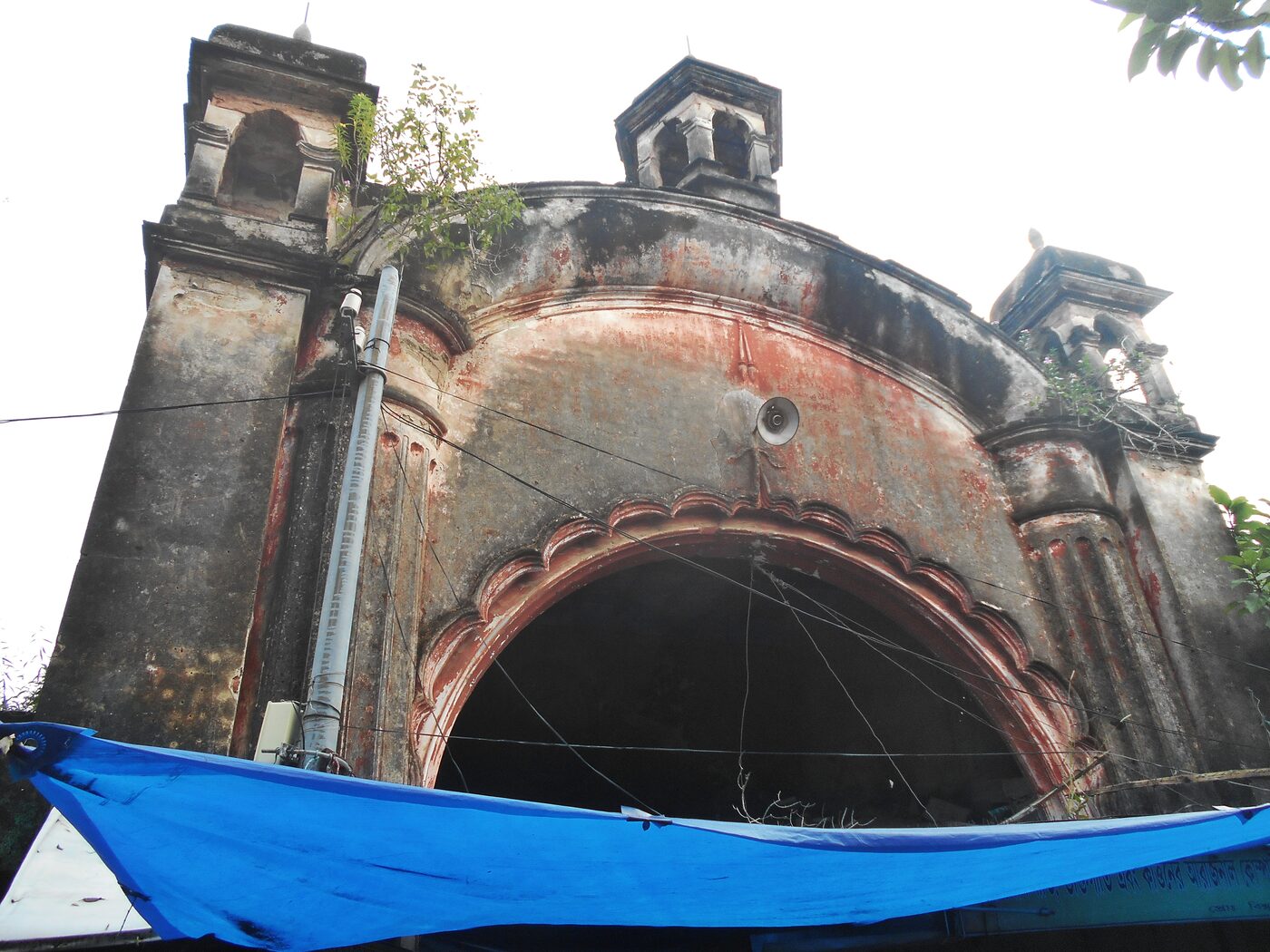
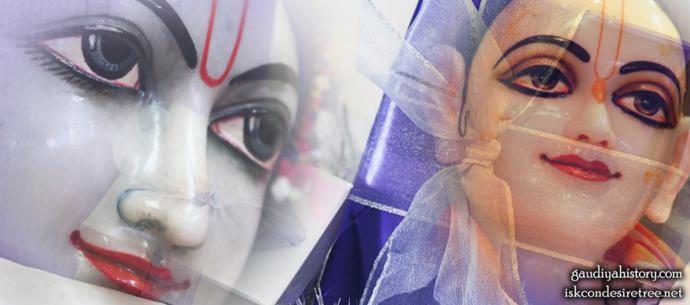
Sita Thakurani's samadhi stands today at Shantipura, beside Sri Advaita Acharya's own. It is part of a site that pilgrims still visit. Wooden Deities of the couple are worshiped at the Sitanath Advaita Mandir in Nabadwip. These carved images show the two of them standing side by side, much as the old accounts describe them living. The Gaudiya Vaishnava calendar marks her appearance day each year. But no source available could confirm the specific date with confidence, so we do not give one here. Something simpler can be said without any doubt. For five centuries, Gaudiya Vaishnava literature has remembered her not for whose wife she was. It remembers her for a kitchen that fed the Lord, a household that sheltered His movement, and at least one disciple who called her guru.
Scriptural evidence for this chapter (4)
This is the ideal householder's life. The husband and wife live together, and the husband works very hard to secure paraphernalia for worshiping Lord Vishnu. The wife at home cooks a variety of foods for Lord Vishnu, and the husband offers it to the Deity.
From the purport: Purport excerpt: "The wife at home cooks a variety of foods for Lord Vishnu, and the husband offers it to the Deity."
Srila Prabhupada's own framing of the household pattern Sita Thakurani and Advaita Acharya are shown living out, used here to describe her daily religious life rather than one single episode.
It is said that she took some leadership responsibility after the death of her husband, but not much detail can be given about how she conducted herself in such a role.
Bhakti-ratnakara has no standalone English corpus available online; this claim is reported as it appears in Jagadananda Das's scholarly survey "Women Saints in Gaudiya Vaishnavism," which cites Bhakti-ratnakara 4.48-52 directly, rather than from independent access to the Bengali text.
Sita had a woman disciple, Jangali... She was fearless and engaged in solitary devotional practice in a jungle filled with wild animals. When the Shah of Bengal attempted to assault her, she manifested a male form; questioned separately, she told him, "Women see a woman, men see a man. But at no time have I ever been a man."
Prema-vilasa has no standalone English corpus available online; this legend is reported as it appears in Jagadananda Das's scholarly survey, which also notes an alternate tradition (Gaudiya Vaishnava Abhidhana, 1243) that Jangalipriya may instead have been a male disciple who took a feminine name after initiation.
Virabhadra approached Sita Thakurani, the wife of Advaita, the third member of the Gaudiya Vaishnava divine triumvirate. She told him that he should seek closer to home, implying he should take mantra from Jahnava.
Nityananda-vamsa-vistara has no standalone English corpus available online; reported here as it appears in Jagadananda Das's scholarly survey, used to show that Sita Thakurani was sought out as guru-qualified even though she declined the role in this instance.
Closing
A Daughter of Nadia, A Wife at Shantipura #
Sita Thakurani was the daughter of Nrsimha Bhaduri. Bengali Vaishnava tradition places her marriage to Advaita Acharya at Phuliya Nagar. After that the couple settled at Shantipura on the Ganges. Beyond this, little is recorded. No birth year survives for her, and nothing is written about her life before marriage. Most Bengali women of the fifteenth century are remembered in this way, through their homes and their devotion, not through personal life stories. We say this plainly and do not invent details that are not in the sources.
But from her very first mention, the sources do record how highly she was honoured. Sri Chaitanya-charitamrita calls her jagat-pujita arya, "worshiped by the whole world, the most advanced and cultured lady," in the same line that gives her name. Gaudiya theology goes further. According to Gaura-Ganoddesha-Dipika, Sita Thakurani is Yogamaya herself. Yogamaya is the Lord's own potency that arranges His pastimes and, when needed, hides them. Here that potency appears in human form as Advaita Acharya's wife. The same text names Sri, remembered in the tradition as her sister, as another manifestation of that same potency. Sita Thakurani is remembered as one of four leading women devotees around Sri Chaitanya Mahaprabhu. The others are Sachi Devi (Mahaprabhu's mother), Vishnupriya Devi and Malini Devi (the wife of Srivasa Thakura). The tradition treats the devotion of these women as carrying real authority, not simply as a reflection of their husbands' devotion.
The verse of Kavi Karnapura's Gaura-ganoddesha-dipika (verse 86) reads:
yogamāyā bhagavatī gṛhiṇī tasya sāmpratam
sītā-rūpeṇāvatīrṇā śrī-nāmnā tat-prakāśataḥ
"The Supreme Lord's yogamaya potency appeared in Lord Caitanya's pastimes as Sri Sita-devi, the wife of Lord Advaita Acarya." (Gaura-ganoddesha-dipika 86)
The closing words of the verse, śrī-nāmnā tat-prakāśataḥ, add that Sri appeared as her manifestation (prakasha).
The Blessing That Named a Lord #
On the day Sri Chaitanya Mahaprabhu was born, Sita Thakurani was among the first outside His immediate family to see Him. She came from Shantipura with a palanquin full of gifts. She blessed the newborn child with fresh grass and paddy placed on His head, saying, "May You be blessed with a long duration of life." Then, afraid that evil spirits might target a child praised so openly, she gave Him the protective name Nimai, after the bitter nimba tree. The full story of that day, and all it meant for the household at Shantipura, is told on Sri Advaita Acharya's own page. Here one simpler point matters. Her very first recorded act toward the Lord was a mother's blessing. That vatsalya-prema, that parental love, went on to shape her relationship with Him for the rest of her life.
Remembered Today #
Sita Thakurani's samadhi stands at Shantipura beside her husband's. Wooden Deities of the couple are worshiped today at the Sitanath Advaita Mandir in Nabadwip. In Gaudiya Vaishnava literature, old and new, she is one of the tradition's clearest examples of a woman honoured for who she herself was. She is honoured for her own devotion, her own hospitality, and her own place at the Lord's side, not only for whose wife she was.
- Sri Chaitanya-charitamrita, Adi-lila 13: The Advent of Lord Sri Chaitanya Mahaprabhu (Bhaktivedanta VedaBase)
- Sri Chaitanya-charitamrita, Madhya-lila 3: Lord Sri Chaitanya Mahaprabhu's Stay at the House of Advaita Acharya
- Sita Thakurani and the Family at Shantipura (Advaita Acharya, nandgramdham.org)
- Sita Thakurani - Biography (gaudiyahistory.iskcondesiretree.com)
- Jagadananda Das (Jan Brzezinski), "Women Saints in Gaudiya Vaishnavism"
- Female Diksa Guru — ISKCON GBC (historical examples: Sita Thakurani gave krishna-mantra to Nandini and Jangali, per Prema-vilasa vilasa 24)
