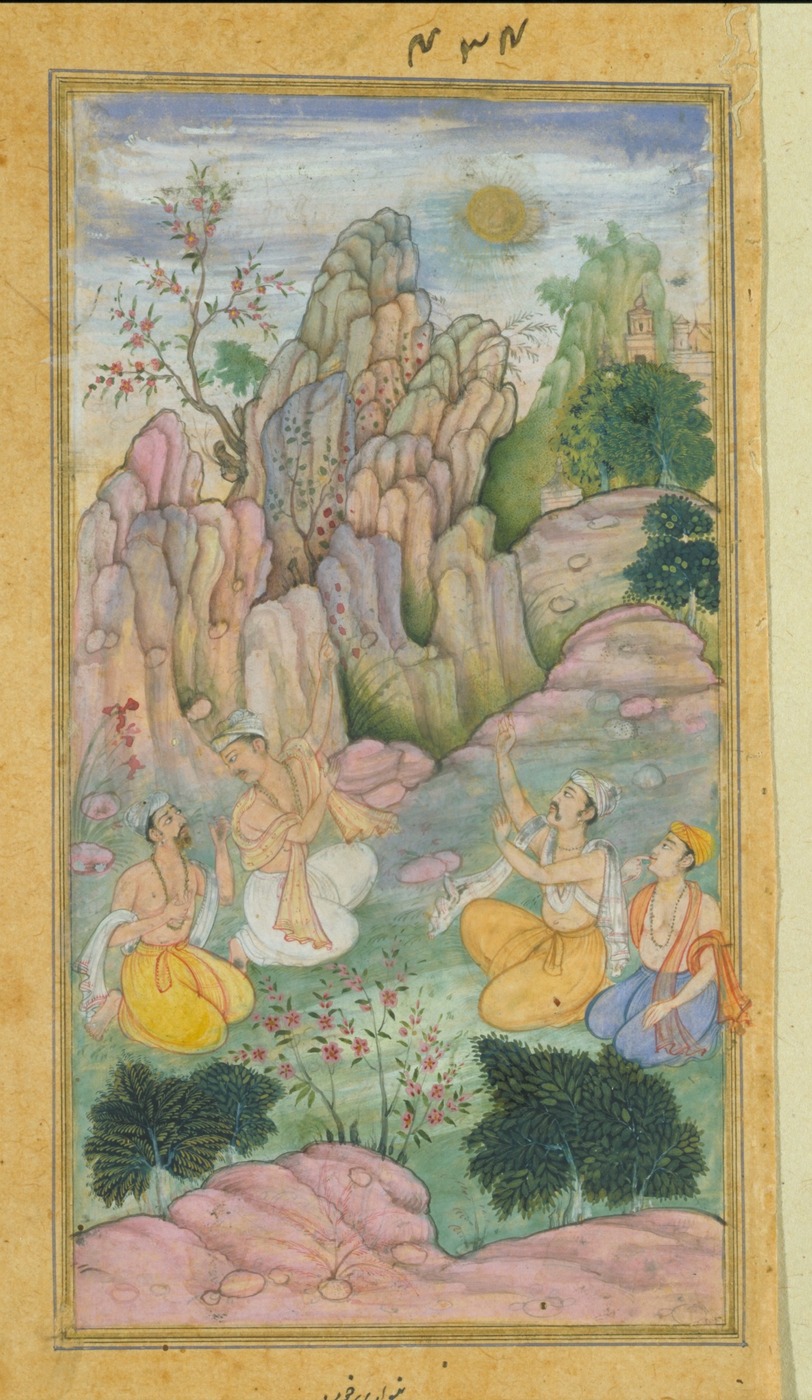
From its very first chapter, Srimad-Bhagavatam tells the story of how it was itself told. Sages gathered at Naimisharanya ask Suta Gosvami to repeat what he once heard Shukadeva Gosvami speak. Suta explains that Shukadeva spoke it to King Parikshit. Parikshit was a king waiting to die within a fixed number of days, and his situation gives the entire work its urgency. But none of this would have reached us without Shukadeva Gosvami himself. He was Vyasadeva's son, and Vyasadeva taught him the finished Bhagavatam before anyone else heard it.
A Son Unlike Other Sons #
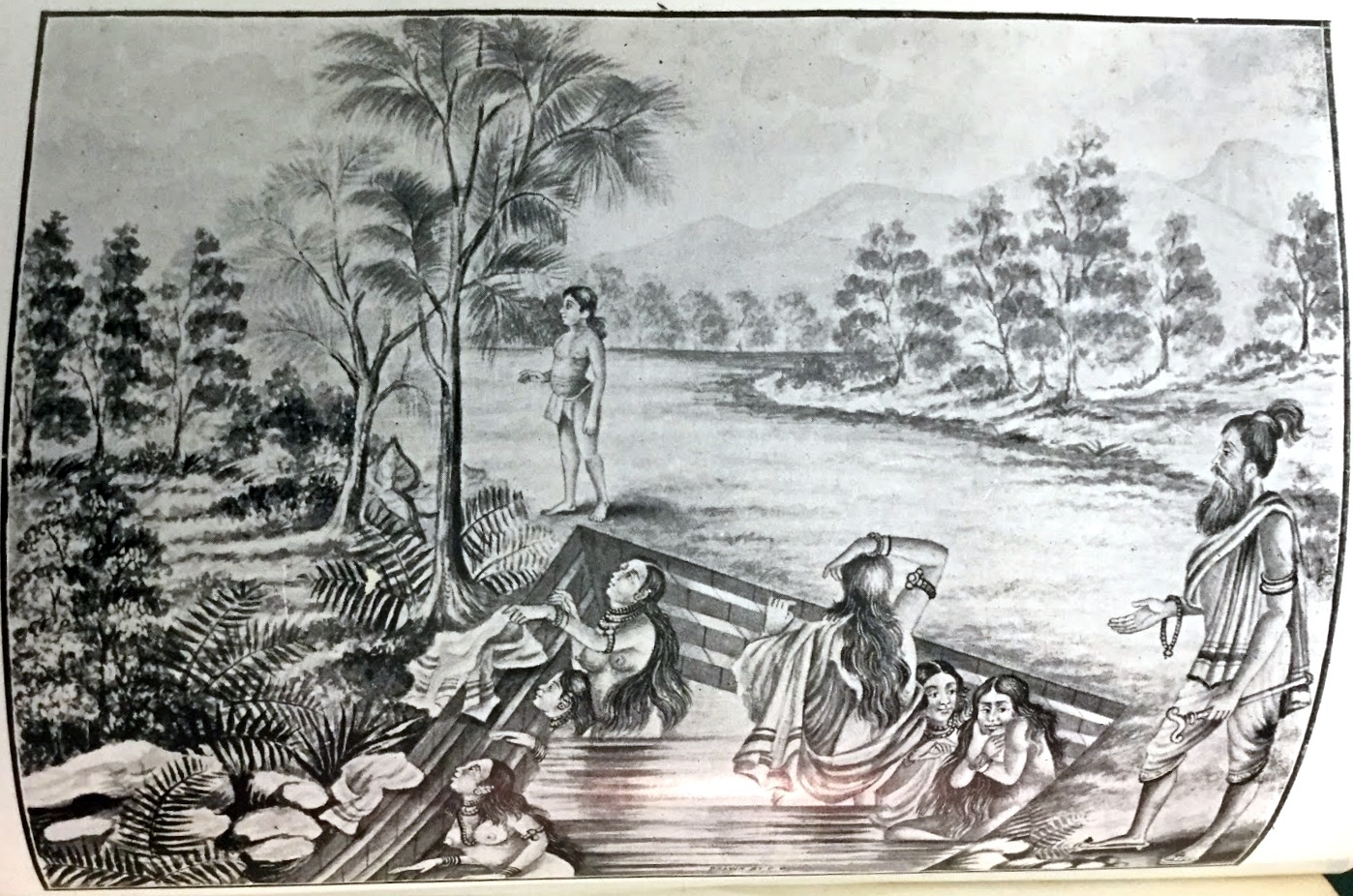
Srimad-Bhagavatam describes Shukadeva as already fully self-realized from the time of his birth, "a great devotee, an equibalanced monist, whose mind was always concentrated in monism," someone "transcendental to mundane activities" who nonetheless "appeared like an ignorant person" to those who did not recognize him. One especially vivid detail shows this: "While Sri Vyasadeva was following his son, beautiful young damsels who were bathing naked covered their bodies with cloth, although Sri Vyasadeva himself was not naked. But they had not done so when his son had passed" (Srimad-Bhagavatam 1.4.5). When asked why, the women explained that Shukadeva's vision made no distinction at all between male and female, but his father's vision evidently still did. This one picture shows how completely Shukadeva had already risen above ordinary bodily awareness, even before his father taught him a single word of the Bhagavatam.
A Wanderer Recognized at Last #
Before he ever spoke the Bhagavatam publicly, Shukadeva lived as a silent wanderer, passing through the lands of Kuru and Jangala "appearing like a madman, dumb and retarded," until at last he reached the city of Hastinapura. There its citizens somehow recognized who he really was. Tradition describes him arriving at the assembly by Parikshit's deathbed suddenly, as if from nowhere, "approaching them through the air like a ball of fire," and startling the sages who were already gathered there. After he had settled there, he lived with the same detachment as before. He was said to remain in any one household only as long as it takes to milk a cow, staying just long enough to sanctify the home before moving on.
King Parikshit's Seven Days #
The event that brought Shukadeva and Parikshit together is one of the most famous stories from the time after the Mahabharata war. Parikshit, grandson of Arjuna and emperor of a peaceful and prosperous kingdom, was cursed by the offended son of a brahmana to die of snakebite within seven days. Parikshit did not spend those days in fear. He renounced his throne, traveled to the bank of the Ganges, and sat down to fast until death. Great sages arrived and sat around him to guide him through his final week. The opening story of Srimad-Bhagavatam asks, almost with wonder, how an emperor could give up his entire kingdom and his own life this readily. He was still young and strong, and still able to command the loyalty of his enemies. The text's answer is that a soul truly devoted to the Supreme Personality of Godhead lives only for others' benefit, and the coming days would show exactly that.
Why an Already-Liberated Sage Bothered to Speak It #
Srimad-Bhagavatam itself asks an important question. Shukadeva Gosvami was already established in self-realization and satisfied in himself. So why would he take the trouble to speak this literature at all? The text's own answer is that devotional service to the Supreme Personality of Godhead attracts even fully liberated souls: "All different varieties of atmaramas... though freed from all kinds of material bondage, desire to render unalloyed devotional service unto the Personality of Godhead" (Srimad-Bhagavatam 1.7.10). The reason is that the Lord has transcendental qualities that can attract anyone, at any stage. Shukadeva Gosvami spoke Srimad-Bhagavatam to King Parikshit over the following seven days. That recitation was later repeated by Suta Gosvami to the sages of Naimisharanya. It has come down to us as the text quoted throughout this whole tradition.
From Father to Son to the World #
It began as one sage's private dissatisfaction at Shamyaprasa, described on The Dejection of Vyasadeva and Narada's Instruction and the Writing of Srimad-Bhagavatam. It reached the wider world only because Vyasadeva first taught it to his own son. His son, in turn, chose to speak it aloud instead of keeping it in silent realization. Gaudiya Vaishnava tradition still calls Srimad-Bhagavatam "the ripened fruit of the desire tree of Vedic literature," and that fruit passed from a father's samadhi through a son's mouth before it ever reached anyone else. This chain of teaching continues, unbroken, in every temple where the Bhagavatam is still read aloud today.