Srila Vyasadeva
Compiler of the Vedas, Author of Srimad-Bhagavatam
The complete life, on one page: The main biography and every pastime page, in order, in one place
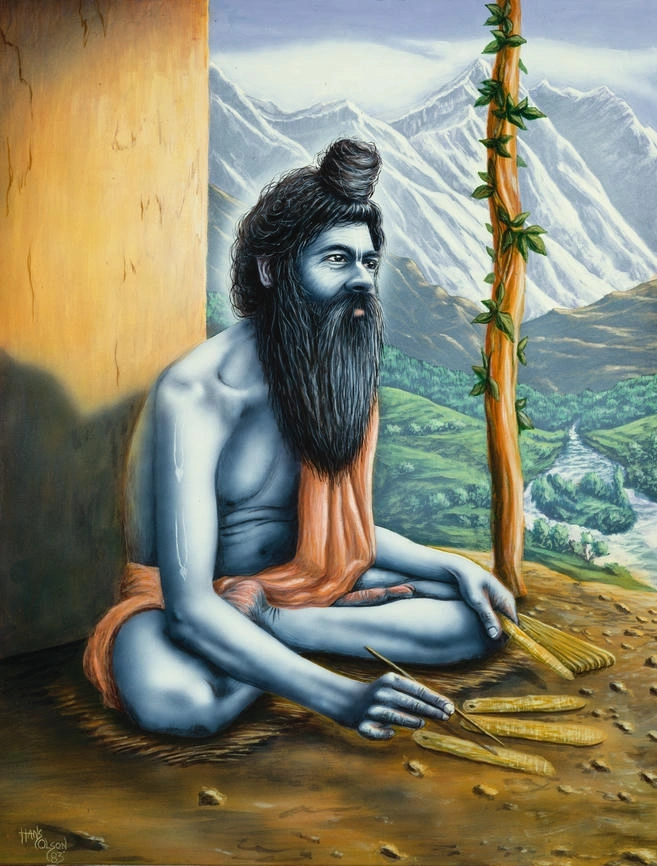
Introduction
Śrīla Vyāsadeva compiled the four Vedas, the eighteen Purāṇas, the Mahābhārata, and the Vedānta-sūtra. Later, as the final and greatest work of his long life, he composed Śrīmad-Bhāgavatam. The Gauḍīya Vaiṣṇava tradition does not see these works simply as the achievement of an unusually talented man. Śrīmad-Bhāgavatam itself describes Vyāsadeva as an incarnation of Nārāyaṇa, who appeared at the beginning of Kali-yuga to arrange Vedic knowledge in a form that ordinary people could still understand and receive. In the Brahma-Madhva-Gauḍīya sampradāya, he stands third in the disciplic succession, after Lord Brahmā and Nārada Muni, and before Madhvācārya and the later ācāryas.
| Detail | Description |
|---|---|
| Also known as | Krishna-Dvaipayana, Veda-Vyasa, Badarayana |
| Born | On a river island, traditionally at the junction of Dvapara-yuga and Kali-yuga; exact site disputed |
| Parents | The sage Parashara and Satyavati, later queen of King Shantanu |
| Guru | Narada Muni, who instructed him to compile Srimad-Bhagavatam |
| Chief works | The four Vedas (as divided), the Mahabharata, eighteen Puranas including Srimad-Bhagavatam, the Vedanta-sutra |
| Ashrama | Shamyaprasa, on the bank of the river Sarasvati |
| Position in parampara | Third acharya of the Brahma-Madhva-Gaudiya sampradaya, after Lord Brahma and Narada Muni |
At a Glance
- Born on a river island to the sage Parāśara and Satyavatī, the daughter of a fisherman. Śrīmad-Bhāgavatam describes him as the seventeenth incarnation of Godhead.
- Divided the original Veda into four parts because people in Kali-yuga would have less memory and shorter lives. He gave each part to a different disciple.
- Composed the Mahābhārata and the eighteen Purāṇas so that more people could understand Vedic knowledge.
- Wrote the Vedānta-sūtra, which gives the main teachings of Vedānta in short statements. Later ācāryas, including Madhvācārya, wrote commentaries on it.
- Even after writing so many books, he was not satisfied. His guru, Nārada Muni, told him to directly describe the Supreme Lord and His pastimes.
- Taught Śrīmad-Bhāgavatam to his son, Śukadeva Gosvāmī. Śukadeva later spoke it to King Parīkṣit on the bank of the Ganges.
- Vyāsa-pūjā is named after him. On this day, disciples honor their spiritual master. This tradition is still followed in Gauḍīya Vaiṣṇavism and ISKCON.
Scriptural evidence for the introduction (1)
ततः सप्तदशे जातः सत्यवत्यां पराशरात् ।
चक्रे वेदतरोः शाखा दृष्ट्वा पुंसोऽल्पमेधसः ॥
tataḥ saptadaśe jātaḥ
satyavatyāṁ parāśarāt
cakre veda-taroḥ śākhā
dṛṣṭvā puṁso 'lpa-medhasaḥ
Word for word
tataḥ: thereafter; saptadaśe: in the seventeenth incarnation; jātaḥ: appeared; satyavatyām: in the womb of Satyavatī; parāśarāt: by Parāśara Muni; cakre: made; veda-taroḥ: of the desire tree of the Vedas; śākhāḥ: branches; dṛṣṭvā: by seeing; puṁsaḥ: the people in general; alpa-medhasaḥ: less intelligent.
Thereafter, in the seventeenth incarnation of Godhead, Sri Vyasadeva appeared in the womb of Satyavati through Parashara Muni, and he divided the one Veda into several branches and subbranches, seeing that the people in general were less intelligent.
From the purport: "Originally the Veda is one. But Srila Vyasadeva divided the original Veda into four, namely Sama, Yajur, Rg, Atharva, and then again they were explained in different branches like the Puranas and the Mahabharata."
The Bhagavatam's own catalogue of incarnations names Vyasadeva directly, giving the theological basis for treating him as an incarnation of Godhead rather than an unusually gifted historical author.
Chapter 1
Birth of Krishna-Dvaipayana
How the sage Parashara and a fisherman's daughter named Satyavati brought Vyasadeva into the world on a river island.
Before she was ever queen of the Kuru dynasty, Satyavati was a fisherman's daughter who ferried travelers across a river for a living. Puranic tradition tells an even stranger story about her beginnings. It holds that Satyavati herself had been born from a fish. This fish was the changed body of a celestial woman named Adrika. Adrika had conceived after the seed of a distracted king fell into the water she lived in. We report this detail as a puranic legend, not as verified history. But it is the traditional explanation for the name she carried before her own children changed it: Matsyagandha, "the one who smelled of fish."
A Boat, a Fog, and an Island #
While she was ferrying travelers, Satyavati met the wandering sage Parashara. Accounts agree that he was overcome with desire for her the moment he saw her. She resisted him, pleading to keep her chastity. Parashara then used his own mystic power in three ways. He raised a fog around the boat to hide them both. He turned her fish-scent into a permanent fragrance of musk. And he created an island in the middle of the river for the meeting itself. Before it was over, he told her two things. First, she would remain a virgin afterward, no matter what followed. Second, the son born of this union would be a partial incarnation of Vishnu, "a man of purity, the spiritual master of the entire world," who was destined to divide the Vedas. Satyavati's pregnancy and delivery were both said to happen at once. The child was said to grow into a full adult ascetic the moment he was born, on the same island. Before departing for a life of austerity in the forest, he promised his mother that he would return to her side whenever she truly needed him.
He was named for the two facts of that single day: Krishna, for the darkness of his complexion, and Dvaipayana, "island-born." Together the two names combine into the one most Vaishnavas actually use for him, Krishna-Dvaipayana Vyasa. The far more common title, simply "Vyasa," is itself a description rather than a name, meaning "one who divides" or "compiles."
Where, Exactly, Did This Happen #
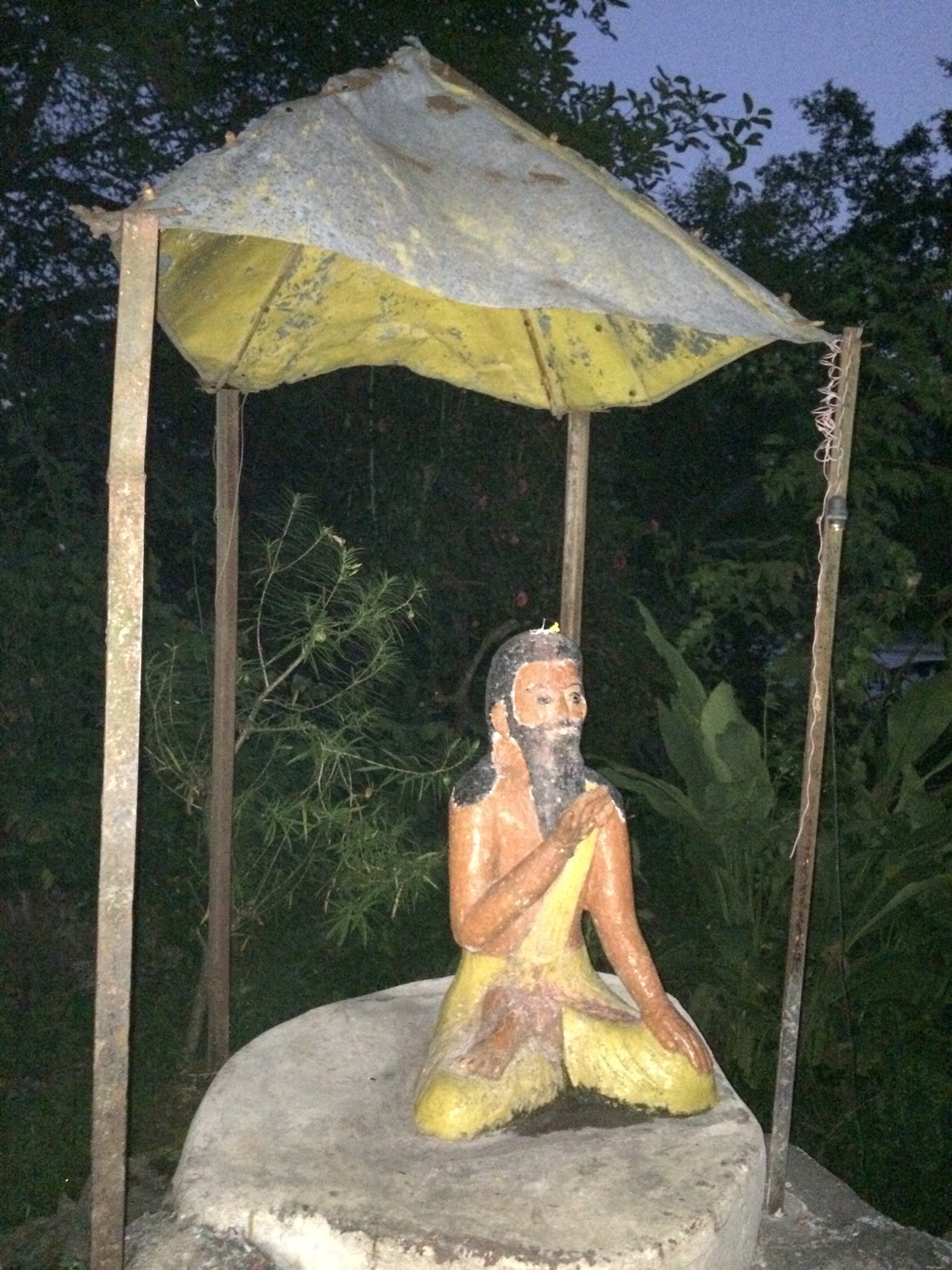
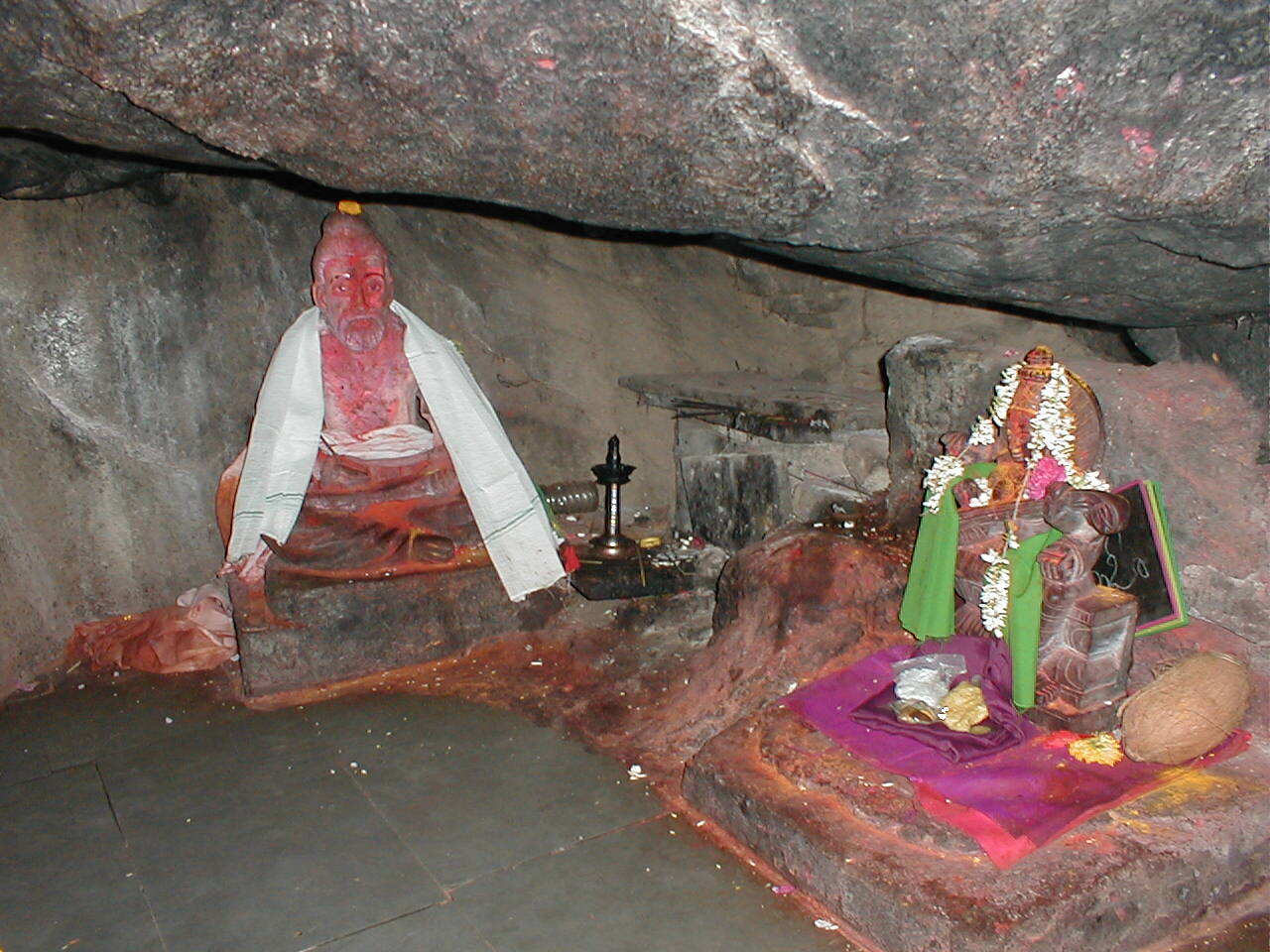
Vaishnava sources do not agree on the river or the region. The most widespread devotional account, drawn from the Mahabharata's own opening books, places the island in the Yamuna. A separate local tradition in Nepal, still living today, points to a cave near Damauli, on the Madi and Seti rivers, in what is now called Vyas Municipality. It says this is both where he was conceived and a place he returned to later in life. A small deity of him stands at the cave's entrance today. Local memory sometimes also connects this site with the writing of the Ramayana, which is confusing. That work belongs to a different sage, Valmiki, not to Vyasa. A third tradition, citing the Padma Purana, places the island in the Yamuna near a spot called Soma Tirtha. The sources we have do not let us decide between these traditions. So we report the disagreement honestly here, instead of choosing one.
Vyasa in Srimad-Bhagavatam's Catalogue of Incarnations #
Whatever the exact place may have been, Srimad-Bhagavatam gives the birth itself a clear and important place in its teaching. Its third chapter lists the Supreme Lord's incarnations one by one, and Vyasadeva has a numbered place among them: "Thereafter, in the seventeenth incarnation of Godhead, Sri Vyasadeva appeared in the womb of Satyavati through Parashara Muni, and he divided the one Veda into several branches and subbranches, seeing that the people in general were less intelligent" (Srimad-Bhagavatam 1.3.21). In his own lectures on this verse, Srila Prabhupada adds a detail that the Sanskrit itself only implies. As Parashara had promised, Satyavati remained a virgin after this birth. This was part of the reason she could later marry King Shantanu without any social objection. Shantanu was already the father of Bhishma of Mahabharata fame, the son of the river-goddess Ganga. His marriage to Satyavati produced Chitrangada and Vichitravirya, and it set the entire Kuru succession crisis in motion a generation later.
An Office Held Across the Ages #
There is one more tradition to report here, because it shapes how Vaishnavas actually think about who Vyasadeva is. The Vishnu Purana and Vayu Purana both describe "Vyasa" as a title or position that returns again and again in the universe, not as a single person who appears only once. They say that in every Dvapara-yuga of the current cosmic cycle, the same task of dividing the Veda falls to a different personality, who then carries the title. Twenty-eight such Vyasas are said to have already appeared in the present Manvantara. Krishna-Dvaipayana, the son of Parashara and Satyavati, is counted as the twenty-eighth and most recent of them. Gaudiya Vaishnavas honor this Vyasa specifically as an incarnation of Narayana. But this wider Puranic picture helps explain something that may otherwise seem strange. It helps explain how one person can be given credit for compiling so vast a body of literature. The Puranas themselves describe the role of Vyasa as one that is taken up again and again. How Vyasa organized this knowledge and passed it on to his disciples is told next, on Dividing the Single Veda into Four.
Scriptural evidence for this chapter (1)
सूत उवाच
द्वापरे समनुप्राप्ते तृतीये युगपर्यये ।
जातः पराशराद्योगी वासव्यां कलया हरेः ॥
sūta uvāca
dvāpare samanuprāpte
tṛtīye yuga-paryaye
jātaḥ parāśarād yogī
vāsavyāṁ kalayā hareḥ
Word for word
sūtaḥ uvāca: Sūta Gosvāmī said; dvāpare: in the Dvāpara age; samanuprāpte: having overtaken; tṛtīye: in the third; yuga-paryaye: the change of ages; jātaḥ: appeared; parāśarāt: by Parāśara; yogī: the great mystic; vāsavyām: in the womb of the daughter of Vasu; kalayā: with a portion; hareḥ: of the Personality of Godhead.
Sūta Gosvāmī said: When the second millennium overlapped the third, the great sage [Vyāsadeva] was born to Parāśara in the womb of Satyavatī, the daughter of Vasu.
This is Srimad-Bhagavatam's own direct statement of Vyasadeva's birth, naming his father Parashara and his mother Satyavati, "the daughter of Vasu" (the fisherman who adopted her).
Chapter 2
Dividing the Single Veda into Four
Why Vyasadeva split the one original Veda into four books and gave each to a different disciple to preserve.
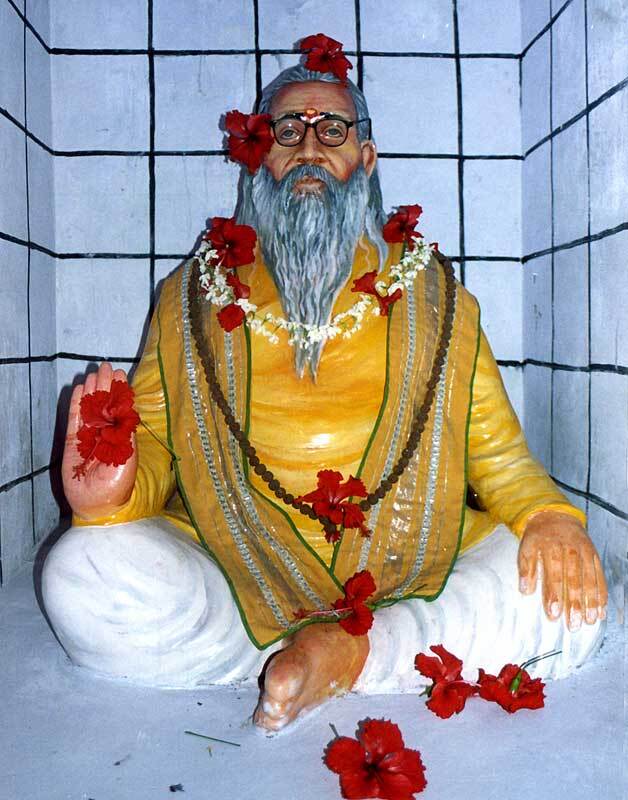
Vedic tradition holds that knowledge was originally passed down as a single, undivided body of sacred sound. It was entrusted to memory and passed from teacher to student without being broken into separate books. Srimad-Bhagavatam describes Vyasadeva looking at the world he had been born into and seeing that this arrangement could not continue. He saw that people entering Kali-yuga would have shorter lives, weaker memories, and less ability for disciplined study than those who had come before them. If the Veda remained a single, unbroken whole, it would demand a lifetime of exact memorization even to begin. Then it would simply be out of people's reach.
Four Divisions, Four Disciples #
So Vyasadeva divided it. Srimad-Bhagavatam records the outcome directly: "After the Vedas were divided into four divisions, Paila Rishi became the professor of the Rig Veda, Jaimini the professor of the Sama Veda, and Vaishampayana alone became glorified by the Yajur Veda" (Srimad-Bhagavatam 1.4.21). A fourth disciple, Sumantu Muni, received the Atharva Veda. A fifth pupil, Romaharshana, was given the historical stories and Puranas to preserve, rather than a Veda. Srimad-Bhagavatam itself calls this class of literature "the fifth Veda," because it carries authentic history and cosmology that the four core Vedas do not themselves narrate. Each of these five men, the text goes on to say, in turn passed what he had received to further disciples and grand-disciples. This branching, generation-by-generation passing down of knowledge is called shakha. It produced the many versions and schools of the Vedas that Vedic scholars still study today. The Vishnu Purana tells the same story more briefly, "he makes the Veda fourfold, to adapt it to their capacities," and this makes the real motive clear. Vyasadeva was adjusting the Veda to what people could receive. He was not simplifying it just for its own sake.
Kindness, Not Compromise #
It would be easy to read this division as a step downward, a lesser Veda for lesser times. Srimad-Bhagavatam frames it the opposite way, as an act of deliberate mercy: "Thus the great sage Vyasadeva, who is very kind to the ignorant masses, edited the Vedas so they might be assimilated by less intellectual men" (Srimad-Bhagavatam 1.4.24). Nothing in the underlying knowledge was diminished. Only its packaging changed, so that it could still reach the people it was meant for.
Why Four, and Why These Disciples #
In the tradition's own understanding, the choice of exactly four divisions was not random either. Each of the four Vedas has a different role in Vedic sacrifice. The Rig Veda supplies the hymns used to call upon the deities. The Yajur Veda supplies the sacrificial formulas actually spoken during the rite. The Sama Veda supplies the musical chanting that goes with it. The Atharva Veda supplies a wider body of practical knowledge, from healing to household ritual, that supports Vedic life outside the sacrifice itself. Because the Veda was divided along these lines, each of Vyasadeva's four chief disciples, Paila, Jaimini, Vaishampayana and Sumantu, could specialize in one complete body of material. Each could master it fully and pass it on. None of them had to try to carry the entire, undivided whole. The arrangement did not create four unrelated scriptures. It created four fields of study within one tradition that was still united. Each was now small enough for a dedicated student to actually master and pass on.
Branches Within Branches #
Srimad-Bhagavatam is careful to note that the story did not end with these four men. "All these learned scholars, in their turn, rendered their entrusted Vedas unto their many disciples, granddisciples and great-granddisciples, and thus the respective branches of the followers of the Vedas came into being" (Srimad-Bhagavatam 1.4.23). This is why later Vedic scholars speak of many shakhas, or branches, within each of the four Vedas, not one single fixed text for each. The division that Vyasadeva began kept branching outward for generations after him. This is just what one would expect from a living oral tradition entrusted to many different teachers across a wide land. The same reasoning, taken one step further, explains why Vyasadeva did not stop at four Vedas. Even after the Veda was divided, Vedic study remained formally closed to whole classes of people: women, laborers, and those born into twice-born families who had not undergone the traditional purifying training. For them, Vyasadeva turned to a different kind of literature altogether: history and story instead of hymns and rules. That decision, and the vast works it produced, are told on Compiling the Mahabharata and the Puranas. Yet Vyasadeva himself later admitted that even this careful work on the Vedas was not the deepest thing he had to give. That realization is the subject of The Dejection of Vyasadeva.
Scriptural evidence for this chapter (1)
तत्रर्ग्वेदधरः पैलः सामगो जैमिनिः कविः ।
वैशम्पायन एवैको निष्णातो यजुषामुत ॥
tatrarg-veda-dharaḥ pailaḥ
sāmago jaiminiḥ kaviḥ
vaiśampāyana evaiko
niṣṇāto yajuṣām uta
Word for word
tatra: thereupon; ṛg-veda-dharaḥ: the professor of the Ṛg Veda; pailaḥ: of the name Paila; sāma-gaḥ: the professor of the Sāma Veda; jaiminiḥ: of the name Jaimini; kaviḥ: great thinker; vaiśampāyanaḥ: of the name Vaiśampāyana; eva: certainly; ekaḥ: alone; niṣṇātaḥ: expert; yajuṣām: of the Yajur Veda; uta: celebrated.
After the Vedas were divided into four divisions, Paila Rsi became the professor of the Rg Veda, Jaimini the professor of the Sama Veda, and Vaisampayana alone became glorified by the Yajur Veda.
This verse names the specific disciples Vyasadeva entrusted with three of the four divided Vedas; the same chapter names Sumantu Muni with the Atharva Veda and Romaharshana with the Puranas and historical records.
Chapter 3
Compiling the Mahabharata and the Puranas
How Vyasadeva composed the Mahabharata and the eighteen Puranas so Vedic wisdom could reach everyone, not only Sanskrit scholars.
Even after dividing the Vedas into four parts, most people still could not access them. Formal Vedic study required initiation, years of training, and a certain social position. By the rules of the time, entire classes of society simply could not have that position. Srimad-Bhagavatam says Vyasadeva saw this gap and answered it directly. The text describes his thinking this way: "Out of compassion, the great sage thought it wise that this would enable men to achieve the ultimate goal of life. Thus he compiled the great historical narration called the Mahabharata for women, laborers and friends of the twice-born" (Srimad-Bhagavatam 1.4.25). An itihasa, a narrated history, needed no initiation to hear. It could carry the same conclusions the Vedas taught, wrapped inside the story of a real royal family's war. In this way it could reach an audience that the Vedas themselves were closed to.
The Fifth Veda and Eighteen Puranas #
For exactly this reason, tradition calls the Mahabharata the fifth Veda. It is not an extra book added to the four. It carries their meaning to people the original four could not reach. Tradition also gives Vyasadeva credit for compiling the eighteen major Puranas, such as the Vishnu Purana, Bhagavata Purana, Padma Purana, Vayu Purana and the rest. Each is a large work of stories that weaves together cosmology (the structure of the universe), genealogy (family lines) and devotional teaching around a particular deity or theme. Puranas are not history in the modern, record-keeping sense. In the tradition's own understanding, they are a kind of literature made to carry Vedic conclusions in story form. They are useful precisely because anyone can listen to a story and remember it, even someone who could never sit through a detailed study of the grammar of a Vedic hymn.
The Legend of Ganesha's Pen #
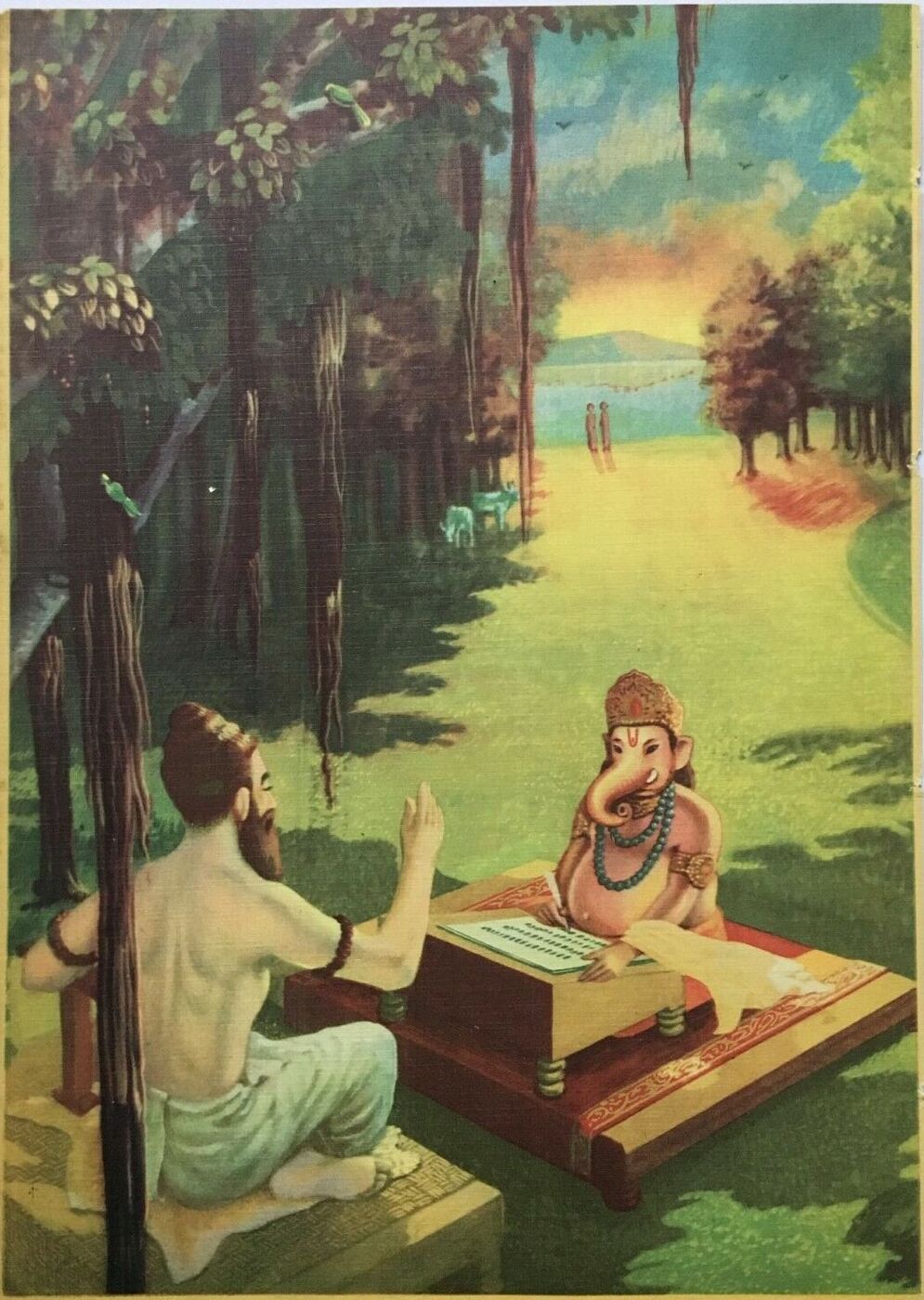
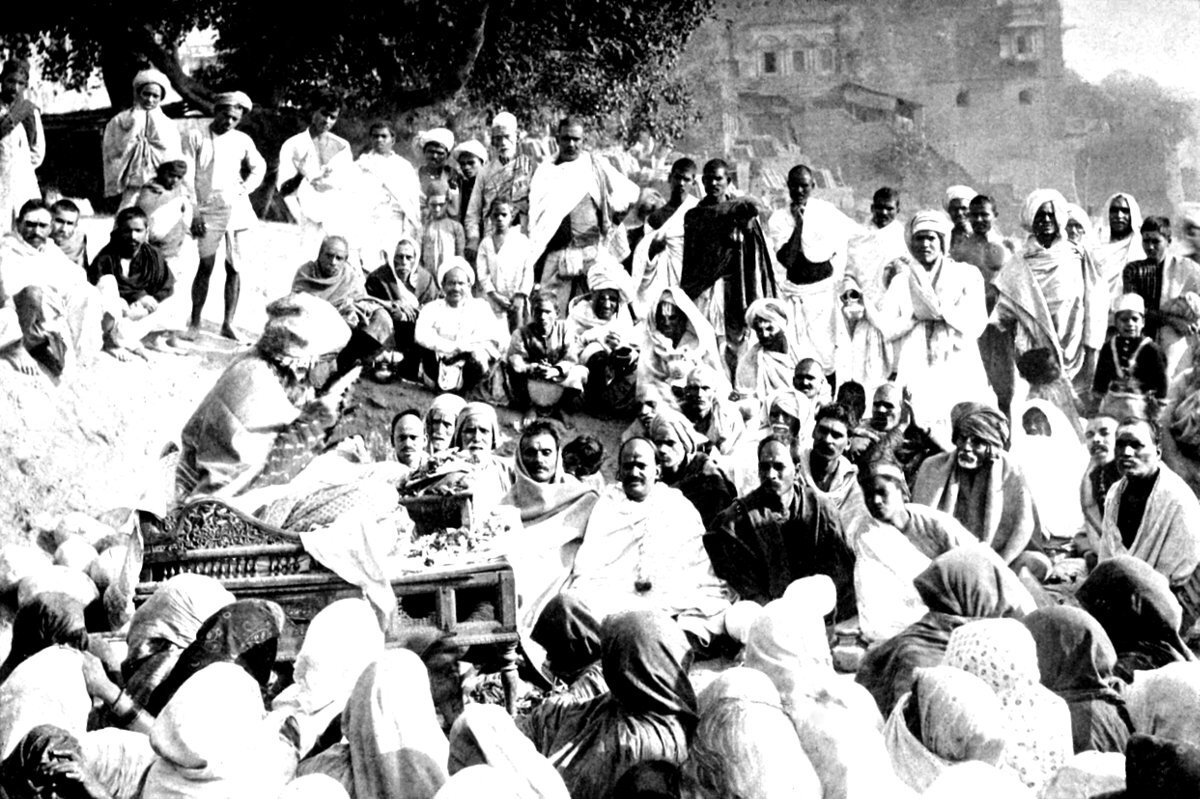
A well-loved story, more devotional legend than recorded history, holds that when Vyasadeva was ready to set the Mahabharata down in writing, he called on Lord Ganesha to act as his scribe. Ganesha agreed on one condition: that Vyasadeva recite without ever pausing, or he would stop writing at once. Vyasadeva accepted, but added a condition of his own: Ganesha must understand each verse fully before writing it down. So whenever the sage put in a verse with a very deep philosophical meaning, even Ganesha needed a moment to take it in. This gave Vyasadeva a short time to compose his next lines. This story is a popular tradition, not a proven fact, but it still shows a real truth about the text. The Mahabharata really does contain passages that pack very deep philosophy into a few words, set among long stretches of simpler storytelling. The Bhagavad-gita is the chief of these passages.
Vyasa Inside His Own Story #
Vyasa is unique because he wrote the Mahabharata and played a big role as a character in it. When the Kuru line was about to die out because there was no successor, his mother Satyavati asked him to father children on behalf of his dead half-brother Vichitravirya. This was done under the ancient custom of niyoga. From this came Dhritarashtra, born blind; Pandu, born pale; and Vidura, born of a servant woman and celebrated in the epic for his wisdom and detachment. While Pandu was still alive, Vyasadeva guided Gandhari through the suffering of her own difficult pregnancy with the Kauravas. Later, after Pandu's death, he consoled the widowed Kunti and her young sons, the Pandavas. He is also the sage who granted his disciple Sanjaya a form of mystic vision. With it, Sanjaya could witness the entire battle of Kurukshetra from the palace at Hastinapura and narrate it, moment by moment, to the blind king Dhritarashtra. This narration is how the Bhagavad-gita itself has come down to us. Sanjaya says this himself at the very close of the Gita: "By the mercy of Vyasa, I have heard these most confidential talks directly from the master of all mysticism, Krishna, who was speaking personally to Arjuna" (Bhagavad-gita 18.75). Srila Prabhupada's purport confirms plainly that "Vyasa was the spiritual master of Sanjaya."
Still Not Enough #
By the time all of this was finished, Vyasadeva had produced a body of literature few individuals in any tradition have matched: four organized Vedas, a vast itihasa, and eighteen Puranas. And still, Srimad-Bhagavatam records, something in him remained unsettled. That surprising dissatisfaction, and what it eventually produced, is the subject of The Dejection of Vyasadeva. His philosophical summary of the Vedanta itself, the Vedanta-sutra, is told separately on Writing the Vedanta-Sutra.
Scriptural evidence for this chapter (2)
Quoted in the text above:
Chapter 4
Writing the Vedanta-Sutra
The Vedanta-sutra, Vyasadeva's very short summary of Vedanta philosophy, on which every later school has had to write a commentary of its own.
After the Vedas, the Mahabharata, and the Puranas, Vyasadeva turned to a form of writing unlike anything he had produced before: the sutra. A sutra is a very short saying, packed with meaning. It is meant to be memorized whole, and then a teacher explains it aloud. The result, called the Vedanta-sutra or Brahma-sutra, explains step by step what the Upanishads teach about the nature of Brahman, the origin of the universe, and the relationship between the soul and the Supreme. Krishna Himself refers to this text directly inside the Bhagavad-gita. He describes the ultimate goal of knowledge as that which is "certainly explained in the Brahma-sutra, or Vedanta-sutra, with all reasoning as to cause and effect" (Bhagavad-gita 13.5).
Why Every School Needs Its Own Bhashya #
The sūtras are very short, sometimes consisting of only two or three Sanskrit words. Because of this, their full meaning cannot always be understood without explanation. They require a bhāṣya, a detailed prose commentary that explains the meaning of each sūtra. This fact played an important role in the later development of Vedānta philosophy.
Traditionally, a school of Vedānta gained recognition as an independent darśana by presenting its own commentary on the Brahma-sūtras. Śaṅkarācārya established the Advaita interpretation through his Brahma-sūtra-bhāṣya, while Rāmānujācārya presented the Viśiṣṭādvaita interpretation through his Śrī-bhāṣya. And Madhvacharya's Dvaita rests on his own Purna-prajna-bhashya, called by Srila Prabhupada "his greatest work." Devotional tradition even holds that Vyasadeva personally reviewed part of that project. Madhvacharya is said to have traveled twice to Badarikashrama. On the first visit he presented his still-unfinished Gita-bhashya before Vyasadeva and received his approval. On the second visit he received from Vyasadeva the shalagrama-shila known as Ashtamurti. We report this meeting just as it is told on Madhvacharya's own page, as sincere tradition, not as history that can be checked.
The Gap the Gaudiya Sampradaya Had to Close #
Centuries later, Sri Chaitanya Mahaprabhu's own line faced this same requirement, and for a long time it simply had no such commentary. Every Gaudiya acharya from Chaitanya Mahaprabhu's own generation through Jiva Goswami had written a great deal on Vaishnava theology. But none had produced a formal Vedanta-sutra-bhashya of their own. At the royal court of Jaipur, rival Vedanta schools used that gap to challenge the Gaudiya sampradaya's right to be accepted. Finally, in the early eighteenth century, long after Sri Chaitanya Mahaprabhu's time, Baladeva Vidyabhusana supplied the missing commentary, the Govinda-bhashya. In this way he met the same ancient requirement that Vyasadeva's short sutras had created in the first place.
The Bhagavatam as Vyasa's Own Commentary on Himself #
Gaudiya Vaishnava theology adds one more striking claim to all of this. Vyasadeva did not need anyone else's commentary at all. He later wrote the final commentary himself, though he did not call it one. Srila Prabhupada states this clearly and firmly in his purport to the verse describing Vyasadeva teaching the finished Bhagavatam to his son: "Srimad-Bhagavatam is the natural commentation on the Brahma-sutras compiled by the same author" (purport to Srimad-Bhagavatam 1.7.8). A closely related verse from the Garuda Purana, quoted in Sri Chaitanya-charitamrita, makes nearly the same claim in a different way: "The meaning of the Vedanta-sutra is present in Srimad-Bhagavatam. The full purport of the Mahabharata is also there... Srimad-Bhagavatam is the supreme Purana, and it was compiled by the Supreme Personality of Godhead in His incarnation as Vyasadeva" (Sri Chaitanya-charitamrita, Madhya 25.143-144). In this understanding, the sage who wrote the most demanding Vedanta text in the tradition, in short packed sayings, went on to explain it again at the end of his life. This time he explained it through story and devotion instead of argument. That final work, and the surprising dissatisfaction that led him to write it, are the subject of The Dejection of Vyasadeva and Narada's Instruction and the Writing of Srimad-Bhagavatam.
An Honest Note on Authorship #
Modern academic scholars who study ancient India raise real questions that are still unresolved. They ask whether works as vast as the Mahabharata, the eighteen Puranas, and the Vedanta-sutra can honestly be credited to a single historical author writing within one lifetime. Many scholars treat "Vyasa" partly as a traditional name given to centuries of writing and editing that built up over time. Gaudiya Vaishnava tradition does not read the evidence this way. It understands Vyasadeva as a single, empowered incarnation whose work spanned an extraordinarily long life. We report both positions here and do not try to settle the disagreement. Throughout this history, we name a real dispute instead of quietly picking a side.
Scriptural evidence for this chapter (2)
Quoted in the text above:
- CC Madhya 25.143-144 Sri Chaitanya-charitamrita
Further verses:
स संहितां भागवतीं कृत्वानुक्रम्य चात्मजम् ।
शुकमध्यापयामास निवृत्तिनिरतं मुनिः ॥
sa saṁhitāṁ bhāgavatīṁ
kṛtvānukramya cātma-jam
śukam adhyāpayām āsa
nivṛtti-nirataṁ muniḥ
Word for word
saḥ: he (Vyāsadeva); saṁhitām: the Vedic literature; bhāgavatīm: in relation to the Supreme Personality of Godhead; kṛtvā: having compiled; anukramya: revising; ca: and; ātma-jam: unto own son; śukam: Śrī Śukadeva Gosvāmī; adhyāpayām āsa: taught; nivṛtti-niratam: one who is already in the transcendental stage; muniḥ: the great sage.
The great sage Vyasadeva, after compiling the Srimad-Bhagavatam and revising it, taught it to his own son, Sri Sukadeva Gosvami, who was already engaged in self-realization.
From the purport: "Srimad-Bhagavatam is the natural commentation on the Brahma-sutras compiled by the same author. This Brahma-sutra, or Vedanta-sutra, is meant for those who are already engaged in self-realization."
Srila Prabhupada's own purport states without qualification that Srimad-Bhagavatam is Vyasadeva's natural commentary on his own Vedanta-sutra, the single clearest statement of this claim available in translation.
Chapter 5
The Dejection of Vyasadeva
Despite compiling the Vedas, the Mahabharata, and the Vedanta-sutra, Vyasadeva sat by the Sarasvati river, still not satisfied at heart.
Srimad-Bhagavatam begins the account of its own origin with a question. The sages gathered at Naimisharanya asked Suta Gosvami directly: Krishna-Dvaipayana Vyasa, "the great sage," had already produced the Vedas, the Mahabharata, and the Puranas, so where did he get the inspiration to compile Srimad-Bhagavatam at all? Suta's answer does not describe a proud final achievement at the end of a finished career. It describes a crisis.
A Morning by the River #
One morning, having bathed in the waters of the Sarasvati at his ashrama in Shamyaprasa, Vyasadeva sat down alone to concentrate his mind, as was his daily practice. Srimad-Bhagavatam says that, with his own inner vision, he began to see real faults in the new age that was settling over the world. Then he looked in the same way at his own completed life's work. What he found troubled him. In the text's own words: "Thus the great sage Vyasadeva, who is very kind to the ignorant masses, edited the Vedas so they might be assimilated by less intellectual men... O twice-born brahmanas, still his mind was not satisfied, although he engaged himself in working for the total welfare of all people" (Srimad-Bhagavatam 1.4.24-26). By his own account, he had "under strict disciplinary vows, humbly worshipped the Vedas, the spiritual master and the altar of sacrifice," and, through the Mahabharata, had shown the path of religion even to those the Vedas themselves could not reach. And still: "I am feeling incomplete, though I myself am fully equipped with everything required by the Vedas. This may be because I did not specifically point out the devotional service of the Lord, which is dear both to perfect beings and to the infallible Lord" (Srimad-Bhagavatam 1.4.30-31). He could name what troubled him with surprising honesty. But he could not yet name its cure.
Narada Muni Arrives #
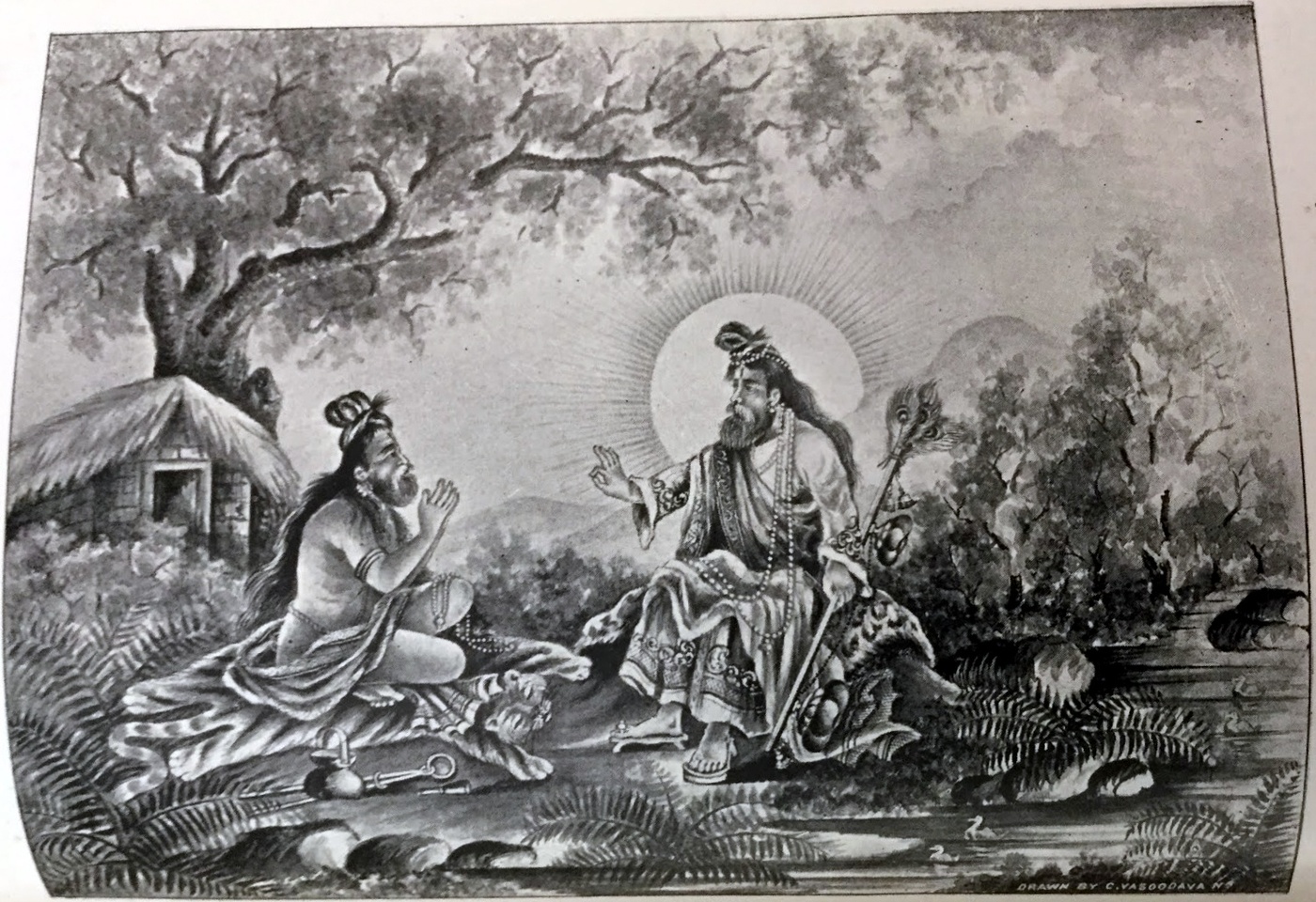
Srimad-Bhagavatam says that just at this moment Narada Muni reached Vyasadeva's cottage on the bank of the Sarasvati. Gaudiya Vaishnava tradition holds Narada to be Vyasadeva's own spiritual master. The way the text describes his reception shows this position: "At the auspicious arrival of Sri Narada, Sri Vyasadeva got up respectfully and worshiped him, giving him honor equal to that given to Brahmaji, the creator." You can read the full account of who Narada is on his own page, along with the earlier turning point in his own life that shaped the instruction he was about to give. Here we follow what happened next.
Narada's Diagnosis of the Problem #
Narada himself listed Vyasadeva's achievements: the Mahabharata, the explanation of impersonal Brahman, and the whole structure of Vedic knowledge, organized and preserved. Then he asked the question at the center of the whole episode. Why, despite all this, was Vyasadeva still so unhappy? Vyasadeva's answer was direct. Everything Narada had said was true, and still he was not at peace, and he did not know why. Narada then named the cause of the problem, in words that Gaudiya Vaishnavism has never stopped repeating since: "You have not actually broadcast the sublime and spotless glories of the Personality of Godhead. That philosophy which does not satisfy the transcendental senses of the Lord is considered worthless" (Srimad-Bhagavatam 1.5.8). Narada explained that Vyasadeva's works had thoroughly covered dharma, artha, kama and moksha (religious duty, economic development, sense gratification and liberation). These are the four recognized goals of human life. But none of these works, however broadly and skillfully explained, described the Supreme Lord's own personal pastimes for their own sake, and not as a means to something else.
What Narada Told Him to Do #
Narada did not only point out what was missing. He also gave Vyasadeva a specific instruction, speaking to him by name: "O Vyasadeva, your vision is completely perfect. Your good fame is spotless. You are firm in vow and situated in truthfulness. And thus you can think of the pastimes of the Lord in trance for the liberation of the people in general from all material bondage" (Srimad-Bhagavatam 1.5.13). This was not to be a new book of philosophy, and not another itihasa centered around human kings and wars. It was to be a direct, meditative description of the Lord's own transcendental activities, written in samadhi, not worked out by logical argument. What that instruction actually produced, and how Vyasadeva carried it out, is told next on Narada's Instruction and the Writing of Srimad-Bhagavatam.
Scriptural evidence for this chapter (2)
Quoted in the text above:
- SB 1.5.13 Srimad-Bhagavatam
Further verses:
श्रीनारद उवाच
भवतानुदितप्रायं यशो भगवतोऽमलम् ।
येनैवासौ न तुष्येत मन्ये तद्दर्शनं खिलम् ॥
śrī-nārada uvāca
bhavatānudita-prāyaṁ
yaśo bhagavato 'malam
yenaivāsau na tuṣyeta
manye tad darśanaṁ khilam
Word for word
śrī-nāradaḥ uvāca: Sri Narada said; bhavatā: by you; anudita-prāyam: almost not broadcast; yaśaḥ: glories; bhagavataḥ: of the Personality of Godhead; amalam: spotless; yena: by which; eva: certainly; asau: all those; na: do not; tuṣyeta: become satisfied; manye: I think; tat: that; darśanam: philosophy; khilam: inferior, worthless.
Sri Narada said: You have not actually broadcast the sublime and spotless glories of the Personality of Godhead. That philosophy which does not satisfy the transcendental senses of the Lord is considered worthless.
This is the exact verse in which Narada Muni diagnoses the cause of Vyasadeva's mysterious dissatisfaction: his vast literature had not yet directly glorified the Supreme Lord's own personal pastimes.
Chapter 6
Narada's Instruction and the Writing of Srimad-Bhagavatam
How Narada Muni's counsel led Vyasadeva to compose Srimad-Bhagavatam in a state of pure meditative absorption.
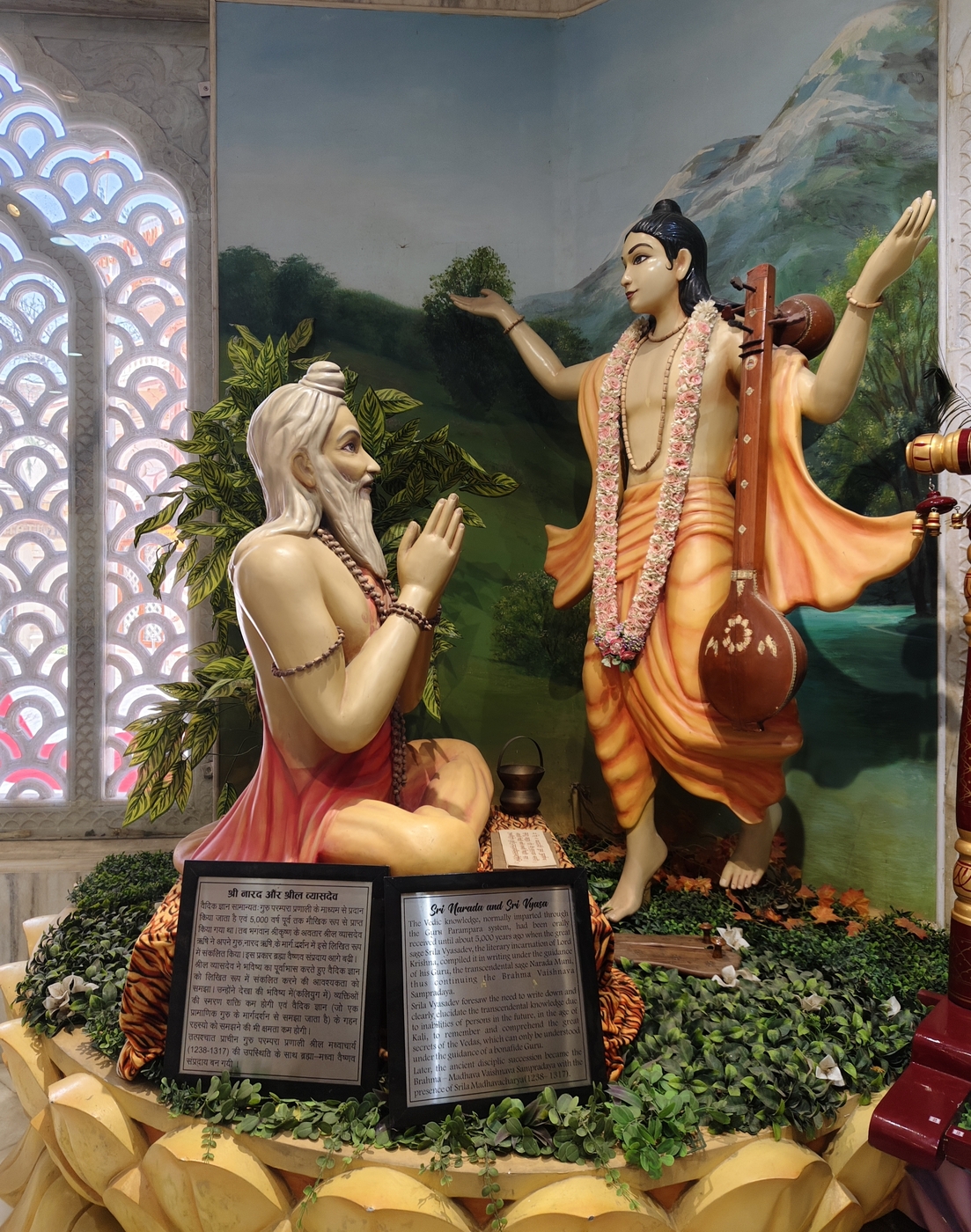
Narada Muni did not simply point out what was missing from Vyasadeva's life's work and then leave. Before he left, vina in hand, to continue his own wandering, he gave something more. He spoke from his own experience. In the same conversation, Narada told Vyasadeva the story of his own earlier life. As a boy born to a maidservant, he had once served a group of wandering sages during a single rainy season. From them, almost by chance, he received instruction in bhakti. It was so powerful that it changed the rest of his existence, through two different bodies. The full story is on Narada Muni's own page. In this conversation, Narada told it as proof by example. He was teaching his own disciple a clear lesson. Devotional hearing and chanting about the Supreme Lord's activities could change an uneducated servant boy this completely. So a literature built entirely around that same subject, written by someone as realized as Vyasadeva, would surely do good for everyone who heard it.
Returning to Samadhi #
The seventh chapter of Srimad-Bhagavatam continues the story right where the fifth chapter ended. Vyasadeva returned to his ashrama at Shamyaprasa, on the western bank of the Sarasvati, and sat down again. This time his aim was not to organize existing knowledge. He fixed his mind in bhakti-yoga, devotional linking, instead of in the dry work of sorting and listing that had produced the divided Vedas. The text says plainly that the result was direct perception: "Thus he fixed his mind, perfectly engaging it by linking it in devotional service without any tinge of materialism, and thus he saw the Absolute Personality of Godhead along with His external energy, which was under full control" (Srimad-Bhagavatam 1.7.4). This was not further study. Narada had told him to think of the Lord's pastimes "in trance," in samadhi. Srimad-Bhagavatam describes its own writing in exactly this way. It came from realization, not from research.
Twelve Cantos, Eighteen Thousand Verses #
From that samadhi, Vyasadeva produced Srimad-Bhagavatam itself. Sri Chaitanya-charitamrita later describes this text very exactly: "Srimad-Bhagavatam is the supreme Purana, and it was compiled by the Supreme Personality of Godhead in His incarnation as Vyasadeva. There are twelve cantos, 335 chapters and eighteen thousand verses" (Sri Chaitanya-charitamrita, Madhya 25.143-144, quoting the Garuda Purana). Its opening verses do not describe it modestly. They call it "the mature fruit of the desire tree of Vedic literatures... though its nectarean juice was already relishable for all, including liberated souls" (Srimad-Bhagavatam 1.1.3). It is a fruit that ripened fully only at the very end of the tree's growth, after the Vedas, the Mahabharata, the Puranas, and the Vedanta-sutra had already been produced.
Teaching It to His Own Son First #
Vyasadeva did not release this finished work to the world directly. Srimad-Bhagavatam records that he taught it first to his own son: "The great sage Vyasadeva, after compiling the Srimad-Bhagavatam and revising it, taught it to his own son, Sri Shukadeva Gosvami, who was already engaged in self-realization" (Srimad-Bhagavatam 1.7.8). This detail is very important for the tradition's theology. Every account agrees that Shukadeva Gosvami was already a liberated soul, absorbed in impersonal self-realization from birth. He seemed to have no need for any further scripture at all. Yet he still found the Bhagavatam worth receiving from his father, and worth carrying forward. Throughout Gaudiya Vaishnavism, this is treated as proof of one clear point. Devotional literature about the Lord's own pastimes attracts even those who have already attained liberation. The tradition calls this the atmarama principle.
Meant to Be Spoken Aloud #
There is one more, quieter point to notice here. Vyasadeva did not simply leave Srimad-Bhagavatam as a finished manuscript and think his work was complete. He taught it aloud to one particular person. He did this in the same personal, teacher-to-disciple way in which he himself had organized the Vedas and given each portion to Paila, Jaimini, Vaishampayana and Sumantu. Understood in this way, Srimad-Bhagavatam was never meant to be only a private text for study alone. From the very moment it was written, it was made to be spoken aloud, heard, and then spoken again by whoever received it in turn. Shukadeva Gosvami would soon do exactly this for King Parikshit, and Suta Gosvami would later do it again for the sages gathered at Naimisharanya. Shukadeva Gosvami learned Srimad-Bhagavatam from his father, Vyasadeva, and then recited it to a dying king. That story is told on Shukadeva Goswami and the Recitation to Parikshit.
Chapter 7
Shukadeva Goswami and the Recitation to Parikshit
How Vyasadeva's own son, Shukadeva Goswami, first spoke the completed Srimad-Bhagavatam aloud to a dying king.
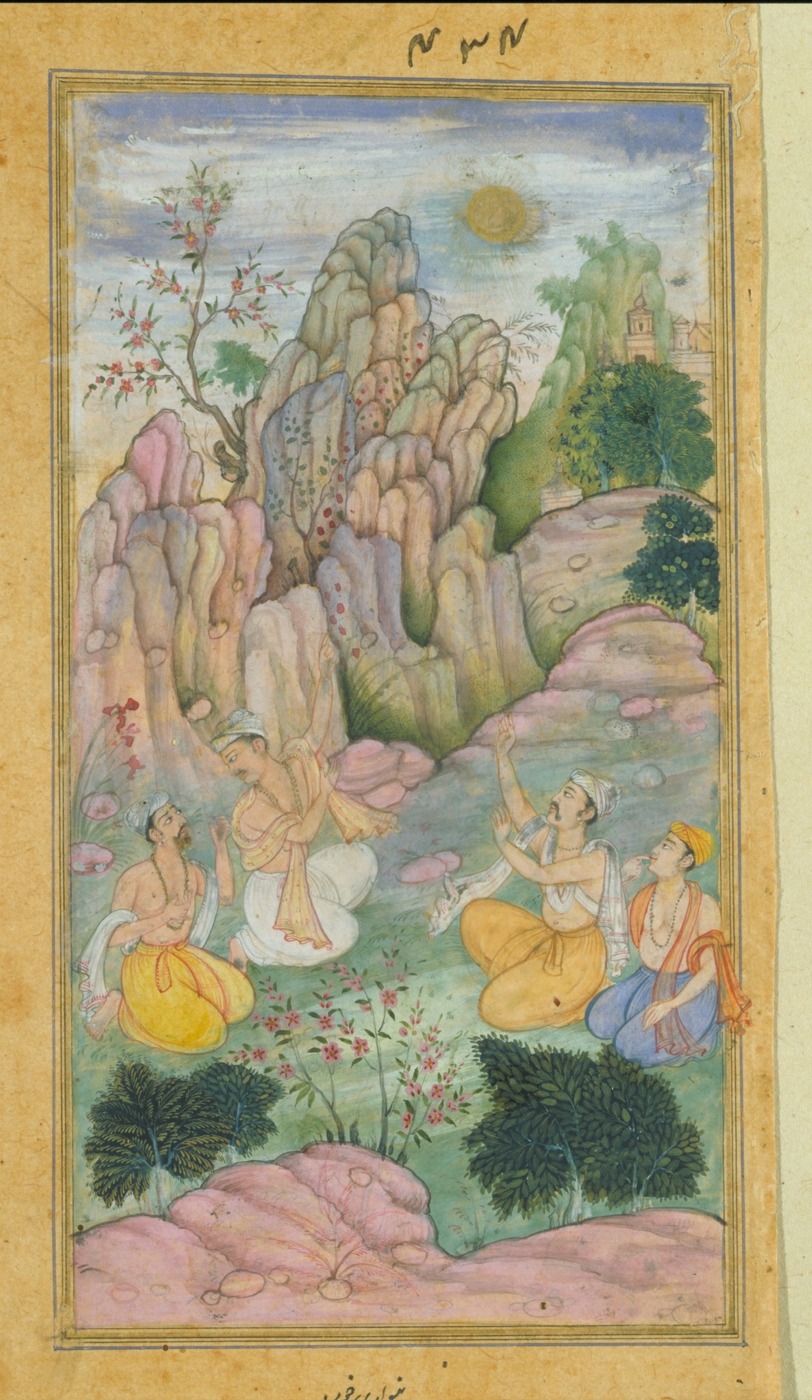
From its very first chapter, Srimad-Bhagavatam tells the story of how it was itself told. Sages gathered at Naimisharanya ask Suta Gosvami to repeat what he once heard Shukadeva Gosvami speak. Suta explains that Shukadeva spoke it to King Parikshit. Parikshit was a king waiting to die within a fixed number of days, and his situation gives the entire work its urgency. But none of this would have reached us without Shukadeva Gosvami himself. He was Vyasadeva's son, and Vyasadeva taught him the finished Bhagavatam before anyone else heard it.
A Son Unlike Other Sons #
Srimad-Bhagavatam describes Shukadeva as already fully self-realized from the time of his birth, "a great devotee, an equibalanced monist, whose mind was always concentrated in monism," someone "transcendental to mundane activities" who nonetheless "appeared like an ignorant person" to those who did not recognize him. One especially vivid detail shows this: "While Sri Vyasadeva was following his son, beautiful young damsels who were bathing naked covered their bodies with cloth, although Sri Vyasadeva himself was not naked. But they had not done so when his son had passed" (Srimad-Bhagavatam 1.4.5). When asked why, the women explained that Shukadeva's vision made no distinction at all between male and female, but his father's vision evidently still did. This one picture shows how completely Shukadeva had already risen above ordinary bodily awareness, even before his father taught him a single word of the Bhagavatam.
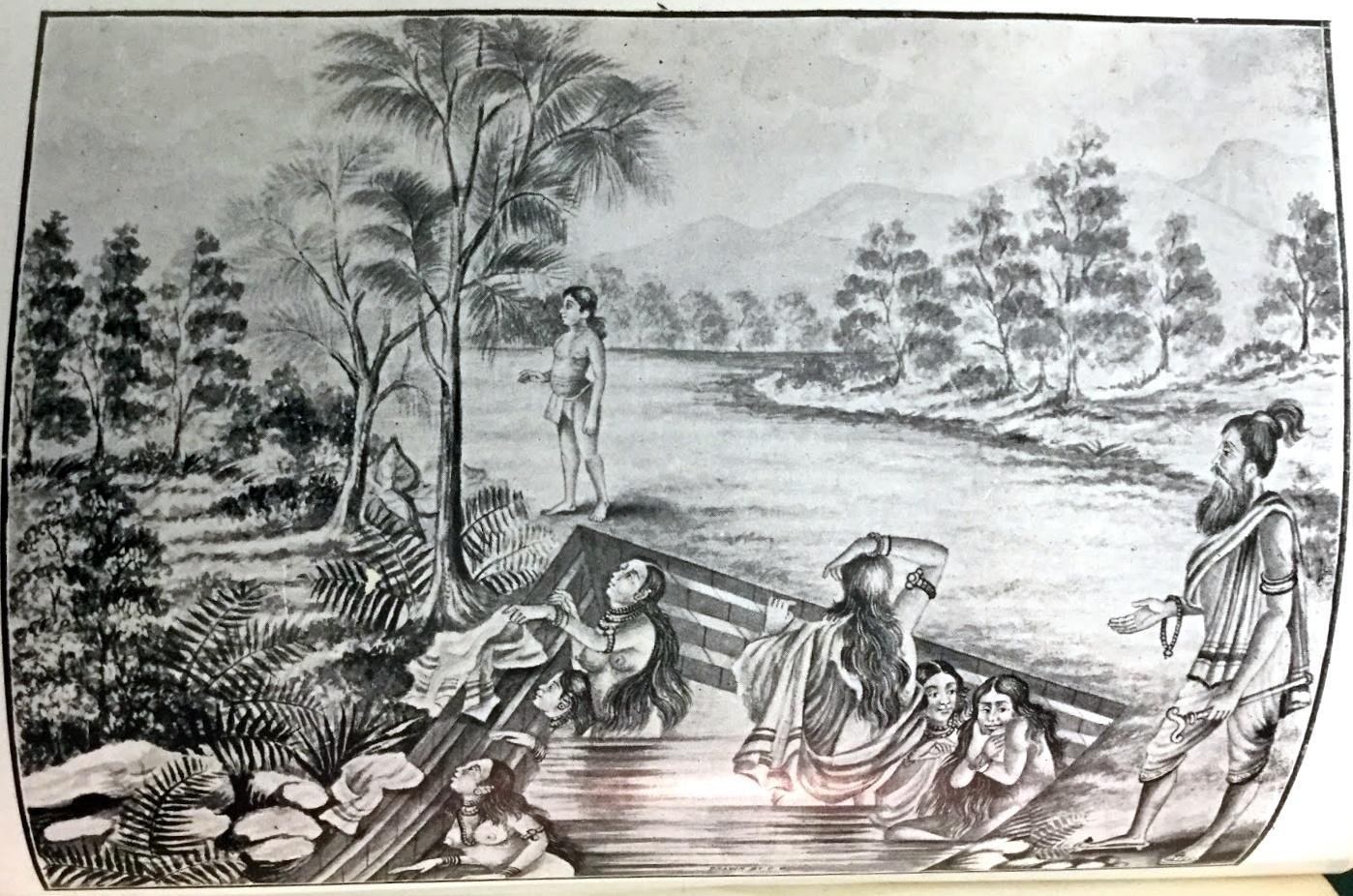
A Wanderer Recognized at Last #
Before he ever spoke the Bhagavatam publicly, Shukadeva lived as a silent wanderer, passing through the lands of Kuru and Jangala "appearing like a madman, dumb and retarded," until at last he reached the city of Hastinapura. There its citizens somehow recognized who he really was. Tradition describes him arriving at the assembly by Parikshit's deathbed suddenly, as if from nowhere, "approaching them through the air like a ball of fire," and startling the sages who were already gathered there. After he had settled there, he lived with the same detachment as before. He was said to remain in any one household only as long as it takes to milk a cow, staying just long enough to sanctify the home before moving on.
King Parikshit's Seven Days #
The event that brought Shukadeva and Parikshit together is one of the most famous stories from the time after the Mahabharata war. Parikshit, grandson of Arjuna and emperor of a peaceful and prosperous kingdom, was cursed by the offended son of a brahmana to die of snakebite within seven days. Parikshit did not spend those days in fear. He renounced his throne, traveled to the bank of the Ganges, and sat down to fast until death. Great sages arrived and sat around him to guide him through his final week. The opening story of Srimad-Bhagavatam asks, almost with wonder, how an emperor could give up his entire kingdom and his own life this readily. He was still young and strong, and still able to command the loyalty of his enemies. The text's answer is that a soul truly devoted to the Supreme Personality of Godhead lives only for others' benefit, and the coming days would show exactly that.
Why an Already-Liberated Sage Bothered to Speak It #
Srimad-Bhagavatam itself asks an important question. Shukadeva Gosvami was already established in self-realization and satisfied in himself. So why would he take the trouble to speak this literature at all? The text's own answer is that devotional service to the Supreme Personality of Godhead attracts even fully liberated souls: "All different varieties of atmaramas... though freed from all kinds of material bondage, desire to render unalloyed devotional service unto the Personality of Godhead" (Srimad-Bhagavatam 1.7.10). The reason is that the Lord has transcendental qualities that can attract anyone, at any stage. Shukadeva Gosvami spoke Srimad-Bhagavatam to King Parikshit over the following seven days. That recitation was later repeated by Suta Gosvami to the sages of Naimisharanya. It has come down to us as the text quoted throughout this whole tradition.
From Father to Son to the World #
It began as one sage's private dissatisfaction at Shamyaprasa, described on The Dejection of Vyasadeva and Narada's Instruction and the Writing of Srimad-Bhagavatam. It reached the wider world only because Vyasadeva first taught it to his own son. His son, in turn, chose to speak it aloud instead of keeping it in silent realization. Gaudiya Vaishnava tradition still calls Srimad-Bhagavatam "the ripened fruit of the desire tree of Vedic literature," and that fruit passed from a father's samadhi through a son's mouth before it ever reached anyone else. This chain of teaching continues, unbroken, in every temple where the Bhagavatam is still read aloud today.
Scriptural evidence for this chapter (1)
निगमकल्पतरोर्गलितं फलं
शुकमुखादमृतद्रवसंयुतम् ।
पिबत भागवतं रसमालयं
मुहुरहो रसिका भुवि भावुकाः ॥
nigama-kalpa-taror galitaṁ phalaṁ
śuka-mukhād amṛta-drava-saṁyutam
pibata bhāgavataṁ rasam ālayam
muhur aho rasikā bhuvi bhāvukāḥ
Word for word
nigama: of the Vedic literatures; kalpa-taroḥ: which is like the desire tree; galitam: fully matured; phalam: fruit; śuka-mukhāt: from the lips of Śrī Śukadeva Gosvāmī; amṛta: nectar; drava: semisolid; saṁyutam: perfect in all respects; pibata: do relish; bhāgavatam: the book dealing in relation with the Supreme Lord; rasam: juice (that which is relishable); ālayam: until liberation, or even in the liberated state; muhuḥ: always; aho: O; rasikāḥ: those who are full of knowledge and are conversant with mellows; bhuvi: on the earth.
O expert and thoughtful men, relish Srimad-Bhagavatam, the mature fruit of the desire tree of Vedic literatures. It emanated from the lips of Sri Sukadeva Gosvami. Therefore this fruit has become even more tasteful, although its nectarean juice was already relishable for all, including liberated souls.
This is the opening description of Srimad-Bhagavatam itself as the ripened fruit of Vyasadeva's own Vedic tree, made sweeter still by passing through his son Shukadeva Gosvami's mouth before reaching King Parikshit and the world.
Chapter 8
Vyasa-Puja and Living Legacy
Why Gaudiya Vaishnavas honor their own spiritual master's appearance day as Vyasa-puja, in Srila Vyasadeva's name.
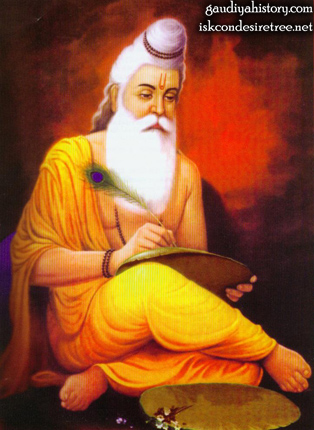
Most people who take part in a Vyasa-puja ceremony today are not thinking about a sage who lived at the dawn of Kali-yuga. They are honoring their spiritual master on his appearance day. At this temple, that spiritual master is Srila Prabhupada. The name itself, though, is not a coincidence or a metaphor. It is a direct, still-functioning link back to Krishna-Dvaipayana Vyasa. Srila Prabhupada explained the reasoning behind it in his own words on more than one occasion.
The Seat Called Vyasasana #
In Gaudiya Vaishnava temples, a spiritual master sits, when honored formally, on an elevated seat called vyasasana, "the seat of Vyasa." Srila Prabhupada, speaking at a Vyasa-puja ceremony in Hyderabad in 1976, explained the term to his audience directly: "This asana where they have seated me, it is called vyasasana. The guru is the representative of Vyasadeva. Every one of you have heard the name of Vyasadeva, Veda-vyasa. So anyone who represents the great acharya, Vyasadeva, he is allowed to sit on the vyasasana. So Vyasa-puja... Guru is representative of Vyasadeva, therefore his birthday anniversary is accepted as Vyasa-puja" (Sri Vyasa-puja Lecture, Hyderabad, 19 August 1976). The reason is direct, not merely symbolic. A bona fide guru passes on the same Vedic knowledge that Vyasadeva first organized and handed down. The disciplic succession, or guru-parampara, is understood as one unbroken chain, from teacher to disciple, passing on that same knowledge. It reaches back to Vyasadeva himself and, before him, to Narada Muni and Lord Brahma.
Worshiping the Birthday of Guru #
Prabhupada made the same point even more plainly in an informal exchange during a morning walk in Bombay in 1974. Dr. Patel remarked, "Vyasa is the surname." Prabhupada's answer was short, as his answers often were: "No, Vyasa, Vyasadeva... The guru is called Vyasa. That is one of... But the original Vyasa is one. Just like we. We worship the birthday of guru as Vyasa-puja day, because guru is representative of Vyasa" (Morning Walk, Bombay, 6 May 1974). These words are important. There is one original Vyasa, Krishna-Dvaipayana. But every later guru in the disciplic succession is honored under that same title because of the work he does. Each one carries forward the same work that the original Vyasa did, passing on Vedic knowledge.
An Annual Practice, Still Observed #
In practical terms, this means that every acharya in the Gaudiya Vaishnava disciplic succession, including Srila Prabhupada himself, has his own appearance day marked each year as his Vyasa-puja. This is separate from the calendar festivals shared across the whole tradition. Disciples traditionally write offerings for the occasion. In them they express gratitude and renew their commitment to the teaching they received. ISKCON has continued this practice in published form since the movement's earliest years. For the Hare Krishna Movement Kota and this temple, Srila Prabhupada is the acharya of the present age and the initiating spiritual master (diksha-guru) of every devotee. Initiations continue by the arrangement he approved in the letter of 9 July 1977. Under it, ritviks, "representative of the acarya," initiate new devotees on his behalf, and the letter states plainly: "The newly initiated devotees are disciples of His Divine Grace A.C. Bhaktivedanta Swami Prabhupad." The full account is on Final Days and Disappearance. So the Vyasa-puja celebrated here is Srila Prabhupada's own. Each year on his appearance day, his disciples gather in temples and homes to honor him. They include those he initiated personally and those initiated on his behalf since 1977. The same principle applies to every acharya in the chain running back through him.
Prabhupada's own conversation records show that, for him, this was not an abstract point of etiquette. He expected disciples to actually understand it, not merely perform it. During a 1976 morning walk in Delhi, his secretaries spoke of the Deity's "Vyasa-puja dress," and Prabhupada at once asked them, "What is that? You know?" They had spoken only of the clothing, and the recording ends before any answer is given. The exchange is a useful reminder. The outward form of a festival, such as the seat, the offerings and the flowers, means little on its own without the reason behind it. Prabhupada gave that reason plainly: the person seated there is a representative of Vyasadeva, not Vyasadeva's replacement or equal. He carries forward a definite chain of teaching that can be traced back. He does not claim any independent authority of his own.
One Office, Carried Forward #
The account of Vyasadeva's own birth notes that Vaishnava cosmology already describes "Vyasa" as a post that is renewed from age to age. In the current cycle, twenty-eight Vyasas appear, and Krishna-Dvaipayana himself is the twenty-eighth. See Birth of Krishna-Dvaipayana for that fuller picture. Vyasa-puja brings the same idea into ordinary devotional life, on a much smaller and more personal scale. It does not mean that every guru literally is Vyasadeva. It means that every guru does for his own disciples exactly what Vyasadeva did for the world. He receives Vedic knowledge faithfully and hands it on unchanged. In the end, this is one of the clearest links between an ancient sage and the tradition still practiced in our temple today.
Closing
His Place at the Source of the Parampara #
The Vaiṣṇava tradition describes “Vyāsa” as both a person and a position or title. In the Brahma-Madhva-Gauḍīya lineage, this particular Vyāsa has a fixed place. He is the third link in the Brahma-sampradāya, following Lord Brahmā and Nārada Muni.
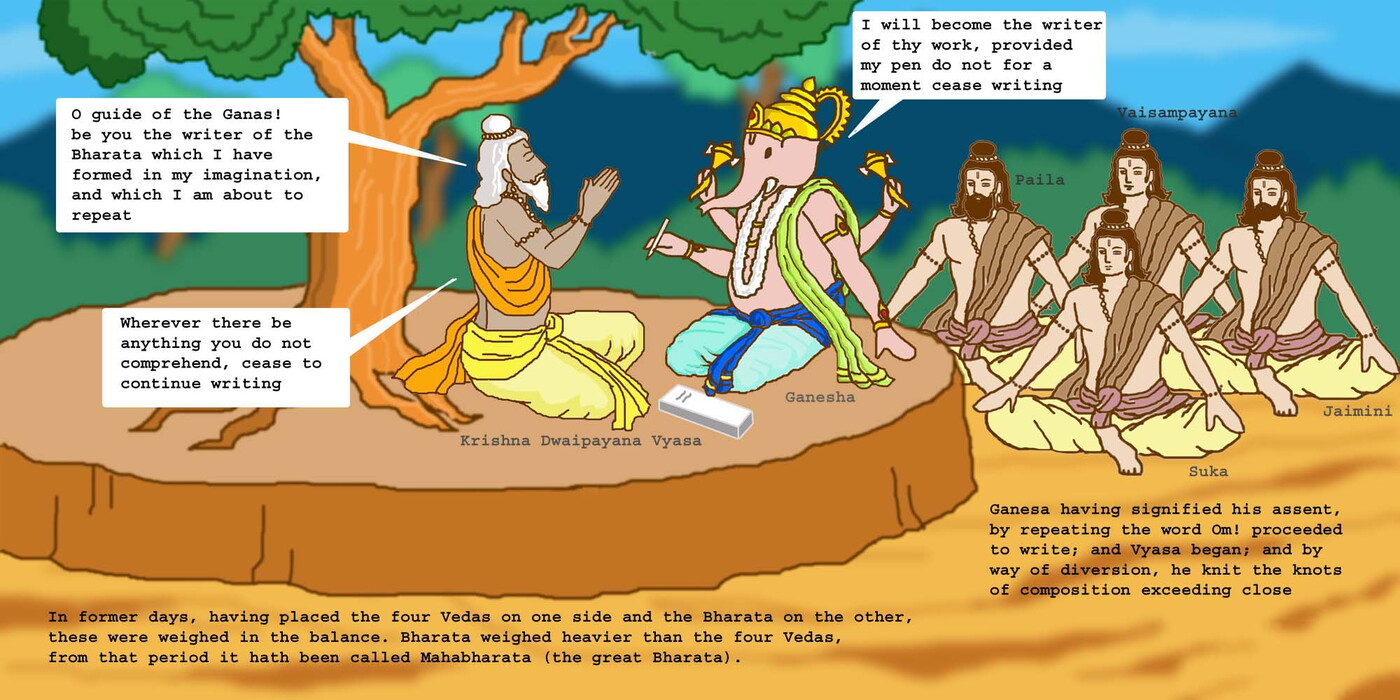
Many generations later, the disciplic line continues through Madhvācārya and develops into what is known as the Brahma-Madhva-Gauḍīya sampradāya. Every ācārya in this lineage who has commented on scripture, quoted the Bhagavad-gītā, or recited the Śrīmad-Bhāgavatam before an audience has built upon the foundation laid by Vyāsadeva. This remains true whether or not that connection is directly mentioned.
