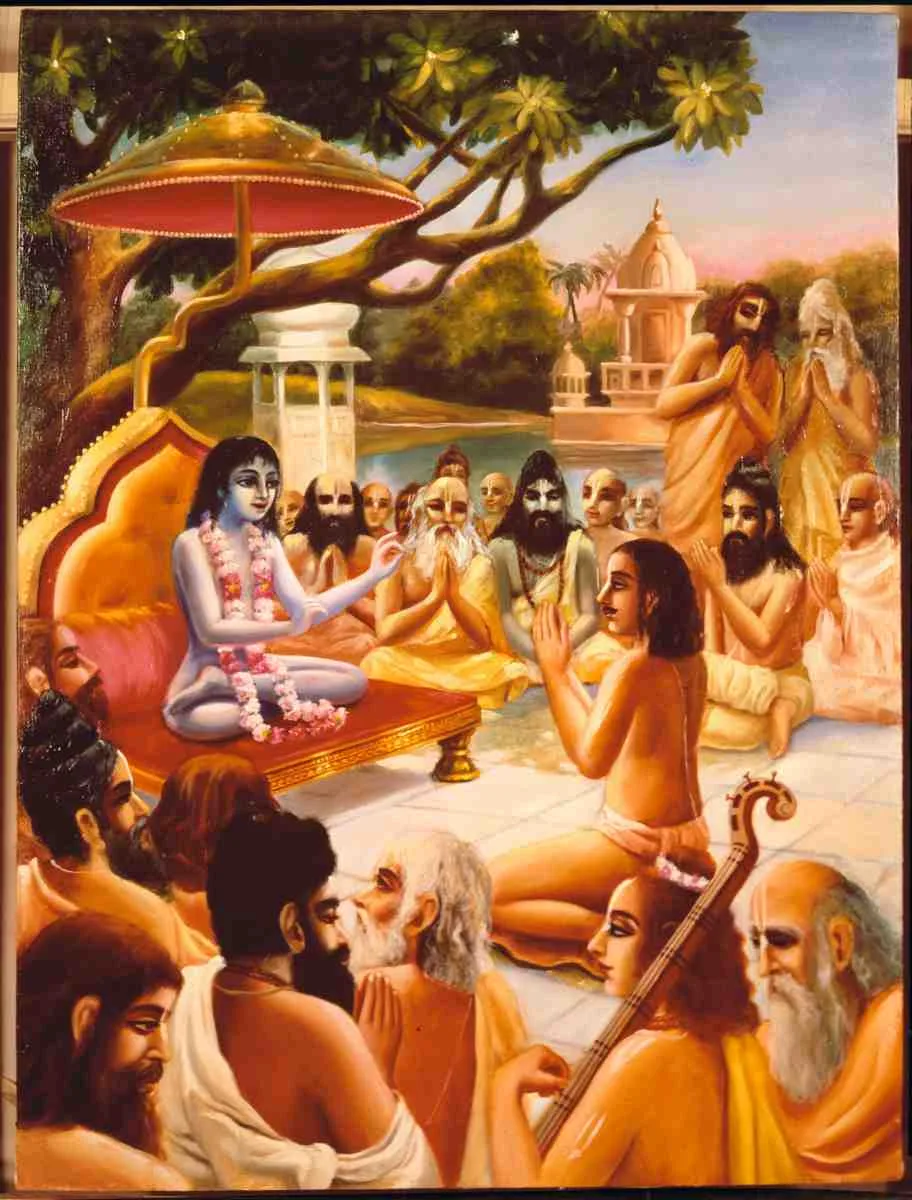
श्रीमद्भागवतम् अपने पहले अध्याय से ही यह कथा सुनाता है कि स्वयं इसे किस प्रकार सुनाया गया। नैमिषारण्य में एकत्र ऋषि सूत गोस्वामी से अनुरोध करते हैं कि उन्होंने कभी शुकदेव गोस्वामी से जो सुना था, उसे फिर से सुनाएँ। सूत बताते हैं कि शुकदेव ने यह राजा परीक्षित को सुनाया था। परीक्षित एक ऐसे राजा थे, जो कुछ निश्चित दिनों के भीतर अपनी मृत्यु की प्रतीक्षा कर रहे थे। उनकी इसी स्थिति के कारण पूरे ग्रन्थ में यह भाव बना रहता है कि समय कम है और हर बात अत्यन्त आवश्यक है। लेकिन स्वयं शुकदेव गोस्वामी के बिना यह सब हम तक नहीं पहुँच सकता था। वे व्यासदेव के पुत्र थे, और व्यासदेव ने पूरा भागवतम् किसी और के सुनने से पहले उन्हें ही सिखाया था।
अन्य पुत्रों से भिन्न एक पुत्र #
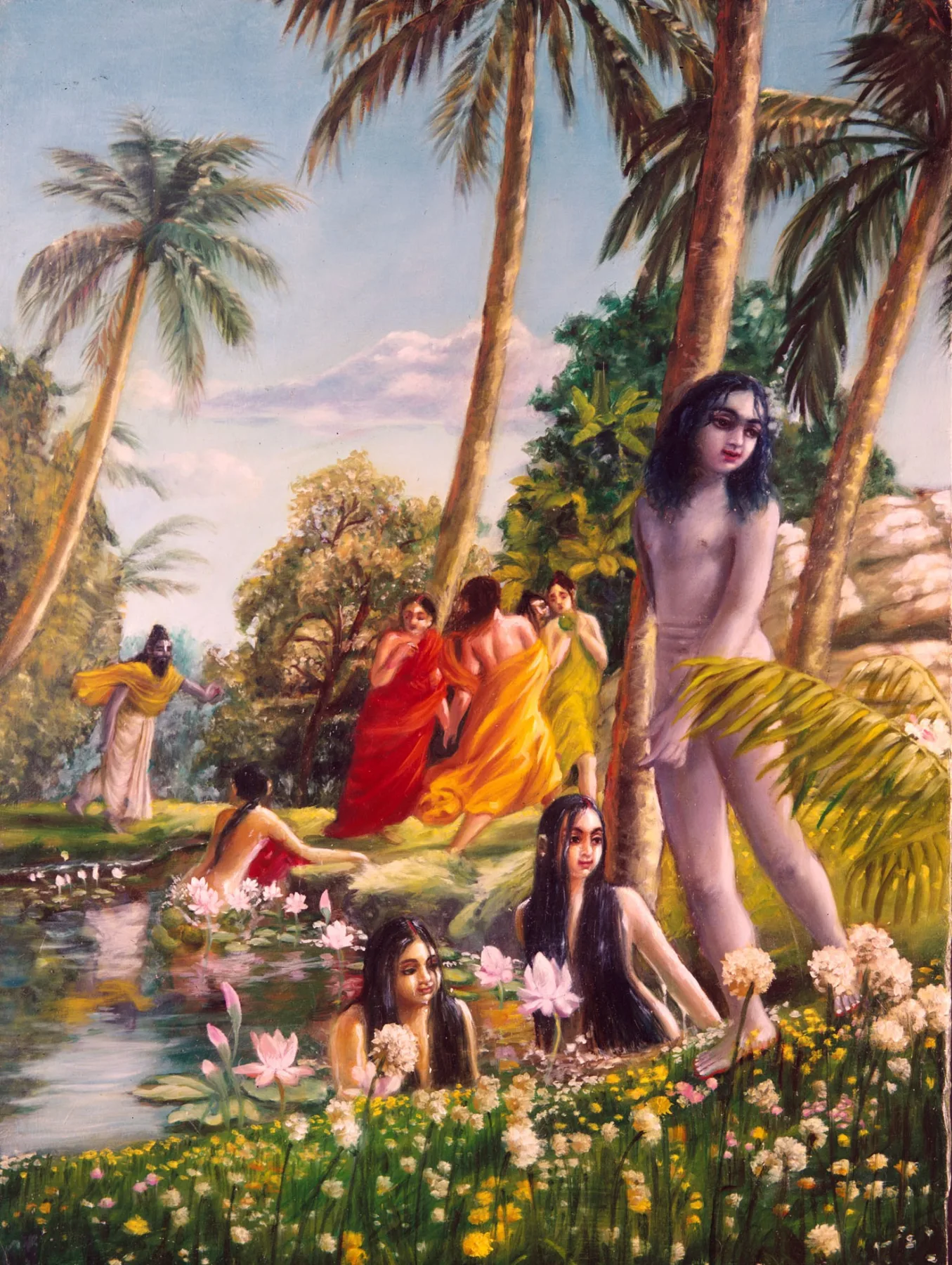
श्रीमद्भागवतम् बताता है कि शुकदेव जन्म से ही पूर्ण रूप से आत्म-साक्षात्कार प्राप्त थे। वह उन्हें "एक महान भक्त, एक सम-भाव अद्वैतवादी, जिनका मन सदैव अद्वैत में केन्द्रित रहता था" कहता है। वे "सांसारिक क्रियाकलापों से परे" थे, फिर भी जो लोग उन्हें पहचान नहीं पाते थे, उन्हें उनका बाहरी रूप "एक अज्ञानी व्यक्ति के समान प्रतीत होता" था। एक बहुत सजीव प्रसंग इस बात को स्पष्ट करता है: "जब श्री व्यासदेव अपने पुत्र के पीछे-पीछे चल रहे थे, तब नग्न स्नान करती हुई सुन्दर युवतियों ने अपने शरीर को वस्त्र से ढक लिया, यद्यपि स्वयं श्री व्यासदेव नग्न नहीं थे। किन्तु जब उनका पुत्र गुज़रा था, तब उन्होंने ऐसा नहीं किया था" (श्रीमद्भागवतम् 1.4.5)। जब उन स्त्रियों से इसका कारण पूछा गया, तो उन्होंने बताया कि शुकदेव की दृष्टि में पुरुष और स्त्री का कोई भेद ही नहीं था, जबकि उनके पिता की दृष्टि में यह भेद स्पष्ट रूप से अभी भी था। यह एक ही चित्र दिखाता है कि पिता से भागवतम् का एक भी शब्द सीखने से पहले ही शुकदेव शरीर की साधारण चेतना से कितने पूरी तरह ऊपर उठ चुके थे।
अन्ततः पहचाना गया एक परिव्राजक #
भागवतम् को सबके सामने सुनाने से पहले शुकदेव एक मौन परिव्राजक के रूप में, अर्थात् निरन्तर घूमते रहने वाले साधु के रूप में रहते थे। वे कुरु और जांगल प्रदेशों से होकर गुज़रे, "एक पागल, गूँगे तथा मन्दबुद्धि व्यक्ति के समान प्रतीत होते हुए"। अन्त में वे हस्तिनापुर नगर पहुँचे। वहाँ के नागरिकों ने किसी प्रकार पहचान लिया कि वे वास्तव में कौन हैं। परम्परा बताती है कि वे परीक्षित की मृत्युशय्या के पास एकत्र सभा में अचानक, मानो कहीं से प्रकट होकर पहुँचे, "अग्नि-गोले के समान आकाश-मार्ग से उनके पास आते हुए"। इससे वहाँ पहले से बैठे ऋषि चौंक उठे। वहाँ ठहरने के बाद भी वे पहले जैसे वैराग्य के साथ ही रहे। कहा जाता है कि वे किसी भी घर में केवल उतनी देर रुकते थे, जितनी देर में गाय का दूध निकाला जाता है। घर को पवित्र करने के लिए इतना समय पर्याप्त था, और फिर वे आगे चल देते थे।
राजा परीक्षित के सात दिन #
शुकदेव और परीक्षित को एक साथ लाने वाली घटना महाभारत युद्ध के बाद के समय की सबसे प्रसिद्ध कथाओं में से एक है। परीक्षित अर्जुन के पौत्र थे और एक शान्त तथा समृद्ध राज्य के सम्राट थे। एक अपमानित ब्राह्मण-पुत्र ने उन्हें शाप दिया कि सात दिनों के भीतर सर्प के डसने से उनकी मृत्यु होगी। परीक्षित ने वे दिन भय में नहीं बिताए। उन्होंने अपना सिंहासन त्याग दिया, गंगा के तट पर गए और मृत्यु तक उपवास करने के लिए बैठ गए। महान ऋषि वहाँ आए और उनके अन्तिम सप्ताह में उनका मार्गदर्शन करने के लिए उनके चारों ओर बैठ गए। श्रीमद्भागवतम् की आरम्भिक कथा लगभग आश्चर्य के साथ पूछती है कि कोई सम्राट अपना पूरा राज्य और अपना जीवन इतनी सहजता से कैसे त्याग सकता था। वे अभी भी युवा और बलवान थे, और उनमें इतनी शक्ति थी कि शत्रु भी उनके प्रति निष्ठा रखते थे। ग्रन्थ इसका उत्तर यह देता है कि जो आत्मा सच में भगवान के प्रति समर्पित होती है, वह केवल दूसरों के हित के लिए जीती है। आने वाले दिन ठीक यही दिखाने वाले थे।
पहले से मुक्त ऋषि ने इसे सुनाने का कष्ट क्यों उठाया #
श्रीमद्भागवतम् स्वयं एक महत्त्वपूर्ण प्रश्न पूछता है। शुकदेव गोस्वामी पहले से ही आत्म-साक्षात्कार में स्थित थे और अपने भीतर ही सन्तुष्ट थे। तो फिर उन्होंने इस साहित्य को सुनाने का कष्ट क्यों उठाया? ग्रन्थ स्वयं इसका उत्तर देता है कि भगवान की भक्ति पूरी तरह मुक्त आत्माओं को भी आकर्षित करती है: "सभी विभिन्न प्रकार के आत्माराम... समस्त प्रकार के भौतिक बन्धन से मुक्त होते हुए भी, भगवान की निष्कपट भक्ति करने की इच्छा रखते हैं" (श्रीमद्भागवतम् 1.7.10)। इसका कारण यह है कि भगवान में ऐसे दिव्य गुण हैं, जो किसी भी अवस्था के व्यक्ति को आकर्षित कर सकते हैं। शुकदेव गोस्वामी ने अगले सात दिनों में राजा परीक्षित को श्रीमद्भागवतम् सुनाया। बाद में सूत गोस्वामी ने यही कथा नैमिषारण्य के ऋषियों को फिर से सुनाई। यही ग्रन्थ हम तक पहुँचा है, जिसे इस पूरी परम्परा में हर जगह उद्धृत किया जाता है।
पिता से पुत्र तक, और फिर संसार तक #
श्रीमद्भागवतम् की शुरुआत शम्याप्रास में एक ऋषि के निजी असन्तोष से हुई थी। इसका वर्णन व्यासदेव का विषाद और नारद का उपदेश और श्रीमद्भागवतम् की रचना पर किया गया है। यह व्यापक संसार तक इसलिए पहुँच सका, क्योंकि व्यासदेव ने इसे सबसे पहले अपने पुत्र को सिखाया। फिर उनके पुत्र ने इसे मौन साक्षात्कार में अपने भीतर ही रखने के बजाय ऊँची आवाज़ में सुनाना चुना। गौड़ीय वैष्णव परम्परा आज भी श्रीमद्भागवतम् को "वैदिक साहित्य रूपी कल्पवृक्ष का पका हुआ फल" कहती है। यह फल पिता की समाधि से निकलकर पहले पुत्र के मुख से होकर गुज़रा, और उसके बाद ही किसी और तक पहुँचा। शिक्षा की यह परम्परा आज भी हर उस मन्दिर में बिना टूटे चल रही है, जहाँ भागवतम् ऊँची आवाज़ में पढ़ा जाता है।
