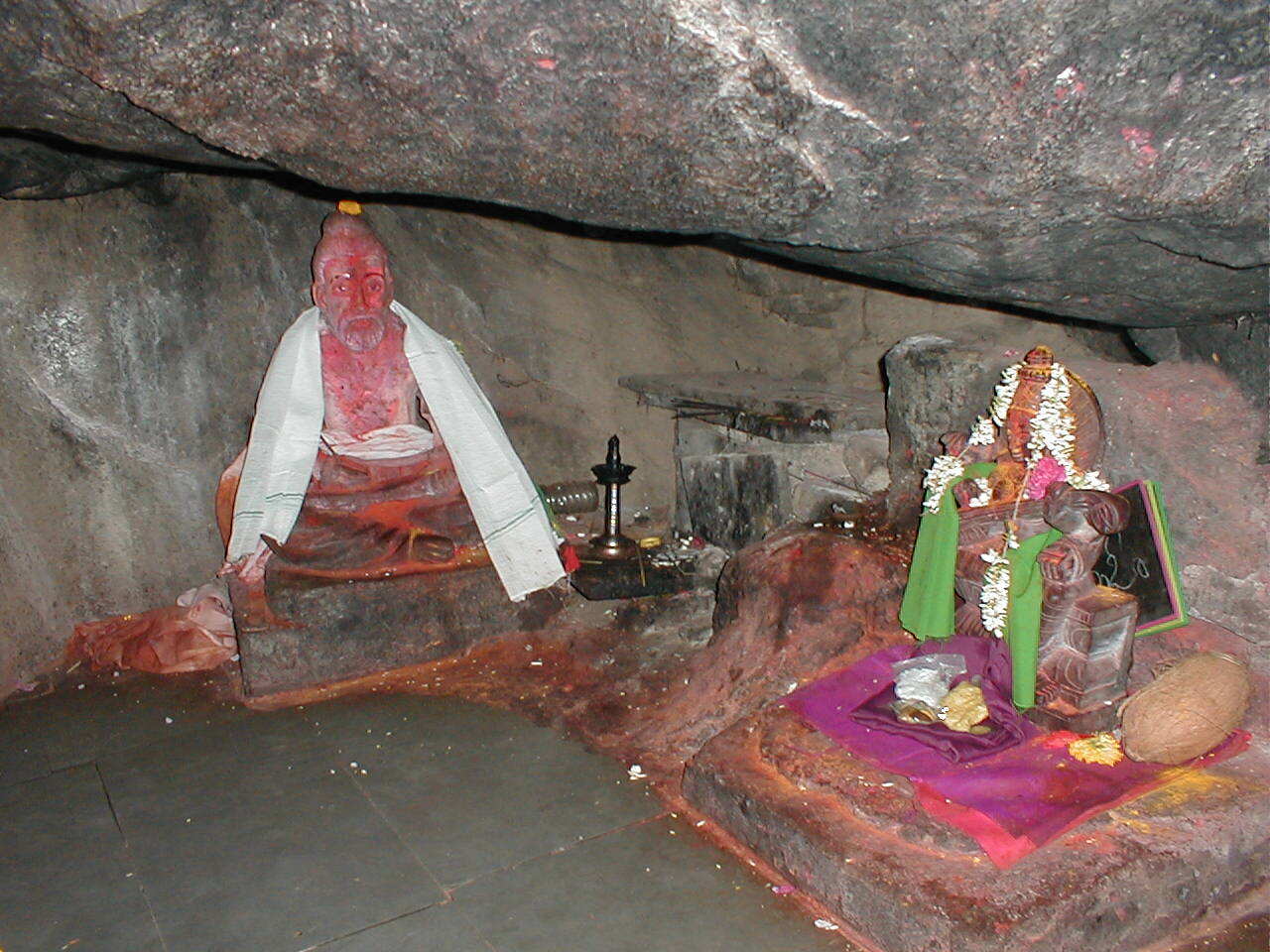
After the Vedas, the Mahabharata, and the Puranas, Vyasadeva turned to a form of writing unlike anything he had produced before: the sutra. A sutra is a very short saying, packed with meaning. It is meant to be memorized whole, and then a teacher explains it aloud. The result, called the Vedanta-sutra or Brahma-sutra, explains step by step what the Upanishads teach about the nature of Brahman, the origin of the universe, and the relationship between the soul and the Supreme. Krishna Himself refers to this text directly inside the Bhagavad-gita. He describes the ultimate goal of knowledge as that which is "certainly explained in the Brahma-sutra, or Vedanta-sutra, with all reasoning as to cause and effect" (Bhagavad-gita 13.5).
Why Every School Needs Its Own Bhashya #
The sūtras are very short, sometimes consisting of only two or three Sanskrit words. Because of this, their full meaning cannot always be understood without explanation. They require a bhāṣya, a detailed prose commentary that explains the meaning of each sūtra. This fact played an important role in the later development of Vedānta philosophy.
Traditionally, a school of Vedānta gained recognition as an independent darśana by presenting its own commentary on the Brahma-sūtras. Śaṅkarācārya established the Advaita interpretation through his Brahma-sūtra-bhāṣya, while Rāmānujācārya presented the Viśiṣṭādvaita interpretation through his Śrī-bhāṣya. And Madhvacharya's Dvaita rests on his own Purna-prajna-bhashya, called by Srila Prabhupada "his greatest work." Devotional tradition even holds that Vyasadeva personally reviewed part of that project. Madhvacharya is said to have traveled twice to Badarikashrama. On the first visit he presented his still-unfinished Gita-bhashya before Vyasadeva and received his approval. On the second visit he received from Vyasadeva the shalagrama-shila known as Ashtamurti. We report this meeting just as it is told on Madhvacharya's own page, as sincere tradition, not as history that can be checked.
The Gap the Gaudiya Sampradaya Had to Close #
Centuries later, Sri Chaitanya Mahaprabhu's own line faced this same requirement, and for a long time it simply had no such commentary. Every Gaudiya acharya from Chaitanya Mahaprabhu's own generation through Jiva Goswami had written a great deal on Vaishnava theology. But none had produced a formal Vedanta-sutra-bhashya of their own. At the royal court of Jaipur, rival Vedanta schools used that gap to challenge the Gaudiya sampradaya's right to be accepted. Finally, in the early eighteenth century, long after Sri Chaitanya Mahaprabhu's time, Baladeva Vidyabhusana supplied the missing commentary, the Govinda-bhashya. In this way he met the same ancient requirement that Vyasadeva's short sutras had created in the first place.
The Bhagavatam as Vyasa's Own Commentary on Himself #
Gaudiya Vaishnava theology adds one more striking claim to all of this. Vyasadeva did not need anyone else's commentary at all. He later wrote the final commentary himself, though he did not call it one. Srila Prabhupada states this clearly and firmly in his purport to the verse describing Vyasadeva teaching the finished Bhagavatam to his son: "Srimad-Bhagavatam is the natural commentation on the Brahma-sutras compiled by the same author" (purport to Srimad-Bhagavatam 1.7.8). A closely related verse from the Garuda Purana, quoted in Sri Chaitanya-charitamrita, makes nearly the same claim in a different way: "The meaning of the Vedanta-sutra is present in Srimad-Bhagavatam. The full purport of the Mahabharata is also there... Srimad-Bhagavatam is the supreme Purana, and it was compiled by the Supreme Personality of Godhead in His incarnation as Vyasadeva" (Sri Chaitanya-charitamrita, Madhya 25.143-144). In this understanding, the sage who wrote the most demanding Vedanta text in the tradition, in short packed sayings, went on to explain it again at the end of his life. This time he explained it through story and devotion instead of argument. That final work, and the surprising dissatisfaction that led him to write it, are the subject of The Dejection of Vyasadeva and Narada's Instruction and the Writing of Srimad-Bhagavatam.
An Honest Note on Authorship #
Modern academic scholars who study ancient India raise real questions that are still unresolved. They ask whether works as vast as the Mahabharata, the eighteen Puranas, and the Vedanta-sutra can honestly be credited to a single historical author writing within one lifetime. Many scholars treat "Vyasa" partly as a traditional name given to centuries of writing and editing that built up over time. Gaudiya Vaishnava tradition does not read the evidence this way. It understands Vyasadeva as a single, empowered incarnation whose work spanned an extraordinarily long life. We report both positions here and do not try to settle the disagreement. Throughout this history, we name a real dispute instead of quietly picking a side.
