Dāvānala-kuṇḍa
दावानल-कुण्ड Hindi name proposed
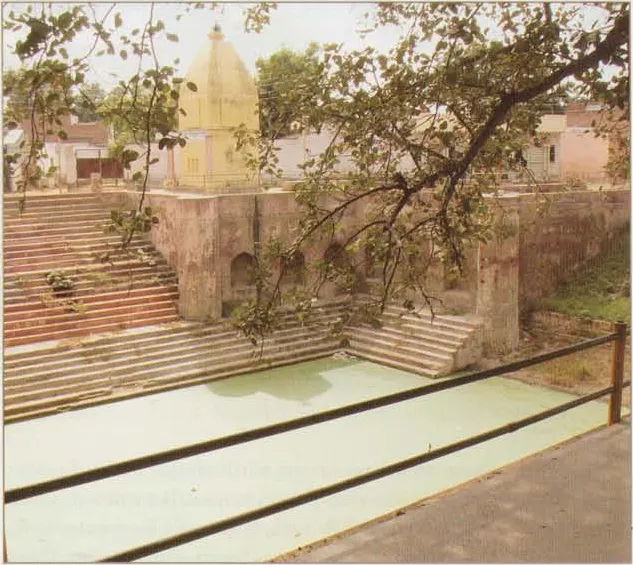
- What it is
- Dāvānala-kuṇḍa is a pond in Kevārivana, a little east of Kāliya-daha, in south-western Vṛndāvana.
- Visiting
- Śrī Vraja-maṇḍala Parikramā (2007) marks the kuṇḍa a little east of Kāliya-daha, and Vṛndāvana-Dhāma Ki Jaya!
In short
Dāvānala-kuṇḍa is a pond in Kevārivana, a little east of Kāliya-daha, in south-western Vṛndāvana.[1 +4] Dāvānala means a forest fire. The guidebooks say that here the people of Vraja rested on the night after Kṛṣṇa subdued the serpent Kāliya, and that here Kṛṣṇa swallowed the forest fire that surrounded them.[1 +5] The Śrīmad-Bhāgavatam tells this pastime on the bank of the Yamunā without naming a pond. The Bhakti-ratnākara points out the place of the fire, and the first texts found that name the kuṇḍa date from 1905 and 1920.[10 +5]
Key facts
| Kind | kuṇḍa |
|---|---|
| Region · area | Vṛndāvana |
| Also part of | Kevārivana |
| Ācāryas | Śrīla Narahari Cakravartī Ṭhākura, Śrīla Murāri Gupta, Śrīla Locana dāsa Ṭhākura |
Why it is glorified
The Nārada Purāṇa, in its glorification of Vṛndāvana, praises the holy tīrtha where Kṛṣṇa freed the gopas, with their women …
The Nārada Purāṇa, in its glorification of Vṛndāvana, praises the holy tīrtha where Kṛṣṇa freed the gopas, with their women, children and wealth, from the forest fire, and says that bathing there removes sin. It names the tīrtha just after the place where Kāliya was crushed, and gives it no other name (summarised here, not translated).[16]
According to the Bhakti-ratnākara, Śrīla Rāghava Paṇḍita Gosvāmī of Govardhana, guiding Śrīla Śrīnivāsa Ācārya through Vraja, showed him the place where Kṛṣṇa drank the forest fire on the day Kāliya was subdued. Whoever sees it, he said, is freed from the forest fire of material life.[10]
Divine pastimes
The fire on the night after Kāliya
Śrīmad-Bhāgavatam 10.17 tells that after Kāliya was subdued, the Vrajavāsīs and their cows, weak from hunger, thirst and fatigue, spent the night near the bank of the Yamunā. At midnight a fire rose from the dry summer forest and surrounded them.[11 +2]
tāṃ rātriṃ tatra rājendra kṣut-tṛḍbhyāṃ śrama-karṣitāḥ / ūṣur vrayaukaso gāvaḥ kālindyā upakūlataḥ
tadā śuci-vanodbhūto dāvāgniḥ sarvato vrajam / suptaṃ niśītha āvṛtya pradagdhum upacakrame
tata utthāya sambhrāntā dahyamānā vrajaukasaḥ / kṛṣṇaṃ yayus te śaraṇaṃ māyā-manujam īśvaram
During the night, while all the people of Vṛndāvana were asleep, a great fire blazed up within the dry summer forest. The fire surrounded the inhabitants of Vraja on all sides and began to scorch them.
Translation: Śrīla Prabhupāda's disciples (BBT)They woke and called on Kṛṣṇa and Balarāma to save them from that fire of death, saying that they could never give up His lotus feet.[11 +2]
itthaṃ sva-jana-vaiklavyaṃ nirīkṣya jagad-īśvaraḥ / tam agnim apibat tīvram ananto 'nanta-śakti-dhṛk
Seeing His devotees so disturbed, Śrī Kṛṣṇa, the infinite Lord of the universe and possessor of infinite power, then swallowed the terrible forest fire.
Translation: Śrīla Prabhupāda's disciples (BBT)What the commentators add
The Canto 10 commentators explain where the Vrajavāsīs camped (summarised here, not translated). Śrīla Sanātana Gosvāmī and Śrīla Jīva Gosvāmī say that, fearing the poisoned water, they kept a little away from the edge of Kāliya's lake; otherwise, they add, the fire could not have surrounded them on all sides. Śrīla Sanātana Gosvāmī says that they stayed because their settlement, then near Nandīśvara, was too far to reach at night. None of them names a pond.[19] Śrīla Jīva Gosvāmī adds that they went hungry beside their cows because, from a fear that the cows had touched the poison, the milk was not offered to Kṛṣṇa, and so they did not take it either.[19]
On what the fire was, Śrīla Sanātana Gosvāmī and the others report the view of others that it was a demon, a friend of Kāliya and a follower of Kaṁsa, in the form of a forest fire.[20] On how Kṛṣṇa swallowed it, Śrīla Sanātana Gosvāmī says that He did it in such a way that Nanda, Yaśodā and the others could not see it, and Śrīla Jīva Gosvāmī that the cowherds therefore had no chance to stop Him.[18 +1]
Other tellings
Śrīla Jīva Gosvāmī's Gopāla-campū keeps the camp on the bank of the Yamunā. There Yaśodā, fearing that everything was touched by poison, would not let the hungry Kṛṣṇa drink even the cows' milk. Kaṁsa, hearing where they were, sent men to light a fire all around them, and the fire went out at Hari's mere blowing; the sages, the text says, poetically describe Him as drinking it (summarised here, not translated).[22 +1] In Śrīla Viśvanātha Cakravartī Ṭhākura's commentary on Śrīla Kavi-karṇapūra's Ānanda-vṛndāvana-campū, the Vrajavāsīs, fearing the poison, had moved from the lake to a place "known to people as Kuḍumāra", where they could not fetch Yamunā water against the fire. Where Kuḍumāra is has not been found.[24] Read more: Kṛṣṇa swallows the forest fire on the night after Kāliya →
Traditional accounts
Two biographies of Śrī Caitanya Mahāprabhu tell that on His tour of Vraja His guide showed Him, right after Kāliya's lake and …
Two biographies of Śrī Caitanya Mahāprabhu tell that on His tour of Vraja His guide showed Him, right after Kāliya's lake and Dvādaśāditya-ghāṭa, the place where Kṛṣṇa saved the cowherd boys from the forest fire by drinking it: Śrīla Murāri Gupta's Kṛṣṇa-caitanya-caritāmṛta (4.7.11) and Śrīla Locana dāsa Ṭhākura's Caitanya-maṅgala (summarised here, not translated). Neither names a pond.[25 +1]
The first texts found that name the kuṇḍa are the Bengali Bhaktamāla of Kṛṣṇadāsa Bābājī (1905) and the Vṛndāvana-kathā (1920). The second says that Kṛṣṇa swallowed the fire in Kevārivana, where the water of the stone-built Dāvānala-kuṇḍa is good to drink.[14 +1] Śrī Vraja-maṇḍala Parikramā (2007) says that the forest is called Kevārivana because after the fire the gopas and gopīs asked, "Ke nivāri?", "Who saved us?"; this explanation of the name is not certain, as no older text gives it.[2 +1]
Śrīla Prabhupāda
Śrīla Prabhupāda tells the pastime in his Kṛṣṇa book, chapter 17.
Śrīla Prabhupāda tells the pastime in his Kṛṣṇa book, chapter 17. He does not mention the kuṇḍa:[11 +2]
General teaching (does not name the place)“Thus they prayed to Kṛṣṇa, saying that they could not take any shelter other than His lotus feet. Lord Kṛṣṇa, being compassionate upon His own townspeople, immediately swallowed up the whole forest fire and saved them. This was not impossible for Kṛṣṇa, because He is unlimited.”
Śrīla Prabhupāda, Kṛṣṇa, the Supreme Personality of Godhead (Kṛṣṇa book), Chapter 17, 'Extinguishing the Forest Fire' · vedabase.io
Songs
A verse of the Kṛṣṇa-līlā-stava, which the song book credits to Śrīla Sanātana Gosvāmī (the credit is marked uncertain there) …
A verse of the Kṛṣṇa-līlā-stava, which the song book credits to Śrīla Sanātana Gosvāmī (the credit is marked uncertain there), prays to Kṛṣṇa who drank the forest fire and removed the distress of His own people.[33]
Visiting today
Śrī Vraja-maṇḍala Parikramā (2007) marks the kuṇḍa a little east of Kāliya-daha, and Vṛndāvana-Dhāma Ki Jaya! (c. 1986) in the south-west of its map of Vṛndāvana. The Color Guide to Vṛndāvana (2000) and Vṛndāvana, the Playground of God (2010) place the Dāvānala-bihārī Mandira just past the kuṇḍa.[1 +4]
Location
| Where it is | a little distance east of Kālīya-daha; map key 16[35] in Kevārivana (Famous kuṇḍas list)[36] |
|---|
Nearby places
Kāliya-ghāṭa · Dāvānala-bihārī Mandira · Viśrāma-kuṇḍa
Pictures
2 pictures
History
The historian A. W. Entwistle (1987) reports that the tank was built by a Mahant named Lakshmandas, who may also have found the image of the Dāvānala-bihārī Deity in the Nimbārka temple beside it. He gives no date.[28] He also names the founders of two āśramas near the kuṇḍa: Santadas, of the Nimbārka line, founded the Kathiya Baba āśrama, and Yamunadas, a Mahant of the Kaladhari temple, founded the Kaladhari Bagicha. Neither date is given.[29 +1] The Color Guide to Vṛndāvana (2000) says that the Dāvānala-bihārī temple is about two hundred years old, which may be only an estimate, as it names no source.[5 +2]
Where the sources differ
Where and why the Vrajavāsīs spent the night of the fire after Kāliya was subdued
Accounts differ Where and why the Vrajavāsīs spent the night of the fire after Kāliya was subdued
- Śrīmad-Bhāgavatam 10.17.20weak from hunger, thirst and fatigue, they and the cows spent the night where they were, near the bank of the Kālindī
- Śrīla Sanātana Gosvāmī, Śrīla Jīva Gosvāmī, Śrīla Viśvanātha Cakravartī Ṭhākura and Śrīla Baladeva Vidyābhūṣaṇa on ŚB 10.17.20a little away from the water's edge of Kāliya's lake, at the edge of the Yamunā's bank, for fear of the poisoned water; Sanātana: because the Vraja settlement, then near Nandīśvara, was too far to reach at night; Sanātana and Jīva: their hunger, thirst and the fatigue of weeping; Viśvanātha and Baladeva: to keep looking at Kṛṣṇa
- BBT purport to ŚB 10.17.20 (Śrīla Prabhupāda's disciples)so overjoyed to get Kṛṣṇa back that they did not want to go home; they stayed on the Yamunā's bank to see Him continuously
- Kṛṣṇa book ch. 17it was almost night and all were very tired, so they rested on the riverbank
Accounts differ How the forest fire started
- Śrīmad-Bhāgavatam 10.17.21a fire arising from the dry (summer) forest (śuci-vanodbhūto dāvāgniḥ); no cause given
- Garga-saṁhitā 2.12.29born from the natural friction of the bamboos
- BBT purport to SB 10.17.21 (citing Śrīla Sanātana Gosvāmī and Śrīla Viśvanātha Cakravartī Ṭhākura)perhaps a friend of Kāliya taking revenge, or a demon following Kaṁsa
- Vṛndāvana, the Playground of God (2010) (citing Śrīla Sanātana Gosvāmī)a friend of Kāliya's wanting revenge; other ācāryas: perhaps a follower of Kaṁsa
Accounts differ How Kṛṣṇa ended the fire after the Kāliya pastime
- Śrīmad-Bhāgavatam 10.17.25; Kṛṣṇa book 17He swallowed (drank) the fire; nothing about closing eyes
- Garga-saṁhitā 2.12.32He told them to close their eyes and drank the fire
- Śrī Vraja-maṇḍala Parikramā (2007)He told everyone to close their eyes, closed His own, and swallowed it like cool water
- Vṛndāvana, the Playground of God (2010)He turned His back on everyone and swallowed it, so they would not see
What the word dāvānala means: Śrī Vraja-maṇḍala Parikramā (2007) and Śrīla Prabhupāda's use of the word take it as a forest fire; Vṛndāvana, the Playground of God (2010) alone says "extinguishing a fire".[1 +2]
Accounts differ Meaning of the word dāvānala
- Śrī Vraja-maṇḍala Parikramā (2007)'Dāvānala means “forest fire”'
- Vṛndāvana, the Playground of God (2010)'the word dāvānala means “extinguishing a fire”'
- Śrīla Prabhupāda, SB 5.14.15 purportexplains saṁsāra-dāvānala as material life being 'like a blazing forest fire'
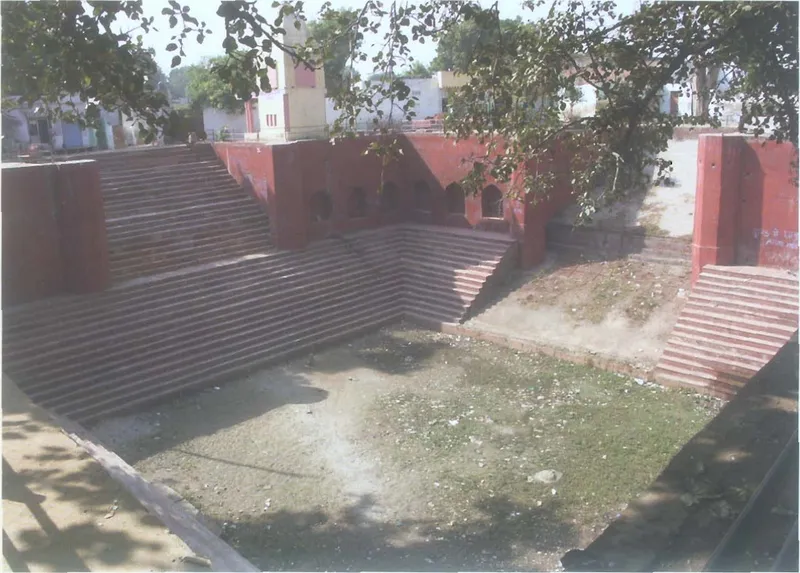
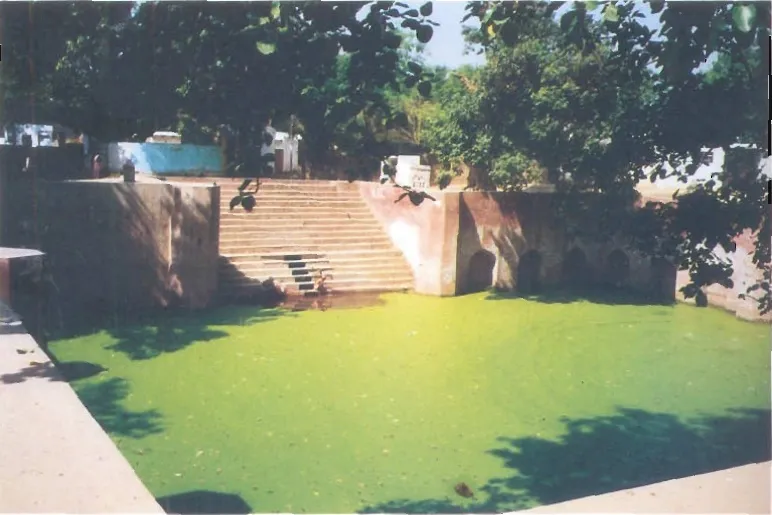
Whether the kuṇḍa holds water: the guidebooks' photographs show the tank sometimes full and sometimes dry.[1 +2]
Accounts differ Whether the kuṇḍa holds water (photographs)
- Śrī Vraja-maṇḍala Parikramā (2007)photo of a stepped tank with a still, opaque water surface
- Vṛndāvana, the Playground of God (2010)caption 'Dāvānala-kuṇḍa devoid of water', bare earth floor
More on this place
Kṛṣṇa swallows the forest fire on the night after Kāliya
References
36 references
- Śrī Vraja-maṇḍala Parikramā (2007), PDF p. 322
- Śrī Vraja-maṇḍala Parikramā (2007), PDF p. 345
- Vṛndāvana-Dhāma Ki Jaya! (c. 1986), by Dhruva Mahārāja dāsa, PDF p. 100
- Vṛndāvana, the Playground of God (2010), Bhakti Caitanya Svāmī, PDF p. 129
- The Color Guide to Vṛndāvana (2000), Written and Photographed by Rājaśekhara dāsa Brahmacārī, PDF p. 67
- Śrī Vraja-maṇḍala Parikramā (2007), PDF p. 321
- Vṛndāvana, the Playground of God (2010), Bhakti Caitanya Svāmī, PDF p. 128
- The Color Guide to Vṛndāvana (2000), Written and Photographed by Rājaśekhara dāsa Brahmacārī, PDF p. 66
- the undated parikramā notes Vṛndāvana, ¶91
- Śrīla Narahari Cakravartī, Bhakti-ratnākara, Fifth Wave, printed p. 448 (1912 edition), 2nd ed., 1912
- Śrīmad-Bhāgavatam 10.17.20–22, GRETIL
- Śrīmad-Bhāgavatam 10.17.25, GRETIL
- Śrīla Prabhupāda, Kṛṣṇa, the Supreme Personality of Godhead, Chapter 17 'Extinguishing the Forest Fire' · vedabase.io
- Śrī Śrī Bhaktamāla grantha, mālā 26 (Vṛndāvana-mahimā-varṇana), printed p. 348, left column
- Vṛndāvana-kathā, ch. 17, section '২। উদ্যান' (gardens), printed p. 195
- Nārada Purāṇa, उत्तरार्धः/अध्यायः 80 v.80-64–65 (Uttara-bhāga, chapter 80, verses 64–65)
- Śrīmad-Bhāgavatam 10.17.23–24, GRETIL
- Śrīla Prabhupāda, Kṛṣṇa, the Supreme Personality of Godhead (Kṛṣṇa book), Chapter 17, 'Extinguishing the Forest Fire' · vedabase.io
- Śrīla Sanātana Gosvāmī: commentary on ŚB 10.17.20, Bhagavata Vidya Pith edition, ed. Bhagavata Rishi and Krishna Shankar Shastri, 1996
- Śrīla Sanātana Gosvāmī: commentary on ŚB 10.17.21, Bhagavata Vidya Pith edition, ed. Bhagavata Rishi and Krishna Shankar Shastri, 1996
Show all 36 references
- Śrīla Sanātana Gosvāmī: commentary on ŚB 10.17.25, Bhagavata Vidya Pith edition, ed. Bhagavata Rishi and Krishna Shankar Shastri, 1996
- Śrīla Jīva Gosvāmī, Gopāla-campū, Pūrva-campū 13, ¶[57], [61]–[62]
- Śrīla Jīva Gosvāmī, Gopāla-campū, Pūrva-campū 13, v.52 and ¶[63]
- Ānanda-vṛndāvana-campū, stavaka 9, v.49, mūla and Viśvanātha Cakravartī's commentary
- Kṛṣṇa-caitanya-caritāmṛta, 4.7.11
- Caitanya-maṅgala, Śeṣa-khaṇḍa, printed p. 173, right column
- Śrī Vraja-maṇḍala Parikramā (2007), PDF p. 340
- A. W. Entwistle, ch. 8 §66.40 'Dawanal Kund', printed p. 417, Egbert Forsten, Groningen, 1987
- A. W. Entwistle, ch. 5 §37 'The Nimbark Sampraday in modern times', printed p. 220, Egbert Forsten, Groningen, 1987
- A. W. Entwistle, ch. 8 §66.7 'Kaladhari Mandir', printed p. 404, Egbert Forsten, Groningen, 1987
- Mathurá (1883), F. S. Growse, B.C.S., M.A. Oxon., C.I.E. (as the title page gives him, p. 189
- Muttra (1911), D. L. Drake-Brockman, I.C.S. (edited and compiled), p. 241
- Obeisance 49 (Kṛṣṇa-līlā-stava) (Sanātana Gosvāmī (as the song book credits it: book 'Kṛṣṇa-līlā-stava'; the song's own credit is marked as inferred in the snapshot)) · song book
- Śrīla Prabhupāda, Śrīmad-Bhāgavatam, 5.14.15, purport · vedabase.io
- Śrī Vraja-maṇḍala Parikramā (2007), p. 616-617
- Śrī Vraja-maṇḍala Parikramā (2007), p. 664-665