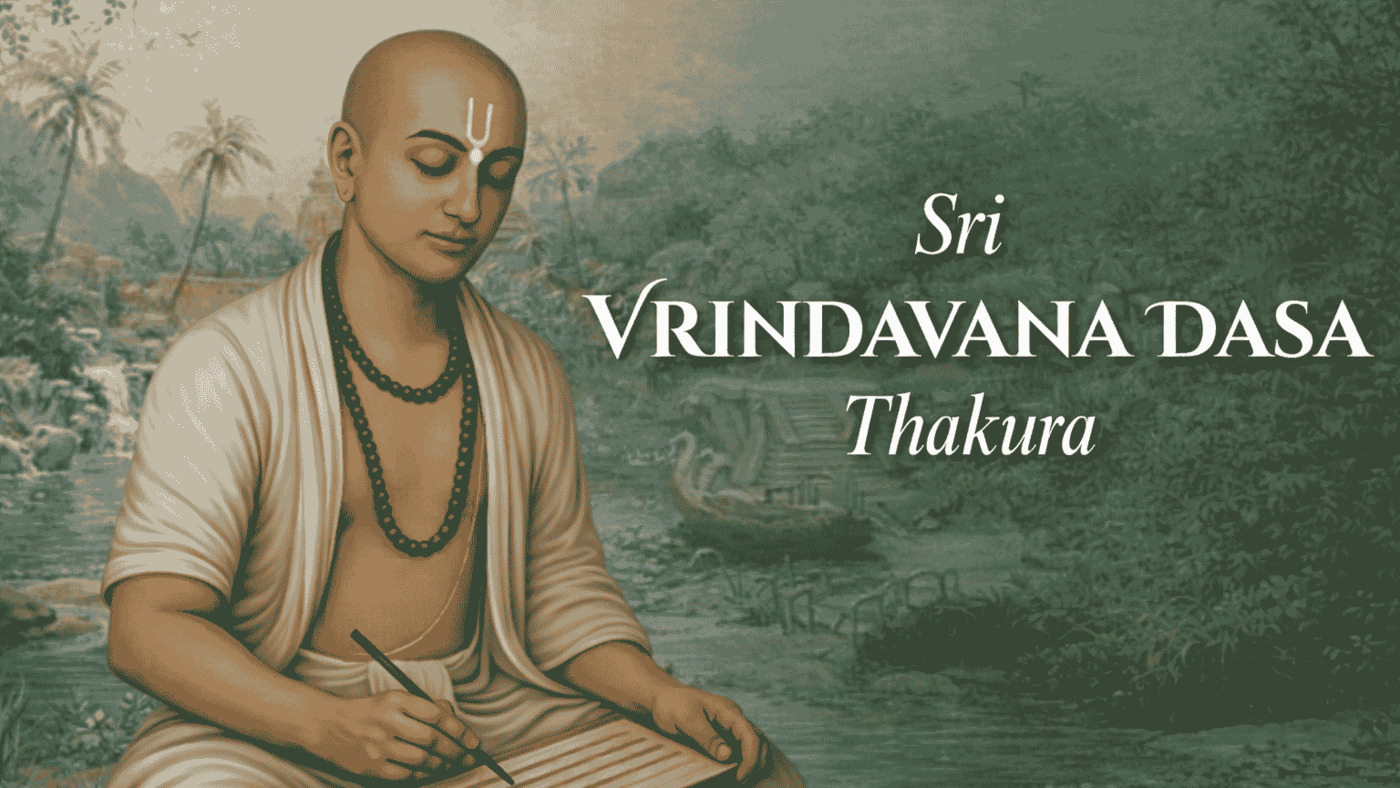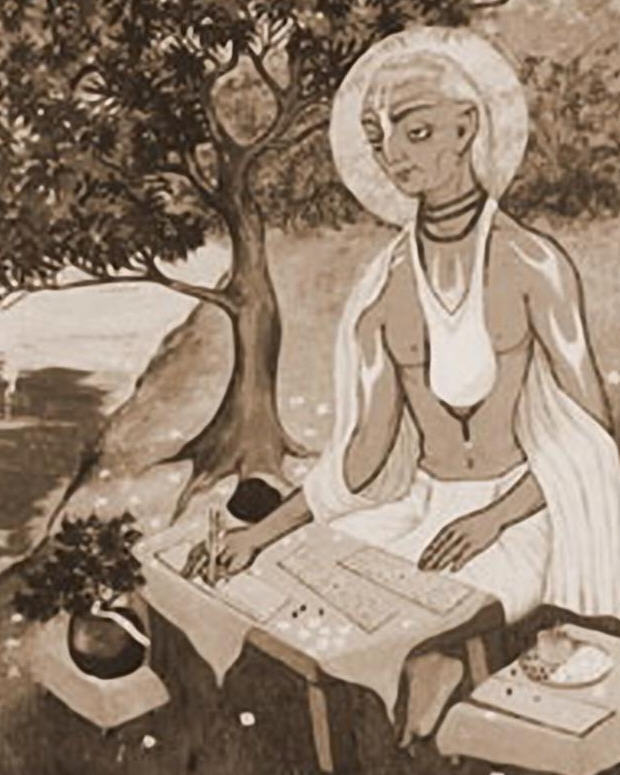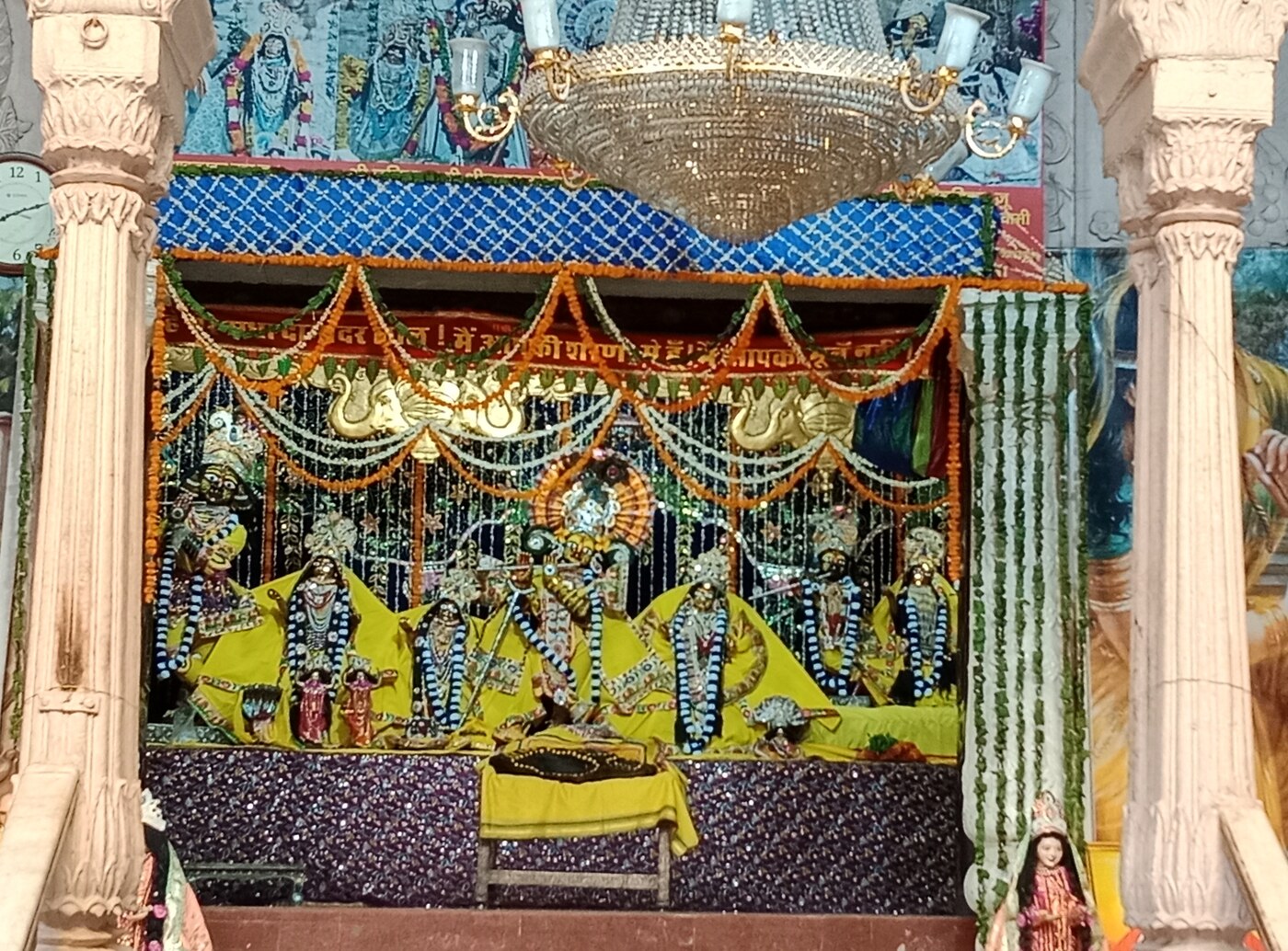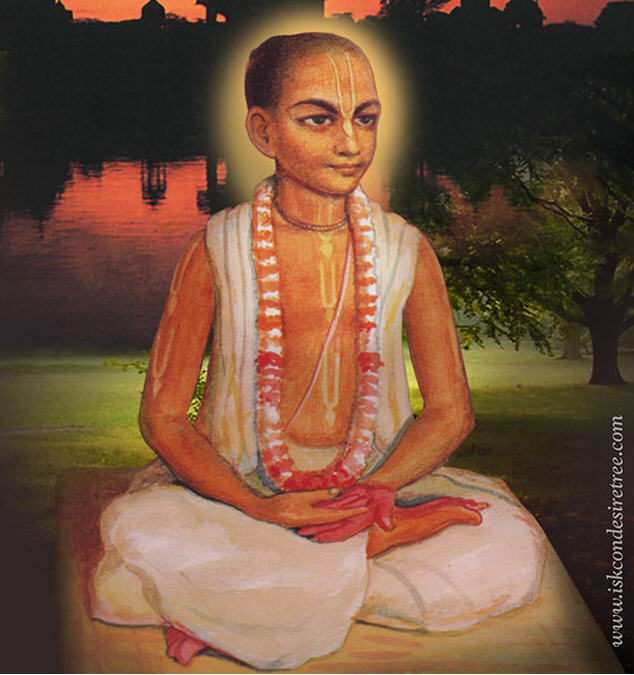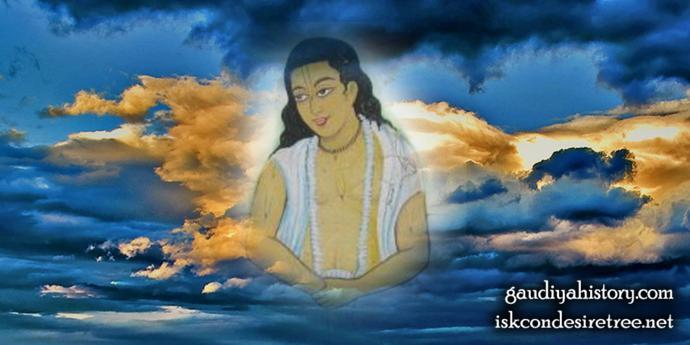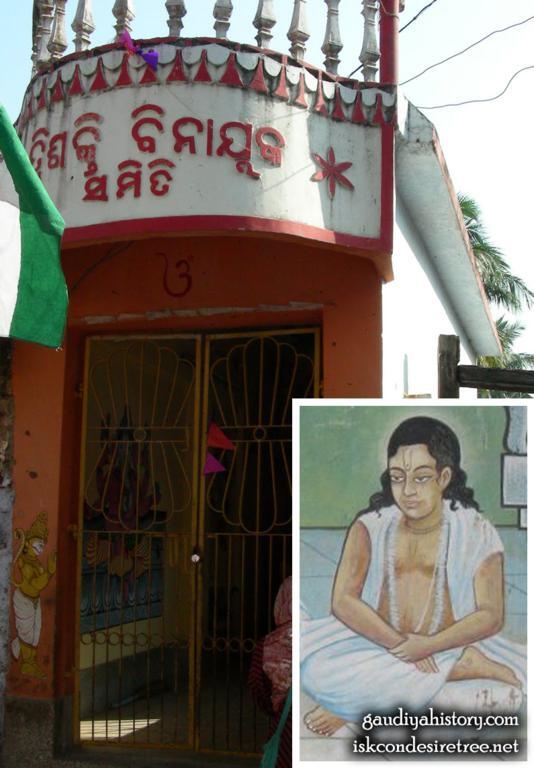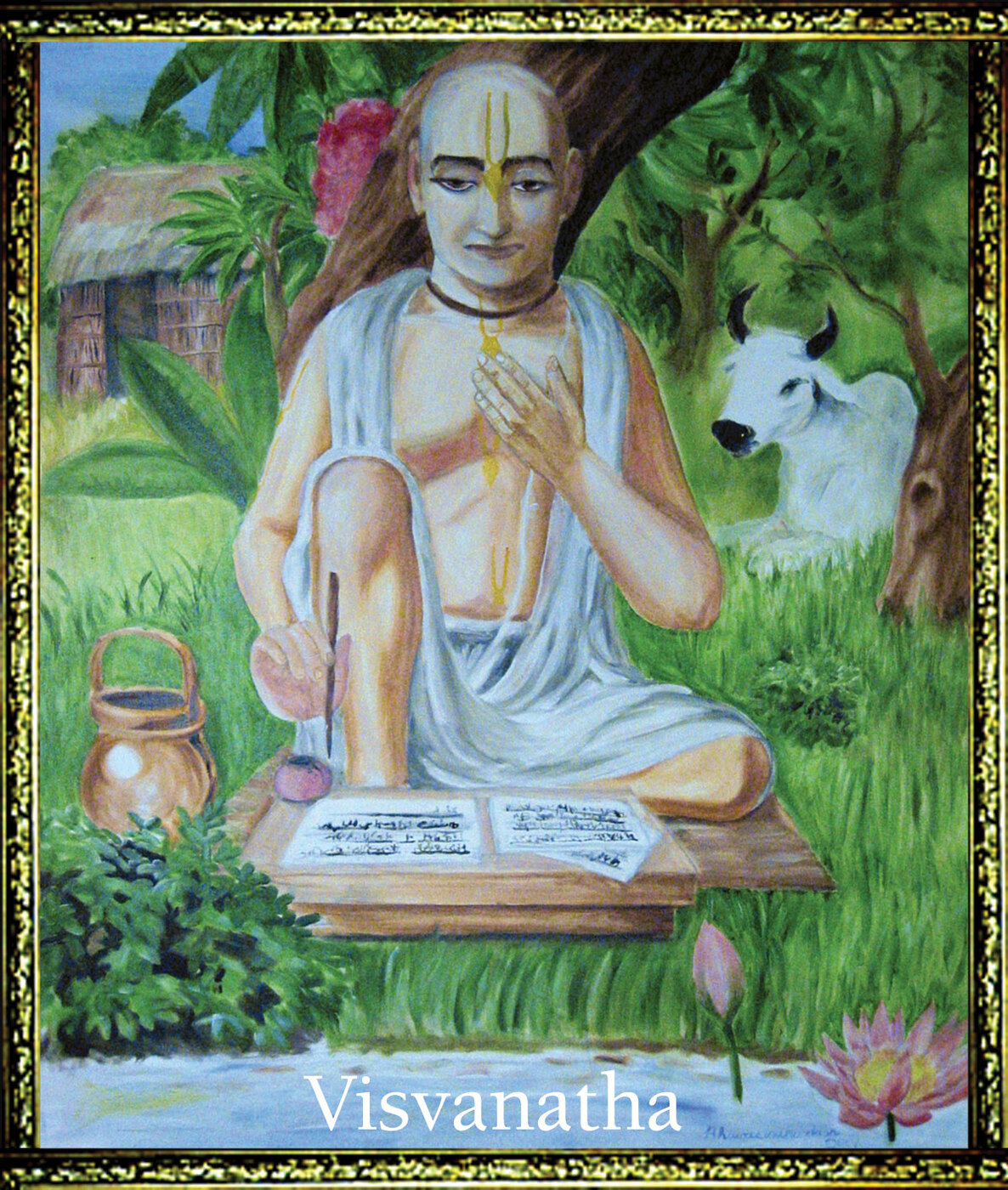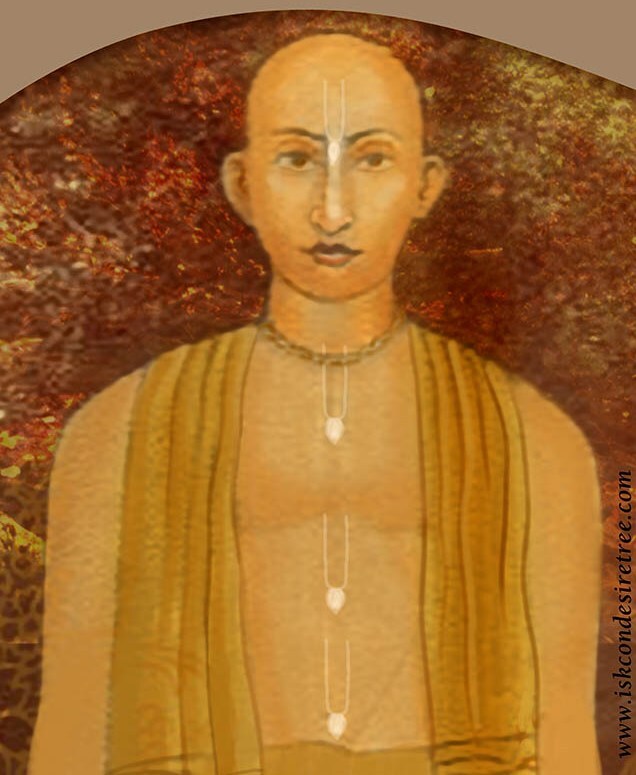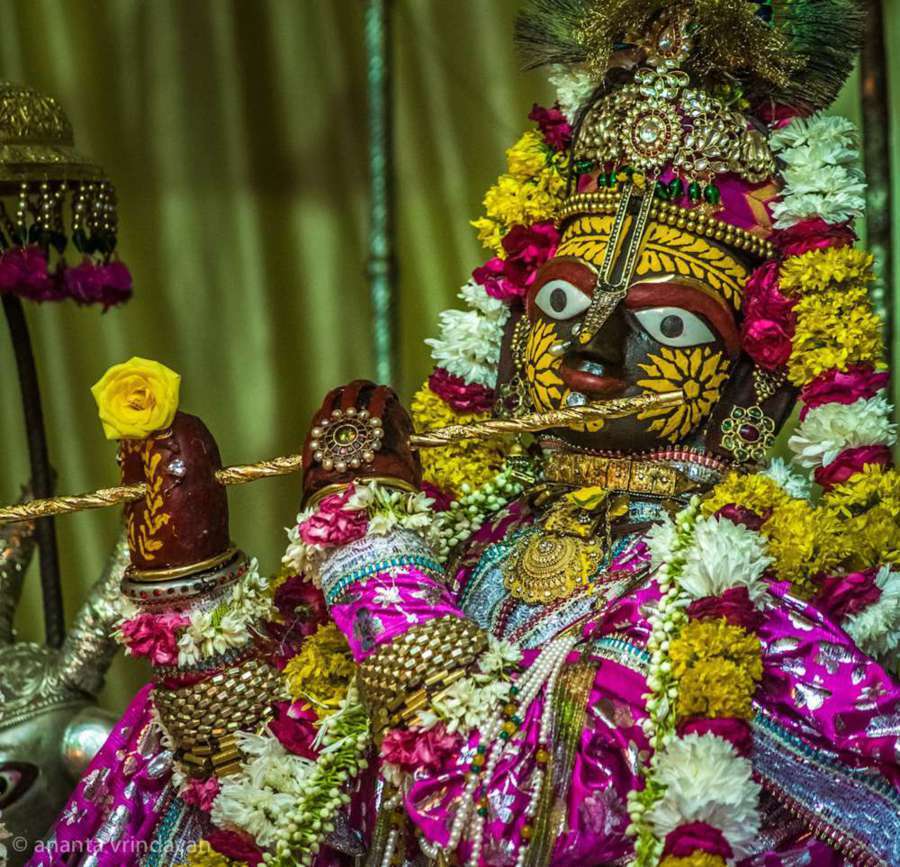
Srila Narahari Chakravarti Thakura
Author of the Bhakti-ratnakara and Narottama-vilasa
Also known as Ghanashyama Dasa, Narahari Dasa, Narahari Cakravarti
“I am an illiterate fool who knows nothing of right or wrong, yet I have been ordered by saintly persons to narrate this beautiful book Narottama Vilasa which will certainly be relished by the readers.”
From the opening of Narottama-vilasa (First Vilasa), by Narahari Chakravarti Thakura
Srila Narahari Chakravarti Thakura signed several of his own books as Ghanashyama Dasa. He left almost no record of his own life. Yet dozens of other Gaudiya Vaishnavas are known today largely because he wrote their lives down. He is the author of the Bhakti-ratnakara and the Narottama-vilasa. For this reason he is the single most important source for the generation that followed the Six Goswamis of Vrindavana and the direct associates of Chaitanya Mahaprabhu. His books tell of the return of the Goswamis' teachings to Bengal, the mission of Narottama Dasa Thakura and Shrinivasa Acharya, and the Kheturi festival that first drew the scattered Gaudiya Vaishnava community together. He should not be confused with an earlier, better-known Vaishnava of a very similar name, as explained below.
| Detail | Description |
|---|---|
| Also known as | Ghanashyama Dasa (his own signature in several works); Narahari Dasa |
| Era | Late 1600s onward; roughly a generation after Vishvanatha Chakravarti Thakura |
| Birthplace | West Bengal; exact village not established in the sources available |
| Father | Jagannatha Vipra, a disciple of Vishvanatha Chakravarti Thakura |
| Diksha guru | Narasimha Chakravarti, in the disciplic line descending from Shrinivasa Acharya |
| Major works | Bhakti-ratnakara, Narottama-vilasa, Shrinivasa-charita, Gaura-charitra-samudra, Namamrita-samudra, Sangita-sara-sangraha, Navadvipa-dhama-parikrama |
| Service | Cook and personal servant of the Radha-Govindaji Deity in Vrindavana, into his seventies |
Not the Same Narahari #
Gaudiya Vaishnava history has two important devotees named Narahari, who lived well over a century apart. Their almost identical names have confused readers ever since. Narahari Sarkar Thakura was born around 1479-80 into a physician (vaidya) family of Shrikhanda in Bengal. He became one of Mahaprabhu's own direct associates, and by tradition he personally fanned the Lord with a camara. He led the devotional circle of poets at Shrikhanda along with Raghunandana Thakura and others. He wrote his own short works of Bengali devotional poetry, but none of them are the books associated with Narahari Chakravarti Thakura. Narahari Chakravarti Thakura belongs to a different family and a completely different century. He was born after Narahari Sarkar's own disciples had already passed away. His connection to Mahaprabhu's own generation is only ever second-hand or third-hand. It comes through the very books he wrote about that generation.
A Family of Scholars, a Guru of His Own Choosing #
The little that is recorded about Narahari Chakravarti's family shows that he came from a respected Brahmana household. His father, Jagannatha Vipra, was known as a disciple of Vishvanatha Chakravarti Thakura, the Vrindavana commentator whose Sarartha-darsini shaped so much of later Gaudiya Vaishnava theology. But Narahari himself did not take initiation in his father's line. His own diksha guru was Narasimha Chakravarti, a spiritual descendant of Shrinivasa Acharya. So Narahari's branch of the parampara runs back through Shrinivasa Acharya, Narottama Dasa Thakura's own missionary companion. It does not run through Vishvanatha Chakravarti's line, which his father had followed. Sources describe him from youth as a lifelong celibate. They also describe him as unusually accomplished in classical music, dance and the playing of instruments, and thoroughly trained in the bhakti-shastras. His books would later use these talents in a special way, since Bhakti-ratnakara is itself composed as devotional poetry meant to be sung.
A Life Spent in the Kitchen of Radha-Govindaji #
Narahari Chakravarti did not become a public preacher or a temple authority. He chose, or was chosen for, one of the least visible services in Vrindavana: cooking for the Deity of Radha-Govindaji. He is remembered as *rasoi pujari*, an expert in preparing offerings pleasing to the Lord. He continued this service into his seventies. Along with it he ground sandalwood paste, gathered firewood, swept the temple courtyard and picked tulasi leaves. These were tasks usually left to junior servants. When temple priests protested that such lowly work was beneath him, tradition records his reply, humble as always: he considered himself unfit for any higher service at all. The full story of these decades of service is told in his years at Govindaji's kitchen. That page also shows what this service reveals about a man who wrote so much about others and almost nothing about himself.
The Bhakti-ratnakara and a Library of Lives #
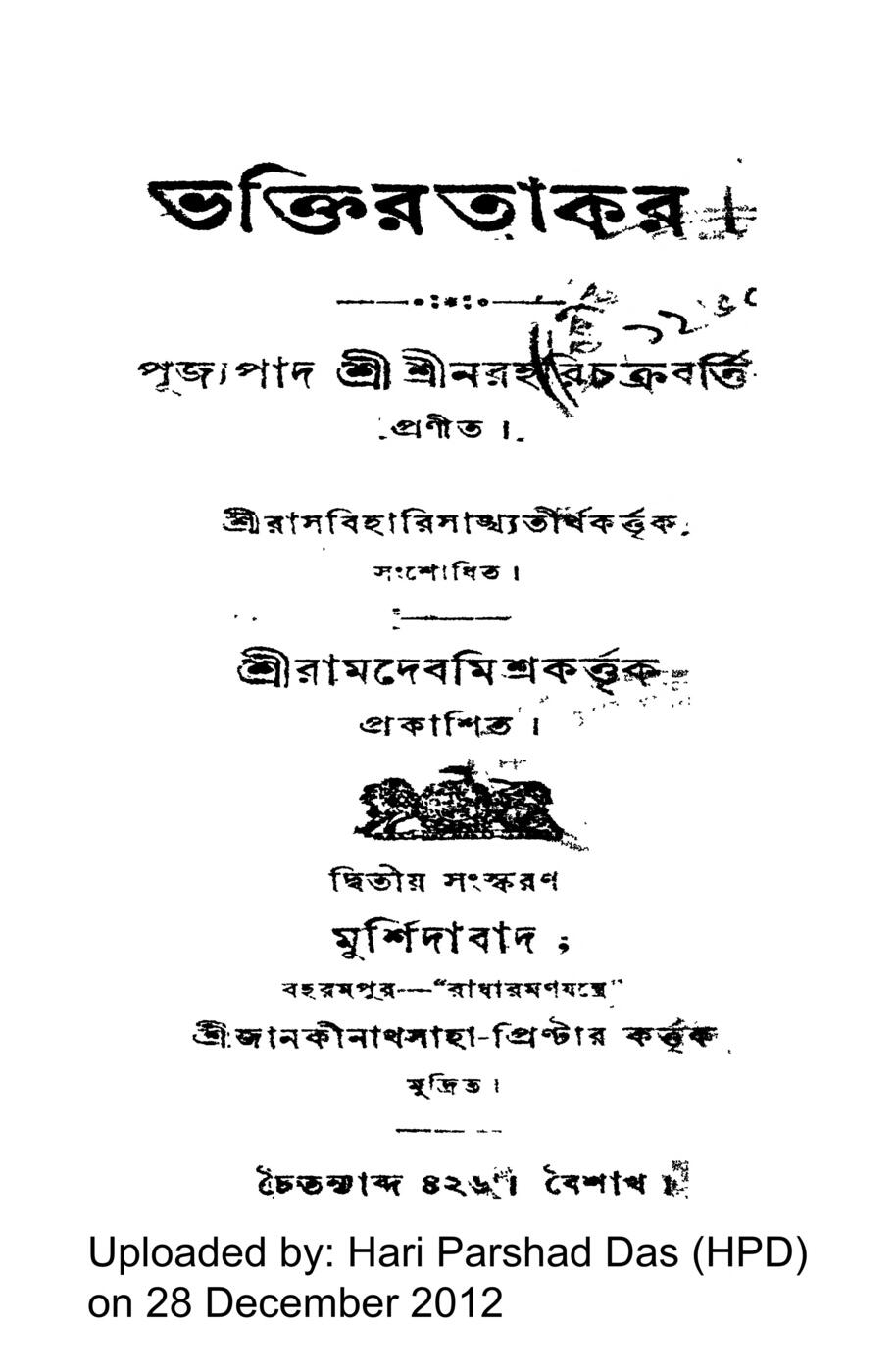
Narahari Chakravarti's lasting importance to Gaudiya Vaishnavism rests almost entirely on what he wrote, not on anything he did in public. The Bhakti-ratnakara is composed in a series of chapters that the text itself calls *tarangas* ("waves"). It is the fullest continuous account that exists of Gaudiya Vaishnavism in the two or three generations after Mahaprabhu's own associates. Above all, it tells of the lives, travels and preaching of Narottama Dasa Thakura and Shrinivasa Acharya, and of the Kheturi festival that united their scattered following. His companion work, the Narottama-vilasa, is specifically about Narottama Dasa Thakura's own life. Along with these he is credited with Shrinivasa-charita, Gaura-charitra-samudra, Namamrita-samudra, a guide to the sacred places of Nadia district called Navadvipa-dhama-parikrama, and a compilation, Sangita-sara-sangraha, that again draws on his musical training. Together these books make him, in effect, the historian of a generation that would otherwise have left almost no connected written record at all. They are looked at in more detail on the page about his major works.
A Source Already Relied On Elsewhere #
The Bhakti-ratnakara has shaped later Gaudiya Vaishnava memory so deeply that it is quoted, by name, inside Sri Chaitanya-charitamrita itself. It is not quoted in Krishnadasa Kaviraja Goswami's own verses, which were written long before it. It is quoted in Srila Prabhupada's purports, which draw on it for details of Vrindavana's sacred geography. His purport to Chaitanya-charitamrita Madhya-lila 16.207 names Narahari Chakravarti directly as its author. On this website too, the account of Narottama Dasa Thakura's final days and the story of Gadadhara Pandit's grief after Mahaprabhu's disappearance both draw on the Bhakti-ratnakara as a source. But until now they never named the Vaishnava who actually wrote it. The same is true of the pages on Sanatana Goswami and several of the associates around Shrinivasa Acharya. That gap should be put right.
What Is Not Known #
The real difficulty in writing about Narahari Chakravarti Thakura comes from the kind of writer he was. He was a biographer, not the subject of a biography. The sources keep many small details about the devotees he wrote about, but they keep almost nothing like that about him. No source available gives a year of birth or disappearance, and none names the village where he was born. What survives instead is a general picture, not a timeline. He came from a Brahmana family. He chose a guru outside his father's own line. He gave decades of humble kitchen service at Govindaji's temple. And he left a shelf of books. Between them, those books are the reason so much of Gaudiya Vaishnavism's second and third generations is remembered at all.
- Narahari Chakravarti Thakura - Gaudiya History
- Narahari Cakravarti Thakura - Stephen Knapp
- Narahari Sarakara Thakura - Biography - Gaudiya History
- Sri Caitanya-caritamrita, Madhya-lila 16.207, purport
- Narottama-vilasa, by Narahari Chakravarti Thakura, tr. Dravida Dasa
- Bhakti Ratnakar (Bengali) - Internet Archive
Frequently asked
When was Srila Narahari Chakravarti Thakura born?
Srila Narahari Chakravarti Thakura appeared Late 1600s (exact year not established) in West Bengal (specific village not established in the sources consulted).
When and where did Srila Narahari Chakravarti Thakura disappear?
Srila Narahari Chakravarti Thakura disappeared Not established at Not established; tradition places his later years at Vrindavana.
What are the main pastimes of Srila Narahari Chakravarti Thakura?
The pastimes covered here include: Cook and Servant of Radha-Govindaji, The Bhakti-ratnakara and a Library of Lives.