Gopī-kūpa
गोपी-कूप Hindi name proposed
- What it is
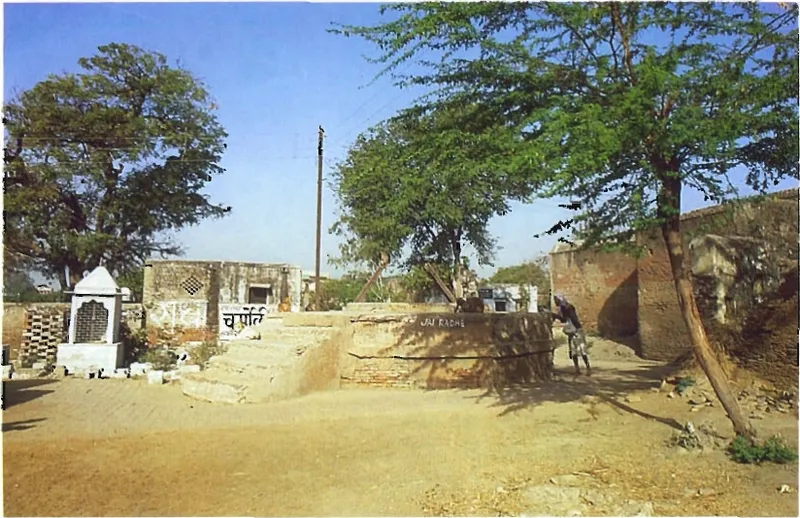
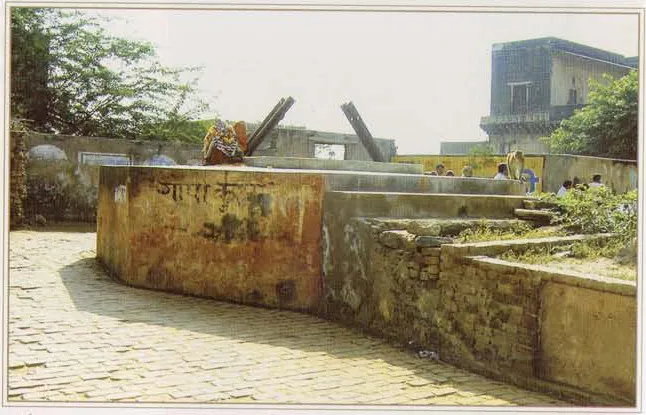
- Gopī-kūpa, the well of the gopīs, is a well east of Śyāma-kuṇḍa in the village of Rādhā-kuṇḍa, just across the parikramā path from Śrīla Mādhavendra Purī's sitting place.
- Visiting
- Śrī Vraja-maṇḍala Parikramā (2007) places Gopī-kūpa to the east of Śyāma-kuṇḍa, and the guidebook Vṛndāvana-Dhāma Ki Jaya!
In short
Gopī-kūpa, the well of the gopīs, is a well east of Śyāma-kuṇḍa in the village of Rādhā-kuṇḍa, just across the parikramā path from Śrīla Mādhavendra Purī's sitting place.[1 +2] According to the local tradition recorded in two guidebooks, the gopīs, the cowherd girls of Vraja, gave the thirsty Kṛṣṇa water from this well; no older source tells this, so it is not certain.[3 +1] The guidebooks also connect the well with Śrīla Raghunātha dāsa Gosvāmī and with the stone found there, the Jihvā-śilā, but they tell that story in different ways.[1]
Key facts
| Kind | well |
|---|---|
| Region · area | Rādhā-kuṇḍa |
| Also part of | Rādhā-kuṇḍa (village) |
| Ācāryas | Śrīla Raghunātha dāsa Gosvāmī |
Traditional accounts
According to The Colour Guide to Rādhā-kuṇḍa (1999) and the undated parikramā notes Rādhā-kuṇḍa, Gopī-kūpa is the well that the gopīs used in Kṛṣṇa's time, and here they gave water to Kṛṣṇa when He was thirsty. Neither book names an older source, and no scripture or older text that tells this has been found, so the story may rest on these books alone.[3 +1]
Śrī Vraja-maṇḍala Parikramā (2007) says that Śrīla Raghunātha dāsa Gosvāmī used to bathe with water from this well. According to the same book, after a stone, the Jihvā-śilā, came out of it, he stopped bathing with its water and had a new well made on the eastern bank of Lalitā-kuṇḍa, which the book says still exists; no other source tells it this way, so it is not certain. The other guidebooks tell his part differently (see below).[1]
Visiting today
Śrī Vraja-maṇḍala Parikramā (2007) places Gopī-kūpa to the east of Śyāma-kuṇḍa, and the guidebook Vṛndāvana-Dhāma Ki Jaya! (c. 1986) says that Śrīla Mādhavendra Purī's sitting place is just across the parikramā path from it. According to The Colour Guide (1999), pilgrims on the parikramā of Rādhā-kuṇḍa and on the Govardhana parikramā stop here to offer their respects.[1 +2]
Location
| Where it is | To the east of Śrī Śyāma-kuṇḍa (text); map key 15 inside a D-shaped enclosure east of the ring road[10] The well was dug "just opposite Mādhavendra Purī's baiṭhāka".[11] |
|---|
Nearby places
Śyāma-kuṇḍa (Rādhā-kuṇḍa) · Mādhavendra Purī's baiṭhaka (Rādhā-kuṇḍa) · Jihvā-śilā
Pictures
1 pictures
Where the sources differ
How the well began and what Śrīla Raghunātha dāsa Gosvāmī had to do with it: the guidebooks tell of an old well of the gopīs that he had dug out again, of a new well that he had dug, or of a well whose water he already used before he bathed in Rādhā-kuṇḍa. They agree on the purpose: to spare the water of Rādhā-kuṇḍa from washing or, in one book, to bathe with this water before entering the kuṇḍa.[1 +4]
Accounts differ Origin of Gopī-kūpa and its relation to Śrīla Raghunātha dāsa Gosvāmī.
- The Colour Guide to Rādhā-kuṇḍa (1999) and the undated parikramā notes Rādhā-kuṇḍaAn ancient well used by the gopīs, later excavated (dug out) by Śrīla Raghunātha dāsa so that residents need not wash in Rādhā-kuṇḍa.
- The Colour Guide to Rādhā-kuṇḍa (1999)Raghunātha 'decided to dig a separate well'; the workers began digging 'just opposite Mādhavendra Purī's baiṭhāka'.
- Vṛndāvana-Dhāma Ki Jaya! (c. 1986)'the well dug by the order of Raghunātha dāsa Gosvāmī'.
- Śrī Vraja-maṇḍala Parikramā (2007)Dāsa Gosvāmī already bathed daily with the water of Gopī-kūpa before entering Rādhā-kuṇḍa; no digging is mentioned.
How the stone was found, and what he did about water afterwards, as the guidebooks tell it.[1 +5]
Accounts differ How the Jihvā-śilā was found, and what Śrīla Raghunātha dāsa Gosvāmī did afterwards about water.
- Śrī Vraja-maṇḍala Parikramā (2007)Śrī Dāsa Gosvāmī used to bathe with Gopī-kūpa water; once, drawing water, he drew a govardhana-śilā out of the well; a dream showed it was Girirāja's tongue; he had it worshipped near the entrance of the Govindadeva temple, stopped bathing with Gopī-kūpa water and had a new well built on the eastern bank of Lalitā-kuṇḍa.
- The Colour Guide to Rādhā-kuṇḍa (1999)Śrīla Raghunātha dāsa had workers dig (or excavate) a well, opposite Śrīla Mādhavendra Purī's baiṭhaka / at Gopī-kūpa, so that residents need not use Rādhā-kuṇḍa's water for washing; the workers struck a rock that bled; in a dream Giri-Govardhana said it was His tongue and asked for its worship with tulasī and Rādhā-kuṇḍa water. No new well at Lalitā-kuṇḍa is mentioned.
- the undated parikramā notes Rādhā-kuṇḍaThe Govardhana tongue (śilā) was found at Gopī-kūpa by Śrīla Raghunātha dāsa Gosvāmī, who installed it near the Govindadeva temple for worship (no detail on how it was found or on a new well).
References
11 references
- Śrī Vraja-maṇḍala Parikramā (2007), PDF p. 94
- Vṛndāvana-Dhāma Ki Jaya! (c. 1986), by Dhruva Mahārāja dāsa, PDF p. 33
- The Colour Guide to Rādhā-kuṇḍa (1999), Rājaśekhara dāsa Brahmacārī, PDF p. 139
- the undated parikramā notes Rādhā-kuṇḍa, ¶109
- The Colour Guide to Rādhā-kuṇḍa (1999), Rājaśekhara dāsa Brahmacārī, PDF p. 97
- the undated parikramā notes Rādhā-kuṇḍa, ¶47
- Govardhana Hill: India's Most Sacred Mountain (2001), Rajasekhara dasa Brahmacari, PDF p. 156
- Govardhana Hill: India's Most Sacred Mountain (2001), Rajasekhara dasa Brahmacari, PDF p. 157
- Vṛndāvana-Dhāma Ki Jaya! (c. 1986), by Dhruva Mahārāja dāsa, PDF p. 31
- Śrī Vraja-maṇḍala Parikramā (2007), p. 162-163
- The Colour Guide to Rādhā-kuṇḍa (1999), Rājaśekhara dāsa Brahmacārī, p. 135