Jihvā-śilā
जिह्वा-शिला Hindi name proposed
Also called Goverdhana Tongue
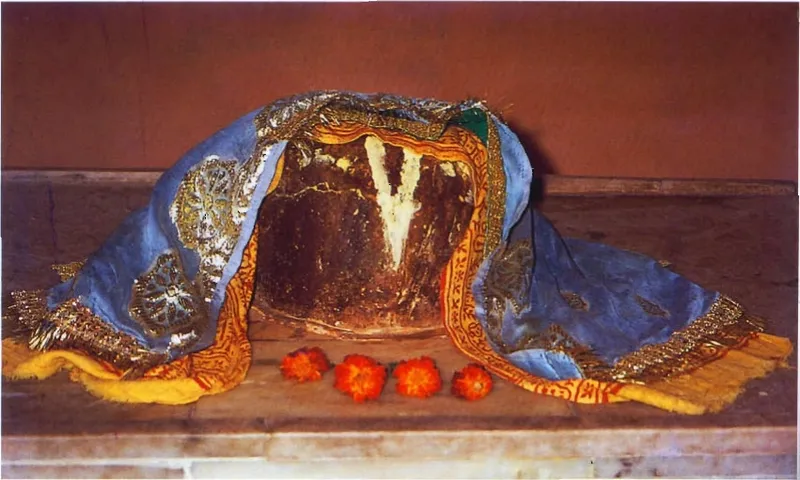
- What it is
- The Jihvā-śilā (jihvā, tongue; śilā, stone) is a stone known as the tongue of Govardhana.
- Visiting
- In 2007 Śrī Vraja-maṇḍala Parikramā placed the stone in a small temple near the entrance of the Govindadeva temple, and said that Śrīla Raghunātha dāsa Gosvāmī had this temple built for it.
In short
The Jihvā-śilā (jihvā, tongue; śilā, stone) is a stone known as the tongue of Govardhana. It is kept in a small shrine near the entrance of the Govindadeva temple, the Rādhā-Govinda Mandira of Rādhā-kuṇḍa village.[1 +4] According to the guidebooks, Śrīla Raghunātha dāsa Gosvāmī learned in a dream that the stone was Govardhana's tongue and installed it there for worship, though they tell differently how it was found.[3 +2] The Garga-saṁhitā gives the name "tongue of Govardhana" to the lake of Rādhā-kuṇḍa itself and does not mention a stone.[7]
Key facts
| Kind | śilā (in a shrine) |
|---|---|
| Region · area | Rādhā-kuṇḍa |
| Also part of | Rādhā-kuṇḍa (village) |
| Ācāryas | Śrīla Raghunātha dāsa Gosvāmī |
Traditional accounts
How the stone was found
The guidebooks connect the stone with the well Gopī-kūpa, but they tell its finding in two ways:
Accounts differ How the Jihvā-śilā was found.
- The Colour Guide to Rādhā-kuṇḍa (1999), Govardhana Hill: India's Most Sacred Mountain (2001), Vṛndāvana-Dhāma Ki Jaya! (c. 1986), the undated parikramā notes Rādhā-kuṇḍaWorkers digging a well struck a rock that began to bleed; Raghunātha stopped the work.
- Śrī Vraja-maṇḍala Parikramā (2007)Dāsa Gosvāmī himself drew the govardhana-śilā out of Gopī-kūpa while drawing water; no bleeding is mentioned.
They also differ on who spoke to Śrīla Raghunātha dāsa Gosvāmī in the dream:
Accounts differ Who revealed in Śrīla Raghunātha dāsa's dream that the stone was Govardhana's tongue.
- The Colour Guide to Rādhā-kuṇḍa (1999), Govardhana Hill: India's Most Sacred Mountain (2001), Śrī Vraja-maṇḍala Parikramā (2007), the undated parikramā notes Rādhā-kuṇḍaGiri-Govardhana / Girirāja himself.
- Vṛndāvana-Dhāma Ki Jaya! (c. 1986)Kṛṣṇa appeared to him in the dream and told him the worker had struck the tongue of Govardhana.
Its worship
According to The Colour Guide to Rādhā-kuṇḍa (1999) and Govardhana Hill (2001), Govardhana asked in the dream that the stone be worshipped every day with tulasī (holy basil) leaves and water from Rādhā-kuṇḍa. Both books add, as a local tradition, that walking seven times around it gives the same benefit as walking around the whole hill; no earlier source for this promise has been found, so it is not certain.[6 +1]
The Gosvāmīs and ācāryas
Govardhana Hill (2001), on its page about the stone, recalls who Śrīla Raghunātha dāsa Gosvāmī is in Kṛṣṇa's pastimes.
Govardhana Hill (2001), on its page about the stone, recalls who Śrīla Raghunātha dāsa Gosvāmī is in Kṛṣṇa's pastimes. Śrīla Kavi-karṇapūra's Gaura-gaṇoddeśa-dīpikā (verse 186) gives his former name as Rasa-mañjarī and adds that some call him Rati-mañjarī and some Bhānumatī. Śrīla Prabhupāda's purport to Caitanya-caritāmṛta Ādi 10.91 also names him Rasa-mañjarī or Rati-mañjarī.[9 +2]
The Caitanya-caritāmṛta tells of a different stone. At Jagannātha Purī, Śrī Caitanya Mahāprabhu gave Śrīla Raghunātha dāsa Gosvāmī a govardhana-śilā, a stone from Govardhana, with His own hand, and he worshipped it. None of the sources consulted says that it is the Jihvā-śilā.[12]
Visiting today
In 2007 Śrī Vraja-maṇḍala Parikramā placed the stone in a small temple near the entrance of the Govindadeva temple, and said that Śrīla Raghunātha dāsa Gosvāmī had this temple built for it. The guidebook Vṛndāvana-Dhāma Ki Jaya! (c. 1986) and the undated parikramā notes Rādhā-kuṇḍa also put the stone beside the Rādhā-Govinda Mandira.[1 +4]
Location
| Where it is | In a temple near the entrance of the Govindadeva Temple; near the Govindadeva temple; near the entrance of the Rādhā-Govinda Temple[13] |
|---|
Nearby places
Rādhā-Govinda Mandira (Rādhā-kuṇḍa) · Gopī-kūpa · Rādhā-Govinda Mandira (Vṛndāvana, old) · Mādhavendra Purī's baiṭhaka (Rādhā-kuṇḍa)
Pictures
2 pictures
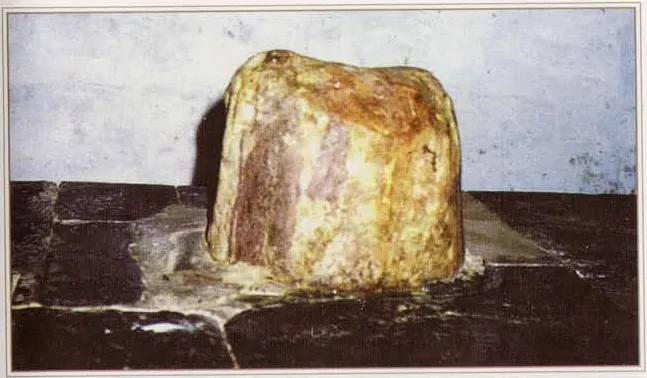
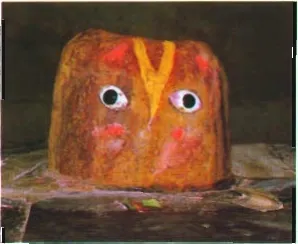
Where the sources differ
The Garga-saṁhitā (3.8.6) describes Govardhana as a body, and in that description the hill's tongue is Rādhā-kuṇḍa. The verse speaks of the kuṇḍa, not of a stone, and none of the sources consulted connects the two.[7]
Accounts differ What is the 'tongue of Govardhana'.
- Garga-saṁhitā, Girirāja-khaṇḍa 3.8.6Rādhā-kuṇḍa is the tongue of Govardhana.
- The Colour Guide to Rādhā-kuṇḍa (1999), Govardhana Hill: India's Most Sacred Mountain (2001), Śrī Vraja-maṇḍala Parikramā (2007), Vṛndāvana-Dhāma Ki Jaya! (c. 1986), the undated parikramā notes Rādhā-kuṇḍaThe stone (śilā) found at Gopī-kūpa is Govardhana's tongue.
References
13 references
- Śrī Vraja-maṇḍala Parikramā (2007), PDF p. 91
- Śrī Vraja-maṇḍala Parikramā (2007), PDF p. 92
- Śrī Vraja-maṇḍala Parikramā (2007), PDF p. 94
- Vṛndāvana-Dhāma Ki Jaya! (c. 1986), by Dhruva Mahārāja dāsa, PDF p. 31
- the undated parikramā notes Rādhā-kuṇḍa, ¶110
- The Colour Guide to Rādhā-kuṇḍa (1999), Rājaśekhara dāsa Brahmacārī, PDF p. 97
- Garga-saṁhitā, Girirāja-khaṇḍa (3), adhyāya 8, verse 6, Sanskrit Wikisource
- Govardhana Hill: India's Most Sacred Mountain (2001), Rajasekhara dasa Brahmacari, PDF p. 157
- Govardhana Hill: India's Most Sacred Mountain (2001), Rajasekhara dasa Brahmacari, PDF p. 156
- Śrīla Prabhupāda, Śrī Caitanya-caritāmṛta, Ādi-līlā 10.91, purport · vedabase.io
- Gaura-gaṇoddeśa-dīpikā, v.186
- Śrīla Prabhupāda, Śrī Caitanya-caritāmṛta, Antya-līlā 6.298, translation · vedabase.io
- Śrī Vraja-maṇḍala Parikramā (2007), p. 156-157