Imlītalā (Vṛndāvana)
इमलीतला (वृन्दावन) Hindi name proposed
Also called Imalītalā-ghāṭa, Imlī Tāla, Imli Tala (Tamarind Tree)
- What it is
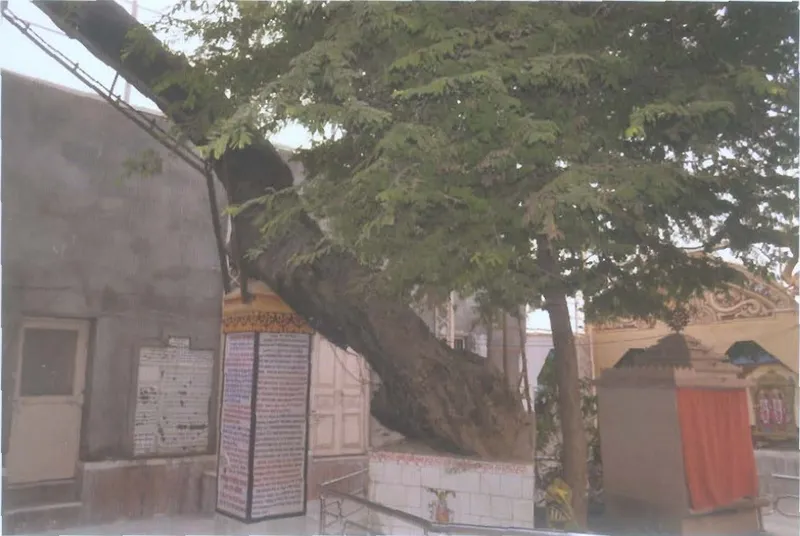
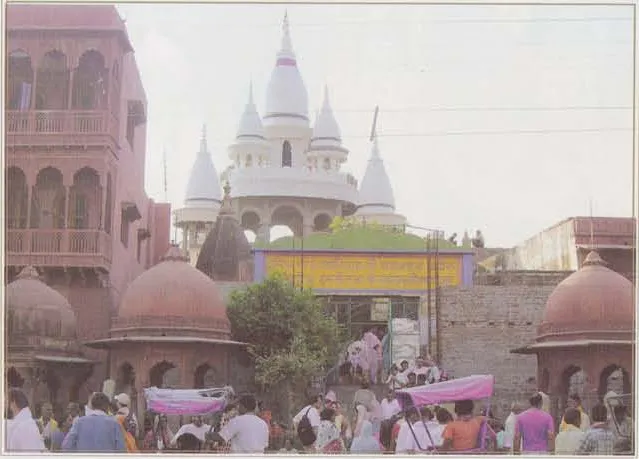
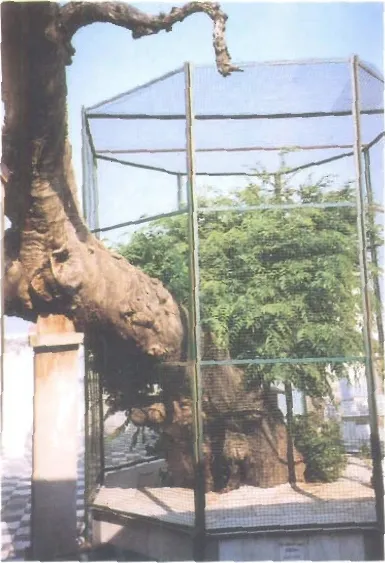
- Imlītalā, "the foot of the tamarind tree", is a tamarind with a temple on the old bank of the Yamunā in Vṛndāvana, near Sevā-kuñja.
- Visiting
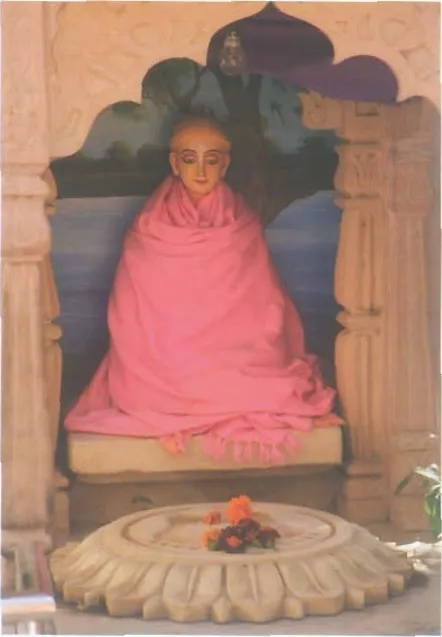
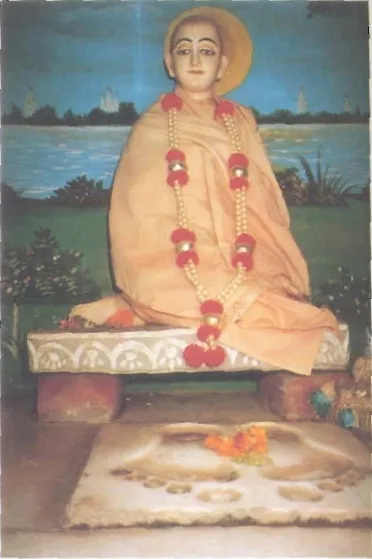
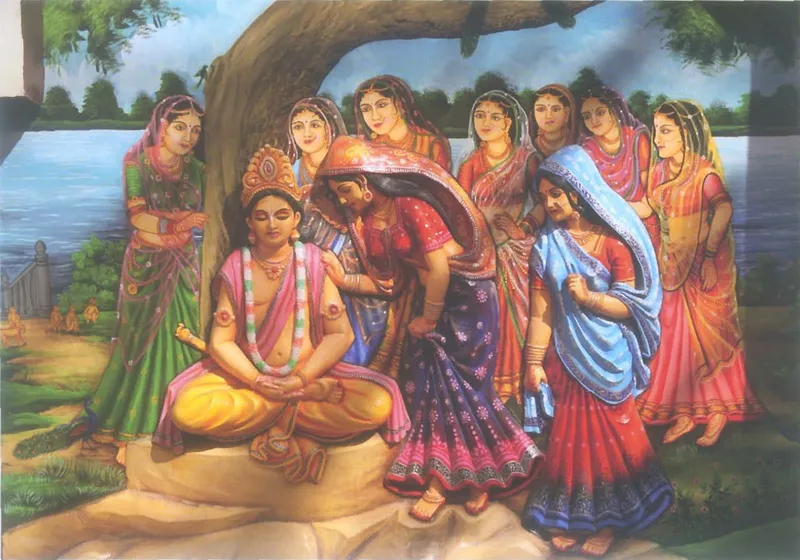
- The 2010 guidebook describes a Deity of Śrī Caitanya Mahāprabhu worshipped at the tree, looking out over the Yamunā, and shows Lord Caitanya's sitting place and a diorama of Kṛṣṇa turning golden.
- Places here
- Bhaktisāraṅga Mahārāja's samādhi (Imlītalā), Gauḍīya Maṭha (Imlītalā), Lord Caitanya's sitting place (Imlītalā)
In short
Imlītalā, "the foot of the tamarind tree", is a tamarind with a temple on the old bank of the Yamunā in Vṛndāvana, near Sevā-kuñja. All the guidebooks identify it with the old tamarind of the Caitanya-caritāmṛta, where Śrī Caitanya Mahāprabhu sat every day chanting the holy name and where He met the Rājaputa Kṛṣṇadāsa.[1 +12] The Bhakti-ratnākara adds that Rādhā and Kṛṣṇa sport with the sakhīs at this tree, and that whoever sees it has his desire fulfilled.[14 +1] The guidebooks tell that Kṛṣṇa, separated from Rādhā, turned golden under the tree; no scripture for that story was found.[1 +5] Śrīla Prabhupāda wrote of the tree and visited the temple.[5 +1]
Key facts
| Kind | tree (with temple and ghāṭa) |
|---|---|
| Region · area | Vṛndāvana |
| Also part of | Yamunā |
| Ācāryas | Śrī Caitanya Mahāprabhu, Śrīla A.C. Bhaktivedanta Swami Prabhupāda, Śrīla Śrīnivāsa Ācārya, Śrīla Rāghava Paṇḍita Gosvāmī of Govardhana |
Why it is glorified
In the Bhakti-ratnākara of Śrīla Narahari Cakravartī Ṭhākura, Śrīla Rāghava Paṇḍita Gosvāmī of Govardhana shows Śrīla Śrīnivāsa …
In the Bhakti-ratnākara of Śrīla Narahari Cakravartī Ṭhākura, Śrīla Rāghava Paṇḍita Gosvāmī of Govardhana shows Śrīla Śrīnivāsa Ācārya the trees and creepers on the bank of the Kālindī (the Yamunā) and says that this tamarind is very old, that Rādhā and Kṛṣṇa sport here with the sakhīs, and that Śrī Kṛṣṇa Caitanya, remembering the past, came and sat here in boundless happiness. It does not say which pastime of Rādhā and Kṛṣṇa it means (summarised here, not translated).[14 +1] When he finishes telling Śrī Caitanya's life at the same tree, he adds that whoever sees this tamarind surely has his desire fulfilled.[14 +1]
Divine pastimes
Śrī Caitanya Mahāprabhu at the tamarind
The Caitanya-caritāmṛta (Madhya 18) tells that Śrī Caitanya Mahāprabhu, staying at Akrūra-tīrtha, came to Vṛndāvana one morning, bathed at Cīra-ghāṭa and rested at Teṅtulī-talā, "the place of the tamarind tree".[7 +3] The tree was very old, standing since the time of Kṛṣṇa's pastimes, with a shiny platform beneath it, and the Yamunā flowed close by with a cool breeze.[8 +1]
কৃষ্ণলীলা-কালের সেই বৃক্ষ পুরাতন ।
তার তলে পিঁড়ি-বান্ধা পরম চিক্কণ ॥ ৭৬ ॥
kṛṣṇa-līlā-kālera sei vṛkṣa purātana
tāra tale piṅḍi-bāndhā parama-cikkaṇa
The tamarind tree named Teṅtulī-talā was very old, having been there since the time of Lord Kṛṣṇa’s pastimes. Beneath the tree was a very shiny platform.
Translation: Śrīla A.C. Bhaktivedanta Swami PrabhupādaFrom then on He sat beneath the tree every day, chanting the holy name, and returned to Akrūra-tīrtha at noon for His meal.[7 +3] The chapter summary printed in Śrīla Prabhupāda's Caitanya-caritāmṛta, which is Śrīla Bhaktivinoda Ṭhākura's, names Āmli-talā among the places He went to see every day.[10]
তেঁতুল-তলে বসি’ করে নাম সংকীর্তন ।
মধ্যাহ্ন করি’ আসি’ করে ‘অক্রূরে’ ভোজন ॥ ৭৮ ॥
teṅtula-tale vasi’ kare nāma-saṅkīrtana
madhyāhna kari’ āsi’ kare ‘akrūre’ bhojana
Śrī Caitanya Mahāprabhu used to sit beneath the old tamarind tree and chant the holy name of the Lord. At noon He would return to Akrūra-tīrtha to take lunch.
Translation: Śrīla A.C. Bhaktivedanta Swami PrabhupādaThe Bhakti-ratnākara tells the same in its own way: crowds pressed on the Lord wherever He went, so He took His meals in solitude at Akrūra and from time to time sat under the tamarind, in tears of joy (summarised here, not translated).[14 +2] Teṅtulī in Bengali and imlī or āmli in Hindi all mean tamarind; the Caitanya-caritāmṛta gives no closer position than the nearby river, and the identification with today's Imlītalā rests on the unanimous tradition.[1 +5]
The Rājaputa Kṛṣṇadāsa
After bathing at Keśī-tīrtha, a householder of the Rājaputa caste named Kṛṣṇadāsa was walking towards Kāliya-daha when he saw Śrī Caitanya Mahāprabhu sitting at Āmli-talā. He had come, he said, because of a dream he had had that day. The Lord embraced him, and Kṛṣṇadāsa, mad with love, danced and chanted the name of Hari and became His servant.[1 +3]
‘কেশী’ স্নান করি’ সেই ‘কালীয়দহ’ যাইতে ।
আম্লি-তলায় গোসাঞিরে দেখে আচম্বিতে ॥ ৮৩ ॥
‘keśī’ snāna kari’ sei ‘kālīya-daha’ yāite
āmli-talāya gosāñire dekhe ācambite
After bathing at Keśī-tīrtha, Kṛṣṇadāsa went toward Kālīya-daha and suddenly saw Śrī Caitanya Mahāprabhu sitting at Āmli-talā [Teṅtulī-talā].
Translation: Śrīla A.C. Bhaktivedanta Swami PrabhupādaThe Bhakti-ratnākara agrees that under "this āmalī" the Lord showed great mercy to Kṛṣṇadāsa Rājaputa, and adds that from here He left for Nīlācala, Jagannātha Purī (summarised here, not translated).[14 +1] Who this Kṛṣṇadāsa was is told differently by later Bengali books (see below).[1 +3]
Rādhā and Kṛṣṇa in the rāsa night
The guidebooks connect the tree with the night of the rāsa dance, when Kṛṣṇa was apart from Rādhā. In Śrīmad-Bhāgavatam Kṛṣṇa takes one gopī away from the rāsa; when she asks Him to carry her, He tells her to climb on His shoulder and vanishes, and she cries out for Him. The Bhāgavatam names no place for any of this.[1 +4]
hā nātha ramaṇa preṣṭha kvāsi kvāsi mahā-bhuja / dāsyās te kṛpaṇāyā me sakhe darśaya sannidhim
She cried out: O master! My lover! O dearmost, where are You? Where are You? Please, O mighty-armed one, O friend, show Yourself to Me, Your poor servant!
Translation: Śrīla Prabhupāda's disciples (BBT)The commentators say that when Kṛṣṇa vanished He stayed close by, unseen, still watching Her, and later Kṛṣṇa Himself told the gopīs that even out of their sight He never stopped loving them (summarised here, not translated).[26 +4] Śrīla Viśvanātha Cakravartī Ṭhākura and Śrīla Baladeva Vidyābhūṣaṇa add that when He came back to the gopīs smiling, His heart was burning in the separation.[31]
The Caitanya-caritāmṛta gives two views of how They came to be apart. Śrī Caitanya Mahāprabhu says that Kṛṣṇa stole Rādhā away from the rāsa; Śrīla Rāmānanda Rāya says that She left the circle of the dance and that Kṛṣṇa searched for Her along the Yamunā and lamented in a grove at the edge of its bank, quoting Śrī Jayadeva's Gīta-govinda. Neither names a place or a tree.[32 +2]
ইতস্ততস্তামনুসৃত্য রাধিকা-
মনঙ্গবাণব্রণখিন্নমানসঃ ।
কৃতানুতাপঃ স কলিন্দনন্দিনী
তটান্তকুঞ্জে বিষসাদ মাধবঃ ॥ ১০৭ ॥
itas tatas tām anusṛtya rādhikām
anaṅga-bāṇa-vraṇa-khinna-mānasaḥ
kṛtānutāpaḥ sa kalinda-nandinī
taṭānta-kuñje viṣasāda mādhavaḥ
‘Being afflicted by the arrow of Cupid and unhappily regretting His mistreating Śrīmatī Rādhārāṇī, Mādhava, Lord Kṛṣṇa, began to search for Her along the banks of the Yamunā River. When He failed to find Her, He entered the bushes of Vṛndāvana and began to lament.’
Translation: Śrīla A.C. Bhaktivedanta Swami PrabhupādaTraditional accounts
The guidebooks Śrī Vraja-maṇḍala Parikramā (2007), Vṛndāvana, the Playground of God (2010), The Color Guide to Vṛndāvana (2000) …
Kṛṣṇa turns golden
The guidebooks Śrī Vraja-maṇḍala Parikramā (2007), Vṛndāvana, the Playground of God (2010), The Color Guide to Vṛndāvana (2000) and Vṛndāvana-Dhāma Ki Jaya! (c. 1986), with the undated parikramā notes Vṛndāvana, tell that Kṛṣṇa sat under this tamarind in separation from Śrī Rādhā, absorbed in Her, and turned golden like Her. Three of them add that He told Her that He would take Her mood and complexion in the age of Kali.[1 +5] No scripture or Gosvāmī text was found for this story. The nearest older form may be a line in the Bengali Bhaktamāla of Kṛṣṇadāsa Bābājī (1905), which says that under an old tamarind on the river bank Kṛṣṇa sits chanting Rādhā's name; it does not say which tamarind, and tells of no golden colour.[1 +7]
The teaching behind the story is stated in the verse of Śrīla Svarūpa Dāmodara that the Caitanya-caritāmṛta quotes: Śrī Kṛṣṇa Caitanya is Kṛṣṇa Himself, appearing with the sentiment and complexion of Śrīmatī Rādhārāṇī. The verse does not mention this tree.[37]
General teaching (does not name the place)“Although Rādhā and Kṛṣṇa are one in Their identity, previously They separated Themselves. Now these two transcendental identities have again united, in the form of Śrī Kṛṣṇa Caitanya. I bow down to Him, who has manifested Himself with the sentiment and complexion of Śrīmatī Rādhārāṇī although He is Kṛṣṇa Himself.”
Śrīla Prabhupāda, Śrī Caitanya-caritāmṛta, Ādi-līlā 1.5, translation · vedabase.io
Other stories of the tree
- According to the local tradition recorded in four of the guidebooks, when Śrī Caitanya chanted here in separation, His golden body turned dark like Kṛṣṇa's. The Caitanya-caritāmṛta says only that He chanted here, so the change of colour is not certain.[2 +3]
- According to the local tradition recorded in the undated parikramā notes Vṛndāvana, which give no source, Rādhā, on Her way to meet Kṛṣṇa, cut Her foot on a tamarind fruit and cursed the tree that its fruit would not ripen; this is not certain. The Bengali Vṛndāvana-kathā (1920) reports a similar saying, but of the tamarinds of Vṛndāvana in general.[39 +1]
- According to the local tradition recorded in Śrī Vraja-maṇḍala Parikramā (2007), which names no date or witness and so is not certain, some years ago someone cut a branch of the old tree and blood oozed from it, and that residents of the dhāma believe that perfected saints worship in Vṛndāvana as trees and creepers.[41 +1]
- The Prema-vilāsa names "the foot of the tamarind", with Cīra-ghāṭa, Dhīra-samīra and Vaṁśīvaṭa, among the places that Śrīla Śyāmānanda Paṇḍita saw when he first came to Vṛndāvana.[43]
Śrīla Prabhupāda
In a purport of the Second Canto Śrīla Prabhupāda gives the tree of Imlitala as an example of a very old tree, reporting its age …
In a purport of the Second Canto Śrīla Prabhupāda gives the tree of Imlitala as an example of a very old tree, reporting its age as tradition:[5]
Names this place“At Vṛndāvana there is a tamarind tree (the place is known as Imlitala) which is said to have existed since the time of Lord Kṛṣṇa.”
Śrīla Prabhupāda, Śrīmad-Bhāgavatam, Canto 2, 3.18, purport · vedabase.io
He knew the place well. In 1969 he wrote to a correspondent at "Imlitala, Mahaprabhu's Gadi", the seat of Mahāprabhu, near Sevā-kuñja.[1 +5] On 15 October 1972 he went there with his disciples and visited the temple; on that walk the account of the place was given by a local man, not by Śrīla Prabhupāda.[5 +3]
Visiting today
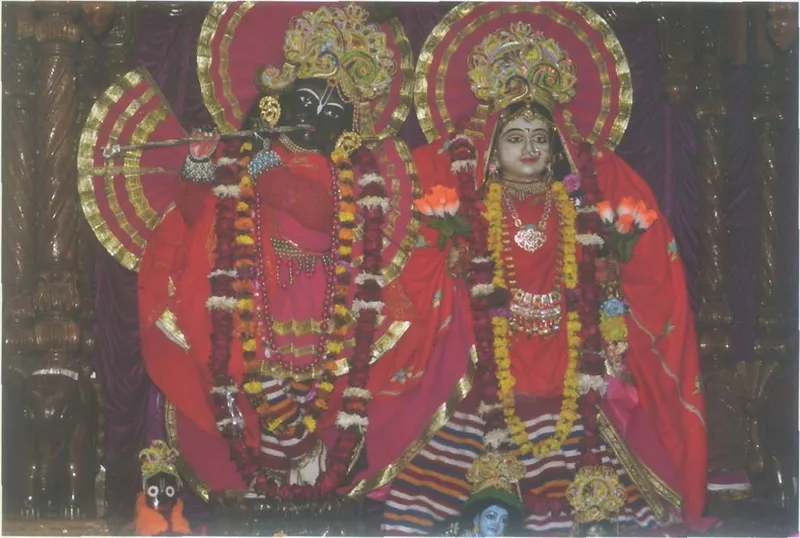
The 2010 guidebook describes a Deity of Śrī Caitanya Mahāprabhu worshipped at the tree, looking out over the Yamunā, and shows Lord Caitanya's sitting place and a diorama of Kṛṣṇa turning golden. The Color Guide (2000) gave the darśana hours as 5:30 am to noon and 4 to 8 pm, summer and winter alike; check them before you go.[2 +4] The 2010 guidebook says that Sevā-kuñja is entered from its eastern side, near the tree.[2 +4]
Location
| Where it is | on the Yamunā bank; map key 6 and label 'Imlītalā-ghāṭa'[61] Imlītalā-ghāṭa is north of Āndhera-ghāṭa[62] |
|---|
Places at Imlītalā (Vṛndāvana)
3 places
Nearby places
Āndhera-ghāṭa · Śṛṅgāra-ghāṭa · Sevā-kuñja · Yamunā
Pictures
7 pictures
History
The ghāṭa
Śrī Vraja-maṇḍala Parikramā lists Imlītalā-ghāṭa, north of Āndhera-ghāṭa, and says it is also known as Gaurāṅga-ghāṭa because Mahāprabhu chanted under the tamarind there; older lists of the town's ghāṭas, of 1883 and 1920, also have it, without a builder.[19 +3] When Śrīla Prabhupāda went to Imlītalā with his disciples in 1972, he remarked that the place had formerly been a ghāṭa.[19]
The temple and the samādhi
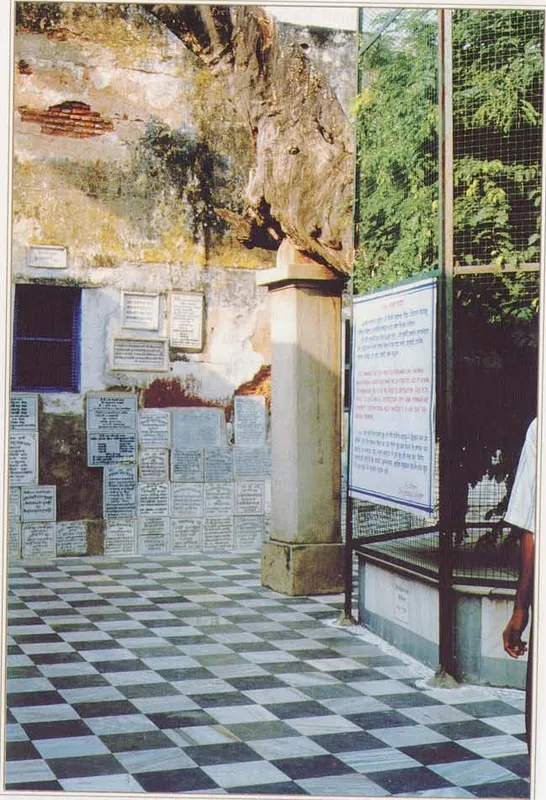
Vṛndāvana-Dhāma Ki Jaya! (c. 1986) says that the Gauḍīya Maṭha temple at Imlītalā was established by Śrī Bhaktisāraṅga Mahārāja, a disciple of Śrīla Bhaktisiddhānta Sarasvatī Ṭhākura, and that his samādhi (tomb) stands next to the tamarind tree. It gives no date and does not describe the samādhi.[4 +2]
Śrīla Prabhupāda's biography reports that in his Jhansi years, in the 1950s, he went to the Imlītala temple to ask his Godbrother Śrī Bhaktisāraṅga Gosvāmī to take over the Bharati Bhavan in Jhansi for preaching, and that he was not interested.[47] A book edited by Śrī Bhaktisāraṅga Gosvāmī was published in Vṛndāvana in 1959 by the "Imlī Talā Śrīmān Mahāprabhu Mandir", the earliest dated record of the temple under that name that was found.[4 +3] Śrīla Prabhupāda said in July 1966 that this Godbrother was no longer in this world, so the samādhi dates from before then.[48]
In 1976 Śrīla Prabhupāda recalled the temple at Imlitala, near Sevā-kuñja, as his Godbrother's temple, without naming him, and in October 1977 he asked that someone be sent to the Imlitala Maṭha to call his sister's son.[47 +2]
Where the sources differ
Whether the tamarind standing today is the tree of Kṛṣṇa's and Śrī Caitanya's time: the sources of different dates differ, and …
Whether the tamarind standing today is the tree of Kṛṣṇa's and Śrī Caitanya's time: the sources of different dates differ, and none dates the old tree's end. The Bengali Bhaktamāla (1905) speaks of the tree as still present, while the Vṛndāvana-kathā (1920) says that the old tree is no more and the one standing may be fifty or sixty years old.[1 +7]
Accounts differ Whether the tamarind standing at Imlītalā today is the tree of Kṛṣṇa's and Śrī Caitanya's time.
- Caitanya-caritāmṛta Madhya 18.76In Śrī Caitanya's time the tree was very old, standing since Kṛṣṇa's pastimes, with a shiny platform beneath it.
- Śrīla Prabhupāda, ŚB 2.3.18 purportAt Vṛndāvana there is a tamarind tree (Imlitala) said to have existed since Kṛṣṇa's time (present tense).
- Vṛndāvana-Dhāma Ki Jaya! (c. 1986)This tamarind tree dates back as far as Lord Kṛṣṇa's time, five thousand years ago.
- The Color Guide to Vṛndāvana (2000); the undated parikramā notes VṛndāvanaŚrī Caitanya sat beneath 'this same tree'.
Accounts differ How Rādhā and Kṛṣṇa came to be apart from the other gopīs in the rāsa night: did Kṛṣṇa take Her away, or did She leave the rāsa on Her own
- Śrīmad-Bhāgavatam 10.29.48, 10.30.28, 10.30.35–36Kṛṣṇa disappeared from all the gopīs because of their pride (and māna), and the gopīs then find that He has led one gopī into the forest, abandoning the rest; no gopī is named
- Śrīla Viśvanātha Cakravartī, Śrīla Baladeva Vidyābhūṣaṇa and Vaṁśīdhara on ŚB 10.29.48Rādhā became jealous and offended because He enjoyed with all alike; He disappeared to pacify Her, taking Her with Him (Śrīla Viśvanātha, Śrīla Baladeva: by force)
- Śrīla Jīva Gosvāmī, Laghu-vaiṣṇava-toṣaṇī on ŚB 10.29.48the disappearance is to be understood as together with Rādhā; its root cause was His longing for pastimes with Her alone
- Caitanya-caritāmṛta Madhya 8.102 (Śrī Caitanya Mahāprabhu speaking)Kṛṣṇa stole Rādhā away, since in the presence of the other gopīs the intensity of love did not show
Accounts differ Where Kṛṣṇa was, and what He felt, after He disappeared from Rādhā in the rāsa night
- Śrīmad-Bhāgavatam 10.30.38; 10.32.20–21He disappeared as She was about to climb on His shoulder; later He tells the gopīs that even when He removed Himself from their sight He never stopped loving them; no place is named
- Śrīla Viśvanātha Cakravartī, Śrīla Jīva Gosvāmī (Bṛhat-krama-sandarbha) and Śrīla Baladeva Vidyābhūṣaṇa on ŚB 10.30.38; Śrīla Nārāyaṇa Bhaṭṭa on 10.30.40He stayed right there, close by, unseen, watching Her (Śrīla Nārāyaṇa Bhaṭṭa: near Her in that circle, silently listening to Her laments)
- Śrīla Śrīdhara Svāmī, Śrīla Sanātana Gosvāmī, Śrīla Jīva Gosvāmī, Śrīla Nārāyaṇa Bhaṭṭa, Śrīla Viśvanātha Cakravartī, Śrīla Baladeva Vidyābhūṣaṇa and Vaṁśīdhara on ŚB 10.32.21; Jīva (Bṛhat-krama-sandarbha) on 10.30.44He had gone nowhere; He stayed near the gopīs, unseen, listening to them (Vaṁśīdhara: ask the Yamunā and the others)
- Kṛṣṇa book ch. 30 and ch. 32 (Śrīla Prabhupāda)in the gopīs' words, He 'must be watching Her from a distant place'; in Kṛṣṇa's words, 'I was near to you'
The wording of these accounts is our summary of the sources, not a published translation.
Where the report of "Kṛṣṇa" on Kāliya Lake reached Śrī Caitanya: Śrī Vraja-maṇḍala Parikramā tells the request as made "while Mahāprabhu was staying here", and the Caitanya-caritāmṛta at Akrūra-tīrtha.[1 +3]
Accounts differ Where the Kālīya report reached Śrī Caitanya and who the 'Kṛṣṇa' on the lake was.
- Śrī Vraja-maṇḍala Parikramā (2007)'While Mahāprabhu was staying here' people asked Him to come to Kālīya-hrada; He told them to wait a few days; the spectacle was 'some Muslims in a boat catching fish' with a light on the bow.
- Caitanya-caritāmṛta Madhya 18.92-108The people came to the Lord at Akrūra-tīrtha in the morning; He told Balabhadra Bhaṭṭācārya to wait till the next night; respectable men explained that a fisherman (kaivartya) lit a torch in his boat at night to catch fish.
Accounts differ How long Śrī Caitanya chanted at the tamarind each day.
- Śrī Vraja-maṇḍala Parikramā (2007)At dawn He would sit at Imlītalā-ghāṭa and chant harināma until the afternoon.
- Caitanya-caritāmṛta Madhya 18.78, 18.80He chanted until noon (madhyāhna) and then returned to Akrūra-tīrtha for His meal.
Who the Kṛṣṇadāsa was who met Śrī Caitanya here: the Vṛndāvana-kathā (1920) may be mistaken in identifying him with Kṛṣṇadāsa Guñjāmālī, whom an older Bengali book describes differently.[11 +2]
Accounts differ Who the Kṛṣṇadāsa was who met Śrī Caitanya at the tamarind (Āmli-talā / Āmalitalā)
- Caitanya-caritāmṛta Madhya 18.82–90A householder of the Rājaputa caste whose home was just across the Yamunā; after a dream he came, found the Lord at Āmli-talā, was embraced, and left his wife, home and children to carry the Lord's waterpot
- Vṛndāvana-kathā (Pulinbihārī Datta), 1920, p. 193Here the Rājput Kṛṣṇadāsa became Caitanyadeva's disciple; that Kṛṣṇadāsa Guñjāmālī spread the Gauḍīya teaching in the Punjab, Gujarat, Surat and other places
- Vṛndāvana-kathā, 1920, p. 204 (reporting what 'others say')The founder of the Nimbārka Mālādhārī ākhaṛā was the Kṛṣṇadāsa Guñjāmālī of the Bhaktamāla, born in Lahore, who met Caitanyadeva while He was staying at Āmalitalā in Vṛndāvana and received the guñjā garland from Him
- the Bengali Bhaktamāla of Kṛṣṇadāsa Bābājī (1905)Kṛṣṇadāsa Guñjāmālī was a brāhmaṇa boy of Pañcāla (Lahore) who served the pūjārī of Gopāla at Govardhana; when Gaurāṅga came to Vṛndāvana he received from Him the guñjā garland and was sent to preach in the west (Punjab, Lahore, Multan, Gujarat); no place of the meeting is named
Who built the ghāṭa is not certain: the only attribution found gives no source.[45 +3]
Accounts differ Who built the ghāṭa at Imlītalā
- Growse, Mathurá (1883), p. 270'19 Imla Ghát.': no builder named
- Vṛndāvana-kathā (1920), p. 274No. 19, Āmalītalā-ghāṭa: builder unknown (the list follows Growse's)
- The Color Guide to Vṛndāvana (2000)No. 20, Imli Ghāṭa: no builder named (the list follows Growse's)
- Entwistle, Braj (1987), p. 405The ghāṭa beneath the tree 'is attributed to' Bīr Siṁh Deo of Orchhā (no source or date given)
References
62 references
- Śrī Vraja-maṇḍala Parikramā (2007), PDF p. 307
- Vṛndāvana, the Playground of God (2010), Bhakti Caitanya Svāmī, PDF p. 151
- The Color Guide to Vṛndāvana (2000), Written and Photographed by Rājaśekhara dāsa Brahmacārī, PDF p. 76
- Vṛndāvana-Dhāma Ki Jaya! (c. 1986), by Dhruva Mahārāja dāsa, PDF p. 66
- Śrīla Prabhupāda, Śrīmad-Bhāgavatam, Canto 2, 3.18, purport · vedabase.io
- Śrīla Prabhupāda, Letter to: Prosanta Mukherjee, Letter, 1969-09-01 (address block) · vedabase.io
- Śrīla Kṛṣṇadāsa Kavirāja Gosvāmī, Śrī Caitanya-caritāmṛta, Madhya-līlā 18.75, online edition · vedabase.io
- Śrīla Kṛṣṇadāsa Kavirāja Gosvāmī, Śrī Caitanya-caritāmṛta, CC Madhya-līlā 18.77, online edition · vedabase.io
- Śrīla Kṛṣṇadāsa Kavirāja Gosvāmī, Śrī Caitanya-caritāmṛta, Madhya-līlā 18.78, online edition · vedabase.io
- Śrīla Prabhupāda, Śrī Caitanya-caritāmṛta, Madhya-līlā, Chapter 18, chapter summary · vedabase.io
- Śrīla Kṛṣṇadāsa Kavirāja Gosvāmī, Śrī Caitanya-caritāmṛta, CC Madhya-līlā 18.83, online edition · vedabase.io
- Śrīla Kṛṣṇadāsa Kavirāja Gosvāmī, Śrī Caitanya-caritāmṛta, CC Madhya-līlā 18.88, online edition · vedabase.io
- Śrīla Kṛṣṇadāsa Kavirāja Gosvāmī, Śrī Caitanya-caritāmṛta, CC Madhya-līlā 18.87, online edition · vedabase.io
- Śrīla Narahari Cakravartī, Bhakti-ratnākara, Fifth Wave (pañcama taraṅga), 1912 ed. p. 307; Grantha Mandira text v.2093–2095, 2nd ed., 1912
- Śrīla Narahari Cakravartī, Bhakti-ratnākara, Fifth Wave (pañcama taraṅga), 1912 ed. pp. 317–318; Grantha Mandira text v.2233–2236, 2nd ed., 1912
- Vṛndāvana, the Playground of God (2010), Bhakti Caitanya Svāmī, PDF p. 148
- the undated parikramā notes Vṛndāvana, ¶103
- the undated parikramā notes Vṛndāvana, ¶105
- Śrīla Prabhupāda, Morning walk, Vṛndāvana, 15 October 1972 · vedabase.io
- Śrīla Kṛṣṇadāsa Kavirāja Gosvāmī, Śrī Caitanya-caritāmṛta, CC Madhya-līlā 18.76, online edition · vedabase.io
Show all 62 references
- Śrīla Narahari Cakravartī, Bhakti-ratnākara, Fifth Wave (pañcama taraṅga), printed pp. 317-318 (1912 edition), 2nd ed., 1912
- Śrīmad-Bhāgavatam ŚB 10.30.37, GRETIL
- Śrīmad-Bhāgavatam ŚB 10.30.38, GRETIL
- Śrīmad-Bhāgavatam ŚB 10.30.39, GRETIL
- Śrī Vraja-maṇḍala Parikramā (2007), PDF p. 311
- Śrīla Viśvanātha Cakravartī Ṭhākura: commentary on ŚB 10.30.38
- Śrīla Nārāyaṇa Bhaṭṭa: commentary on ŚB 10.30.40
- Śrīla Jīva Gosvāmī: commentary on ŚB 10.32.21
- Śrīmad-Bhāgavatam 10.32.21, GRETIL
- Śrīla Prabhupāda, Kṛṣṇa, the Supreme Personality of Godhead (Kṛṣṇa book), Chapter 32, 'Kṛṣṇa Returns to the Gopīs' · vedabase.io
- Śrīla Viśvanātha Cakravartī Ṭhākura: commentary on ŚB 10.32.2
- Śrīla Prabhupāda, Śrī Caitanya-caritāmṛta, Madhya-līlā 8.102, translation and purport · vedabase.io
- Śrīla Kṛṣṇadāsa Kavirāja Gosvāmī, Śrī Caitanya-caritāmṛta, CC Madhya-līlā 8.105 (Rāmānanda Rāya speaking), online edition · vedabase.io
- Śrīla Jayadeva Gosvāmī, Gīta-govinda, CC Madhya-līlā 8.107 (= Gīta-govinda 3.2), online edition · vedabase.io
- Śrī Śrī Bhaktamāla grantha, pilgrimage list of Vṛndāvana’s riverside places, printed p. 348, right-hand column
- Śrī Śrī Bhaktamāla grantha, pilgrimage list of Vṛndāvana's places, printed p. 351, right-hand column
- Śrīla Prabhupāda, Śrī Caitanya-caritāmṛta, Ādi-līlā 1.5, translation · vedabase.io
- the undated parikramā notes Vṛndāvana, ¶107
- the undated parikramā notes Vṛndāvana, ¶101
- Vṛndāvana-kathā, ch. 1 (prathama pariccheda, on Vṛndāvana in general), printed p. 21
- Śrī Vraja-maṇḍala Parikramā (2007), PDF p. 308
- Śrī Vraja-maṇḍala Parikramā (2007), PDF p. 309
- Prema-vilāsa, 12th vilāsa (dvādaśa vilāsa, as this edition numbers it), printed p. 84, left-hand column, Kolkata, 1913
- Śrī Vraja-maṇḍala Parikramā (2007), PDF p. 343
- The Color Guide to Vṛndāvana (2000), Written and Photographed by Rājaśekhara dāsa Brahmacārī, PDF p. 31
- Pulinbihārī Datta, ch. 23 (upasaṁhāra, 'conclusion'), list of Vṛndāvana's ghāṭas and their builders, nos. 19-24, printed p. 274
- Satsvarūpa dāsa Gosvāmī, Śrīla Prabhupāda-līlāmṛta, vol. 1, ch. 7 · vedabase.io
- Śrīla Prabhupāda, Bhagavad-gītā 4.12-13 lecture, New York, 27 July 1966 · vedabase.io
- Satsvarūpa dāsa Gosvāmī, Śrīla Prabhupāda-līlāmṛta, vol. 1, ch. 7 · vedabase.io
- Śrīla Prabhupāda, Room conversation, Vṛndāvana, 3 October 1976 · vedabase.io
- A. W. Entwistle, Bibliography, printed p. 494, Egbert Forsten, Groningen, 1987
- Śrīla Prabhupāda, Room Conversation, Vṛndāvana, 12 October 1977 · vedabase.io
- Vṛndāvana, the Playground of God (2010), Bhakti Caitanya Svāmī, PDF p. 149
- the undated parikramā notes Vṛndāvana, ¶108
- Vṛndāvana-kathā, ch. 16 (ṣoḍaśa pariccheda), item 6 'Āmalītalā', printed pp. 192-193; quoted from p. 193
- Śrīla Kṛṣṇadāsa Kavirāja Gosvāmī, Śrī Caitanya-caritāmṛta, CC Madhya-līlā 18.92, online edition · vedabase.io
- Śrīla Kṛṣṇadāsa Kavirāja Gosvāmī, Śrī Caitanya-caritāmṛta, CC Madhya-līlā 18.104, online edition · vedabase.io
- A. W. Entwistle, ch. 8 §66.11 'Imli Tala', printed p. 405, Egbert Forsten, Groningen, 1987
- Vṛndāvana-kathā, ch. 23 (trayoviṁśa pariccheda, 'Upasaṁhāra'), list of Vṛndāvana's ghāṭas, printed p. 274
- Mathurá (1883), F. S. Growse, B.C.S., M.A. Oxon., C.I.E. (as the title page gives him, p. 270
- Śrī Vraja-maṇḍala Parikramā (2007), p. 588-589
- Śrī Vraja-maṇḍala Parikramā (2007), p. 660-661