Kosī
कोसी
Also called Kosīvana
- What it is
- Kosī, also called Kosīvana, is a town on the Mathurā–Delhi road.
- Visiting
- According to Śrī Vraja-maṇḍala Parikramā (2007), Kosī lies on the Mathurā–Delhi highway about thirty-five miles from Mathurā and some ten miles from Chatravana, with Gomatī-kuṇḍa west of the village.
In short
Kosī, also called Kosīvana, is a town on the Mathurā–Delhi road.[1 +3] The guidebook Śrī Vraja-maṇḍala Parikramā (2007) explains its name from Rādhikā's teasing question at Her door, Ko 'sī?, "Who are You?", and says that at its Gomatī-kuṇḍa Kṛṣṇa let Nanda Bābā see Kuśa-sthalī, that is Dvārakā. No scripture or work of the ācāryas found so far sets these pastimes here.[1] Śrīla Prabhupāda told several times how, before his initiation, he joined the Vraja parikramā of his future spiritual master, Śrīla Bhaktisiddhānta Sarasvatī Ṭhākura, at Kosī and stayed there to hear him speak.[5 +1]
Key facts
| Kind | village |
|---|---|
| Region · area | Jāvaṭa |
| Ācāryas | Śrīla Bhaktisiddhānta Sarasvatī Ṭhākura, Śrīla A.C. Bhaktivedanta Swami Prabhupāda |
Traditional accounts
The name Kosī
According to Śrī Vraja-maṇḍala Parikramā (2007), when Kṛṣṇa knocked at Rādhikā's door She asked, Ko 'sī?, "Who are You?", and took each name He gave in another sense: Kṛṣṇa as a black snake, Ghanaśyāma as a dark cloud, Cakrī as a potter, Madhusūdana as a bumblebee and Hari as a monkey or a lion. So, the book says, the place is called Kosī. It names no source for this.[1]
Śrīla Rūpa Gosvāmī's Padyāvalī, in its section on the conversation of Hari with Rādhā, keeps two verses of this kind of wordplay at the door. In one, Mādhava is taken as the spring season, Cakrī as a potter and Hari as a monkey; in the other, ascribed to the poet Cakrapāṇi, the names Keśava, Śauri and Cakrī are turned in the same way. Neither verse names a place (summarised here, not translated).[7 +1] The names in the guidebook and in the verses differ:
Accounts differ The names twisted in the wordplay at Rādhā's door: Śrī Vraja-maṇḍala Parikramā (2007)'s Kosī account and the Padyāvalī verses differ, and only Śrī Vraja-maṇḍala Parikramā (2007) sets the exchange at Kosī.
- Śrī Vraja-maṇḍala Parikramā (2007)Rādhikā asks 'Ko 'sī?'; She takes Kṛṣṇa as 'black snake', Ghanaśyāma as 'black cloud', Cakrī as 'potter', Madhusūdana as 'bumblebee', Hari as 'monkey or lion'; the place is therefore called Kosī/Kosīvana.
- Padyāvalī v.281 ('kasyacit')Rādhā asks who knocks at the door; the names are Mādhava (taken as 'spring'), Cakrī ('potter'), Dharaṇī-dhara ('two-tongued serpent king'), the serpent-crusher (king of birds) and Hari (chief of monkeys); no place named.
- Padyāvalī v.282 (Cakrapāṇi)A cowherd's wife asks Who are you, at night?; the names are Keśava ('hair'), Śauri ('father's qualities') and Cakrī ('potter': give me pots); no place named.
The wording of these accounts is our summary of the sources, not a published translation.
Gomatī-kuṇḍa
According to the same guidebook, Śrī Kṛṣṇa arranged at Gomatī-kuṇḍa, west of the village, for Nanda Bābā to have darśana of Kuśa-sthalī, Dvārakā. No scripture or work of an ācārya found so far tells this pastime; the Gomatī-kuṇḍa of the Vraja-bhakti-vilāsa and the Bhakti-ratnākara is another pond, in Kāmyavana.[1]
Nanda's treasury
The biography Śrīla Prabhupāda-līlāmṛta calls Kosī the site of the treasury of Kṛṣṇa's father, King Nanda. This is the biographer's description, not Śrīla Prabhupāda's words; no older source for it was found, so it is not certain.[9]
Śrīla Prabhupāda
Śrīla Prabhupāda recalled in 1969, 1971, 1972 and 1973 how, before he was initiated, he came from Allahabad to see the …
Śrīla Prabhupāda recalled in 1969, 1971, 1972 and 1973 how, before he was initiated, he came from Allahabad to see the Vraja-maṇḍala parikramā of Śrīla Bhaktisiddhānta Sarasvatī Ṭhākura and met the party at Kosī, which he once called "the Vṛndāvana interior". In 1972 he told Dr. Kapoor that he came simply to see what they were doing, and that he was initiated in Allahabad after the parikramā.[5 +3]
His fullest account was given at Māyāpur in 1973. The pilgrims were going to see the Śeṣaśāyī temple, but it was announced that his spiritual master would speak that evening before leaving for Mathurā, and he chose to stay and hear him:[6]
Names this placeSo the parikramā, I thought, "What are these people doing on this parikramā? Let me go." So I met them in Kosi. Perhaps Mahārāja, you may remember, and all people were going to see some Śeṣaśāyī. … I thought it wise = "What shall I see, this Śeṣaśāyī? Let me hear. Prabhupāda will speak; let me hear."
Śrīla Prabhupāda, Māyāpur Temple Inauguration with Śrīdhara Mahārāja, plus Mahāṁsa Sanyass Initiation, Māyāpur, 17 March 1973 · vedabase.io
According to the biography Śrīla Prabhupāda-līlāmṛta, the party arrived at Kosī on 28 October 1932, and by sitting patiently and hearing there he pleased his spiritual master. In a morning walk of 10 February 1976, however, Śrīla Prabhupāda placed the party at Mathurā in 1933 and did not name Kosī; the accounts differ on the place and the year.[9 +1] Read more: Śrīla Prabhupāda's instruction to print books: Kosī and Rādhā-kuṇḍa →
Accounts differ Where and in which year Śrīla Prabhupāda met Śrīla Bhaktisiddhānta Sarasvatī Ṭhākura's parikramā party and stayed to hear him: at Kosi in 1932, or 'At Mathurā' in 1933.
- Śrīla Prabhupāda, recorded 1969 (Columbus), 1971 and 1972 (Vṛndāvana), 1973 (Māyāpur)He met the parikramā party at Kosi ('the Vṛndāvana interior, which place was known as Kosi', 1969; 'I went there, Koṣi', 1971; 'Kosi', 1972; 'So I met them in Kosi', 1973); the question put to him in 1971 speaks of 'that parikramā by Prabhupāda in 1932'.
- Śrīla Prabhupāda, morning walk, Māyāpur, 10 February 1976'At Mathurā there was party, parikramā party, in 1933'; he went from Allahabad to Mathurā and came back; he does not name Kosi.
- Śrīla Prabhupāda-līlāmṛta 1.4 (biography)The party arrived at Kosi on 28 October 1932; Abhay came by train from Allahabad to Mathurā and on to Kosi by ricksha.
Visiting today
According to Śrī Vraja-maṇḍala Parikramā (2007), Kosī lies on the Mathurā–Delhi highway about thirty-five miles from Mathurā and some ten miles from Chatravana, with Gomatī-kuṇḍa west of the village. Nandagrāma is eight miles south of Kosī, Bichora ten miles south-west and Paya-gaon six miles east, and Koṭvana lies between Kosī and Hoḍal. These distances are printed in 2007 and have not been checked.[1 +3]
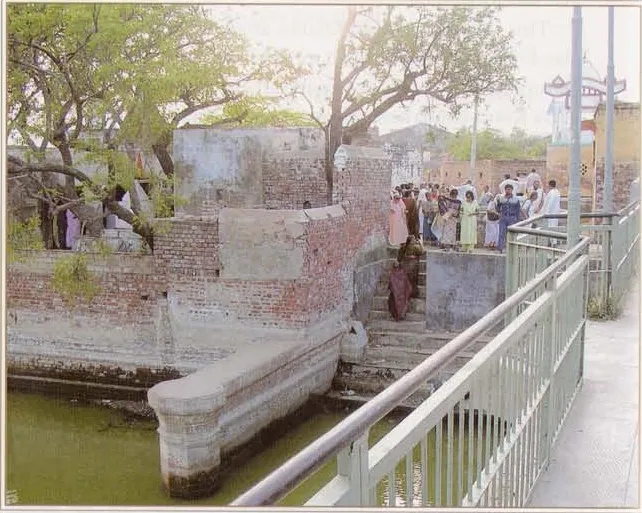
The book's photograph shows Gomatī-kuṇḍa as a pond with a flight of steps, old walls and a landing.[1]
Places at Kosī
1 places
Also listed here
- Gomatī-kuṇḍa (Kosī) kuṇḍa
Nearby places
Mathurā · Chatravana · Nandagrāma · Bichora
History
F. S. Growse (1883) and Prabhudayāl Mītal (1966) ascribe the large stone sarāi, the travellers' inn in the middle of the town, to Khwāja I'tibār Khān, governor of Delhi in the reign of Akbar, and date the Ratnākara-kuṇḍa, a large masonry tank, to the same period. Neither names the document on which this rests.[10 +1]
Growse (1883) also recorded that wealthy traders of the town had built two or three masonry ghāṭas at Gomatī-kuṇḍa, and that the Phūl-ḍol fair was held beside it on the second day of the dark half of Caitra.[10]
More on this place
Śrīla Prabhupāda's instruction to print books: Kosī and Rādhā-kuṇḍa
References
16 references
- Śrī Vraja-maṇḍala Parikramā (2007), PDF p. 229
- Śrī Vraja-maṇḍala Parikramā (2007), PDF p. 191
- Śrī Vraja-maṇḍala Parikramā (2007), PDF p. 187
- Śrī Vraja-maṇḍala Parikramā (2007), PDF p. 235
- Śrīla Prabhupāda, Room Conversation, Columbus, 10 May 1969 · vedabase.io
- Śrīla Prabhupāda, Māyāpur Temple Inauguration with Śrīdhara Mahārāja, plus Mahāṁsa Sanyass Initiation, Māyāpur, 17 March 1973 · vedabase.io
- Śrīla Rūpa Gosvāmī, Padyāvalī v.281, GRETIL
- Śrīla Rūpa Gosvāmī, Padyāvalī v.282, ascribed to Cakrapāṇi, GRETIL
- Satsvarūpa dāsa Gosvāmī, Śrīla Prabhupāda-līlāmṛta, vol. 1, ch. 4 · vedabase.io
- Mathurá (1883), F. S. Growse, B.C.S., M.A. Oxon., C.I.E. (as the title page gives him, p. 361
- Prabhudayāl Mītal, printed p.126: 'कोसी'
- Śrīla Prabhupāda, Parikramā on the Way to Gokula, Vṛndāvana, 29 November 1971 · vedabase.io
- Śrīla Prabhupāda, Room Conversation, Vṛndāvana, 25 October 1972 · vedabase.io
- Śrīla Prabhupāda, Morning Walk, Māyāpur, 10 February 1976 · vedabase.io
- Śrī Vraja-maṇḍala Parikramā (2007), p. 432-433
- The Colour Guide to Rādhā-kuṇḍa (1999), Rājaśekhara dāsa Brahmacārī, p. 6