Śrīla Prabhupāda's instruction to print books: Kosī and Rādhā-kuṇḍa
पुस्तकें छापने का आदेश: कोसी और राधा-कुण्ड पर श्रील प्रभुपाद
In short
At Rādhā-kuṇḍa (Radha Kund), a sacred pond, Śrīla Bhaktisiddhānta Sarasvatī Ṭhākura told Śrīla Prabhupāda that if he got money he should print books. Śrīla Prabhupāda told it often, giving 1933 or 1935 and once calling it his last meeting with his spiritual master. He also told how he first heard him at Kosī, on a parikramā (pilgrims' walk) in Vraja.[1–6]
On this page
At a glance
- Śrīla Prabhupāda's own letters and talks place the instruction at Rādhā-kuṇḍa and name no building.[1–3]
- In the opening words of the Eighth Canto of Śrīmad-Bhāgavatam he gives 1935 and says he was told that publishing books is more important than constructing temples.[4]
- In a letter of 1976 he calls it his last meeting with his spiritual master and says that he took it very seriously.[3]
- He recalled his spiritual master's stay at Rādhā-kuṇḍa reading the Upaniṣads, philosophical books of the Vedas, dating it once to 1934 and once to 1935.[7, 8]
- Before his initiation he joined his spiritual master's parikramā party, a group of pilgrims walking around Vraja, at Kosī. He stayed to hear him while the others went to see the Śeṣaśāyī temple.[6, 9]
- The biography Śrīla Prabhupāda-līlāmṛta dates the Kosī meeting to October 1932; in a walk of 1976 Śrīla Prabhupāda gave Mathurā and 1933.[10, 11]
What happened at Kosī in 1932?
Śrīla Prabhupāda first heard his spiritual master in Vraja before he was initiated. In a conversation of 1969 he said that he went to see the parikramā, the pilgrims' walk around Vṛndāvana. He went to Mathurā and then to the Vṛndāvana interior, which place was known as Kosī. There a Godbrother, a fellow disciple, announced that Śrīla Bhaktisiddhānta Sarasvatī Ṭhākura would go back to Mathurā the next day and would speak that evening.[9]
The others were to go to see the Śeṣaśāyī temple. But he, though new, decided to stay and hear, and his spiritual master noticed that this boy was interested to hear him.[9] At the inauguration of the Māyāpur temple in 1973 he told it most fully:
Names this placeSo the parikramā, I thought, "What are these people doing on this parikramā? Let me go." So I met them in Kosi. Perhaps Mahārāja, you may remember, and all people were going to see some Śeṣaśāyī. … I thought it wise = "What shall I see, this Śeṣaśāyī? Let me hear. Prabhupāda will speak; let me hear."
Śrīla Prabhupāda, Māyāpur Temple Inauguration with Śrīdhara Mahārāja, plus Mahāṁsa Sanyass Initiation, Māyāpur, 17 March 1973 · vedabase.io
Only ten or twelve stayed that evening, he said, and his spiritual master marked him as one eager to hear.[6]
In 1971, on the road to Gokula, he was asked whether he had been on the parikramā of 1932. He answered that he had not been on all of it, and that he had gone there, to Kosī.[12]
In 1972, speaking with Dr. Kapoor, a Godbrother, he said that he had simply come to see what they were doing, and that the place was Kosī. He was initiated in Allahabad, he said, after the party came back from the parikramā.[13]
The biography Śrīla Prabhupāda-līlāmṛta (vol. 1, ch. 4) gives the date in its own words; these are the biographer's words, not Śrīla Prabhupāda's. In October 1932, it says, Śrīla Bhaktisiddhānta Sarasvatī Ṭhākura led hundreds of disciples and pilgrims on a month-long walk around Vraja. On 28 October the party reached Kosī. Abhay, as Śrīla Prabhupāda was then called, came from Mathurā to join it for a day, and stayed for the talk.[10]
When did Śrīla Bhaktisiddhānta Sarasvatī Ṭhākura tell him to print books?
Again and again Śrīla Prabhupāda told how his spiritual master had asked him to print books. In several of these accounts he named the place: Rādhā-kuṇḍa, the sacred pond near Govardhana. He told it in letters, in lectures and on morning walks, and he did not always give the same year or the same setting.[1–3, 14] The fullest account of what was said is in a letter of 1974:
Names this place“At Radha Kunda he told me that since constructing the big marble temple at Bhag Bazar, there have been so many difficulties. Our men our envious over who will live in which room. I think it would be better to take off all the marbles and sell them and print books. He told me this personally.”
Śrīla Prabhupāda, Letter to: Srutadeva, letter 74-10-24, October 24th 1974 · vedabase.io
In Los Angeles the next summer he described the setting differently. It was not a talk between the two of them, but a private meeting at which some of his Godbrothers were present.[2]
Names this placeMy Guru Mahārāja asked me that "If you get some money, you print books." So there was a private meeting, talking, some of my important Godbrothers also there. It was in Rādhā-kuṇḍa.
Śrīla Prabhupāda, Arrival Address, Los Angeles, 20 June 1975 · vedabase.io
In a letter of November 1976 he called it his last meeting with his spiritual master, and said what the words had meant to him. In the same letter he wrote that by that grace eighty-four books had already been published.[3]
Names this place“In my last meeting with him in Radha Kunda he advised me to print some books if I get money. I took it very seriously”
Śrīla Prabhupāda, Letter to: Syama Sundarji, letter 76-11-15, 15 November 1976 · vedabase.io
In the opening words of the Eighth Canto of Śrīmad-Bhāgavatam he gave the meeting a year:
Names this place“Sometime in the year 1935 when His Divine Grace was staying at Rādhā-kuṇḍa, I went to see him from Bombay. At that time, he gave me many important instructions in regard to constructing temples and publishing books. He personally told me that publishing books is more important than constructing temples.”
Śrīla Prabhupāda, Śrīmad-Bhāgavatam, Canto 8, Chapter 1 page, Śrīla Prabhupāda's opening words to the canto · vedabase.io
On his spiritual master's appearance day in February 1976, in Māyāpur, he told it with another year and another occasion: an offer of land for a temple in Bombay. Śrīla Bhaktisiddhānta Sarasvatī Ṭhākura answered, he said, that there was no need of many temples. If he got money, he should try to publish books.[5]
Names this place“And in 1933, when he was in Rādhā-kunḍa, I was at that time Bombay in connection with my business life. So I came to see him, and one friend wanted to give some land in Bombay for starting Bombay Gauḍīya Maṭha.”
Śrīla Prabhupāda, Śrīla Bhaktisiddhānta Sarasvatī Appearance Day Lecture, Māyāpur, 21 February 1976 · vedabase.io
What did his spiritual master do at Rādhā-kuṇḍa?
Śrīla Prabhupāda also remembered what his spiritual master did at Rādhā-kuṇḍa during such a stay. He came for the Kārttika-vrata, the vow kept in the month of Kārttika (October–November). On a morning walk in Los Angeles in 1976 Śrīla Prabhupāda said:[7, 8]
Names this place“In 1935, our Guru Mahārāja, Bhaktisiddhānta Sarasvatī Ṭhākura, he went to Rādhā-kuṇḍa for Kārttika-vrata. So at that time he was reading Upaniṣads. So first of all, these bābājīs, they were coming.”
Śrīla Prabhupāda, Morning Walk, Los Angeles, 7 June 1976 · vedabase.io
The bābājīs, renounced devotees living at the kuṇḍa, came at first out of curiosity. Then they stopped coming when they heard him speak on the Upaniṣads. Śrīla Prabhupāda had told the same episode in a lecture of 1971, with another year and with his spiritual master's remark:[8 +4]
Names this placeI have seen it. In Rādhā-kuṇḍa, sometimes in 1934, my Guru Mahārāja was living, and he was discussing Upaniṣad. … So my Guru Mahārāja recommended that "These people are not living in Rādhā-kuṇḍa. They are living in Nāraka-kuṇḍa." I have heard it personally.
Śrīla Prabhupāda, Lecture on Śrīmad-Bhāgavatam 6.3.20-23, Gorakhpur, 14 February 1971 · vedabase.io
Nāraka-kuṇḍa, as the transcript of this lecture spells it (Naraka-kuṇḍa in the morning walk of 1976), means a pond of hell (naraka). Śrīla Prabhupāda repeated the remark as something he had heard himself.[15–19] In a room conversation in Vṛndāvana on 5 September 1976 he used Rādhā-kuṇḍa to teach the same lesson in his own words:[20]
Names this place“Rādhā-kuṇḍa is not so easy that by force I go to Rādhā-kuṇḍa, I become a candidate.”
Śrīla Prabhupāda, Room Conversation, Vṛndāvana, 5 September 1976 · vedabase.io
Which years did Śrīla Prabhupāda give?
Taken together, Śrīla Prabhupāda's own statements give three years and two kinds of setting. They are given here as he spoke them.[1 +4]
- 1933: the instruction about books, when a friend offered land in Bombay (lecture, Māyāpur, 21 February 1976).[5]
- 1934: sometimes in 1934, the Upaniṣad readings and the remark about the bābājīs (lecture, Gorakhpur, 14 February 1971).[16]
- 1935: his visit from Bombay and the instruction that publishing books is more important than building temples (Śrīmad-Bhāgavatam, Canto 8, opening words). He gives 1935 also for the Kārttika stay with the Upaniṣad readings (morning walk, Los Angeles, 7 June 1976).[4, 15]
- No year: the letters of 1974 and 1976 and the Los Angeles address of 1975, which name only Rādhā-kuṇḍa. The 1974 letter says that he was told personally. The 1975 address speaks of a private meeting with some Godbrothers present. The 1976 letter calls it his last meeting with his spiritual master.[1–3]
Whether they describe one meeting or more than one, his words do not say.[1–3]
What does the biography say?
Satsvarūpa dāsa Goswami's biography Śrīla Prabhupāda-līlāmṛta (BBT) tells the scene at Rādhā-kuṇḍa in its own words. These are the biographer's words, not Śrīla Prabhupāda's. In volume 1, chapter 4, it says that Śrīla Bhaktisiddhānta Sarasvatī Ṭhākura came to Rādhā-kuṇḍa in October 1935 and stayed for the month of Kārttika with his disciples:[19 +5]
From his biography“Then in October he had come to Rādhā-kuṇḍa. Occupying the small one-story house Bhaktivinoda Ṭhākura had constructed, he had been reading and speaking to the assembled devotees on the Upaniṣads, Caitanya-caritāmṛta, and Śrīmad-Bhāgavatam. He had also installed Deities at Śrī Kuñjavihārī Math.”
Satsvarūpa dāsa Gosvāmī, Śrīla Prabhupāda-līlāmṛta, vol. 1, ch. 4, October–November 1935 · vedabase.io
Abhay came from Bombay with his son to see him, and the biography sets the instruction on the bank of the kuṇḍa, while the two walked there alone:[1 +5]
From his biographyAnd now, as they walked together alone on the bank of Rādhā-kuṇḍa, Śrīla Bhaktisiddhānta turned and spoke confidentially to Abhay. … “I had a desire to print some books. If you ever get money, print books.”
Satsvarūpa dāsa Gosvāmī, Śrīla Prabhupāda-līlāmṛta, vol. 1, ch. 4, November 1935 · vedabase.io
Śrīla Prabhupāda's own words confirm a Kārttika stay in 1935 with Upaniṣad readings, but they do not name the house.[19 +5]
Where at Rādhā-kuṇḍa was the instruction given?
The pilgrims' guidebooks tell the instruction at a house on the bank of Rādhā-kuṇḍa that Śrīla Bhaktivinoda Ṭhākura and Śrīla Bhaktisiddhānta Sarasvatī Ṭhākura used, the bhajana-kuṭī of Śrīla Bhaktivinoda Ṭhākura, his small house for worship. The Colour Guide to Rādhā-kuṇḍa (1999) says that it was given there in 1935. Śrīla Prabhupāda had come to see his spiritual master, it says, and went with him on morning walks around the kuṇḍas.[26–30]
Vṛndāvana-Dhāma Ki Jaya! (c. 1986) and the undated parikramā notes Rādhā-kuṇḍa tell it in their sections on the same house, without a year. No source places the words inside the house, and Śrīla Prabhupāda's own accounts name Rādhā-kuṇḍa and no building.[1 +7]
The guidebooks of 1986 and 1999 report that some of Śrīla Bhaktisiddhānta Sarasvatī Ṭhākura's belongings were kept in the house: his bed, walking stick and wooden shoes. The undated notes add a chair and a table. That is how the books describe the house when they were written.[26 +5]
- Kosī: the camp of the 1932 parikramā where, before his initiation, Śrīla Prabhupāda stayed to hear his future spiritual master.[9, 10]
- Śrīla Bhaktivinoda Ṭhākura's bhajana-kuṭī: the house on the bank of Rādhā-kuṇḍa under which the guidebooks tell the instruction to print books.[26–30]
- Śrīla Bhaktisiddhānta Sarasvatī Gosvāmī's bhajana-kuṭī: his place of stay at the kuṇḍa. The biography says that in 1935 he stayed in the small house that Śrīla Bhaktivinoda Ṭhākura had built.[21, 22]
- Rādhā-kuṇḍa: the kuṇḍa itself, whose story is told in “How Rādhā-kuṇḍa appeared: the accounts side by side” and “How Rādhā-kuṇḍa was found and dug out again”.[1–3]
Where the sources differ
The circumstances of the instruction differ between Śrīla Prabhupāda's own accounts and the biography. He speaks once of being told personally and once of a private meeting with some Godbrothers present. The biography has the two walk alone on the bank, and the guidebooks tie the words to a house. Each is given as its source tells it.[1 +6]
Accounts differ Circumstances of the 'print books' instruction at Rādhā-kuṇḍa.
- Śrīla Prabhupāda, Arrival Address, Los Angeles, 20 June 1975'there was a private meeting, talking, some of my important Godbrothers also there. It was in Rādhā-kuṇḍa.'
- Śrīla Prabhupāda, letter to Srutadeva, 24 Oct 1974'At Radha Kunda he told me … He told me this personally.'
- Śrīla Prabhupāda, letter to Syama Sundarji, 15 Nov 1976'In my last meeting with him in Radha Kunda he advised me to print some books if I get money.'
- Śrīla Prabhupāda-līlāmṛta 1.4Spoken 'as they walked together alone on the bank of Rādhā-kuṇḍa'.
The years differ too. Śrīla Prabhupāda gives 1933 and 1935 for the instruction, and 1934 and 1935 for the Upaniṣad readings. The biography gives 1935 in one chapter. In a later chapter (1.18) it says that the words were spoken one day in 1932 at Rādhā-kuṇḍa.[1 +9]
Accounts differ The year of Śrīla Prabhupāda's meeting with Śrīla Bhaktisiddhānta Sarasvatī at Rādhā-kuṇḍa (the instruction to print books) and of Śrīla Bhaktisiddhānta's Kārttika stay there.
- Śrīla Prabhupāda, ŚB Canto 8 (opening words)'Sometime in the year 1935 when His Divine Grace was staying at Rādhā-kuṇḍa, I went to see him from Bombay.'
- Śrīla Prabhupāda, morning walk, Los Angeles, 7 June 1976Śrīla Bhaktisiddhānta went to Rādhā-kuṇḍa for Kārttika-vrata 'in 1935' (the Upaniṣad classes).
- Śrīla Prabhupāda, lecture, Gorakhpur, 14 February 1971The same Upaniṣad episode 'sometimes in 1934'.
- Śrīla Prabhupāda, lecture, Māyāpur, 21 February 1976'And in 1933, when he was in Rādhā-kunḍa, I was at that time Bombay…' (the instruction to print books).
The meeting at the parikramā is set at Kosī in four of Śrīla Prabhupāda's recorded accounts and in the biography, which dates it 1932. In a morning walk of 10 February 1976 he said instead that the parikramā party was at Mathurā in 1933, without naming Kosī.[6, 9–13]
Names this place“At Mathurā there was party, parikramā party, in 1933. So I went to see that party, what they are doing, Gauḍīya Maṭha, out of inquisitiveness. … I preferred to hear him than go to parikramā. That he appreciated. … From Allahabad I went to Mathurā, and I came back to Allahabad at my own place.”
Śrīla Prabhupāda, Morning Walk, Māyāpur, 10 February 1976 · vedabase.io
Accounts differ Where and in which year Śrīla Prabhupāda met Śrīla Bhaktisiddhānta Sarasvatī Ṭhākura's parikramā party and stayed to hear him: at Kosi in 1932, or 'At Mathurā' in 1933.
- Śrīla Prabhupāda, recorded 1969 (Columbus), 1971 and 1972 (Vṛndāvana), 1973 (Māyāpur)He met the parikramā party at Kosi ('the Vṛndāvana interior, which place was known as Kosi', 1969; 'I went there, Koṣi', 1971; 'Kosi', 1972; 'So I met them in Kosi', 1973); the question put to him in 1971 speaks of 'that parikramā by Prabhupāda in 1932'.
- Śrīla Prabhupāda, morning walk, Māyāpur, 10 February 1976'At Mathurā there was party, parikramā party, in 1933'; he went from Allahabad to Mathurā and came back; he does not name Kosi.
- Śrīla Prabhupāda-līlāmṛta 1.4 (biography)The party arrived at Kosi on 28 October 1932; Abhay came by train from Allahabad to Mathurā and on to Kosi by ricksha.
The guidebooks also disagree on whether there was one house or two. The Colour Guide (1999) describes one house, which it calls Vraja-Svānanda-Sukhada-kuñja. It was built in about 1900 and used by Śrīla Bhaktivinoda Ṭhākura until 1914, and afterwards by Śrīla Bhaktisiddhānta Sarasvatī Ṭhākura. Śrī Vraja-maṇḍala Parikramā (2007) names a separate bhajana-kuṭī of Śrīla Bhaktisiddhānta Sarasvatī Gosvāmī next to Śrīla Bhaktivinoda Ṭhākura's, without giving its place.[26 +3]
Accounts differ One building or two: was Śrīla Bhaktivinoda Ṭhākura's bhajana-kuṭīra at Rādhā-kuṇḍa (called 'Vraja-Swānanda-Sukhada-kuñja' by The Colour Guide to Rādhā-kuṇḍa (1999) and by the signboard that the undated parikramā notes Rādhā-kuṇḍa reports) also Śrīla Bhaktisiddhānta Sarasvatī's bhajana-kuṭī, or did Śrīla Bhaktisiddhānta Sarasvatī have a separate kuṭī there?
- Śrī Vraja-maṇḍala Parikramā (2007)'A little further away from Śrī Raghunātha dāsa Gosvāmī's samādhi is the bhajana-kuṭī of Śrīla Saccidānanda Bhaktivinoda Ṭhākura, renowned as "the Seventh Gosvāmī"; and the bhajana-kuṭī of Śrīla Bhaktisiddhānta Sarasvatī Gosvāmī': two items, with no separate position for the second; its map of Rādhā-kuṇḍa marks only 'Śrīla Bhaktivinoda Ṭhākura's bhajana-kuṭī' (key no. 9).
- The Colour Guide to Rādhā-kuṇḍa (1999)One kuṭīra, 'known as the Vraja-Swānanda-Sukhada-kuñja', is 'the bhajana kuṭira of Śrīla Bhaktivinoda Ṭhākura (1838-1914) as well as Śrīla Bhaktisiddhānta Saraśvatī Gosvāmī (1874-1936)': built in about 1900 and used regularly by Śrīla Bhaktivinoda Ṭhākura until his disappearance in 1914, when Śrīla Bhaktisiddhānta Sarasvatī 'started using it as his bhajana kuṭira'; the puṣpa-samādhis of both are in it, and in another room his bed, walking stick and wooden shoes.
- the undated parikramā notes Rādhā-kuṇḍaThe house with the sign 'Vraja Swananda Sukhada Kunja': Śrīla Bhaktivinoda Ṭhākura and Śrīla Bhaktisiddhānta Sarasvatī 'used this bhajana kutir from 1900 to 1936'; Śrīla Bhaktisiddhānta Sarasvatī would come there in the month of Kārttika; the puṣpa-samādhis of both are 'located here', and his personal articles (wooden shoes, walking stick, bed, chair and table) are 'in this house'.
- Vṛndāvana-Dhāma Ki Jaya! (c. 1986) (Dhruva Mahārāja dāsa, Vṛndāvana-Dhāma Ki Jaya!)Under the heading 'Bhaktivinoda Ṭhākura's Bhajana-kuṭir': Śrīla Bhaktisiddhānta Sarasvatī 'also lived at Rādhā-kuṇḍa, and some of his belongings are still here, including his cane, shoes, and bed'; a photo caption shows his shoes and cane 'in his cottage at Rādhā-kuṇḍa'. No separate kuṭī is named.
Timeline
- 1900
It was built in about 1900 and used by Śrīla Bhaktivinoda Ṭhākura until 1914, and afterwards by Śrīla Bhaktisiddhānta Sarasvatī Ṭhākura.
Read in the article: Where the sources differ → - 1932
In a later chapter (1.18) it says that the words were spoken one day in 1932 at Rādhā-kuṇḍa.
Read in the article: Where the sources differ → - 1934
Śrīla Prabhupāda gives 1933 and 1935 for the instruction, and 1934 and 1935 for the Upaniṣad readings.
Read in the article: Where the sources differ → - 1935
In volume 1, chapter 4, it says that Śrīla Bhaktisiddhānta Sarasvatī Ṭhākura came to Rādhā-kuṇḍa in October 1935 and stayed for the month of Kārttika with his disciples:
Read in the article: What does the biography say? → - 1986
The guidebooks of 1986 and 1999 report that some of Śrīla Bhaktisiddhānta Sarasvatī Ṭhākura's belongings were kept in the house: his bed, walking stick and wooden shoes.
Read in the article: Where at Rādhā-kuṇḍa was the instruction given? →
Places in this article
Bhaktisiddhānta Sarasvatī Gosvāmī's bhajana-kuṭī (Rādhā-kuṇḍa)
भक्तिसिद्धान्त सरस्वती गोस्वामी की भजन-कुटी (राधा-कुण्ड)Śrīla Bhaktisiddhānta Sarasvatī Ṭhākura, the spiritual master of Śrīla Prabhupāda, stayed at Rādhā-kuṇḍa for the Kārttika vow and spoke there on the Upaniṣads, as Śrīla P …
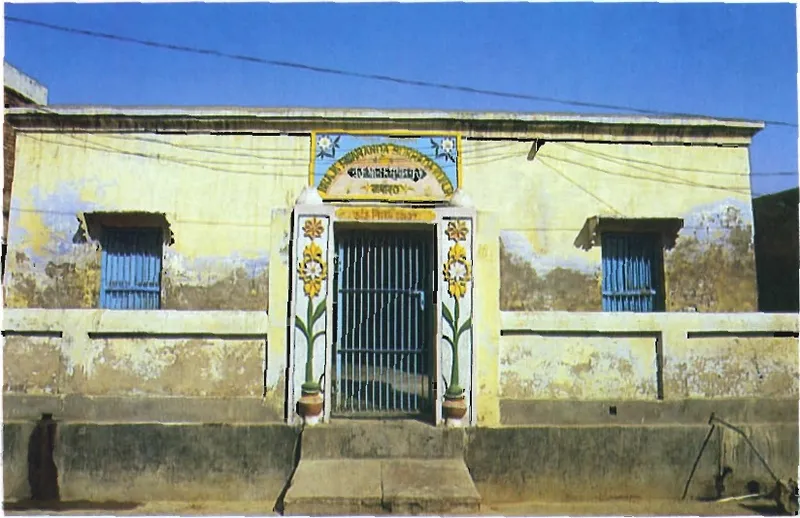
Bhaktivinoda Ṭhākura's bhajana-kuṭī (Rādhā-kuṇḍa)
भक्तिविनोद ठाकुर की भजन-कुटी (राधा-कुण्ड)Śrīla Bhaktivinoda Ṭhākura's bhajana-kuṭī, his house for chanting and prayer at Rādhā-kuṇḍa, stands a little way from Śrīla Raghunātha dāsa Gosvāmī's samādhi, according t …
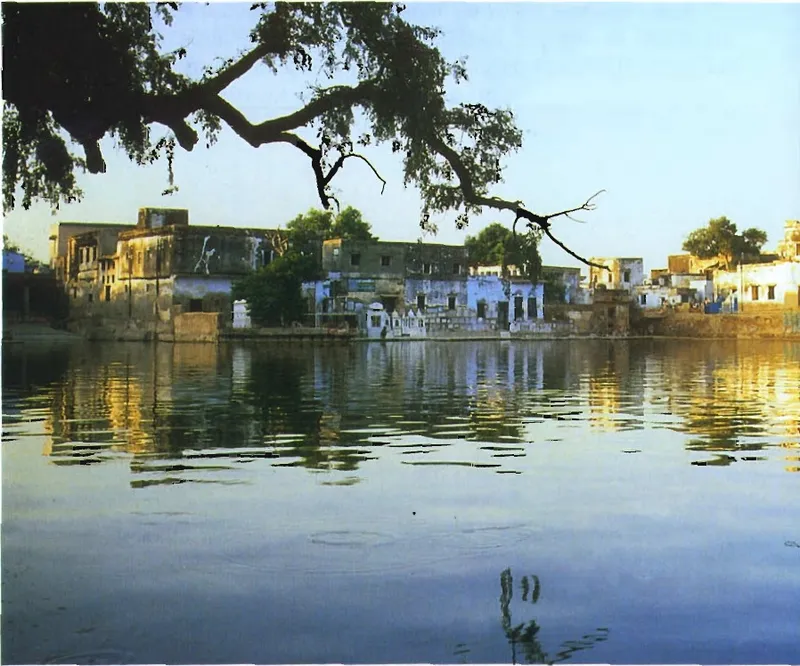
Rādhā-kuṇḍa
राधा-कुण्डRādhā-kuṇḍa is the lake of Śrī Rādhā at the foot of Govardhana Hill, in the village of Āriṭa.
Rādhā-kuṇḍa (village)
राधा-कुण्ड (गाँव)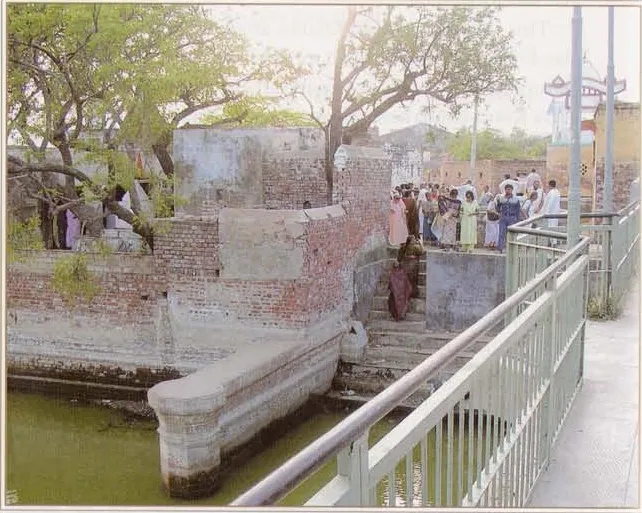
Kosī
कोसीKosī, also called Kosīvana, is a town on the Mathurā–Delhi road.
Questions and answers
Śrīla Prabhupāda gives 1935 in the opening words of the Eighth Canto and 1933 in a lecture of 1976. In a letter of 1976 he calls it his last meeting with his spiritual master, without a year.[3–5]
At Rādhā-kuṇḍa, as he says in letters of 1974 and 1976 and an address of 1975. He names no building; the guidebooks tie the instruction to the bhajana-kuṭī of Śrīla Bhaktivinoda Ṭhākura there.[1 +7]
At Kosī, before his initiation, during his spiritual master's parikramā of Vraja, and later at Rādhā-kuṇḍa, where he received the instruction to print books.[1–3, 6]
Śrīla Prabhupāda, not yet initiated, came to see the parikramā party at Kosī. When the others went to see the Śeṣaśāyī temple he stayed to hear his future spiritual master speak, and was marked as one eager to hear. The biography dates this to 28 October 1932.[6, 10]
When the bābājīs who had come out of curiosity stopped coming to his talks on the Upaniṣads, he said that they were living not in Rādhā-kuṇḍa but in Naraka-kuṇḍa. Śrīla Prabhupāda says he heard this himself.[15–18]
The guidebooks of 1986 and 1999 report Śrīla Bhaktisiddhānta Sarasvatī Ṭhākura's bed, walking stick and wooden shoes. The undated notes also list a chair and a table. That is how the house was when the books were written.[26 +5]
Sources
- Śrīla Prabhupāda, Letter to: Srutadeva, letter 74-10-24, October 24th 1974 · vedabase.io
- Śrīla Prabhupāda, Arrival Address, Los Angeles, 20 June 1975 · vedabase.io
- Śrīla Prabhupāda, Letter to: Syama Sundarji, letter 76-11-15 (to Sri Purusottama Math, Puri), November 15th 1976 · vedabase.io
- Śrīla Prabhupāda, Śrīmad-Bhāgavatam, Canto 8, Chapter 1 page, Śrīla Prabhupāda's opening words to the canto · vedabase.io
- Śrīla Prabhupāda, Śrīla Bhaktisiddhānta Sarasvatī Appearance Day Lecture, Māyāpur, 21 February 1976 · vedabase.io
- Śrīla Prabhupāda, Māyāpur Temple Inauguration with Śrīdhara Mahārāja, plus Mahāṁsa Sanyass Initiation, Māyāpur, 17 March 1973 · vedabase.io
- Śrīla Prabhupāda, Morning Walk, Los Angeles, 7 June 1976 · vedabase.io
- Śrīla Prabhupāda, Śrīmad-Bhāgavatam 6.3.20–23, Gorakhpur, 14 February 1971 · vedabase.io
- Śrīla Prabhupāda, Room Conversation, Columbus, 10 May 1969 · vedabase.io
- Satsvarūpa dāsa Gosvāmī, Śrīla Prabhupāda-līlāmṛta, vol. 1, ch. 4 · vedabase.io
- Śrīla Prabhupāda, Morning Walk, Māyāpur, 10 February 1976 · vedabase.io
- Śrīla Prabhupāda, Parikramā on the Way to Gokula, Vṛndāvana, 29 November 1971 · vedabase.io
- Śrīla Prabhupāda, Room Conversation, Vṛndāvana, 25 October 1972 · vedabase.io
- Śrīla Prabhupāda, Letter to: Syama Sundarji, letter 76-11-15, 15 November 1976 · vedabase.io
- Śrīla Prabhupāda, Morning Walk, Los Angeles, 7 June 1976 · vedabase.io
- Śrīla Prabhupāda, Lecture on Śrīmad-Bhāgavatam 6.3.20–23, Gorakhpur, 14 February 1971 · vedabase.io
- The Colour Guide to Rādhā-kuṇḍa (1999), Rājaśekhara dāsa Brahmacārī, PDF p. 49
- Govardhana Hill: India's Most Sacred Mountain (2001), Rajasekhara dasa Brahmacari, PDF p. 154
- Śrīla Prabhupāda, Morning Walk, Los Angeles, 7 June 1976 · vedabase.io
- Śrīla Prabhupāda, Room Conversation, Vṛndāvana, 5 September 1976 · vedabase.io
Show all 36 references
- Satsvarūpa dāsa Gosvāmī, Śrīla Prabhupāda-līlāmṛta, vol. 1, ch. 4, October–November 1935 · vedabase.io
- Vṛndāvana-Dhāma Ki Jaya! (c. 1986), by Dhruva Mahārāja dāsa, PDF p. 33
- Śrīla Prabhupāda-līlāmṛta 1.4 · vedabase.io
- Śrīla Prabhupāda-līlāmṛta 1.9 · vedabase.io
- Śrīla Prabhupāda, Lecture on Śrīmad-Bhāgavatam 6.3.20-23, Gorakhpur, 14 February 1971 · vedabase.io
- The Colour Guide to Rādhā-kuṇḍa (1999), Rājaśekhara dāsa Brahmacārī, PDF p. 122
- The Colour Guide to Rādhā-kuṇḍa (1999), Rājaśekhara dāsa Brahmacārī, PDF p. 123
- the undated parikramā notes Rādhā-kuṇḍa, ¶101
- the undated parikramā notes Rādhā-kuṇḍa, ¶102
- Vṛndāvana-Dhāma Ki Jaya! (c. 1986), by Dhruva Mahārāja dāsa, PDF p. 32
- The Colour Guide to Rādhā-kuṇḍa (1999), Rājaśekhara dāsa Brahmacārī, PDF p. 124
- The Colour Guide to Rādhā-kuṇḍa (1999), Rājaśekhara dāsa Brahmacārī, PDF p. 125
- Vṛndāvana-Dhāma Ki Jaya! (c. 1986), by Dhruva Mahārāja dāsa, PDF p. 31
- the undated parikramā notes Rādhā-kuṇḍa, ¶100
- Śrī Vraja-maṇḍala Parikramā (2007), PDF p. 95
- Śrī Vraja-maṇḍala Parikramā (2007), PDF p. 101
Further sources
- Śrīla Prabhupāda: letter to Srutadeva, 24 October 1974; arrival address, Los Angeles, 20 June 1975; letter to Syama Sundarji, 15 November 1976; Śrīmad-Bhāgavatam, Canto 8, opening words; lectures and addresses of 1971, 1973 and 1976; conversations of 1969, 1971, 1972 and 1976 (BBT).
- Satsvarūpa dāsa Goswami, Śrīla Prabhupāda-līlāmṛta, vol. 1, chapters 4 and 18 (BBT): the biographer's words.
- The Colour Guide to Rādhā-kuṇḍa (1999); Śrī Vraja-maṇḍala Parikramā (2007); Vṛndāvana-Dhāma Ki Jaya! (c. 1986); undated parikramā notes Rādhā-kuṇḍa.