Pīpaleśvara Mahādeva
पीपलेश्वर महादेव Hindi name proposed
Also called Pippaleśvara
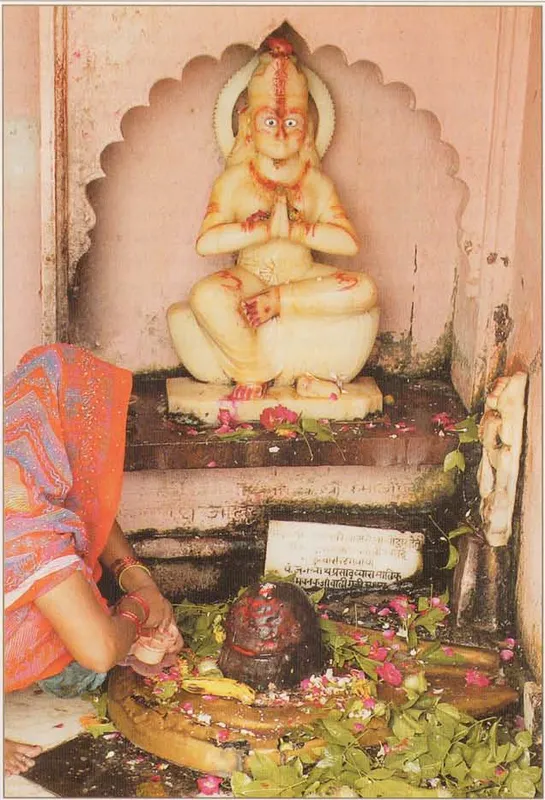
- What it is
- Pīpaleśvara Mahādeva, also written Pippaleśvara, is a shrine of Lord Śiva near Viśrāma-ghāṭa in Mathurā.
- Visiting
- Śrī Vraja-maṇḍala Parikramā (2007) marks Pīpaleśvara Mahādeva on its map of Mathurā and prints a photograph of it; Vṛndāvana-Dhāma Ki Jaya!
In short
Pīpaleśvara Mahādeva, also written Pippaleśvara, is a shrine of Lord Śiva near Viśrāma-ghāṭa in Mathurā. Two guidebooks show it in photographs, and F. S. Growse found a temple of the same name at the Sringār Ghāṭ, south of Viśrānti, in 1883.[1 +3] On Mathurā's ten-mile parikramā the guidebook Śrī Vraja-maṇḍala Parikramā (2007) lists it before the darśanas of Veṇī-Mādhava and Rāmeśvara.[2 +1] The guidebooks call it one of the protector Śivas of Mathurā, which the older texts do not say (see below). The Varāha Purāṇa ends the walk around Mathurā, beside Viśrānti, with a god of a similar name, Pippalādeśvara, but no source says that he is this Deity.[6]
Key facts
| Kind | temple |
|---|---|
| Region · area | Mathurā |
| Ācāryas | Śrīla Nārāyaṇa Bhaṭṭa Gosvāmī |
Visiting today
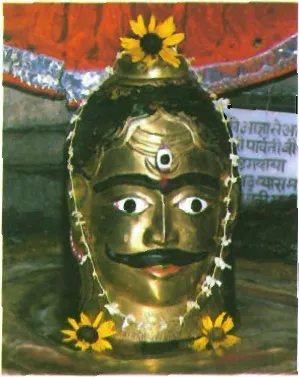
Śrī Vraja-maṇḍala Parikramā (2007) marks Pīpaleśvara Mahādeva on its map of Mathurā and prints a photograph of it; Vṛndāvana-Dhāma Ki Jaya! (c. 1986) shows the liṅga with a metal face mask.[1 +2] On the ten-mile parikramā the first book lists, after Pīpaleśvara, darśanas of Veṇī-Mādhava, Rāmeśvara, Dāūjī, Madana-mohana, Tinduka-tīrtha, Sūrya-ghāṭa and Dhruva-ṭīlā, and then Sapta-ṛṣi-ṭīlā. Its present state has not been checked.[2 +1]
Location
| Where it is | 'near Viśrāma-ghāṭa, in the eastern part of Mathurāpurī'[11] just south of Viśrama-ghāṭa[12] |
|---|
Nearby places
Viśrāma-ghāṭa
Pictures
1 pictures
History
In 1883 F. S. Growse recorded a temple of Pipalesvar Mahādeva at the Sringār Ghāṭ, a newer ghāṭ south of Viśrānti, between the Jog Ghāṭ and the Prāg Ghāṭ, Prayāga-tīrtha.[4]
Where the sources differ
In the Varāha Purāṇa the walk around Mathurā ends at Viśrānti.
In the Varāha Purāṇa the walk around Mathurā ends at Viśrānti. The pilgrim bathes there and offers water to the forefathers, walks round Gataśrama and bows down to Him, prays to the goddess Sumaṅgalā for the success of his pilgrimage, and then goes to "the god Pippalādeśvara", worshipped by the sage Pippalāda (summarised here, not translated). The next lines are hard to construe in the available text.[6]
विश्रान्तिसंज्ञके स्नानं कृत्वा च पितृतर्पणम् ।। गतश्रमं परिक्रम्य स्तुत्वा दृष्ट्वा प्रणम्य च ॥ 65 ॥
सुमङ्गलां ततो गच्छेद्यात्रासिद्धिं प्रसादयेत् ।। सर्वमङ्गलमांगल्ये शिवे सर्वार्थसाधिके ॥ 66 ॥
यात्रेयं त्वत्प्रसादेन सफला मे भवत्विति ।। पिप्पलादेश्वरं देवं पिप्पलादेन पूजितम् ॥ 67 ॥
विश्रान्तस्तु परिक्रम्य त्रातस्तत्र महातपाः ।। उपलिप्य ततस्तस्य शीर्षोपरि महच्छिवम् ॥ 68 ॥
स्वनाम्ना चिह्नितं स्थाप्य तदा यात्राफलं लभेत्
viśrāntisaṁjñake snānaṁ kṛtvā ca pitṛtarpaṇam
gataśramaṁ parikramya stutvā dṛṣṭvā praṇamya ca
sumaṅgalāṁ tato gacchedyātrāsiddhiṁ prasādayet
sarvamaṅgalamāṁgalye śive sarvārthasādhike
yātreyaṁ tvatprasādena saphalā me bhavatviti
pippalādeśvaraṁ devaṁ pippalādena pūjitam
viśrāntastu parikramya trātastatra mahātapāḥ
upalipya tatastasya śīrṣopari mahacchivam
svanāmnā cihnitaṁ sthāpya tadā yātrāphalaṁ labhet
Śrīla Nārāyaṇa Bhaṭṭa Gosvāmī's Vraja-bhakti-vilāsa follows the same order. Among the Deities inside Mathurā it lists, after Viśrānti-tīrtha and the path round Gataśrama, the goddess Sumaṅgalā and beside her a Viṣṇu image called Pippalādeśvara. For the circuit of Mathurā it gives a prayer to Him as Viṣṇu, lord of Mathurā-maṇḍala, and Keśava, to be said six times with six obeisances (summarised here, not translated).[8 +1]
पिप्पलादेश्वरं विष्णुमूर्त्तिं संस्थापयेदजः ॥ ७८ ॥ ततो पिप्पलादेश्वरप्रार्थनामन्त्रः— पिप्पलादेश्वराख्याय विष्णवे प्रभविष्णवे । मथुरामण्डलेशाय नमस्ते केशवाय च ॥ इति मन्त्रं षडावृत्त्या प्रणतीं षट् समाचरेत् ॥ ७९ ॥
pippalādeśvaraṁ viṣṇumūrttiṁ saṁsthāpayedajaḥ
78
tato pippalādeśvaraprārthanāmantraḥ— pippalādeśvarākhyāya viṣṇave prabhaviṣṇave
mathurāmaṇḍaleśāya namaste keśavāya ca
iti mantraṁ ṣaḍāvṛttyā praṇatīṁ ṣaṭ samācaret || 79 ||
The names are similar and both stand beside Viśrāma-ghāṭa, but no source says that Pippalādeśvara is the Pīpaleśvara Mahādeva of the guidebooks, and the Vraja-bhakti-vilāsa calls its Deity a Viṣṇu image, not a Śiva (see below).[6 +2]
Accounts differ Whether the deity near Viśrāma-ghāṭa is a Śiva (Pīpaleśvara Mahādeva) or a Viṣṇu image (Pippalādeśvara), and whether the Pippalādeśvara of the Varāha and the Vraja-bhakti-vilāsa is the Pīpaleśvara of the guidebooks.
- Śrī Vraja-maṇḍala Parikramā (2007)Pīpaleśvara Mahādeva (Śiva), an area-protector, near Viśrāma-ghāṭa.
- Vṛndāvana-Dhāma Ki Jaya! (c. 1986)Pippaleśvara, a śiva-liṅga, just south of Viśrama-ghāṭa.
- Growse, Mathurá (1883), printed p. 144A temple of Pipalesvar Mahādeva at the Sringār Ghāṭ, between the Jog and Prāg Ghāṭs.
- Varāha Purāṇa 160.65-69After Viśrānti, Gataśrama and Sumaṅgalā, the god Pippalādeśvara, worshipped by Pippalāda; whether he is a Śiva is not clear from the text (the obscure 'mahac chivam' of 160.68).
The wording of these accounts is our summary of the sources, not a published translation.
Which Śiva protects Mathurā: the guidebooks name four protector Śivas, with Pīpaleśvara in the east; the Varāha Purāṇa names Bhūteśvara and never speaks of four.
Accounts differ Which Śiva protects Mathurā (kṣetra-pāla), and whether Pīpaleśvara is one of four protectors.
- Śrī Vraja-maṇḍala Parikramā (2007)Pīpaleśvara is one of the four area-protectors (kṣetra-pālas) of Mathurā.
- Vṛndāvana-Dhāma Ki Jaya! (c. 1986)Four śiva-liṅgas protect Mathurā: Pippaleśvara (east), Gokarṇeśvara (north), Bhūteśvara (west), Raṅgeśvara (south).
- Varāha Purāṇa 160.31, 160.51, 160.63-64 and ch. 168Śiva Bhūteśvara is the kṣetra-pāla (160.31; ch. 168 tells how Śiva, 'Bhūtapati', became Mathurā's kṣetra-pāla); the word kṣetra-pa is also used for Rudra-mahālaya (160.51) and for the Śiva addressed as Avimukteśa at the end of the circuit (160.63-64); no group of four is mentioned, and Pippalādeśvara, visited afterwards, is not called a protector.
- Vraja-bhakti-vilāsa, printed p. 44A Śiva image called Kṣetrapāla heads the inner list, separate from the Viṣṇu image Pippalādeśvara.
References
12 references
- Śrī Vraja-maṇḍala Parikramā (2007), PDF p. 31
- Śrī Vraja-maṇḍala Parikramā (2007), PDF p. 43
- Vṛndāvana-Dhāma Ki Jaya! (c. 1986), by Dhruva Mahārāja dāsa, PDF p. 20
- Mathurá (1883), F. S. Growse, B.C.S., M.A. Oxon., C.I.E. (as the title page gives him, p. 144
- Śrī Vraja-maṇḍala Parikramā (2007), PDF p. 42
- Varāha Purāṇa, adhyāya 160, 'mathurā-parikrama-prādurbhāva', vv. 65-69, Sanskrit Wikisource
- Varāha Purāṇa, adhyāya 160, 'mathurā-parikrama-prādurbhāva', vv. 65-69, Sanskrit Wikisource
- Śrīla Nārāyaṇa Bhaṭṭa, Vraja-bhakti-vilāsa, second chapter, §42, the thirteen tīrtha-deities inside Mathurā, items 1-5, 1st ed., publ. Bābā Kṛṣṇadāsa, Kusuma-sarovara, Saṁvat 2008
- Śrīla Nārāyaṇa Bhaṭṭa, Vraja-bhakti-vilāsa, Mathurā circuit, verses numbered 78-79, 1st ed., publ. Bābā Kṛṣṇadāsa, Kusuma-sarovara, Saṁvat 2008
- Śrīla Nārāyaṇa Bhaṭṭa, Vraja-bhakti-vilāsa, Mathurā circuit, verses numbered 78-79, 1st ed., publ. Bābā Kṛṣṇadāsa, Kusuma-sarovara, Saṁvat 2008
- Śrī Vraja-maṇḍala Parikramā (2007), p. 58-59
- Vṛndāvana-Dhāma Ki Jaya! (c. 1986), by Dhruva Mahārāja dāsa, p. 2