Rādhā-Govinda Mandira (Rādhā-kuṇḍa)
राधा-गोविन्द मन्दिर (राधा-कुण्ड) Hindi name proposed
Also called Śrī Śrī Rādhā Govinda Maṇḍira (Rādhā-kuṇḍa), Śrī Rādhā-Govinda Temple (Rādhā-kuṇḍa), Rādhā-Govinda Mandir, Govindadeva Mandira (Rādhā-kuṇḍa)
On this page
In short
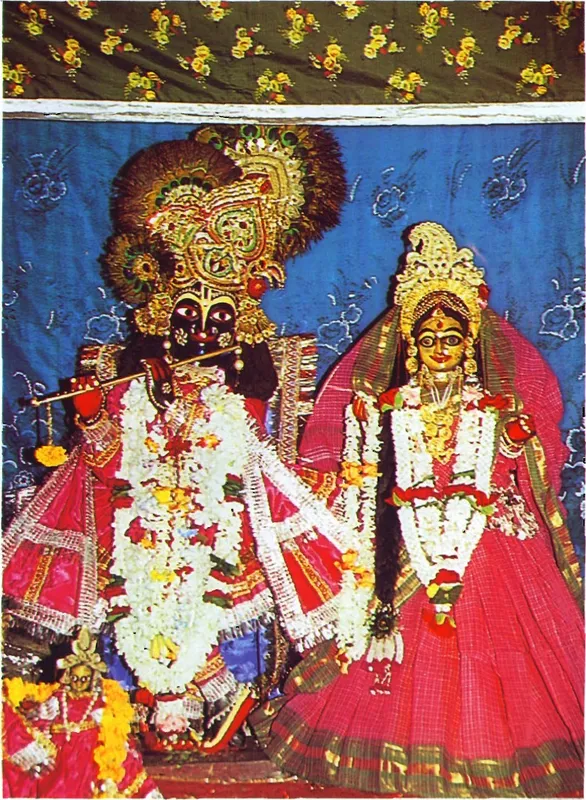
The Rādhā-Govinda Mandira, also called the Govindadeva temple, is a temple of Śrī Śrī Rādhā-Govinda in the village of Rādhā-kuṇḍa. According to The Colour Guide to Rādhā-kuṇḍa (1999), its Deities are pratibhū, representative forms of the Govinda whom Śrīla Rūpa Gosvāmī established in Vṛndāvana and who is now worshipped in Jaipur; the undated parikramā notes Rādhā-kuṇḍa count it among the seven Gosvāmī temples of Rādhā-kuṇḍa.[1 +1] Beside its entrance a small temple holds the Jihvā-śilā, the stone honoured as the tongue of Govardhana.[3 +4] No scripture and no statement of Śrīla Prabhupāda about this temple has been found.
Key facts
| Kind | temple |
|---|---|
| Region · area | Rādhā-kuṇḍa |
| Also part of | Rādhā-kuṇḍa (village) |
| Ācāryas | Śrīla Rūpa Gosvāmī |
History
According to the local tradition recorded in The Colour Guide (1999), it is one of the oldest temples at Rādhā-kuṇḍa, built by Rājā Mān Singh of Jaipur in 1591, one year after he finished the Govindajī temple in Vṛndāvana. The book itself gives this as hearsay, and no inscription or dated record has been found, so it is not certain.[1] Read more: The pratibhū Deities of Rādhā-kuṇḍa →
Visiting today
Śrī Vraja-maṇḍala Parikramā (2007) and two other guides place the shrine of the Jihvā-śilā near the entrance of the temple.[3 +4]
According to The Colour Guide (1999), the Deities' decorations of candana (sandalwood paste) are known all over Rādhā-kuṇḍa, and in the hot months Govindajī wears only a kaupīna, a simple loincloth, at maṅgala-ārati, the first worship of the morning. The book describes the custom as it was in 1999; it may have changed since.[1]
Where the sources differ
Accounts differ How the Jihvā-śilā (Govardhana's 'tongue') kept beside the Rādhā-Govinda temple was found.
- Śrī Vraja-maṇḍala Parikramā (2007)Dāsa Gosvāmī drew a govardhana-śilā out of Gopī-kūpa while drawing water; in a dream he learned it was Girirāja's tongue and was ordered to worship it; he built a temple for it near the entrance of the Govindadeva temple and had a new well dug at Lalitā-kuṇḍa.
- The Colour Guide to Rādhā-kuṇḍa (1999)Workers digging a well opposite Śrīla Mādhavendra Purī's baiṭhaka struck a rock that bled; Giri-Govardhana told Raghunātha in a dream that it was his tongue.
- Vṛndāvana-Dhāma Ki Jaya! (c. 1986)A worker digging a well struck a stone that bled; Kṛṣṇa appeared to Raghunātha in a dream and said it was Govardhana's tongue.
- the undated parikramā notes Rādhā-kuṇḍaRaghunātha had the ancient Gopī-kūpa dug out so that residents would not wash in Rādhā-kuṇḍa; the workmen struck a rock that bled; Girirāja appeared in a dream and said it was his own tongue, to be worshipped; Raghunātha installed it near the Govindadevji Mandir.
Location
| Where it is | North-west of the Gadādhara-Caitanya temple, in the north-eastern area[8] |
|---|
Nearby places
References
- The Colour Guide to Rādhā-kuṇḍa (1999), Rājaśekhara dāsa Brahmacārī, PDF p. 95
- the undated parikramā notes Rādhā-kuṇḍa, ¶38
- Śrī Vraja-maṇḍala Parikramā (2007), PDF p. 92
- Śrī Vraja-maṇḍala Parikramā (2007), PDF p. 94
- Vṛndāvana-Dhāma Ki Jaya! (c. 1986), by Dhruva Mahārāja dāsa, PDF p. 31
- the undated parikramā notes Rādhā-kuṇḍa, ¶47
- the undated parikramā notes Rādhā-kuṇḍa, ¶110
- Śrī Vraja-maṇḍala Parikramā (2007), p. 158-159