Raghunātha dāsa Gosvāmī's samādhi (Rādhā-kuṇḍa)
रघुनाथ दास गोस्वामी की समाधि (राधा-कुण्ड) Hindi name proposed
Also called Raghunātha dāsa Gosvāmī Samādhī, Śrīla Raghunātha Dāsa Gosvāmī samādhi
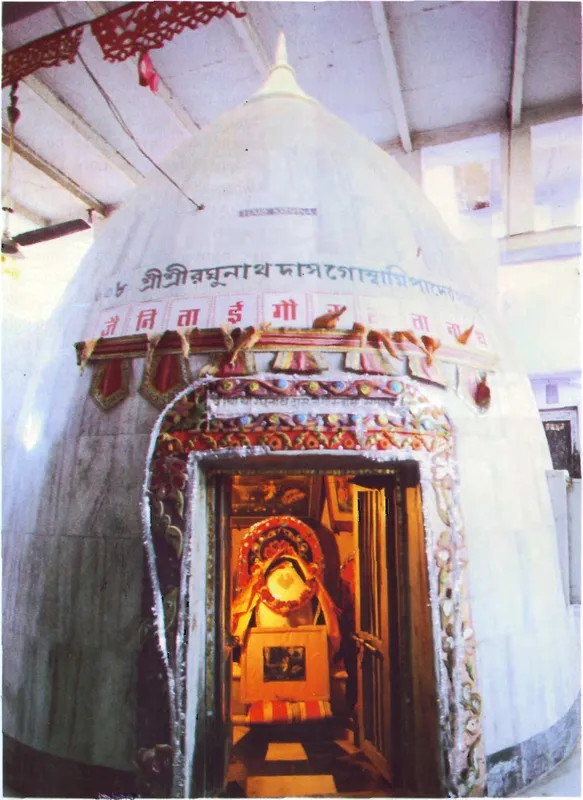
- What it is
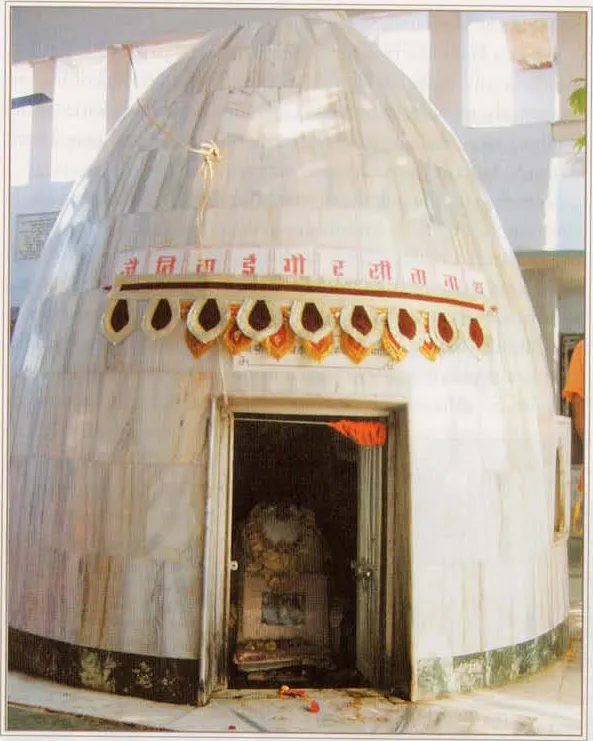
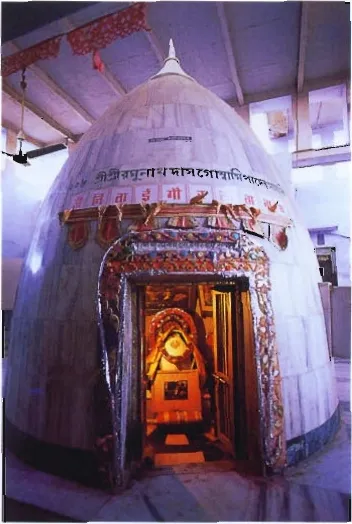
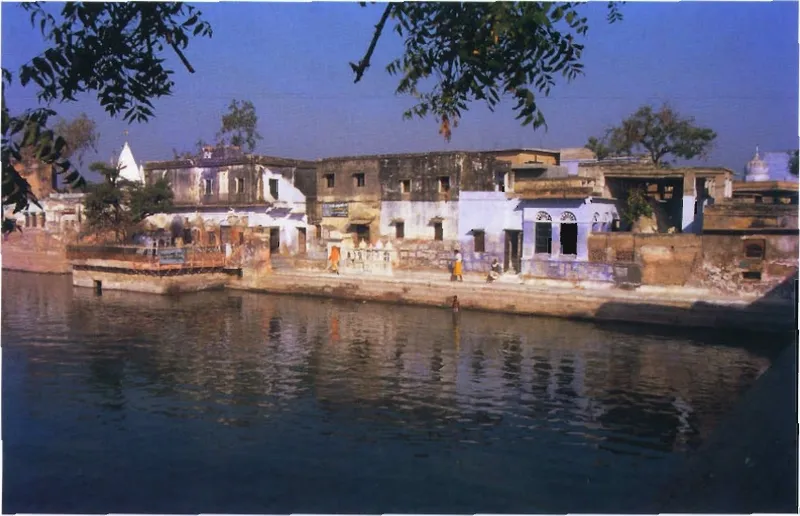
- This is the samādhi, the tomb or memorial shrine, of Śrīla Raghunātha dāsa Gosvāmī on the bank of Rādhā-kuṇḍa.
- Visiting
- The Colour Guide to Rādhā-kuṇḍa (1999), Govardhana Hill (2001) and the undated parikramā notes Rādhā-kuṇḍa place the samādhi on the bank of Rādhā-kuṇḍa where he sat for his daily chanting, in or …
In short
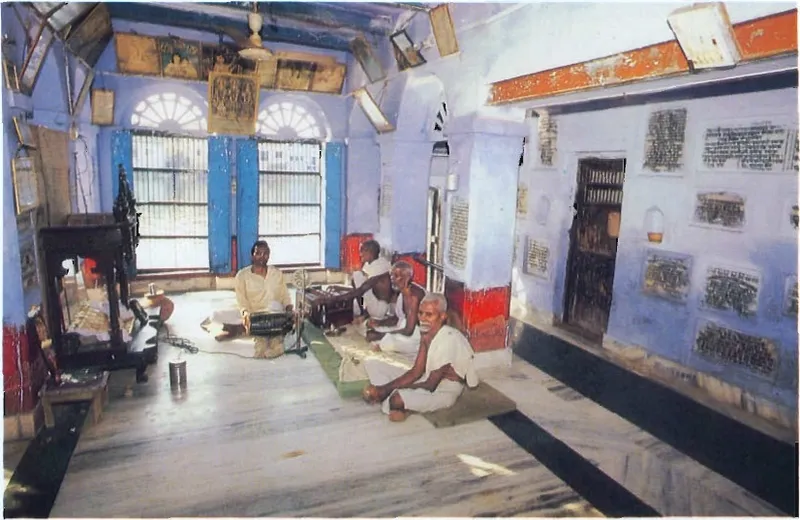
This is the samādhi, the tomb or memorial shrine, of Śrīla Raghunātha dāsa Gosvāmī on the bank of Rādhā-kuṇḍa. The guidebooks place it at the spot where he sat every day for his bhajana, chanting the holy name on his beads, beside the Rādhā-Gopīnātha Mandira near Śrīla Jāhnavā-devī's sitting place.[1 +4] Śrīla Prabhupāda said in 1970 that Śrīla Raghunātha dāsa Gosvāmī passed his days at Rādhā-kuṇḍa and that his tomb is still there.[1 +2] The sources differ on what the shrine holds and on the year of his passing.[1 +4]
Key facts
| Kind | samādhi |
|---|---|
| Region · area | Rādhā-kuṇḍa · Rādhā-Gopīnātha Mandira (Rādhā-kuṇḍa, by Jāhnavā's sitting place) |
| Ācāryas | Śrīla Raghunātha dāsa Gosvāmī, Śrīla Jīva Gosvāmī |
The Gosvāmīs and ācāryas
Śrīla Raghunātha dāsa Gosvāmī at Rādhā-kuṇḍa
Śrīla Prabhupāda writes that Śrīla Raghunātha dāsa Gosvāmī was most probably born in 1494 and that he lived a long time, residing for most of his life at Rādhā-kuṇḍa.[7 +4] The guidebooks say that he may have spent almost forty-eight years there; the undated parikramā notes Rādhā-kuṇḍa say "more than forty years".[1 +3] Read more: Śrīla Raghunātha dāsa Gosvāmī's life at Rādhā-kuṇḍa →
In his own vows, the Sva-niyama-daśaka, he writes that he lives at the kuṇḍa of the Queen, Śrī Rādhā, and by the best of hills, and that at the proper time he will die at that dear lake in front of Śrīla Jīva Gosvāmī and the others (summarised here, not translated).[1 +2]
According to the Bhakti-ratnākara, when Śrīla Jāhnavā-devī came to Rādhā-kuṇḍa, she found him slowly chanting the holy name on a lonely bank of the kuṇḍa, very thin and shining like the sun (summarised here, not translated).[15]
Śrīla Prabhupāda writes, citing the Gaura-gaṇoddeśa-dīpikā (186), that Śrīla Raghunātha dāsa Gosvāmī was formerly the gopī Rasa-mañjarī, and that sometimes he is said to be Rati-mañjarī.[1 +4]
Śrīla Prabhupāda
In a talk in Calcutta on 2 September 1970, Śrīla Prabhupāda spoke of this place …
In a talk in Calcutta on 2 September 1970, Śrīla Prabhupāda spoke of this place:[6]
Names this place“after Lord Caitanya's disappearance he went to Vṛndāvana to associate with the other Gosvāmīs, and he remained mostly at Rādhā-kuṇḍa, and he passed his days at Rādhā-kuṇḍa. His tomb is there still in Rādhā-kuṇḍa and he has got established a temple, that is Raghunātha Dāsa Gosvāmī's temple.”
Śrīla Prabhupāda, Vaiṣṇava Calendar Description conversation, Calcutta, 2 September 1970 · vedabase.io
He did not say whether the tomb holds the body, the ashes or flowers, and he did not name the temple he mentions.[6]
Songs
Śrīla Raghunātha dāsa Gosvāmī's Sva-niyama-daśaka, his ten vows, is in the song book; its ninth verse, shown above, is his wish …
Śrīla Raghunātha dāsa Gosvāmī's Sva-niyama-daśaka, his ten vows, is in the song book; its ninth verse, shown above, is his wish to live and die at Rādhā-kuṇḍa.[14 +1]
Visiting today
The Colour Guide to Rādhā-kuṇḍa (1999), Govardhana Hill (2001) and the undated parikramā notes Rādhā-kuṇḍa place the samādhi on the bank of Rādhā-kuṇḍa where he sat for his daily chanting, in or beside the compound of the Rādhā-Gopīnātha temple near Śrīla Jāhnavā-devī's sitting place.[1 +4] The Colour Guide (1999) and Govardhana Hill (2001) report a twenty-four-hour kīrtana, an unbroken chanting of the holy names, held next to the samādhi; the 1999 book says it had gone on for many decades.[1 +2]
According to the Bengali Vṛndāvana-kathā (1920), Śrīla Raghunātha dāsa Gosvāmī's samādhi is at the Mānasa-pāvana-ghāṭa of Rādhā-kuṇḍa, and a festival is held there every year on the twelfth day of the bright fortnight of Āśvina. Its photograph shows a single domed shrine. Whether that shrine is this one or the Teen Gosvāmī Samādhi is not settled.[18]
Location
| Where it is | On the banks of Rādhā-kuṇḍa where he sat for bhajana.[20] Adjacent to the Gopīnātha temple; map key 8 at the north-east corner of Rādhā-kuṇḍa[21] |
|---|
Nearby places
Rādhā-Gopīnātha Mandira (Rādhā-kuṇḍa, by Jāhnavā's sitting place) · Rādhā-kuṇḍa · Jāhnavā-devī's baiṭhaka
Pictures
5 pictures
Where the sources differ
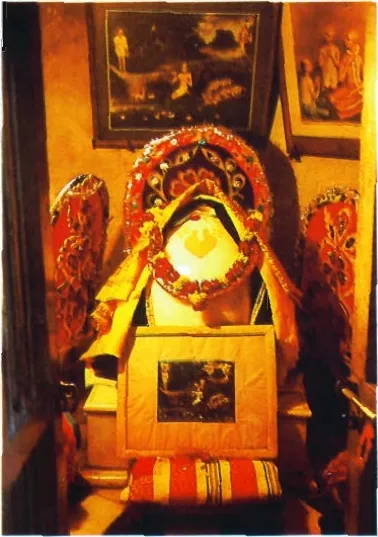
What the shrine holds and where his remains lie: the 1999 and 2001 guidebooks say that his body was cremated and, by a tradition they record, that Śrīla Jīva Gosvāmī placed the ashes here, which is not certain, while the 2007 guidebook calls the shrine a puṣpa-samādhi, a memorial with flowers.[1 +3]
Accounts differ What the samādhi at Rādhā-kuṇḍa holds, and where Śrīla Raghunātha dāsa's remains are
- The Colour Guide to Rādhā-kuṇḍa (1999) p. 87 printedhis body was cremated and Śrīla Jīva Gosvāmī had the ashes placed in samādhi at this very spot
- The Colour Guide to Rādhā-kuṇḍa (1999) pp. 94-95 printed (Teen Gosvāmī Samādhi)the three Gosvāmīs were cremated at the Teen Gosvāmī site; a portion of the ashes is kept there and other portions were entombed elsewhere
- Śrī Vraja-maṇḍala Parikramā (2007)this is his puṣpa-samādhi (flower-samādhi); a samādhi of Śrīla Raghunātha dāsa is also among the three at the Teen Gosvāmī Samādhi
- Śrīla Prabhupāda, Calcutta 2 Sep 1970'His tomb is there still in Rādhā-kuṇḍa' (no detail)
Whether the three Gosvāmīs of the Teen Gosvāmī Samādhi were cremated at Rādhā-kuṇḍa, and where their remains lie, is told differently and is not certain; the accounts are set side by side on the Teen Gosvāmī Samādhi page.[1 +2]
When Śrīla Raghunātha dāsa Gosvāmī passed away, and on which day: the guidebooks give 1583, but the year is not certain.[1 +3]
Accounts differ When Śrīla Raghunātha dāsa Gosvāmī disappeared, and on which tithi
- The Colour Guide to Rādhā-kuṇḍa (1999) p. 87 printed, the undated parikramā notes Rādhā-kuṇḍa, Govardhana Hill: India's Most Sacred Mountain (2001) p. 142in 1583
- The Colour Guide to Rādhā-kuṇḍa (1999) p. 104 printed'Some scholars have given the date of 1571, while others have suggested 1583'; transfer documents of 1576 make 1583 'quite possible'
- The Colour Guide to Rādhā-kuṇḍa (1999) p. 94 printed (Teen Gosvāmī Samādhi)on Āśvina-śukla dvādaśī in the month of Dāmodara; Śrīla Raghunātha Bhaṭṭa 1579, Śrīla Kṛṣṇadāsa Kavirāja 1582, Śrīla Raghunātha dāsa 1583
- Vṛndāvana-Dhāma Ki Jaya! (c. 1986) p. 18 printed, in a passage it attributes to the purport of CC Ādi 10.158all three left this world on the Dvādaśī of the waxing moon in the month of Kārttika, in different years; this sentence is not in Śrīla Prabhupāda's purport to CC Ādi 10.158
Accounts differ Śrīla Raghunātha dāsa's identity in Kṛṣṇa's pastimes as the sources give it
- Śrīla Prabhupāda, CC Ādi 10.91 purport (citing Gaura-gaṇoddeśa-dīpikā 186)formerly the gopī Rasa-mañjarī; sometimes said to be Rati-mañjarī
- Gaura-gaṇoddeśa-dīpikā (Śrīla Kavi-karṇapūra) v.186, Grantha Mandira text Gaura-gaṇoddeśa-dīpikāhis former name is Rasa-mañjarī; some call him Śrīmatī Rati-mañjarī; some call him Bhānumatī, which the verse calls a difference of name
- The Colour Guide to Rādhā-kuṇḍa (1999) p. 87 printed and Govardhana Hill: India's Most Sacred Mountain (2001) p. 142Rāsa-mañjarī (spelled with long ā); sometimes Rati-mañjarī
- the undated parikramā notes Rādhā-kuṇḍa and The Colour Guide to Rādhā-kuṇḍa (1999) p. 102 printedRati Mañjarī (no other name given)
More on this place
Śrīla Raghunātha dāsa Gosvāmī's life at Rādhā-kuṇḍa
References
21 references
- The Colour Guide to Rādhā-kuṇḍa (1999), Rājaśekhara dāsa Brahmacārī, PDF p. 91
- The Colour Guide to Rādhā-kuṇḍa (1999), Rājaśekhara dāsa Brahmacārī, PDF p. 108
- the undated parikramā notes Rādhā-kuṇḍa, ¶43
- Govardhana Hill: India's Most Sacred Mountain (2001), Rajasekhara dasa Brahmacari, PDF p. 156
- Śrī Vraja-maṇḍala Parikramā (2007), PDF p. 91
- Śrīla Prabhupāda, Vaiṣṇava Calendar Description conversation, Calcutta, 2 September 1970 · vedabase.io
- Śrīla Prabhupāda, Śrī Caitanya-caritāmṛta, Ādi-līlā 10.91, purport (quoting Bhaktisiddhānta Sarasvatī's Anubhāṣya for the birth year) · vedabase.io
- The Colour Guide to Rādhā-kuṇḍa (1999), Rājaśekhara dāsa Brahmacārī, PDF p. 88
- the undated parikramā notes Rādhā-kuṇḍa, ¶41
- Govardhana Hill: India's Most Sacred Mountain (2001), Rajasekhara dasa Brahmacari, PDF p. 155
- Śrīla Prabhupāda, Śrī Caitanya-caritāmṛta, Ādi-līlā 10.91, purport · vedabase.io
- The Colour Guide to Rādhā-kuṇḍa (1999), Rājaśekhara dāsa Brahmacārī, PDF p. 102
- the undated parikramā notes Rādhā-kuṇḍa, ¶57
- Śrīla Raghunātha dāsa Gosvāmī, Sva-niyama-daśaka v.9 (Grantha Mandira Stavāvalī, section (12))
- Śrīla Narahari Cakravartī, Bhakti-ratnākara, Eleventh Wave, 1912 ed. printed p. 668, 2nd ed., 1912
- Gaura-gaṇoddeśa-dīpikā, v.186
- Gurau Mantre Nāmni Prabhuvara (Sva-niyama-daśakam) (Raghunātha dāsa Gosvāmī (as the song book credits it)) · song book
- Vṛndāvana-kathā, chapter 7 (saptama pariccheda), section on Raghunātha dāsa Gosvāmī, printed p. 109; photograph on the following plate
- the undated parikramā notes Vṛndāvana, ¶278
- The Colour Guide to Rādhā-kuṇḍa (1999), Rājaśekhara dāsa Brahmacārī, p. 84
- Śrī Vraja-maṇḍala Parikramā (2007), p. 156-157