Mānasa-pāvana-ghāṭa
मानस-पावन-घाट Hindi name proposed
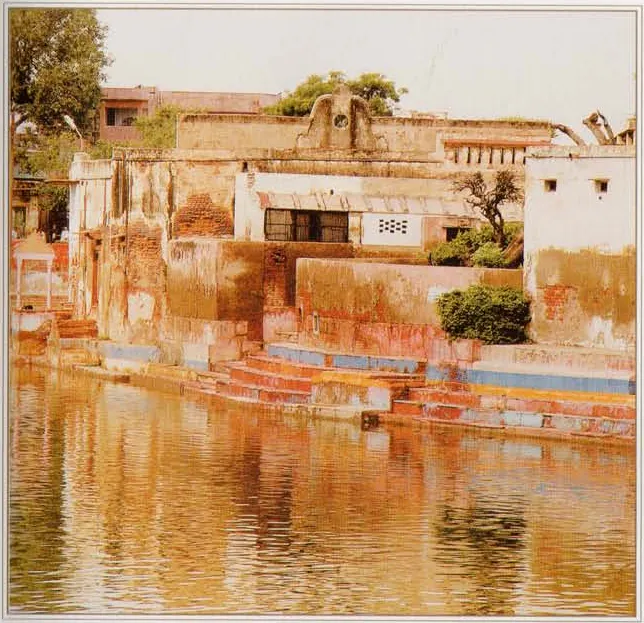
- What it is
- Mānasa-pāvana-ghāṭa is a bathing ghāṭa on the north side of Śyāma-kuṇḍa, Kṛṣṇa's kuṇḍa beside Rādhā-kuṇḍa.
- Visiting
- Śrī Vraja-maṇḍala Parikramā (2007) places the ghāṭa on the north-western side of Śyāma-kuṇḍa and marks it on its map as steps running down to the water; it says that Pañca Pāṇḍava-ghāṭa is joined to …
- Places here
- Pilu bush (Mānasa-pāvana-ghāṭa)
In short
Mānasa-pāvana-ghāṭa is a bathing ghāṭa on the north side of Śyāma-kuṇḍa, Kṛṣṇa's kuṇḍa beside Rādhā-kuṇḍa. The Bhakti-ratnākara places it at the kuñja (grove) of Kṛṣṇa's friend Subala and calls it very dear to Śrī Rādhikā; the five Pāṇḍavas, it says, stay there in the form of trees.[1 +1] Śrīla Kṛṣṇadāsa Kavirāja Gosvāmī's Govinda-līlāmṛta names Mānasa-pāvana as the bathing place where Rādhā bathes every day with Her friends.[3 +2] The Bhakti-ratnākara also tells of Śrīla Raghunātha dāsa Gosvāmī, Śrīla Sanātana Gosvāmī, Śrīla Śrīnivāsa Ācārya and Śrīla Narottama dāsa Ṭhākura at this ghāṭa.[2 +2]
Key facts
Why it is glorified
In the Govinda-līlāmṛta (7.114–115), the kuñja-hall Subalānandadā lies in the north-west of Kṛṣṇa's lake; Rādhā accepted it, and …
Śrī Rādhā's daily bath
In the Govinda-līlāmṛta (7.114–115), the kuñja-hall Subalānandadā lies in the north-west of Kṛṣṇa's lake; Rādhā accepted it, and its bathing place is Mānasa-pāvana. Here Rādhā bathes daily with Her friends in Kṛṣṇa's kuṇḍa, whose water is the honey of His lotus feet and which is as dear to Her as Kṛṣṇa (summarised here, not translated).[3 +2] The verses give no hour. In the midday pastimes of the same poem Rādhā and Her friends bathe in Kṛṣṇa's lake before worshipping the Sun, but there no ghāṭa is named.[10]
Śrīla Raghunātha dāsa Gosvāmī's Viśākhānandada-stotra (26) praises Rādhā as the one who bathes every day in the lake of the killer of Ariṣṭa, without naming the ghāṭa (summarised here, not translated).[11] In the twenty verses on the origin of the two kuṇḍas in Śrīla Viśvanātha Cakravartī Ṭhākura's comment on Śrīmad-Bhāgavatam 10.36.15, Rādhā promises to come to bathe in Kṛṣṇa's pond and blesses all who love it:[12]
rādhābravīd aham api sva-sakhībhir etya snāsyāmy ariṣṭa-śata-mardanam astu tasya
yo’riṣṭa-mardana-sarasy uru-bhaktir atra snāyād vasan mama sa eva mahā-priyo’stu ||xix||
Rādhā replied, ‘I will come to bathe in Your pond as well, even though You may kill hundreds of Ariṣṭa demons here. In the future, anyone who has intense devotion for this lake, which is on the spot where You chastised Ariṣṭāsura, and who bathes or resides here is sure to become very dear to Me.’
Translation: Śrīla Prabhupāda's disciples (BBT)Śrīla Prabhupāda writes that as Śrīmatī Rādhikā is very dear to Kṛṣṇa, Her ponds, Śyāma-kuṇḍa and Rādhā-kuṇḍa, are also very dear to Him.[14]
The Gosvāmīs and ācāryas
The Pāṇḍava trees
According to the Bhakti-ratnākara, an old tree on the bank of Śyāma-kuṇḍa was to be cut down while the two kuṇḍas were being dug. King Yudhiṣṭhira then told Śrīla Raghunātha dāsa Gosvāmī in a dream that the five Pāṇḍavas were there in the form of trees, and asked him to go to Mānasa-pāvana-ghāṭa in the morning and protect them. At daybreak Śrīla Raghunātha dāsa Gosvāmī saw five trees in one tree, and the cutting was stopped.[6 +1] The trees have their own page.
The tiger
The same book tells that Śrīla Sanātana Gosvāmī once came from Vṛndāvana to Śrī Gopāla Bhaṭṭa Gosvāmī's lodging at the kuṇḍas and went to bathe at Mānasa-pāvana-ghāṭa. There he saw a tiger drinking, which passed close by Śrīla Raghunātha dāsa Gosvāmī as he sat absorbed in meditation and went back to the forest. Śrīla Sanātana Gosvāmī then asked him to live in a hut.[7] Read more: Śrīla Raghunātha dāsa Gosvāmī's life at Rādhā-kuṇḍa →
Other ācāryas
- Śrīla Śrīnivāsa Ācārya and Śrīla Narottama dāsa Ṭhākura bathed at this ghāṭa in an ecstasy of love on their pilgrimage, according to the Bhakti-ratnākara.[2]
- According to the Bengali Vṛndāvana-kathā (1920), Śrīla Raghunātha dāsa Gosvāmī's samādhi is at the Mānasa-pāvana-ghāṭa, where a festival was held every year on the twelfth day of the bright fortnight of Āśvina. Whether it means his own samādhi or the Teen Gosvāmī Samādhi, drawn beside this ghāṭa on a guidebook map of 2007, is not settled.[15 +2]
- The Colour Guide to Rādhā-kuṇḍa (1999) places Śrīla Viśvanātha Cakravartī Ṭhākura's bhajana-kuṭī just next to the top of the ghāṭa steps; no older source ties him to the ghāṭa.[9 +1]
Visiting today
Śrī Vraja-maṇḍala Parikramā (2007) places the ghāṭa on the north-western side of Śyāma-kuṇḍa and marks it on its map as steps running down to the water; it says that Pañca Pāṇḍava-ghāṭa is joined to it.[5 +4] In the same book's description of the kuṇḍas, a place made of jewels in the north-west of Śyāma-kuṇḍa, where, according to the book, Śrī Rādhikā bathes daily, lies just south of Subalānandada-kuñja; whether that place is this ghāṭa is not certain.[4]
According to The Colour Guide (1999), Śrīla Kṛṣṇadāsa Kavirāja Gosvāmī says that Śrī Rādhā and Her friends bathe here every day at noon.[8 +1] The book gives the Caitanya-caritāmṛta as its source, but the statement has been found only in his Govinda-līlāmṛta, without an hour.[3]
The pilu bush
At the top of the ghāṭa steps, next to Śrīla Viśvanātha Cakravartī Ṭhākura's kuṭī, The Colour Guide (1999) shows a pilu bush, a green-leafed shrub, and records a local tradition that the gopīs hang their clothes on it while they bathe in the kuṇḍa. No older source mentions the bush, so this is not certain.[9 +1] The pīlu is a plant of Vraja: the Caitanya-caritāmṛta tells that Śrīla Sanātana Gosvāmī sent dry pīlu fruits from Vṛndāvana to Śrī Caitanya Mahāprabhu, who gave them to His devotees.[20]
Location
| Where it is | North-western side of Śyāma-kuṇḍa (text); Detailed Map key 7 on steps running down to the water[23] On the banks of Śyāma-kuṇḍa; next to Viśvanātha Cakravartī's kuṭira.[24] |
|---|
Places at Mānasa-pāvana-ghāṭa
1 places
Nearby places
Śyāma-kuṇḍa (Rādhā-kuṇḍa) · Viśvanātha Cakravartī Ṭhākura's bhajana-kuṭī
Pictures
3 pictures
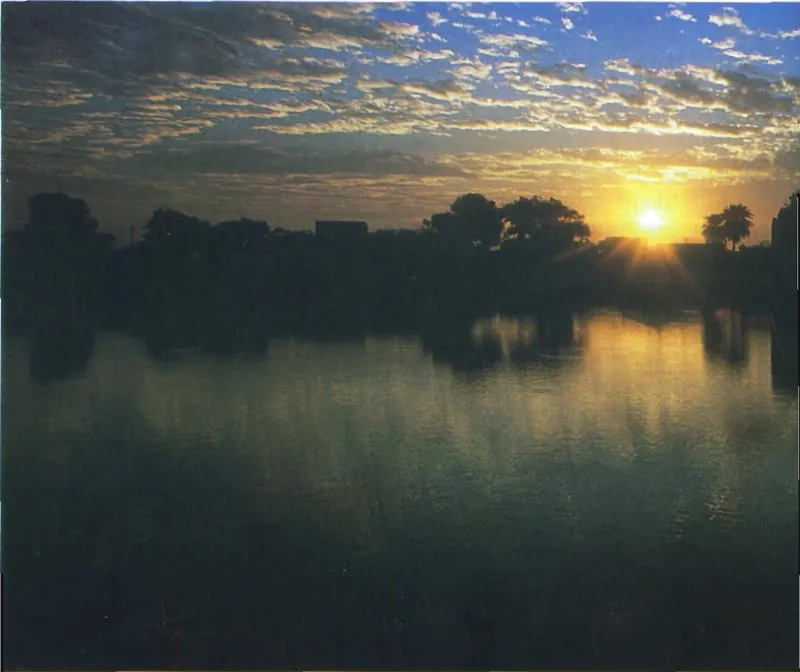
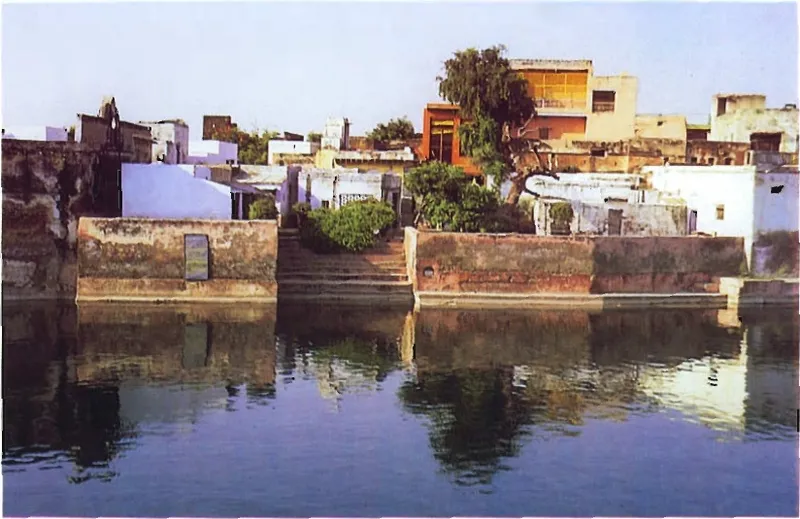
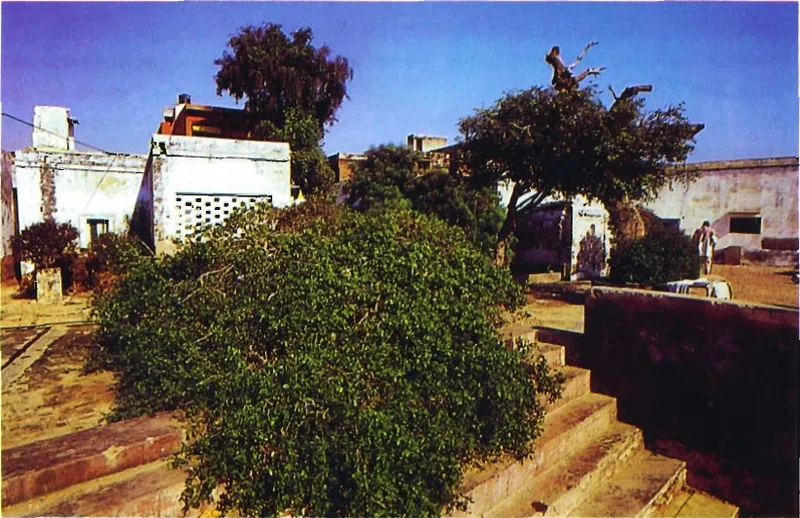
Where the sources differ
Who gives a blessing to those who bathe, and for which water: The Colour Guide (1999) says that Rādhārāṇī has promised that anyone who may bathe at this ghāṭa will receive Her own love for Kṛṣṇa; the older texts give such blessings for Rādhā-kuṇḍa or for Kṛṣṇa's lake as a whole.[9 +1]
Accounts differ Who gives the blessing for bathers, for which water, and what it promises.
- The Colour Guide to Rādhā-kuṇḍa (1999)Mānasa-pāvana-ghāṭa of Śyāma-kuṇḍa: Rādhārāṇī 'has said that anyone who bathes at this ghāṭa, will be blessed by Her to achieve the same level of love that She Herself has for Kṛṣṇa'.
- Śrīla Viśvanātha Cakravartī, twenty verses in the commentary on ŚB 10.36.15, verse xix (BBT English in the purport to ŚB 10.36.16)Kṛṣṇa's pond as a whole, the lake 'where You chastised Ariṣṭāsura': Rādhā says that anyone with intense devotion for it who bathes or resides there will become very dear to Her.
- Ādi-varāha, as quoted by Śrīla Jīva Gosvāmī and Vaṁśīdhara on ŚB 10.36.15Bathing in Ariṣṭa-kuṇḍa and Rādhā-kuṇḍa gives the fruit of the Rājasūya and Aśvamedha sacrifices (the Purāṇa's statement).
- Govinda-līlāmṛta 7.102, quoted in CC Madhya 18.12Rādhā-kuṇḍa (Rādhā's lake): whoever bathes in it even once attains Rādhā's love for Kṛṣṇa (the poet's statement).
Accounts differ At which ghāṭa the Pāṇḍava trees stood.
- Bhakti-ratnākara, Fifth Wave pp. 196, 199At Mānasa-pāvana-ghāṭa, north of Śyāma-kuṇḍa at Subala's kuñja; no Pañca Pāṇḍava-ghāṭa is named.
- Śrī Vraja-maṇḍala Parikramā (2007)The Pāṇḍavas disclosed themselves 'above' Pañca Pāṇḍava-ghāṭa, which is joined to Mānasa-ghāṭa; the trees were near Śrīla Raghunātha dāsa Gosvāmī's bhajana-kuṭī.
- The Colour Guide to Rādhā-kuṇḍa (1999)At Pañca-Pāṇḍava-ghāṭa ('Formerly standing here …'); the Arjuna tree is a few metres down from Pāṇḍava Ghāṭa, the Bhīma trunk in front of Śrīla Viśvanātha's kuṭīra (which stands, on its pages, just next to the pilu bush at the top of the steps of Mānasa-pāvana-ghāṭa).
The wording of these accounts is our summary of the sources, not a published translation.
Accounts differ The tiger episode near Śrīla Raghunātha dāsa Gosvāmī is told differently.
- Bhakti-ratnākara, Fifth Wave p. 196Sanātana, come from Vṛndāvana to Śrī Gopāla Bhaṭṭa's lodging, went to bathe at Mānasa-pāvana-ghāṭa and saw one tiger drink there and pass near the meditating Raghunātha; he then asked him to live in a hut.
- Śrī Vraja-maṇḍala Parikramā (2007)Sanātana, from a distance, saw a tiger and a tigress walk past Raghunātha, drink from the kuṇḍa and return; he had a leaf hut built for him.
- The Colour Guide to Rādhā-kuṇḍa (1999); the undated parikramā notes Rādhā-kuṇḍaTwo tigers drank from the kuṇḍa while Kṛṣṇa Himself stood guard over Raghunātha; Sanātana saw Kṛṣṇa, who smiled and disappeared.
- Vṛndāvana-Dhāma Ki Jaya! (c. 1986), caption of a Bengali paintingRaghunātha takes water from Śyāma-kuṇḍa while Kṛṣṇa protects him from tigers; Sanātana stands nearby.
Which plant was the brāhmaṇa of Kāśī who spoke with Śrīla Viśvanātha Cakravartī Ṭhākura: The Colour Guide (1999) says that the pilu bush here may have been that brāhmaṇa in a former life.[9 +1]
Accounts differ Which plant was the brāhmaṇa from Kāśī who spoke with Śrīla Viśvanātha Cakravartī Ṭhākura, and where it stands.
- The Colour Guide to Rādhā-kuṇḍa (1999)The pilu bush at the top of the steps of Mānasa-pāvana-ghāṭa, next to Śrīla Viśvanātha's bhajana-kuṭīra; Viśvanātha often discussed Rādhā-Kṛṣṇa-līlā with it.
- Śrī Vraja-maṇḍala Parikramā (2007)An old choharā tree at the entrance door of the Śrī Gadādhara-Caitanya temple at Pañca Pāṇḍava-ghāṭa 'disclosed to Śrī Viśvanātha Cakravartī Ṭhākura that it was actually a brāhmaṇa from Kāśī'.
More on this place
Śrīla Raghunātha dāsa Gosvāmī's life at Rādhā-kuṇḍa
References
24 references
- Śrīla Narahari Cakravartī, Bhakti-ratnākara, Fifth Wave (pañcama taraṅga), 1912 ed. p. 199, 2nd ed., 1912
- Śrīla Narahari Cakravartī, Bhakti-ratnākara, Fifth Wave, 1912 ed. p. 199, 2nd ed., 1912
- Śrīla Kṛṣṇadāsa Kavirāja Gosvāmī, Govinda-līlāmṛta, sarga 7, verses 114–115, after the editions of Haridas Das and Haridas Shastri
- Śrī Vraja-maṇḍala Parikramā (2007), PDF p. 88
- Śrī Vraja-maṇḍala Parikramā (2007), PDF p. 97
- Śrīla Narahari Cakravartī, Bhakti-ratnākara, Fifth Wave, 1912 ed. p. 196, lines 7-12, 2nd ed., 1912
- Śrīla Narahari Cakravartī, Bhakti-ratnākara, Fifth Wave, 1912 ed. p. 196, 2nd ed., 1912
- The Colour Guide to Rādhā-kuṇḍa (1999), Rājaśekhara dāsa Brahmacārī, PDF p. 18
- The Colour Guide to Rādhā-kuṇḍa (1999), Rājaśekhara dāsa Brahmacārī, PDF p. 116
- Śrīla Kṛṣṇadāsa Kavirāja Gosvāmī, Govinda-līlāmṛta, 8.83–8.86 (aṣṭamaḥ sargaḥ, midday pastimes), after the editions of Haridas Das and Haridas Shastri
- Śrīla Raghunātha dāsa Gosvāmī, Viśākhānandada-stotra, v.26, headed 'śrī-viśākhānandābhidha-stotram')
- Śrīla Viśvanātha Cakravartī Ṭhākura: commentary on ŚB 10.36.15, verse xix of the twenty verses, Bhagavata Vidya Pith edition, ed. Bhagavata Rishi and Krishna Shankar Shastri, 1996
- Śrīla Viśvanātha Cakravartī Ṭhākura: commentary on ŚB 10.36.15, verse xix of the twenty verses, Bhagavata Vidya Pith edition, ed. Bhagavata Rishi and Krishna Shankar Shastri, 1996
- Śrīla Prabhupāda, Śrī Caitanya-caritāmṛta, Ādi-līlā 7.18–19, purport · vedabase.io
- Vṛndāvana-kathā, chapter 7 (saptama pariccheda), section on Raghunātha dāsa Gosvāmī, printed p. 109; photograph on the following plate
- Śrī Vraja-maṇḍala Parikramā (2007), PDF p. 102
- The Colour Guide to Rādhā-kuṇḍa (1999), Rājaśekhara dāsa Brahmacārī, PDF p. 98
- The Colour Guide to Rādhā-kuṇḍa (1999), Rājaśekhara dāsa Brahmacārī, PDF p. 113
- The Colour Guide to Rādhā-kuṇḍa (1999), Rājaśekhara dāsa Brahmacārī, PDF p. 110
- Śrīla Kṛṣṇadāsa Kavirāja Gosvāmī, Śrī Caitanya-caritāmṛta, CC Antya-līlā 13.67, online edition · vedabase.io
- Śrīla Kṛṣṇadāsa Kavirāja Gosvāmī, Govinda-līlāmṛta, CC Madhya-līlā 18.12, online edition · vedabase.io
- The Colour Guide to Rādhā-kuṇḍa (1999), Rājaśekhara dāsa Brahmacārī, PDF p. 114
- Śrī Vraja-maṇḍala Parikramā (2007), p. 168-169
- The Colour Guide to Rādhā-kuṇḍa (1999), Rājaśekhara dāsa Brahmacārī, p. 112