Jāhnavā-devī's baiṭhaka
जाह्नवा देवी की बैठक Hindi name proposed
Also called Mā Jāhnavā Baiṭhāka
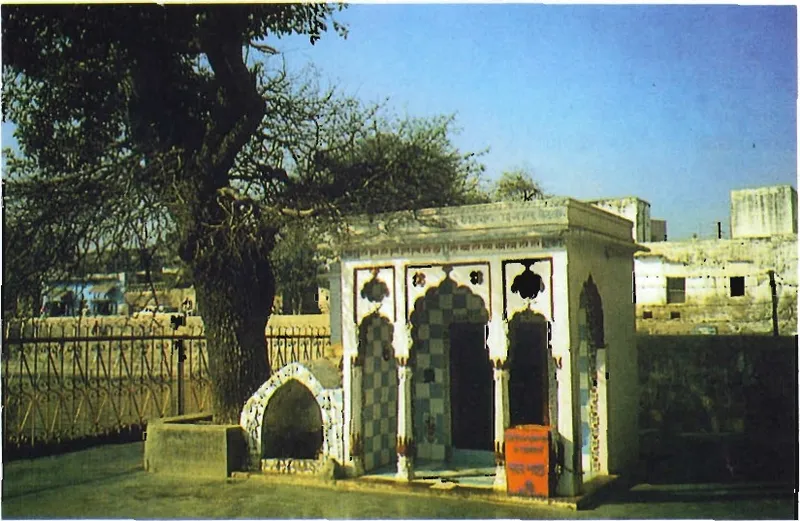
- What it is
- Jāhnavā-devī's baiṭhaka, her sitting place, is on the northern bank of Rādhā-kuṇḍa, with her ghāṭa (bathing steps) beside it.
- Visiting
- Śrī Vraja-maṇḍala Parikramā (2007) places her sitting place and her ghāṭa in the northern part of Rādhā-kuṇḍa, east of the Śyāmasundara temple.
In short
Jāhnavā-devī's baiṭhaka, her sitting place, is on the northern bank of Rādhā-kuṇḍa, with her ghāṭa (bathing steps) beside it. The guidebooks say that she sat here every day to chant during her stay at the kuṇḍa.[1 +7] According to the Bhakti-ratnākara, Śrīla Jāhnavā-devī, the wife of Śrī Nityānanda Prabhu, came to Rādhā-kuṇḍa at the request of Śrīla Raghunātha dāsa Gosvāmī, stayed three or four days, and one midday on the bank saw Kṛṣṇa with Śrī Rādhā and the sakhīs, Her companions.[2 +5] The book places her only "on the bank of the kuṇḍa"; the spot where she sat is known from the guidebooks.[1 +3]
Key facts
| Kind | baiṭhaka |
|---|---|
| Region · area | Rādhā-kuṇḍa |
| Also part of | Rādhā-kuṇḍa (village) |
| Ācāryas | Śrīla Jāhnavā Mātā (Jāhnavā-devī), Śrīla Raghunātha dāsa Gosvāmī, Śrīla Kṛṣṇadāsa Kavirāja Gosvāmī |
Traditional accounts
Anaṅga-mañjarī and the crystal bridge
Śrīla Kavi-karṇapūra's Gaura-gaṇoddeśa-dīpikā reports in verse 66 that some call Śrīla Jāhnavā-devī Anaṅga-mañjarī, and ends that verse by calling both of the views it gives right; Śrīla Prabhupāda cites this verse for her in his purport to Caitanya-caritāmṛta Ādi 11.21 (see "Who Anaṅga-mañjarī is" below). In verse 184 the same book gives the name Anaṅga-mañjarī to Śrī Gopāla Bhaṭṭa Gosvāmī.[11 +1]
The Colour Guide to Rādhā-kuṇḍa (1999) also calls Śrīla Jāhnavā-devī Anaṅga-mañjarī in Kṛṣṇa's pastimes, and adds a local tradition that in the unmanifest pastimes, the eternal pastimes hidden from ordinary sight, a crystal footbridge runs from her sitting place to Anaṅga-mañjarī's lotus-shaped kuñja (grove) in the middle of the kuṇḍa. The book names no source for the bridge, and none has been found, so it is not certain.[3 +5]
Two works of the ācāryas do describe a house of Anaṅga-mañjarī, her kuñja, in the kuṇḍa. Śrīla Kṛṣṇadāsa Kavirāja Gosvāmī's Govinda-līlāmṛta (7.100–101) sets a lotus-shaped house in the water, joined to the northern bank by a bridge, and Śrīla Viśvanātha Cakravartī Ṭhākura's Kṛṣṇa-bhāvanāmṛta (14.14) a house of moonstone in the middle of the lake, reached by a bridge from the north. Neither names Śrīla Jāhnavā-devī or a bridge of crystal (both summarised here, not translated).[15 +1]
The Gosvāmīs and ācāryas
Śrīla Narahari Cakravartī Ṭhākura tells the visit in the Eleventh Wave of his Bhakti-ratnākara.
Śrīla Jāhnavā-devī's visit
Śrīla Narahari Cakravartī Ṭhākura tells the visit in the Eleventh Wave of his Bhakti-ratnākara. When Śrīla Jāhnavā-devī was in Vṛndāvana, Śrīla Raghunātha dāsa Gosvāmī, who lived at Rādhā-kuṇḍa, rejoiced to hear of her coming but was too weak to travel. Devotees who had come from Govardhana and other places brought her his request. She told Śrī Gopāla Bhaṭṭa Gosvāmī and the others that she would go to Śrī-kuṇḍa in the morning, and went there by way of Bahulāvana.[5 +3]
She found him slowly chanting the holy name on a lonely bank of the kuṇḍa. Śrīla Kṛṣṇadāsa Kavirāja Gosvāmī went ahead and told him that she had come, and he went to meet her in tears; she saw him coming, very thin and shining like the sun.[6] The book says that she stayed three or four days, cooked with great care, offered the food to Kṛṣṇa and fed the Vaiṣṇavas of Vraja. The 1912 edition prints the lines about the cooking in brackets, so that detail is less certain than the visit.[5 +2]
One midday on the bank of the kuṇḍa she heard Kṛṣṇa's flute. Looking around, she saw Him under a kadamba tree in His threefold-bending pose, with Śrī Rādhikā, Lalitā and the other sakhīs; at the sight she fainted, and she told no one what she had seen.[7 +1] Read more: Śrīla Raghunātha dāsa Gosvāmī's life at Rādhā-kuṇḍa →
Śrīla Narahari Cakravartī Ṭhākura tells the journey only briefly in his Narottama-vilāsa: she went to Śrī-kuṇḍa by way of Bahulāvana, saw Rādhā-kuṇḍa and Śyāma-kuṇḍa, and went on to Mānasī-gaṅgā and Govardhana. It mentions no stay at the kuṇḍa.[8]
Visiting today
Śrī Vraja-maṇḍala Parikramā (2007) places her sitting place and her ghāṭa in the northern part of Rādhā-kuṇḍa, east of the Śyāmasundara temple. The Colour Guide to Rādhā-kuṇḍa (1999) and the undated parikramā notes Rādhā-kuṇḍa also put it on the bank of the kuṇḍa.[1 +3]
Nearby places
Jāhnavā-ghāṭa · Rādhā-Gopīnātha Mandira (Rādhā-kuṇḍa, by Jāhnavā's sitting place) · Anaṅgamañjarī-ānandada-kuñja · Raghunātha dāsa Gosvāmī's samādhi (Rādhā-kuṇḍa)
Pictures
2 pictures
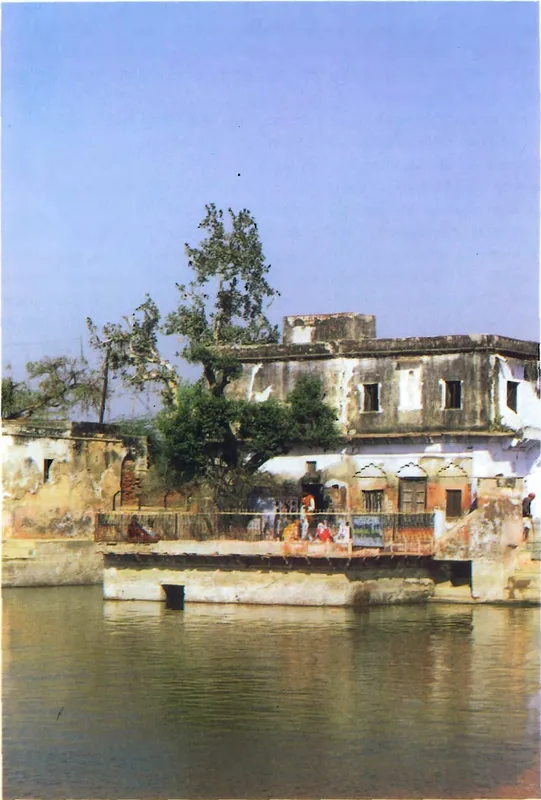
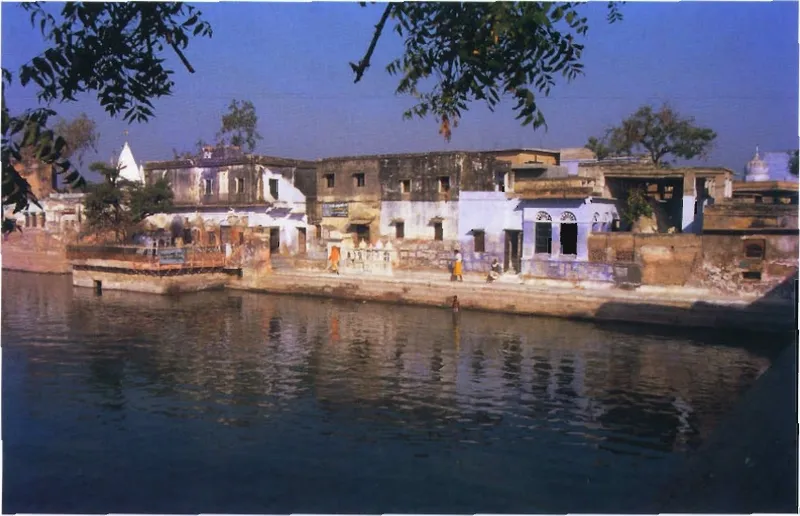
History
The Colour Guide to Rādhā-kuṇḍa (1999) dates the visit "probably somewhere around 1582" and says that on her tour of Vraja she met Śrīla Jīva Gosvāmī, Śrī Gopāla Bhaṭṭa Gosvāmī, Śrīla Kṛṣṇadāsa Kavirāja Gosvāmī and Śrīla Raghunātha dāsa Gosvāmī. The Bhakti-ratnākara gives no year.[2] Śrīla Prabhupāda writes only that she went to Vṛndāvana with a few devotees while Śrīla Jīva Gosvāmī was alive:
General teaching (does not name the place)“While Jīva Gosvāmī was alive, Śrīmatī Jāhnavā-devī, the pleasure potency of Śrī Nityānanda Prabhu, went to Vṛndāvana with a few devotees.”
Śrīla Prabhupāda, Śrī Caitanya-caritāmṛta, Ādi-līlā 10.85, purport · vedabase.io
Where the sources differ
The guidebook The Colour Guide to Rādhā-kuṇḍa tells the visit differently from the Bhakti-ratnākara, which it quotes in an …
The guidebook The Colour Guide to Rādhā-kuṇḍa tells the visit differently from the Bhakti-ratnākara, which it quotes in an English rendering without naming the translator. Who asked her to come:
Accounts differ Who asked Jāhnavā-devī to go to Rādhā-kuṇḍa.
- The Colour Guide to Rādhā-kuṇḍa (1999)Śrīla Jīva Gosvāmī requested her to give darśana to the grieving Śrīla Raghunātha dāsa.
- Bhakti-ratnākara, Eleventh WaveDevotees coming from Nandīśvara, Govardhana and other places (Gopāla, Rāghava Paṇḍita and others) conveyed Dāsa Gosvāmī's own request; she then told Śrī Gopāla Bhaṭṭa and the other Gosvāmīs that she would go to Śrī-kuṇḍa in the morning.
Accounts differ Details of the meeting of Jāhnavā-devī and Śrīla Raghunātha dāsa Gosvāmī.
- The Colour Guide to Rādhā-kuṇḍa (1999), presenting a translation as from the Bhakti-ratnākara (translator not named)Jāhnavā 'glowed with a golden effulgence more brilliant than the sun'; Raghunātha, seeing her, cried so much that he lost sight of her; tears flowed from both.
- Bhakti-ratnākara (1912 Bengali edition, as read)Dāsa Gosvāmī goes forward with tears in his eyes; Jāhnavā sees him coming, his body extremely thin, his effulgence like the sun, and weeps.
The wording of these accounts is our summary of the sources, not a published translation.
Accounts differ How long Jāhnavā stayed at Rādhā-kuṇḍa.
- Bhakti-ratnākara, Eleventh Wave p. 668'Three or four days' (দিন তিন চারি).
- The Colour Guide to Rādhā-kuṇḍa (1999)Four days.
- Narottama-vilāsa (Śrīla Narahari Cakravartī), ninth vilāsa vv. 50–54She went to Śrī-kuṇḍa by way of Bahulā-vana, saw Rādhā-kuṇḍa and Śyāma-kuṇḍa and went on to the Mānasa-gaṅgā, Govardhana, Vṛṣabhānupura and Nandīśvara; no stay at the kuṇḍa is mentioned.
What she saw, under which tree, and whether the Gopīnātha Deity beside her seat recalls it:
Accounts differ Under which tree Jāhnavā-devī saw Kṛṣṇa, and what she saw.
- Bhakti-ratnākara, Eleventh WaveHearing the flute at midday on the bank of the kuṇḍa, she sees Śyāma under a kadamba tree in His threefold-bending pose, surrounded by Rādhikā, Lalitā and the other sakhīs, and faints.
- The Colour Guide to Rādhā-kuṇḍa (1999)She sees 'Lord Gopīnātha standing under a tamāla tree' playing the flute, with Rādhārāṇī and the gopīs; a Gopīnātha Deity was installed next to her sitting place to commemorate it.
Accounts differ Who Anaṅga-mañjarī is in Śrī Caitanya Mahāprabhu's pastimes: Śrī Jāhnavā-devī or Śrī Gopāla Bhaṭṭa Gosvāmī.
- Śrīla Prabhupāda, CC Ādi 11.21 purport (on Jāhnavā-mātā)'She is described in the Gaura-gaṇoddeśa-dīpikā (66) as Anaṅga-mañjarī of Vṛndāvana.'
- Gaura-gaṇoddeśa-dīpikā v.66Some (kecit) call Jāhnavī Anaṅga-mañjarī ('anaṅgamañjarīṁ kecij jāhnavīṁ ca pracakṣate'); the verse ends by calling 'both' views right ('ubhayaṁ tu samīcīnaṁ').
- Gaura-gaṇoddeśa-dīpikā v.184She who was Anaṅga-mañjarī is now Śrī Gopāla Bhaṭṭa Gosvāmī ('anaṅga-mañjarī yāsīt sādya gopāla-bhaṭṭakaḥ'); some call Bhaṭṭa Gosvāmī Śrī Guṇa-mañjarī.
- Śrīla Prabhupāda, CC Ādi 10.105 purport (on Śrī Gopāla Bhaṭṭa Gosvāmī)'In the Gaura-gaṇoddeśa-dīpikā (184) it is mentioned that his previous name in the pastimes of Lord Kṛṣṇa was Anaṅga-mañjarī. Sometimes he is also said to have been an incarnation of Guṇa-mañjarī.'
More on this place
Śrīla Raghunātha dāsa Gosvāmī's life at Rādhā-kuṇḍa
References
18 references
- the undated parikramā notes Rādhā-kuṇḍa, ¶45
- The Colour Guide to Rādhā-kuṇḍa (1999), Rājaśekhara dāsa Brahmacārī, PDF p. 86
- The Colour Guide to Rādhā-kuṇḍa (1999), Rājaśekhara dāsa Brahmacārī, PDF p. 88
- Śrī Vraja-maṇḍala Parikramā (2007), PDF p. 90
- Śrīla Narahari Cakravartī, Bhakti-ratnākara, Ekādaśa-taraṅga (11th wave), printed page 667, 2nd ed., 1912
- Śrīla Narahari Cakravartī, Bhakti-ratnākara, Ekādaśa-taraṅga (11th wave), printed page 668, 2nd ed., 1912
- Śrīla Narahari Cakravartī, Bhakti-ratnākara, Ekādaśa-taraṅga (11th wave), printed page 669, 2nd ed., 1912
- Śrīla Narahari Cakravartī, Narottama-vilāsa, Navama-vilāsa, vv. 50–52, printed page 79, right column, 1st ed., Baṅgābda 1314
- Śrīla Narahari Cakravartī, Bhakti-ratnākara, Eleventh Wave (ekādaśa taraṅga), 1912 ed. p. 667, 2nd ed., 1912
- Śrīla Narahari Cakravartī, Bhakti-ratnākara, Eleventh Wave, 1912 ed. p. 668, 2nd ed., 1912
- Gaura-gaṇoddeśa-dīpikā, vv. 65–66
- Śrīla Prabhupāda, CC Ādi 11.21 purport · vedabase.io
- Śrī Vraja-maṇḍala Parikramā (2007), PDF p. 87
- Śrī Vraja-maṇḍala Parikramā (2007), PDF p. 88
- Śrīla Kṛṣṇadāsa Kavirāja Gosvāmī, Govinda-līlāmṛta, sarga 7, vv. 100–101, after the editions of Haridas Das and Haridas Shastri
- Śrīla Viśvanātha Cakravartī Ṭhākura, Kṛṣṇa-bhāvanāmṛta, sarga 14 (caturdaśaḥ sargaḥ, jala-vihāra-līlāsvādana), vv. 14–15 (the index labels the section '(14) trayodaśaḥ sargaḥ'), after the edition of Radhikanath Goswami, Vrindavan, 1906
- Śrīla Prabhupāda, Śrī Caitanya-caritāmṛta, Ādi-līlā 10.85, purport · vedabase.io
- The Colour Guide to Rādhā-kuṇḍa (1999), Rājaśekhara dāsa Brahmacārī, p. 82