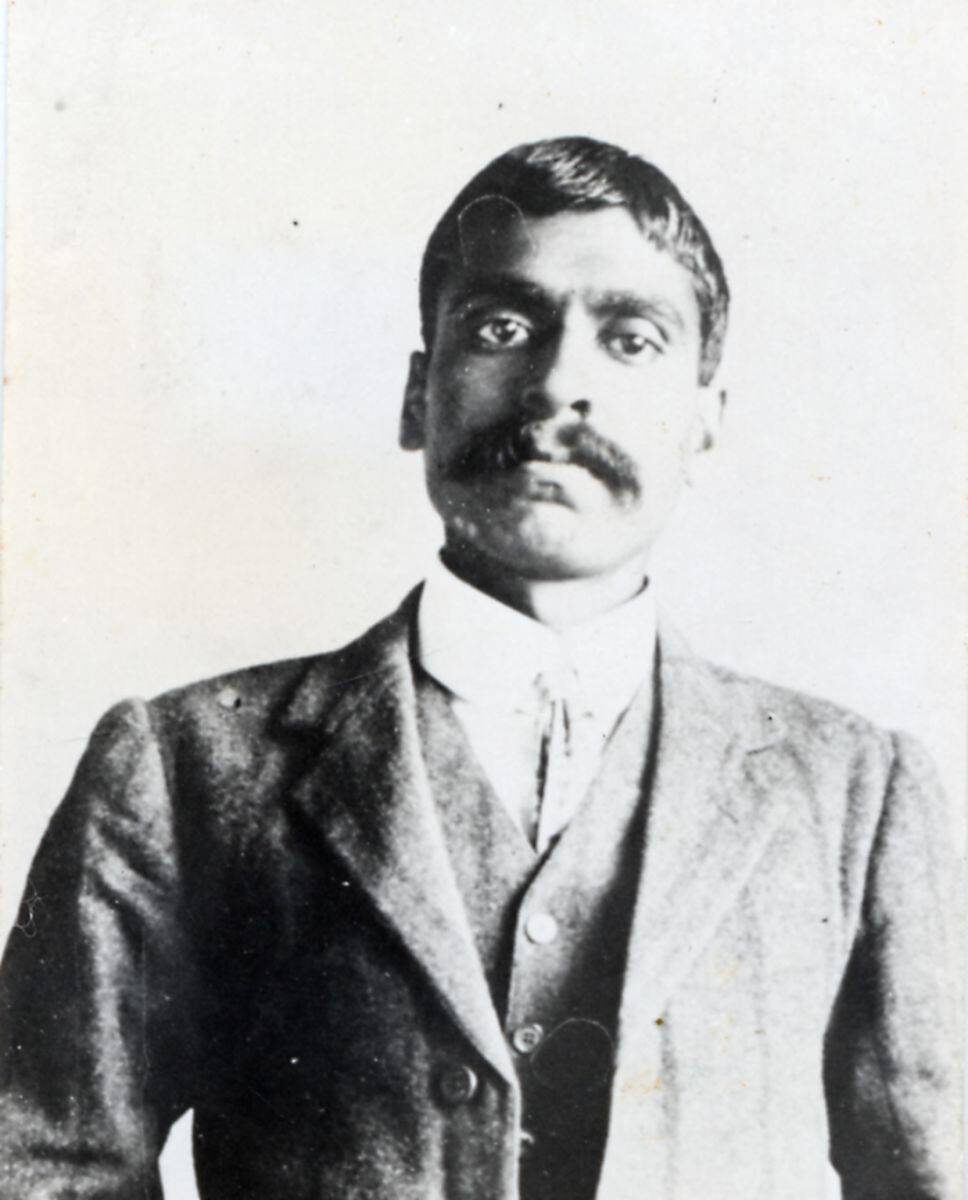
Kedarnath Datta, the man the world would come to know as Srila Bhaktivinoda Thakura, was born on 2 September 1838. His birthplace was the village of Ula, in the Nadia district of Bengal, a place known today as Birnagar. He was not born in his father's house but in his maternal grandfather's. His parents had taken shelter there after financial troubles pushed them out of Calcutta. At his birth there was no sign of the reformer he would become. To all outward appearance, the boy was born into an ordinary Bengali kayastha household. The family was dealing with debt and caste custom. It also faced a colonial economy that was already changing the idea of what a respectable Bengali gentleman should be.
| Birth name | Kedarnath Datta |
| Born | 2 September 1838, Ula (now Birnagar), Nadia district, Bengal |
| Parents | Ananda Chandra Datta and Jagat Mohini Devi |
| Family lineage | Datta kayastha family; paternal line traced to Krishnananda Datta, an associate of Nityananda Prabhu |
| First marriage | 1850, at age 12, to five-year-old Shyamani Mitra of Ranaghat |
| Education | Village school in Ula; Hindu Charitable Institution and Hindu College, Calcutta |
A Kayastha Family in Ula #
Kedarnath's father, Ananda Chandra Datta, came from a Datta family. Vaishnava tradition connects this family to Krishnananda Datta, who lived at the same time as Nityananda Prabhu and was his associate. Nityananda Prabhu was Chaitanya Mahaprabhu's closest companion. The exact family line is unclear, but later biographers thought the connection important enough to mention. By the family's own account, it had come into contact with Gaudiya Vaishnavism generations before Bhaktivinoda Thakura gave his life to it. In his autobiography, Svalikhita-jivani, Kedarnath describes his father as "a straightforward, clean, religious man." His mother, Jagat Mohini Devi, came from the Mitra family. She was a descendant of an eighteenth-century zamindar, Rameshwar Mitra, and Kedarnath calls her "a sober woman possessed of many unique qualities." His maternal grandfather, Ishwar Chandra Mustaufi, was a landowner in Ula known for his generosity. Kedarnath was born, and spent his early childhood, in that house.
A Child Who Spoke to Crows #
Even before he could properly speak, those around Kedarnath sensed something unusual in him. Not yet two years old, he composed a simple rhyme to a crow perched near the house: "O crow, Kala, flower of the jhinga squash, father comes, sit aside." As he spoke it, the crow actually moved, and those nearby took it as a sign. A few days later his father did arrive home from Orissa, just as the rhyme seemed to predict. His first schooling began around age three, on the veranda of his maternal grandfather's puja hall, where the village boys gathered under a stern teacher named Karttika Sarkara. Bhaktivinoda Thakura recalled him decades later without much fondness: "I have some recollection of going to a school run by Karttika Sarkara when I was three years old. Even now it comes to mind, that cane he used to show."
Cholera and a Widow's House #
The family that welcomed Kedarnath was already marked by loss, and more was coming. He was the third of six children. All four of his brothers died young. The eldest, Abhayakali, had died before Kedarnath was even born. In the years after his birth, cholera swept through the family. Then Kaliprasanna fell ill with cholera at seven while travelling home from school in Krishnanagar, and he died within a day of reaching Ula. Then two more infant brothers, Haridas and Gauridas, died in that same season. Three years later, when Kedarnath was eleven, his father Ananda Chandra also died. He died of a high fever, not of cholera itself. But the family's fortunes never recovered from the earlier losses. Jagat Mohini was left a widow with young children to raise. Around the same time, her own father's finances collapsed, ruined in large part by the pressures of the Permanent Settlement land-revenue system. Kedarnath later recalled the strain plainly: "Everybody thought that my mother had a lot of money and jewelry, so no one would help. All her wealth was lost except for a few properties. There was so much debt and I was full of anxiety." Several years later, a further cholera outbreak killed his sister Hemlata and ended what was left of the family's place in Ula. After that, his mother left the village for Calcutta for good.
A Boy in Search of Truth #
Even as a child Kedarnath was drawn to serious questions. At nine he studied astrology under a local teacher, Jagat Bhattacharya, taking careful notes and learning by heart what he was taught. By ten, he later wrote, "I began to become a little thoughtful. What is this world? Who are we? These two questions were in my mind." He read whatever Bengali manuscripts of the Ramayana, Mahabharata and other epics he could find. He discussed them with anyone learned enough to talk with him about them. His biographers have compared this searching, restless mood to that of Maharaja Parikshit. After his birth, Parikshit examined everything around him, searching for the Krishna he had seen in the womb. Around this time Kedarnath was frightened one day by an orchard that was said to be haunted. He learned that chanting the name of Rama removed his fear completely. From then on he chanted it constantly whenever he had to go out after dark. When Kedarnath was eleven his father Ananda Chandra died of a high fever. For a short time this loss drove the boy to avoid school in any way he could. Even so, he kept writing. In this period he composed a poem called Ula-chandi-mahatmya about the deity of his village. By his own account, this work no longer survives.
Married at Twelve #
This run of misfortune did not stop the ordinary customs of the period. In 1850, following the custom of upper-class Bengali Hindus at the time, Jagat Mohini arranged for her twelve-year-old son to marry five-year-old Shyamani Mitra of nearby Ranaghat. She hoped a new set of in-laws might bring the family better fortune than its own recent history had. Decades later, Kedarnath spoke of it plainly, without any sentiment: "It was just like a doll's play-marriage." By his own account he did not question the custom at the time. Later, though, he would become a strong critic of the rigid rules of caste and custom in Bengali Vaishnava society. Shyamani died young, not many years into the marriage, after bearing him a son.
Calcutta, Hindu College, and the Bengal Renaissance #
In 1852 Kedarnath moved to Calcutta to continue his education, at the invitation of his maternal uncle Kashiprasad Ghosh, a well-known poet and newspaper editor. He studied first at the Hindu Charitable Institution, then from 1856 at Hindu College. There he studied under Ishwar Chandra Vidyasagar, the reformer and educationist who became his lifelong friend and mentor. He also moved among a circle that included Bankim Chandra Chattopadhyay, the journalist Sisir Kumar Ghosh, and classmates such as the elder brothers of Rabindranath Tagore. This was the world of the Bengal Renaissance and its bhadralok class. These educated Bengalis were trying to bring the religion they had inherited into agreement with Western learning. Kedarnath threw himself into this world. He studied English literature and rhetoric, took public-speaking lessons from the British abolitionist George Thompson, and in 1857 published a two-volume English poem, The Poriade, that earned him an early reputation as a writer. He also read seriously across many traditions and compared them. He worked through Kant, Hegel, Hume, and Schopenhauer alongside the Bible, the Quran, and Unitarian theology. An American Unitarian minister posted in Calcutta guided him in this. By a longer route, this path eventually led him back to the Vaishnava scripture of his own family's tradition. That road is taken up on the next page, The Magistrate and the Manuscript.
