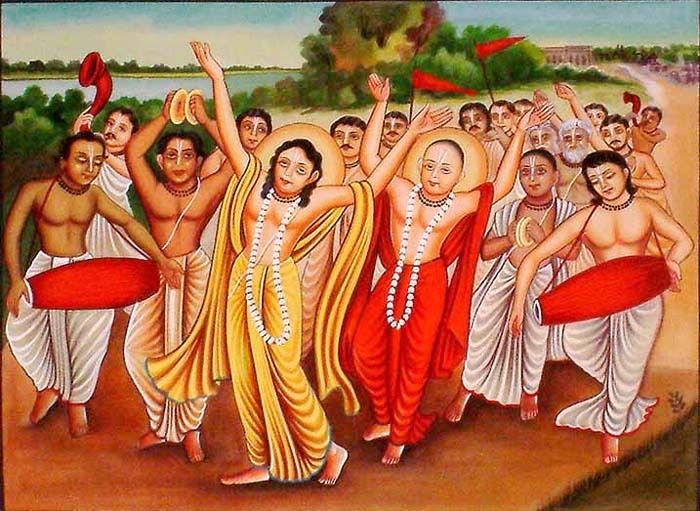
Buddhimanta Khan
The Navadwip Householder Who Funded the Lord's Wedding
Also known as Buddhimanta Khaan
“The thirty-sixth branch, Buddhimanta Khan, was extremely dear to Lord Chaitanya Mahaprabhu. He was always prepared to carry out the Lord's orders, and therefore he was considered to be a chief servant of the Lord.”
Krishnadasa Kaviraja Goswami's description of Buddhimanta Khan among the branches of Mahaprabhu's tree of devotees (Chaitanya-charitamrita, Adi-lila 10.74). These are not Buddhimanta Khan's own words. They are the text's summary of him.
Buddhimanta Khan was a wealthy householder of Navadwip whom Krishnadasa Kaviraja Goswami names as the thirty-sixth branch of Sri Chaitanya Mahaprabhu's tree of devotees in Sri Chaitanya-charitamrita. The text says he was extremely dear to the Lord and obeyed His orders from the very beginning of his life. He belongs entirely to Mahaprabhu's Navadwip years, the household period before the Lord's sannyasa. He should not be confused with two other Bengali devotees who also carry the title Khan. Satyaraja Khan was a Hindu Kayastha of Kulina-grama, from a family that had held the title for two generations before Mahaprabhu's birth. Ser Khan was a Pathan official converted decades later by Shyamananda Pandit in Orissa. A fourth Khan, Bijali Khan, was a young Pathan noble whom Mahaprabhu met on His way back from Vrindavana. He too came from a different family, a different era and an entirely different part of the country. Buddhimanta Khan's own story never leaves Navadwip and Jagannatha Puri.
| Detail | Description |
|---|---|
| Standing among the associates | The thirty-sixth branch of Mahaprabhu's tree of devotees (Chaitanya-charitamrita, Adi-lila 10.74) |
| Home | Navadwip, Bengal |
| Wealth | Among the richest men in Navadwip, alongside his close companion Mukunda Sanjaya |
| Best-known service | Personally paid every expense of Mahaprabhu's wedding to Vishnupriya Devi |
| Textual sources | Chaitanya-charitamrita, Chaitanya-bhagavata, Bhakti-ratnakara |
| Devotional tradition | Identified by Bhaktivinoda Thakura as the reborn King Suvarna Sena of Satya-yuga |
Navadwip's Richest Devotee #
Alongside his companion Mukunda Sanjaya, Buddhimanta Khan was counted among the wealthiest residents of Navadwip in Mahaprabhu's own lifetime. The two men used that wealth for ordinary charity, supplying medicine and treatment to the town's poor. They did this long before either of them is remembered for anything directly connected to Mahaprabhu. This same practical help is the reason Buddhimanta Khan appears in the biographies at all. The young Nimai Pandit began to suffer the physical strain of vāyu-vyādhi, a disorder of the bodily airs brought on by His own deepening ecstatic love. At that time the other devotees called on Buddhimanta Khan to arrange treatment and medicines. So he was first useful to Mahaprabhu's circle as a man who could simply get things done and pay for them. This was a householder's service to bhakti, and in its own way it was as real as any scholar's commentary. Lord Krishna Himself says in the Bhagavad-gita, "Whatever you do, whatever you eat, whatever you offer or give away, and whatever austerities you perform, do that, O son of Kunti, as an offering to Me" (Bhagavad-gita 9.27). In the same spirit, the service Buddhimanta Khan gave with his wealth and his work was also bhakti.
Funding The Lord's Wedding To Vishnupriya #
Buddhimanta Khan's name is most consistently linked with one service. He personally paid every cost of Sri Chaitanya Mahaprabhu's second wedding, to Vishnupriya, daughter of the Navadwip priest Sanatan Mishra. Srila Prabhupada states this plainly in his purport to the Chaitanya-charitamrita verse naming him as the thirty-sixth branch (Adi-lila 10.74), and later Bengali sources such as Bhakti-ratnakara repeat it as common knowledge of the tradition. No amount or particular expense is recorded beyond the fact that he covered it in full. But this wedding placed Vishnupriya Devi at Mahaprabhu's side for the rest of His household life. To be the only one who paid for it was no small service.
The Vraja-Lila Costumes At Chandrashekhara's House #
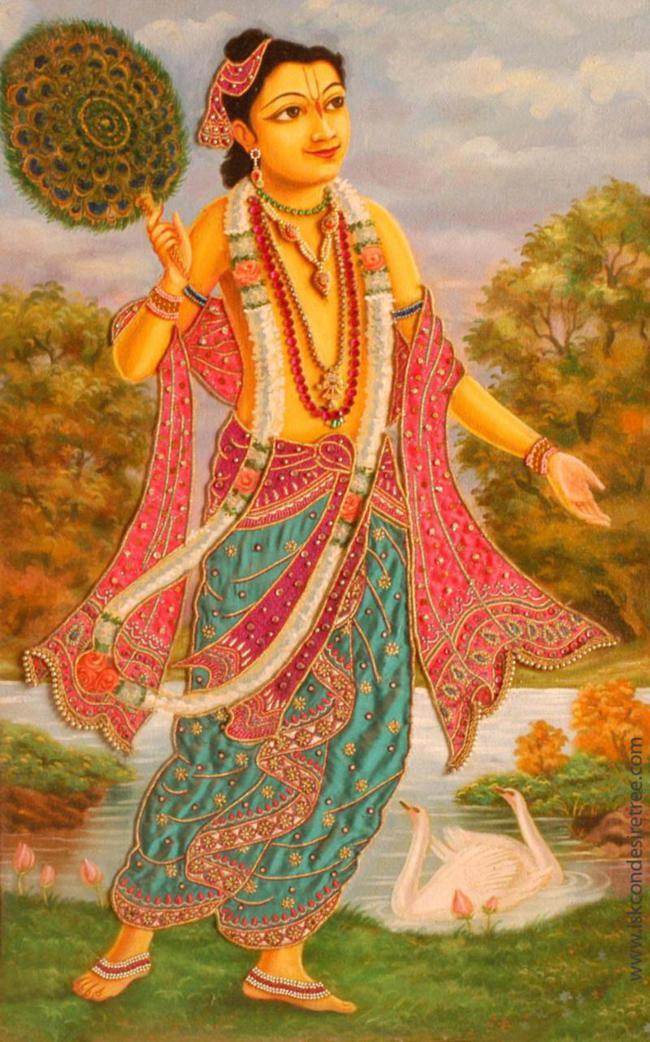
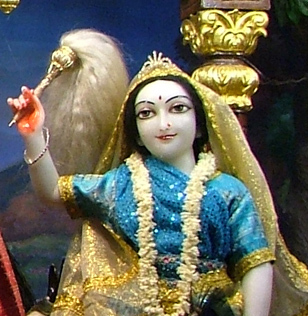
Buddhimanta Khan's most vividly remembered single scene comes from a different occasion. Vrindavana Dasa Thakura's Chaitanya-bhagavata, and later Bhakti-ratnakara, place him at the house of Chandrashekhara Acharya. It was the day Mahaprabhu decided to stage a play of Krishna's Vraja pastimes among His own devotees. He Himself took on the roles of Durga, Lakshmi and other divine feminine forms. Mahaprabhu called out directly for him: 'Buddhimanta Khan! Go quickly and arrange for costumes, for today I shall dance.' Buddhimanta Khan and a devotee named Sadashiva ran the errand at once, the text says, feeling unlimited joy at simply being asked. They returned with the costumes and decorations that let the performance go forward. It is a small, everyday kind of pastime, with no philosophy and no miracle. That is exactly why it has stayed attached to his name for five centuries. It shows a devotee whose entire service was to be ready the moment he was called.
Following The Lord To Puri #
When Mahaprabhu took sannyasa at Katwa and went first to Shantipur, Buddhimanta Khan was among the Navadwip devotees who came to see Him there. Chaitanya-charitamrita later lists him by name among "all the inhabitants of Navadvipa" who met the Lord with joy on that occasion. He did not stop there. Chaitanya-bhagavata records that he joined the Bengali devotees' yearly pilgrimage to Jagannatha Puri after Mahaprabhu's renunciation. Chaitanya-charitamrita also describes a much later Puri visit, the one built around Raghunatha Dasa Goswami's own arrival there. In that account it names Buddhimanta Khan, alongside Vasudeva Datta and Murari Gupta, among the devotees who brought varieties of food for the Lord. So his devotion over decades can be seen only through what he paid for, arranged or carried on each of these occasions. The sources never once quote him speaking.
A Previous Life As King Suvarna Sena #
A separate tradition, purely devotional, explains Buddhimanta Khan's place in Mahaprabhu's circle by looking back to a previous life. In his Nabadvipa-dhama-mahatmya, Srila Bhaktivinoda Thakura writes that a pious king named Suvarna Sena once ruled in Satya-yuga over the village later known as Suvarna Bihar, in Godrumadvipa. He writes that through Narada Muni's blessing, this king attained deep love for Radha and Krishna in their combined form as Sri Gauranga. Once the king saw Gaura and Gadadhara in a dream vision. When he woke, he grieved at losing it. Then a voice from the sky told him that he would be born again as Buddhimanta Khan when Mahaprabhu Himself appeared in Kali-yuga, to help expand the Lord's pastimes. This devotional identification was recorded generations after Mahaprabhu's own life. It is not a claim made in Chaitanya-charitamrita or Chaitanya-bhagavata themselves. It is worth reading, and it is right to name it honestly for exactly what it is. In the Bhagavad-gita, Lord Krishna Himself says that a person who could not finish the path of yoga, on taking his next birth, "revives the divine consciousness of his previous life, and he again tries to make further progress in order to achieve complete success" (Bhagavad-gita 6.43). This devotional story of Suvarna Sena becoming Buddhimanta Khan is seen as an echo of that same principle.
A Story Told Only By Srila Prabhupada #
One more episode connected with Buddhimanta Khan's name comes from a completely different source. It comes from Srila Prabhupada's own lectures, not from any of the devotional biographies. In more than one Srimad-Bhagavatam class, Prabhupada told of Buddhimanta Khan's former servant boy, who grew up to become Nawab Hussain Shah. He also told how this same Nawab's wife later forced Buddhimanta Khan, her husband's old master, into a conversion to Islam in name only. And he told of the harsh, almost impossible acts of atonement that Bengali priests then gave Buddhimanta Khan. That fuller story, and Mahaprabhu's own response when Buddhimanta Khan finally brought the problem to Him, is told at Sprinkled With A Muhammadan's Water.
What The Record Leaves Open #
No birth year, disappearance year or family lineage for Buddhimanta Khan survives in any available source. We have only his home town, his wealth, and a scattered handful of services he did across several decades of Mahaprabhu's life. The details of the Hussain Shah episode itself are uncertain. Prabhupada's own two tellings of it were five years apart, and they do not fully agree on what atonement the priests ordered or how the story ended. The episode also does not appear at all in the devotional biographies (Chaitanya-bhagavata, Bhakti-ratnakara) that are cited elsewhere for Buddhimanta Khan's Navadwip life. So it should be taken for what it plainly is: a story Srila Prabhupada told from memory, not a verse from Chaitanya-charitamrita itself. Even so, it is no less worth preserving.
Scriptural evidence
Quoted in the text above:
- 9.27 Bhagavad-gita As It Is
Further verses:
শ্রীচৈতন্যের অতি প্রিয় বুদ্ধিমন্ত খান্ । আজন্ম আজ্ঞাকারী তেঁহো সেবক–প্রধান ॥
śrī-caitanyera ati priya buddhimanta khān
ājanma ājñākārī teṅho sevaka-pradhāna
Word for word
śrī-caitanyera: of Lord Sri Chaitanya Mahaprabhu; ati priya: very dear; buddhimanta khān: Buddhimanta Khan; ājanma: from the very beginning of his life; ājñā-kārī: follower of the orders; teṅho: he; sevaka-pradhāna: chief servant.
The thirty-sixth branch, Buddhimanta Khan, was extremely dear to Lord Chaitanya Mahaprabhu. He was always prepared to carry out the Lord's orders, and therefore he was considered to be a chief servant of the Lord.
From the purport: Purport excerpt: "He personally defrayed all the expenditures for the marriage ceremony. When Lord Caitanya Mahaprabhu was attacked by vayu-vyadhi... Buddhimanta Khan paid for all requisite medicines and treatments to cure the Lord."
The core verse establishing Buddhimanta Khan's place among Mahaprabhu's associates; Prabhupada's own purport here is the fullest single-paragraph biography of him in the text.
শ্রীবাস, রামাই, বিদ্যানিধি, গদাধর । গঙ্গাদাস, বক্রেশ্বর, মুরারি, শুক্লাম্বর ॥ বুদ্ধিমন্ত খাঁন, নন্দন, শ্রীধর, বিজয় । বাসুদেব, দামোদর, মুকুন্দ, সঞ্জয় ॥ কত নাম লইব যত নবদ্বীপবাসী । সবারে মিলিলা প্রভু কৃপাদৃষ্ট্যে হাসি’॥
śrīvāsa, rāmāi, vidyānidhi, gadādhara
gaṅgādāsa, vakreśvara, murāri, śuklāmbara
buddhimanta khāṅ, nandana, śrīdhara, vijaya
vāsudeva, dāmodara, mukunda, sañjaya
kata nāma la-iba yata navadvīpa-vāsī
sabāre mililā prabhu kṛpā-dṛṣṭye hāsi'
Word for word
buddhimanta khāṅ: Buddhimanta Khan; kata nāma la-iba: how many names shall I mention; yata navadvīpa-vāsī: as many as are the inhabitants of Navadvipa; sabāre mililā: met with all of them; prabhu: the Lord; kṛpā-dṛṣṭye hāsi': smiling with a merciful glance.
Srivasa, Ramai, Vidyanidhi, Gadadhara, Gangadasa, Vakreshvara, Murari, Shuklambara, Buddhimanta Khan, Nandana, Shridhara, Vijaya, Vasudeva, Damodara, Mukunda, Sanjaya and all the others, however many I can mention -- indeed, all the inhabitants of Navadvipa -- arrived there, and the Lord met them with smiles and glances of mercy.
Buddhimanta Khan named among the Navadwip devotees who came to see Mahaprabhu after His sannyasa, at Shantipur/Puri.
বাসুদেব-দত্তের এই মুরারি-গুপ্তের আর । বুদ্ধিমন্ত-খাঁনের এই বিবিধ প্রকার ॥
vāsudeva-dattera ei murāri-guptera āra
buddhimanta-khāṅnera ei vividha prakāra
Word for word
vāsudeva-dattera: of Vasudeva Datta; ei: these; murāri-guptera: of Murari Gupta; āra: and; buddhimanta-khāṅnera: of Buddhimanta Khan; ei: these; vividha prakāra: of different varieties.
And all these varieties of food have been given by Vasudeva Datta, Murari Gupta and Buddhimanta Khan.
Late in the narrative, at Raghunatha Dasa Goswami's own arrival in Puri, Buddhimanta Khan is still named among the Bengali devotees supplying food for Mahaprabhu -- evidence of a service that lasted decades.
तत्र तं बुद्धिसंयोगं लभते पौर्वदेहिकम् ।
यतते च ततो भूयः संसिद्धौ कुरुनन्दन ॥ ४३ ॥
tatra taṁ buddhi-saṁyogaṁ
labhate paurva-dehikam
yatate ca tato bhūyaḥ
saṁsiddhau kuru-nandana
Word for word
tatra: thereupon; tam: that; buddhi-saṁyogam: revival of consciousness; labhate: gains; paurva-dehikam: from the previous body; yatate: endeavors; ca: also; tataḥ: thereafter; bhūyaḥ: again; saṁsiddhau: for perfection; kuru-nandana: O son of Kuru.
On taking such a birth, he revives the divine consciousness of his previous life, and he again tries to make further progress in order to achieve complete success, O son of Kuru.
From the purport: King Bharata, who took his third birth in the family of a good brahmana, is an example of good birth for the revival of previous transcendental consciousness. From his life it is understood that transcendental endeavors, or the practice of yoga, never go in vain.
Cited here in connection with Bhaktivinoda Thakura's account of King Suvarna Sena's rebirth as Buddhimanta Khan, a devotional tradition rather than a claim of Chaitanya-charitamrita itself, but one that reflects this same Gita principle of a devotee's practice carried forward from one life into the next.
- Sri Chaitanya-charitamrita, Adi-lila 10.74 and purport (vedabase.io)
- Sri Chaitanya-charitamrita, Madhya-lila 3.153-155 (vedabase.io)
- Sri Chaitanya-charitamrita, Antya-lila 10.9-11 and 10.121 (vedabase.io)
- Buddhimanta Khan — Gaudiya History (ISKCON Desire Tree)
- Sri Buddhimanta Khan — Shyam Das Baba (excerpted from Sri Chaitanya: His Life & Associates by Srila Bhakti Ballabh Tirtha Maharaja)
- Srimad-Bhagavatam 6.1.6 lecture, Bombay, November 6 1970 (vedabase.io)
- Srimad-Bhagavatam 6.1.6 lecture, Nellore, January 5 1976 (vedabase.io)
Frequently asked
When was Buddhimanta Khan born?
Buddhimanta Khan appeared Not recorded in Navadwip, Bengal.
When and where did Buddhimanta Khan disappear?
Buddhimanta Khan disappeared Not recorded at Not recorded.
What are the main pastimes of Buddhimanta Khan?
The pastimes covered here include: Costumes for a Vraja-Lila, Sprinkled With a Muhammadan's Water.