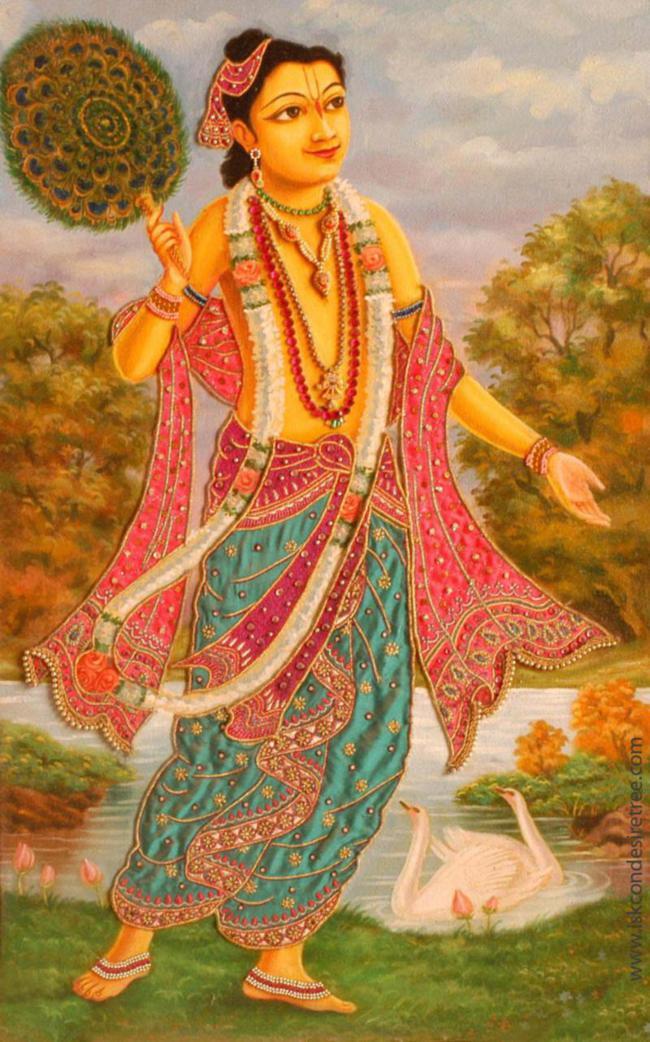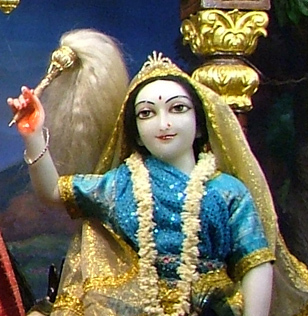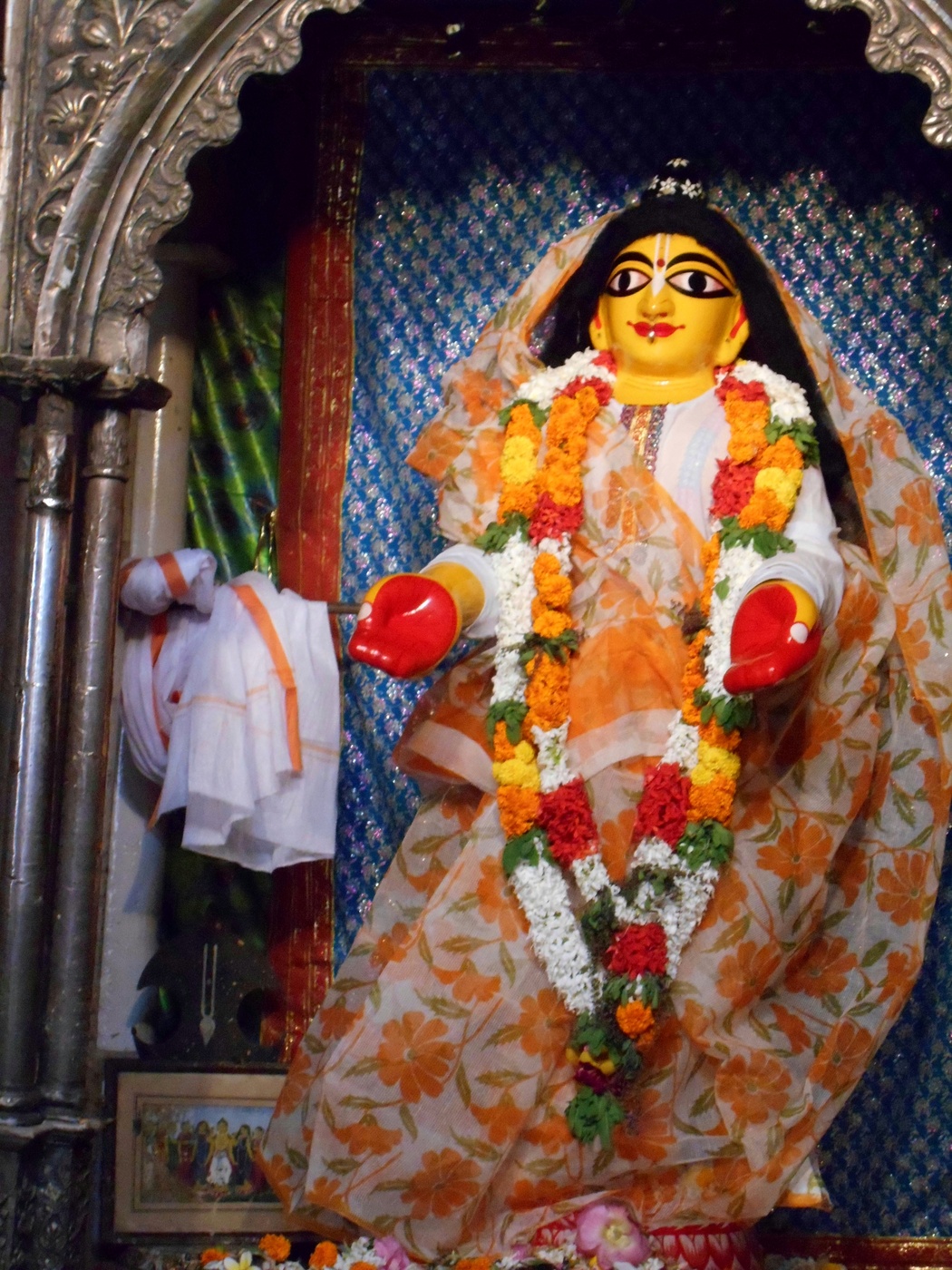
Srimati Vishnupriya Devi
The Wife Who Waited a Lifetime in Separation
Also known as Vishnupriya Thakurani, Visnupriya Devi, Ishvari Vishnupriya
“You must do what makes You happy, my Lord. Let no one be an obstacle to Your divine mission.”
Her reply to Sri Chaitanya Mahaprabhu on the night before He accepted sannyasa, once she understood His resolve was fixed: Chaitanya-mangala by Locana Dasa Thakura, as translated on gaudiyahistory.iskcondesiretree.com.
Srimati Vishnupriya Devi was the second wife of Sri Chaitanya Mahaprabhu, married to Him a few years before He gave up household life altogether and accepted the sannyasa order. The story of that marriage is already told in full on Mahaprabhu's own page, in Marriage and Household Life, so it is not repeated here. That page tells how His first wife Lakshmipriya died, how Sachi Devi chose Vishnupriya as a second bride, and what the household at Navadwip actually looked like. This page tells Vishnupriya Devi's own story instead. She was a girl of about sixteen, left behind when her husband left home at night to become a sannyasi. After that she lived on for decades in one of the most austere devotional disciplines recorded anywhere in Gaudiya Vaishnava literature.
| Detail | Description |
|---|---|
| Relationship | Second wife of Sri Chaitanya Mahaprabhu |
| Father | Sanatana Mishra, the raja-pandita (court scholar) of Navadwip |
| Married | At Navadwip, a few years before Mahaprabhu's sannyasa; the wedding expenses were borne by Buddhimanta Khan |
| Left behind | At about sixteen years of age, when Mahaprabhu accepted sannyasa at twenty-four |
| Identity | Bhu-shakti, the Lord's potency as Bhu-devi, called jagan-mata, mother of the universe (Gaura-ganoddesha-dipika 47-48) |
| Best known for | Roughly eighty years of austere bhajana in separation, and worship of a Deity of Mahaprabhu that is still served today near Nabadwip |
A Marriage Already Told On His Page #
Sanatana Mishra was a respected and wealthy brahmana of Navadwip. He was learned enough to hold the title raja-pandita. Sachi Devi noticed his daughter at the Ganges bathing ghat and chose her as a bride for her son. Sri Chaitanya-charitamrita records the marriage in a single verse: "Then Lord Chaitanya married Vishnupriya, the goddess of fortune, and thereafter He conquered a champion of learning named Keshava Kashmiri." Chaitanya-Bhagavata tells it more fully and festively, with Buddhimanta Khan paying every expense of the ceremony. The sources disagree on one small point about her family. Most sources name Sanatana Mishra as her father. But the Prema-vilasa tradition preserves a note that some people considered her grandfather, Durga Das Mishra, to be her actual father instead. No source settles the question, so it is reported here instead of being quietly decided either way.
Srila Kavi Karnapura's Gaura-ganoddesha-dipika (verse 47) tells who the bride and her father were:
śrī sanātana miśro’yaṁ purā satrājito nṛpaḥ
viṣṇupriyā jagan-mātā yat-kanyā bhū-svarūpiṇī
"The same person who formerly appeared as King Satrajit appeared in Lord Caitanya's pastimes as Sanatana Misra. Sanatana Misra's daughter was Srimati Visnupriya, and she was the incarnation of the Lord's Bhu-sakti, who is the mother of the entire universe." (Gaura-ganoddesha-dipika 47)
In the next verse (48) he points to his own play, the Chaitanya-chandrodaya-nataka, where Kali says: "Understanding that Srimati Visnupriya was the incarnation of Bhu-devi, Lord Caitanya accepted her hand in marriage."
The Night Before Sannyasa #
Sri Chaitanya-charitamrita and Chaitanya-Bhagavata both pass quickly over the household years to the events that were important for the sampradaya later. But a later work, Locana Dasa Thakura's Chaitanya-mangala, records something neither of those two texts does. It gives a direct, long conversation between Mahaprabhu and Vishnupriya Devi on the night before He left. She had heard the rumor that He intended to take sannyasa and asked Him directly whether it was true. She said that she would rather drink poison than lose His association. He answered gently. He told her that only Krishna and the Vaishnavas were real, that every other relationship in this world is a temporary designation, and that she should hold Him in her heart instead of clinging to Him as a husband alone. Then, the text says, He showed her His four-armed form. Seeing it did not really take away her grief. Instead, it changed it. By her own choice, she still went on regarding Gaurahari as her husband, and she asked only that He do what made Him happy.
Left Behind At Sixteen #
Mahaprabhu left for Katwa at night, without ceremony. By the tradition's account, Vishnupriya did not fully understand He was gone until she woke and found His bed empty. The fuller account of that discovery is told in Marriage and the Parting. It includes a devotional song by Vasudeva Ghosh that describes her running to Sachi Devi's door in the dark. One thing should be stated plainly here, honestly and without drama. No source records any further direct message passing between Mahaprabhu and Vishnupriya Devi after He left Navadwip. This is true of Sri Chaitanya-charitamrita, Chaitanya-Bhagavata and the wider later writings. He had promised her that last night that wherever He went, He would remain at her side if she simply held Him in her heart. That promise appears to be the last word she is recorded as receiving from Him directly.
Eighty Years Of Rice And Japa #
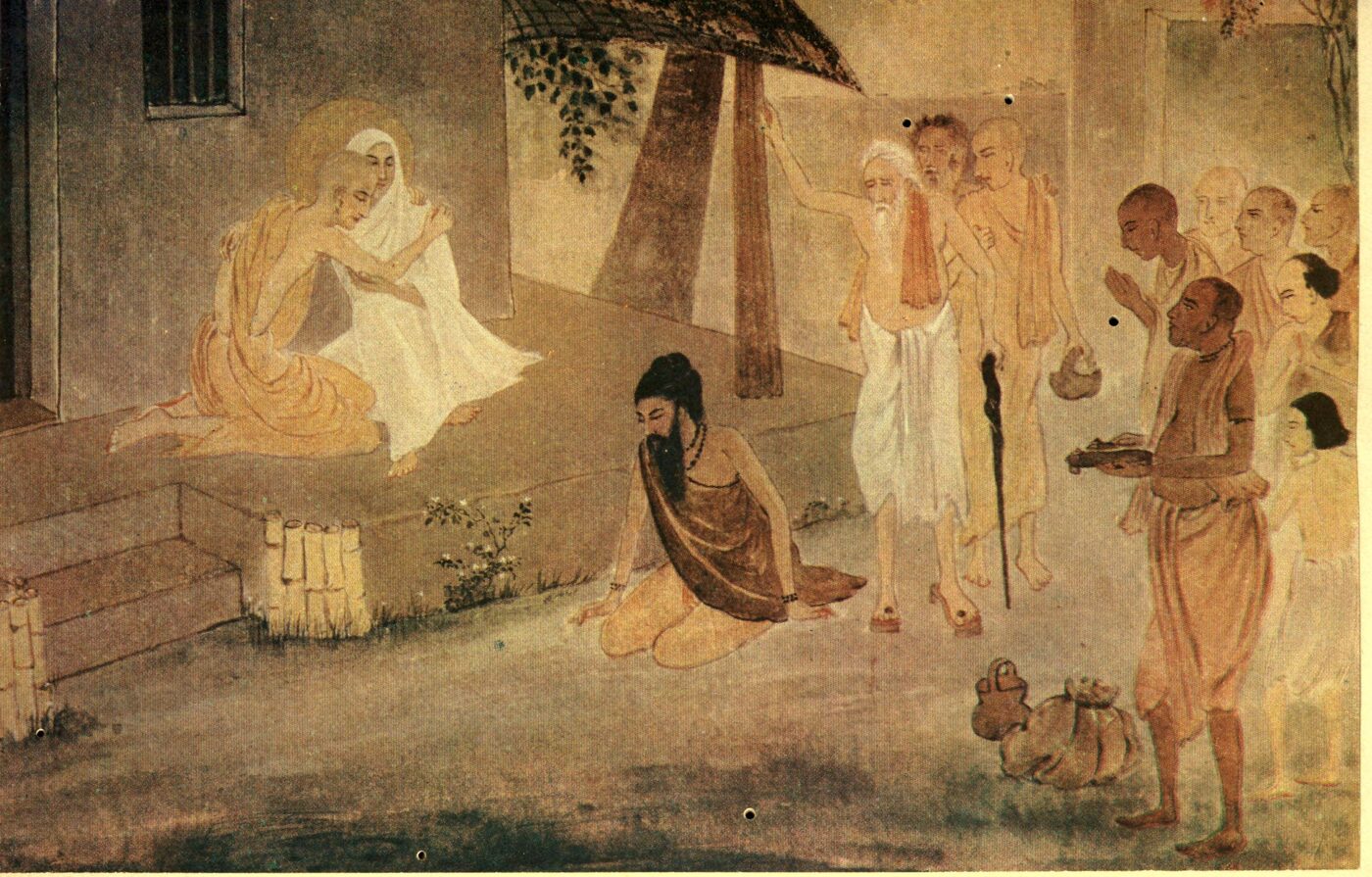
What she did with that promise is the part of her story confirmed by the most independent Gaudiya Vaishnava sources. Devotional tradition draws chiefly on the Advaita-prakasha, Narahari Chakravarti's Bhakti-ratnakara and Nityananda Dasa's Prema-vilasa. It describes her setting aside one grain of rice each time she chanted the complete Hare Krishna maha-mantra once, all sixteen names. It says she cooked only what she had counted out that day, offered it to a Deity of her husband, and ate only a small portion herself. Temple tradition at Nabadwip holds that she kept this discipline for roughly eighty years, living to about ninety-six. The full detail of that practice is told on A Life of Separation and Austerity. That page also looks honestly at how far the record can really support such exact figures. Srila Prabhupada's own words, in his Introduction to Srimad-Bhagavatam, state the main fact plainly and simply: Vishnupriya "bore the separation of the Lord throughout her life."
The Deity She Made, Remembered Today #
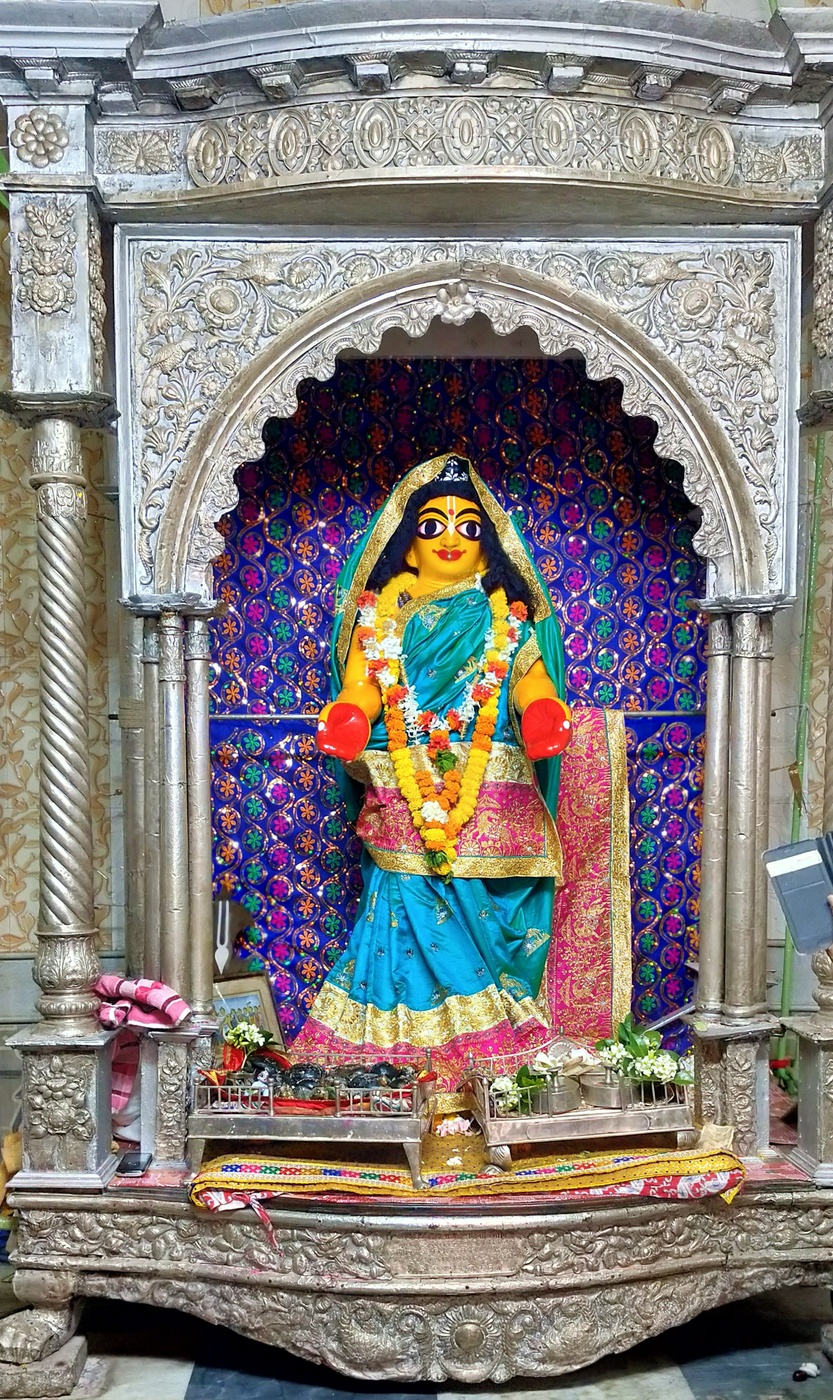
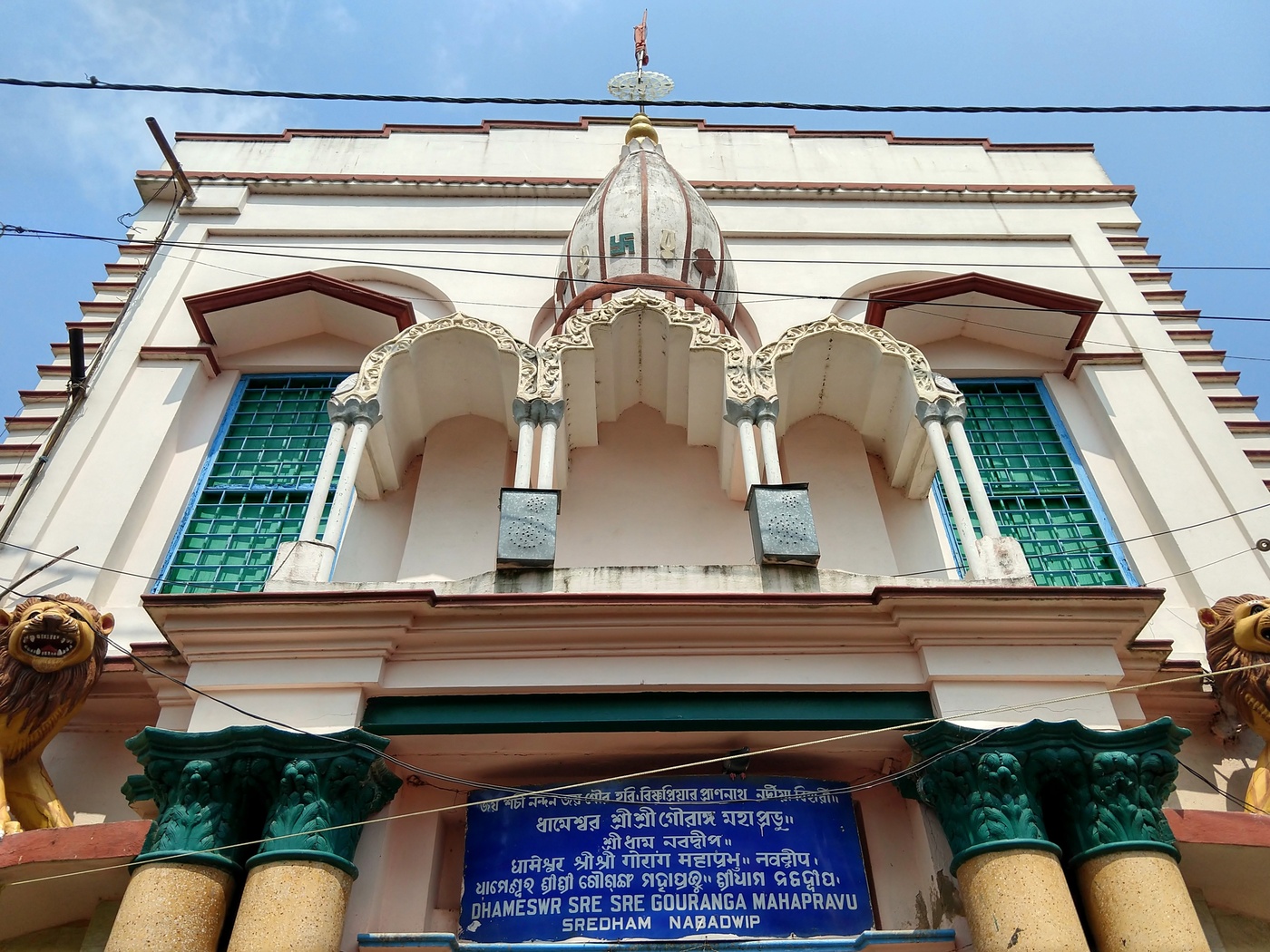
Devotional literature credits Vishnupriya Devi as the first person to establish worship of a Deity of Gauranga. It was a neem-wood image, carved on the instruction of a dream. She served it alongside a pair of Mahaprabhu's own footwear (paduka), said to have been His personal gift to her. That Deity, known today as Dhameswar Mahaprabhu, and the paduka with it, are still worshiped at a temple in Nabadwip. The temple is built on the very land where Sanatana Mishra's house once stood. If the tradition is accurate, it is a direct physical link between her devotion and a living place of worship five centuries later. The fuller story of that Deity, its journey after her disappearance, and the family that still serves it is told on Worship and Legacy. Along with Sachi Devi, Sita Thakurani, and Malini Devi (the wife of Srivasa Thakura), Vishnupriya is remembered in Gaudiya biographical tradition as one of four leading women devotees who supported Mahaprabhu's mission during His own lifetime. Of these four, she went on serving Him in separation the longest, for the many decades after His lifetime.
Scriptural evidence
Quoted in the text above:
- CC Ādi 16.25 Sri Chaitanya-charitamrita
- Verses 47-48 Gaura-ganoddesha-dipika
Further verses:
His second wife was Srimati Vishnupriya Devi, who bore the separation of the Lord throughout her life because the Lord took the order of sannyasa (renunciation) at the age of twenty-four, when Srimati Vishnupriya was barely sixteen years old.
Not a purport on a specific verse but Srila Prabhupada's own summary, in his general Introduction to Srimad-Bhagavatam, of Vishnupriya's age and the fact of her lifelong separation; the single most authoritative primary-source statement available on both points.
- Sri Chaitanya-charitamrita, Adi-lila 16.25 (Bhaktivedanta VedaBase)
- Srimad-Bhagavatam, Introduction, A.C. Bhaktivedanta Swami Prabhupada (Bhaktivedanta VedaBase)
- Marriage and Household Life (Sri Chaitanya Mahaprabhu, nandgramdham.org)
- Vishnupriya Devi - Biography (gaudiyahistory.iskcondesiretree.com), excerpted from Sri Chaitanya: His Life & Associates by Srila Bhakti Ballabh Tirtha Maharaj
- Vishnupriya Devi (gaudiyahistory.iskcondesiretree.com)
- Vishnupriya devi - Biography, Sri Dhameswar Mahaprabhu Temple (The Gaudiya Treasures of Bengal)
- Sri Dhamesvara Temple (Mahaprabhu Bari) (Sri Navadwipa Mandala Parikrama)
Frequently asked
When was Srimati Vishnupriya Devi born?
Srimati Vishnupriya Devi appeared 16th century; exact year not recorded in the available sources in Navadwip, Nadia district, Bengal.
When and where did Srimati Vishnupriya Devi disappear?
Srimati Vishnupriya Devi disappeared Devotional and temple tradition holds that she lived to about 96, roughly 80 years after Mahaprabhu's sannyasa. No available source gives a specific year, and Chaitanya-charitamrita and Chaitanya-Bhagavata do not record this figure themselves at Navadwip (Yogpith), Nadia district, Bengal.
What are the main pastimes of Srimati Vishnupriya Devi?
The pastimes covered here include: Marriage and the Parting, A Life of Separation and Austerity, Worship and Legacy.