Satyaraja Khan
The Kulina-grama householder entrusted with Jagannatha's Ratha-yatra ropes
Also known as Lakshminatha Vasu, Satyaraja Vasu, Satyaraja Khana
“My dear Lord, being a householder and a materialistic man, I do not know the process of advancing in spiritual life. I therefore submit myself unto Your lotus feet and request You to give me orders.”
Satyaraja Khan's own words to Sri Chaitanya Mahaprabhu at Jagannatha Puri (Sri Chaitanya-charitamrita, Madhya-lila 15.103)
Satyaraja Khan was a householder devotee of Sri Chaitanya Mahaprabhu from the Bengali village of Kulina-grama. Sri Chaitanya-charitamrita remembers him for two things. The first is a family service to the Deity of Jagannatha that Mahaprabhu Himself assigned to his household. The second is a personal question that he asked, as a plain, practical householder, about how to advance in devotional life. His name has an unusual detail for a Vaishnava saint. "Khan" was not a spiritual title but an official one, given to his family by Bengal's Muslim rulers. It reminds us how ordinary and worldly the starting point of bhakti can be.
| Detail | Description |
|---|---|
| Birth name | Lakshminatha Vasu |
| Title | Satyaraja Khan, a court title, not a religious one |
| Native place | Kulina-grama, Bengal |
| Father | Shri Gunaraja Khan (born Maladhara Vasu), author of Sri Krishna-vijaya |
| Son | Ramananda Vasu (not to be confused with Srila Ramananda Raya) |
| Identity | Sukantha-devi, one of the two Gandharva dancers of Vraja (Gaura-ganoddesha-dipika 173) |
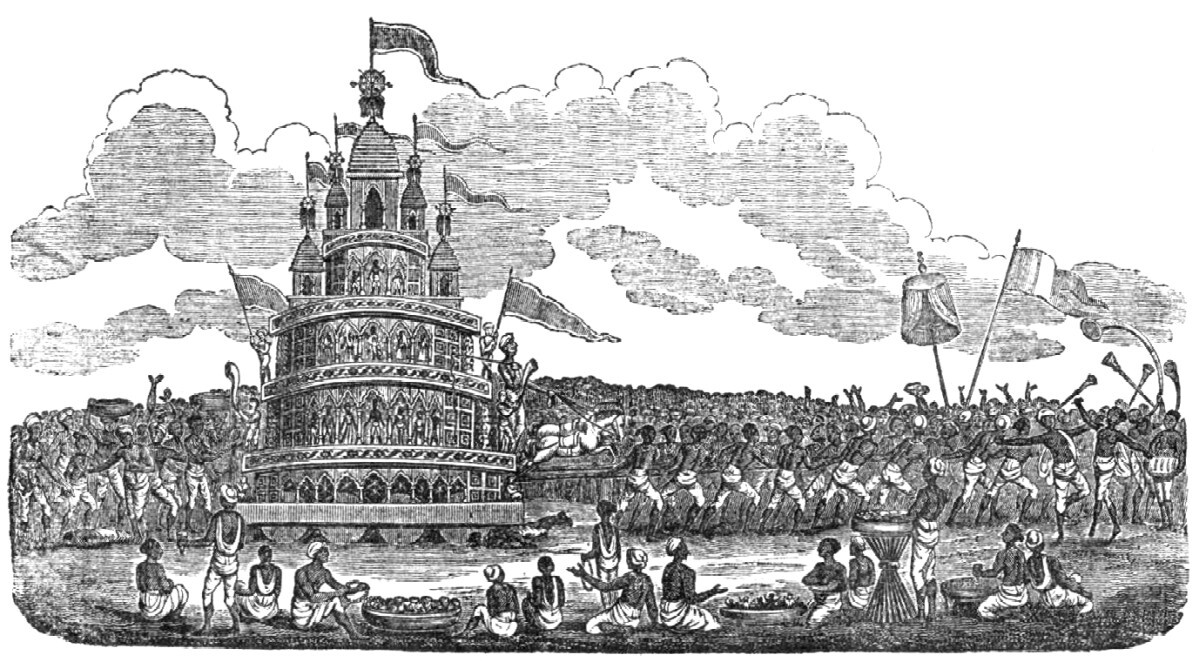
| Best-known service | Hereditary supplier of the silk ropes for Lord Jagannatha's Ratha-yatra chariot |
| Community | Kayastha, a family that traced its move to Bengal from Kanyakubja (Kanauj) |
A Kayastha Family With A Court Title #
Satyaraja Khan's father was Shri Gunaraja Khan, whose birth name was Maladhara Vasu. He was the thirteenth generation of a Kayastha family descended from a man named Dasharatha Vasu. Dasharatha Vasu is said to have come to Bengal from Kanyakubja among the attendants of an early Bengali king. Gunaraja Khan was himself a celebrated Vaishnava. He wrote Sri Krishna-vijaya, a Bengali poetic retelling of the Tenth and Eleventh Cantos of Srimad-Bhagavatam. Chaitanya-charitamrita records that it was written so plainly that even half-educated readers could follow it. Sri Chaitanya Mahaprabhu Himself praised the book directly. The reigning emperor gave Gunaraja Khan the title "Khan". It was a mark of standing under Bengal's Muslim government and had nothing to do with caste or religion. His own sons received titles in the same way. Of his fourteen sons, the second, Lakshminatha Vasu, received his own title of Satyaraja Khan. Lakshminatha's own son was Ramananda Vasu. This was the family into which Satyaraja Khan was born. It was wealthy and literate, and it was settled in the village of Kulina-grama. It had been devoted to Krishna for at least two generations before Mahaprabhu's own appearance.
Srila Haridasa Thakura once spent a Chaturmasya period in Kulina-grama, chanting the holy name. Chaitanya-charitamrita says that he distributed his mercy to the Vasu family living there. Among them, Satyaraja Khan is named as the one who received the most of that mercy. It was not a formally recorded initiation. But it was a real blessing, specially remembered, from one of Mahaprabhu's own most confidential associates.
Named In The Tree Of Mahaprabhu's Associates #
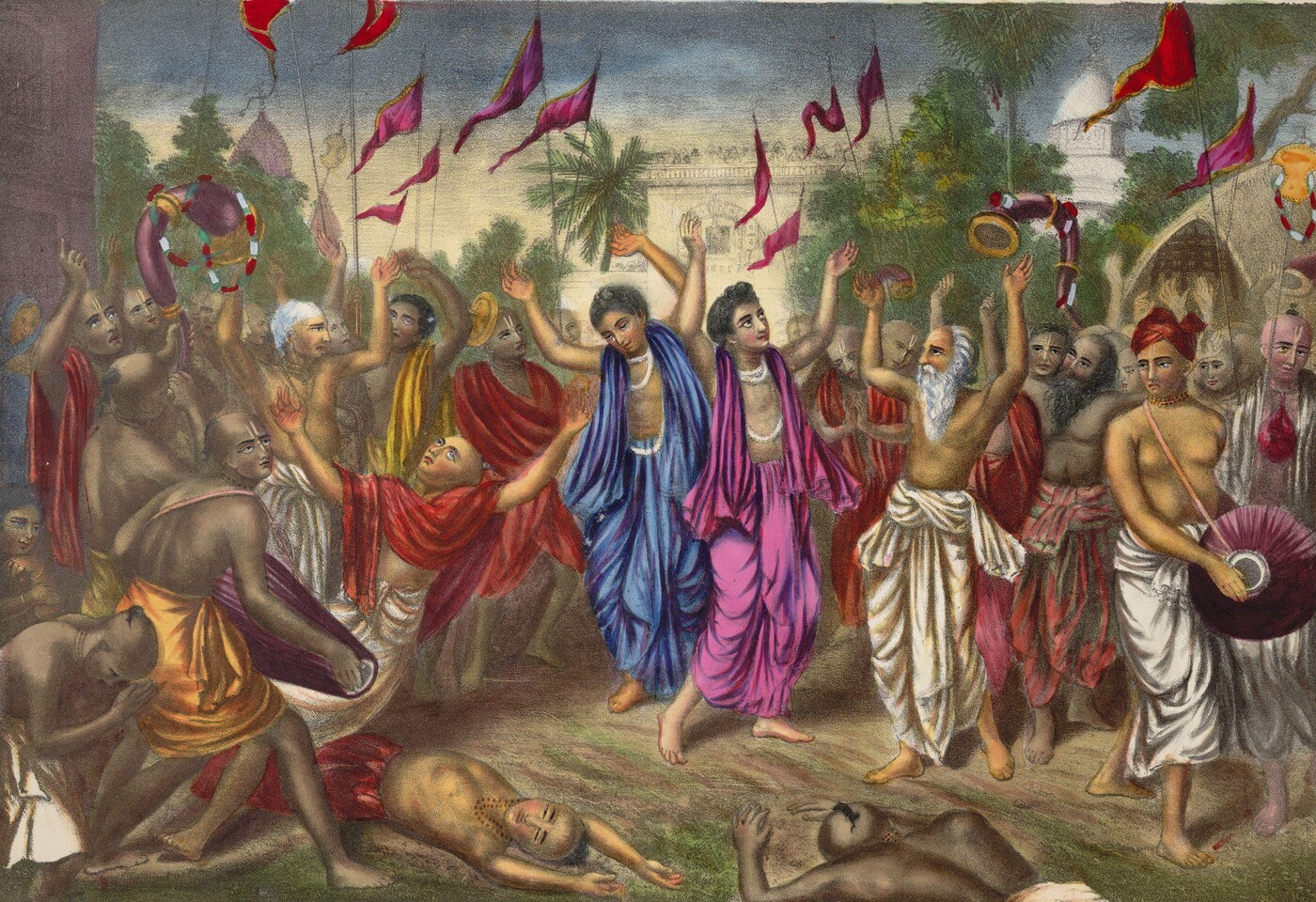
In Adi-lila, Krishnadasa Kaviraja Goswami lists the branches and subbranches of Sri Chaitanya Mahaprabhu's tree of associates. Satyaraja Khan appears there twice. He appears once as the foremost of a subbranch under Haridasa Thakura. He appears again heading a branch of his own, alongside fellow Kulina-grama devotees Ramananda, Yadunatha, Purushottama, Shankara and Vidyananda. A separate verse names Vaninatha Vasu as the head of the wider Kulina-grama community. These listings agree on a simple point. Kulina-grama was not a minor part of Mahaprabhu's circle. It was one of its recognized centers, and Satyaraja Khan was one of its most visible figures. He was one of the two dancers chosen to lead its sankirtana party, and his place in that community is told at the sankirtana dancer of Kulina-grama.
Sold To A Householder's Devotion #
Mahaprabhu's affection for this family shows in one of Chaitanya-charitamrita's more surprising lines. Quoting a verse about His own attachment to Krishna, He told the Kulina-grama devotees that by that same attachment He had, in effect, been "sold into the hands of the descendants of Gunaraja Khan," adding that even a dog living in their village was dear to Him. In this same setting Satyaraja Khan called himself a "householder and a materialistic man," and asked Mahaprabhu directly how such a person could advance in spiritual life. Then he asked how to recognize a genuine Vaishnava. The order to supply the Ratha-yatra ropes is told at keeper of the silken ropes. The full conversation that followed, about chanting and about recognizing a Vaishnava, is told at how to recognize a Vaishnava.
A Life Told Only Through These Chapters #
Sri Chaitanya-charitamrita gives no birth or disappearance date for Satyaraja Khan, and no account of his life outside Kulina-grama and these meetings at Puri. But what it does record is exact. It gives a family line, a named service, and his own words asking to be taught. Kulina-grama's devotees, together with those of Khanda, were among the Bengali communities who joined the pilgrimage to Jagannatha Puri that Shivananda Sena organized and paid for each year. The text does not describe the two men speaking to each other, but it places Satyaraja Khan's own community clearly inside the pilgrimage Shivananda led. There is also a more personal link between the two families. Shivananda Sena's own son, Kavi-karnapura, wrote the Gaura-ganoddesha-dipika. In it he identifies Satyaraja Khan as the reincarnation of the gopi-friend Sukantha-devi from Krishna's pastimes in Vraja, and Ramananda Vasu as Kalakantha-devi. This is a later devotional tradition of identification, not a scene from Chaitanya-charitamrita itself.
The verse is number 173 of the Gaura-ganoddesha-dipika, and it names father and son together:
kalakaṇṭhī-sukaṇṭhyau ye vraje gāndharva-nāṭike
rāmānanda-vasu-satyarājāś cāpi yathāyatham
"Kalakantha-devi and Sukantha-devi, the two Gandharva-dancers who appeared in Vrajabhumi, also appeared as Ramananda Vasu and Satyaraja." (Gaura-ganoddesha-dipika 173)
The Sanskrit word yathayatham, meaning in the same order, pairs the names one by one: Kalakantha with Ramananda Vasu, and Sukantha with Satyaraja Khan.
Scriptural evidence
Quoted in the text above:
- Verse 173 Gaura-ganoddesha-dipika
Further verses:
tanra upasakha—yata kulina-grami jana
satyaraja-adi—tanra krpara bhajana
Word for word
tanra upasakha: his subbranch; yata: all; kulina-grami jana: the inhabitants of Kulina-grama; satyaraja: Satyaraja; adi: heading the list; tanra: his; krpara: of mercy; bhajana: recipient.
One subbranch of Haridasa Thakura consisted of the residents of Kulina-grama. The most important among them was Satyaraja Khan, or Satyaraja Vasu, who was a recipient of all the mercy of Haridasa Thakura.
From the purport: Purport excerpt: "Satyaraja Khan was the son of Gunaraja Khan and father of Ramananda Vasu... Satyaraja Khan was allotted the service of supplying silk ropes for the Jagannatha Deity during the Ratha-yatra festival."
The single verse that establishes Satyaraja Khan's family lineage (son of Gunaraja Khan, father of Ramananda Vasu) and his connection to Haridasa Thakura, cited here as the foundation for the biography's genealogy section.
- Sri Chaitanya-charitamrita, Adi-lila 10.48, 10.80-81 (translation and purport)
- Sri Chaitanya-charitamrita, Madhya-lila 11.91; 13.44; 14.248-249; 15.98-111; 16.69-75
- Sri Chaitanya-charitamrita, Antya-lila 10.58-61
- Satyaraja Khan - Gaudiya History (ISKCON Desire Tree)
- Shivananda Sena biography - this site
Frequently asked
When was Satyaraja Khan born?
Satyaraja Khan appeared Not recorded in Kulina-grama, Bengal.
When and where did Satyaraja Khan disappear?
Satyaraja Khan disappeared Not recorded at Not recorded.
What are the main pastimes of Satyaraja Khan?
The pastimes covered here include: The Sankirtana Dancer Of Kulina-Grama, Keeper Of The Silken Ropes, How To Recognize A Vaishnava.