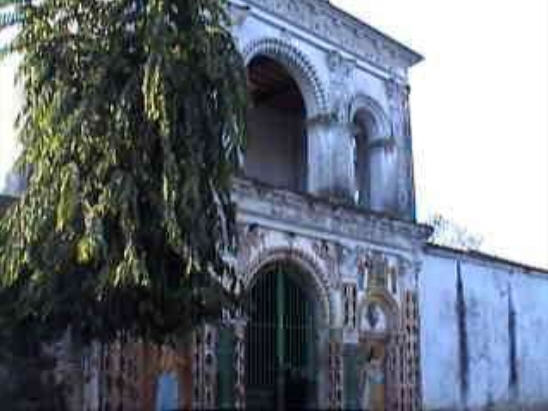
Almost everything known about Hridaya Chaitanya's own early life comes through his connection to one man, Gauridasa Pandit. He was a Bengali householder devotee. In Sri Chaitanya-charitamrita, Krishnadasa Kaviraja Goswami praises him as especially gifted both in receiving and in giving krishna-prema. Gauridasa Pandit had settled at Ambika Kalna, a town on the Ganges facing Shantipur. He had moved there from the village of Saligrama with his elder brother's permission. There he installed neem-wood Deities of Sri Sri Gaura-Nitai and gave the rest of his life to their worship. He cooked for them and dressed them, and by tradition he even received instructions from them directly. Later, his disciple Hridaya Chaitanya was placed in the care of these same Deities.
| Detail | Description |
|---|---|
| Guru | Gauridasa Pandit |
| Guru's own identity | Named as Subala, a cowherd friend of Krishna, in the Gaura-ganoddesha-dipika |
| Deities served | Sri Sri Gaura-Nitai (Gauranga and Nityananda), carved from neem wood |
| Location | Ambika Kalna, on the Ganges, Bengal |
| Textual source | Bhakti-ratnakara (seventh wave), Narahari Chakravarti Thakura |
Entrusted With the Deities' Care #
According to the traditional account, Gauridasa Pandit once left for a nearby village to collect alms just as the anniversary of Chaitanya Mahaprabhu's appearance day was approaching. He put his disciple in full charge of the Deities' daily service. The festival date drew close, and there was still no sign of his guru's return. The disciple grew anxious that invitations had not gone out to the visiting Vaishnavas and mahantas. He did not want to risk the festival falling apart, so he used his own judgment and sent the invitations himself. Gauridasa Pandit arrived back only a day or so before the festival. He was proudly told what his disciple had done. He did not praise him. Instead he showed sharp displeasure: "In my presence you are acting independently... this cannot go on. You cannot stay here." The disciple, without argument, bowed and went to sit alone under a tree on the riverbank.
The Festival on the Riverbank #
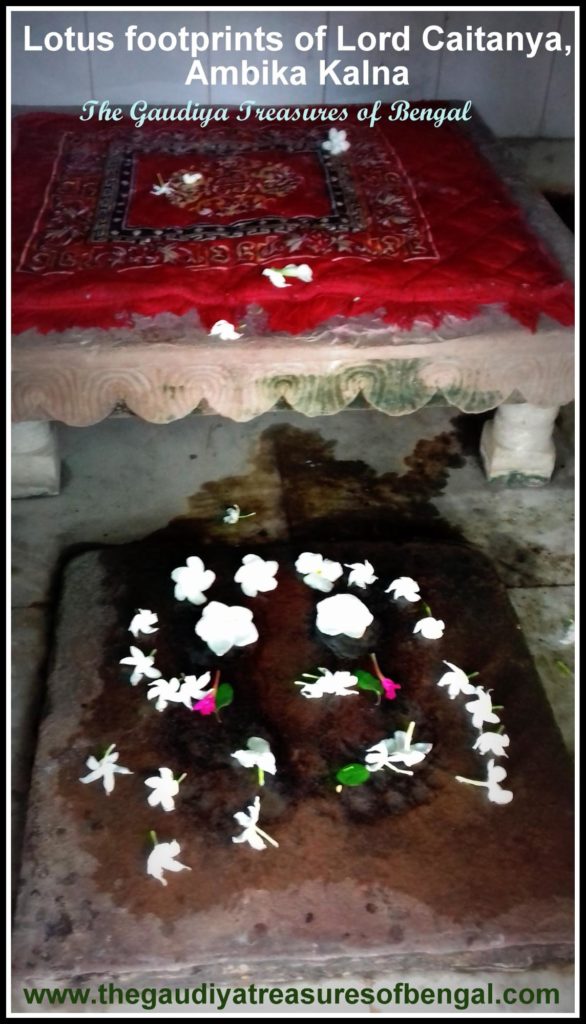
What followed is the episode by which this disciple is remembered. A wealthy merchant passing by boat gave him a large donation and told him to pass it on to his guru. When the disciple did so, Gauridasa Pandit's anger was apparently still not settled. He told the disciple to use that very donation to hold his own, separate festival on the riverbank. The disciple did exactly that. He gathered a large kirtana there, while Gauridasa Pandit conducted the main festival at the temple. At the appointed hour for the midday offering, the temple priest opened the altar doors and found the Deities gone. Gauridasa Pandit was certain his disciple had taken them. He rushed to the riverbank with a stick in hand, and found Gaura and Nityananda Themselves dancing in the middle of the kirtana. Tradition says that the Deities saw their pujari's anger and tried to flee. Then Gauridasa Pandit saw Gaura and Nityananda vanish. They did not go away. They vanished into his own disciple's heart.
A New Name #
Overcome, Gauridasa Pandit dropped his anger completely, embraced his disciple, and declared: "You are truly fortunate. From today your name will be Hridaya Chaitanya," meaning one who carries Chaitanya within his own heart. He then gave his disciple the adhikara, the spiritual qualification, for Deity seva. Local tradition at Ambika Kalna links this same pastime to a temple custom that continues today. The original Gaura-Nitai Deities are shown to pilgrims only for a brief "jhalak darshan" of a few seconds. This is said to guard against Them running off to join another kirtana.
What He Was Called Before #
Sources truly disagree on the name this devotee carried before that day. All the versions are reported here as they are, without forcing them into agreement. Gauridasa Pandit's own page, following Bhaktisiddhanta Sarasvati Thakura's Anubhasya commentary, calls him Chaitanya Dasa, Gauridasa Pandit's own foremost disciple from the start. The Gaudiya History website's own biography of Hridaya Chaitanya tells basically the same festival story, but it never gives his name from before that day. However, it quotes a Sanskrit verse from the devotional poem Shyamananda-shataka. The verse calls Shyamananda Pandit "hridayanandasya shishyam," meaning "the dear disciple of Hridayananda," which suggests that Hridayananda, not Chaitanya Dasa, was his name before the renaming. A third, more detailed account is compiled in a "Life of Shyamananda Pandit" drawn from the same devotional literature. It goes further still. It names him Hridayananda from birth, and says he was a nephew of Gadadhara Pandit through Gadadhara's brother Kashinath. It says Gadadhara Pandit raised and personally educated him, and then handed him over to Gauridasa Pandit for initiation. All three versions trace back, directly or indirectly, to Narahari Chakravarti Thakura's Bhakti-ratnakara. All three agree on the main point. He was a disciple of exceptional, tested devotion, and he was trusted with the Deities that Gauridasa Pandit loved above everything else.
A Base in Bengal, Not Orissa #
It is easy to think otherwise, but from this time on Hridaya Chaitanya's own life continued to center on Ambika Kalna in Bengal (Gauda-desh), not on Orissa. He did not carry a mission into Utkal himself. It was because of a disciple who would later come to him that Hridaya Chaitanya's name came to stand at the root of Gaudiya Vaishnavism's growth in that region. That disciple's arrival at Ambika Kalna is the subject of Discovering Duhkhi Krishnadasa.
