Srila Hridaya Chaitanya
The Guru Who Discovered Shyamananda Pandit
The complete life, on one page: The main biography and every pastime page, in order, in one place

Introduction
Srila Hridaya Chaitanya's place in Gaudiya Vaishnava history rests on one act, more than on anything he wrote or built himself. He was the disciple of Gauridasa Pandit at Ambika Kalna. There he first recognized, trained, and sent onward the milkman's son who became Shyamananda Pandit. Along with Narottama Dasa Thakura and Shrinivasa Acharya, Shyamananda Pandit was one of the three great preachers who carried the Vrindavana Goswamis' teachings back into Bengal and Orissa. One point should be made clear at the start. Hridaya Chaitanya's own life was spent at Ambika Kalna, a temple town on the Ganges in Bengal, not in Orissa. It was his disciple, not Hridaya Chaitanya himself, who was later sent to preach in Utkal.
| Detail | Description |
|---|---|
| Guru | Gauridasa Pandit of Ambika Kalna |
| Other names | Hriday Chaitanya, Hridaya Caitanya; some sources give his name before this title as Hridayananda |
| Base of activity | Ambika Kalna, on the Ganges in Bengal (Gauda-desh) |
| Most important disciple | Shyamananda Pandit, born Duhkhi Krishnadasa |
| Birth / disappearance | Not recorded in any available source |
| Primary textual source | Bhakti-ratnakara of Narahari Chakravarti Thakura (via secondary accounts; the full text is not on vedabase) |
Scriptural evidence for the introduction (1)
কিবা বিপ্র, কিবা ন্যাসী, শূদ্র কেনে নয় ।
যেই কৃষ্ণতত্ত্ববেত্তা, সেই ‘গুরু’ হয় ॥ ১২৮ ॥
kibā vipra, kibā nyāsī, śūdra kene naya
yei kṛṣṇa-tattva-vettā, sei 'guru' haya
Word for word
kibā: whether; vipra: a brāhmaṇa; kibā: whether; nyāsī: a sannyāsī; śūdra: a śūdra; kene naya: why not; yei: anyone who; kṛṣṇa-tattva-vettā: a knower of the science of Kṛṣṇa; sei: that person; guru haya: becomes the spiritual master.
"Whether one is a brahmana, a sannyasi or a shudra — regardless of what he is — he can become a spiritual master if he knows the science of Krishna."
From the purport: Purport excerpt: "Srila Bhaktisiddhanta Sarasvati Thakura also states that... if he is conversant in the science of Krsna he can become a spiritual master."
Placed on the main biography page because this verse's principle is the single idea Hridaya Chaitanya's own life is remembered for putting into practice, a generation before it was formally stated in these terms in the tradition's own literature.
Chapter 1
Life and Guru at Ambika Kalna
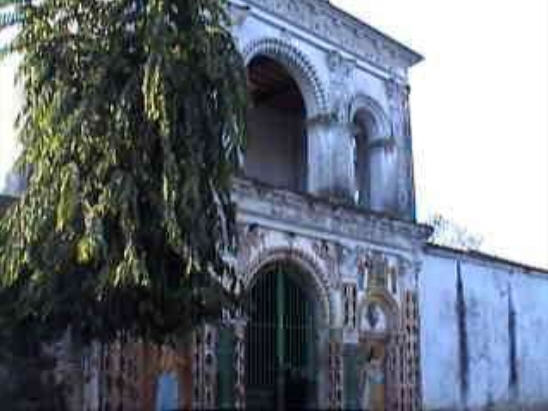
Almost everything known about Hridaya Chaitanya's own early life comes through his connection to one man, Gauridasa Pandit. He was a Bengali householder devotee. In Sri Chaitanya-charitamrita, Krishnadasa Kaviraja Goswami praises him as especially gifted both in receiving and in giving krishna-prema. Gauridasa Pandit had settled at Ambika Kalna, a town on the Ganges facing Shantipur. He had moved there from the village of Saligrama with his elder brother's permission. There he installed neem-wood Deities of Sri Sri Gaura-Nitai and gave the rest of his life to their worship. He cooked for them and dressed them, and by tradition he even received instructions from them directly. Later, his disciple Hridaya Chaitanya was placed in the care of these same Deities.
| Detail | Description |
|---|---|
| Guru | Gauridasa Pandit |
| Guru's own identity | Named as Subala, a cowherd friend of Krishna, in the Gaura-ganoddesha-dipika |
| Deities served | Sri Sri Gaura-Nitai (Gauranga and Nityananda), carved from neem wood |
| Location | Ambika Kalna, on the Ganges, Bengal |
| Textual source | Bhakti-ratnakara (seventh wave), Narahari Chakravarti Thakura |
Entrusted With the Deities' Care #
According to the traditional account, Gauridasa Pandit once left for a nearby village to collect alms just as the anniversary of Chaitanya Mahaprabhu's appearance day was approaching. He put his disciple in full charge of the Deities' daily service. The festival date drew close, and there was still no sign of his guru's return. The disciple grew anxious that invitations had not gone out to the visiting Vaishnavas and mahantas. He did not want to risk the festival falling apart, so he used his own judgment and sent the invitations himself. Gauridasa Pandit arrived back only a day or so before the festival. He was proudly told what his disciple had done. He did not praise him. Instead he showed sharp displeasure: "In my presence you are acting independently... this cannot go on. You cannot stay here." The disciple, without argument, bowed and went to sit alone under a tree on the riverbank.
The Festival on the Riverbank #
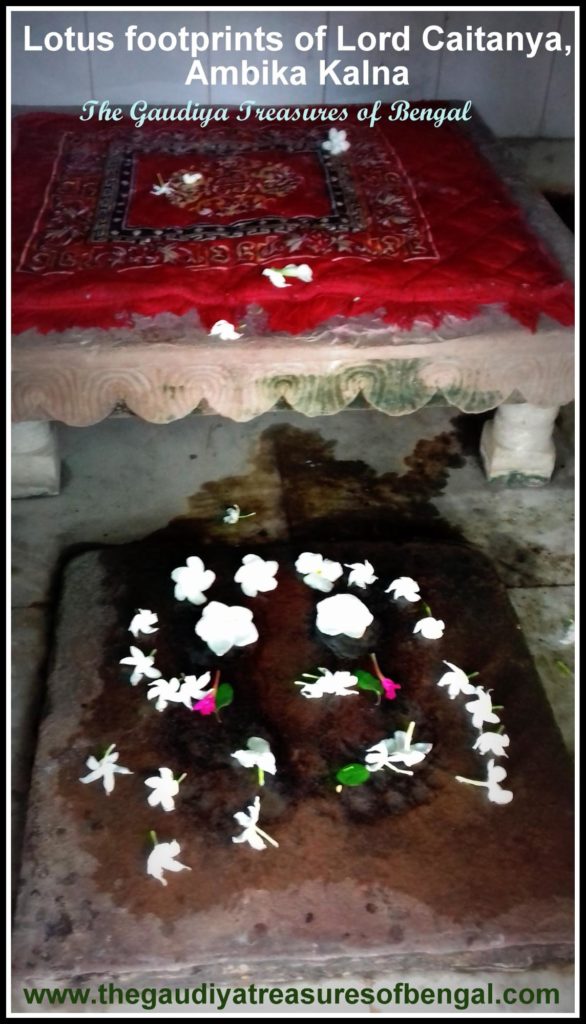
What followed is the episode by which this disciple is remembered. A wealthy merchant passing by boat gave him a large donation and told him to pass it on to his guru. When the disciple did so, Gauridasa Pandit's anger was apparently still not settled. He told the disciple to use that very donation to hold his own, separate festival on the riverbank. The disciple did exactly that. He gathered a large kirtana there, while Gauridasa Pandit conducted the main festival at the temple. At the appointed hour for the midday offering, the temple priest opened the altar doors and found the Deities gone. Gauridasa Pandit was certain his disciple had taken them. He rushed to the riverbank with a stick in hand, and found Gaura and Nityananda Themselves dancing in the middle of the kirtana. Tradition says that the Deities saw their pujari's anger and tried to flee. Then Gauridasa Pandit saw Gaura and Nityananda vanish. They did not go away. They vanished into his own disciple's heart.
A New Name #
Overcome, Gauridasa Pandit dropped his anger completely, embraced his disciple, and declared: "You are truly fortunate. From today your name will be Hridaya Chaitanya," meaning one who carries Chaitanya within his own heart. He then gave his disciple the adhikara, the spiritual qualification, for Deity seva. Local tradition at Ambika Kalna links this same pastime to a temple custom that continues today. The original Gaura-Nitai Deities are shown to pilgrims only for a brief "jhalak darshan" of a few seconds. This is said to guard against Them running off to join another kirtana.
What He Was Called Before #
Sources truly disagree on the name this devotee carried before that day. All the versions are reported here as they are, without forcing them into agreement. Gauridasa Pandit's own page, following Bhaktisiddhanta Sarasvati Thakura's Anubhasya commentary, calls him Chaitanya Dasa, Gauridasa Pandit's own foremost disciple from the start. The Gaudiya History website's own biography of Hridaya Chaitanya tells basically the same festival story, but it never gives his name from before that day. However, it quotes a Sanskrit verse from the devotional poem Shyamananda-shataka. The verse calls Shyamananda Pandit "hridayanandasya shishyam," meaning "the dear disciple of Hridayananda," which suggests that Hridayananda, not Chaitanya Dasa, was his name before the renaming. A third, more detailed account is compiled in a "Life of Shyamananda Pandit" drawn from the same devotional literature. It goes further still. It names him Hridayananda from birth, and says he was a nephew of Gadadhara Pandit through Gadadhara's brother Kashinath. It says Gadadhara Pandit raised and personally educated him, and then handed him over to Gauridasa Pandit for initiation. All three versions trace back, directly or indirectly, to Narahari Chakravarti Thakura's Bhakti-ratnakara. All three agree on the main point. He was a disciple of exceptional, tested devotion, and he was trusted with the Deities that Gauridasa Pandit loved above everything else.
A Base in Bengal, Not Orissa #
It is easy to think otherwise, but from this time on Hridaya Chaitanya's own life continued to center on Ambika Kalna in Bengal (Gauda-desh), not on Orissa. He did not carry a mission into Utkal himself. It was because of a disciple who would later come to him that Hridaya Chaitanya's name came to stand at the root of Gaudiya Vaishnavism's growth in that region. That disciple's arrival at Ambika Kalna is the subject of Discovering Duhkhi Krishnadasa.
Scriptural evidence for this chapter (1)
yam loka bhuvi kirtayanti hridayanandasya shishyam priyam sakhye shri-subalasya yam bhagavatah preshthanushishyam tatha sa shriman rasikendra-mastaka-manish citte mamaharnisham shri-radhapriya-narma-marmasu rucim sampadayan bhasatam
Shri Shyamananda was known in this world as Hridayananda's dear disciple; he was the grand-disciple of Subala sakha, the most dear friend of the Supreme Lord; he was the crest-jewel of the enjoyers of sacred rapture. May he appear day and night in my mind, bringing an appreciation for the essence of the joys of the beloved of Shri Radha.
This verse from the devotional poem Shyamananda-shataka names Hridaya Chaitanya as 'Hridayananda' and calls Shyamananda Pandit his dear disciple and Gauridasa Pandit's grand-disciple in the Subala lineage, one of the few surviving textual references to Hridaya Chaitanya's own identity outside the prose biographies.
Chapter 2
Discovering Duhkhi Krishnadasa
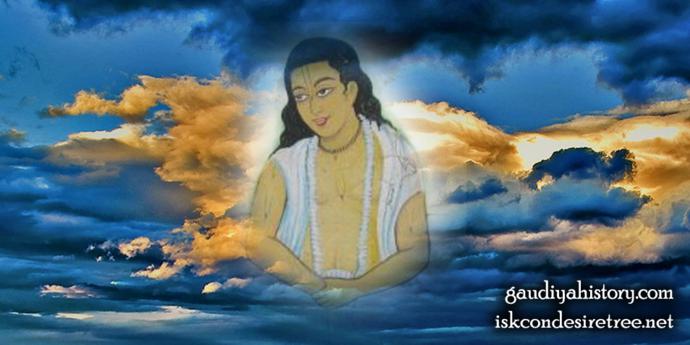
Some years after Hridaya Chaitanya received his new name, a boy arrived at Ambika Kalna. This boy's own life would carry that name far beyond Bengal. He was born to a family of milkmen belonging to the Six Gopa (Shata-gopa) community at Dharenda Bahadurpur. This village is now identified with Kalaikunda near Midnapur. He was named Duhkhi, meaning "sorrowful," and the name is sometimes spelled Dukhi or Dukhia. His father, Krishna Mandal, and mother, Durika, had lost several children before his birth. They are said to have named him Duhkhi to keep away further grief, and to have vowed that if this child survived they would offer him to Vishnu's service.
| Detail | Description |
|---|---|
| Birth name | Duhkhi (Dukhi, Dukhia) |
| Family | Milkmen (gopas) of the Six Gopa lineage; father Krishna Mandal, mother Durika |
| Birthplace | Dharenda Bahadurpur, near present-day Kalaikunda, Midnapur |
| Journey | Traveled with Ganga pilgrims to Ambika Kalna in Bengal |
| Name given by Hridaya Chaitanya | Krishnadasa (combined in tradition as Duhkhi Krishnadasa) |
A Boy Marked for Renunciation #
Even as a child, sources agree, Duhkhi showed signs that set him apart: an unusual seriousness once his basic schooling was done, and a growing pull toward the stories of Gaura and Nityananda that he heard from local devotees. When that pull became a wish to bathe in the Ganges, his father, himself a devotee, gave his blessing and let the boy join a group of pilgrims bound for Gauda-desh. He never returned home.
Two Accounts of How They Met #
Sources truly differ on whether this meeting was planned or happened by chance. Both versions are given here, without mixing them into one. One widely repeated account, on the Gaudiya History website's biography of Shyamananda Prabhu, describes the meeting as closer to chance. In this account, the boy simply traveled with the pilgrims to Ambika Kalna and, once there, "chanced to meet" Hridaya Chaitanya. A more detailed devotional account, compiled in a "Life of Shyamananda Pandit," tells it differently. In it, Duhkhi names Hridaya Chaitanya as his intended guru even before leaving home. He tells his father plainly, "Hriday Chaitanya Prabhu is my guru, he lives in Ambika Kalna. His guru is Gauridas Pandit... If you give the order, I will go to him." The available sources do not agree on this point. Perhaps Hridaya Chaitanya's reputation had already reached a milkman's household many days' journey away. Or perhaps the two simply found each other once the boy arrived.
What They Do Agree On #
Both versions agree on what happened at the meeting itself. When the boy arrived at Ambika Kalna, he paid his respects outside Gauridasa Pandit's household temple and found Hridaya Chaitanya there. When asked who he was, Duhkhi answered simply and honestly. He said that he had come a long way, that he was from a family of milkmen, and that his name was Duhkhi. Tradition says Hridaya Chaitanya was pleased by the plain sincerity of the boy's words. It says that he looked past the boy's non-brahmana birth and recognized in him what one account calls "the lotus of devotion blooming on the stem of renunciation." He gave the boy a new name on the spot, Krishnadasa. In time, on an auspicious day, he formally initiated him with the Krishna mantra.
A Choice That Echoes Through the Lineage #
This willingness to see real devotion first and social birth second was not an isolated kindness. Sri Chaitanya Mahaprabhu Himself is recorded as teaching this same principle to Ramananda Raya: that "whether one is a brahmana, a sannyasi or a shudra... he can become a spiritual master if he knows the science of Krishna" (Sri Chaitanya-charitamrita, Madhya 8.128). Later, when Krishnadasa had become Shyamananda Pandit, he handed down this very principle as an explicit order to his own chief disciple, Rasikananda Prabhu. He did this when he sent Rasikananda to initiate people across every caste line in Odisha. Hridaya Chaitanya's acceptance of a milkman's son at Ambika Kalna is where that three-generation thread begins. Training and Sending Him to Vrindavana tells what came next. It describes the training Hridaya Chaitanya gave this new disciple and the decision to send him to Vrindavana.
Scriptural evidence for this chapter (2)
কিবা বিপ্র, কিবা ন্যাসী, শূদ্র কেনে নয় ।
যেই কৃষ্ণতত্ত্ববেত্তা, সেই ‘গুরু’ হয় ॥ ১২৮ ॥
kibā vipra, kibā nyāsī, śūdra kene naya
yei kṛṣṇa-tattva-vettā, sei 'guru' haya
Word for word
kibā: whether; vipra: a brāhmaṇa; kibā: whether; nyāsī: a sannyāsī; śūdra: a śūdra; kene: why; naya: not; yei: anyone who; kṛṣṇa-tattva-vettā: a knower of the science of Kṛṣṇa; sei: that person; guru: the spiritual master; haya: is.
"Whether one is a brahmana, a sannyasi or a shudra — regardless of what he is — he can become a spiritual master if he knows the science of Krishna."
From the purport: Purport excerpt: "If one understands the truth of Krsna consciousness and seriously desires to attain transcendental knowledge for the perfection of life, he can accept a spiritual master from any social status, provided the spiritual master is fully conversant with the science of Krsna."
This is the same principle Hridaya Chaitanya put into practice by initiating Duhkhi, a milkman's son, purely on the evidence of his sincerity and devotion rather than his birth.
विप्राद् द्विषड्गुणयुतादरविन्दनाभ-पादारविन्दविमुखात् श्वपचं वरिष्ठम् ।
मन्ये तदर्पितमनोवचनेहितार्थ-प्राणं पुनाति स कुलं न तु भूरिमान: ॥ १० ॥
viprād dvi-ṣaḍ-guṇa-yutād aravinda-nābha-
pādāravinda-vimukhāt śvapacaṁ variṣṭham
manye tad-arpita-mano-vacanehitārtha-
prāṇaṁ punāti sa kulaṁ na tu bhūrimānaḥ
Word for word
viprāt: than a brāhmaṇa; dvi-ṣaṭ-guṇa-yutāt: qualified with twelve brahminical qualities; aravinda-nābha: Lord Viṣṇu; pāda-aravinda: to the lotus feet of the Lord; vimukhāt: not interested in devotional service; śva-pacam: one born in a low family, or a dog-eater; variṣṭham: more glorious; manye: I consider; tat-arpita: surrendered unto the lotus feet of the Lord; manaḥ: his mind; vacana: words; īhita: every endeavor; artha: wealth; prāṇam: and life; punāti: purifies; saḥ: he; kulam: his family; na tu: but not; bhūrimānaḥ: one falsely proud of his position.
If a brahmana has all twelve brahminical qualifications but is not a devotee and is averse to the lotus feet of the Lord, he is certainly lower than a devotee who is a dog-eater but who has dedicated everything to the Supreme Lord. Such a devotee can purify his whole family, whereas the so-called brahmana cannot purify even himself.
Cited here for the theme it carries, not as a verse about Duhkhi specifically: the traditional accounts frame Hridaya Chaitanya's recognition of a milkman's son as an instance of exactly this Vaishnava principle, that sincere devotion outweighs birth.
Chapter 3
Training and Sending Him to Vrindavana
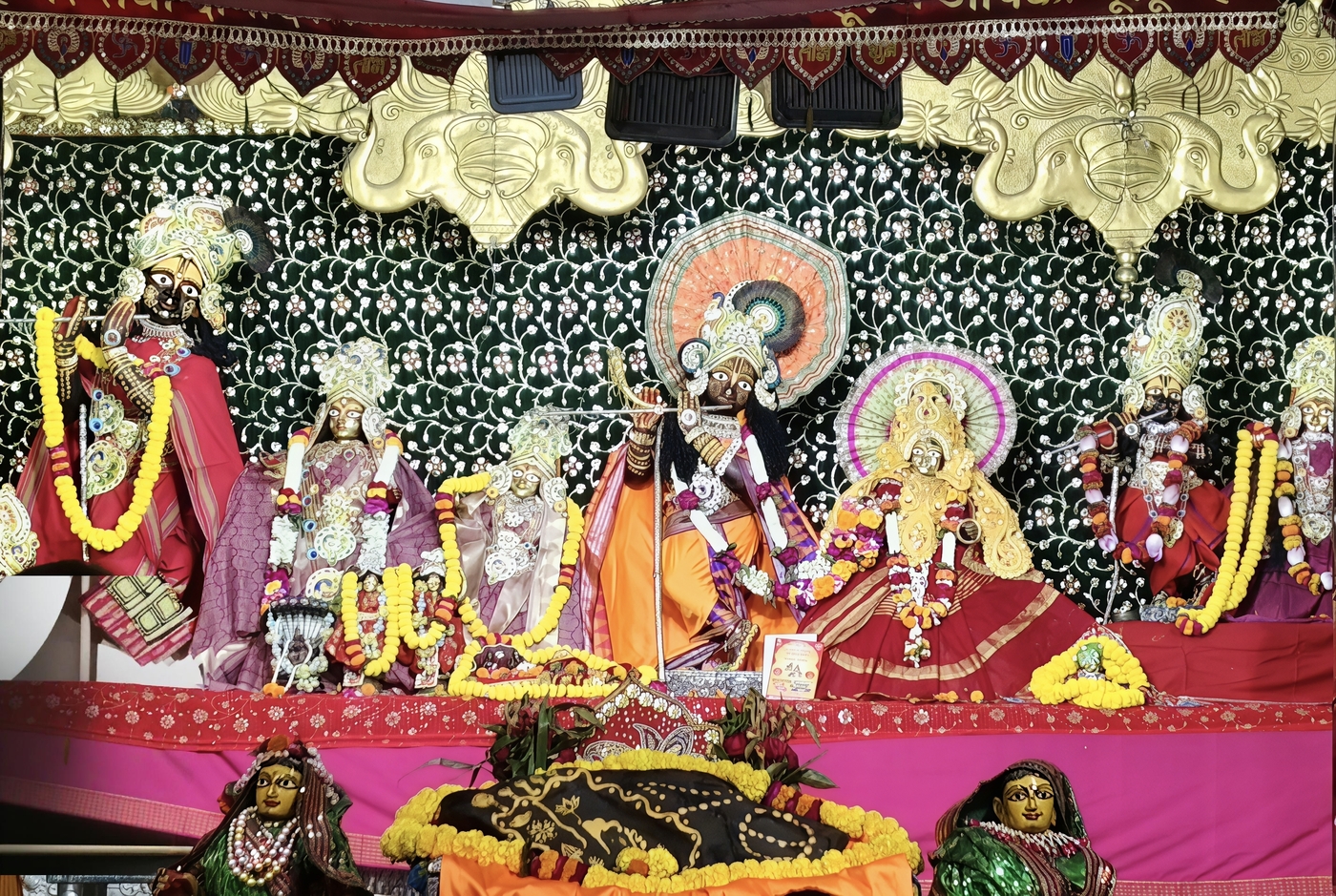
Once initiated, Krishnadasa gave himself completely to his guru's service. Hridaya Chaitanya watched that service closely. He is remembered as someone who trained his disciple with real personal attention, not one who simply accepted him and moved on. The available sources do not say exactly what the training was, beyond "assiduous service," meaning careful and hard-working service. This is a common description in this literature for a disciple's daily care of his guru's needs. But the same sources do describe in detail how wisely Hridaya Chaitanya recognized when his disciple's service had matured enough for him to be sent further. They also describe how he personally and deliberately made that happen.
| Detail | Description |
|---|---|
| New disciple's stated wish | To see the river Yamuna, having already bathed in the Ganges |
| Guru's response | "Yes, of course, you shall see it. You shall go to Braj-dhama." |
| Destination | Vrindavana, to study under Jiva Goswami |
| Traveling companions found there | Narottama Dasa Thakura and Shrinivasa Acharya |
| New name received in Vrindavana | Shyamananda |
"You Shall Go to Braj-Dhama" #
Tradition preserves a short but meaningful conversation between guru and disciple. After his bath in the Ganges, Krishnadasa's heart only grew more restless. "Now I shall see the Yamuna," he told his guru. Hridaya Chaitanya did not discourage this longing or treat it as youthful impatience. He understood it correctly as the pull of Vrindavana itself, and answered simply: "Yes, of course, you shall see it. You shall go to Braj-dhama." Some time later, when he judged that his disciple's service and devotion were firm enough, Hridaya Chaitanya gave Krishnadasa permission to travel to Vrindavana. Tradition says he sent with him his own messages of respect and dandavats to be delivered to the six Goswamis. According to the same account, he had also already written ahead to Jiva Goswami himself: "I have a disciple named Duhkhi Krishnadasa. I am offering him to you. Teach him well in Krishna consciousness... when his mind is fixed... you may send him back to me." The message may or may not have been delivered in exactly those words. But every version of the story makes the same point. This was a planned handing over between two gurus, not an abandonment.
The Journey to Vrindavana #
Krishnadasa's route to Vrindavana is remembered as a pilgrimage in itself. He went first through Navadwipa, where he paid respects at the old house of Jagannatha Mishra. Then he went to Gaya, where Chaitanya Mahaprabhu Himself had once taken initiation from Ishvara Puri. In Kashi (Benares) he met Tapana Mishra and Chandrashekhara Acharya. Finally he reached Mathura and Vrindavana, where he went looking for Jiva Goswami's own bhajana hut. There he found two other young students already studying under Jiva Goswami: Narottama Dasa Thakura and Shrinivasa Acharya. The three of them became close companions in scriptural study and in madhukari, the practice of begging just enough food for the day.
A Guru's Displeasure, and a Change of Heart #
This very human episode is, in one sense, as much about Hridaya Chaitanya as about his disciple. In Vrindavana, tradition holds, Krishnadasa received an unusual mark of tilaka and a new name, Shyamananda, in connection with a vision involving Srimati Radharani. Jiva Goswami himself was joyful about what had happened, though he asked that it not be spoken of publicly. Still, word of the change reached Ambika Kalna. Hridaya Chaitanya heard that his disciple had taken on a new name and tilaka without his permission. He was angry enough to travel to Vrindavana himself and scold Krishnadasa directly. Krishnadasa, tradition says, bore the rebuke without protest, certain in his own mind that he had never actually left his guru's service. That night, in a dream, Hridaya Chaitanya is said to have been rebuked in turn by Radharani herself. In the dream she told him plainly that she had given the boy his new name and mark, and asked why he had instructed his disciple otherwise. By morning Hridaya Chaitanya had accepted what had happened. He embraced Shyamananda warmly and returned to Ambika Kalna reconciled. The exact historical facts behind this episode are not certain. But the devotional sources consistently tell it as the moment when Hridaya Chaitanya's position as guru was, in a sense, corrected and confirmed at the same time.
Called Back, and Sent On Again #
Later, Shyamananda returned once to Ambika Kalna to report to his guru on his studies, before continuing eastward. It was from Ambika Kalna, some time afterward, that Hridaya Chaitanya gave the order that shaped the rest of Shyamananda's life. He saw that Chaitanya Mahaprabhu's own associates in Utkal desh were passing on one by one, and that the preaching there was fading. So he directed his disciple to go and revive it. That mission and what it built are the subject of Legacy.
Scriptural evidence for this chapter (2)
एवं परम्पराप्राप्तमिमं राजर्षयो विदुः ।
स कालेनेह महता योगे नष्टः परन्तप ॥ २ ॥
evaṁ paramparā-prāptam
imaṁ rājarṣayo viduḥ
sa kāleneha mahatā
yogo naṣṭaḥ paran-tapa
Word for word
evam: thus; paramparā: by disciplic succession; prāptam: received; imam: this science; rāja-ṛṣayaḥ: the saintly kings; viduḥ: understood; saḥ: that knowledge; kālena iha: in course of time in this world; mahatā: great; yogaḥ: the science; naṣṭaḥ: scattered; parantapa: O subduer of enemies.
This supreme science was thus received through the chain of disciplic succession, and the saintly kings understood it in that way. But in course of time the succession was broken, and therefore the science as it is appears to be lost.
Cited for the general principle of guru-parampara that Hridaya Chaitanya's deliberate handoff of his disciple to Jiva Goswami, reportedly with his own written message of introduction, exemplifies in miniature.
यस्यास्ति भक्तिर्भगवत्यकिञ्चना सर्वैर्गुणैस्तत्र समासते सुरा: ।
हरावभक्तस्य कुतो महद्गुणा मनोरथेनासति धावतो बहि: ॥ १२ ॥
yasyāsti bhaktir bhagavaty akiñcanā
sarvair guṇais tatra samāsate surāḥ
harāv abhaktasya kuto mahad-guṇā
manorathenāsati dhāvato bahiḥ
Word for word
yasya: of whom; asti: there is; bhaktiḥ: devotional service; bhagavati: to the Supreme Personality of Godhead; akiñcanā: without motive; sarvaiḥ guṇaiḥ: with all good qualities; tatra: there; samāsate: reside; surāḥ: the demigods; harau abhaktasya: of one not devoted to Hari; kutaḥ: where; mahat-guṇāḥ: good qualities.
All the demigods and their exalted qualities become manifest in the body of one who has developed unalloyed devotion for the Supreme Personality of Godhead. A person devoid of devotional service, however adept at mystic yoga or worldly life, has no good qualities of his own.
Cited for the theme of a sincere devotee's qualities being self-evident regardless of formal training, the same quality the traditional accounts say Hridaya Chaitanya recognized in Krishnadasa's service even before Vrindavana had shaped him further.
Chapter 4
Legacy
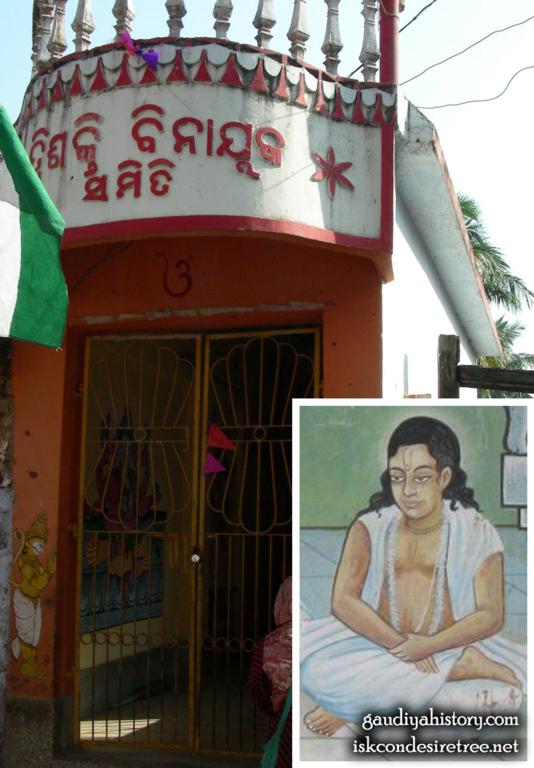
Shyamananda Pandit left Ambika Kalna carrying his guru's order on his head. By his own account, he felt real pain at leaving Hridaya Chaitanya behind. What he built afterward across Utkal is well recorded in the traditional life stories. Its outline is traced here, because every part of it grew, directly or indirectly, out of Hridaya Chaitanya's own original decision to recognize and train him.
| Detail | Description |
|---|---|
| Shyamananda's mission field | Dandeshwar, Rohini, Balarampur, Nrisimhapur, Gopiballabhpur, and wider Utkal |
| Chief disciple found in Utkal | Rasikananda Prabhu, met at Rohini |
| Later philosophical descendant | Baladeva Vidyabhusana |
| Hridaya Chaitanya's disappearance | Date and place not recorded; occurred while Shyamananda was preaching in Utkal |
| Shyamananda's own disappearance | 1552 Shaka era (1630 AD), by tradition |
Building a Mission in Utkal #
On his way to Utkal, Shyamananda passed through his own birth village and through Dandeshwar, where his father had once lived, preaching in both. At Rohini, on the Subarnarekha river, he met the young Rasikananda Prabhu, who quickly became his foremost disciple. Rasikananda's own page on discipleship under Shyamananda Pandit tells of this meeting in full. At Gopiballabhpur, Shyamananda installed Deities of Radha-Govinda that Rasikananda would later be entrusted to serve. From Nrisimhapur to Balarampur, Shyamananda is remembered for winning over wealthy householders, yogis, and even open skeptics through kirtana and plain explanation of the teachings of Gaura and Nityananda.
Word of a Guru's Passing #
At some point during these years of active preaching, Shyamananda received news that Hridaya Chaitanya had passed away. According to the fullest account of his life, he was at Gopiballabhpur at the time. Shyamananda is said to have fainted at the news, and then to have wept for a long time, until his guru appeared in a dream to comfort him and encourage him to continue his preaching. No available source gives a date, a place, or any further circumstance of Hridaya Chaitanya's own disappearance. We state this plainly instead of filling the gap with invented details. Shyamananda's birth, initiation, travels, and death are recorded in several independent accounts. But Hridaya Chaitanya himself simply disappears from the records, with no account of his last days.
A Line That Reaches Baladeva Vidyabhusana #
The lineage that his one act of recognition started is clearly remembered. From Shyamananda Pandit, the line of formal initiation runs through Rasikananda Prabhu. According to Gauridasa Pandit's own legacy page, it then continues through Nayanananda Goswami and Radha Damodara Goswami to Baladeva Vidyabhusana. Baladeva Vidyabhusana was the eighteenth-century scholar whose Govinda-bhashya secured the Gaudiya sampradaya's standing at Jaipur in 1718. In this way, a recorded chain of formal discipleship runs from Ambika Kalna, where a Bengali guru was willing to initiate a milkman's son, to one of the most important philosophical defenses the Gaudiya Vaishnava tradition ever made. That defense came nearly two centuries and several generations later.
The Same Principle, Handed Down Once More #
The thread that matters most in Hridaya Chaitanya's own story did not end with Baladeva Vidyabhusana's scholarship. It appeared again, more directly, in how Shyamananda himself passed on what he had received. When Shyamananda sent Rasikananda Prabhu to preach, he gave him an explicit charge to initiate people across every caste line in Utkal, "from the brahmanas up to the chandalas... without any discrimination." Shyamananda did not invent this idea on his own. It was the same principle his own guru had already put into practice by initiating him, a milkman's son, at Ambika Kalna. Gaudiya History's biographical entry on Hridaya Chaitanya notes that the family of disciples descending from this line came to be known as the "Shyamananda parivar," and that it is still remembered as prominent across Orissa and southern Bengal. Hridaya Chaitanya himself left behind no writings, no dated birth or death, and no independent monument of his own. Instead, he left a single act of recognition at Ambika Kalna, and a lineage that carried its effects forward for centuries.
Scriptural evidence for this chapter (1)
কাশীতে লেখক শূদ্র–শ্রীচন্দ্রশেখর ।
তাঁর ঘরে রহিলা প্রভু স্বতন্ত্র ঈশ্বর ॥ ৪৫ ॥
kāśīte lekhaka śūdra-śrīcandraśekhara
tāṅra ghare rahilā prabhu svatantra īśvara
Word for word
kāśīte: in Vārāṇasī; lekhaka: writer; śūdra: born of a śūdra family; śrī-candraśekhara: Candrashekhara; tāṅra ghare: in his house; rahilā: remained; prabhu: the Lord; svatantra īśvara: the independent supreme controller.
"This time Lord Chaitanya stayed at the house of Chandrashekhara, although he was regarded as a shudra or kayastha, for the Lord, as the Supreme Personality of Godhead, is completely independent."
From the purport: Purport excerpt: "...in the families of Thakura Raghunandana Acarya, Thakura Krsnadasa, Navani Hoda and Rasikananda-deva (a disciple of Syamananda Prabhu), the sacred thread ceremony is performed... and this system has continued for the past three to four hundred years."
This purport traces the caste-crossing principle, alive at the very root of Hridaya Chaitanya's own initiation of Duhkhi, forward through Shyamananda Pandit into Rasikananda Prabhu's own family line of initiating disciples for centuries afterward.
Closing
Servant of the Gaura-Nitai Deities at Ambika Kalna #
Gauridasa Pandit was among the householder devotees who gathered around Sri Chaitanya Mahaprabhu and Nityananda Prabhu in Bengal. Krishnadasa Kaviraja Goswami praises him by name in Sri Chaitanya-charitamrita. He installed neem-wood Deities of Gaura-Nitai at his home in Ambika Kalna and, tradition says, would not let the two Lords out of his sight. The disciple who came to serve those Deities most intimately was Hridaya Chaitanya. During this seva he received the name by which he is remembered today.
This story is recorded in Narahari Chakravarti Thakura's Bhakti-ratnakara, and Gauridasa Pandit's own page also tells it. Before Chaitanya Mahaprabhu's appearance-day festival, Gauridasa Pandit went away to collect alms and left his disciple in sole charge of the Deities. The disciple did not want to risk the date being missed, so he sent out the festival invitations on his own initiative. Gauridasa Pandit, testing him, showed anger at this independence and sent him away. The banished disciple then held the festival kirtana on the riverbank. During that kirtana the Deities themselves slipped out of the temple and danced among the devotees there. When Gauridasa Pandit, stick in hand, went to bring them back, he saw Gaura and Nityananda vanish into his disciple's own heart. Overcome, he embraced him and gave him a new name on the spot: Hridaya Chaitanya, "one who carries Chaitanya within his heart."
Sources do not agree on what he was called before that day. Gauridasa Pandit's own page, following Bhaktisiddhanta Sarasvati Thakura's Anubhasya, calls him Chaitanya Dasa. The Gaudiya History website's own biography of Hridaya Chaitanya calls him Hridayananda before the renaming, and so does a verse from the devotional poem Shyamananda-shataka quoted on that same page. A third account, found in a compiled "Life of Shyamananda Pandit," says that he was born a nephew of Gadadhara Pandit, as the son of Gadadhara's brother Kashinath. It adds that Gadadhara raised and educated him before handing him over to Gauridasa Pandit. All three versions are given here, instead of quietly choosing one. Every version agrees on the main event itself, and on the name that came from it.
- Hridaya Chaitanya - Gaudiya History
- SHYAMANANDA PRABHU - Biography - Gaudiya History
- Sri Shyamananda Pandit (Life of Shyamananda Pandit) - ISKCON ebooks
- Shyamananda Prabhu - Stephen Knapp
- Gauridasa Pandit - Disappearance and Legacy (this site)
- Gauridasa Pandit - Establishing Deity Worship at Kalna (this site)
- Rasikananda Prabhu - Discipleship Under Shyamananda Pandit (this site)
- Sri Chaitanya-caritamrita, Madhya-lila 8.128, purport
- Sri Chaitanya-caritamrita, Adi-lila 7.45, purport
