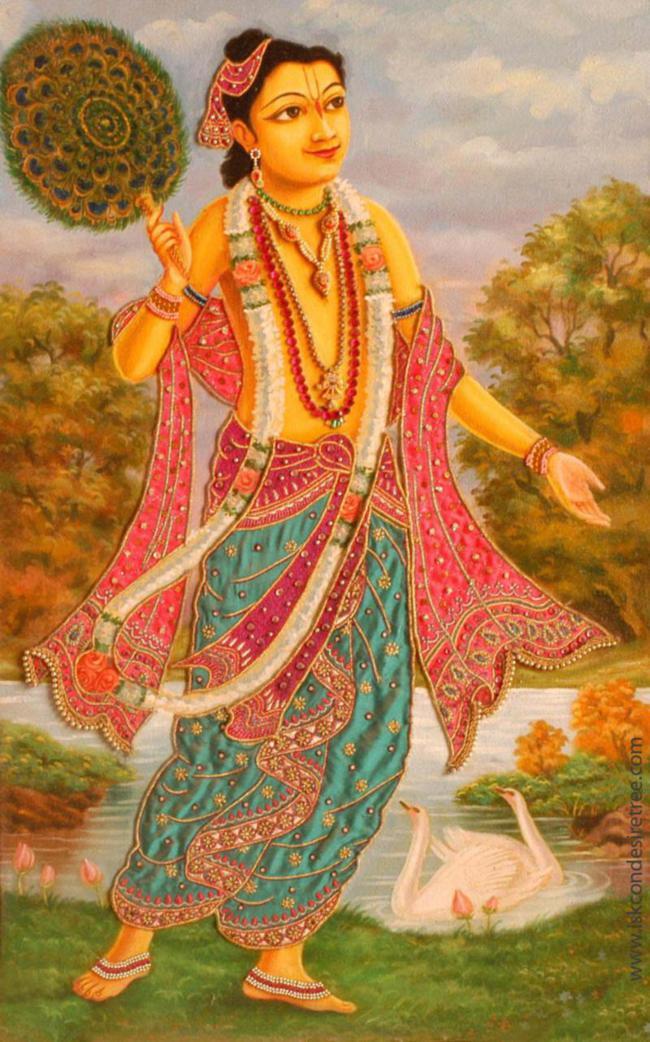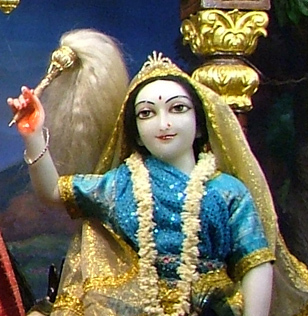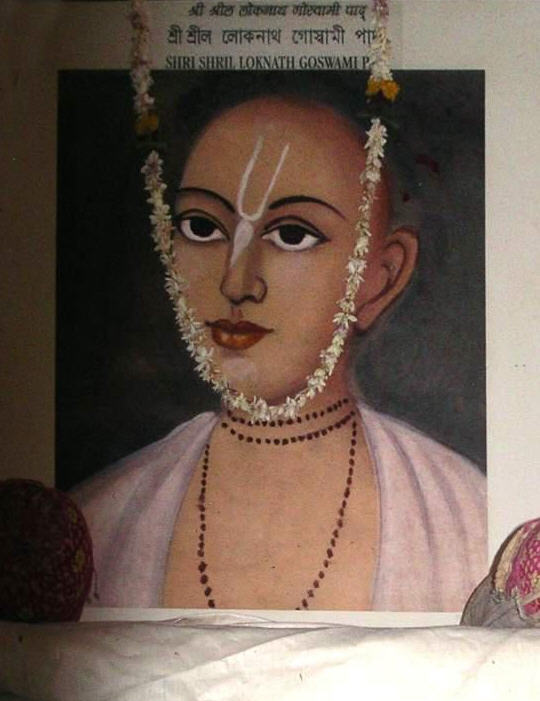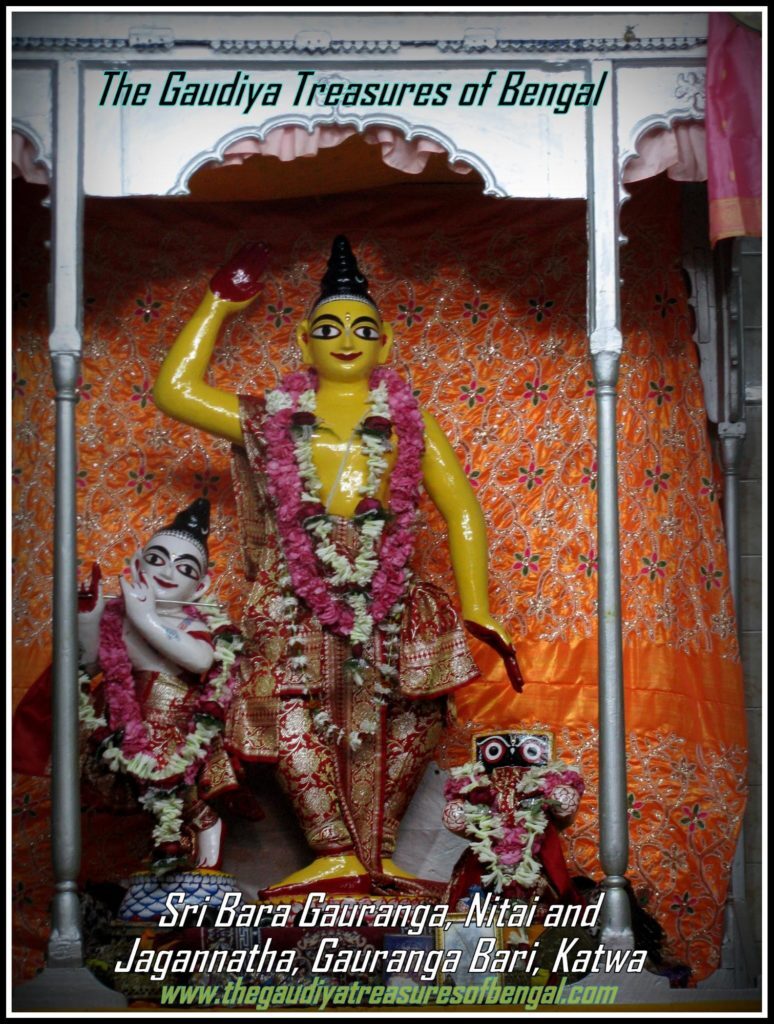
Srila Madhava Ghosh
The Singer of Vrindavana
Also known as Madhava Ghosa, Sri Madhava Ghosh, Madhava Ghosh Thakura
“In his heart, Madhava Ghosha yearns to attain Lord Gaura's company.”
Closing bhanita line of "Nace Pahum Abadhuta Gora," the one song surviving under his own signature
Madhava Ghosh was one of three brothers, with Govinda Ghosh and Vasudeva Ghosh, whose kirtan made Sri Chaitanya Mahaprabhu and Nityananda Prabhu dance in Navadvipa. Srila Krishnadasa Kaviraja Goswami names all three brothers separately in Sri Chaitanya-charitamrita, and Srila Prabhupada's purport picks Madhava out with a title that has stayed with his name for five hundred years: "known as the singer of Vrindavana." Most of what we know about Madhava is tied up with the story of his brothers. Where the old texts do speak of him alone, we give what they say plainly. Where they are silent, we leave the silence just as it is.
| Detail | Description |
|---|---|
| Also known as | Madhava Ghosa, Sri Madhava Ghosh, Madhava Ghosh Thakura |
| Family | Kayastha family of northern Rarh, Bengal; brother of Govinda Ghosh and Vasudeva Ghosh |
| Birthplace | Kulai village on the Ajay river near Katwa (one tradition); Baduna or Burangi grama in Sri Hatta (another) |
| Role | Kirtan singer among the associates of Sri Chaitanya Mahaprabhu and Nityananda Prabhu |
| Traditional epithet | "The singer of Vrindavana" |
| Identity | Rasollasa, a gopi of Vraja who sang the songs composed by Vishakha (Gaura-ganoddesha-dipika 188; Chaitanya-charitamrita Adi 10.115 purport) |
| Later shripata | Dainhat, near Katwa, Bengal |
Birth and the Ghosh Family of Bengal #
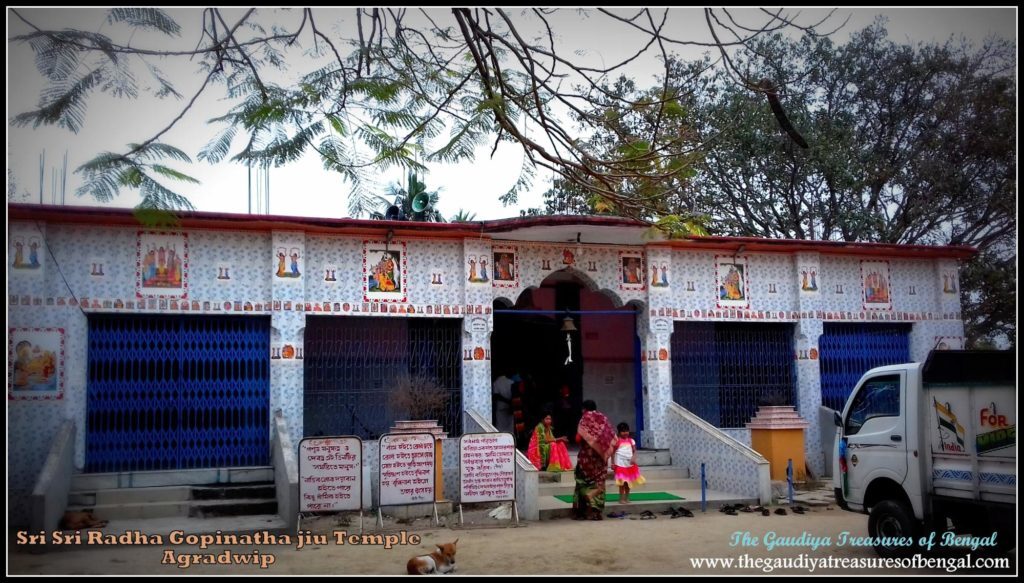
The three Ghosh brothers were born into a kayastha family from northern Rarh, the old name for the part of Bengal west of the Ganges. Beyond this, two accounts tell the story differently. One tradition, followed by several modern Gaudiya pilgrimage guides, says they were born in Kulai, a village on the bank of the Ajay river about twenty kilometers west of Katwa. An older account says instead that the family's true home was in Sri Hatta, in a village called Baduna or Burangi grama, and that their father lived at Kumarhatta. Only after his death, this account says, did Govinda, Madhava and Vasudeva settle in Navadvipa dhama. The two stories cannot both be fitted together, and there is no need to force them into one. What we can say plainly is that Madhava Ghosh's birthplace is remembered in more than one way.
What every source agrees on is what happened once the three brothers reached Navadvipa. Their combined voices became one of the fixed sounds of Mahaprabhu's early sankirtana. The fuller story of how the three brothers grew up and were drawn into that circle is told in Birth and the Ghosh Brothers of Navadvipa.
Three Brothers, One Kirtan #
Sri Chaitanya-charitamrita counts Govinda, Madhava and Vasudeva as the eighty-second, eighty-third and eighty-fourth branches of the "Chaitanya tree," Krishnadasa Kaviraja's picture of the associates who carried Mahaprabhu's sankirtana out into the world. Srila Prabhupada's purport at this verse gives Madhava his own line among the three: "Madhava Ghosh was expert in performing kirtana. No one within this world could compete with him. He was known as the singer of Vrindavana and was very dear to Sri Nityananda Prabhu." The same purport also tells us the brothers' eternal identity, from the Gaura-ganoddesha-dipika: in their eternal life in Vraja, they were three gopis, Kalavati, Rasollasa and Gunatunga, who sing the songs composed by Vishakha-gopi. Madhava is Rasollasa.
Kavi Karnapura's verse itself (Gaura-ganoddesha-dipika 188) lists the three gopis and then the three brothers in the same order. This is how we know that Madhava is Rasollasa:
kalāvatī rasollāsā guṇatuṅgā vraje sthitā
śrī viśākhā kṛtaṁ gītaṁ gāyanti smādya tā matāḥ
govinda mādhavānanda-vāsudevā yathākramam
"The vraja-gopis Kalavati-devi, Rasollasa-devi, and Gunatunga-devi, who sang the songs composed by Visakha-devi, later appeared as Govinda, Madhavananda, and Vasudeva respectively." (Gaura-ganoddesha-dipika 188)
Sri Chaitanya-charitamrita speaks of the three brothers again in its account of Mahaprabhu's beda-kirtana pastimes, saying simply that "their sankirtana... pleases the Lord very much." It is a small verse, but it fits a pattern seen again and again in the text: wherever Chaitanya Mahaprabhu's sankirtana is described at length, the Ghosh brothers tend to be there.
Known as the Singer of Vrindavana #
Chapter eleven of the Adi-lila, which lists the associates and expansions of Nityananda Prabhu, gives Madhava a verse of his own, not shared with his brothers: "Sri Madhava Ghosh was a principal performer of kirtana. While he sang, Nityananda Prabhu danced." The very next verse gives Vasudeva an equally personal line, that his kirtan could melt "even wood and stone." So even inside a family known together for sweet singing, tradition still remembered something special about each brother's voice. Chaitanya-bhagavata, quoted by later writers, adds a matching description of Madhava. It says that no singer on earth equaled him, and that he was especially dear to Nityananda Prabhu, even more than he was to Mahaprabhu.
This closeness to Nityananda Prabhu was not a small thing. It shaped the next part of Madhava's life, and it is why his own verse appears in a chapter about Nityananda's associates rather than Mahaprabhu's.
Two Circles at Once #
When Sri Chaitanya Mahaprabhu told Nityananda Prabhu to return to Bengal and preach, Sri Chaitanya-charitamrita names three companions who went with him: Ramadasa, Madhava Ghosh and Vasudeva Ghosh. Govinda Ghosh stayed behind with Mahaprabhu at Jagannatha Puri, "feeling great satisfaction." A few verses later, Krishnadasa Kaviraja tells us what this meant. Madhava and Vasudeva had gone with Nityananda under Mahaprabhu's own order. So they came to be counted among both groups of devotees at once. Sometimes they are listed with Chaitanya Mahaprabhu's own associates, and sometimes with Nityananda's. Govinda, who never left Puri, belonged only to the first.
This is one of the few places where the old texts separate Madhava from his brothers instead of naming all three together. It points to a specific, personal role: he was not just "one of the Ghosh brothers," but, together with Vasudeva, one of the singers Nityananda Prabhu brought back to Bengal with him on Mahaprabhu's own order. Their kirtan together at the Ratha-yatra festival, and how the four kirtan parties at Jagannatha Puri were arranged, is told in Singing for Sri Chaitanya Mahaprabhu.
Legacy in Song and Worship #
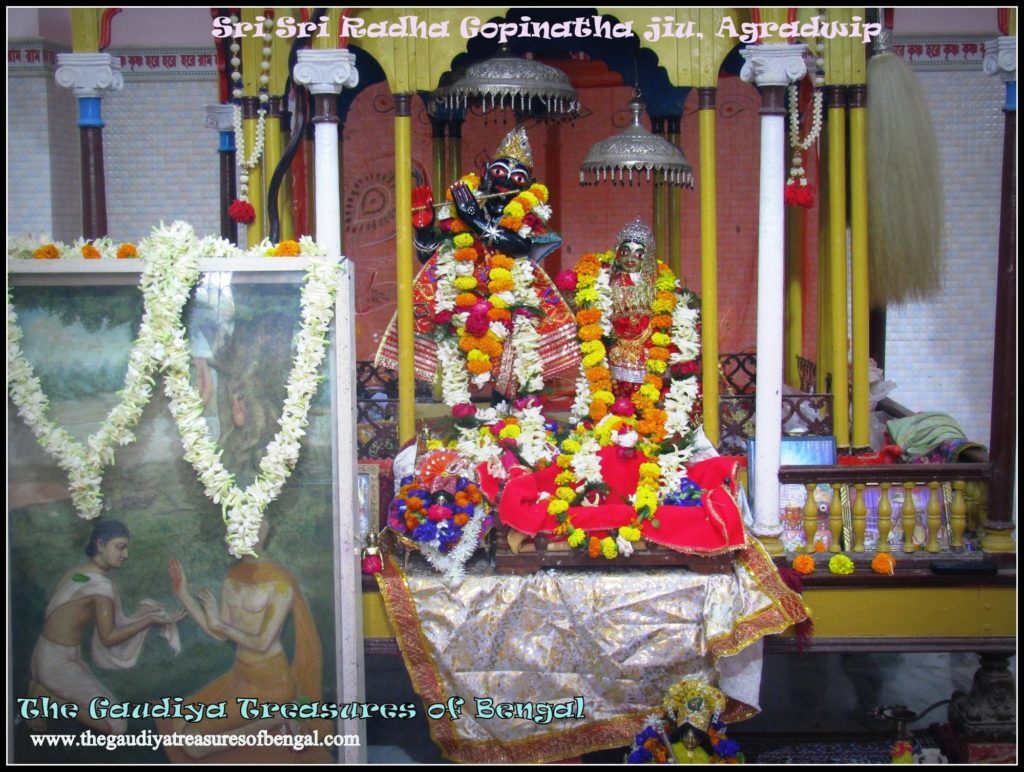
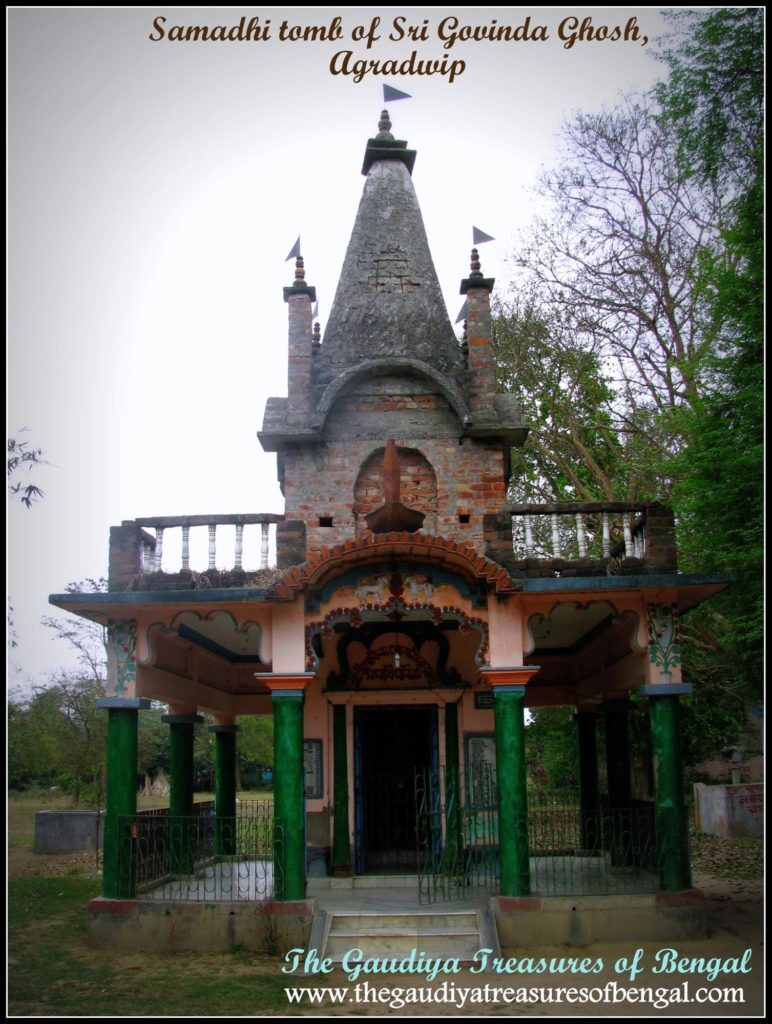
Very little is written about Madhava Ghosh's later life or his disappearance. There is no dated festival, no story of a deity and a funeral like the one told of Govinda Ghosh at Agradvipa, no samadhi-pit story like the one told of Vasudeva Ghosh at Tamluk. What tradition does keep is a shripata, a seat of worship, at Dainhat near Katwa, and a single Bengali song, Nace Pahum Abadhuta Gora, meaning "Gora Dances as a Wandering Avadhuta," which still carries his own bhanita, his signature line, today. Srila Bhaktisiddhanta Sarasvati Thakura placed all three brothers in madhurya-rasa, the mood of a lover's devotion, among those who take Srimati Radharani as their final shelter. This fits well with their eternal identity as gopis in Vishakha's own circle of singers.
This biography is short, but it can still be honest. Madhava Ghosh's voice was so dear to Nityananda Prabhu that Nityananda danced to it. His singing was so rare that Chaitanya-bhagavata calls no one on earth his equal. His voice is remembered here as clearly as the old texts allow, without adding anything or leaving anything out. What this legacy left behind in worship and song is told in Legacy and Disappearance.
Songs in the Vaishnava Song Book #
The Vaishnava Song Book carries 1 song by Srila Madhava Ghosh: see the full author page here.
Scriptural evidence
Quoted in the text above:
- Verse 188 Gaura-ganoddesha-dipika
Further verses:
govinda, mādhava, vāsudeva — tina bhāi
yāṅ-sabāra kīrtane nāce caitanya-nitāi
Word for word
govinda: Govinda; mādhava: Mādhava; vāsudeva: Vāsudeva; tina bhāi: three brothers; yāṅ-sabāra: all of whom; kīrtane: in the performance of saṅkīrtana; nāce: dance; caitanya-nitāi: Lord Caitanya and Nityānanda Prabhu.
The three brothers Govinda, Madhava and Vasudeva were the eighty-second, eighty-third and eighty-fourth branches of the tree. Lord Chaitanya and Nityananda used to dance in their kirtana performances.
From the purport: Purport excerpt: "Madhava Ghosh was expert in performing kirtana. No one within this world could compete with him. He was known as the singer of Vrindavana and was very dear to Sri Nityananda Prabhu."
The one purport that names Madhava individually among the three brothers and records his eternal identity as the gopi Rasollasa per Gaura-ganoddesha-dipika 188.
- Sri Chaitanya-caritamrta, Adi-lila 10.115 (Bhaktivedanta VedaBase)
- Sri Chaitanya-caritamrta, Adi-lila 11.18 (Bhaktivedanta VedaBase)
- Sri Chaitanya-caritamrta, Adi-lila 11.14-15 (Bhaktivedanta VedaBase)
- Sri Chaitanya-caritamrta, Adi-lila 10.117-118 (Bhaktivedanta VedaBase)
- Sri Chaitanya-caritamrta, Madhya-lila 11.88 (Bhaktivedanta VedaBase)
- Ghosh Brothers, Vedic Library by ISVARA.org (Gaura-ganoddesha-dipika 188 and Chaitanya-bhagavata citations)
- Sri Govinda, Vasudeva and Madhava Ghosh, ISKCON Bangalore Blog
- Vasudeva Ghosh, Govinda Ghosh, and Madhava Ghosh, Stephen Knapp
- The Ghosh Brothers, Shyam Das Baba
- Govinda Ghosh - Life and Pastimes, The Gaudiya Treasures of Bengal
- Vasudeva Ghosh, Gaudiya History
Frequently asked
When was Srila Madhava Ghosh born?
Srila Madhava Ghosh appeared Date not recorded (era of Sri Chaitanya Mahaprabhu, early 16th century) in Kulai, on the Ajay river near Katwa, Bengal (one tradition); Baduna or Burangi grama in Sri Hatta (another) — sources differ.
When and where did Srila Madhava Ghosh disappear?
Srila Madhava Ghosh disappeared Not recorded at Dainhat, near Katwa, Bengal (his later shripata); no specific date survives.
What are the main pastimes of Srila Madhava Ghosh?
The pastimes covered here include: Birth and the Ghosh Brothers of Navadvipa, Singing for Sri Chaitanya Mahaprabhu, Legacy and Disappearance.