Srila Govinda Ghosh
Kirtan Leader Among the Ghosh Brothers, Founder of Sri Gopinatha at Agradwipa
Also known as Govinda Ghosha, Govinda Ghosa, Ghosha Thakura, Ghosa Thakura
“O Mukunda, life of my life - what have I just heard? Gauranga is truly leaving Navadvipa. I do not think I have the strength to go on living.”
From a Bengali song attributed to Govinda Ghosh, on learning that Sri Chaitanya Mahaprabhu had resolved to leave Navadvipa for sannyasa
Govinda Ghosh was one of three brothers, Govinda, Madhava, and Vasudeva. Their kirtan is remembered in Sri Chaitanya-charitamrita as so sweet that Sri Chaitanya Mahaprabhu and Nityananda Prabhu would dance whenever the three brothers sang. Most sources speak of the three Ghosh brothers together, as one story. But scripture and tradition also remember things that belong to Govinda alone: his own songs, his choice to stay at Jagannatha Puri when his brothers went back to Bengal, his own Deity of Sri Gopinatha at Agradwipa, and his own kirtan party at the yearly Ratha-yatra festival. Both threads matter: what the three brothers did as one, and what Govinda alone is remembered for.
| Detail | Description |
|---|---|
| Family | Uttara-Radhiya Kayastha family of Bengal, with brothers Madhava and Vasudeva |
| Home / shripat | Agradwipa, on the Ganga near Katwa, Bardhaman district |
| Also known as | Ghosha Thakura, Ghosa Thakura |
| Deity established | Sri Gopinatha, Agradwipa |
| Role at Ratha-yatra | Leader of his own kirtan party, in which his brothers Madhava and Vasudeva sang as responding singers |
| Identity | Kalavati, a gopi of Vraja who sang the songs composed by Vishakha (Gaura-ganoddesha-dipika 188; Chaitanya-charitamrita Adi 10.115 purport) |
The Three Ghosh Brothers of Navadvipa #
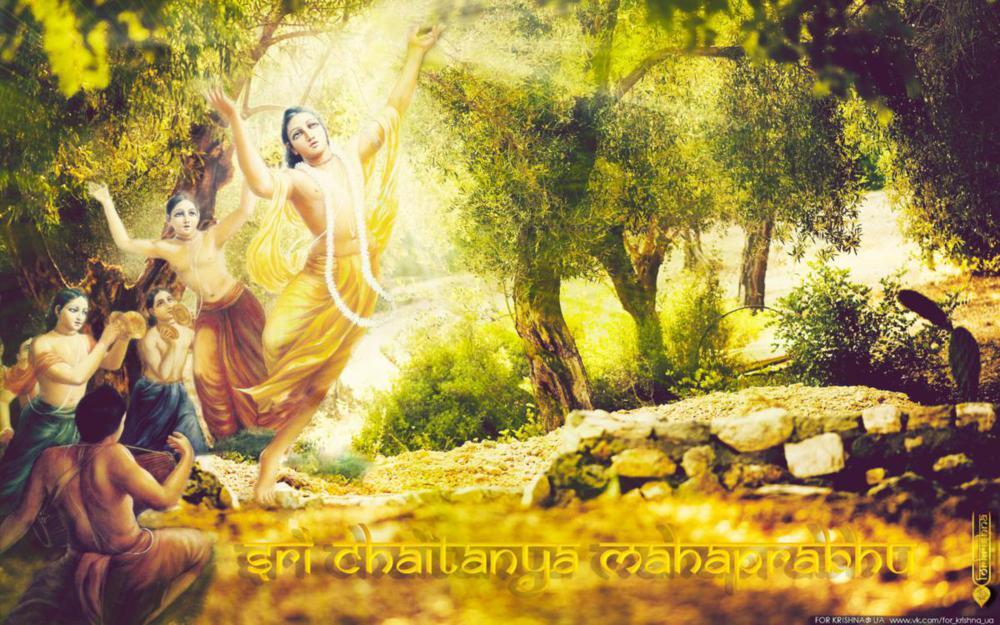
Krishnadasa Kaviraja Goswami names the three brothers together in one verse of Chaitanya-charitamrita: "Govinda, Madhava, and Vasudeva, three brothers, in whose kirtana Chaitanya and Nitai dance." Srila Prabhupada's purport to this verse adds that all three were born in a kayastha family of the Uttara-Radhiya section. It also says that Madhava sang so well he was called "the singer of Vrindavana," and that the brothers were among the seven kirtan parties that sang when Mahaprabhu attended the Ratha-yatra festival at Jagannatha Puri. Tradition remembers their kirtan at some of the most special gatherings of the early sankirtana movement in Navadvipa: the courtyard of Srivasa Thakura, the nagara-sankirtana that marched to the house of the local Kazi, and the house of Raghava Pandit. Birth and the Ghosh Brothers of Navadvipa tells the full story of their family, their separate shripatas, and the little that is known of their early years.
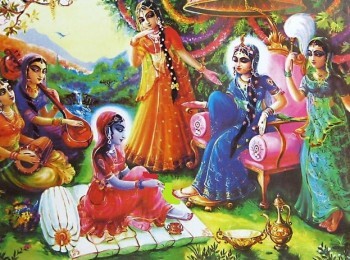
Srila Prabhupada's purport to this verse also gives the brothers' eternal identity, taken from Kavi Karnapura's Gaura-ganoddesha-dipika (verse 188). The verse names three gopis and then the three brothers, in the same order:
kalāvatī rasollāsā guṇatuṅgā vraje sthitā
śrī viśākhā kṛtaṁ gītaṁ gāyanti smādya tā matāḥ
govinda mādhavānanda-vāsudevā yathākramam
"The vraja-gopis Kalavati-devi, Rasollasa-devi, and Gunatunga-devi, who sang the songs composed by Visakha-devi, later appeared as Govinda, Madhavananda, and Vasudeva respectively." (Gaura-ganoddesha-dipika 188)
So Govinda, named first, is Kalavati. In Srila Prabhupada's own words in the purport to Chaitanya-charitamrita Adi 10.115: "According to the Gaura-gaṇoddeśa-dīpikā (188), the three brothers were formerly Kalāvatī, Rasollāsā and Guṇatuṅgā, who recited the songs composed by Śrī Viśākhā-gopī."
A Song Written in Grief #
One piece of writing belongs to Govinda alone. Old Bengali Vaishnava song collections keep at least two padas that he wrote in his own voice. They describe his shock when he learned that Gauranga had decided to leave Navadvipa forever and take sannyasa. The Vaishnava Song Book lists three songs credited to "Govinda Ghosha." One of them is titled, in translation, "Gora Went to the Eastern Land, His Own Associates Fell Into Distress," and it strikes a rare, personal note of separation. Most songs of this kind are written for festivals or in praise. Birth and the Ghosh Brothers of Navadvipa explains what can be confirmed about these songs, and what later devotional retelling has added beyond what scripture actually says.
Remaining at Jagannatha Puri #
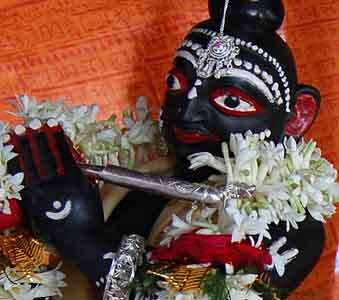
Chaitanya-charitamrita records one clear moment where Govinda's path parted from his brothers'. When Mahaprabhu sent Nityananda Prabhu back to Bengal to preach, three devotees went with Him: Ramadasa, Madhava, and Vasudeva Ghosha. Govinda did not go. "Govinda Ghosha, however, remained with Sri Chaitanya Mahaprabhu at Jagannatha Puri and thus felt great satisfaction," writes Krishnadasa Kaviraja Goswami. Tradition explains why. While traveling with the Lord's party, Govinda kept a small stock of haritaki (dried myrobalan) for the next day, and Mahaprabhu gently corrected the habit. By the same account, He then told Govinda to stay behind and take charge of installing a Deity. What happened next is told in full on Serving Mahaprabhu and the Gopinatha Deity of Agradwipa. That page tells of the sacred stone found in the Ganga, the Deity of Sri Gopinatha, and a household marked by real loss. It also gives an important note about a different "Govinda" who is often confused with him.
Leading His Own Kirtan at the Ratha-Yatra #
Years later, when the three brothers came back each year to Puri for the Ratha-yatra festival, Chaitanya-charitamrita records something that again sets Govinda apart. Mahaprabhu made him "the chief" of one of the kirtan parties, with the younger Haridasa, Vishnudasa, and Raghava singing beside him. Madhava and Vasudeva joined this same party as responding singers, with Vakreshvara Pandita as its dancer. The family still sang together, but now Govinda was the named leader. This detail, Govinda's identity as Kalavati in the Gaura-ganoddesha-dipika, and the difficult question of where he finally passed away, are told in Legacy and Disappearance.
What Remains Honestly Uncertain #
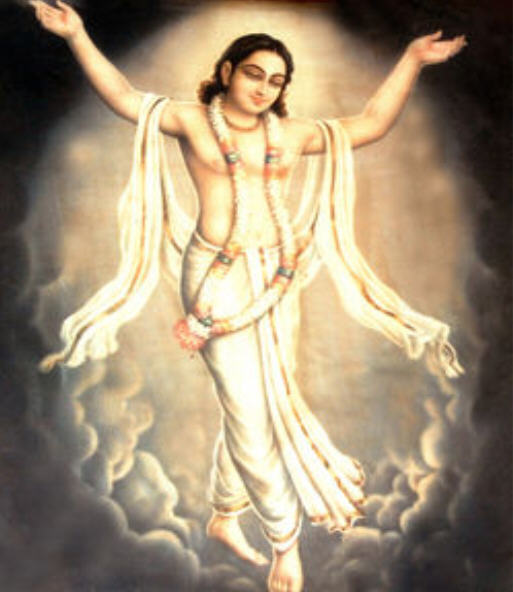
Much of what is told about Govinda Ghosh today comes from later devotional retellings, not directly from Chaitanya-charitamrita or Chaitanya-bhagavata. This includes the vivid dream of a Krishna-shila floating down the Ganga, the deaths of his wife and only son, and Krishna's own promise to perform his shraddha. That does not make these stories false. Gaudiya Vaishnava tradition has always carried such stories alongside its scripture, and the Gopinatha Deity at the center of these stories is real and still worshiped at Agradwipa today. Still, we should keep apart what Krishnadasa Kaviraja Goswami himself wrote and what temple tradition added later. We should not treat both as equally certain.
Songs in the Vaishnava Song Book #
The Vaishnava Song Book carries three songs attributed to Srila Govinda Ghosh. See the full author page here.
Scriptural evidence
Quoted in the text above:
- Verse 188 Gaura-ganoddesha-dipika
Further verses:
govinda, madhava, vasudeva-tina bhai
yan-sabara kirtane nace caitanya-nitai
Word for word
govinda-Govinda; madhava-Madhava; vasudeva-Vasudeva; tina bhai-three brothers; yan-sabara-all of whom; kirtane-in the performance of sankirtana; nace-dance; caitanya-nitai-Lord Caitanya and Nityananda Prabhu.
The three brothers Govinda, Madhava and Vasudeva were the eighty-second, eighty-third and eighty-fourth branches of the tree. Lord Caitanya and Nityananda used to dance in their kirtana performances.
From the purport: Purport excerpt: "Govinda established the Gopinatha temple in Agradvipa, where he resided... According to the Gaura-ganoddesa-dipika (188), the three brothers were formerly Kalavati, Rasollasa and Gunatunga."
The foundational verse naming all three Ghosh brothers together and recording, in Srila Prabhupada's own purport, that Govinda specifically established the Gopinatha Deity at Agradwipa.
- Sri Chaitanya-charitamrita, Adi-lila 10.115, 10.117-118
- Sri Chaitanya-charitamrita, Madhya-lila 11.88, 13.42-43
- Gaudiya History (ISKCON Desire Tree): Sri Govinda Ghosh (short biography)
- Gaudiya History (ISKCON Desire Tree): Govinda Ghosh Biography (full)
- Gaudiya History (ISKCON Desire Tree): Sri Vasudeva Ghosh
- Srila Prabhupada, lecture on Sri Chaitanya-charitamrita, Adi-lila 10th-11th chapters, Los Angeles, December 17, 1973
- This site's Vaishnava Song Book: songs credited to Govinda Ghosha
Frequently asked
When was Srila Govinda Ghosh born?
Srila Govinda Ghosh appeared Not recorded; a contemporary of Sri Chaitanya Mahaprabhu (late 15th century) in An Uttara-Radhiya Kayastha family of Bengal; local tradition ties him to the Agradwipa area near Katwa.
When and where did Srila Govinda Ghosh disappear?
Srila Govinda Ghosh disappeared Not recorded at Agradwipa, Bengal, by most tradition (one source instead places his samadhi among the 64 Samadhis near Radha-kunda, Vrindavana).
What are the main pastimes of Srila Govinda Ghosh?
The pastimes covered here include: Birth and the Ghosh Brothers of Navadvipa, Serving Mahaprabhu and the Gopinatha Deity of Agradwipa, Legacy and Disappearance.