Srila Rupa Gosvami
Foremost of the Six Gosvamis of Vrindavana, Architect of the Science of Devotional Rasa
The complete life, on one page: The main biography and every pastime page, in order, in one place
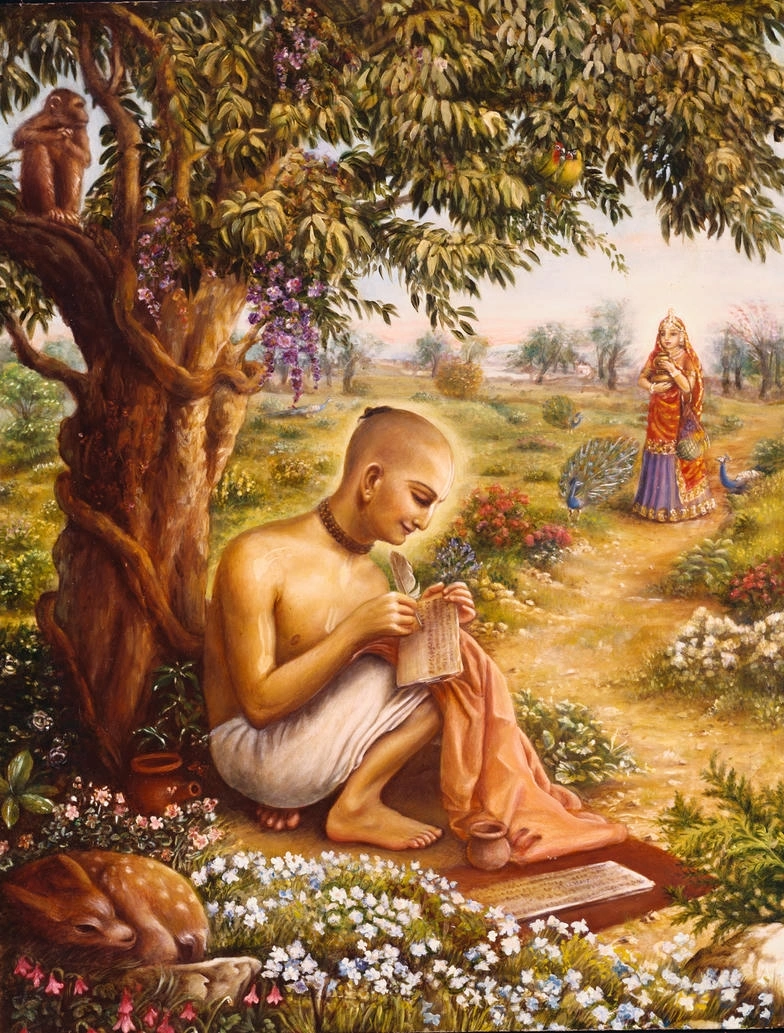
Introduction
śrī-caitanya-mano-'bhīṣṭaṁ sthāpitaṁ yena bhū-tale
svayaṁ rūpaḥ kadā mahyaṁ dadāti sva-padāntikam
"When will Srila Rupa Gosvami Prabhupada, who has established within this material world the mission to fulfill the desire of Sri Chaitanya Mahaprabhu, give me shelter at his lotus feet?" This is the traditional pranama-mantra offered to Srila Rupa Gosvami.
Srila Rupa Gosvami is the leader of the Six Goswamis, the renounced scholars of Vrindavana. Sri Chaitanya Mahaprabhu sent Rupa and his brother Sanatana there to recover its lost holy places and to set down the theology of the Gaudiya Vaishnava tradition in written scripture. Rupa was once the chief secretary in the court of an independent Muslim sultan of Bengal. He gave away his great fortune to follow a wandering sannyasi he had barely met. Within a few decades he became the most systematic theologian the tradition would ever produce. His book on the science of devotional rasa, his two Sanskrit dramas, and his short manual on how a devotee should live day to day are still essential reading in Gaudiya Vaishnavism five centuries later. Srila Prabhupada carried this lineage to the West. Gaudiya Vaishnavas call themselves rupanugas, followers in the line of Rupa Gosvami.
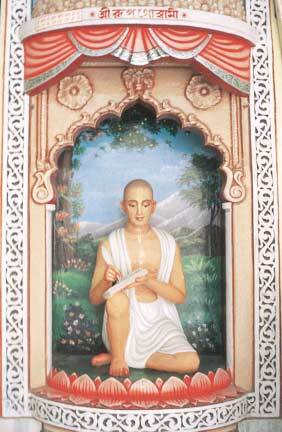
| Detail | Description |
|---|---|
| Birth name | Given variously as Rupa or Santosha in secondary sources |
| Born | c. 1489 (sources vary), into a Karnataka-brahmana family settled in Bengal |
| Father | Kumaradeva |
| Brothers | Sanatana Gosvami (elder), Anupama (Vallabha, younger, father of Jiva Gosvami) |
| Identity | In Krishna-lila: Sri Rupa-manjari, a gopi famous in Vrindavana (Gaura-ganoddesha-dipika 180; Chaitanya-charitamrita Adi 10.84 purport) |
| Court title under Hussain Shah | Dabir Khas, chief secretary |
| Chief works | Bhakti-rasamrita-sindhu, Vidagdha-madhava, Lalita-madhava, Ujjvala-nilamani, Upadeshamrita |
| Disappeared | Traditionally 1564, at Seva-kunja, Vrindavana |
Scriptural evidence for the introduction (1)
श्रीरूपमञ्जरी ख्याता यासीद्वृन्दावने पुरा ।
साद्य रूपाख्यगोस्वामी भूत्वा प्रकटतामियात् ॥१८०॥
śrī-rūpa-mañjarī khyātā yāsīd vṛndāvane purā
sādya rūpākhya-gosvāmī bhūtvā prakaṭatām iyāt
Sri Rupa-manjari, who had been famous in Vrndavana-dhama, appeared as Srila Rupa Gosvami.
From the purport: In the Gaura-gaṇoddeśa-dīpikā (180) Śrī Rūpa Gosvāmī is described to be the gopī named Śrī Rūpa-mañjarī. (Srila Prabhupada, Chaitanya-charitamrita Adi 10.84 purport)
Kavi Karnapura identifies Srila Rupa Gosvami with Sri Rupa-manjari, a gopi of Vrindavana; Srila Prabhupada cites this verse in his purport to Chaitanya-charitamrita Adi 10.84. Sanskrit: diacritic edition of the Gaura-ganoddesha-dipika; English translation as published at bvmlu.org.
Chapter 1
Birth and Early Life in Bengal
A Karnataka-brahmana family's long migration to the Bengal sultanate, and the education of three remarkable brothers
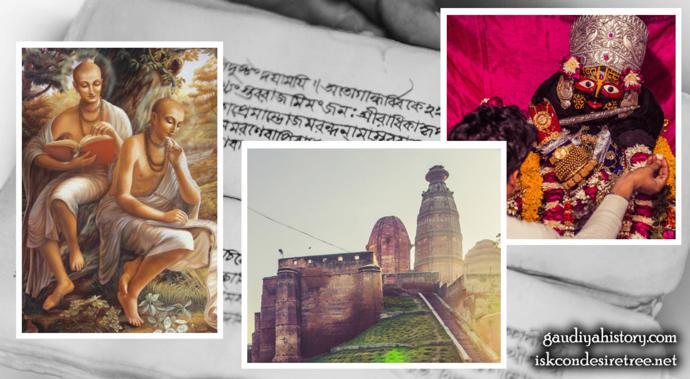
Long before Rupa Gosvami was born, his family had already made one great journey. They belonged to a line of Karnataka brahmanas of the Bharadvaja gotra. Family tradition remembers one ancestor, Sarvajna, as having held the title jagadguru. He was a scholar-king who was respected in his own part of the south. Over several generations the family moved north and east, first to Naihati on the bank of the Ganges, and later into the territory of Gauda. Gauda was the Bengal capital under the independent sultans who ruled the region in the late fifteenth century. By the time Rupa's father, Kumaradeva, was raising his own family, the family's Karnataka roots were mostly something remembered from the past.
| Detail | Description |
|---|---|
| Family origin | Karnataka brahmanas, Bharadvaja gotra |
| Migration route | Karnataka to Naihati (on the Ganges) to Gauda, Bengal |
| Father | Kumaradeva |
| Three sons | Sanatana (eldest), Rupa, Anupama or Vallabha (youngest) |
| Education | Sanskrit, Nyaya (logic), Persian and Arabic |
Three Sons of Kumaradeva #
Kumaradeva raised three sons who would each leave a permanent mark on Gaudiya Vaishnavism. Sanatana, the eldest, was already known in his youth as an exceptionally sharp scholar. Rupa was younger by perhaps a year. He matched Sanatana in learning, and he would go on to write more than his brother. The youngest, Anupama, also known by the name Vallabha, is remembered less for his own scholarship than for his son. Anupama died before ever reaching Vrindavana himself. His boy, Sri Jiva Gosvami, would be raised largely on the example of his two uncles. As a young man, Jiva would later join them in Vraja.
A Longer Line, Traced Back Four Generations #
Family tradition traces this lineage back several generations further still. It names an ancestor called Sarvajna, a brahmana of standing in Karnataka. His two sons, Rupeshvara and Harihara, were forced out of whatever position the family had held, and they settled instead in the highlands. Rupeshvara's son, Padmanabha, is remembered as the one who actually made the move north to Naihati, on the bank of the Ganges. Padmanabha had five sons, and the youngest of them, Mukunda, was the father of Kumaradeva, Rupa's own father. Some accounts do not only name Fatehabad in general terms. They place Kumaradeva's household more exactly, at a village still called Prembagh today, near Ramshara in the Jessore district of what is now Bangladesh. They also give the name of Rupa's mother, Revatidevi, alongside that of his father.
An Education Built for the Court #
Because the family's fortunes depended on standing well with Bengal's Muslim rulers, Kumaradeva made sure his sons were educated well beyond the usual brahmana course of study. Besides Sanskrit grammar, poetics and the difficult discipline of Nyaya logic, all three brothers were trained in Persian and Arabic. These were the working languages of the sultan's government. This was an unusual course of study for brahmana boys of the period. It shows plainly what their father intended for them. He wanted them in government service, not in the temple or the forest hermitage that both older brothers would eventually choose instead.
Teachers Worthy of Three Exceptional Students #
Secondary biographical accounts name the family's main teacher as Vasudeva Sarvabhauma Bhattacharya, a logician with a strong reputation in the region. All three brothers are said to have studied Nyaya-shastra in depth under him. Such training was demanding even for brahmana boys who meant to remain scholars their whole lives. These three brothers were being trained instead for government service. Even so, they entered adulthood able to debate philosophy as equals with the most learned men of Bengal, Hindu or Muslim. At the same time, they knew Persian and Arabic well enough to write official letters. This unusual double skill, strict Sanskrit learning together with the practical languages of government, is what made Rupa and Sanatana so valuable to the Bengal sultanate's administration. Later, once his court career was behind him, it also let Rupa turn the same disciplined mind toward Sanskrit theology. Other accounts tell the story a little differently. They name the actual family tutor not as Sarvabhauma Bhattacharya himself but as his brother, Sarvananda Vidya-Vachaspati. They also separately credit a scholar and landowner of Saptagram named Syed Fakirud-Din with teaching the brothers their Persian and Arabic. Other retellings attach Sarvabhauma Bhattacharya's own name very firmly to this family's education. So both versions are noted here, and neither is quietly chosen over the other.
What the Sources Do Not Agree On #
The people of Rupa Gosvami's own time did not take care to record exactly where and when he was born, in the way later readers might wish. Secondary sources place his birth around 1489, and give his elder brother Sanatana's birth as roughly a year earlier. But neither date rests on a document from their own lifetime. His birthplace is given by some as Fatehabad and by others as the family's earlier home at Naihati. The account here follows the commonly repeated figures, but it does not treat either as settled fact. Even the brothers' birth names are uncertain. Some later biographical traditions give Sanatana's birth name as Amara, and a name close to Santosha for Rupa. But Sri Chaitanya-charitamrita itself never uses these names. At first it calls the brothers by their Muslim court titles, Dabira Khasa and Sakara Mallika. At Ramakeli, Mahaprabhu gives them the names Rupa and Sanatana, and after that the book calls them by these names. This much can be said with confidence. By early adulthood both elder brothers were already so accomplished in scholarship and languages that they, along with their whole family, were drawn into the highest levels of the Bengal sultanate's government. That story is the subject of Service in the Court of Hussain Shah.
Chapter 2
Service in the Court of Hussain Shah
Chief secretary to an independent Muslim sultan, at the cost of his place in orthodox brahmana society
By the time Rupa and Sanatana reached adulthood, their learning and their family's connections had carried them into the innermost circle of Bengal's government. Alauddin Husain Shah was the independent Sultan who ruled Bengal from Gauda in the early sixteenth century. He drew both brothers into his personal administration and gave each of them a Muslim court title. This was a common practice for high officials of the period, whatever religion they were born into. Sri Chaitanya-charitamrita records these titles directly. Rupa became Dabira Khasa, the Sultan's confidential secretary. Sanatana, as the elder, rose to become Sakara Mallika, in practice the Sultan's chief minister. Srila Prabhupada gives the same titles in his own preface to The Nectar of Devotion. Some later secondary retellings reverse the two names, but on this point the original texts are clear.
| Detail | Description |
|---|---|
| Ruler | Alauddin Husain Shah, independent Sultan of Bengal |
| Capital | Gauda |
| Rupa's title | Dabira Khasa (chief secretary) |
| Sanatana's title | Sakara Mallika (chief minister) |
| Social cost | Ostracism from orthodox brahmana society for serving a Muslim government |
A Post That Cost Them Their Caste Standing #
Hindu society in early sixteenth-century Bengal was so rigid that a brahmana who accepted service under a Muslim ruler was normally expelled from brahmana society altogether. Rupa and Sanatana belonged to a highly regarded Sarasvata brahmana line, but they paid exactly this price. Their family's wealth and influence grew enormously with the Sultan's support. But by the orthodox standards of their own community, they had placed themselves outside that community for good. Both brothers seem to have felt this deeply. Their later letters to Sri Chaitanya Mahaprabhu are full of words describing themselves as fallen and low.
Conscripted Under Threat #
Some accounts of this period give a harsher picture of how the brothers first entered government service at all. According to the Bhakti-ratnakara, Husain Shah did not simply recruit two willing scholars. He threatened that if they refused, he would punish the wider Vaishnava community, whose members openly loved Rupa and Sanatana. So the two brothers accepted service not so much from ambition as from what the same source calls mleccha-bhaya, fear of what an uncivilized ruler might do to others if they said no. This detail changes how we see their later departure from court. It looks less like an ordinary career change and more like the end of a compromise they had never wanted to make in the first place.
Power Without Peace #
Dabira Khasa's office gave Rupa access to the Sultan's own private conversations. Sri Chaitanya-charitamrita preserves one such moment directly. Husain Shah was astonished by the crowds Sri Chaitanya Mahaprabhu was drawing at Ramakeli, and he privately asked his secretary what he made of it all. Rupa answered with care and tact. He praised the Lord's influence, while turning the question back onto the Sultan's own judgment. The exchange shows a man fully at home in the language of power. Rupa's life at court was one of wealth, secrecy and public restraint. Rupa and Sanatana's real transformation has to be understood against exactly this background. It began with their first secret approach to Sri Chaitanya Mahaprabhu. That meeting is described in The Meeting at Ramakeli.
What the Post Actually Required #
The office of Dabira Khasa was not just a title of honour. As the Sultan's confidential secretary, Rupa would have handled state letters, written and checked official documents, and been trusted with matters the Sultan did not wish to have spoken of openly. This was exactly the kind of access that let Rupa overhear the king's private opinion of Sri Chaitanya Mahaprabhu, and be asked to comment on it. Sanatana's post as Sakara Mallika carried even wider responsibility. It was closer to that of a chief minister, overseeing revenue and general administration on the Sultan's behalf. Between them, the two brothers were involved in almost all of the Bengal government's daily business. This is part of why Husain Shah saw Sanatana's later attempt to simply stop turning up for work as such a serious betrayal, not an ordinary resignation.
Correspondence in Secret #
Even while they continued to serve the Sultan outwardly, both brothers had begun writing privately to Sri Chaitanya Mahaprabhu. In these letters they condemned themselves in the strongest words. They begged to be freed from the very position their family had spent generations building. Sri Chaitanya Mahaprabhu later told them directly that He had understood their hearts from these letters alone, long before they ever met Him face to face. That detail suggests that the decision to leave court service, when it finally came, had really been growing for years, hidden beneath two very successful careers. Gaudiya tradition remembers Husain Shah himself as a fairly tolerant ruler by the standards of the period. His own admiration for Sri Chaitanya Mahaprabhu's clear holiness may help explain what happened when the brothers left. Their departure still angered the Sultan. When Sanatana stopped coming to court, the Nawab had him arrested and kept in prison. But the Sultan never turned against Sri Chaitanya Mahaprabhu Himself.
A Hidden Vrindavana at Ramakeli #
Even while outwardly serving the Sultan, Rupa and Sanatana used their wealth to build a private refuge at Ramakeli itself. It was a copy of Krishna's own abode, complete with bathing ghats and constant recitation of His pastimes. Later generations came to call it Gupta Vrindavana, hidden Vrindavana. A large pond that Rupa dug there is still known as Rupa-sagara. It remains part of this site, along with a temple of Sri Madana-mohana and a Keli-kadamba tree. Under this tree Sri Chaitanya Mahaprabhu would later meet Sanatana Gosvami by night. A society named Ramakeli-samskara-samiti was established in 1924 specifically to restore this temple and pond. Today the site draws Gaudiya Vaishnava pilgrims to the same border village where two of the Sultan's ministers first quietly built themselves a small piece of Vraja to live in, while outwardly serving a Muslim court.
Scriptural evidence for this chapter (2)
ardha-rātre dui bhāi āilā prabhu-sthāne\nprathame mililā nityānanda-haridāsa sane
Word for word
ardha-rātre: in the dead of night; dui bhāi: the two brothers; āilā: came; prabhu-sthāne: to the place of Lord Caitanya; prathame: first; mililā: met; nityānanda-haridāsa: Lord Nityananda and Haridasa Thakura; sane: with.
Thus in the dead of night the two brothers, Dabira Khasa and Sakara Mallika, went to see Sri Chaitanya Mahaprabhu incognito. First they met Nityananda Prabhu and Haridasa Thakura.
Sri Chaitanya-charitamrita names Rupa as Dabira Khasa and Sanatana as Sakara Mallika directly, resolving which brother held which court title under Hussain Shah.
mora karma, mora hāte-galāya bāndhiyā\nku-viṣaya-viṣṭhā-garte diyāche phelāiyā
Word for word
mora: our; karma: activities; mora: our; hāte: on the hand; galāya: on the neck; bāndhiyā: binding; ku-viṣaya: of abominable objects of sense gratification; viṣṭhā: of the stool; garte: in the ditch; diyāche phelāiyā: have been thrown.
The two brothers, Sakara Mallika and Dabira Khasa, very humbly submitted that due to their abominable activities they were now bound by the neck and hands and had been thrown into a ditch filled with abominable, stoollike objects of material sense enjoyment.
Rupa and Sanatana's own description, while still serving under their Muslim court titles, of how they regarded the government service that had brought them wealth but no peace.
Chapter 3
The Meeting at Ramakeli
A secret, straw-in-teeth approach at night, and the moment two ministers of state became Rupa and Sanatana
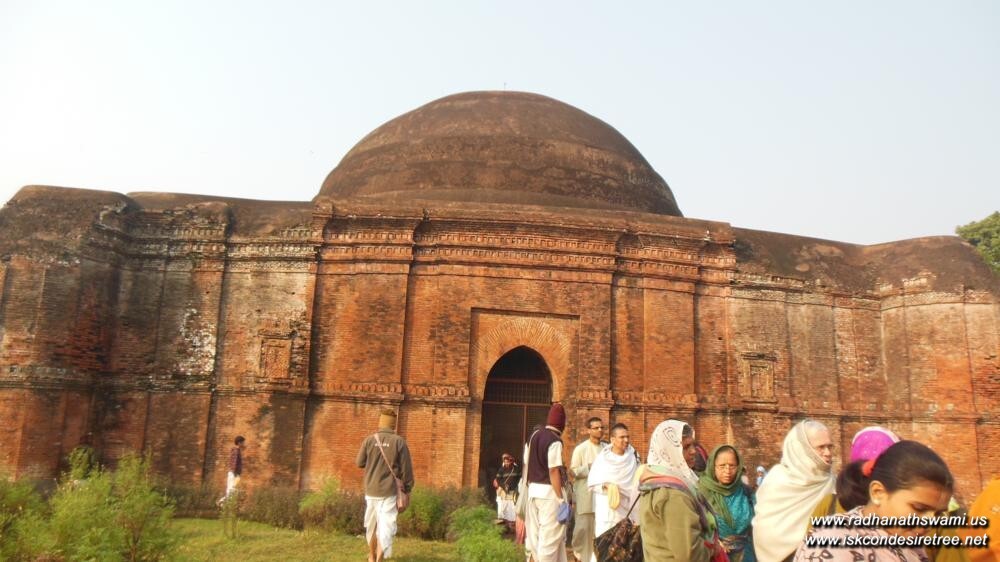
Sri Chaitanya Mahaprabhu arrived at the border village of Ramakeli while travelling from Bengal toward Vrindavana. The crowds that immediately gathered to see Him were so large that news of them reached Sultan Husain Shah himself. Sri Chaitanya-charitamrita records that the Sultan reacted with cautious respect, not alarm. He was told that a wandering man was attracting enormous public devotion without offering anyone money or favor. So he concluded that the man must be a genuine prophet, and he ordered his officials not to interfere. When the Sultan privately asked his secretary Dabira Khasa (Rupa, under his court name) what he thought, Rupa answered carefully. He turned the question back onto the Sultan's own judgment, because he did not want to risk showing where his own heart already stood.
| Detail | Description |
|---|---|
| Place | Ramakeli, on the border of Bengal |
| Time of meeting | Late at night, in secret |
| Rupa's court name at the time | Dabira Khasa |
| Sanatana's court name at the time | Sakara Mallika |
| Outcome | Both brothers renamed Rupa and Sanatana by Sri Chaitanya Mahaprabhu |
An Approach Made in the Dead of Night #
That same night, the two brothers decided between themselves to see Sri Chaitanya Mahaprabhu directly, but only in secret. They went first to Nityananda Prabhu and Haridasa Thakura to be introduced. When they finally stood before the Lord, both men placed straw between their teeth, a traditional sign of complete humility. They fell to the ground like rods, weeping. Their prayer is preserved at length in Sri Chaitanya-charitamrita. It is one of the harshest passages of self-blame in the whole book. They declared that they were lower than the sinners Jagai and Madhai, and unfit even to speak their own wrongs aloud. They called themselves servants of meat-eaters. Through years of court service, they said, they had made themselves enemies of cows and brahmanas.
New Names, Given at Once #
Sri Chaitanya Mahaprabhu's reply was completely different from what the two brothers, in their humility, were ready for. He did not scold them. He told Dabira Khasa and Sakara Mallika plainly that they were His own old servants, birth after birth. He said that their very letters, full of that same self-blame, had already revealed their hearts to Him. "From this day your names will be changed to Rupa and Sanatana," He said, placing His hands on their heads, and the two men, in turn, placed the Lord's feet on theirs. All the Vaishnavas gathered there, including Nityananda Prabhu, Haridasa Thakura, Srivasa Thakura and Gadadhara Pandita, called out the holy names of Hari to witness it.
A Crowd Too Large to Ignore #
The crowd that had first drawn the Sultan's attention was huge. Sri Chaitanya-charitamrita describes people gathering by the thousands at Ramakeli simply to see Sri Chaitanya Mahaprabhu pass. Some wept, some laughed, and some rolled on the ground calling out the name of Krishna. Wherever He touched the ground with His feet, devotees would gather up the dirt itself as something sacred. This, and not any political threat, is what had first reached Husain Shah's ears. He concluded that a man who could move so many people without offering anyone wealth or favor in return must be a genuine prophet. Sri Chaitanya-charitamrita presents this conclusion as sincere, not just politically careful. Against that background, Rupa and Sanatana chose to approach the Lord themselves, in secret and at night. They did not use any official channel open to men of their rank. This can be read as a sign that what they wanted from Him had nothing to do with politics at all.
A Warning Mahaprabhu Took Seriously #
Before the two brothers went back to their homes, they gave the Lord one more very practical piece of advice. They asked Him not to go on to Vrindavana followed by the enormous crowd then gathered around Him at Ramakeli. Their reason was that a Muslim ruler might tolerate a Hindu holy man in public, but it was unwise to test that tolerance carelessly with such numbers. Sri Chaitanya Mahaprabhu went on as far as Kanai Natashala, and that night He weighed their advice seriously. He decided to go to Vrindavana alone, or with at most one companion, not with the crowd that had followed Him until then. So the next morning He turned back toward Jagannatha Puri. When He later went to Vrindavana, He travelled through the Jharikhanda forest with only Balabhadra Bhattacharya and one servant. Sri Chaitanya-charitamrita presents this as evidence of how quickly the Lord had come to trust the judgment of His newly renamed servants. Rupa did not act at once on his own decision to leave court service, however. That longer and more difficult process took another year or more to complete. It is described in Renouncing Worldly Service.
Scriptural evidence for this chapter (1)
āji haite duṅhāra nāma 'rūpa' 'sanātana'.
dainya chāḍa, tomāra dainye phāṭe mora mana
Word for word
āji haite: from this day; duṅhāra: of both of you; nāma: these names; rūpa: Sri Rupa; sanātana: Sri Sanatana; dainya chāḍa: give up your humility; tomāra: your; dainye: humility; phāṭe: breaks; mora: My; mana: heart.
"My dear Sakara Mallika, from this day your names will be changed to Srila Rupa and Srila Sanatana. Now please abandon your humility, for My heart is breaking to see you so humble.
The moment at Ramakeli when Sri Chaitanya Mahaprabhu renamed Dabira Khasa and Sakara Mallika as Rupa and Sanatana, marking their formal acceptance as His disciples.
Chapter 4
Renouncing Worldly Service
Dividing a fortune, deceiving no one, and finally slipping free of a government post his family had spent generations building
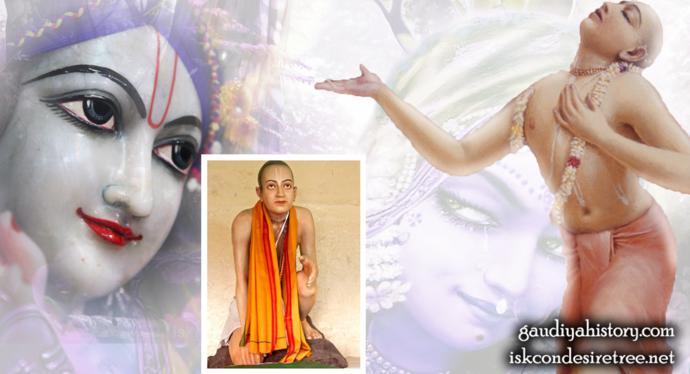
Leaving royal service was not a simple matter of walking away for either brother. Rupa and Sanatana returned home from Ramakeli and spent a long time preparing to leave. They engaged two brahmanas to perform puraskarana ceremonies and chant the holy name, so that their release might go smoothly. Rupa moved first. He gathered the wealth he had built up in office. Sri Chaitanya-charitamrita describes it as filling boats. He set out with it for Bakla Chandradvipa, and there he divided everything according to a plan that the tradition has quoted as a model ever since. He gave fifty percent to brahmanas and Vaishnavas and twenty-five percent to relatives. He kept the remaining twenty-five percent in reserve, against whatever legal or personal difficulty his sudden retirement might bring. Part of this reserve he left as a working deposit with a local grocer.
| Detail | Description |
|---|---|
| Rupa's distribution of wealth | 50% to brahmanas and Vaishnavas, 25% to relatives, 25% kept in reserve |
| Deposit for Sanatana's later use | 10,000 gold coins, left with a Bengali grocer |
| Sanatana's excuse to the Nawab | Feigned illness |
| Result for Sanatana | Arrested and imprisoned by Husain Shah |
| Rupa's travelling companion | His younger brother Anupama (also called Vallabha) |
Preparing the Ground Before Leaving #
Rupa and Sanatana did not simply walk out of their positions the morning after Ramakeli. Sri Chaitanya-charitamrita records that the two brothers first engaged brahmanas to perform puraskarana ceremonies and chant the holy name on their behalf. They wanted their departure to be smooth and auspicious. Their lives could not simply be abandoned overnight without causing trouble for their households and the people who depended on them. Only after this preparation did Rupa begin the more visible part of his leaving. He gathered his wealth and told no one what he finally meant to do. Then he made his way toward Bakla Chandradvipa, a district in the Bengal delta some distance from the capital. There he could settle his affairs away from the immediate notice of the court.
A Ruse That Could Not Last #
While Rupa settled his own affairs, Sanatana tried a quieter approach. He told the Nawab he was too ill to attend to government business and simply stayed home. He spent his days discussing Srimad-Bhagavatam with an assembly of twenty or thirty learned brahmanas. Husain Shah was not so easily satisfied. He first sent his own physician to examine Sanatana. When the report came back that nothing was medically wrong, the Sultan came in person. He was furious, because he plainly saw that this was a resignation dressed up as sickness. Sanatana told him outright that he could no longer be counted on for service. The enraged Nawab accused Sanatana's elder brother of having "destroyed all Bengal" through his own departure. When Sanatana refused to go with him on a coming military campaign against Orissa, the Nawab had him arrested and thrown into prison.
A Brother's Deliberate Delay #
Sanatana's delaying tactic gave him time, but it did not win him sympathy. He kept up the pretense of illness for weeks. He went on with his Bhagavatam discussions with the visiting brahmanas, even as Husain Shah's suspicion grew. When the Sultan finally lost patience and confronted him in person, Sanatana answered so bluntly that nothing was left to discuss. He told the ruler outright that no further service could be expected of him. The two brothers left their posts in very different ways. Rupa's departure was quiet, carefully planned where money was concerned, and mostly unopposed. Sanatana's grew into open confrontation and imprisonment. This difference would shape the very different paths each brother took to reach Sri Chaitanya Mahaprabhu again.
Word Sent Ahead #
By the time this happened, Rupa had already learned that Sri Chaitanya Mahaprabhu had left Jagannatha Puri and was travelling toward Vrindavana through the forest of Jharikhanda. He wrote at once to his imprisoned brother. He told Sanatana where the ten thousand gold coins had been deposited, and he urged him to use that money in any way needed to win his release and follow on to Vrindavana. Then, with his youngest brother Anupama beside him, Rupa set out to overtake the Lord. His search would end at Prayaga, where Sri Chaitanya Mahaprabhu was waiting. There the most important ten days of Rupa Gosvami's life were about to begin. That meeting, and the instruction that followed it, is described in full in The Instruction at Prayag. From this point the two brothers' paths separated until they were reunited in Vraja. So Sanatana's own escape from prison, and his separate two months of instruction from the Lord at Varanasi, are told on Sri Sanatana Gosvami's own page, not on this one.
Scriptural evidence for this chapter (2)
brāhmaṇa-vaiṣṇave dilā tāra ardha-dhane\neka cauṭhi dhana dilā kuṭumba-bharaṇe
Word for word
brāhmaṇa-vaiṣṇave: to the brahmanas and Vaishnavas; dilā: gave as charity; tāra: of the riches; ardha-dhane: fifty percent; eka cauṭhi dhana: one-fourth of the riches; dilā: gave; kuṭumba-bharaṇe: to satisfy the relatives.
Srila Rupa Gosvami divided the wealth that he brought back home. He gave fifty percent in charity to brahmanas and Vaishnavas and twenty-five percent to his relatives.
From the purport: "This is a practical example of how one should divide his money and retire from household life."
Rupa Gosvami's own division of his accumulated wealth on leaving government service, still cited within the tradition as a model for renunciation.
gauḍe rākhila mudrā daśa-hājāre\nsanātana vyaya kare, rākhe mudi-ghare
Word for word
gauḍe: in Bengal; rākhila: kept; mudrā: coins; daśa-hājāre: ten thousand; sanātana: his elder brother; vyaya kare: spent; rākhe: deposited; mudi-ghare: in the place of a local grocer.
He deposited ten thousand coins, which were later spent by Sri Sanatana Gosvami, in the custody of a local Bengali grocer.
The deposit Rupa Gosvami left behind specifically so that his imprisoned elder brother Sanatana could later secure his own release.
Chapter 5
The Instruction at Prayag
Ten unbroken days at the Dashashvamedha-ghat, in which Sri Chaitanya Mahaprabhu gave Rupa Gosvami the entire science of devotional rasa
Rupa Gosvami and his younger brother Anupama reached Prayaga and found Sri Chaitanya Mahaprabhu already there. The Lord was absorbed in ecstasy at the temple of Bindu Madhava. The crowds around Him were so large that at first the two brothers could only watch from a distance. The Lord had gone for a meal at the home of a hospitable brahmana from the Deccan. There Rupa finally approached Him, falling to the ground with straw between his teeth exactly as he had at Ramakeli. Sri Chaitanya Mahaprabhu called him forward at once: "Stand up! Stand up! My dear Rupa, come here."
| Detail | Description |
|---|---|
| Location within Prayaga | Dashashvamedha-ghat, at the confluence of the Ganges and Yamuna |
| Duration of instruction | Ten consecutive days |
| Who else was present | Anupama; later, Vallabha Bhatta and Raghupati Upadhyaya |
| Central teaching | The seed, cultivation and fruit of devotional service (bhakti-lata-bija); the classification of the five primary and seven secondary rasas |
| Recorded in | Sri Chaitanya-charitamrita, Madhya-lila, Chapter 19 |
An Ocean Given as a Single Drop #
Once the Lord had settled at the Dashashvamedha-ghat, He began an instruction unlike anything He is recorded to have given anyone else at such length. He told Rupa plainly that the ocean of devotional mellows could never be fully described, and that He would give him only a single drop of it. Then, over ten days, He went on to set out what would become the whole plan of Rupa's own later writing. He explained the tiny, spiritual nature of the living entity. He explained how rare it is for a soul to be fortunate enough to meet a bona fide spiritual master. Then He described the process by which that good fortune ripens. His words here have since become perhaps the single most quoted verse in the whole of Sri Chaitanya-charitamrita: "Out of many millions of wandering living entities, one who is very fortunate gets an opportunity to associate with a bona fide spiritual master by the grace of Krishna. By the mercy of both Krishna and the spiritual master, such a person receives the seed of the creeper of devotional service" (Madhya 19.151).
A Creeper That Must Be Weeded #
From that single seed the Lord built a longer comparison, almost like a lesson in gardening. The bhakti-lata-bija must be watered with hearing and chanting. It must be protected from the mad elephant of offense against Vaishnavas. It must also be weeded constantly. Unwanted growths spring up alongside it: the desire for material profit, for praise, or even for liberation. If they are left to grow, they choke it. Only a creeper tended this carefully, He explained, could climb past the material universe altogether and reach Krishna's own abode of Goloka Vrindavana. There it would bear the fruit of prema, love of God. After explaining this process, Mahaprabhu defined the goal itself. Rupa would later place this definition, almost unchanged, at the opening of his own Bhakti-rasamrita-sindhu. It is devotional service rendered "favorably," free of any other desire and not covered by either fruitive knowledge or fruitive action (Madhya 19.167).
The Five Rasas and Rupa's Own Verse #
Over the remaining days the Lord went through the five primary devotional mellows. These are neutrality, servitude, friendship, parental affection and conjugal love. He also explained seven secondary emotions that color a devotee's relationship with Krishna. He worked through them in careful order, with examples from Vraja, Dvaraka and Vaikuntha alike. Early in this same meeting, before the formal instruction had even begun, Rupa and Anupama had already offered the Lord the prayer beginning namo maha-vadanyaya. In it they address Him as Krishna Himself, appearing in the golden color of Radharani (Madhya 19.53). It is a verse still recited today wherever Gaudiya Vaishnavas gather. When the ten days finally ended, Sri Chaitanya Mahaprabhu prepared to leave for Varanasi. Rupa begged to go with Him and could not bear the thought of separation. Instead, the Lord ordered him to go straight to Vrindavana, and told him that later he could come from Vrindavana to Jagannatha Puri by way of Bengal, and meet the Lord again there. Rupa fainted at the parting. He was now empowered and grieving, and he carried an assignment that would occupy the rest of his life. In that state he and Anupama turned west toward Vrindavana. Krishnadasa Kaviraja Gosvami wrote his account of these ten days decades later. It remains the fullest record we have of what actually passed between them.
Scriptural evidence for this chapter (3)
Quoted in the text above:
- Madhya 19.151 Sri Chaitanya-charitamrita
Further verses:
namo mahā-vadānyāya kṛṣṇa-prema-pradāya te\nkṛṣṇāya kṛṣṇa-caitanya-\nnāmne gaura-tviṣe namaḥ
Word for word
namaḥ: obeisances; mahā-vadānyāya: who is most munificent and charitably disposed; kṛṣṇa-prema: love of Krishna; pradāya: who can give; te: unto You; kṛṣṇāya: the original Personality of Godhead; kṛṣṇa-caitanya-nāmne: under the name Krishna Chaitanya; gaura-tviṣe: whose complexion is the golden complexion of Srimati Radharani; namaḥ: obeisances.
"O most munificent incarnation! You are Krishna Himself appearing as Sri Krishna Chaitanya Mahaprabhu. You have assumed the golden color of Srimati Radharani, and You are widely distributing pure love of Krishna. We offer our respectful obeisances unto You."
Rupa Gosvami's own famous prayer of obeisance to Sri Chaitanya Mahaprabhu, offered at their reunion at Prayaga just before the ten days of instruction began.
anyābhilāṣitā-śūnyaṁ jñāna-karmādy-anāvṛtam\nānukūlyena kṛṣṇānu-\nśīlanaṁ bhaktir uttamā
Word for word
anya-abhilāṣitā-śūnyam: without desires other than for the service of Krishna; jñāna: by monistic philosophy; karma: by fruitive activities; ādi: and so on; anāvṛtam: not covered; ānukūlyena: favorable; kṛṣṇa-anuśīlanam: cultivation of service to Krishna; bhaktiḥ uttamā: first-class devotional service.
"When first-class devotional service develops, one must be devoid of all material desires, knowledge obtained by monistic philosophy, and fruitive action. The devotee must constantly serve Krishna favorably, as Krishna desires."
From the purport: "This verse is also found in Srila Rupa Gosvami's Bhakti-rasamrita-sindhu (1.1.11)."
The Lord's own definition of pure devotional service, given to Rupa Gosvami at Prayaga and later placed by Rupa near the opening of his own Bhakti-rasamrita-sindhu.
Chapter 6
Arrival in Vrindavana
Uncovering a lost forest of Krishna's pastimes, one deity and one holy site at a time, and a life reduced to chanting, chickpeas and an hour and a half of sleep
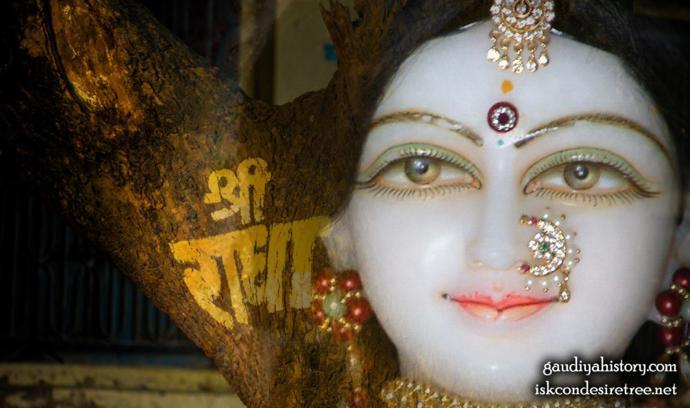
When Rupa Gosvami reached Vrindavana on Sri Chaitanya Mahaprabhu's order, he found a forest that had lost, over centuries, almost every visible trace of the pastimes it was famous for. Krishna had once herded cows and danced with the gopis there. But local memory could point only vaguely at "these quarters", without any of the specific sites, temples or deities that mark the land today. Rupa's task was both practical and enormous. His brother Sanatana shared it with him once he too arrived. They were to find whatever could still be found, start worship where none existed, and write the philosophy of what they had rediscovered into lasting scripture.
| Detail | Description |
|---|---|
| Deities credited to Rupa's discovery | Sri Govindaji, at Gomatila; Sri Vrinda Devi, at Brahma-kunda |
| Daily sleep | About an hour and a half (four dandas), some days none at all |
| Daily food | Dry chapatis and a few fried chickpeas, begged from brahmana households |
| Reunited with | Sanatana Gosvami, arriving separately after his escape from prison |
| Later development | The Govindaji temple, completed in 1590 under Raja Man Singh of Amber |
The Long Road Between Prayaga and Vraja #
Rupa did not travel from Prayaga straight into a settled life in Vrindavana. He first reached Mathura. There, at Dhruva-ghata on the Yamuna, he met a poor woodcutter named Subuddhi Raya. Subuddhi Raya earned barely a few paise a day selling dry wood. Yet he spent nearly all of it feeding, massaging and otherwise caring for Bengali Vaishnavas who passed through the town. Out of pure affection, Subuddhi Raya personally guided Rupa through all twelve forests of Vraja. He kept Rupa company for a month before Rupa set out again, this time to search for Sanatana. That search took Rupa to Varanasi. There he stayed about ten days as the guest of a Maharashtrian brahmana named Chandrashekhara, and he took his meals at the home of Tapana Mishra. In Varanasi he also heard how Sri Chaitanya Mahaprabhu had recently delivered the Mayavadi sannyasis of that same city.
From Varanasi Rupa returned to Bengal, not to Vraja. Soon after, his youngest brother Anupama died there. This loss delayed Rupa's reunion with Sri Chaitanya Mahaprabhu by many months. Rupa eventually reached the Lord at Jagannatha Puri, and by tradition he stayed there for about ten months. Then came a final stay in Bengal of roughly a year. He spent it dividing what remained of his wealth among relatives, brahmanas and temples, so that his renunciation would not cause trouble for anyone. Only after he had settled every one of these duties did Rupa Gosvami arrive in Vrindavana to take up the work for which Sri Chaitanya Mahaprabhu had sent him. Some accounts place this in the year 1516.
Finding the Deity of Govindaji #
According to the tradition preserved at Vrindavana, Rupa Gosvami was sitting beside the Yamuna one day. He felt worn down by the huge size of the task he had been given. Then a radiant Vrajavasi approached him. The stranger told him that a deity of Govinda lay buried on a low hill called Gomatila. A cow was known to visit that place each morning and let down her milk onto the earth. The stranger vanished as suddenly as he had appeared. Rupa understood who the visitor must have been. He went to the spot with local villagers and dug there. He uncovered a deity that is said to have been first installed five thousand years earlier by Krishna's own great-grandson, Vajranabha. Worship of Sri Govindaji began immediately, in a simple thatched shelter. This shelter did not become the magnificent stone temple still associated with the name until decades after Rupa's own lifetime. Raja Man Singh of Amber completed that temple in 1590.
Vrinda Devi and the Name of the Forest #
At Brahma-kunda, Rupa is likewise credited with uncovering the deity of Vrinda Devi. She is the goddess said to preside over the forest of Vrindavana, and she is said to have been first established there by the same Vajranabha. Her name is, in fact, the source of the town's own name: Vrindavana, the forest of Vrinda. In the years that followed, the brothers also identified and marked many holy sites across Vraja. Through these two discoveries and these many sites, Rupa and Sanatana together gave back to Vrindavana many of the holy places that pilgrims still walk to today.
A Deity Sent from Puri #
Worship of Govindaji did not remain a simple, private affair for long. According to temple tradition preserved at Vrindavana, Purushottama later sent a deity of Srimati Radharani from Jagannatha Puri to be installed beside Govindadeva. Purushottama was a son of the Puri king associated with the line of Prataparudra. The same tradition says this was the first deity of Radharani ever formally established in Vrindavana. The grand stone temple that pilgrims associate with Govindaji today was so tall that its upper stories were once visible from Agra. It was not completed until 1590, decades after Rupa's own disappearance, with support from Raja Man Singh of Amber. The recovery of Vrindavana that Rupa and Sanatana began would continue to grow for generations after their own lifetimes were over.
A Life Reduced to Almost Nothing #
All this recovery work was done without any comfort. Sri Chaitanya-charitamrita describes the daily routine Rupa and Sanatana kept once they had settled in Vraja, in words meant to startle the reader. They had no fixed home, and slept one night beneath one tree and the next beneath another. Their food was only whatever a few brahmana households would give in alms, usually nothing more than dry bread and fried chickpeas. Their days were so full of chanting, hearing and writing that barely ninety minutes remained for sleep, and some days there was no sleep at all (Madhya 19.130). Word of this austerity travelled back to Bengal so widely that devotees returning from pilgrimage were regularly asked for news of "how Rupa and Sanatana are doing." According to Sri Chaitanya-charitamrita, that report never failed to fill the Lord's other associates with wonder at what such mercy could produce. The Bhakti-ratnakara adds a warmer, more personal detail to this picture. Rupa and Sanatana are remembered to have known ordinary Vraja families in detail. They knew how many sons and daughters each household had, whose child had recently married, how many cows and bullocks a family owned, and how their crops and health were faring. If they had not seen a family for some days, they would check on them, exactly as caring relatives would. This same disciplined, unbroken life of bhajana gave Rupa Gosvami the years he needed to write his major theological and dramatic works.
Scriptural evidence for this chapter (1)
aṣṭa-prahara kṛṣṇa-bhajana, cāri daṇḍa śayane\nnāma-saṅkīrtane seha nahe kona dine
Word for word
aṣṭa-prahara: twenty-four hours; kṛṣṇa-bhajana: worshiping Lord Krishna; cāri daṇḍa: four dandas (about ninety-six minutes); śayane: for sleeping; nāma-saṅkīrtane: because of chanting the holy name; seha: that much time; nahe: not; kona dine: some days.
"They engage almost twenty-four hours daily in rendering service to the Lord. They usually sleep only an hour and a half, and some days, when they continuously chant the Lord's holy name, they do not sleep at all."
Sri Chaitanya-charitamrita's own description of Rupa and Sanatana Gosvami's daily discipline once settled in Vrindavana.
Chapter 7
Bhakti-rasamrita-sindhu and Other Works
The books that turned ten days of instruction at Prayag into a complete science of devotional rasa
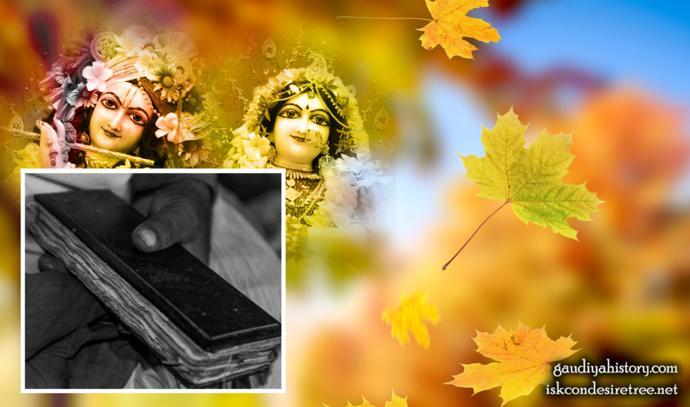
Rupa spent much of the rest of his life writing out in full everything that Sri Chaitanya Mahaprabhu had given him at Prayaga in ten days. He opens his greatest work, Bhakti-rasamrita-sindhu, with a verse of striking humility. Krishnadasa Kaviraja Gosvami later quoted this verse directly in Sri Chaitanya-charitamrita: "Although I am the lowest of men and have no knowledge, the inspiration to write transcendental literatures about devotional service has been mercifully bestowed upon me" (Madhya 19.134). Most people within the tradition regard the book that came from that inspiration as the single most important theological work of Gaudiya Vaishnavism. Rupa also wrote many other works, among them:
- Dana-keli-kaumudi
- Lila-chandra
- Padyavali
- Govinda-virudavali
- Mathura-mahatmya
- Laghu-bhagavatamrita
- Hamsaduta
- Uddhava-sandesha
- Radha-Krishna-ganoddesha-dipika, in both a longer and a shorter form
Counting this work and all the others, Srila Bhaktisiddhanta Sarasvati Thakura calculated that Rupa Gosvami left behind roughly one hundred thousand verses in all.
| Detail | Description |
|---|---|
| Bhakti-rasamrita-sindhu | Systematic treatise on the science of devotional rasa, in four divisions |
| Ujjvala-nilamani | Companion volume devoted entirely to madhurya-rasa, conjugal love of Krishna |
| Vidagdha-madhava | Sanskrit drama of Krishna's pastimes in Vrindavana, in seven acts |
| Lalita-madhava | Sanskrit drama of Krishna's later pastimes at Dvaraka, in ten acts |
| Upadeshamrita | Eleven-verse manual of practical instruction for a devotee's conduct |
| Stava-mala and Dana-keli-kaumudi | Collected devotional poetry, and a one-act drama on Krishna's toll-tax pastime |
Bhakti-rasamrita-sindhu: A Complete Science of Devotional Mellows #
Sri Chaitanya-charitamrita lists Bhakti-rasamrita-sindhu first among Rupa's books (Madhya 1.38), and for good reason. It is the foundation underneath everything else he wrote. The book is arranged in four broad divisions, and in them Rupa gives a complete explanation of bhakti. First he lays out the general principles and practice of devotional service. Then he classifies the mellows (rasas) through which a soul can relate to Krishna. Finally he covers the five primary rasas of neutrality, servitude, friendship, parental love and conjugal love, along with seven secondary emotions that color them. Srila Prabhupada's own English summary study of this book is published as The Nectar of Devotion. It remains the standard introduction to the text for readers who are not Sanskrit scholars. Its opening verses are, almost word for word, the very instruction Rupa received at Prayaga.
Ujjvala-nilamani: Conjugal Love Examined in Full #
Bhakti-rasamrita-sindhu treats madhurya-rasa as one of five primary rasas. Ujjvala-nilamani returns to madhurya-rasa alone and examines it in far greater depth. It classifies the gopis themselves into groups, such as gostha-sakhis, priya-sakhis and the manjaris who serve Radha and Krishna in their most intimate moods. It also explains the inner workings of mahabhava, the highest stage of ecstatic love, as it appears uniquely in Vraja. Gaudiya commentators have long treated Ujjvala-nilamani as the necessary companion of Bhakti-rasamrita-sindhu, not as a separate work.
Two Dramas: Vrindavana and Dvaraka #
Rupa also wrote two full Sanskrit plays:
- Vidagdha-madhava: composed in seven acts, it stages Krishna and Radha's pastimes within Vrindavana itself, opening with the sage Paurnamasi explaining how their secret meetings were first arranged.
- Lalita-madhava: its companion, which moves the setting to Dvaraka and unfolds across ten acts. It follows Krishna in His royal life away from Vraja while never losing sight of Radha as the true object of His heart.
Together the two plays are regarded as among the most demanding and rewarding works of devotional Sanskrit drama the tradition produced.
Two Dramas, and the Dream That Split Them #
Rupa had originally drafted the pastimes of both Vrindavana and Dvaraka as a single continuous work. Tradition holds that this plan changed on the road to Jagannatha Puri. Rupa rested for a night at Satyabhamapura in Odisha. There he dreamed that a radiant woman appeared before him. Mercifully but firmly, she asked him to write a separate drama for her alone. Rupa understood the dream as an order from Satyabhama herself. So he divided his single manuscript into the two dramas known today. He kept Krishna's Vrindavana pastimes for Vidagdha-madhava, and gave Dvaraka, and Satyabhama's own place within it, to Lalita-madhava.
Dates the Tradition Remembers #
Srila Bhaktisiddhanta Sarasvati Thakura, working from the Shakabda-era dates preserved in Gaudiya tradition, placed the completion of these works as follows:
- Vidagdha-madhava: Shakabda 1454 (1532 CE)
- Lalita-madhava: five years later, Shakabda 1459 (1537 CE)
- Bhakti-rasamrita-sindhu: Shakabda 1463 (1541 CE)
Bhakti-rasamrita-sindhu is the master text underlying both dramas. By the time it was completed, Rupa had spent roughly a quarter century in Vraja since his instruction at Prayaga.
Upadeshamrita: Eleven Verses for Ordinary Practice #
The larger works are theological and literary, but Upadeshamrita is deliberately practical. It has eleven short verses, and it was originally part of the larger Stava-mala collection. It opens with the instruction that a sober person must first learn to control speech, mind, anger, tongue, belly and genitals. Only then should he try to instruct the world in anything else. The remaining verses deal with the six favorable and unfavorable practices of devotional life, the importance of sadhu-sanga, and the proper way to honor Vrindavana's holy places. This guidance is so easy to put into practice that it is still among the first texts new practitioners in the tradition are given to study. Alongside it are these two works:
- Stava-mala: gathers Rupa's shorter devotional poetry, including prayers glorifying Sri Chaitanya Mahaprabhu and a brief seven-verse petition to Radharani.
- Dana-keli-kaumudi: a one-act work that shows Krishna playfully blocking the gopis' path to collect a mock toll.
This lighter side of his writing shows that the same poet was capable of theology, drama and simple charm, all within a single body of work. Rupa Gosvami composed this literature during his ascetic years in Vraja, and he carried it with him to the very end of his life. His last days are the subject of Final Days and Disappearance.
Two Cottages Where the Books Took Shape #
Much of this literature was written at the bhajana-kutir Rupa kept in Seva-kunja, beside the Radha-Damodara temple. This place became a kind of headquarters where the Gosvamis met. There Jiva Gosvami, still a young disciple, helped prepare the palm-leaf pages Rupa wrote on. One such page, written earlier at Jagannatha Puri, very nearly went unnoticed. Once, at Jagannatha Puri, Sri Chaitanya Mahaprabhu visited Rupa's residence and found him away at his bath. The Lord discovered a verse Rupa had tucked into the thatch of his roof, and He read it before Rupa returned. When Rupa came back, the Lord embraced him in tears, because once again Rupa had understood the Lord's heart without being told. On another day at Puri, the Lord saw a page of Rupa's manuscript and praised his handwriting with the words, "the handwriting of Rupa Gosvami is just like rows of pearls."
Rupa also kept a second, quieter cottage at Ter Kadamba in Nandagrama, the very spot where Krishna is said to have called His cows home each evening with His flute. Vaishnava tradition remembers this kadamba tree as unusually responsive to what Rupa wrote beneath it: its leaves are said to have fallen when he described Radha and Krishna's pain of separation, and to have burst into new leaf and blossom when he turned, in the same pages, to describe Their joyful reunion.
Scriptural evidence for this chapter (2)
Quoted in the text above:
- Madhya 19.134 Sri Chaitanya-charitamrita
Further verses:
rasāmṛta-sindhu, āra vidagdha-mādhava\nujjvala-nīlamaṇi, āra lalita-mādhava
Word for word
rasāmṛta-sindhu: the Bhakti-rasamrita-sindhu; āra: and; vidagdha-mādhava: the Vidagdha-madhava; ujjvala-nīlamaṇi: the Ujjvala-nilamani; āra: and; lalita-mādhava: the Lalita-madhava.
The books compiled by Sri Rupa Gosvami include the Bhakti-rasamrita-sindhu, Vidagdha-madhava, Ujjvala-nilamani and Lalita-madhava.
Krishnadasa Kaviraja Gosvami's own list of Rupa Gosvami's four principal works, given in the summary chapter of Sri Chaitanya-charitamrita's Madhya-lila.
Chapter 8
Final Days and Disappearance
A bhajana-kutir beside the Radha-Damodara temple, a traditional date of 1564, and a legacy after which Srila Prabhupada named an entire movement
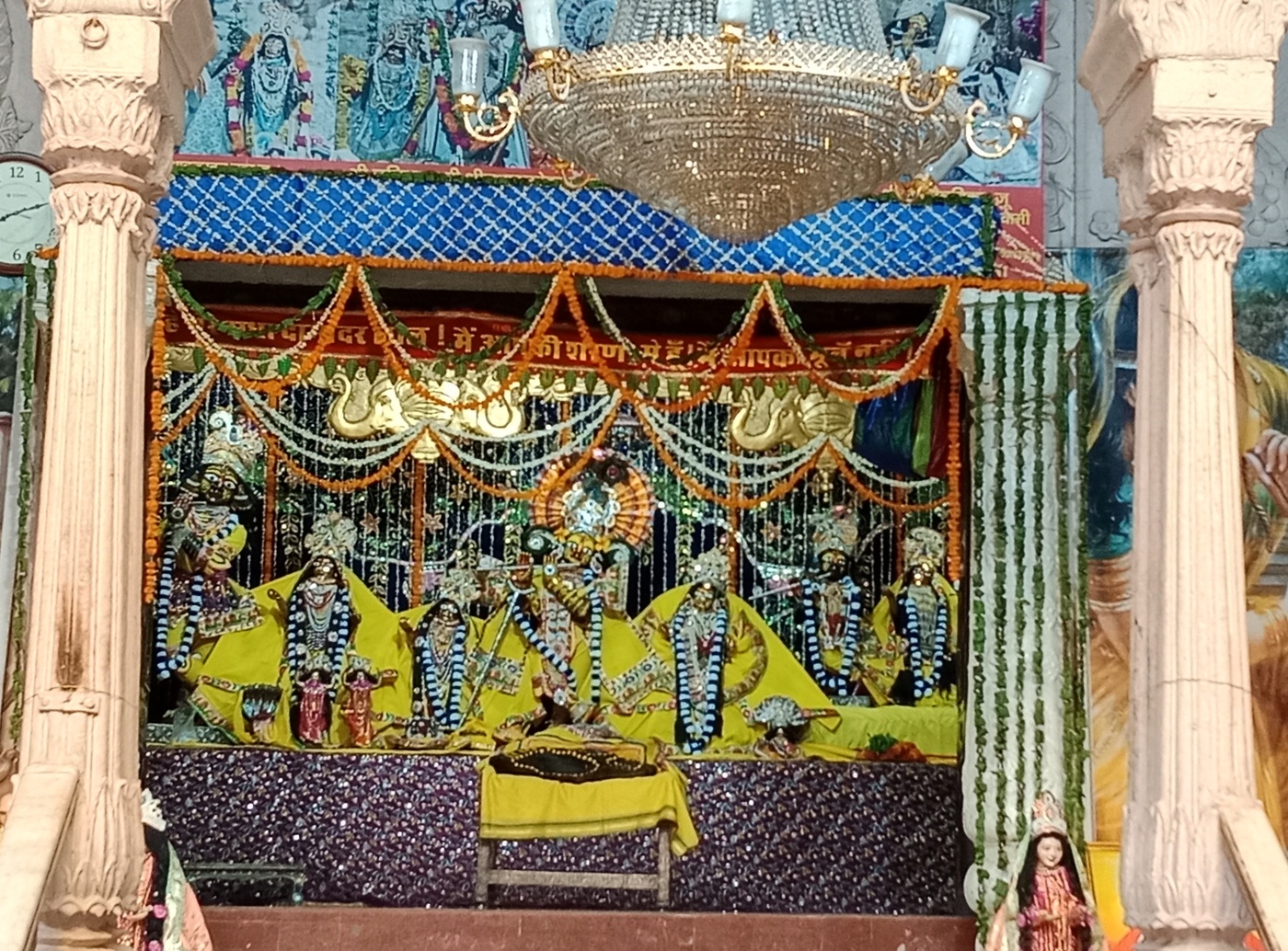
In his last years Rupa Gosvami lived much as he had lived for most of his adult life. He kept almost the same pace of chanting, writing and begging for his meals as when he first arrived in Vraja decades earlier. His bhajana-kutir, and later his samadhi, lie within Seva-kunja, in the courtyard of the Radha-Damodara temple in Vrindavana. The founding of that temple is closely connected with the community of Gosvamis that Rupa had helped to establish. Tradition places his disappearance from this world on Shravana Shukla Dvadashi in 1564. Some accounts state that he left only twenty-seven days after his elder brother Sanatana. This account follows the commonly repeated tradition. But no record from his own time fixes the exact date with certainty.
| Detail | Description |
|---|---|
| Final residence | Seva-kunja, beside the Radha-Damodara temple, Vrindavana |
| Traditional date of disappearance | Shravana Shukla Dvadashi, 1564 |
| Relationship to Sanatana's disappearance | Some sources place it twenty-seven days after Sanatana's own |
| Books passed on | Inherited and continued by his nephew Jiva Gosvami |
| Legacy title | Rupanuga Vaishnavism, followers in the line of Rupa Gosvami |
A Legacy Left to His Nephew #
By the time of his disappearance, Rupa Gosvami had already spent years working alongside Sri Jiva Gosvami, the son of his brother Anupama. Jiva had arrived in Vrindavana as a young scholar, already trained in Navadwipa and Varanasi, and he studied directly under both his uncles. Jiva inherited the unfinished parts of his uncles' theological work and carried it forward. Largely through Jiva's many commentaries and his own independent works, the philosophy that Rupa began at Prayaga was given the fullest and most systematic form it would take in the Six Gosvamis' own generation.
Remembered in a Single Prayer #
Gaudiya Vaishnavas have long honored Rupa Gosvami and his five companions together in the Sri Sad-Gosvamy-ashtaka, an eight-verse prayer still recited daily in temples following this tradition. Its opening verse offers obeisances to all six as an inseparable group: "I offer my respectful obeisances unto the Six Gosvamis... who are always engaged in chanting the holy name of Krishna and dancing. They are just like the ocean of love of God... and they are fully blessed by Lord Chaitanya." Srila Prabhupada, commenting on this same verse in a 1968 lecture in Los Angeles, recalled that when the Gosvamis' own writings were eventually carried out of Vrindavana, the collected manuscripts filled an entire cartload. It was a detail he offered simply to show how much theological literature this small community of renounced devotees had produced in a single generation.
What Later Rulers Undid, and What Survived #
Rupa's discovery of the deity had led to the building of the Govindaji temple. Later, that temple suffered because it was so grand. Generations after Rupa's disappearance, Emperor Aurangzeb is said to have ordered its upper stories destroyed, because he was displeased that its tower could be seen from so far away. The original deity was eventually moved for safety, first to Bharatpur and finally to Jaipur. The deity is still worshiped there today, not in Vrindavana itself. Rupa Gosvami did not live to see the temple completed, or what it suffered later. But a deity he personally uncovered from the earth is still worshiped every day, five centuries later and hundreds of miles from where he found it. This shows his legacy as clearly as any book he wrote.
A Window Srila Prabhupada Once Looked From #
There is one more connection with Rupa Gosvami's samadhi in Seva-kunja. Before he set out alone for the West in 1965, Srila Prabhupada stayed for a time in the temple complex built around this samadhi. He is remembered to have looked out from his kitchen window there at Rupa Gosvami's tomb, and to have drawn inspiration from it. This was in the days before his voyage, which would carry Rupa's own teachings, and the movement built on his authority, to the entire world.
The Movement Named After Him #
No one has stated Rupa Gosvami's place in the tradition more plainly than Srila Prabhupada himself. In the preface to his English summary of Bhakti-rasamrita-sindhu, he wrote that "the present Krishna consciousness movement is also based on the authority of Srila Rupa Gosvami Prabhupada," and he added that for this reason practitioners in the line are "generally known as rupanugas, or followers in the footsteps of Srila Rupa Gosvami." A chief secretary in a Muslim sultan's court once walked away from wealth and position to sit at the feet of a wandering ascetic. Almost four and a half centuries later, that description is still the clearest single statement of what Rupa Gosvami's life and writing mean to the tradition. Rupa helped build that tradition from almost nothing, in a forgotten forest.
A Final Darshan From Gopala Himself #
In his last years Rupa Gosvami was too frail to make the climb up Govardhana Hill as he once had, so he received the Lord's own visit instead. Sri Madhavendra Puri had first installed the Gopala Deity of Govardhana on that hill. Today the same deity is worshiped at Nathdwara as Srinathji. Tradition recounts that Gopala came down to Mathura and remained for a month at the home of Vitthalesvara, Vallabhacharya's second son, so that Rupa Gosvami could have His darshana without the climb. Rupa is said to have travelled to Mathura for this month-long visit with much of Vrindavana's Gosvami community. Among them were Gopala Bhatta Gosvami, Raghunatha Dasa Goswami, Raghunatha Bhatta Gosvami, Jiva Gosvami and others. Afterwards Gopala returned to His own place, and Rupa returned to Vrindavana.
Scriptural evidence for this chapter (1)
kṛṣṇotkīrtana-gāna-nartana-parau premāmṛtāmbho-nidhi\ndhīrādhīra-jana-priyau priya-karau nirmatsarau pūjitau\nśrī-caitanya-kṛpā-bharau bhuvi bhuvo bharavahantarakau\nvande rūpa-sanātanau raghu-yugau śrī-jīva-gopālakau
"I offer my respectful obeisances unto the Six Gosvamis, namely Sri Rupa Gosvami, Sri Sanatana Gosvami, Sri Raghunatha Bhatta Gosvami, Sri Raghunatha dasa Gosvami, Sri Jiva Gosvami, and Sri Gopala Bhatta Gosvami, who are always engaged in chanting the holy name of Krishna and dancing. They are just like the ocean of love of God... and they are fully blessed by Lord Chaitanya."
The opening verse of the daily prayer by which Gaudiya Vaishnavas together honor Rupa Gosvami and the other five Gosvamis of Vrindavana.
- Sri Chaitanya-charitamrita, Madhya-lila, Chapters 1 and 19 (Bhaktivedanta VedaBase)
- The Nectar of Devotion, Preface (Bhaktivedanta VedaBase)
- Rupa Goswami - Gaudiya History
- Rupa Goswami - Gaudiya History (Biography 2)
- Srila Rupa Gosvami - PureBhakti
- Six Gosvamis Lecture, Sri Sri Sad-gosvamy-astaka, Los Angeles, November 18 1968 (Bhaktivedanta VedaBase)
