Ādi-badrī
आदि-बद्री Hindi name proposed
Also called Ādi-badrī-nārāyaṇa, Ādi-Badrinātha
- What it is
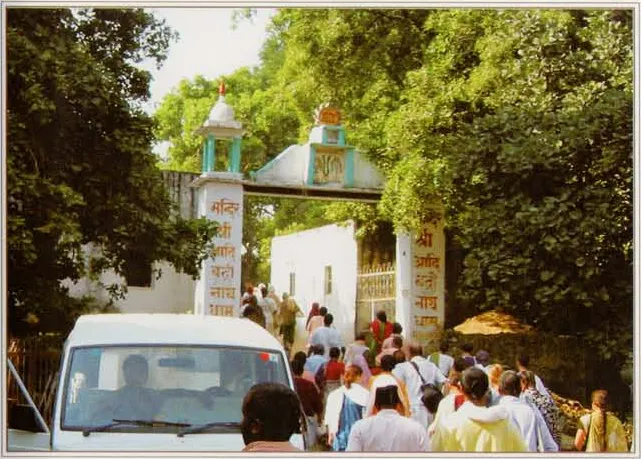
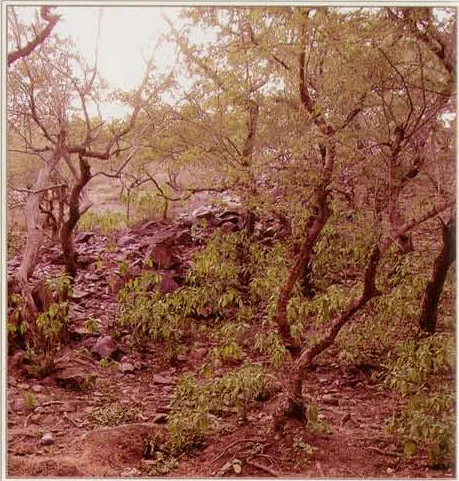
- Ādi-badrī, "the original Badarī", is a hill area on the western side of Vraja-maṇḍala, one and a half miles north of Setu-kandarā, with the village of Ālīpura at the foot of its hills.
- Visiting
- Ādi-badrī lies in the hills on the western side of Vraja-maṇḍala.
- Places here
- Ādi-badrī Mandira, Ālīpura (Ādi-badrī)
In short
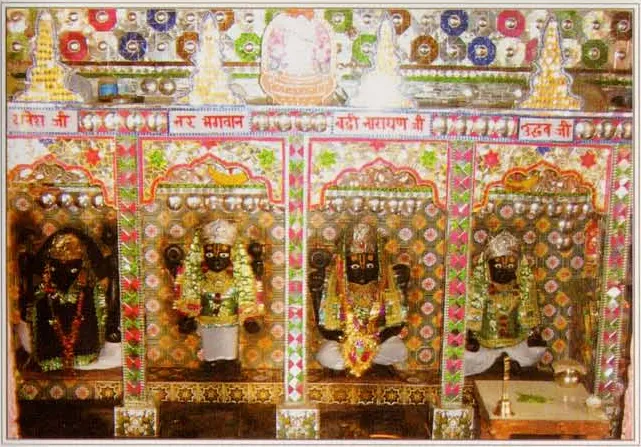
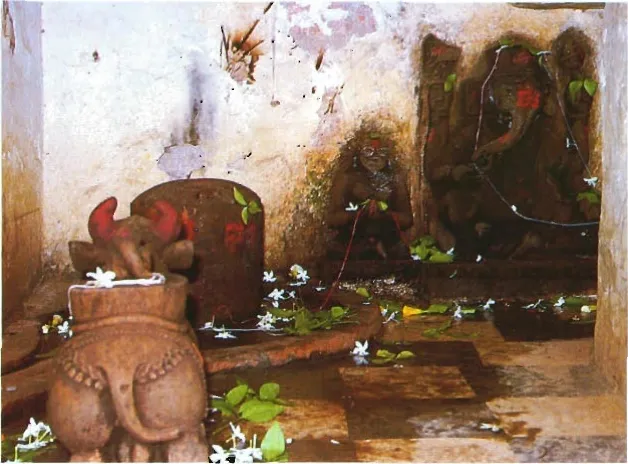
Ādi-badrī, "the original Badarī", is a hill area on the western side of Vraja-maṇḍala, one and a half miles north of Setu-kandarā, with the village of Ālīpura at the foot of its hills.[1 +4] According to the Bhakti-ratnākara, here Kṛṣṇa brought Nanda and the other cowherd men and removed their distress by showing them Nārāyaṇa.[6] Nara-Nārāyaṇa Ṛṣi, the Lord's form who performs austerities at Badarikāśrama in the Himālayas, is worshipped here, and the guidebooks show around it the Vraja counterparts of the holy places of that Himalayan Badarī.[1 +7]
Key facts
Divine pastimes
Kṛṣṇa shows the cowherds Badarī in Vraja
In the Bhakti-ratnākara, Śrīla Rāghava Paṇḍita Gosvāmī leads Śrīla Śrīnivāsa Ācārya and Śrīla Narottama dāsa Ṭhākura to Setu-kandarā and tells them to see Ādi-badrī-nārāyaṇa, the merciful; he speaks of wonderful worship within the forest and a charming hill, and says that here Kṛṣṇa brought Nanda and the other gopas and removed their distress by showing them Nārāyaṇa (summarised here, not translated).[6]
The modern guidebooks tell the pastime more fully. When Nanda and the people of Vraja wished to go on pilgrimage to Badrī-nārāyaṇa in the Himālayas, Kṛṣṇa brought them here instead. The undated parikramā notes Ādi-Badrinātha add that He declared this place the original Badrīnātha; Vṛndāvana-Dhāma Ki Jaya! (c. 1986) says that He explained that all the holy places of the world are present in Vraja and showed them Hṛṣīkeśa, Lakṣmaṇa-jhūlā, Kedāranātha and other holy places of the north in the western hills.[1 +4] No account of this pastime was found in Śrīmad-Bhāgavatam or the other scriptures searched; the Bhakti-ratnākara is the oldest source found.[1 +4]
Nara-Nārāyaṇa
Śrīmad-Bhāgavatam tells that the Lord appeared as the twin sages Nara and Nārāyaṇa to show the way of austerity, and that the heavenly women sent to break His vows failed. It sets His austerities at Badarikāśrama in the Himālayas; Śrī Vraja-maṇḍala Parikramā (2007) recalls the pastime at Ādi-badrī, where Nara-Nārāyaṇa Ṛṣi is worshipped.[1 +3]
dharmasya dakṣa-duhitary ajaniṣṭa mūrtyāṁ / nārāyaṇo nara iti sva-tapaḥ-prabhāvaḥ / dṛṣṭvātmano bhagavato niyamāvalopaṁ / devyas tv anaṅga-pṛtanā ghaṭituṁ na śekuḥ
To exhibit His personal way of austerity and penance, He appeared in twin forms as Nārāyaṇa and Nara in the womb of Mūrti, the wife of Dharma and the daughter of Dakṣa. Celestial beauties, the companions of Cupid, went to try to break His vows, but they were unsuccessful, for they saw that many beauties like them were emanating from Him, the Personality of Godhead.
Translation: Śrīla A.C. Bhaktivedanta Swami PrabhupādaHow Urvaśī came from Nara-Nārāyaṇa is told differently in the Bhāgavatam, the Skanda Purāṇa and the guidebook; the accounts are shown below.[1 +3]
Traditional accounts
Śrī Vraja-maṇḍala Parikramā (2007) calls Ādi-badrī the source of even the Badrī of the Himālayas, and the Ādi-Badrinātha notes …
Śrī Vraja-maṇḍala Parikramā (2007) calls Ādi-badrī the source of even the Badrī of the Himālayas, and the Ādi-Badrinātha notes say that because Vraja is the origin of all holy places, the Badrīnātha of the Himālayas is an expansion of this one, hence the name Ādi-badrī. No scripture with this statement was found.[1 +1]
Śrīla Nārāyaṇa Bhaṭṭa Gosvāmī's Vraja-bhakti-vilāsa names Ādi-badrīśvara as the Lord who presides over Paramānandavana, one of Vraja's upavanas, quoting a Bṛhan-nāradīya that was not found in the registered Nārada Purāṇa. It sets the round of Paramānandavana on the new-moon day of the dark fortnight of Bhādra, with a prayer at the sight of Ādi-badrikā, "the form of Ādi-badri, Nārāyaṇa", and then Ānanda-saras (summarised here, not translated). The book does not say whether this upavana is the area by Setu-kandarā.[10 +2]
The holy places of the Himālayas at Ādi-badrī
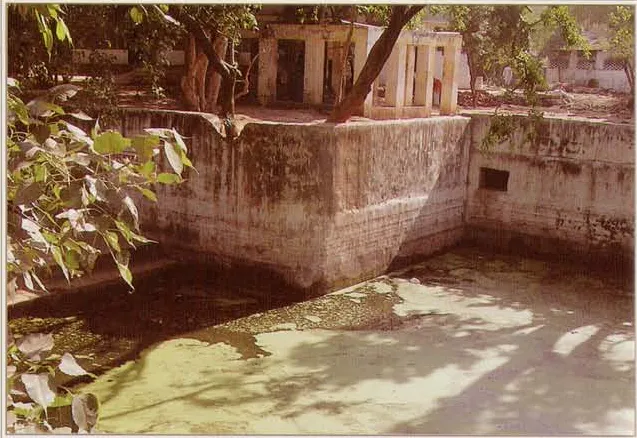
Śrī Vraja-maṇḍala Parikramā (2007) says that the Alakanandā and the Tapta-kuṇḍa of the Himalayan Badrī are present here too, and that a little further on, on top of the hill, are Būḍhe-badrī, Gandhamādana Hill and Tapovana, in scenery like that of Badrī-nārāyaṇa; it does not say what Būḍhe-badrī, "old Badrī", is.[1 +1] The water of the Tapta-kuṇḍa, hot at Badrī, is cool here, and the Ādi-Badrinātha notes call it Tapasyā-kuṇḍa and Śītala-kuṇḍa, "the cool pond"; the 2007 book prints a photograph of the square stone tank.[1 +2] The Bengali Bhaktamāla of Kṛṣṇadāsa Bābājī (1905) names an Alakanandā at Ādi-badrī, a very secluded place, where Śiva and Gaurī reside, with a fragrant stone nearby (summarised here, not translated).[18] Śrīmad-Bhāgavatam names the Himalayan Alakanandā, to which Kṛṣṇa sends Uddhava, and the Gandhamādana Hill to which Nara-Nārāyaṇa went; it does not name these places in Vraja.[1 +4]
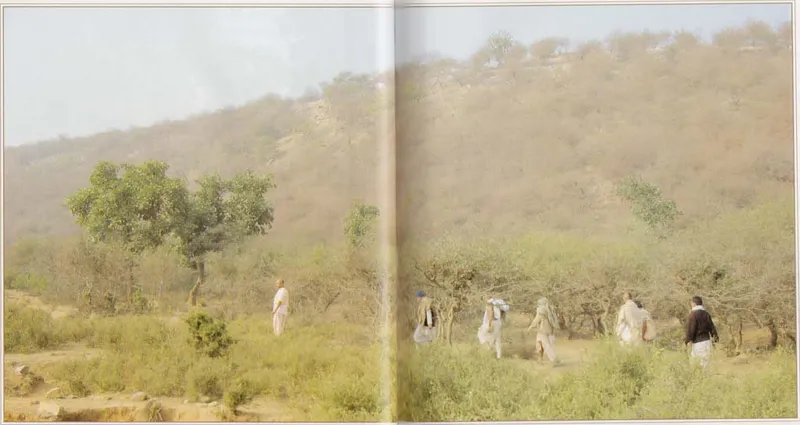
The Ādi-Badrinātha notes count still more of the Himālayas' holy places as present here: Nara Parvata and Nārāyaṇa Parvata, Gandhamādana and Trikūṭa Parvata, the rivers Alakanandā, Yamunā and Sarasvatī, Haridvāra and Har-ki-paurī, Hṛṣīkeśa, Lakṣmaṇa-jhūlā and Tapovana, and the Triveṇī-saṅgama and Daśāśvamedha-ghāṭa. They give most of them no position or description, and no scripture or ācārya's book has been found that names them in Vraja.[10 +1] The 2007 guidebook prints a photograph of a long hillside captioned Nara-Nārāyaṇa-parvata, without describing it in its text.[2] The notes also call Har-ki-paurī "the Haridvāra of Vṛndāvana", with Hṛṣīkeśa just nearby, so it is not certain whether Haridvāra and Har-ki-paurī are one place or two.[10 +2]
Lakṣmaṇa-jhūlā
The Ādi-Badrinātha notes describe Lakṣmaṇa-jhūlā between two mountains. The temple of Lord Lakṣmaṇa stands there, and a Deity of Lord Lakṣmaṇa is on the top of the hill; Lakṣmaṇa is said to have performed austerities on a rock here.[23 +2] Behind the temple, they say, two streams come down two hills: facing them, Gaṅgotrī is on the left and Yamunotrī on the right, and just below Lakṣmaṇa-jhūlā is the Triveṇī-saṅgama, where the Sarasvatī from a third mountain joins the Gaṅgā and the Yamunā. The 2007 guidebook prints a photograph captioned "Yamunotrī".[17 +2] The notes also say that one of the rocks here bears an imprint of Kṛṣṇa's lotus feet; they do not say which pastime left it, and no other source mentions it, so it is not certain.[23]
The Gosvāmīs and ācāryas
According to the Bhakti-ratnākara of Śrīla Narahari Cakravartī Ṭhākura, Śrīla Rāghava Paṇḍita Gosvāmī showed Ādi-badrī-nārāyaṇa …
According to the Bhakti-ratnākara of Śrīla Narahari Cakravartī Ṭhākura, Śrīla Rāghava Paṇḍita Gosvāmī showed Ādi-badrī-nārāyaṇa to Śrīla Śrīnivāsa Ācārya and Śrīla Narottama dāsa Ṭhākura, as told above.[6] Śrīla Nārāyaṇa Bhaṭṭa Gosvāmī names Ādi-badrīśvara as the Lord of the Paramānanda upavana and gives the prayer at the sight of Ādi-badrikā.[15 +1]
Visiting today
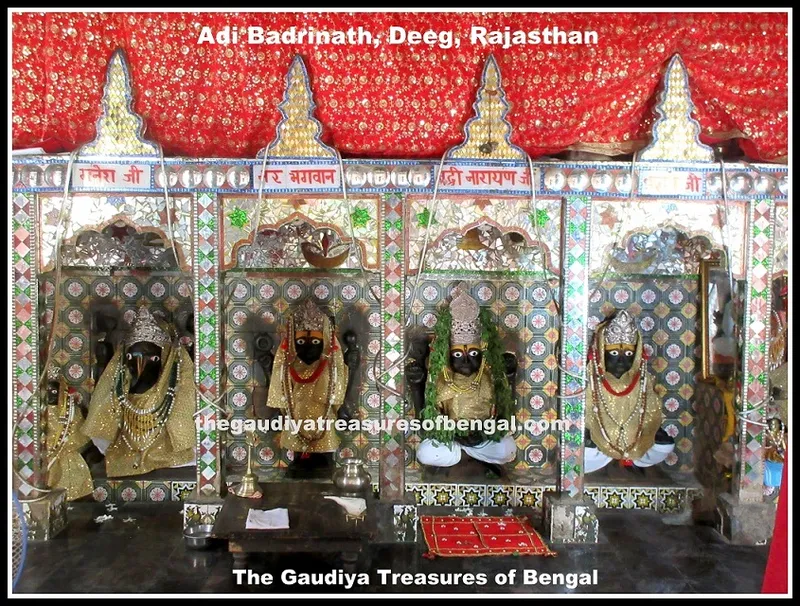
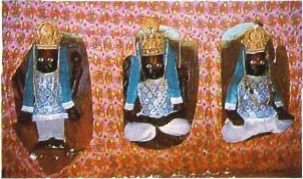
Ādi-badrī lies in the hills on the western side of Vraja-maṇḍala. According to Śrī Vraja-maṇḍala Parikramā (2007), it is one and a half miles north of Setu-kandarā, its hills rise from Ālīpura, and from here pilgrims go on to Kāmyavana, some five miles to the north, by way of Ālīpura and Paśopā.[1 +4] The deities worshipped at Ādi-badrī are described on the page of the Ādi-badrī temple.[1 +2]
The Yogamāyā Mandira
The undated parikramā notes Ādi-Badrinātha list a temple of Yogamāyā among the places of Ādi-badrī and describe her as Yogamāyā Devī, who protects one's devotional service. The notes give the temple no position and tell no story of it.[29 +1] In 1987 the historian A. W. Entwistle described a temple of a goddess he calls Gaurī or Yogamāyā, about one kilometre west of Ālīpura beside a pond called Gaurikund, rebuilt from fragments of a medieval temple. It is probably the temple of the notes, but no Vaiṣṇava source says so.[31]
Śrīmad-Bhāgavatam tells who Yogamāyā is: the Lord's own potency, whom He sent to Vraja to protect His devotees. In its Tenth Canto (10.2) the Lord orders Yogamāyā to go to Vraja, and says that in different places on earth people will worship her under many names, such as Durgā, Bhadrakālī, Vaiṣṇavī, Māyā and Nārāyaṇī. No source connects a pastime of Yogamāyā with this temple.[32 +2]
gaccha devi vrajaṃ bhadre gopa-gobhir alaṅkṛtam / rohiṇī vasudevasya bhāryāste nanda-gokule / anyāś ca kaṃsa-saṃvignā vivareṣu vasanti hi
The Lord ordered Yoga-māyā: O My potency, who are worshipable for the entire world and whose nature is to bestow good fortune upon all living entities, go to Vraja, where there live many cowherd men and their wives. In that very beautiful land, where many cows reside, Rohiṇī, the wife of Vasudeva, is living at the home of Nanda Mahārāja. Other wives of Vasudeva are also living there incognito because of fear of Kaṁsa. Please go there.
Translation: Śrīla A.C. Bhaktivedanta Swami PrabhupādaLocation
| Where it is | 1.5 miles north of Setu-kandarā; its hills rise from Ālīpura[35] 'This very attractive place is surrounded by lush, green mountain-ranges' (paragraph on the hilltop places a little further on from Ādi-badrī)[36] |
|---|
Places at Ādi-badrī
25 places
Also described on this page
- Yogamāyā Mandira (Ādi-badrī) temple
Also listed here
- Alakānandā (Ādi-badrī) river
- Būḍhe-badrī
- Daśāśvamedha-ghāṭa (Ādi-badrī) ghāṭa
- Gandhamādana Hill (Ādi-badrī) hill
- Gaṅgotrī (Ādi-badrī) stream
- Haridvāra (Ādi-badrī) tīrtha
- Har-ki-paurī tīrtha
- Hṛṣikeśa (Ādi-badrī) tīrtha
- Lakṣmaṇa-jhūlā (Ādi-badrī) tīrtha
- Nara-Nārāyaṇa-parvata hill
- Nara-parvata (Ādi-badrī) hill
- Nārāyaṇa-parvata (Ādi-badrī) hill
- Sarasvatī (Ādi-badrī) river
- Tapovana (Ādi-badrī) tīrtha
- Tapta-kuṇḍa (Ādi-badrī) kuṇḍa
- Trikūṭa-parvata (Ādi-badrī) hill
- Triveṇī-saṅgama (Ādi-badrī) confluence (saṅgama)
- Yamunā (Ādi-badrī) river
- Yamunotrī (Ādi-badrī) stream
- Footprint of Kṛṣṇa (Lakṣmaṇa-jhūlā) footprint
- Lakṣmaṇa Mandira (Lakṣmaṇa-jhūlā) temple
- Lakṣmaṇa's austerity rock (Lakṣmaṇa-jhūlā) śilā
Nearby places
Setu-kandarā
Pictures
7 pictures
History
According to Śrī Vraja-maṇḍala Parikramā (2007), the village of Ālīpura below the hills may once also have been called Ādi-badrī; no document of the renaming is cited, and the Ālīpura page tells what is known.[2 +1]
Where the sources differ
Are 'Badrī-nārāyaṇa' and 'Ādi-badrī' one place or two stops?
Accounts differ Are 'Badrī-nārāyaṇa' and 'Ādi-badrī' one place or two stops?
- Śrī Vraja-maṇḍala Parikramā (2007) (text)one place: 'This is the place of Ādi-badrī-nārāyaṇa'; 'Badrī-nārāyaṇa (Ādi-badrī)'
- Śrī Vraja-maṇḍala Parikramā (2007) (route list) and (one route)separate stops: 'Paramādanā, Badrī-nārāyaṇa, Guhānā, Khoṅ, Ālīpura, Ādi-badrī, Paśopā'; 'via Ādi-badrī, Ālīpura and Paśapa-gaon'
- Vṛndāvana-Dhāma Ki Jaya! (c. 1986) (text) and (map); SRI VRAJA-MANDALA mapthe text says 'Badarīnātha in Vraja'; the maps print separate labels 'Badarīnātha' and 'Ādi-Badarī'
- Bhakti-ratnākara printed p.214Ādi-badrinārāyaṇa shown at Setu-kandarā
Accounts differ How Urvaśī came from Nara-Nārāyaṇa.
- ŚB 11.4.13-15 (disciples' translation); ŚB 2.7.6 (Śrīla Prabhupāda's translation)Nara-Nārāyaṇa manifested many beautiful women; the demigods' servants chose Urvaśī (no thigh mentioned)
- Skanda Purāṇa, Avantī-khaṇḍa 8.34-39Nara made her with a mango sprig 'from the thighs'
- Śrī Vraja-maṇḍala Parikramā (2007)Nara-Nārāyaṇa Ṛṣi 'manifested the beautiful celestial damsel Urvaśī from his left thigh'
Accounts differ Are Haridvāra and Har-ki-paurī at Ādi-badrī one place or two?
- the undated parikramā notes Ādi-Badrināthalists 'the holy places Haridvāra and Har-ki-paurī' side by side
- the undated parikramā notes Ādi-Badrinātha'This place [Har Ki Pauri] is Haridwara of Vrindavana'
References
36 references
- Śrī Vraja-maṇḍala Parikramā (2007), PDF p. 139
- Śrī Vraja-maṇḍala Parikramā (2007), PDF p. 140
- Śrī Vraja-maṇḍala Parikramā (2007), PDF p. 142
- Vṛndāvana-Dhāma Ki Jaya! (c. 1986), by Dhruva Mahārāja dāsa, PDF p. 43
- the undated parikramā notes Ādi-Badrinātha, ¶3
- Śrīla Narahari Cakravartī, Bhakti-ratnākara, Fifth Wave, printed p.214: Rāghava Paṇḍita shows Setu-kandarā and Ādi-badrī-nārāyaṇa, 2nd ed., 1912
- Śrīmad-Bhāgavatam, 2.7.6, online edition · vedabase.io
- Śrīmad-Bhāgavatam, 11.4.7, online edition · vedabase.io
- the undated parikramā notes Ādi-Badrinātha, ¶32
- the undated parikramā notes Ādi-Badrinātha, ¶6
- the undated parikramā notes Ādi-Badrinātha, ¶16
- Vṛndāvana-Dhāma Ki Jaya! (c. 1986), by Dhruva Mahārāja dāsa, PDF p. 44
- the undated parikramā notes Ādi-Badrinātha, ¶39
- the undated parikramā notes Ādi-Badrinātha, ¶5
- Śrīla Nārāyaṇa Bhaṭṭa Gosvāmī, Vraja-bhakti-vilāsa, part 3 vv.11-12, printed p.5: the presiding Lords of the twelve upavanas, 1st ed., publ. Bābā Kṛṣṇadāsa, Kusuma-sarovara, Saṁvat 2008
- Śrīla Nārāyaṇa Bhaṭṭa Gosvāmī, Vraja-bhakti-vilāsa, chapter 11 vv.1-2, printed p.229: the Paramānanda-vana circuit and the darśana of Ādi-badrikā, 1st ed., publ. Bābā Kṛṣṇadāsa, Kusuma-sarovara, Saṁvat 2008
- Śrī Vraja-maṇḍala Parikramā (2007), PDF p. 141
- Śrī Śrī Bhaktamāla grantha, printed p. 335, right column: the round from Muniśīrṣa and Pramodanā to Setu-kandarā and Ādi-badrīnātha
- Śrīmad-Bhāgavatam 11.29.41-42, GRETIL
- Śrīmad-Bhāgavatam 4.1.58, GRETIL
Show all 36 references
- the undated parikramā notes Ādi-Badrinātha, ¶52
- the undated parikramā notes Ādi-Badrinātha, ¶53
- the undated parikramā notes Ādi-Badrinātha, ¶41
- the undated parikramā notes Ādi-Badrinātha, ¶43
- the undated parikramā notes Ādi-Badrinātha, ¶19
- the undated parikramā notes Ādi-Badrinātha, ¶22
- the undated parikramā notes Ādi-Badrinātha, ¶4
- the undated parikramā notes Ādi-Badrinātha, ¶37
- the undated parikramā notes Ādi-Badrinātha, ¶24
- the undated parikramā notes Ādi-Badrinātha, ¶51
- A. W. Entwistle, ch. 8 §30 'Adibadri', printed p.361, Egbert Forsten, Groningen, 1987
- Śrīmad-Bhāgavatam 10.2.6, translation (Śrīla Prabhupāda), online edition · vedabase.io
- Śrīmad-Bhāgavatam 10.2.11-12, translation (Śrīla Prabhupāda), online edition · vedabase.io
- Śrīmad-Bhāgavatam 10.2.7, GRETIL
- Śrī Vraja-maṇḍala Parikramā (2007), p. 252-253
- Śrī Vraja-maṇḍala Parikramā (2007), p. 254-255