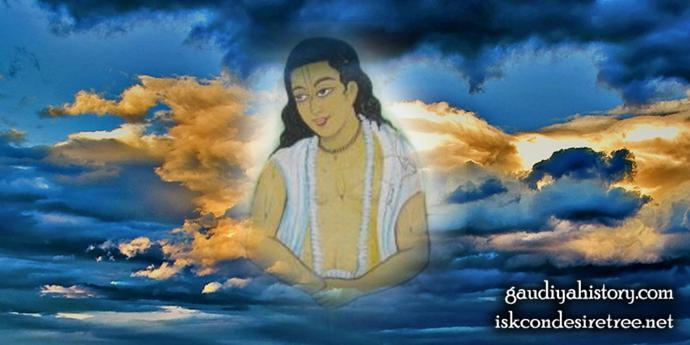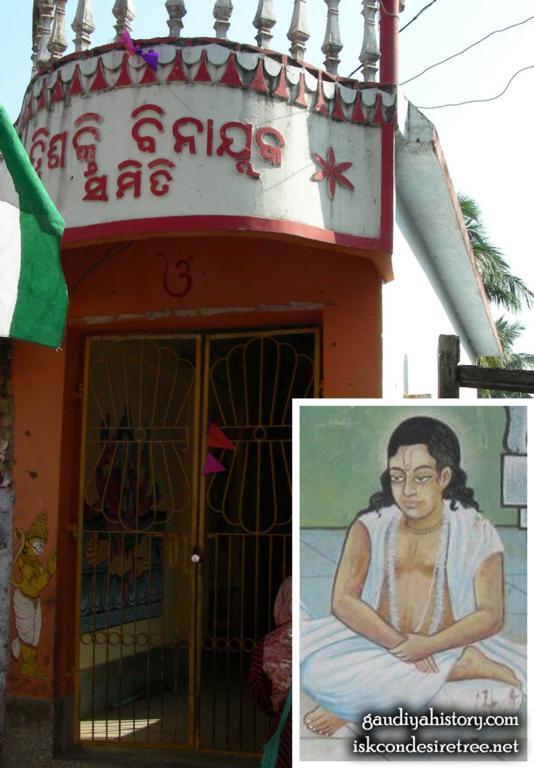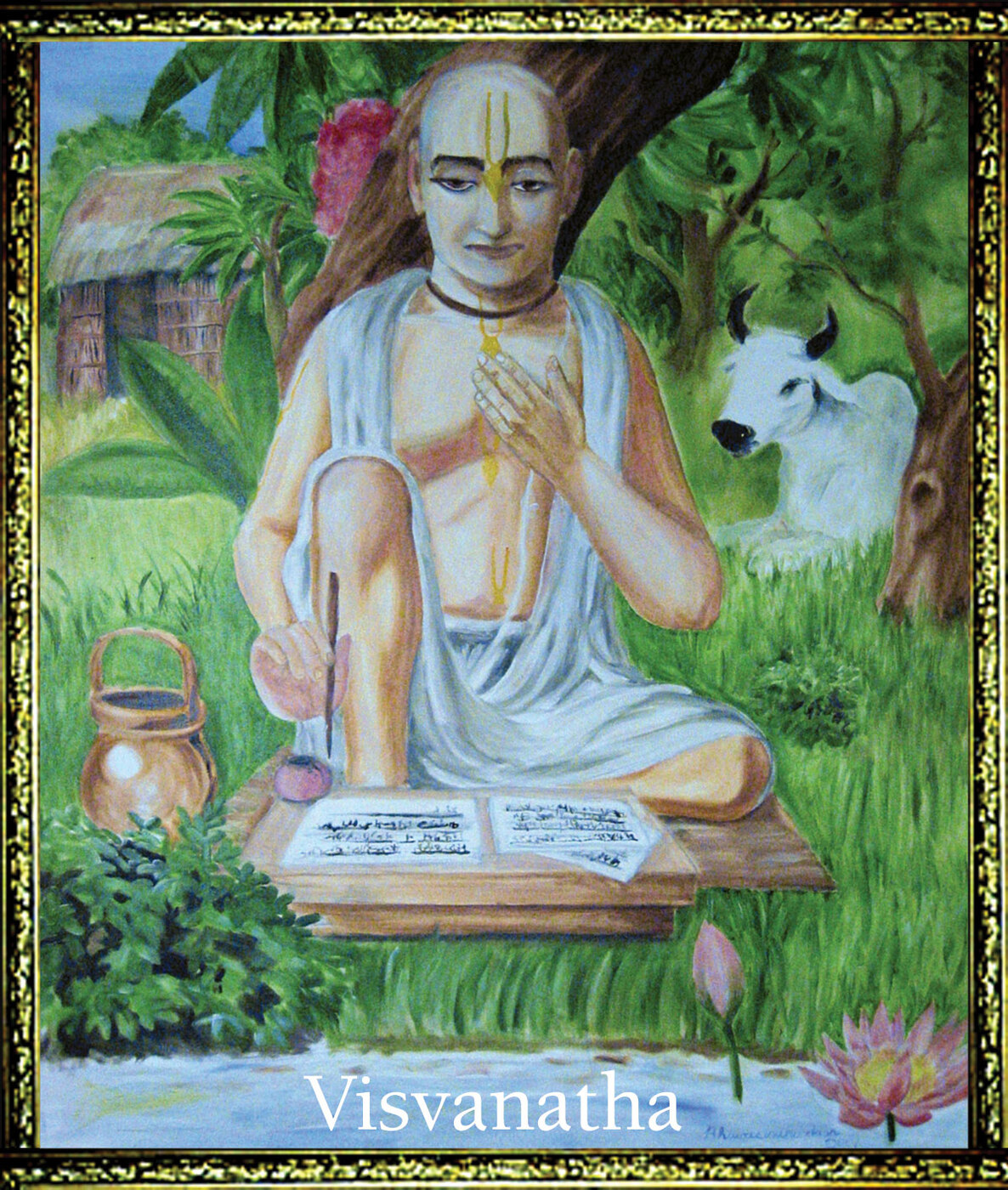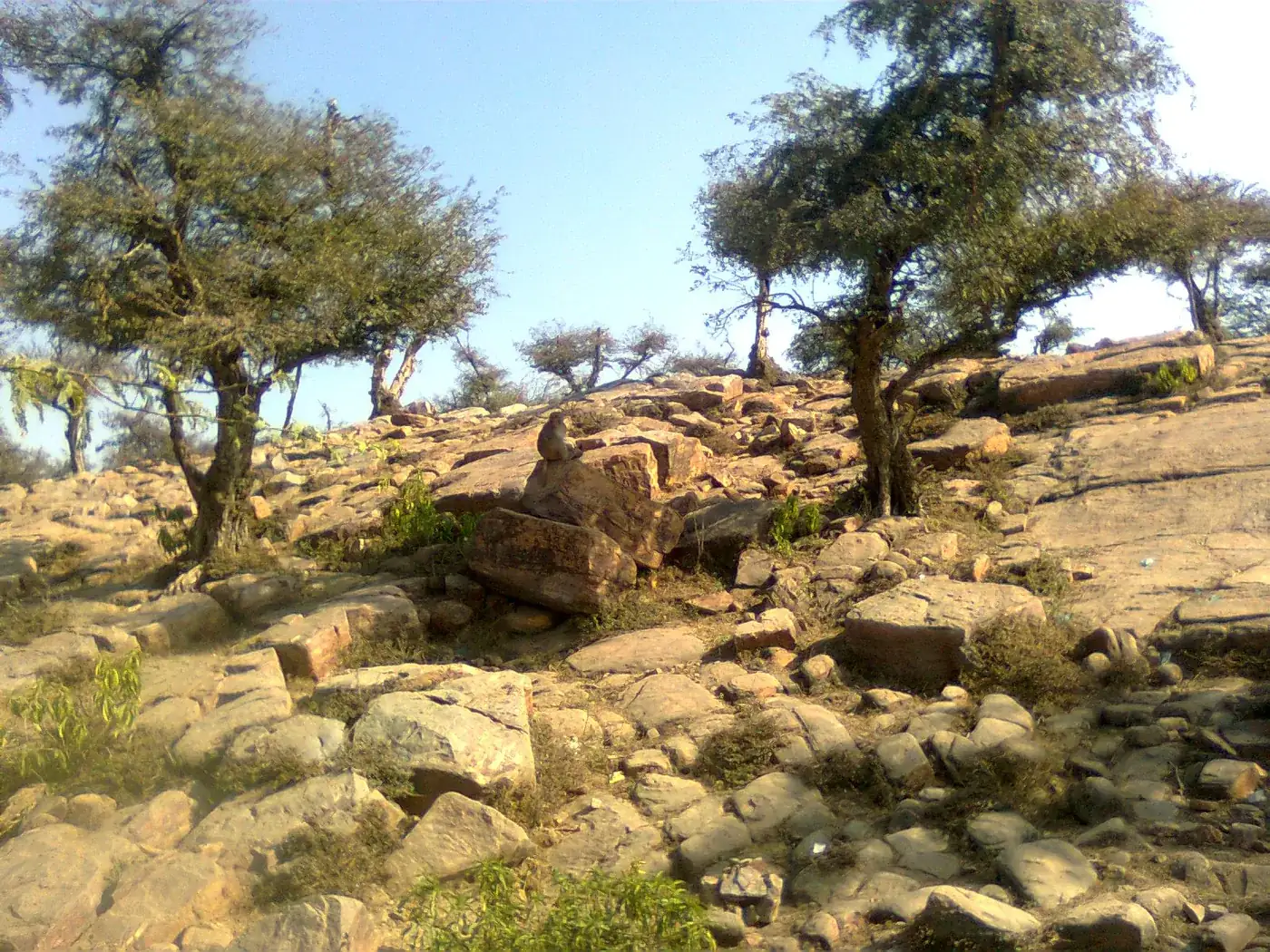
Srila Raghava Pandita Goswami
Govardhana's Guide Through Vraja
Also known as Raghava Goswami, Raghava Gosai, Raghava Pandita of Govardhana, Raghava of Govardhana
“This is my cave; I live right here. Seeing the beauty of Govardhana, I feel great happiness. This cave of Govardhana is most charming; here Radha and Krishna enjoy Their pastimes without end.”
Spoken to Shrinivasa Acharya on the Govardhana circuit of the Vraja tour (Bhakti-ratnakara, Fifth Wave, 1912 ed. p. 203; English rendering ours)
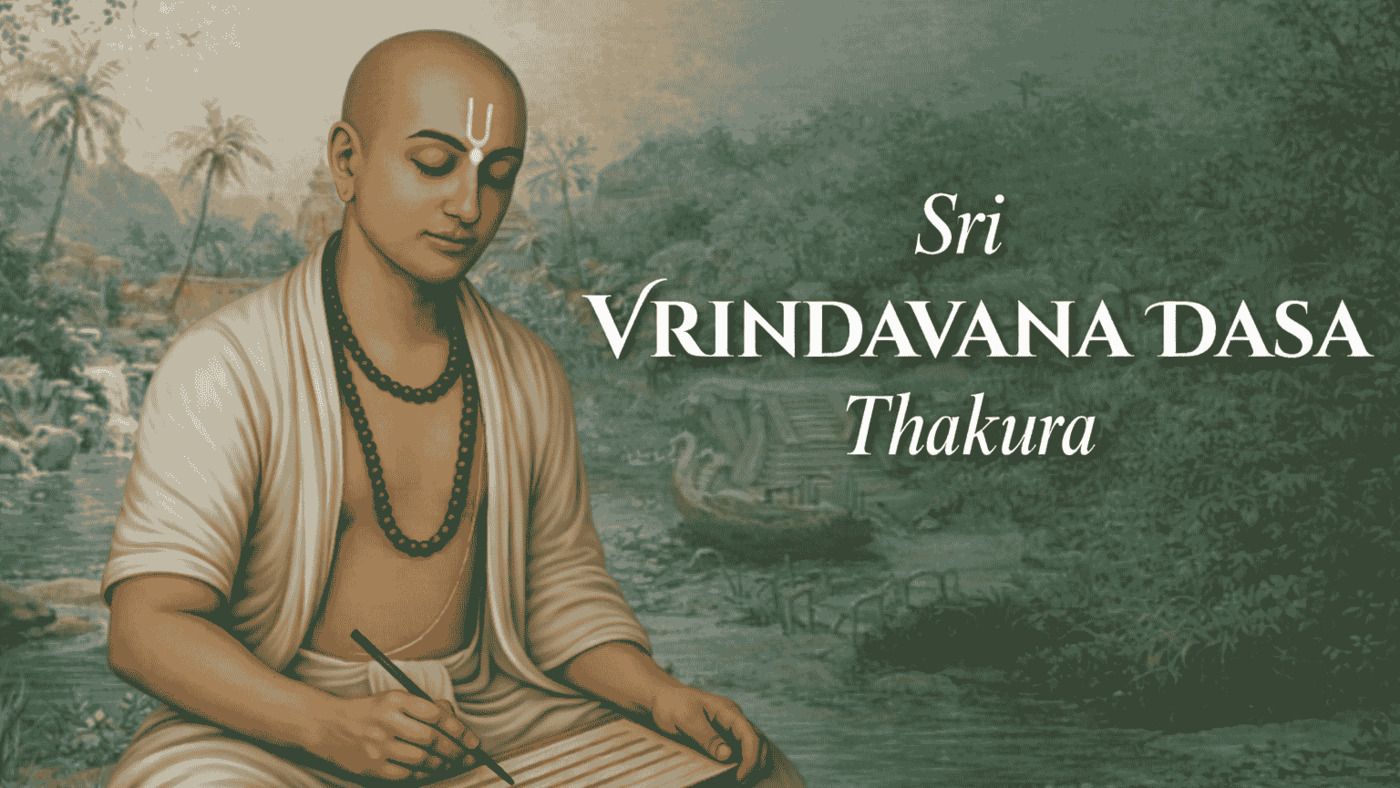
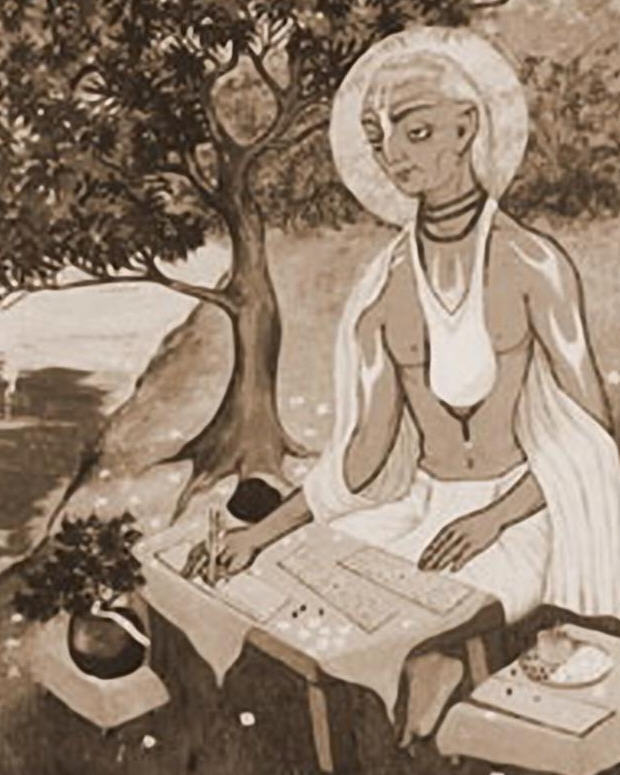
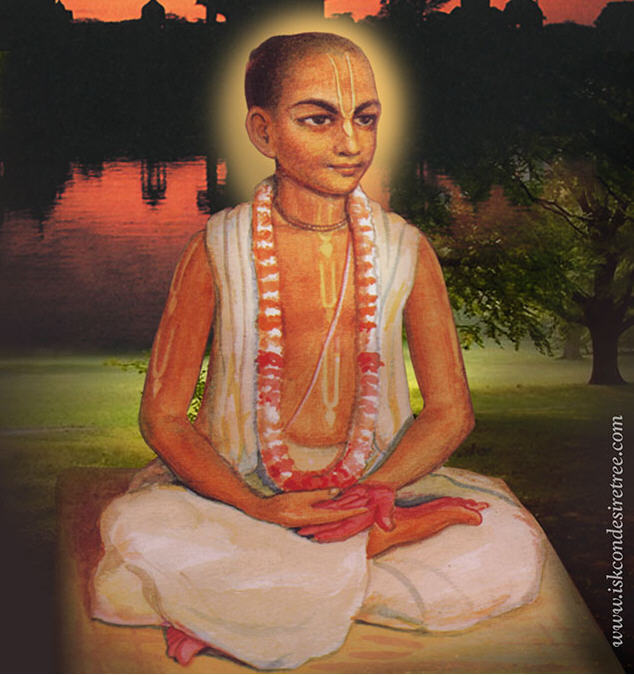
Srila Raghava Pandita Goswami was a Vaishnava saint from South India who made Govardhana Hill his home. He lived in the time of the later Vrindavana Goswamis, and the old books call him by three names: Raghava Gosai, Raghava Pandita and Raghava Goswami. He lived in a cave at the southern end of Govardhana, wandered through the forests of Vraja, and often stayed with his dear friend Raghunatha Dasa Goswami at Radha-kunda. He is remembered above all as the guide whom Srila Jiva Goswami sent with Shrinivasa Acharya and Narottama Dasa Thakura to show them all the holy places of Vraja-mandala. Narahari Chakravarti Thakura describes that great parikrama, page after page, in the Fifth Wave of his Bhakti-ratnakara. Kavi Karnapura names him in the Gaura-ganoddesha-dipika as Campakalata, one of the eight dearest friends of Srimati Radharani, and as the author of the Bhakti-ratna-prakasha, a Sanskrit book on pure devotion to Krishna that still survives. He is a different person from Raghava Pandit of Panihati, the associate of Sri Chaitanya Mahaprabhu, although many modern books mix the two up.
| Detail | Description |
|---|---|
| Also known as | Raghava Gosai, Raghava Pandita and Sri Raghava (Bhakti-ratnakara); Raghava Goswami (Gaura-ganoddesha-dipika 162) |
| Identity | Campakalata, one of the eight principal sakhis of Srimati Radharani (Gaura-ganoddesha-dipika 162) |
| Origin | A brahmana from South India, of a highly respected family (Bhakti-ratnakara, Fifth Wave, p. 150); a twentieth-century reference work names his birthplace as Ramanagara |
| Home | A cave at the southern end of Govardhana Hill, near Apsara-kunda and Punchari (Bhakti-ratnakara, Fifth Wave, p. 203) |
| Time | Already living at Govardhana, with his book written, when the Gaura-ganoddesha-dipika was completed in 1576 |
| Closest companion | Raghunatha Dasa Goswami of Radha-kunda |
| Best known for | Guiding Shrinivasa Acharya and Narottama Dasa Thakura around Vraja-mandala at Jiva Goswami's request |
| Book | Krishna-bhakti-ratna-prakasha (Bhakti-ratna-prakasha), a Sanskrit work in six chapters called "jewels" |
| Guru | Not named in any old source |
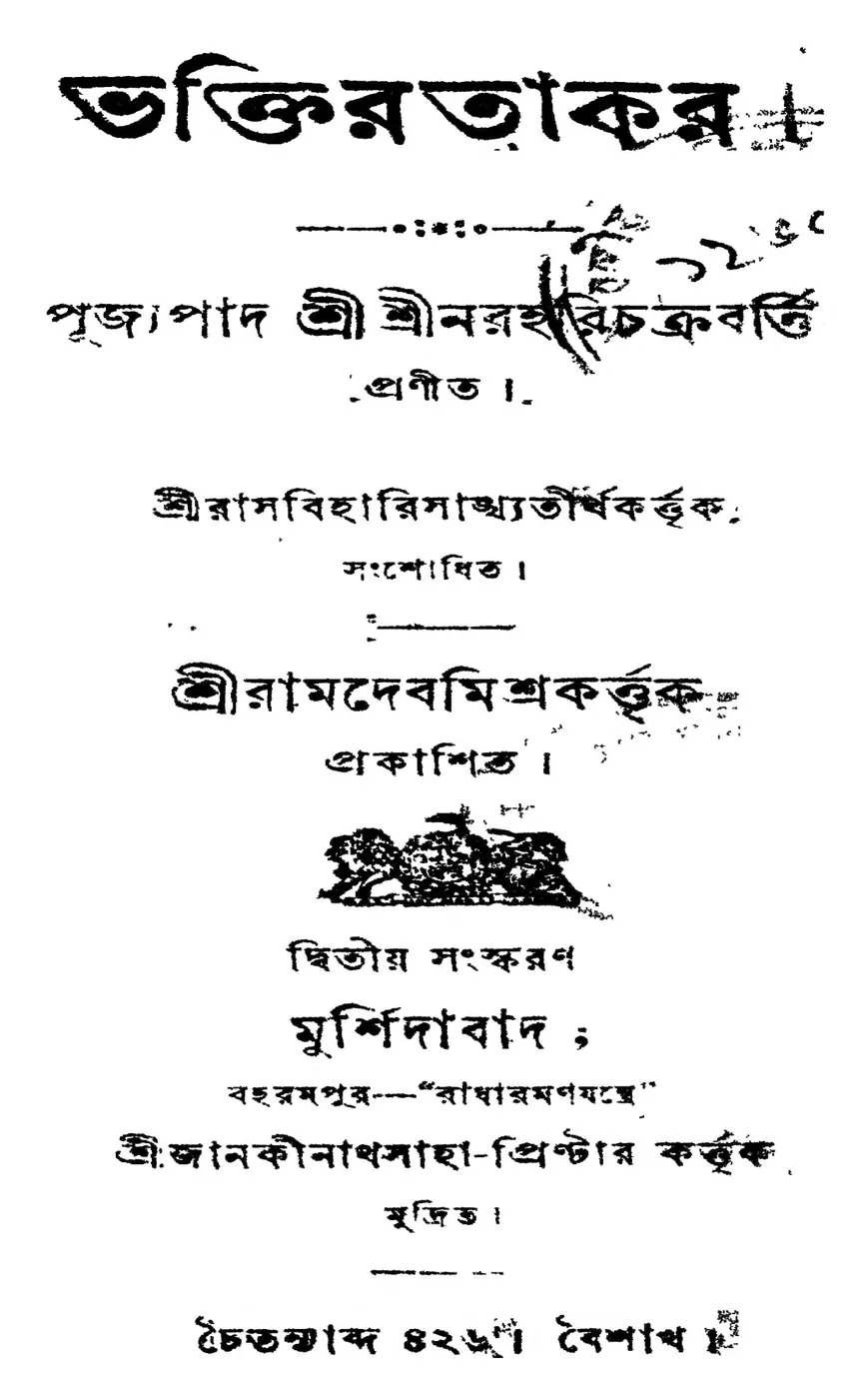
| Main source | Bhakti-ratnakara of Narahari Chakravarti Thakura, especially the Fifth Wave |
A Brahmana of the South at Govardhana #
Narahari Chakravarti Thakura introduces Raghava with great love at the very start of the Vraja tour. He says that there is no end to telling of Raghava's character, and then he gives a short portrait that is still the best description we have of him:
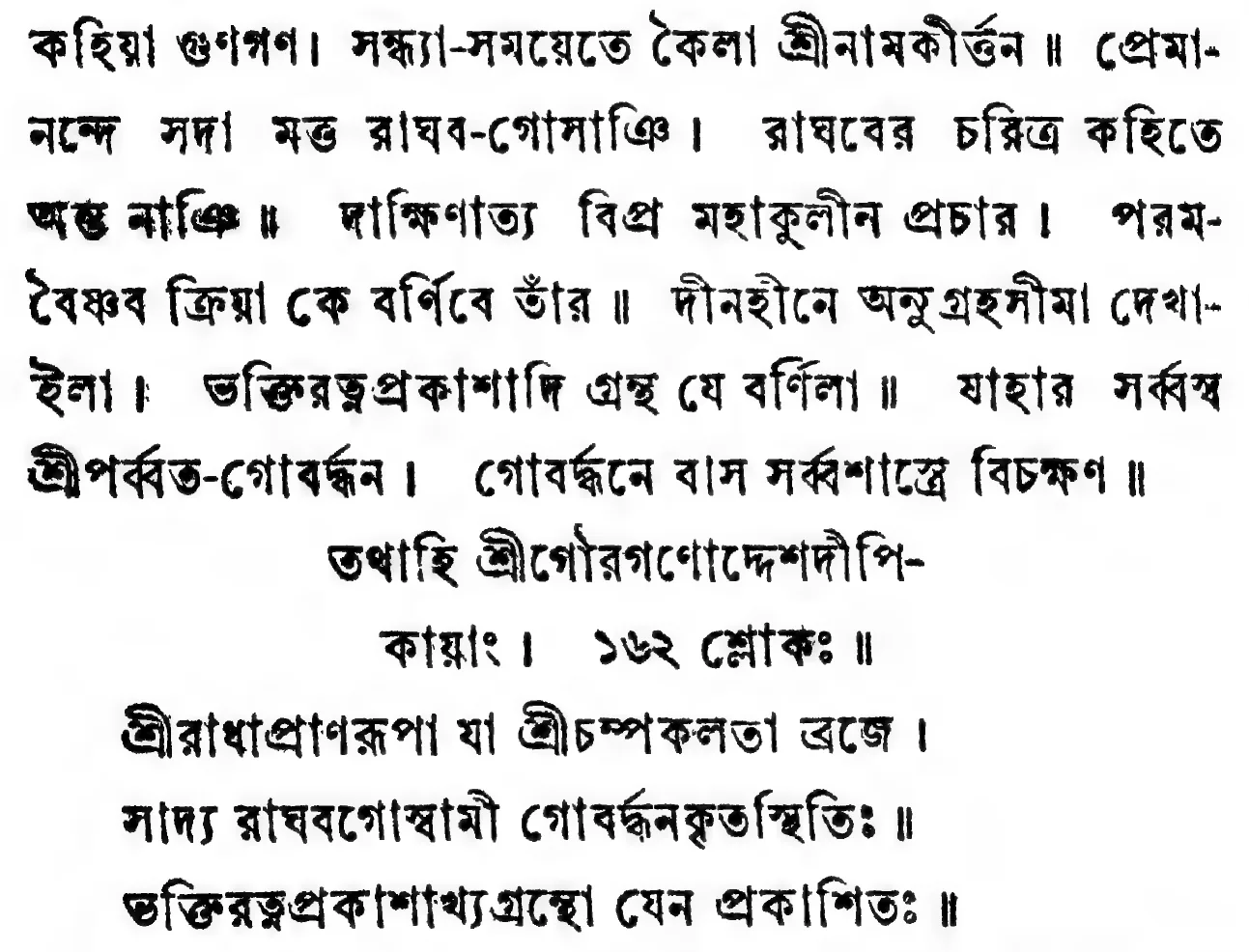
premānande sadā matta rāghava-gosāñi / rāghavera caritra kahite anta nāñi
dākṣiṇātya vipra mahā-kulīna pracāra / parama-vaiṣṇava kriyā ke varṇibe tāṅra
dīna-hīne anugraha-sīmā dekhāilā / bhakti-ratna-prakāśādi grantha ye varṇilā
yāhāra sarvasva śrī-parvata-govardhana / govardhane vāsa sarva-śāstre vicakṣaṇa
"Raghava Gosai is always intoxicated with the joy of prema; there is no end to telling of Raghava's character. He is known as a brahmana from the South, of a very high-born family. Who can describe the ways of that great Vaishnava? He showed the utmost mercy to the lowly and the poor, and he wrote books such as the Bhakti-ratna-prakasha. Sri Govardhana Hill is his everything; he lives at Govardhana and is expert in all the scriptures." (Bhakti-ratnakara, Fifth Wave, p. 150, 1912 Bengali edition; English rendering ours)
Narahari then tells how Raghava lived. Now and then he wandered joyfully through Vraja, and now and then he stayed with "Dasa Goswami", Raghunatha Dasa Goswami of Radha-kunda. Sometimes he came to Vrindavana and was overjoyed to see the Goswamis there. He was always singing of Radha and Krishna and of Sri Chaitanya's life, with tears he could not hold back. He was grey with the dust of Vraja and had no wish to eat, and Narahari asks, "Who can understand his intense renunciation?" In the opening prayers of the same book, Narahari salutes him as "Sri Raghava, who lives in the forest of Govardhana" (Bhakti-ratnakara, First Wave, p. 3). Nothing is recorded about his parents, his village in the South, or how and when he came to Vraja. A twentieth-century Gaudiya reference work, the Gaudiya Vaishnava Abhidhana, says that he came from a place called Ramanagara in the South, but it does not give its source.
Jiva Goswami Entrusts Shrinivasa and Narottama to Him #
The Bhakti-ratnakara first shows Raghava with Shrinivasa Acharya at Radha-kunda. After Shrinivasa had received initiation from Gopala Bhatta Goswami, Jiva Goswami sent him to see Raghunatha Dasa Goswami, and there "Sri Raghava, Krishnadasa Kaviraja and the others all showed Shrinivasa the greatest mercy" (Bhakti-ratnakara, Fourth Wave, p. 145). Some time later Jiva Goswami wanted to send Shrinivasa and Narottama to see every holy place of Vraja, and he was wondering who should take them, when Raghava himself walked in:
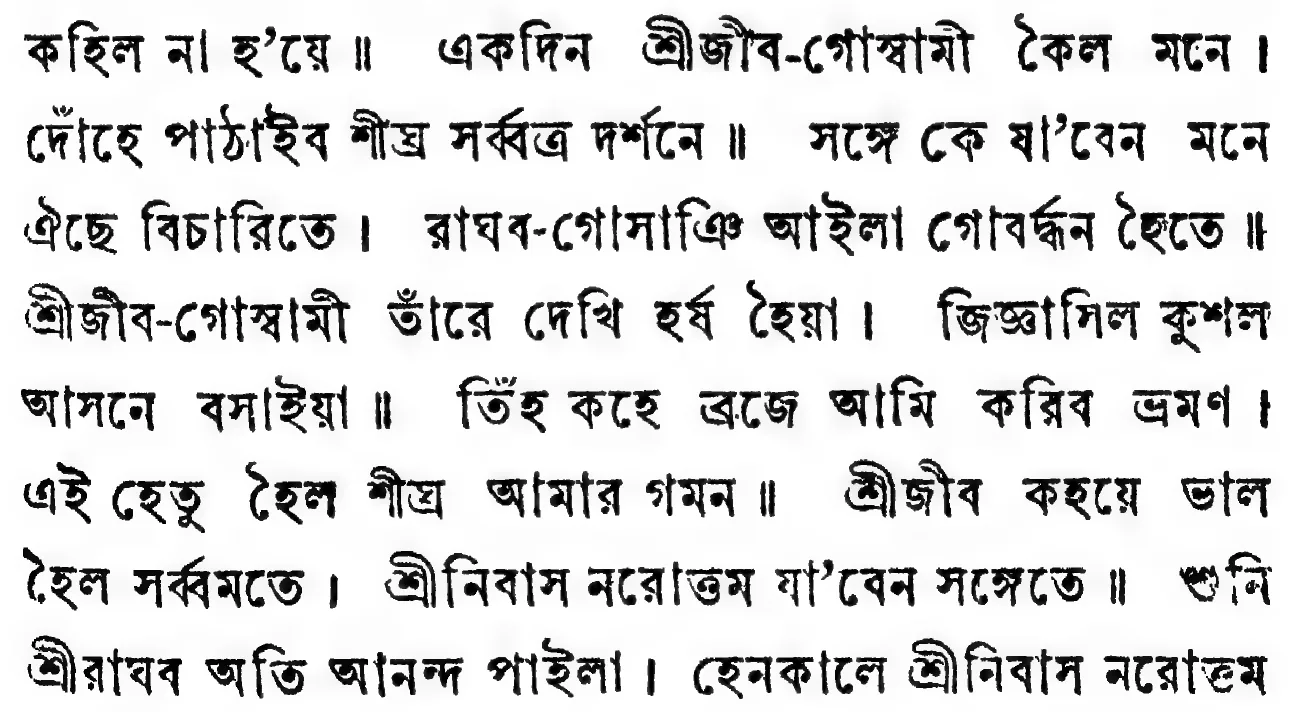
eka-dina śrī-jīva-gosvāmī kaila mane / doṅhe pāṭhāiba śīghra sarvatra darśane
saṅge ke yā'bena mane aiche vicārite / rāghava-gosāñi āilā govardhana haite
śrī-jīva-gosvāmī tāṅre dekhi harṣa haiyā / jijñāsila kuśala āsane vasāiyā
tiṅha kahe vraje āmi kariba bhramaṇa / ei hetu haila śīghra āmāra gamana
śrī-jīva kahaye bhāla haila sarva-mate / śrīnivāsa narottama yā'bena saṅgete
"One day Sri Jiva Goswami thought, 'I will soon send these two to see all the holy places.' While he was thinking about who should go with them, Raghava Gosai came from Govardhana. Sri Jiva Goswami was delighted to see him; he gave him a seat and asked how he was. Raghava said, 'I am going to wander through Vraja; that is why I have come in haste.' Sri Jiva said, 'This is good in every way. Shrinivasa and Narottama will go with you.'" (Bhakti-ratnakara, Fifth Wave, p. 149, 1912 Bengali edition; English rendering ours)
Raghava was delighted, and when the two young devotees came and bowed down, he embraced them. He took them first to Mathura, where they stayed near the temple of Sri Keshavadeva, at the place where Subuddhi Raya had once lived. He spoke of Subuddhi Raya's good qualities, and at dusk he held kirtana of the holy name. In private he told the two how the places of Krishna's pastimes had been almost lost and then found again by Sri Chaitanya Mahaprabhu through Rupa Goswami and Sanatana Goswami. From then on, at almost every place, he told what Mahaprabhu had done there. He never says that he saw it himself. Once he says plainly, "I heard this from the mouths of the elders" (Bhakti-ratnakara, Fifth Wave, p. 165). Remembering Mahaprabhu, he often sighed and wept, and the two young devotees fell at his feet.
At Radha-kunda With Raghunatha Dasa Goswami #
No Vaishnava was closer to Raghava than Raghunatha Dasa Goswami. At Radha-kunda he told Shrinivasa story after story from Raghunatha's life, and then he gave his own conviction about the holy lake:
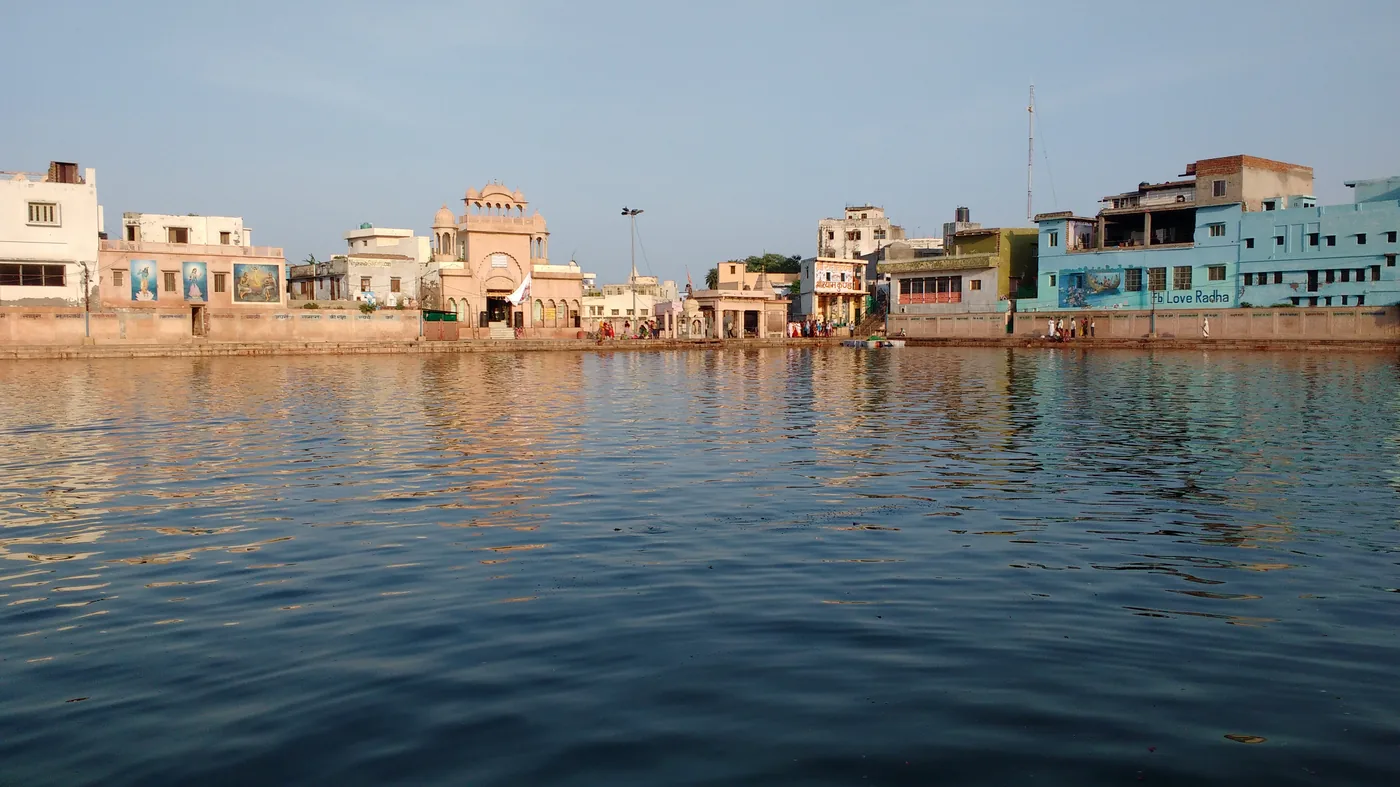
ahe śrīnivāsa e niścaya jāna cite / rādhā-kuṇḍa vāsa raghunātha kṛpā haite
śrī-kuṇḍa śrī-govardhana śilā guñjā-hāra / śrī-raghunāthera ei sevā supracāra
"O Shrinivasa, know this for certain in your heart: one gets to live at Radha-kunda by the mercy of Raghunatha. Sri Radha-kunda, the Govardhana-shila and the gunja-mala: this service of Sri Raghunatha is well known." (Bhakti-ratnakara, Fifth Wave, p. 198, 1912 Bengali edition; English rendering ours)
Then he brought the two young devotees to Raghunatha Dasa Goswami and told him everything. Raghunatha's body was dried up and very weak, yet he rose and opened his arms to embrace them. Krishnadasa Kaviraja Goswami, who loved Shrinivasa as his own life, came to meet them, and the party honoured mahaprasada at the hut of Gopala Bhatta Goswami. On another day of the tour the three spent a whole night on the bank of Radha-kunda talking about Krishna until dawn. Years later, when Jahnava Mata came to Vrindavana, Raghava was still close to his friend: "Gopala, Raghava Pandita and others" came from Nandishvara and Govardhana and gave her Raghunatha's humble message, and the next morning she went to Radha-kunda (Bhakti-ratnakara, Eleventh Wave, p. 667).
Around Govardhana Hill and His Own Cave #
On the Govardhana circuit Raghava showed the two young devotees Kusuma-sarovara, Narada-kunda, Govinda-kunda, the forest where the Deity Gopala had once been hidden, and many other places. Srila Prabhupada quotes some of these very lines of the Bhakti-ratnakara in his purports to the Chaitanya-charitamrita, for example: "O Śrīnivāsa, whoever sees this place has all his desires fulfilled" (Sri Chaitanya-charitamrita Madhya 18.26, purport). Then, after Apsara-kunda and the old palasha tree at Shyama-dhaka, Raghava came to his own home:
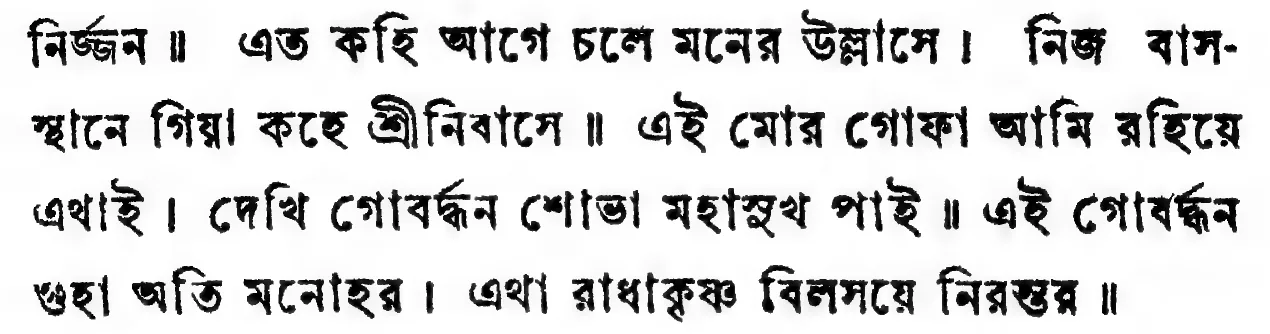
eta kahi āge cale manera ullāse / nija vāsa-sthāne giyā kahe śrīnivāse
ei mora gophā āmi rahiye ethāi / dekhi govardhana śobhā mahā-sukha pāi
ei govardhana guhā ati manohara / ethā rādhā-kṛṣṇa vilasaye nirantara
"Saying this, he went on with joy in his heart. Reaching his own dwelling place, he said to Shrinivasa, 'This is my cave; I live right here. Seeing the beauty of Govardhana, I feel great happiness. This cave of Govardhana is most charming; here Radha and Krishna enjoy Their pastimes without end.'" (Bhakti-ratnakara, Fifth Wave, p. 203, 1912 Bengali edition; English rendering ours)
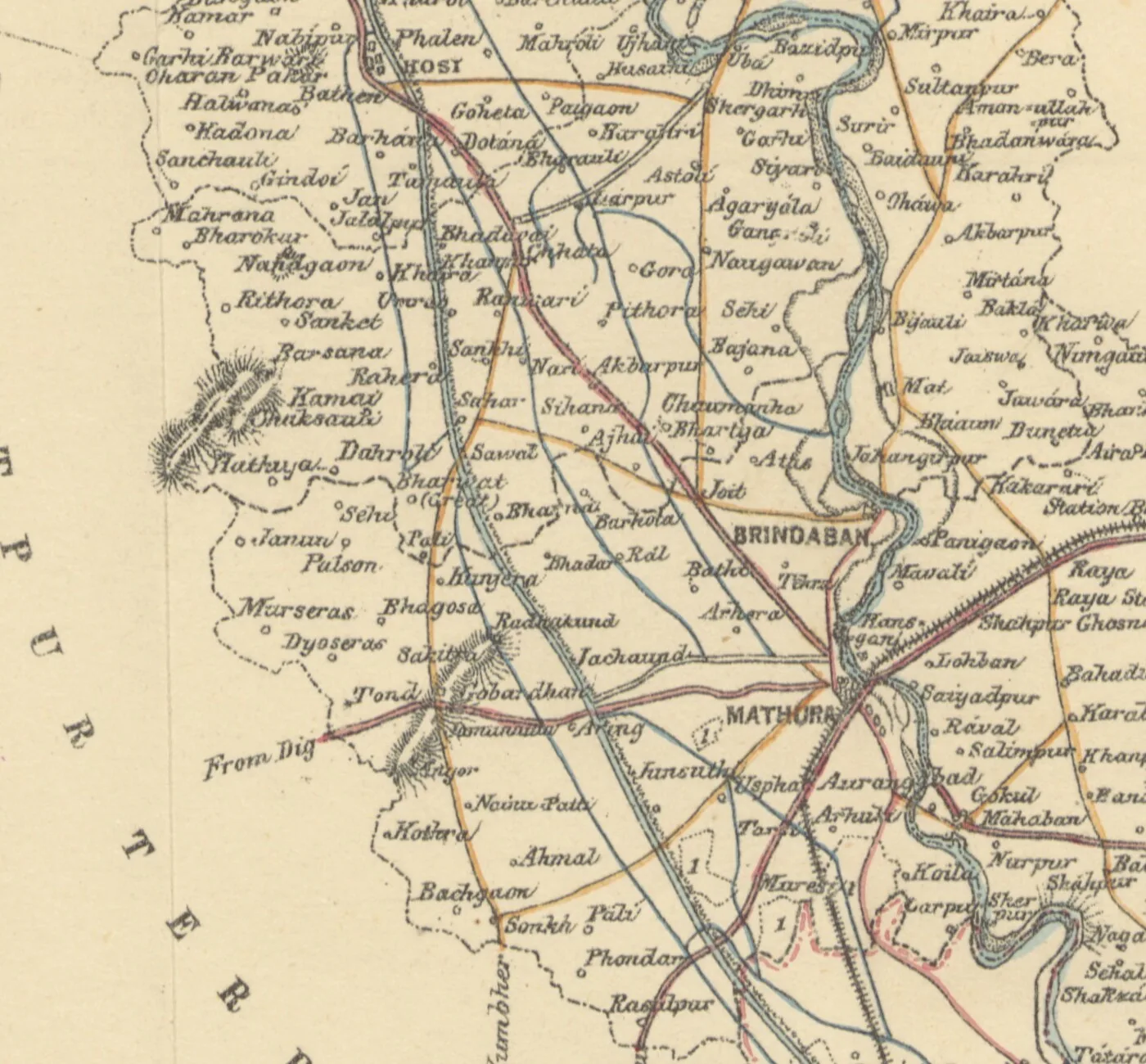
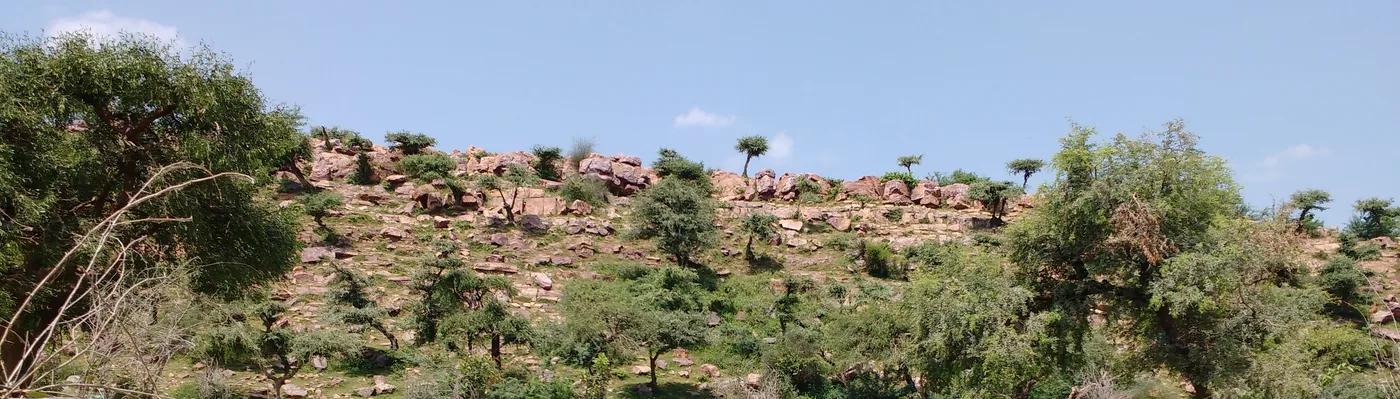
Pilgrims still visit Raghava Pandita's cave at Punchari, the "tail" of Govardhana, close to Apsara-kunda, on the path of the Govardhana parikrama. Recent pilgrim guides say that its mouth is now closed and that the place stands inside a small walled enclosure. Some modern guidebooks call it the Mani-kandali cave, a name that is not found in any old source.
Through the Forests of Vraja #
From Govardhana the tour went on to Kamyavana, Varshana and Nandishvara, then north and east to Khadiravana, Rama-ghata, Bhandira, Mahavana-Gokula and Raval. At each place Raghava told the pastimes of Krishna, and the stories of Mahaprabhu, Nityananda Prabhu and the Goswamis that had happened there. At Pavana-sarovara, near Nandishvara, he wept at the sight of Sanatana Goswami's hut. At Umrao he told the two how Lokanatha Goswami, Narottama's own guru, had lived there in complete renunciation with his Deity Radha-vinoda, and he could not hold back his tears:
aiche kata kahi dhairya dharite nā pāre / rāghava-paṇḍita netra jalei sāṅtāre
śrīnivāsa narottama dhūlāya loṭāya / chāḍe dīrgha-śvāsa bhāse netrera dhārāya
kata kṣaṇe śrī-paṇḍita susthira haiyā / doṅhe sthira kari āge cale doṅhe laiyā
"Saying many such things, Raghava Pandita could not keep his composure: he swam in his own tears. Shrinivasa and Narottama rolled in the dust, heaving long sighs and floating in streams of tears. After some time Sri Pandita became calm, calmed the two, and went on, taking them with him." (Bhakti-ratnakara, Fifth Wave, p. 248, 1912 Bengali edition; English rendering ours)
At Nanda-ghata he showed them the hut where Jiva Goswami had once lived unknown, and at Raval the three again passed the whole night in talk about Krishna.
Last Teachings in Vrindavana and the Farewell #
The tour ended in Vrindavana. At Akrura Raghava said to Shrinivasa, in words that Srila Prabhupada also quotes, "Śrīnivāsa, look at this village of Akrūra. Śrī Caitanya Mahāprabhu stayed there in a solitary place" (Sri Chaitanya-charitamrita Madhya 18.70, purport). He taught them that Vrindavana cannot be seen with eyes of flesh, only with eyes of prema, and that worldly people see a statue in the Deity of Govinda while His own devotees see Govinda face to face. At Advaita-vata he explained the four sampradayas and the line of gurus that comes down through Madhvacharya to Sri Chaitanya Mahaprabhu. When all was done, he spoke these words of farewell:
ohe śrīnivāsa vṛndāvanera mādhurī / mane abhilāṣa sadā rākhi netre bhari'
tomā doṅhā laiyā mahā ānande bhraminu / puna nā ha-ibe hena mane vicārinu
janme janme tumi dui prabhura kiṅkara / eta kahi' paṇḍitera adhairya antara
"'O Shrinivasa, the one wish of my heart is always to keep the sweetness of Vrindavana filling my eyes. Taking you two with me, I have wandered in great joy, and I feel in my heart that this will not happen again. Birth after birth, you two are servants of the Lord.' Saying this, the Pandita's heart lost all composure." (Bhakti-ratnakara, Fifth Wave, p. 450, 1912 Bengali edition; English rendering ours)
The two fell at his feet, and he took them on his lap and bathed them with his tears. He reported the whole tour to Jiva Goswami, stayed only one or two days in Vrindavana, and quickly went back to Govardhana. When the books of the Goswamis later left Vrindavana for Bengal, Raghava was among the Vaishnavas who saw Shrinivasa, Narottama and Shyamananda Pandit off at Mathura, all of them in tears. Years afterwards, touring Navadvipa, Shrinivasa remembered that it was "while touring Vraja with Sri Raghava" that he first wished to see Nadiya in the same way (Bhakti-ratnakara, Twelfth Wave, p. 716).
Campakalata and the Krishna-bhakti-ratna-prakasha #
Kavi Karnapura completed his Gaura-ganoddesha-dipika in 1576. In it he shows which associates of Sri Krishna appeared again among the devotees of Sri Chaitanya, and he names Raghava of Govardhana in one verse:
śrī-rādhā-prāṇa-rūpā yā śrī-campakalatā vraje
sādya rāghava-gosvāmī govardhana-kṛta-sthitiḥ
bhaktiratna-prakāśākhya-grantho yena vinirmitaḥ
"Srimati Campakalata-gopi, who considered Srimati Radharani as dear as her own life-breath, appeared as Raghava Gosvami, who lived at Govardhana Hill and wrote the book entitled Bhakti-ratna-prakasa." (Gaura-ganoddesha-dipika 162, translation as published at bvmlu.org)
Campakalata is one of the eight principal gopis, the ashta-sakhis, whom Srila Prabhupada lists by name in a letter of 27 May 1970. This identification is Kavi Karnapura's statement about Raghava, not a claim that Raghava made for himself. His book survives in Sanskrit as the Krishna-bhakti-ratna-prakasha. It has six chapters, and at the end of each one Raghava offers the chapter to the reader as a jewel to be worn: a diamond, a pearl, a sapphire, a ruby, an emerald, and finally the whole book as a cintamani, a wish-fulfilling gem for the worship of Krishna. Its central message is that a devotee should give up every other kind of worship and worship only the lotus feet of Sri Krishna. A copy of it was made in 1684-85, a Bengali verse version of its first four chapters was made at Vishnupura in 1739-40, and the book is still read today in Sanskrit and in English translation.
Is He the Same as Raghava Pandit of Panihati? #
No. Gaudiya Vaishnava history has two great devotees called Raghava Pandita, and the Gaura-ganoddesha-dipika itself keeps them apart, only four verses after the verse on Campakalata. Srila Prabhupada quotes that second verse when he writes about Raghava Pandit of Panihati:
dhaniṣṭhā bhakṣya-sāmagrīṁ kṛṣṇāyādād vraje ’mitām
saiva sāmprataṁ gaurāṅga-priyo rāghava-paṇḍitaḥ
"Rāghava Paṇḍita was formerly a confidential gopī in Vraja during the time of Lord Kṛṣṇa’s pastimes, and his former name was Dhaniṣṭhā. This gopī, Dhaniṣṭhā, always engaged in preparing foods for Kṛṣṇa." (Sri Chaitanya-charitamrita Adi 10.24, purport)
So the two are clearly different:
- Raghava Pandit of Panihati: an associate of Sri Chaitanya Mahaprabhu in Bengal, the gopi Dhanishtha in Krishna's pastimes, famous for the bags of food (raghavera jhali) that he sent to Mahaprabhu at Puri every year. His home and samadhi are at Panihati on the Ganges.
- Raghava Pandita Goswami of Govardhana: a brahmana from the South who is known from the years after Mahaprabhu, when he lived in Vraja with the Goswamis, the gopi Campakalata, the author of the Bhakti-ratna-prakasha, and the guide of Shrinivasa and Narottama. His home was a cave at Govardhana.
Many modern guidebooks and websites call the Raghava of the Govardhana cave "a close associate of Sri Chaitanya Mahaprabhu". This comes from mixing up the two men, and no old source supports it.
Common Questions About Him #
Did Raghava Pandita Goswami meet Sri Chaitanya Mahaprabhu? #
No old source says that he did. In the Bhakti-ratnakara he tells Mahaprabhu's pastimes in Mathura and Vraja at almost every place, but always as something that happened there, never as something he saw, and once he names his source as the elders who told him. The records show him in Vraja among the Goswamis of Vrindavana and Radha-kunda in the years after Mahaprabhu's disappearance; nothing shows him in Mahaprabhu's company.
Who was his guru? #
The old books do not name his guru. His own book opens with verses from the Krama-dipika, and in the second of them he bows to the lotus feet of his spiritual master, without giving a name. The Bhakti-ratnakara shows him close to Raghunatha Dasa Goswami, Jiva Goswami and Krishnadasa Kaviraja Goswami, and honoured by them, but it does not say that any of them was his guru.
Where is Raghava Pandita's cave? #
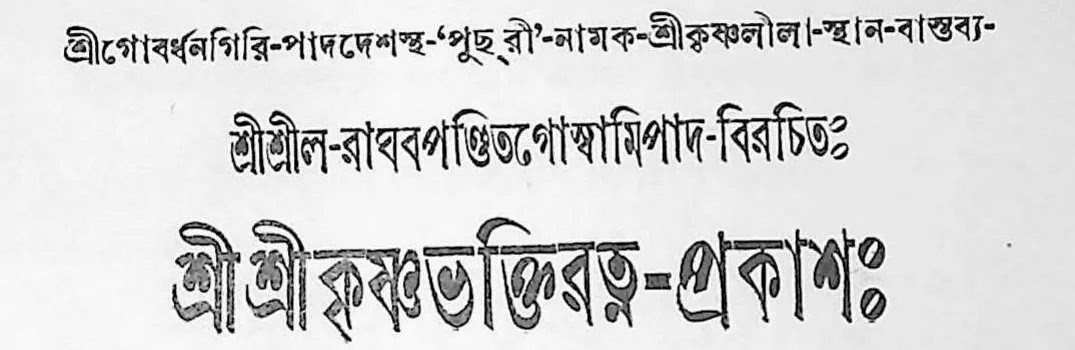
It is at Punchari, the southern end of Govardhana Hill, near Apsara-kunda and Navala-kunda, on the Govardhana parikrama path. In the Bhakti-ratnakara, Raghava shows Shrinivasa Apsara-kunda "at the end of Govardhana" and the old palasha tree of Shyama-dhaka, and then brings him to his cave, and a 1955 edition of his book calls him "a resident of the Krishna-lila place called Puchri at the foot of Sri Govardhana Hill".
Where is his samadhi, and when did he leave this world? #
The old sources do not say when or where he left this world. The Gaudiya Vaishnava Abhidhana says only that his samadhi is in Vrindavana, without naming the place. No date for his disappearance day was found in the Gaudiya calendars.
What did he write? #
The Krishna-bhakti-ratna-prakasha, also called the Bhakti-ratna-prakasha, a Sanskrit book in six chapters on exclusive devotion to Krishna. The Bhakti-ratnakara says he wrote "books such as" this one, so there may have been others, but no other title has come down to us.
When did he live? #
His exact dates are not known. He was already living at Govardhana, and had already written his book, when the Gaura-ganoddesha-dipika was completed in 1576. He was a friend of Raghunatha Dasa Goswami and was honoured by Jiva Goswami, and he was still living near Govardhana when Jahnava Mata visited Vrindavana.
What His Life Teaches Us #
Raghava Pandita Goswami asked nothing of the world. He lived in a cave, ate little, and spent his days in the places where Krishna played, singing of Radha and Krishna and of Sri Chaitanya. Yet when two young devotees needed a guide, he gave them everything he had heard from the elders, and he made the holy places come alive for them. This is exactly what the scriptures say a pure devotee does:
bhavad-vidhā bhāgavatās
tīrtha-bhūtāḥ svayaṁ vibho
tīrthī-kurvanti tīrthāni
svāntaḥ-sthena gadābhṛtā
"My lord, devotees like your good self are verily holy places personified. Because you carry the Personality of Godhead within your heart, you turn all places into places of pilgrimage." (Srimad-Bhagavatam 1.13.10)
In his purport Srila Prabhupada explains that whoever visits a holy place "must search out the pure devotees residing in such holy places, take lessons from them, try to apply such instructions in practical life and thus gradually prepare oneself for the ultimate salvation, going back to Godhead." Shrinivasa Acharya and Narottama Dasa Thakura did exactly that. They saw Vraja through the eyes of Raghava, and then they carried the books and the mood of the Goswamis to Bengal, where Narottama's songs are still sung by devotees today.
Scriptural evidence
Quoted in the text above:
- Bhakti-ratnakara, Fifth Wave, p. 150 (1912 ed.)
- Bhakti-ratnakara, Fifth Wave, p. 149 (1912 ed.)
- Bhakti-ratnakara, Fifth Wave, p. 198 (1912 ed.)
- Bhakti-ratnakara, Fifth Wave, p. 203 (1912 ed.)
- Bhakti-ratnakara, Fifth Wave, p. 248 (1912 ed.)
- Bhakti-ratnakara, Fifth Wave, p. 450 (1912 ed.)
- Gaura-ganoddesha-dipika 162
- Sri Chaitanya-charitamrita Adi 10.24, purport quoted above ↑
- Srimad-Bhagavatam 1.13.10 quoted above ↑
Further verses:
श्री-राघव पण्डित गोसाञि गोवर्धने । पाइला परमानन्द देखि नरोत्तमे
śrī-rāghava paṇḍita gosāñi govardhane / pāilā paramānanda dekhi narottame
Sri Raghava Pandita, who had been living at Govardhana, was extremely happy to see Narottama.
Narahari Chakravarti's other biography, the Narottama-vilasa, remembers Raghava's joy on meeting Narottama, when Narottama was first brought to Radha-kunda and Govardhana.
जय रघुनाथ-दास श्री-कुण्ड-निवासी । जय जय श्री-राघव गोवर्धन-वासी
jaya raghunātha-dāsa śrī-kuṇḍa-nivāsī / jaya jaya śrī-rāghava govardhana-vāsī
Glory to Raghunatha Dasa, who lives at Sri Radha-kunda! Glory, glory to Sri Raghava, who lives at Govardhana!
In the opening prayers of the Third Wave, Narahari remembers Raghava together with Raghunatha Dasa Goswami in a single couplet.
Primary Scriptural Sources
- Bhakti-ratnakara of Narahari Chakravarti (Bengali, 2nd edition, Murshidabad 1912) - archive.org
- Gaura-ganoddesha-dipika of Kavi Karnapura, Sanskrit with diacritics (verse 162)
- Narottama-vilasa of Narahari Chakravarti (Bengali, 1907 edition) - archive.org
- Krishna-bhakti-ratna-prakasha of Raghava Pandita Goswami (Sanskrit, 1955 edition) - archive.org
- Krishna-bhakti-ratna-prakasha, Sanskrit e-text - Gaudiya Grantha Mandira
Teachings of Srila Prabhupada
Historical and Secondary References
Frequently asked
When was Srila Raghava Pandita Goswami born?
Srila Raghava Pandita Goswami appeared in an unrecorded year in a brahmana family of South India.
When and where did Srila Raghava Pandita Goswami disappear?
Srila Raghava Pandita Goswami disappeared on an unrecorded date.
What are the main pastimes of Srila Raghava Pandita Goswami?
The pastimes covered here include: A Brahmana of the South at Govardhana, Jiva Goswami Entrusts Shrinivasa and Narottama to Him, At Radha-kunda With Raghunatha Dasa Goswami, Around Govardhana Hill and His Own Cave, Through the Forests of Vraja, Last Teachings in Vrindavana and the Farewell, Campakalata and the Krishna-bhakti-ratna-prakasha.