Āśīṣeśvara Mahādeva
आशीषेश्वर महादेव Hindi name proposed
- What it is
- Āśīṣeśvara Mahādeva is a temple of Lord Śiva a short distance east of Nanda-bāga at Nandagrāma, beside its pond, Āśīṣeśvara-kuṇḍa.
- Visiting
- Śrī Vraja-maṇḍala Parikramā places the temple and its pond a short distance east of Nanda-bāga, with Jalvihāra-kuṇḍa to the west of the pond.
In short
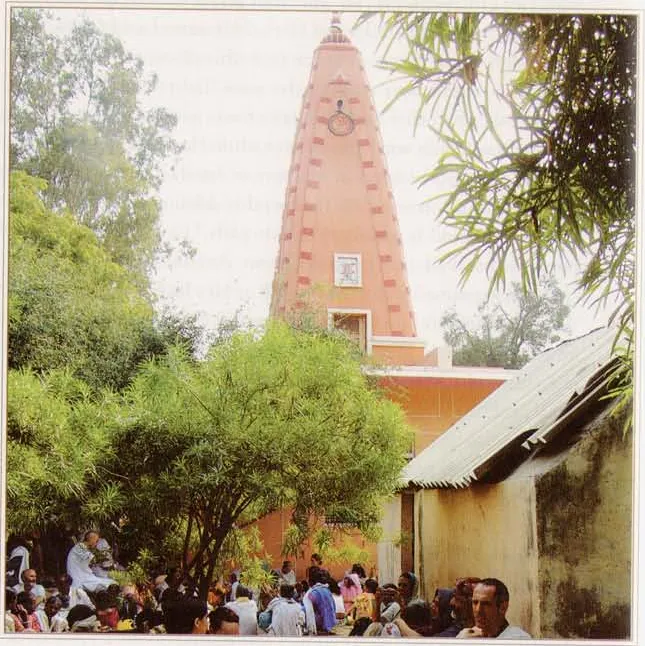
Āśīṣeśvara Mahādeva is a temple of Lord Śiva a short distance east of Nanda-bāga at Nandagrāma, beside its pond, Āśīṣeśvara-kuṇḍa.[1 +1] According to the local tradition recorded in the guidebook Śrī Vraja-maṇḍala Parikramā (2007), Parjanya Mahārāja bathed in the pond and worshipped this Śiva, who is pleased even by a little worship and gives blessings, āśīṣa; the book explains the name from that word. This account is not certain.[1] In 1987 the historian A. W. Entwistle recorded a small Śiva temple and a pond east of Nandagrāma under the names Aseshwar and As Kund.[3] No scripture or Gosvāmī text found so far names the shrine.[1]
Key facts
| Kind | temple |
|---|---|
| Region · area | Nandagrāma |
Traditional accounts
Parjanya and Āśīṣeśvara
Śrīla Rūpa Gosvāmī calls Parjanya, the cowherd, Kṛṣṇa's grandfather.[4] Besides telling of his bath and worship here, Śrī Vraja-maṇḍala Parikramā says of Āśīṣeśvara Mahādeva that he fulfils all desires; no older source confirms these traditions, so they are not certain.[1]
The sources differ on how Parjanya obtained his five sons. Śrī Vraja-maṇḍala Parikramā reports that some Vrajavāsīs, the people of Vraja, say that he had his sons, and his grandson Kṛṣṇa, by Āśīṣeśvara's blessing. That local saying does not agree with the Gosvāmīs, whose older works are the authority here, and they tell it differently (summarised here, not translated). Śrīla Rūpa Gosvāmī writes that Parjanya, on the instruction of the sage of the gods, worshipped Nārāyaṇa, the husband of Lakṣmī, at Nandīśvara, and a voice from the sky promised him five sons, with Nanda the best of them, and a grandson who would delight Vraja.[4] Śrīla Raghunātha dāsa Gosvāmī sets Parjanya's fasting worship of Nārāyaṇa at the lake of Taḍāga-tīrtha, and Śrīla Viśvanātha Cakravartī Ṭhākura speaks of Nārāyaṇa pleased by Parjanya's austerities.[5 +1] Read more: Nanda's family at Nandagrāma →
Accounts differ How Parjanya obtained his five sons and how Kṛṣṇa came to Nanda's family.
- 'Some Vrajavāsīs', as reported by Śrī Vraja-maṇḍala Parikramā (2007)By the blessings of Āśīṣeśvara Mahādeva Parjanya had five sons and the grandson Śrī Kṛṣṇa.
- Śrī Vraja-maṇḍala Parikramā (2007) (its own account)Parjanya worshipped with the Lakṣmī-Nārāyaṇa mantra received from Nārada, bathing in Taḍāga-tīrtha; a voice from the sky promised five sons, Nanda the middle one, and Śrī Hari as Nanda's son.
- Śrīla Rūpa Gosvāmī, Rādhā-Kṛṣṇa-gaṇoddeśa-dīpikā 1.16–20Parjanya, on the divine sage's instruction, worshipped the husband of Lakṣmī at Nandīśvara, desiring excellent offspring; a bodiless voice promised five sons, Nanda the best, and Nanda's son the delight of Vraja.
- Śrīla Raghunātha dāsa Gosvāmī, Vraja-vilāsa-stava 60At the Taḍāga lake, famous as Kṣuṇṇāhāra (the lake of fasting), grandfather Parjanya, whose own son, the lord of the cowherds, had no son, gave up food and worshipped Nārāyaṇa, and obtained a grandson, Giridhara.
Nanda and Yaśodā in the Bhāgavatam
Śrīmad-Bhāgavatam (10.8.46–50) gives its own answer to how Nanda and Yaśodā came to have Kṛṣṇa as their son: they were Droṇa, the best of the Vasus, and his wife Dharā, who had received Brahmā's consent to be born on earth with devotion to Hari. It does not mention Parjanya or Śiva.[7 +2]
General teaching (does not name the place)“In contrast to Sutapā and Pṛśni, they did not undergo severe penances and austerities to become the father and mother of Kṛṣṇa. This is the difference between nitya-siddha and sādhana-siddha.”
Śrīla Prabhupāda, Śrīmad-Bhāgavatam, Canto 10, Chapter 8, Text 50, purport · vedabase.io
Śrīla Prabhupāda
Śrīla Prabhupāda explains, as a general teaching about Lord Śiva, the name Āśutoṣa, the one who is quickly satisfied; he does not …
Śrīla Prabhupāda explains, as a general teaching about Lord Śiva, the name Āśutoṣa, the one who is quickly satisfied; he does not mention this temple.[10]
General teaching (does not name the place)Lord Śiva is also called Āśutoṣa. Āśu means “very soon,” and toṣa means “to become satisfied.”
Śrīla Prabhupāda, Śrīmad-Bhāgavatam, Canto 4, Chapter 6, Text 5, purport · vedabase.io
Visiting today
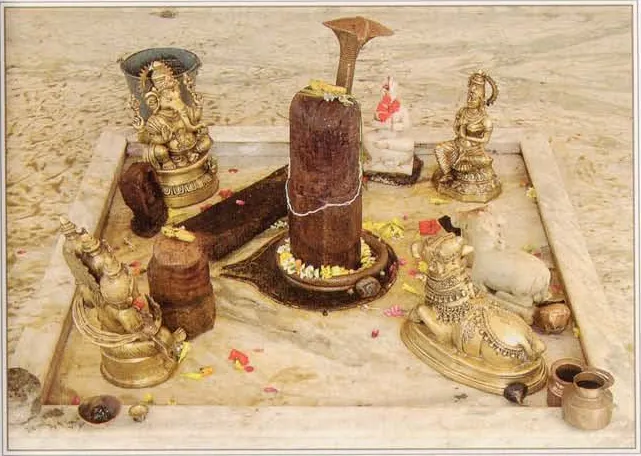
Śrī Vraja-maṇḍala Parikramā places the temple and its pond a short distance east of Nanda-bāga, with Jalvihāra-kuṇḍa to the west of the pond. Its photographs show a tall temple tower and the shrine of the Śiva-liṅga.[1 +1]
Āśīṣeśvara-kuṇḍa
Āśīṣeśvara-kuṇḍa is the pond beside the temple, with Jalvihāra-kuṇḍa to its west.[1 +1] According to the local tradition recorded in Śrī Vraja-maṇḍala Parikramā (2007), Parjanya Mahārāja bathed here before worshipping Āśīṣeśvara Mahādeva, who is pleased even by a little worship and gives blessings; this is not certain. The pond has not been found named in any scripture, Gosvāmī text, the Bhakti-ratnākara or the Vraja-bhakti-vilāsa.[1] The Caitanya-caritāmṛta says that at Nandīśvara Śrī Caitanya Mahāprabhu bathed in all the kuṇḍas, beginning with Pāvana-sarovara; it names no other pond, so it does not show that this pond existed under its present name in His time.[11] Entwistle's As Kund and the older pilgrim itinerary that names it with Jalvihāra-kuṇḍa are told above; neither source explains the other's form of the name.[3]
Location
| Where it is | a short distance to the east of Nanda-bāga (map: dot below 14 and 13, far east)[12] |
|---|
Places at Āśīṣeśvara Mahādeva
1 places
Also described on this page
- Āśīṣeśvara-kuṇḍa kuṇḍa
Nearby places
Nanda-bāga
Pictures
1 pictures
History
In 1987 Entwistle placed a small temple of Śiva, which he called Aseshwar, and a pond, As Kund, some distance east of Nandagrāma, near the huts of Śrīla Rūpa Gosvāmī and Śrīla Sanātana Gosvāmī and the tree of Ṭer-kadamba. For them he cited two older pilgrim itineraries, one of which names the pond together with Jalvihāra-kuṇḍa, and he asked whether a Gopeśvara in a third list is the same shrine.[3] The guidebook writes the name Āśīṣeśvara; neither source explains the other's form of it.[3]
More on this place
Nanda's family at Nandagrāma
References
12 references
- Śrī Vraja-maṇḍala Parikramā (2007), PDF p. 207
- Śrī Vraja-maṇḍala Parikramā (2007), PDF p. 194
- A. W. Entwistle, §40 Nandgaon, 3 'Tanks and ponds to the east of Nandgaon' (source note and text), printed p. 380, Egbert Forsten, Groningen, 1987
- Śrīla Rūpa Gosvāmī, Rādhā-Kṛṣṇa-gaṇoddeśa-dīpikā, part 1, vv.16–19
- Śrīla Raghunātha dāsa Gosvāmī, Vraja-vilāsa-stava, Stavāvalī (9) Vraja-vilāsa-stava v.60
- Śrīla Viśvanātha Cakravartī: commentary v.10.8.45, viśvanātha-cakravartī (sārārtha-darśiṇī), Bhagavata Vidya Pith edition, ed. Bhagavata Rishi and Krishna Shankar Shastri, 1996
- Śrīmad-Bhāgavatam ŚB 10.8.48–50, GRETIL
- Śrīla Prabhupāda, Śrīmad-Bhāgavatam, Canto 10, Chapter 8, Text 50, purport · vedabase.io
- Śrīla Prabhupāda, Kṛṣṇa, the Supreme Personality of Godhead, Chapter 8 (Vision of the Universal Form) · vedabase.io
- Śrīla Prabhupāda, Śrīmad-Bhāgavatam, Canto 4, Chapter 6, Text 5, purport · vedabase.io
- Śrīla Prabhupāda, Śrī Caitanya-caritāmṛta, Madhya-līlā 18.58, translation · vedabase.io
- Śrī Vraja-maṇḍala Parikramā (2007), p. 388-389