Pāvana-sarovara
पावन-सरोवर
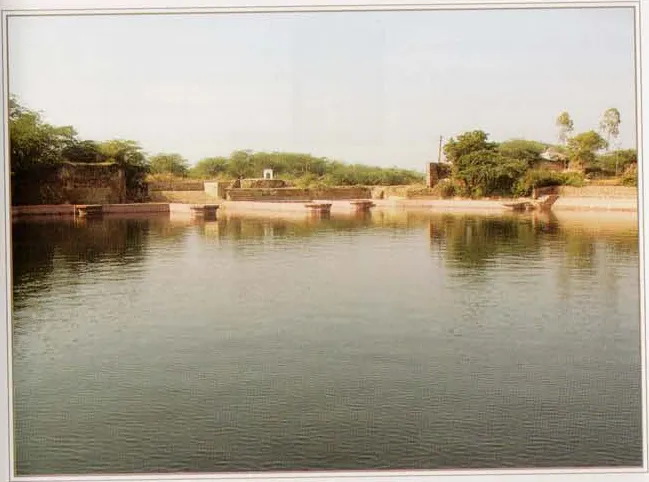
- What it is
- Pāvana-sarovara is the lake at the foot of Nandīśvara Hill, on the north side of Nandagrāma.
- Visiting
- Śrī Vraja-maṇḍala Parikramā (2007) places the lake north of Nandagrāma as one comes down from Nandīśvara Hill, beside the road to Kāmyavana.
- Places here
- Rādhikā's palace (Pāvana-sarovara), Sanātana Gosvāmī's bhajana-kuṭī (Pāvana-sarovara), Vallabhācārya's baiṭhaka (Pāvana-sarovara), Niṣkiñcana Kṛṣṇadāsa Bābājī's samādhi
In short
Pāvana-sarovara is the lake at the foot of Nandīśvara Hill, on the north side of Nandagrāma.[1 +3] Śrīla Rūpa Gosvāmī names "the lake called Pāvana" among Kṛṣṇa's own places, and a verse that he gives, and that Śrīla Prabhupāda translates, says that whoever bathes in it and sees Kṛṣṇa on the hill with Nanda and Yaśodā gains every desire.[5 +4] Śrī Caitanya Mahāprabhu bathed here, and the Bhakti-ratnākara tells how Śrīla Sanātana Gosvāmī lived hidden by its bank until Kṛṣṇa Himself brought him milk.[2 +7]
Key facts
| Kind | sarovara |
|---|---|
| Region · area | Nandagrāma |
| Ācāryas | Śrīla Rūpa Gosvāmī, Śrīla Sanātana Gosvāmī, Śrīla Raghunātha dāsa Gosvāmī, Śrī Caitanya Mahāprabhu, Śrīla Viśvanātha Cakravartī Ṭhākura |
Why it is glorified
In his list of the places of Kṛṣṇa's pastimes, the Rādhā-Kṛṣṇa-gaṇoddeśa-dīpikā, Śrīla Rūpa Gosvāmī names "the lake called …
In his list of the places of Kṛṣṇa's pastimes, the Rādhā-Kṛṣṇa-gaṇoddeśa-dīpikā, Śrīla Rūpa Gosvāmī names "the lake called Pāvana", whose banks shine with groves for play, right after Nandīśvara (summarised here, not translated).[5 +4]
His Mathurā-māhātmya gives a verse on bathing in the lake, introduced only with "and so they recite"; no Purāṇa that contains it has been found. The Bhakti-ratnākara quotes it at the lake, and Śrīla Prabhupāda quotes and translates it in his purport to the verse where Śrī Caitanya Mahāprabhu bathes here:[7 +2]
tathā ca paṭhanti— pāvane sarasi snātvā kṛṣṇaṁ nandīśvare girau
dṛṣṭvā nandaṁ yaśodāñ ca sarvābhīṣṭam avāpnuyāt ||433||
One who bathes in Pāvana Lake by Nandīśvara Hill will see Kṛṣṇa there along with Nanda and Yaśodā and will fufill all his desires.
Translation: Śrīla A.C. Bhaktivedanta Swami PrabhupādaAbout this place: Śrīla Rūpa Gosvāmī gives this verse with the words 'and so they recite', naming no Purāṇa: whoever bathes in the Pāvana lake and sees Kṛṣṇa on Nandīśvara Hill with Nanda and Yaśodā attains every desire. Śrīla Prabhupāda quotes and translates it in his purport to Caitanya-caritāmṛta, Madhya 18.58.
Śrīla Raghunātha dāsa Gosvāmī prays to the lake in his Vraja-vilāsa-stava: may this Pāvana lake protect us: it is surrounded by kadamba trees humming with bees, and there the lotus-eyed gopīs come again and again with delight and love to Kṛṣṇa, the son of the cowherd king, for play in the water (summarised here, not translated).[6 +2]
Śrīla Nārāyaṇa Bhaṭṭa Gosvāmī's Vraja-bhakti-vilāsa says that the lake lies in front of the village, with Yaśodā's well in its middle and the Kadamba-khaṇḍa forest beside it. It is called Pāvana, the book says, because it purifies the worlds, and it destroys even the sin of killing a brāhmaṇa.[19 +1]
Divine pastimes
Kṛṣṇa at the lake
Śrīla Viśvanātha Cakravartī Ṭhākura's Kṛṣṇa-bhāvanāmṛta says that after the evening milking Kṛṣṇa sometimes goes, on hot summer evenings, to bathe in a lake. The poem says only "a lake"; its commentator names it as Pāvana-sarovara, and he also places on its shore a garden pavilion of Śrī Rādhā's evening pastimes (summarised here, not translated).[21 +1] In Śrīla Raghunātha dāsa Gosvāmī's Muktā-carita, Tuṅgavidyā names the lake in passing, in a jest about Kṛṣṇa's pearls.[5 +1]
Śrī Caitanya Mahāprabhu bathes here
The Caitanya-caritāmṛta tells that at Nandīśvara Śrī Caitanya Mahāprabhu bathed in all the lakes, beginning with Pāvana, and then climbed the hill.[9 +4]
‘pāvanādi’ saba kuṇḍe snāna kariyā
lokere puchila, parvata-upare yāñā
Śrī Caitanya Mahāprabhu bathed in all the celebrated lakes, beginning with Lake Pāvana. Thereafter He climbed a hill and spoke to the people.
Translation: Śrīla A.C. Bhaktivedanta Swami PrabhupādaAbout this place: At Nandīśvara Śrī Caitanya Mahāprabhu bathed in all the lakes, beginning with Pāvana, and then climbed the hill. The verse names Pāvana, and Śrīla Prabhupāda's purport quotes the Mathurā-māhātmya verse on the Pāvana lake.
In his account of the Lord's life Śrīla Prabhupāda lists Pāvana-sarovara among the important places He visited.[10 +1]
Names this place“Some of the important places that were visited by the Lord in Vṛndāvana were Kāmyavana, Ādīśvara, Pāvana-sarovara, Khadiravana, Śeṣaśāyī, Khela-tīrtha, Bhāṇḍīravana, Bhadravana, Śrīvana, Lauhavana, Mahāvana, Gokula, Kāliya-hrada, Dvādaśāditya, Keśī-tīrtha, etc.”
Śrīla Prabhupāda, Śrīmad-Bhāgavatam, Canto 1, Introduction, Introduction (life of Śrī Caitanya Mahāprabhu) · vedabase.io
Śrīla Murāri Gupta and Śrīla Locana dāsa Ṭhākura tell that the Lord's guide, Kṛṣṇadāsa, showed Him the lake on His tour of Vraja. Śrīla Murāri Gupta places it north of Nanda's village, where Nanda's cows and calves graze, tended by Kṛṣṇa; Śrīla Locana dāsa Ṭhākura places it north of Nandīśvara, with posts for tying the calves all around it (summarised here, not translated).[23 +1]
Traditional accounts
According to the Bhakti-ratnākara, Śrīla Rāghava Paṇḍita brought Śrīla Śrīnivāsa Ācārya back to Nandīśvara and stood with him by …
Śrīla Sanātana Gosvāmī by the lake
According to the Bhakti-ratnākara, Śrīla Rāghava Paṇḍita brought Śrīla Śrīnivāsa Ācārya back to Nandīśvara and stood with him by Pāvana-sarovara, and the sight of Śrīla Sanātana Gosvāmī's hut moved them to tears. Śrīla Sanātana Gosvāmī, he told, had come from Vṛndāvana to this lonely forest and lived here hidden, absorbed in worship and making no effort to eat.[2 +6]
Then, the book tells, Kṛṣṇa came as a cowherd boy, with a turban on His head and a pot of milk in His hand. He asked the Gosvāmī to drink the milk and to live in a hut, so that the people of Vraja would not grieve. The Lord had a Vrajavāsī build the hut, and Śrīla Rūpa Gosvāmī stayed there from time to time (summarised here, not translated).[2 +5] Read more: Śrīla Sanātana Gosvāmī at Nandagrāma →
কৃষ্ণ গোপ বালকের ছলে দুগ্ধ লৈয়া ॥ দাঁড়াইলা গোস্বামি সম্মুখে হর্ষ হৈয়া ॥ গোরক্ষক বেশ মাথে উষ্ণীষ শোভয়। দুগ্ধ ভাণ্ড হাতে করি গোস্বামিরে কয় ॥ আছহ নির্জ্জনে তোমা কেহো নাহি জানে! দেখিলাম তোমারে আসিয়া গোচারণে ॥ এই দুগ্ধ পান কর আমার কথায়। লইয়া যাইব ভাণ্ড রাখিহ এথায় ॥ কুটীরে রহিলে মো সভার সুখ হবে। ঐছে রহ ইথে ব্রজবাসী দুঃখ পাবে ॥ এত কহি গোপালের হইল গমন। মুগ্ধ হৈয়া দুগ্ধপান কৈলা সনাতন ॥ দুগ্ধ পান মাত্রে প্রেমে অধৈর্য্য হইলা। নেত্রজলে সিক্ত হৈয়া বহুখেদ কৈলা ॥
kṛṣṇa gopa bālakera chale dugdha laiẏā
dām̐ṛāilā gosbāmi sammukhe harṣa haiẏā
gorakṣaka beśa māthe uṣṇīṣa śobhaẏa| dugdha bhāṇḍa hāte kari gosbāmire kaẏa
āchaha nirjjane tomā keho nāhi jāne! dekhilāma tomāre āsiẏā gocāraṇe
ei dugdha pāna kara āmāra kathāẏa| laiẏā yāiba bhāṇḍa rākhiha ethāẏa
kuṭīre rahile mo sabhāra sukha habe| aiche raha ithe brajabāsī duḥkha pābe
eta kahi gopālera haila gamana| mugdha haiẏā dugdhapāna kailā sanātana
dugdha pāna mātre preme adhairyya hailā| netrajale sikta haiẏā bahukheda kailā ||
Other visitors
The Bhakti-ratnākara also tells that Śrīla Jāhnavā-devī visited Nandagrāma, and that Śrīla Vīracandra Prabhu, after hearing of the festival of Kṛṣṇa's birthday there, bathed in Śrī Pāvana-sarovara before going on through Khadiravana to Yāvaṭa (Jāvaṭa).[26 +2]
The guidebooks' pastimes
According to Śrī Vraja-maṇḍala Parikramā (2007), Kṛṣṇa brought the cows here to drink as He came home from grazing, calling them with "Nīrī-nīrī" and "Cūṅ-cūṅ"; the undated parikramā notes Nandagrāma say that the cows counted at Ṭer-kadamba drank here before going to the cowshed. Śrīmad-Bhāgavatam says only that Kṛṣṇa gathered His cows at the end of the day and came home playing His flute.[1 +2]
The same guidebook and the pictorial guide Vṛndāvana-Dhāma Ki Jaya! (c. 1986) say that Kṛṣṇa and His friends bathed and played in the lake and that the gopīs met Him here on the pretext of fetching water. The 2007 book adds that Vṛṣabhānu built a palace for Rādhikā on the northern bank (below), a detail not found in any older source.[1 +3]
Rādhikā's palace
Rādhikā's palace is a place on the northern bank of the lake. According to the local tradition recorded in Śrī Vraja-maṇḍala Parikramā (2007), King Vṛṣabhānu had a palace built here for his daughter Śrīmatī Rādhikā; She played here with Her sakhīs and could easily see Kṛṣṇa from it.[1] No older source for the palace has been found, so it is not certain.
In Śrīla Viśvanātha Cakravartī Ṭhākura's Kṛṣṇa-bhāvanāmṛta (17.28), Rādhā leaves Her elders' town in the evening, after Kṛṣṇa's meal, and comes with Her friends to the shore of a lake. There She climbs a fine upper pavilion in a garden and, unseen by others, drinks in the beauty of Kṛṣṇa's face (summarised here, not translated). The commentary of Kṛṣṇadeva Sārvabhauma says that the shore is that of Pāvana-sarovara and that the pavilion is what is called an aṭālī, a raised room. Neither text says who built it, calls it a palace or names the northern bank.[22]
Songs
Śrīla Viśvanātha Cakravartī Ṭhākura's Nandīśvarāṣṭaka places "the lake called Pāvana" at the foot of Nandīśvara and says that …
Śrīla Viśvanātha Cakravartī Ṭhākura's Nandīśvarāṣṭaka places "the lake called Pāvana" at the foot of Nandīśvara and says that people touched by the breezes from its shore become purifiers of others (summarised here, not translated).[31]
Visiting today
At the lake
Śrī Vraja-maṇḍala Parikramā (2007) places the lake north of Nandagrāma as one comes down from Nandīśvara Hill, beside the road to Kāmyavana. The custom, it says, is to bathe here before taking darśana of Nanda, Yaśodā and the others on top of the hill.[1 +3]
The same book names the Pāvana-bihārī Mandira nearby and Śrī Vallabhācārya's sitting place on the northern bank, where he recited the Bhāgavatam for a month. The pictorial guide Vṛndāvana-Dhāma Ki Jaya! names Śrīla Sanātana Gosvāmī's bhajana-kuṭī and a samādhi on its banks.[1 +3]
The samādhi of Niṣkiñcana Kṛṣṇadāsa Bābājī
The pictorial guide Vṛndāvana-Dhāma Ki Jaya! names the samādhi of Niṣkiñcana Kṛṣṇadāsa Bābājī on the bank of the lake, and gives no date, description or history.[4 +1] Śrīla Prabhupāda's biography, the Śrīla Prabhupāda-līlāmṛta, uses the same name for a Godbrother who sat with him, chanting and speaking in Bengali, during his last weeks at Vṛndāvana in 1977.[32] The room conversations of those days call him Kṛṣṇa dāsa Bābājī of Mādhava Mahārāja's Maṭha, and record Śrīla Prabhupāda's words to him. None of these sources says that this Godbrother is the Bābājī buried here.[33 +3]
Location
| Where it is | at the bottom of Nandagrāma Hill[44] |
|---|
Places at Pāvana-sarovara
4 places
Nearby places
Nandagrāma · Nandīśvara Hill · Kāmyavana
Where the sources differ
Why the lake is called Pāvana: because it purifies, or after Viśākhā's father, the cowherd Pāvana. The sources differ.
Accounts differ Why the lake is called Pāvana.
- Vraja-bhakti-vilāsa ch. 4 v.21 (Śrīla Nārāyaṇa Bhaṭṭa)Because it purifies: the gods become pure there and the lake is pure, hence it is named Pāvana, made purifying for the worlds.
- the Bengali Bhaktamāla of Kṛṣṇadāsa Bābājī (1905)Pāvana the Ābhīra (cowherd), father of the sakhī Viśākhā, made its nectar-like water.
- Śrī Vraja-maṇḍala Parikramā (2007)'It is said that Pāvana Gopa, the father of Viśākhā Sakhī, constructed this sarovara, thereby giving it its name.'
- Śrīla Rūpa Gosvāmī, Rādhā-Kṛṣṇa-gaṇoddeśa-dīpikāNames Viśākhā's father Pāvana (part 1 v.83) and the lake 'named Pāvana' (part 2 v.118) without connecting them.
The wording of these accounts is our summary of the sources, not a published translation.
Where Śrīla Rūpa Gosvāmī's sweet rice for Śrīla Sanātana Gosvāmī was made, and who cooked it: the Bhakti-ratnākara places it here, the guidebooks at Ṭer-kadamba. The accounts are set side by side on the page Śrīla Sanātana Gosvāmī's bhajana-kuṭī.[14]
Where Rādhā cooks for Kṛṣṇa, and what Durvāsā's boon promised: one pictorial guide places the cooking at this lake; the Gosvāmīs place it in Nanda's house. The accounts are set side by side on the page of the kitchen of Nanda's palace.[4 +3] Read more: The gopīs cross the Yamunā to feed Durvāsā →
Who the queen of Burdwan was who lined the lake with stone ghāṭas: the sources differ on whether she was the wife or the mother of Mahārāja Kīrticand, and they date the work differently.[40 +3]
Accounts differ Who the Burdwan builder was (of the Vṛndāvana kuñja according to Śrī Vraja-maṇḍala Parikramā (2007), and of the Pāvana-sarovara ghāṭas).
- Śrī Vraja-maṇḍala Parikramā (2007)'The devotee queen Rājarājeśvarī-devī, wife of Śrī Kīrticānda, a mahārāja of Varddhamān in Bengal, built this temple. She also arranged for the ghāṭas of Pāvana-sarovara in Nandagaon to be constructed out of stone.'
- F. S. Growse, Mathurá (1883), a historianGrowse ascribes the ghāṭas to a dowager Rānī of Burdwan in 1747. The inscription he copies names Śrīmatī Rānī Rājyeśvarī, mother of Rājā Kīrtichand and grandmother of Rājā Tilakchand, with the date Saṁvat 1805.
- Muttra: A Gazetteer (1911)The gazetteer ascribes the ghāṭas to one of the Rājās of Burdwan, and says that the same Rājā began to face the Kṛṣṇa-kuṇḍa at Khaira with stone but died.
- Vṛndāvana-kathā (Pulinbihārī Datta, Bengali, 1920)Rājarājeśvarī Devī, rāṇī (queen) of the late Mahārāja Kīrticā̃d Bāhādur of Barddhamān, established the ṭhākura-bāṛī opposite Śrījī's temple in Vṛndāvana, across the road, and had the Pāvana-sarovara of Nandagrāma lined with stone; no date is given.
More on this place
Śrīla Sanātana Gosvāmī at Nandagrāma · The gopīs cross the Yamunā to feed Durvāsā
References
44 references
- Śrī Vraja-maṇḍala Parikramā (2007), PDF p. 201
- Śrī Vraja-maṇḍala Parikramā (2007), PDF p. 202
- Śrī Vraja-maṇḍala Parikramā (2007), PDF p. 203
- Vṛndāvana-Dhāma Ki Jaya! (c. 1986), by Dhruva Mahārāja dāsa, PDF p. 53
- Śrīla Rūpa Gosvāmī, Rādhā-Kṛṣṇa-gaṇoddeśa-dīpikā, part 2, v.118 (sthāna-vivaraṇa)
- Śrīla Raghunātha dāsa Gosvāmī, Muktā-carita, GRETIL
- Śrīla Rūpa Gosvāmī, Mathurā-māhātmya v.433
- Śrīla Narahari Cakravartī, Bhakti-ratnākara, Fifth Wave, 1912 ed. p. 221; Grantha Mandira text v.935–938, 2nd ed., 1912
- Śrīla Prabhupāda, Śrī Caitanya-caritāmṛta, Madhya-līlā 18.58, purport · vedabase.io
- Śrīla Kṛṣṇadāsa Kavirāja Gosvāmī, Śrī Caitanya-caritāmṛta, CC Madhya-līlā 18.58, online edition · vedabase.io
- Śrīla Prabhupāda, Śrīmad-Bhāgavatam, Canto 1, Introduction, Introduction (life of Śrī Caitanya Mahāprabhu) · vedabase.io
- Śrīla Narahari Cakravartī, Bhakti-ratnākara, Fifth Wave, 1912 ed. p. 250; Grantha Mandira text v.1297–1302, 2nd ed., 1912
- Śrīla Narahari Cakravartī, Bhakti-ratnākara, Fifth Wave, 1912 ed. pp. 250–251; Grantha Mandira text v.1303–1309, 2nd ed., 1912
- Śrīla Narahari Cakravartī, Bhakti-ratnākara, Fifth Wave, 1912 ed. p. 251; Grantha Mandira text v.1310–1313, 2nd ed., 1912
- The Color Guide to Vṛndāvana (2000), Written and Photographed by Rājaśekhara dāsa Brahmacārī, PDF p. 63
- the undated parikramā notes Nandagrāma, ¶28
- Śrīla Narahari Cakravartī, Bhakti-ratnākara, Fifth Wave, 1912 ed. p. 251; Grantha Mandira text v.1314–1317, 2nd ed., 1912
- Śrīla Raghunātha dāsa Gosvāmī, Vraja-vilāsa-stava, Stavāvalī (9) Vraja-vilāsa-stava 59
- Śrīla Nārāyaṇa Bhaṭṭa, Vraja-bhakti-vilāsa, ch. 2 v.44; printed p. 45, 1st ed., publ. Bābā Kṛṣṇadāsa, Kusuma-sarovara, Saṁvat 2008
- Śrīla Nārāyaṇa Bhaṭṭa, Vraja-bhakti-vilāsa, ch. 4 v.21; printed p. 90, 1st ed., publ. Bābā Kṛṣṇadāsa, Kusuma-sarovara, Saṁvat 2008
Show all 44 references
- Śrīla Viśvanātha Cakravartī, Kṛṣṇa-bhāvanāmṛta, sarga 17 (saptadaśaḥ sargaḥ, sāyantana-līlāsvādana; text section (17), which the index labels 'ṣoḍaśaḥ sargaḥ') v.41 with ṭīkā, after the edition of Radhikanath Goswami, Vrindavan, 1906
- Śrīla Viśvanātha Cakravartī, Kṛṣṇa-bhāvanāmṛta, sarga 17 (saptadaśaḥ sargaḥ, sāyantana-līlāsvādana; text section (17), which the index labels 'ṣoḍaśaḥ sargaḥ') v.28 with ṭīkā, after the edition of Radhikanath Goswami, Vrindavan, 1906
- Kṛṣṇa-caitanya-caritāmṛta of Śrīla Murāri Gupta, prakrama 4, sarga 10, vv.15-16
- Śrīla Locana dāsa Ṭhākura, Caitanya-maṅgala, Śeṣa-khaṇḍa, 1903 ed. p. 177, right column, lines 11-12
- Śrīla Narahari Cakravartī, Bhakti-ratnākara, Fifth Wave, 1912 ed. pp. 250–251; Grantha Mandira text v.1303–1309, 2nd ed., 1912
- Śrīla Narahari Cakravartī, Bhakti-ratnākara, Eleventh Wave, 1912 ed. p. 669, 2nd ed., 1912
- Śrīla Narahari Cakravartī, Bhakti-ratnākara, Thirteenth Wave, 1912 ed. p. 1023; Grantha Mandira text v.356–357, 2nd ed., 1912
- Śrīla Narahari Cakravartī, Bhakti-ratnākara, Thirteenth Wave, 1912 ed. p. 1025; Grantha Mandira text v.374–375, 2nd ed., 1912
- the undated parikramā notes Nandagrāma, ¶45
- Śrīmad-Bhāgavatam 10.35.22, Bhagavata Vidya Pith edition, ed. Bhagavata Rishi and Krishna Shankar Shastri, 1996
- Śrī Nandīśvarāṣṭaka of Śrīla Viśvanātha Cakravartī Ṭhākura, Nandīśvarāṣṭaka v.7
- Satsvarūpa dāsa Gosvāmī, Śrīla Prabhupāda-līlāmṛta, vol. 2, ch. 55, 1977 (Śrīla Prabhupāda's last weeks; the chapter goes on to his departure on 14 November 1977) · vedabase.io
- Śrīla Prabhupāda, Room Conversation, Vṛndāvana, 30 October 1977 · vedabase.io
- Śrīla Prabhupāda, Room Conversation, Vṛndāvana, 3 November 1977 · vedabase.io
- Śrīla Prabhupāda, Room Conversation, Vṛndāvana, 10 November 1977 · vedabase.io
- Śrīla Prabhupāda, Room Conversation, Vṛndāvana, 10 November 1977 · vedabase.io
- Śrīla Kṛṣṇadāsa Kavirāja Gosvāmī, Govinda-līlāmṛta, sarga 3 v.14, after the editions of Haridas Das and Haridas Shastri
- Śrīla Raghunātha dāsa Gosvāmī, Vraja-vilāsa-stava, Stavāvalī (9) Vraja-vilāsa-stava 33
- Śrīla Narahari Cakravartī, Bhakti-ratnākara, Fifth Wave, 1912 ed. p. 228; Grantha Mandira text v.1017–1018, 2nd ed., 1912
- Mathurá (1883), F. S. Growse, B.C.S., M.A. Oxon., C.I.E. (as the title page gives him, p. 315
- Muttra (1911), D. L. Drake-Brockman, I.C.S. (edited and compiled), p. 314
- Śrī Vraja-maṇḍala Parikramā (2007), PDF p. 337
- Pulinbihārī Datta, ch. 20 (viṁśa pariccheda), item 4 'Barddhamāner rājādiger kīrtti' (the works of the Rājās of Burdwan), printed p. 245
- Vṛndāvana-Dhāma Ki Jaya! (c. 1986), by Dhruva Mahārāja dāsa, p. 35