Nanda's family at Nandagrāma
Parjanya, Gokula and the return to Nandīśvara
In short
Nanda's family story at Nandagrāma (Nandgaon) has three steps. The Bhāgavatam tells how the cowherds left Gokula for Vṛndāvana, and Śrīla Prabhupāda calls this the move to Nandagrāma, when Kṛṣṇa was three or four. Before that, according to Śrīla Rūpa Gosvāmī, Kṛṣṇa's grandfather Parjanya left Nandīśvara for Bṛhadvana, fearing Keśī. The ācāryas give different times for the return to Nandīśvara.[1–13]
On this page
At a glance
- Śrīmad-Bhāgavatam 10.11 tells the move from Gokula to Vṛndāvana. Śrīla Prabhupāda's translation places Vṛndāvana between Nandeśvara and Mahāvana.[1 +7]
- Śrīla Prabhupāda speaks of the move both as a move to Vṛndāvana and as a move to Nandagrāma, and in 1971 he said that Kṛṣṇa was brought there when He was three or four years old.[6 +5]
- Parjanya, Kṛṣṇa's grandfather, had five sons, Nanda among them, after worshipping at Nandīśvara, according to Śrīla Rūpa Gosvāmī and the Bhakti-ratnākara.[8 +3]
- Fearing the demon Keśī, Parjanya went with his family to Bṛhadvana (Mahāvana), according to Śrīla Rūpa Gosvāmī and Śrīla Viśvanātha Cakravartī Ṭhākura.[8–10]
- The commentators and two Gauḍīya campūs (long works in verse and prose) bring Nanda's home to Nandīśvara, but at different times.[11 +4]
- The Bhakti-ratnākara shows Ḍerāvali village near Rādhā-kuṇḍa, where Nanda camped on his way to Nandīśvara.[23]
Why did Nanda's people leave Gokula?
The Tenth Canto (chapter 11) tells the story. The elder cowherds, led by Nanda, met because of the great troubles in Gokula, the settlement at Mahāvana (Bṛhadvana). Upananda proposed a new home. Śrīla Prabhupāda himself translates this chapter.[1 +9]
vanaṃ vṛndāvanaṃ nāma paśavyaṃ nava-kānanam / gopa-gopī-gavāṃ sevyaṃ puṇyādri-tṛṇa-vīrudham //
Between Nandeśvara and Mahāvana is a place named Vṛndāvana. This place is very suitable because it is lush with grass, plants and creepers for the cows and other animals. It has nice gardens and tall mountains and is full of facilities for the happiness of all the gopas and gopīs and our animals.
Translation: Śrīla A.C. Bhaktivedanta Swami PrabhupādaIn his purport, his explanation of the verse, he says why the cowherds chose Vṛndāvana.[14, 15]
General teaching (does not name the place)“Vṛndāvana is situated between Nandeśvara and Mahāvana. Formerly the cowherd men had shifted to Mahāvana, but still there were disturbances. Therefore the cowherd men selected Vṛndāvana, which was between the two villages, and decided to go there.”
Śrīla Prabhupāda, Śrīmad-Bhāgavatam, Canto 10, chapter 11, verse 28, purport · vedabase.io
The Sanskrit verse itself names only Vṛndāvana. The words "between Nandeśvara and Mahāvana" come from the translation and purport, and Śrīla Viśvanātha Cakravartī Ṭhākura uses the same words in his commentary on the verse.[11 +2]
Śrīla Jīva Gosvāmī gives a second reason for leaving. The forest near Bṛhadvana had been worn out by long use, and he reads the verse's "new groves" as a hint of this (summarised here, not translated).[11 +2]
The journey
Upananda asked them to go that very day (10.11.29). They put the old men, the women, the children and all their goods on the carts. They sent the cows ahead, took up their bows, and set out with horns sounding and their priests beside them (10.11.31–32).[1–6]
Yaśodā and Rohiṇī rode on one cart with Kṛṣṇa and Balarāma, so as not to be apart from Them for a moment (10.11.34). Then they entered Vṛndāvana.[1–6]
vṛndāvanaṃ sampraviśya sarva-kāla-sukhāvaham / tatra cakrur vrajāvāsaṃ śakaṭair ardha-candravat //
In this way they entered Vṛndāvana, where it is always pleasing to live in all seasons. They made a temporary place to inhabit by placing their bullock carts around them in the shape of a half moon.
Translation: Śrīla A.C. Bhaktivedanta Swami PrabhupādaThe Bhāgavatam names no stop on the way, and it tells of no later move to Nandīśvara. The commentators add that the cowherds crossed the Yamunā. Śrīla Sanātana Gosvāmī says they crossed easily at a well-known place upstream of Kāliya-hrada. Śrīla Jīva Gosvāmī says they crossed on rafts made of their carts tied together. Śrīla Baladeva Vidyābhūṣaṇa says they walked through ankle-deep water (summarised here, not translated).[1 +7]
What does Śrīla Prabhupāda say about the move?
Śrīla Prabhupāda speaks of the move both as a move to Vṛndāvana, as in his translation above, and as a move to Nandagrāma. In the purport to ŚB 10.1.9 he writes:[6 +5]
General teaching (does not name the place)“Just after His birth in the house of Vasudeva in Mathurā, Kṛṣṇa transferred Himself to Gokula, on the other side of the Yamunā, and after some days He moved with His father, mother and other relatives to Nanda-grāma, Vṛndāvana.”
Śrīla Prabhupāda, Śrīmad-Bhāgavatam, Canto 10, chapter 1, verse 9, purport · vedabase.io
In a lecture of 1 November 1976 he used the move to show how quickly a whole village could be shifted. He said the same on a morning walk of 27 May 1974.[17, 18]
General teaching (does not name the place)“So immediately, they transferred the whole village with their possessions, cloth or something, everything, within one hour. And they transported by the bullock cart to Nandagrāma. That means, the idea is the whole village was transferred from one village to another within very short time.”
Śrīla Prabhupāda, Lecture on Śrīmad-Bhāgavatam 5.5.10-13, Vṛndāvana, 1 November 1976 · vedabase.io
On a parikramā of 28 November 1971, he was asked whether they then moved to Vṛndāvana, and he said yes. He added that Kṛṣṇa was brought to Nanda-grāma "when He was three, four years old". And in a letter of 1970 he wrote:[7, 30]
General teaching (does not name the place)“It is correct that Nanda, Krsna, the gopas, gopis, etc. left Gokula to move to Vrindaban. There is no discrepancy because the whole area of Mathura is known as Vrindaban. Every place there is known as Vrindaban, but there are different quarters.”
Śrīla Prabhupāda, Letter to Hayagriva, Letter 70-02-23, 23 February 1970 · vedabase.io
He names no stop on the way.[6 +5]
Who was Parjanya, according to the ācāryas?
The family's story at Nandīśvara, the hill of Nandagrāma, begins one generation before Kṛṣṇa. Śrīla Rūpa Gosvāmī tells it in his Rādhā-Kṛṣṇa-gaṇoddeśa-dīpikā (1.16–21), a book that lists Rādhā and Kṛṣṇa's family and companions.[8 +6]
The cowherd Parjanya was Kṛṣṇa's grandfather and the head of the best cowherd family of Vraja. He wished for good children. So, by the order of Nārada, the sage of the gods, he worshipped the husband of Lakṣmī (Lord Nārāyaṇa) at Nandīśvara, "in former times" (summarised here, not translated).[8]
A voice from the sky promised him five sons. The middle one would be named Nanda, and Nanda's son would be the joy of Vraja. The same book names the five: Upananda and Abhinanda were older than Nanda, Sannanda and Nandana younger (1.19, 1.33). Kṛṣṇa's grandmother, it says, was Varīyasī.[8 +2]
The Bhakti-ratnākara of Śrīla Narahari Cakravartī Ṭhākura tells it briefly. In it, Śrīla Rāghava Paṇḍita shows Śrīla Śrīnivāsa Ācārya the places of Nandīśvara and says: here lived Parjanya, son of Devamīḍha. Nārada came to Nandīśvara and gave him the Lakṣmī-Nārāyaṇa mantra. Parjanya performed austerities at Taḍāga-tīrtha, and five sons were born: Upananda, Abhinanda, Nanda, Sananda and Nandana (summarised here, not translated).[19 +7]
The pond of Parjanya's fast, in the ācāryas' texts and a guidebook
Śrīla Raghunātha dāsa Gosvāmī names the pond in his Vraja-vilāsa-stava (verse 60). He takes shelter of the Taḍāga, the pond that, in his words, is famous on earth for the fast of Kṛṣṇa's grandfather Parjanya. Parjanya's own son, the lord of the cowherds, had no son, the verse says in one reading. So Parjanya gave up food, worshipped Nārāyaṇa there with full attention, and gained a grandson, Giridhara, "the lifter of the hill" (summarised here, not translated).[43]
The Bhakti-ratnākara quotes this verse at the pond and calls it Kṣuṇṇāhāra-sarovara, "the lake of the fast".[36, 37]
According to Śrī Vraja-maṇḍala Parikramā (2007), Taḍāga-tīrtha lies north-east of Pāvana-sarovara and was Parjanya's place of worship. Having no sons, he took the Lakṣmī-Nārāyaṇa mantra from Nārada. He gave up food and water and bathed there morning, noon and evening, until a voice promised him five sons.[44, 45]
The same book places the temple of Āśīṣeśvara Mahādeva and its kuṇḍa (sacred pond) a short way east of Nanda-bāga. It says that Parjanya used to bathe in that kuṇḍa and worship Āśīṣeśvara, the Śiva who gives blessings (āśīṣa). The book gives no older source for this.[45, 46]
Why did Parjanya leave Nandīśvara, according to the ācāryas?
Śrīla Rūpa Gosvāmī goes on. Parjanya, satisfied, lived there; but when he saw Keśī coming, he left in fear with all his family for Bṛhadvana. Śrīla Viśvanātha Cakravartī Ṭhākura gives the same reason in his commentary on Śrīla Kavi-karṇapūra's Ānanda-vṛndāvana-campū (4.4). Nanda and the others were living in Bṛhadvana, he says, because at that time Parjanya could not stay at Nandīśvara out of fear of Keśī (both summarised here, not translated).[8–10]
Śrīla Jīva Gosvāmī's Gopāla-campū tells the family's beginning another way. Parjanya, son of Devamīḍha, made his home in Bṛhadvana and had five sons, beginning with Upananda. It tells of no austerity and no blessing (summarised here, not translated).[47]
So in these accounts Gokula at Mahāvana (Bṛhadvana), where Kṛṣṇa was brought after His birth, was the family's second home, not its first. Gauḍīya tradition, following Śrīla Prabhupāda, regards that settlement at Mahāvana as the original Gokula.[8 +4] Read more: The original Gokula: Mahāvana and the later village of Gokula →
Where did they live between Gokula and Nandīśvara, according to the ācāryas?
The commentators on 10.11.35 describe the new settlement (summarised here, not translated).[11, 12]
- Śrīla Sanātana Gosvāmī: on the first day they rested on the bank of the Yamunā. The Vraja then stretched two yojanas from a krośa south of Kāliya-hrada (yojana and krośa are old measures of distance). In it, King Nanda's main home was mostly beside Nandīśvara hill. The cows' station moved from place to place for good grass, which is why it is called a vraja.[11, 12]
- Śrīla Jīva Gosvāmī: the new settlement was two yojanas long. It took in the area called Saṭṭīkarā, a krośa south-west of Kāliya-hrada, with Govardhana in front. King Nanda's well-known home around Nandīśvara hill came later.[11, 12]
- Śrīla Baladeva Vidyābhūṣaṇa: they made their home from Kāliya-hrada up to the side of Govardhana. The home at Nandīśvara, he says, came after the demon Keśī had fled.[11, 12]
In his Gopāla-campū (Pūrva 9), Śrīla Jīva Gosvāmī tells the arrival as a story. The people crossed the Yamunā on rafts and entered the forest between Mathurā and Kāliya-hrada. Rāma and Kṛṣṇa, sometimes walking and sometimes carried on the shoulders of loving relatives, came from the landing called Vatsa-krīḍana to the area called Saṭṭīkarā. There the half-moon ring of carts was made, filled with cows (summarised here, not translated).[20–22]
Śrīla Viśvanātha Cakravartī Ṭhākura, in his commentary on Śrīla Kavi-karṇapūra Gosvāmī's Ānanda-vṛndāvana-campū, calls this first capital, between Govardhana and Kāliya-hrada, Śakaṭāvarta.[20–22]
When did Nanda's household come back to Nandīśvara, according to the ācāryas?
Śrīla Viśvanātha Cakravartī Ṭhākura explains Upananda's choice on 10.11.28. Nandīśvara (Nandagrāma) was the cowherds' old capital, which they had left for Mahāvana out of fear. They could not go back there now, because the danger they had fled, "that ariṣṭa" in his words, was still there. Nor did they wish to live outside Vraja, so they chose a place between the two (summarised here, not translated).[11, 12]
The word ariṣṭa can be the name of the bull-demon Ariṣṭa, or it can mean simply "a calamity". Which one he means is not settled. Śrīla Baladeva Vidyābhūṣaṇa also calls Nandīśvara the old capital.[11, 12]
The books give different times for the return.[13 +3]
- Śrīla Viśvanātha Cakravartī Ṭhākura, on 10.45.3: counting Kṛṣṇa's ages, he has Him live in Mahāvana for His first three years and four months, and afterwards at Nandīśvara. The BBT purport to that verse, by Śrīla Prabhupāda's disciples, gives a fuller form of his comment, with a time in Vṛndāvana in between: Vṛndāvana up to six years and eight months, then Nandīśvara through His tenth year. One Sanskrit edition of his comment lacks that middle period.[13]
- *The Ānanda-vṛndāvana-campū* (7.1–2):** the half-moon of carts reaching from the Yamunā to Govardhana and Nandīśvara was only the home of that time. Afterwards the king of Vraja entered his capital. Śrīla Viśvanātha Cakravartī Ṭhākura's commentary places that capital at Nandīśvara, and explains "afterwards" as "after some years".[20–22]
- *The Gopāla-campū* (Pūrva 32):** by the time Kaṁsa sent the horse-demon Keśī, the people of Vraja lived from Nandīśvara hill onwards. The wording seems to mean after Ariṣṭa's killing, but the reading is not certain.[20–22] Read more: How Kṛṣṇa killed the horse demon Keśī →
- Śrīla Sanātana Gosvāmī: as above, he has Nanda's main home beside Nandīśvara hill in the new settlement itself, and tells of no separate later move. Śrīla Jīva Gosvāmī and Śrīla Baladeva Vidyābhūṣaṇa put it later.[11, 12]
The reason for the earlier flight is also given in two ways. On 10.11.28 Śrīla Viśvanātha Cakravartī Ṭhākura speaks of "that ariṣṭa". In his commentary on the Ānanda-vṛndāvana-campū (4.4), as in Śrīla Rūpa Gosvāmī's account, it is fear of Keśī. None of these texts names a route or a camp on the way to Nandīśvara (all summarised here, not translated).[8 +6]
Where did Nanda camp on the way, according to the Bhakti-ratnākara and a guidebook?
Only two sources speak of a camp on the road to Nandīśvara. The first is the Bhakti-ratnākara. There Śrīla Rāghava Paṇḍita Gosvāmī shows Śrīla Śrīnivāsa Ācārya the villages around Rādhā-kuṇḍa, and says: this is Ḍerāvali village. Here Nanda, coming from Ṣaṭhīgharā, made his camp (ḍerā) on his way to Nandīśvara.[23]
On that walk, the book says, the village comes after Nimagrāma and Pāṭala-grāma, and before Navāgrāma and the village of Sūrya-kuṇḍa.[23]
The second is the guidebook Śrī Vraja-maṇḍala Parikramā (2007). It records the same local tradition, with Nanda arriving from Chaṭṭīkarā, and explains the village's name by the camp.[48]
In its entry on Ḍīg, the same book traces a longer road. Nanda went from Chaṭṭīkarā to Ḍerāvalī, then to Ḍīg, where he stayed for some time, then to Kāmyavana, and from there to Nandagaon.[45 +2]
Two open questions
The first question is whether the Bhakti-ratnākara's Ṣaṭhīgharā is the guidebook's Chaṭṭīkarā. The 1912 print clearly reads Ṣaṭhīgharā, and no source says that the two names mean one village. The closest names in the older texts are Śrīla Jīva Gosvāmī's Saṭṭīkarā, where the Gopāla-campū sets the half-moon camp, and Śrīla Viśvanātha Cakravartī Ṭhākura's Śakaṭāvarta. The names look alike, but that is not proof.[20–23]
The second is where exactly Ḍerāvalī lies. Neither the Bhakti-ratnākara nor the guidebook gives a distance or direction, only its place in the order of the walk. Its present name has not been settled.[23 +2]
Where the sources differ
On the move itself, the books differ. The Bhāgavatam tells of one journey. Śrīla Sanātana Gosvāmī has Nanda's home at Nandīśvara from the start. Śrīla Baladeva Vidyābhūṣaṇa puts the move after Keśī, and Śrīla Viśvanātha Cakravartī Ṭhākura after some years. The Bhakti-ratnākara and the 2007 guidebook speak of camps on the road.[1 +13]
The 2007 guidebook's entry on Nandagaon even gives a shorter road, without Ḍerāvalī or Ḍīg: from Gokula-Mahāvana to Chaṭṭīkarā, then Kāmyavana, Khelanvana and other places, and then Nandīśvara.[45 +2]
Accounts differ Where the Vrajavāsīs went when they left Gokula, when they came to Nandīśvara (Nandagaon), and whether Nanda camped on the way
- Śrīmad-Bhāgavatam 10.11.21–36 (Śrīla Prabhupāda's translation and purport, ch. 11)one move, which Upananda proposes to begin 'today itself' (10.11.29; Śrīla Prabhupāda's chapter summary: 'the next day they all departed'), from Gokula to the forest named Vṛndāvana, which the translation and purport place 'between Nandeśvara and Mahāvana'; the people went with their carts and cows and made a half-moon camp of carts on arrival (10.11.35); it names no halt on the way and tells no later move to Nandīśvara
- Śrīla Prabhupāda, ŚB 10.1.9 purport, talks of 1971, 1974 and 1976, letter of 1970after some days Kṛṣṇa moved with His family from Gokula to 'Nanda-grāma, Vṛndāvana' (ŚB 10.1.9 purport); the whole village was moved by bullock carts to Nandagrāma within a short time (1974, 1976); in 1971, asked 'Then they moved to Vṛndāvana?', he answered 'Yes', and said that Kṛṣṇa was brought to Nanda-grāma at three or four years of age; in 1970 he wrote that there is no discrepancy in the move from Gokula to Vṛndāvana, since 'the whole area of Mathura is known as Vrindaban', with different quarters
- Śrīla Viśvanātha Cakravartī, Sārārtha-darśinī on ŚB 10.11.28 and 10.45.3Nandīśvara was the cowherds' old capital, which they had left for Mahāvana out of fear; Ariṣṭa was still there, so they now chose a place between Nandīśvara and Mahāvana; Kṛṣṇa lived at Nandīśvara later, after His first three years and four months in Mahāvana
- Śrīla Sanātana Gosvāmī, Bṛhad-vaiṣṇava-toṣaṇī on ŚB 10.11.31–32 and 10.11.35 (also on 10.17.20, 10.24.37-38 and 10.38.24)they set out at once (10.11.31–32); on the first day they rested on the Yamunā's bank; the Vraja then stretched two yojanas from a krośa south of Kāliya-hrada, with King Nanda's main residence mostly beside Nandīśvara hill; the cows' station moved from place to place; the Vraja lay near Nandīśvara at the time of Kāliya's subduing, and after the Govardhana-pūjā near Nandīśvara hill or by Rādhā-kuṇḍa; at Akrūra's coming Nanda's house was the famous one called Nandīśvara
How Parjanya got his sons is told in four ways.[8 +4]
- By worshipping the husband of Lakṣmī at Nandīśvara: Śrīla Rūpa Gosvāmī.[8–10]
- By the Lakṣmī-Nārāyaṇa mantra and austerities at Taḍāga-tīrtha: the Bhakti-ratnākara, and the 2007 guidebook after it.[19]
- By his fast at the Taḍāga: Śrīla Raghunātha dāsa Gosvāmī.[43]
- By the blessings of Āśīṣeśvara Mahādeva: what some Vrajavāsīs (local people) say, according to the 2007 guidebook.[8 +4]
Accounts differ How Parjanya, Kṛṣṇa's grandfather, obtained his five sons at Nandīśvara.
- Rādhā-Kṛṣṇa-gaṇoddeśa-dīpikā (Śrīla Rūpa Gosvāmī) part 1 vv.16–21By the order of the sage of the gods he worshipped Lakṣmī's husband formerly at Nandīśvara, wishing for excellent children; a voice from the sky promised five sons; he lived there until Keśī came.
- Bhakti-ratnākara, Fifth WaveNārada came to Nandīśvara and gave Parjanya the Lakṣmī-Nārāyaṇa mantra; Parjanya performed austerities at Taḍāga-tīrtha and five sons were born.
- Śrī Vraja-maṇḍala Parikramā (2007)Nārada initiated him in the Lakṣmī-Nārāyaṇa mantra; he bathed daily in Taḍāga-tīrtha and worshipped until a divine voice promised five sons.
- Śrī Vraja-maṇḍala Parikramā (2007)'Some Vrajavāsīs also say' that Parjanya had his five sons by the blessings of Āśīṣeśvara Mahādeva, whom he worshipped.
The wording of these accounts is our summary of the sources, not a published translation.
Places in this article
Ḍerāvalī
डेरावलीḌerāvalī is a village that the Bhakti-ratnākara counts among the places near Rādhā-kuṇḍa.
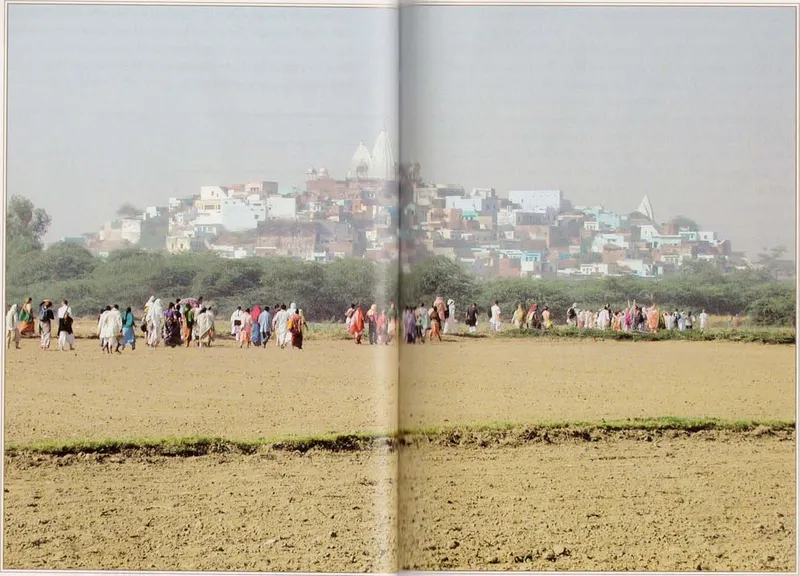
Nandīśvara Hill
नन्दीश्वर पर्वतNandīśvara is the hill of Nandagrāma, also called Rudra-parvata, "Rudra's hill".
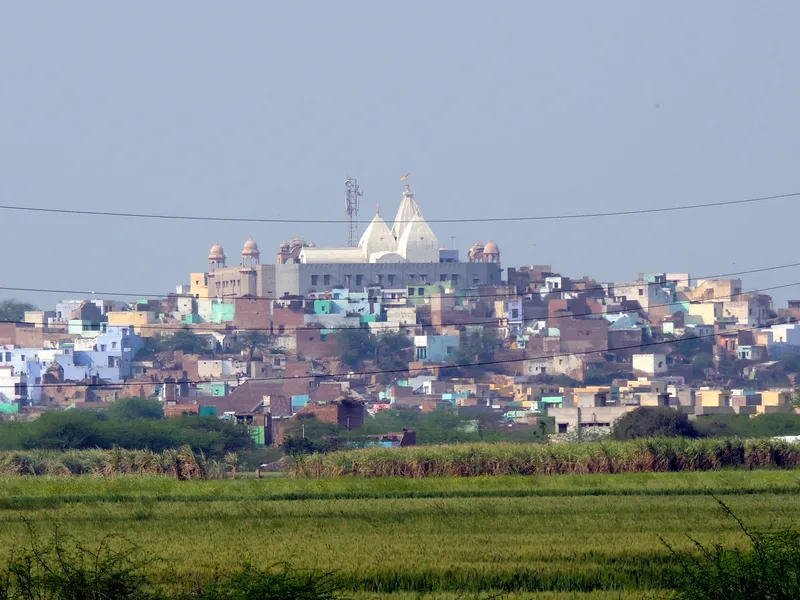
Nandagrāma
नन्दग्रामNandagrāma, today Nandagaon, is the village of Nanda Mahārāja, Kṛṣṇa's father in Vraja, on and around Nandīśvara Hill.
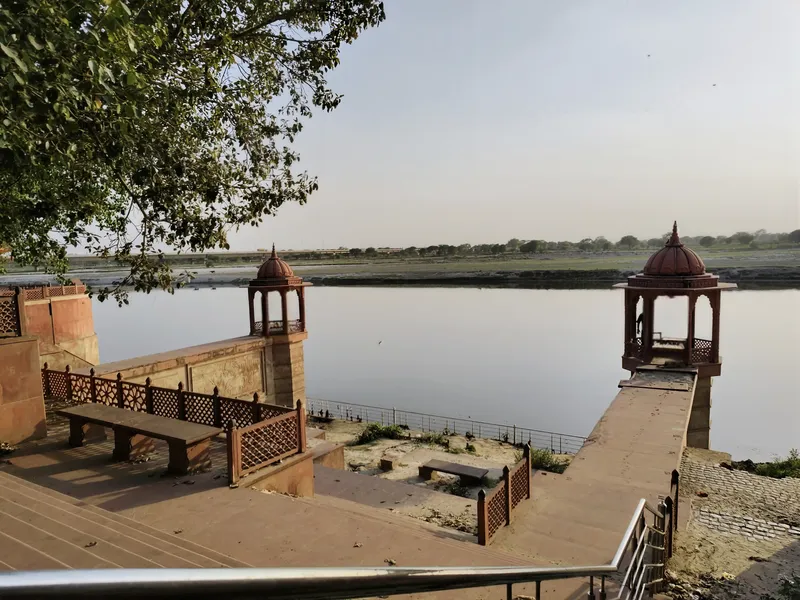
Mahāvana
महावनMahāvana, "the great forest", also called Bṛhadvana, is the forest on the eastern bank of the Yamunā where Kṛṣṇa spent His infancy.
Taḍāga-tīrtha
तड़ाग-तीर्थTaḍāga-tīrtha is a holy pond near Pāvana-sarovara at Nandagrāma.
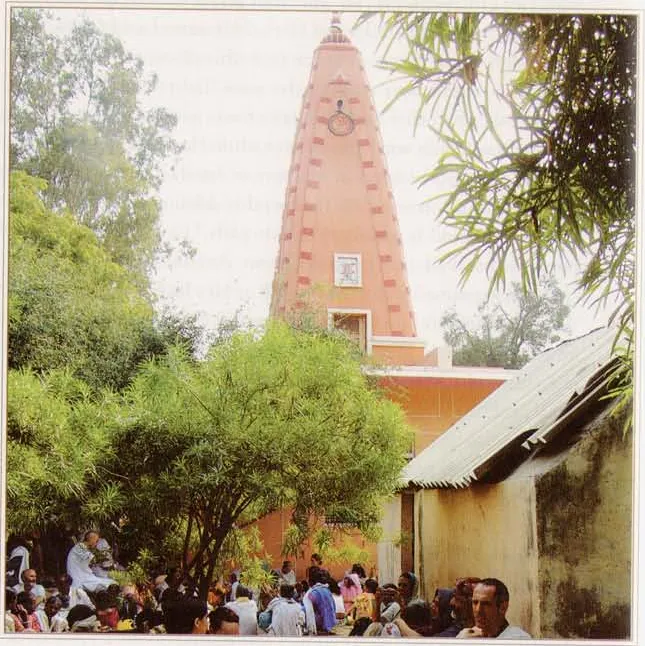
Āśīṣeśvara Mahādeva
आशीषेश्वर महादेवĀśīṣeśvara Mahādeva is a temple of Lord Śiva a short distance east of Nanda-bāga at Nandagrāma, beside its pond, Āśīṣeśvara-kuṇḍa.
Questions and answers
Because of the great troubles there, Śrīmad-Bhāgavatam 10.11 says. Upananda proposed moving to Vṛndāvana, which was good for the cows. Śrīla Jīva Gosvāmī adds that the forest near Bṛhadvana had been worn out by long use.[5 +7]
He speaks of it both as a move to Vṛndāvana, between Nandeśvara and Mahāvana, and as a move to Nandagrāma, made by bullock cart within a few hours.[6 +5]
Kṛṣṇa's grandfather, Nanda's father. According to Śrīla Rūpa Gosvāmī, he had five sons, Nanda the middle one, after worshipping the husband of Lakṣmī at Nandīśvara on the order of Nārada.[8 +3]
Out of fear of Keśī, according to Śrīla Rūpa Gosvāmī and Śrīla Viśvanātha Cakravartī Ṭhākura. He went with all his family to Bṛhadvana.[8–10]
In Vṛndāvana, in a half-moon ring of carts. Śrīla Jīva Gosvāmī places the settlement in the area called Saṭṭīkarā, Śrīla Baladeva Vidyābhūṣaṇa from Kāliya-hrada up to Govardhana. Śrīla Viśvanātha Cakravartī Ṭhākura calls the first capital Śakaṭāvarta.[11 +4]
The books differ. Śrīla Prabhupāda said on his parikramā of 1971 that Kṛṣṇa was brought to Nandagrāma when He was three or four years old. Śrīla Viśvanātha Cakravartī Ṭhākura has Kṛṣṇa live at Nandīśvara after His first three years and four months in Mahāvana.[7, 13]
A village near Rādhā-kuṇḍa. The Bhakti-ratnākara shows it as the place where Nanda camped (ḍerā) on his way to Nandīśvara. Its present name and position have not been settled.[23 +2]
Sources
- Śrīmad-Bhāgavatam 10.11.28, GRETIL
- Śrīmad-Bhāgavatam 10.11.29, GRETIL
- Śrīmad-Bhāgavatam 10.11.31–32, GRETIL
- Śrīmad-Bhāgavatam 10.11.34, GRETIL
- Śrīmad-Bhāgavatam 10.11.35, GRETIL
- Śrīla Prabhupāda, Kṛṣṇa, the Supreme Personality of Godhead (Kṛṣṇa book), Chapter 11, 'Killing the Demons Vatsāsura and Bakāsura' · vedabase.io
- Śrīla Prabhupāda, Parikramā on the Way to Gokula, Vṛndāvana, 28 November 1971 · vedabase.io
- Śrīla Rūpa Gosvāmī, Rādhā-Kṛṣṇa-gaṇoddeśa-dīpikā, part 1, vv.16–19
- Śrīla Rūpa Gosvāmī, Rādhā-Kṛṣṇa-gaṇoddeśa-dīpikā, part 1, vv.20–21
- Ānanda-vṛndāvana-campū, part 4, ṭīkā on v.4
- Śrīla Viśvanātha Cakravartī Ṭhākura: commentary on ŚB 10.11.28, Bhagavata Vidya Pith edition, ed. Bhagavata Rishi and Krishna Shankar Shastri, 1996
- Śrīla Sanātana Gosvāmī: commentary on ŚB 10.11.35, Bhagavata Vidya Pith edition, ed. Bhagavata Rishi and Krishna Shankar Shastri, 1996
- Śrīla Viśvanātha Cakravartī Ṭhākura: commentary on ŚB 10.45.3, Bhagavata Vidya Pith edition, ed. Bhagavata Rishi and Krishna Shankar Shastri, 1996
- Śrīla Prabhupāda, Śrīmad-Bhāgavatam, Canto 10, chapter 11, verse 28, purport · vedabase.io
- Śrīmad-Bhāgavatam 10.11.28, Bhagavata Vidya Pith edition, ed. Bhagavata Rishi and Krishna Shankar Shastri, 1996
- Śrīla Prabhupāda, Śrīmad-Bhāgavatam, Canto 10, chapter 1, verse 9, purport · vedabase.io
- Śrīla Prabhupāda, Morning Walk, Rome, 27 May 1974 · vedabase.io
- Śrīla Prabhupāda, Lecture on Śrīmad-Bhāgavatam 5.5.10-13, Vṛndāvana, 1 November 1976 · vedabase.io
- Śrīla Narahari Cakravartī, Bhakti-ratnākara, Fifth Wave, 1912 ed. pp. 222–223; Grantha Mandira text v.955–957, 2nd ed., 1912
- Jīva Gosvāmī, Pūrva 9 ¶[64]–[65] (v.34)
Show all 52 references
- Jīva Gosvāmī, Pūrva 32 ¶[9]
- Kavi-karṇapūra, beginning of the seventh stavaka and 7.1–7.2, with the ṭīkā
- Śrīla Narahari Cakravartī, Bhakti-ratnākara, Fifth Wave, 1912 ed. pp. 211-212, 2nd ed., 1912
- Śrīmad-Bhāgavatam 10.11.21, Bhagavata Vidya Pith edition, ed. Bhagavata Rishi and Krishna Shankar Shastri, 1996
- Śrīmad-Bhāgavatam 10.11.23, Bhagavata Vidya Pith edition, ed. Bhagavata Rishi and Krishna Shankar Shastri, 1996
- Śrīla Prabhupāda, Kṛṣṇa, the Supreme Personality of Godhead, ch. 11 'Killing the Demons Vatsāsura and Bakāsura' · vedabase.io
- Gopāla-campū, Pūrva-campū 9.[30]
- Harivaṁśa, HV 52.1, GRETIL
- the undated parikramā notes Mahāvana, ¶97
- Śrīla Prabhupāda, Letter to Hayagriva, Letter 70-02-23, 23 February 1970 · vedabase.io
- Śrīla Rūpa Gosvāmī, Rādhā-Kṛṣṇa-gaṇoddeśa-dīpikā, part 2, vv.116–117 (sthāna-vivaraṇa)
- Śrīla Rūpa Gosvāmī, Haṁsadūta 83, GRETIL
- Śrīla Rūpa Gosvāmī, Stava-mālā, part 7 (Kṛṣṇa's names) v.15 with ṭīkā, after the edition of Bhakti Saranga Goswami and Purushottam Das, Vrindavan, 1959
- Śrīla Rūpa Gosvāmī, Mathurā-māhātmya v.432
- Śrīla Rūpa Gosvāmī, Rādhā-Kṛṣṇa-gaṇoddeśa-dīpikā, part 1 v.33
- Śrīla Narahari Cakravartī, Bhakti-ratnākara, Fifth Wave, 1912 ed. pp. 222–223; Grantha Mandira text v.954–959, 2nd ed., 1912
- Śrīla Narahari Cakravartī, Bhakti-ratnākara, Fifth Wave, 1912 ed. p. 223; Grantha Mandira text v.961, 2nd ed., 1912
- Śrīla Narahari Cakravartī, Bhakti-ratnākara, Fifth Wave, 1912 ed. p. 221; Grantha Mandira text v.931–934, 2nd ed., 1912
- Śrīla Narahari Cakravartī, Bhakti-ratnākara, Fifth Wave, 1912 ed. p. 221; Grantha Mandira text v.935–938, 2nd ed., 1912
- Śrīla Narahari Cakravartī, Bhakti-ratnākara, Fifth Wave, 1912 ed. p. 222; Grantha Mandira text v.940–945, 2nd ed., 1912
- Śrīla Narahari Cakravartī, Bhakti-ratnākara, Fifth Wave (pañcama taraṅga), printed p. 229 (1912 edition), 2nd ed., 1912
- Śrīla Narahari Cakravartī, Bhakti-ratnākara, Fifth Wave, 1912 ed. p. 250; Grantha Mandira text v.1297–1302, 2nd ed., 1912
- Śrīla Raghunātha dāsa Gosvāmī, Vraja-vilāsa-stava, Stavāvalī (9) Vraja-vilāsa-stava v.60
- Śrī Vraja-maṇḍala Parikramā (2007), PDF p. 203
- Śrī Vraja-maṇḍala Parikramā (2007), PDF p. 194
- Śrī Vraja-maṇḍala Parikramā (2007), PDF p. 207
- Gopāla-campū, Pūrva 3.[19] and 3.[23]
- Śrī Vraja-maṇḍala Parikramā (2007), PDF p. 135
- Śrī Vraja-maṇḍala Parikramā (2007), PDF p. 138
- Śrī Vraja-maṇḍala Parikramā (2007), PDF p. 71
- Śrī Vraja-maṇḍala Parikramā (2007), PDF p. 25
- Śrīla Viśvanātha Cakravartī: commentary v.10.8.45, viśvanātha-cakravartī (sārārtha-darśiṇī), Bhagavata Vidya Pith edition, ed. Bhagavata Rishi and Krishna Shankar Shastri, 1996
Further sources
- Śrīmad-Bhāgavatam 10.1.9 and 10.11.21–36, translation and purports by Śrīla Prabhupāda; 10.45.3, purport by the disciples of Śrīla Prabhupāda; Śrīla Prabhupāda's lecture of 1 November 1976, morning walk of 27 May 1974, parikramā of 28 November 1971 and letter of 23 February 1970.
- Commentaries on Śrīmad-Bhāgavatam 10.11 and 10.45.3 by Śrīla Sanātana Gosvāmī, Śrīla Jīva Gosvāmī, Śrīla Viśvanātha Cakravartī Ṭhākura and Śrīla Baladeva Vidyābhūṣaṇa: summarised here, not translated.
- Śrīla Rūpa Gosvāmī, Rādhā-Kṛṣṇa-gaṇoddeśa-dīpikā 1.16–21, 1.33; Śrīla Raghunātha dāsa Gosvāmī, Vraja-vilāsa-stava 60; Śrīla Jīva Gosvāmī, Gopāla-campū, Pūrva 9 and 32; Śrīla Kavi-karṇapūra Gosvāmī, Ānanda-vṛndāvana-campū 4.4 and 7.1–2, with Śrīla Viśvanātha Cakravartī Ṭhākura's commentary: summarised here, not translated.
- Śrīla Narahari Cakravartī Ṭhākura, Bhakti-ratnākara, Fifth Wave; Śrī Vraja-maṇḍala Parikramā (2007).