Nipa-kuṇḍa
नीप-कुण्ड Hindi name proposed
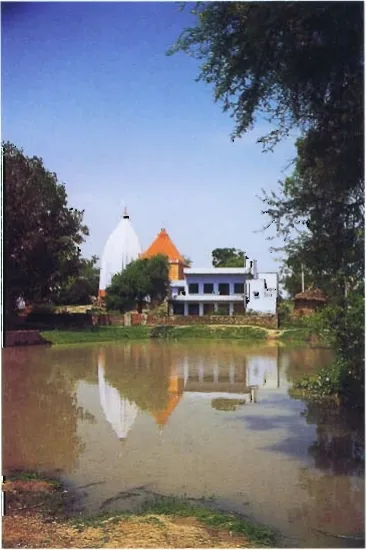
- What it is
- Nipa-kuṇḍa is a kuṇḍa (sacred pond) near Aniyora and Govinda-kuṇḍa at Govardhana.
- Visiting
- In 2001 Govardhana Hill photographed the kuṇḍa with the Rādhā-Govinda Mandira on its far bank.
- Places here
- Rādhā-Govinda Mandira (Nipa-kuṇḍa)
In short
Nipa-kuṇḍa is a kuṇḍa (sacred pond) near Aniyora and Govinda-kuṇḍa at Govardhana. The guidebook Govardhana Hill (2001) says that many nipa, or kadamba, trees once grew round it.[1 +2] The Bhakti-ratnākara shows it to Śrīla Śrīnivāsa Ācārya as supremely lovely, but tells no pastime here.[3] The 2001 guidebook sets here Kṛṣṇa's toll pastime, after which He fed His friends from cups made of kadamba leaves.[1 +1] The Garga-saṁhitā tells the same story at a place it calls Droṇa, and the Bhakti-ratnākara sets the toll at Dāna-ghāṭī.[3 +6]
Key facts
| Kind | kuṇḍa |
|---|---|
| Region · area | Govardhana |
| Ācāryas | Śrīla Śrīnivāsa Ācārya |
Divine pastimes
The toll and the leaf cups
Śrīmad-Bhāgavatam does not tell the toll pastime, the dāna-keli in which Kṛṣṇa stops the gopīs, the cowherd girls, to take a toll on their milk products. Among the games of Kṛṣṇa and Balarāma with the cowherd boys it lists imitating kings (10.18.15), and names no place for these games.[10 +2]
kvacic ca dardura-plāvair vividhair upahāsakaiḥ / kadācit syandolikayā karhicin nṛpa-ceṣṭayā
They would sometimes jump around like frogs, sometimes play various jokes, sometimes ride in swings and sometimes imitate monarchs.
Translation: Śrīla Prabhupāda's disciples (BBT)Śrīla Viśvanātha Cakravartī Ṭhākura explains this game as stopping the young women of Vraja at a toll place to take a toll, and Śrīla Sanātana Gosvāmī counts among the games of the verse before it the blocking of the gopīs' path and the taking of their yogurt. Neither names a place (summarised here, not translated). Śrīla Jīva Gosvāmī and Śrīla Baladeva Vidyābhūṣaṇa read the game as royal play, and Śrīla Prabhupāda's Kṛṣṇa book tells it as playing like a king and his subjects, without a toll.[10 +4] Read more: Kṛṣṇa's toll pastime (dāna-līlā) at Govardhana and Varṣāṇā →
The Garga-saṁhitā tells the pastime in full (summarised here, not translated). When Kṛṣṇa heard the ankle-bells of gopīs on their way to sell yogurt, He led the cowherd boys out, flute and stick in hand, blocked the gopīs' path and demanded a toll.[4 +4]
तत्रैकदा वै दधिविक्रयार्थं विनिर्गतो गोपवधूसमूहः । श्रुत्वा क्वणन्नूपुरशब्दमारा- द्रुरोध तन्मार्गमनंगमोही ॥ 15 ॥ वंशीधरो वेत्रवरेण गोपैः पुरश्च तासां विनिधाय पादम् । मह्यं करादानधनाय दानं देहीति गोपीर्निजगाद मार्गे ॥ 16 ॥
tatraikadā vai dadhivikrayārthaṁ vinirgato gopavadhūsamūhaḥ
śrutvā kvaṇannūpuraśabdamārā- drurodha tanmārgamanaṁgamohī
15
vaṁśīdharo vetravareṇa gopaiḥ puraśca tāsāṁ vinidhāya pādam
mahyaṁ karādānadhanāya dānaṁ dehīti gopīrnijagāda mārge || 16 ||
The gopīs threatened Him with Kaṁsa's prison, He vowed to kill Kaṁsa, and they went home laughing to tell Yaśodā and Nanda. Then Kṛṣṇa made cups of nīpa and palāśa leaves and ate the yogurt with the boys. The leaves of the trees there took the shape of cups, so the place bears the name Droṇa (a leaf cup); the book makes it the back of Govardhana; the Garga-saṁhitā gives it no other position and does not name Nipa-kuṇḍa.[4 +4]
द्रोणाकाराणि पत्राणि बभूवुः शाखिनां तदा । तत्क्षेत्रं च महापुण्यं द्रोणं नाम नृपेश्वर ॥ 23 ॥ दधिदानं तत्र कृत्वा पीत्वा पत्रधृतं दधि । नमस्कुर्यान्नरस्तस्य गोलोकान्न च्युतिर्भवेत् ॥ 24 ॥
droṇākārāṇi patrāṇi babhūvuḥ śākhināṁ tadā
tatkṣetraṁ ca mahāpuṇyaṁ droṇaṁ nāma nṛpeśvara
23
dadhidānaṁ tatra kṛtvā pītvā patradhṛtaṁ dadhi
namaskuryānnarastasya golokānna cyutirbhavet || 24 ||
Govardhana Hill (2001), naming no source, tells the same story at Nipa-kuṇḍa. The gopīs carrying butter and yogurt were stopped by Kṛṣṇa, threatened to tell Kaṁsa, laughed at His boast and went home leaving their pots, and Kṛṣṇa fed His friends from cups made of the leaves of the kadamba trees round the kuṇḍa.[1 +1] Other books set the leaf cups elsewhere:
Accounts differ Where Kṛṣṇa and His friends used leaves as cups for the yogurt or buttermilk
- Garga-saṁhitā 3.7.22-24, 3.8.8cups of nīpa and palāśa leaves; the leaves there became cup-shaped; the place is called Droṇa(-tīrtha), the back of Govardhana; no position
- Govardhana Hill: India's Most Sacred Mountain (2001)at Nipa-kuṇḍa, with leaves of the surrounding kadamba (nipa) trees, after the toll pastime
- Śrī Vraja-maṇḍala Parikramā (2007)the kadamba grove with leaves like cups next to Śyāma-ḍhāka (which is full of palāśa trees); Kṛṣṇa drank buttermilk from the leaf-cups
- Vṛndāvana-Dhāma Ki Jaya! (c. 1986)Śyāma Dhaka is especially known for the cup-shaped leaves; Kṛṣṇa used them to carry His friends' yogurt
The forest lunch
Govardhana Hill adds that Kṛṣṇa and the cowherd boys used to take their lunch on the banks of this kuṇḍa, using kadamba leaves as cups.[1 +1] The Bhāgavatam (10.13.4–11) tells of one such lunch, after the killing of Aghāsura, on a sandy riverbank that Śrīla Prabhupāda's Kṛṣṇa book calls the bank of the Yamunā; it names no kuṇḍa.[16 +2]
kecit puṣpair dalaiḥ kecit pallavair aṅkuraiḥ phalaiḥ / śigbhis tvagbhir dṛṣadbhiś ca bubhujuḥ kṛta-bhājanāḥ
Among the cowherd boys, some placed their lunch on flowers, some on leaves, fruits, or bunches of leaves, some actually in their baskets, some on the bark of trees and some on rocks. This is what the children imagined to be their plates as they ate their lunch.
Translation: Śrīla A.C. Bhaktivedanta Swami PrabhupādaThe Gosvāmīs and ācāryas
According to the Bhakti-ratnākara, Śrīla Śrīnivāsa Ācārya's guide turned back to Gaurī-tīrtha, where a charming nīpa, a king of …
According to the Bhakti-ratnākara, Śrīla Śrīnivāsa Ācārya's guide turned back to Gaurī-tīrtha, where a charming nīpa, a king of trees, stands, and said: see this Nīpa-kuṇḍa, supremely lovely. The book then comes to Aniyora village and Govinda-kuṇḍa.[3]
Visiting today
In 2001 Govardhana Hill photographed the kuṇḍa with the Rādhā-Govinda Mandira on its far bank.[1 +1]
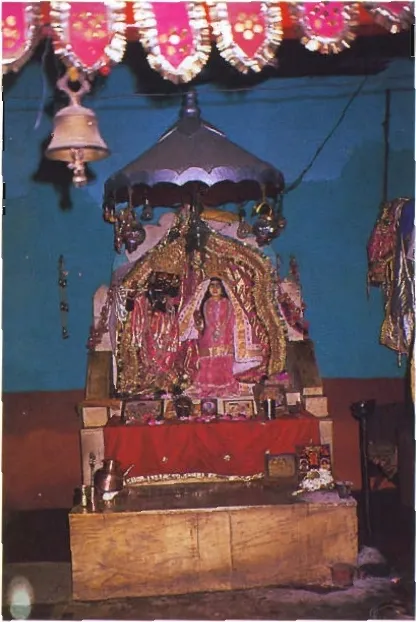
The Rādhā-Govinda Mandira
The Rādhā-Govinda Mandira is a temple that Govardhana Hill (2001) lists among the places around Govinda-kuṇḍa, without saying where exactly it stands; one of the book's photographs shows it across the water of Nipa-kuṇḍa.[1 +1] According to the local tradition recorded in the same book, Vajranābha, Kṛṣṇa's great-grandson, installed its Deity of Govindadeva five thousand years ago; this is not certain. No other source found so far names this temple, and none gives a date or a builder for the present building.[1 +2]
The Skanda Purāṇa's Bhāgavata-māhātmya says that Vajra, helped by King Parīkṣit and blessed by the sage Śāṇḍilya, found and named the places of Kṛṣṇa's pastimes, settled villages, made kuṇḍas and wells, and installed forms of Govinda, Harideva and others (summarised here, not translated). It does not say where the form of Govinda was installed.[20]
वज्रस्तु तत्सहायेन शाण्डिल्यस्याऽप्यनुग्रहात् ।। गोविन्दगोपगोपीनां लीलास्थानान्यनुक्रमात् ॥ 4 ॥ विज्ञायाऽभिधयाऽऽस्थाप्य ग्रामानावासयद्बहून् ।। कुण्डकूपादिपूर्तेन शिवादिस्थापनेन च ॥ 5 ॥ गोविन्दहरिदेवादिस्वरूपाऽऽरोपणेन च ।। कृष्णैकभक्तिं स्वे राज्यं ततान च मुमोद ह ॥ 6 ॥
vajrastu tatsahāyena śāṇḍilyasyā'pyanugrahāt
govindagopagopīnāṁ līlāsthānānyanukramāt vijñāyā'bhidhayā''sthāpya grāmānāvāsayadbahūn
kuṇḍakūpādipūrtena śivādisthāpanena ca govindaharidevādisvarūpā''ropaṇena ca
kṛṣṇaikabhaktiṁ sve rājyaṁ tatāna ca mumoda ha
Two other guidebooks place Vajranābha's Govinda in Vṛndāvana: Śrī Vraja-maṇḍala Parikramā (2007) identifies Him with the Govindadeva of Gomā-ṭīlā whom Śrīla Rūpa Gosvāmī later brought to light, and The Colour Guide to Rādhā-kuṇḍa (1999) names Harideva and Gopāla Rāya as his Deities at Govardhana. Neither mentions a Govinda Deity of Vajranābha at Govardhana.[21 +2]
In his purport to Caitanya-caritāmṛta Madhya 18.37, Śrīla Prabhupāda gives Śrīla Bhaktisiddhānta Sarasvatī Ṭhākura's information that at Govinda-kuṇḍa, near Aniyora, there are two temples, one to Govinda and one to Baladeva. The purport does not say which buildings these are, and no source says that its temple to Govinda is this one.[24]
General teaching (does not name the place)“There is a village named Āniyora on Govardhana Hill, a little distance from the village of Paiṭha. Govinda-kuṇḍa is situated near here, and there are two temples to Govinda and Baladeva there.”
Śrīla Prabhupāda, Śrī Caitanya-caritāmṛta, Madhya-līlā 18.37, purport · vedabase.io
Location
| On the numbered Govardhana chart | 43 (printed as “Nipa Kund”)[25] |
|---|
Places at Nipa-kuṇḍa
1 places
Pictures
1 pictures
Where the sources differ
Accounts differ Where Kṛṣṇa stopped the gopīs to take a toll of their milk products
- Śrīmad-Bhāgavatam 10.18.14-16no toll pastime is narrated; the games, among them 'imitating kings', are set among the rivers, hills, valleys, bushes, trees and lakes of Vṛndāvana
- Śrīla Viśvanātha Cakravartī, Sārārtha-darśinī on 10.18.15at the toll place (dāna-ghaṭṭa); not located
- Śrīla Prabhupāda's disciples, ŚB 10.18.15 purport (vedabase)Śrīla Viśvanātha's toll place was on the riverbank, where people crossing the Yamunā paid a small tax
- Śrīla Sanātana Gosvāmī, Bṛhad-vaiṣṇava-toṣaṇī on 10.18.14at midday the gopīs' path was blocked and their yogurt taken; no place given
Accounts differ What Kṛṣṇa said to the gopīs about Kaṁsa in the toll pastime
- Govardhana Hill: India's Most Sacred Mountain (2001), Nipa-kuṇḍaHe was not afraid of Kaṁsa and would in future kill him and throw his dead body near Govardhana Hill
- Garga-saṁhitā 3.7.18Kṛṣṇa tells the gopīs that He has vowed to kill Kaṁsa and his friends, and that each day He will lead the cows out from Mathurā to Govardhana Hill (summarised here, not translated).
More on this place
Kṛṣṇa's toll pastime (dāna-līlā) at Govardhana and Varṣāṇā
References
25 references
- Govardhana Hill: India's Most Sacred Mountain (2001), Rajasekhara dasa Brahmacari, PDF p. 118
- the key of the numbered Govardhana chart, ¶46
- Śrīla Narahari Cakravartī, Bhakti-ratnākara, Fifth Wave, 1912 ed. p. 201, 2nd ed., 1912
- Garga-saṁhitā, Girirāja-khaṇḍa (3), adhyāya 7, verse 22, Sanskrit Wikisource
- Garga-saṁhitā, Girirāja-khaṇḍa (3), adhyāya 7, verses 15-16, Sanskrit Wikisource
- Garga-saṁhitā, Girirāja-khaṇḍa (3), adhyāya 7, verses 17-18, Sanskrit Wikisource
- Garga-saṁhitā, Girirāja-khaṇḍa (3), adhyāya 7, verses 23-24, Sanskrit Wikisource
- Garga-saṁhitā, Girirāja-khaṇḍa (3), adhyāya 8, verse 8, Sanskrit Wikisource
- Śrīla Narahari Cakravartī, Bhakti-ratnākara, Fifth Wave, 1912 ed. p. 203, 2nd ed., 1912
- Śrīmad-Bhāgavatam 10.18.15, GRETIL
- Śrīmad-Bhāgavatam 10.18.16, GRETIL
- Śrīla Prabhupāda, Kṛṣṇa, the Supreme Personality of Godhead (Kṛṣṇa book), Chapter 18, 'Killing the Demon Pralambāsura' · vedabase.io
- Śrīla Viśvanātha Cakravartī Ṭhākura: commentary on ŚB 10.18.15, Bhagavata Vidya Pith edition, ed. Bhagavata Rishi and Krishna Shankar Shastri, 1996
- Śrīla Sanātana Gosvāmī: commentary on ŚB 10.18.14, Bhagavata Vidya Pith edition, ed. Bhagavata Rishi and Krishna Shankar Shastri, 1996
- Śrīmad-Bhāgavatam 10.18.14, GRETIL
- Śrīmad-Bhāgavatam 10.13.4, GRETIL
- Śrīmad-Bhāgavatam 10.13.9, GRETIL
- Śrīla Prabhupāda, Kṛṣṇa, the Supreme Personality of Godhead (Kṛṣṇa book), Chapter 13, 'The Stealing of the Boys and Calves by Brahmā' · vedabase.io
- Govardhana Hill: India's Most Sacred Mountain (2001), Rajasekhara dasa Brahmacari, PDF p. 114
- Skanda Purāṇa, Vaiṣṇava-khaṇḍa (2), Śrīmad-bhāgavata-māhātmya (section 6), adhyāya 2, verses 4-6, Sanskrit Wikisource
Show all 25 references
- The Colour Guide to Rādhā-kuṇḍa (1999), Rājaśekhara dāsa Brahmacārī, PDF p. 35
- Śrī Vraja-maṇḍala Parikramā (2007), PDF p. 325
- Śrī Vraja-maṇḍala Parikramā (2007), PDF p. 322
- Śrīla Prabhupāda, Śrī Caitanya-caritāmṛta, Madhya-līlā 18.37, purport · vedabase.io
- Numbered list of the Govardhana sites (key of the Govardhana chart)