Kṛṣṇa's toll pastime (dāna-līlā) at Govardhana and Varṣāṇā
श्रीकृष्ण की दान-लीला: गोवर्धन और बरसाना में
In short
In the toll pastime, the dāna-līlā, Kṛṣṇa stops Śrī Rādhā and Her friends as they carry milk products. He playfully asks for a toll (dāna). Pilgrims remember it at the pass of Dāna-ghāṭī and the pond Dāna-nivartana-kuṇḍa on Govardhana, and at the fort of Dāna-garh in Varṣāṇā. The Bhāgavatam does not tell it; Śrīla Prabhupāda explains it.[1–13]
On this page
At a glance
- The Tenth Canto of the Bhāgavatam does not tell a toll pastime; some of its commentators read one into the boys' games.[9 +7]
- Śrīla Prabhupāda explains the dāna-keli-līlā in his purport (explanation) to Caitanya-caritāmṛta Madhya 14.173.[13]
- Śrīla Rūpa Gosvāmī wrote a play on it, the Dāna-keli-kaumudī, and set it on the top of Govardhana.[18–23]
- Dāna-nivartana-kuṇḍa got its name, says Śrīla Raghunātha dāsa Gosvāmī, because the toll matter was settled there.[5, 6]
- The Bhakti-ratnākara shows Dāna-ghāṭī on Govardhana and also places the dāna-līlā on the hill of Varṣāṇā.[1 +5]
- In the guidebooks, Dāna-ghāṭī is where the Mathurā road crosses Govardhana Hill.[2, 3]
What is the dāna-līlā?
Dāna means a toll or tax, and līlā means a divine pastime. As the sources tell it, in the dāna-līlā Kṛṣṇa stops Śrī Rādhā and Her friends on their way and asks for a toll on the milk products they carry.[1–4, 13]
It belongs to the confidential pastimes of Rādhā and Kṛṣṇa. Here we keep to its places, its sources and its meaning for devotees, told simply. Śrīla Prabhupāda asked us to approach such pastimes with care.[26]
Names this place“Who will understand Rādhā-Kṛṣṇa's loving affairs unless one has gone really through the instruction of Rūpa Gosvāmī? Rādhā-Kṛṣṇa loving affairs is not so easy. Rādhā-kuṇḍa is not so easy that by force I go to Rādhā-kuṇḍa, I become a candidate.”
Śrīla Prabhupāda, Room Conversation, Vṛndāvana, 5 September 1976 · vedabase.io
Several places in Vraja remember the pastime: Dāna-ghāṭī and Dāna-nivartana-kuṇḍa on Govardhana, and Dāna-garh and Sāṅkarī-khor in Varṣāṇā.[1–6, 25]
Does the Bhāgavatam tell the toll pastime?
No. The Tenth Canto lists the games that Kṛṣṇa, Balarāma and the cowherd boys played in the forests of Vṛndāvana. Among them, the boys sometimes imitate monarchs (10.18.15).[9–12] Later the gopīs (the cowherd girls) tell Mother Yaśodā that her son is expert in the many ways of the cowherds (10.35.14). Neither verse speaks of a toll.[10 +4]
Śrīla Prabhupāda's Kṛṣṇa book tells the first verse this way.[11]
General teaching (does not name the place)“They joked with one another by imitating croaking frogs, and they enjoyed swinging underneath the trees. Sometimes they would play amongst themselves like a king and his subjects.”
Śrīla Prabhupāda, Kṛṣṇa, the Supreme Personality of Godhead (Kṛṣṇa book), Chapter 18, 'Killing the Demon Pralambāsura' · vedabase.io
What the commentators read into it
Several commentators on the Tenth Canto read the toll into these verses. None of them names a place. All are summarised here, not translated.[14–17]
- Śrīla Viśvanātha Cakravartī Ṭhākura, and Vaṁśīdhara after him, explain imitating monarchs as acting like a king at a toll place (dāna-ghaṭṭa). There He stops the girls of Vraja to take the toll.[14]
- Śrīla Sanātana Gosvāmī counts among the boys' midday games a play with gopīs who passed by on the pretext of selling milk products. The play was blocking their path and taking their yogurt. His text is unclear here, and he does not use the word toll.[14 +2]
- *The Bṛhat-krama-sandarbha,* printed under Śrīla Jīva Gosvāmī's name, and Śrī Śrīnātha Cakravartī read the cowherd ways of 10.35.14 differently. For them these ways include the play of a toll-keeper, on the road and on the water.[16]
Not every commentator reads a toll here. Śrīla Jīva Gosvāmī in his Laghu-toṣaṇī and Śrīla Baladeva Vidyābhūṣaṇa explain imitating monarchs as a game of playing king, seated on a throne of hill-stone under an umbrella of flowers.[14]
How does Śrīla Prabhupāda explain the pastime?
The Caitanya-caritāmṛta (Madhya 14.171) names the toll pastime among Śrī Rādhā's moods of ecstatic love. In his purport Śrīla Prabhupāda explains it simply. Śrī Rādhā, being a cowherd girl, often carries milk to sell on the other side of the Yamunā, and to cross the river She must pay the boatman.[13 +2] Read more: The boat pastime on Mānasī-gaṅgā: Kṛṣṇa as the boatman →
General teaching (does not name the place)To cross the river, She has to pay the boatman, and the spot where the boatman collects his fares is called the dāna-ghāṭi. Lord Śrī Kṛṣṇa stops Her from going, telling Her, “First You have to pay the fee; then You will be allowed to go.” This pastime is called dāna-keli-līlā.
Śrīla Prabhupāda, Śrī Caitanya-caritāmṛta, Madhya-līlā 14.173, purport · vedabase.io
His explanation is general: it speaks of a crossing of the Yamunā and names no hill or village.[13, 30] The Caitanya-caritāmṛta also names Śrīla Rūpa Gosvāmī's play on this pastime, the Dāna-keli-kaumudī, among his works.[23]
What does the Garga-saṁhitā say?
The Garga-saṁhitā mentions the toll pastime three times. It is summarised here, not translated.[32–35]
- Why Govardhana stayed in Vraja. When the sage Pulastya was carrying Govardhana through Vraja, the hill decided to stay. The Lord would perform His toll pastime and other pastimes in that land (2.2.38).[35]
- The leaf cups of Droṇa. On Govardhana, Kṛṣṇa and the cowherd boys stopped gopīs who were going to sell yogurt and asked for a toll. The gopīs threatened Him with Kaṁsa's prison and went home to tell Yaśodā and Nanda. Kṛṣṇa folded nīpa and palāśa leaves into cups and ate the yogurt with His friends.[34 +4]
- The leaves today. The text says the leaves of those trees became cup-shaped, and the place is called Droṇa, the back of the hill (3.7.15–24). It does not say where on the hill Droṇa is.[34 +4]
- The narrow lanes. In another chapter, Nanda's son stops a girl in the narrow lanes on a hillside as she goes to sell yogurt. He asks for a tax, breaks her pot and goes off towards Nandīśvara (2.18.14–17). The hill is not named.[32 +3]
How do the Gosvāmīs set it on Govardhana?
Two works of the Gosvāmīs tell the pastime in full, and both set it on Govardhana. It happens on the day of a sacrifice that the sage Bhāguri performed on the bank of Govinda-kuṇḍa, on Vasudeva's behalf, for the welfare of Kṛṣṇa and Balarāma. Śrī Rādhā and Her friends set out for it with fresh butter (both works summarised here, not translated).[18 +8]
- *Śrīla Rūpa Gosvāmī's Dāna-keli-kaumudī.* Vṛndā, the goddess of Vraja's forests, has Kṛṣṇa's friend Subala bring Him to the top of Govardhana, behind a small pavilion, the Śyāmala-maṇḍapikā. Viśākhā exclaims that a toll on Govardhana was never seen before.[18–22]
- *Śrīla Raghunātha dāsa Gosvāmī's Dāna-keli-cintāmaṇi.* Kṛṣṇa hears from a parrot that the gopīs are coming, and sets up His toll seat on a high dark platform, the śyāma-vedī, on top of the king of hills.[21, 51]
At the end of the poem, the character Nāndīmukhī names a lake on the hill Dāna-nirvartana, because the toll matter was to be settled there. This is the lake known today as Dāna-nivartana-kuṇḍa.[5 +4] In his Vraja-vilāsa-stava (78), Śrīla Raghunātha dāsa Gosvāmī explains its name the same way, and prays to live at this lake.[5, 6]
In the prayers of the Gosvāmīs
Śrīla Raghunātha dāsa Gosvāmī returns to the pastime in his prayers (summarised here, not translated).[2 +5]
- In Vraja-vilāsa-stava 77 (also quoted in the Bhakti-ratnākara) he praises the Kṛṣṇa-vedī. There, one morning, Kṛṣṇa posed as a toll collector and stopped Śrī Rādhā and Her friends for a toll on milk products.[2 +4]
- In the Govardhanāśraya-daśaka (8), Govardhana is the hill of the playful quarrel over the toll.[58]
- In the Govardhana-vāsa-prārthanā-daśaka (4), the hill brings forth the śyāma-vedī, the dark platform that witnessed it.[50]
Śrīla Viśvanātha Cakravartī Ṭhākura's Vraja-rīti-cintāmaṇi (3.21–22) names Śrī Dāna-ghaṭṭa on Govardhana, after the kuṇḍas of Saṅkarṣaṇa and Dāna-nivartana, as the place of the playful quarrel over the toll. He does not put it on the top of the hill.[60]
Where is Dāna-ghāṭī, and what do pilgrims see there?
The Bhakti-ratnākara of Śrīla Narahari Cakravartī Ṭhākura joins these texts to a place. On the walk round Govardhana, Śrīla Rāghava Paṇḍita Gosvāmī shows Śrīla Śrīnivāsa Ācārya Dānaghāṭa, where Kṛṣṇa asks for the toll of milk products.[1–4, 55] He calls it a very secluded place that some call Kṛṣṇa-vedī, quotes Vraja-vilāsa-stava 77, and says that Śrī Rūpa described this pastime in the Dāna-keli-kaumudī.[2 +7]
The book also tells that Śrī Caitanya Mahāprabhu asked His brāhmaṇa companion about the toll pastimes there, and smiled with joy as he described them.[1 +3] The Caitanya-caritāmṛta tells of Mahāprabhu's visit to Harideva at Govardhana, but not of this talk.[1 +3] That visit is told in “Harideva of Govardhana: the Deity, Śrī Caitanya's visit and the temple”.[1 +3]
The guidebooks give the place today, each at its own date. Govardhana Hill (2001) puts Dāna-ghāṭī where the road to Mathurā passes over the hill, and says a narrow pass used by the gopīs was there before. Śrī Vraja-maṇḍala Parikramā (2007) puts it in the middle of Govardhana, on the road between Mathurā and Kāmyavana.[2, 3]
The 2001 guidebook also tells of a temple on top of the hill dedicated to this pastime, called Dāni Raya, which was abandoned in 2001. Its Govardhana-śilā, the book says, had been moved to the Girirāja temple at Dāna-ghāṭī. Neither Gosvāmī names such a temple.[2 +3]
How is the toll pastime remembered at Varṣāṇā?
Other sources set the toll at Varṣāṇā, the village of Śrī Rādhā's father. These are summarised here, not translated.[7 +3]
The Bhakti-ratnākara (Fifth Wave) says that on the hill of Varṣāṇā the prince of Vraja performed the dāna-līlā.[24] The narrow path between the two hills, it adds, is now called Sāṅkarī-khor, and the hills carry three forts named Dāna, Māna and Vilāsa. This is the earliest known mention of a Dāna fort at Varṣāṇā.[25]
The Vraja-bhakti-vilāsa of Śrīla Nārāyaṇa Bhaṭṭa Gosvāmī, a handbook for pilgrims, says that on Brahma, the golden hill of Varṣāṇā, Kṛṣṇa once asked Śrī Rādhā for the toll (4.54).[7, 8] It lists a Dāna-mandira on Brahma-parvata (2.47), and tells the pilgrim to bow to the place and worship it with yogurt (4.56).[8, 67]
The same book bows to the paths at the dance circle before Śrī Rādhā's temple and at Sāṅkarī-khor. There Kṛṣṇa stopped the gopīs coming and going with pots of yogurt on their heads (4.60). It is the earliest known text that ties the stopping of the gopīs to Sāṅkarī-khor by name.[68, 69]
Which other places remember the taking of yogurt?
A pastime close to the toll is the taking of the gopīs' yogurt, which several books tell at other places.[70, 71]
- Dadhi-grāma. The Bhakti-ratnākara names a Dadhi-grāma, village of yogurt, where Kṛṣṇa took the yogurt; it mentions no tax.[70, 71]
- Dāigrāma. Kṛṣṇadāsa Bābājī's Bengali Bhaktamāla (1905) calls Dāigrāma the place where Kṛṣṇa ate yogurt, and says that the leaves of the banyan tree there are leaf-cups even today.[72]
- Daīgaon. Śrī Vraja-maṇḍala Parikramā (2007) says that at Daīgaon Kṛṣṇa and His friends took the gopīs' yogurt on the excuse of collecting tax. That Dadhi-grāma is today's Daīgaon rests on the name and the story.[70 +2]
- Nipa-kuṇḍa. Govardhana Hill (2001) tells the toll story with the leaf cups at Nipa-kuṇḍa, where Kṛṣṇa fed His friends from cups of leaves.[37, 74]
- Aḍīṅga. The 2007 guidebook also sets a toll pastime at Aḍīṅga, which neither Gosvāmī's work mentions.[13 +2]
Where the sources differ
Side by side, the sources place the toll in different spots. They do not say whether they describe one occasion or several, and none says that the others are wrong.[7 +8]
- No place: the Bhāgavatam and its commentators.[14–17]
- A crossing of the Yamunā: according to Śrīla Prabhupāda's purport and the commentators who speak of a toll on the water.[13 +2]
- Govardhana: according to the Garga-saṁhitā (Droṇa), and to Śrīla Rūpa Gosvāmī and Śrīla Raghunātha dāsa Gosvāmī (the top of the hill, the Kṛṣṇa-vedī, Dāna-nivartana). Śrīla Viśvanātha Cakravartī Ṭhākura (Dāna-ghaṭṭa), the Bhakti-ratnākara (Dānaghāṭa) and the guidebooks place it there too.[1 +8]
- Varṣāṇā: according to the Bhakti-ratnākara, the Vraja-bhakti-vilāsa (Brahma-parvata, Sāṅkarī-khor) and the guidebooks (Dāna-garh).[7 +5]
Accounts differ Where Kṛṣṇa took the toll from the gopīs
- Śrīla Rūpa Gosvāmī, Dāna-keli-kaumudīon the top of Govardhana, at the Śyāmala-maṇḍapikā, which Rādhā calls the vow-altar of Her friend Śyāmalā; a toll on Govardhana never seen before
- Śrīla Raghunātha dāsa Gosvāmī, Dāna-keli-cintāmaṇi 15the toll seat on the lofty śyāma-vedī ('dark platform') on top of the king of hills
- Bhakti-ratnākara, quoting Vraja-vilāsa-stava 77at Dāna-ghāṭa, which some call Kṛṣṇa-vedī
- Govardhana Hill: India's Most Sacred Mountain (2001)the Dāni Raya temple on top of Govardhana Hill is dedicated to the pastime; its śilā was moved to the Dāna-ghāṭī Girirāja temple, where the Mathurā road crosses the hill
The wording of these accounts is our summary of the sources, not a published translation.
No source says whether the Śyāmala-maṇḍapikā of the play, the śyāma-vedī of the poem and the Kṛṣṇa-vedī of the prayer are one spot, or where on the hill they stood.[2 +9]
The guidebook Śrī Vraja-maṇḍala Parikramā (2007) tells a longer story at Dāna-garh on Brahma-parvata. Kṛṣṇa and Subala sat there as tax collectors. They stopped Śrī Rādhikā and Her friends and closed the narrow pass of Sāṅkarī-khor. The same book gives the Dāna-mandira prayer as from the Brahma Purāṇa, while the Vraja-bhakti-vilāsa names no source for it. No book older than the guidebooks is known to tell these details.[67 +3]
Accounts differ Where Kṛṣṇa stopped Rādhā and the gopīs for the toll (dāna-līlā).
- Śrī Vraja-maṇḍala Parikramā (2007)At Dāna-garh on top of Brahmācala-parvata (Varṣāṇā), with the narrow path of Sāṅkarī-khor; the gopīs were going to worship the Sun-god.
- Vraja-bhakti-vilāsa ch. 4 v.54On the golden hill named Brahma at Vṛṣabhānupura.
- Bhakti-ratnākara, Fifth Wave, p. 218On the wonderful hill at Varṣāṇa.
- Garga-saṁhitā 2.18.14–16In a story that Kṛṣṇa, disguised as a woman, tells Rādhā: on narrow lanes on the slopes of an unnamed ridge-hill, as the speaker (not Rādhā) was going to sell yoghurt; afterwards He ran off toward Nandīśvara hill (2.18.17).
According to the books, the leaf cups of the Garga-saṁhitā's Droṇa are also placed differently. The 2001 guidebook puts them at Nipa-kuṇḍa, the 2007 guidebook at the kadamba grove beside Śyāma-ḍhāka, and a third book at Śyāma-ḍhāka itself.[37 +4]
Accounts differ Where Kṛṣṇa took the gopīs' yoghurt, and whether it was a toll (dāna) pastime.
- Śrīmad-Bhāgavatam 10.18.14-16no toll and no taking of yoghurt are narrated; the boys sometimes 'imitate monarchs' among the rivers, hills, valleys, groves and lakes of Vṛndāvana
- Śrīla Sanātana Gosvāmī on ŚB 10.18.14at midday the boys block the way of the cowherd women passing by on the pretext of selling milk products and take their yoghurt; no place
- Śrīla Viśvanātha Cakravartī on ŚB 10.18.15acting like a king at the toll-ghāṭ (dāna-ghaṭṭa), stopping the girls of Vraja for the toll; no place and no yoghurt
- Śrīla Prabhupāda, CC Madhya 14.173 purportthe dāna-keli-līlā is at the dāna-ghāṭi, the crossing of the Yamunā where the boatman collects his fares
Places in this article
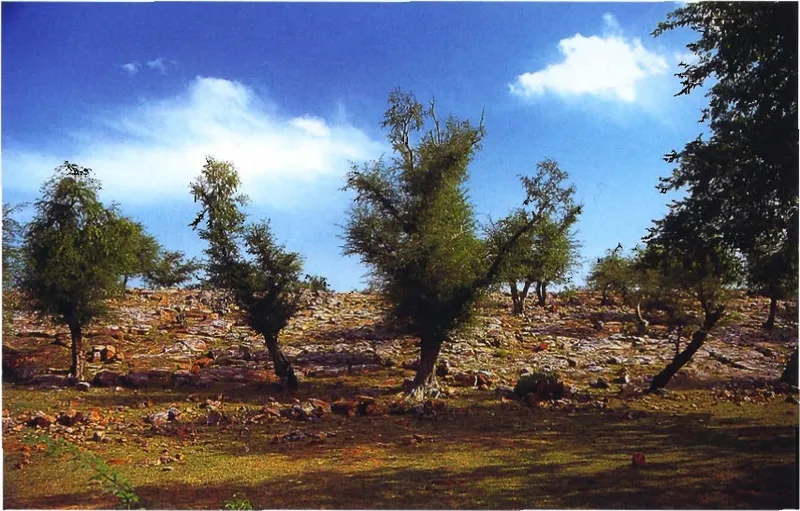
Govardhana
गोवर्धनGovardhana is the hill that Kṛṣṇa lifted with one hand and held up for seven days, so that the people and cows of Vraja could shelter under it from Indra's rain.
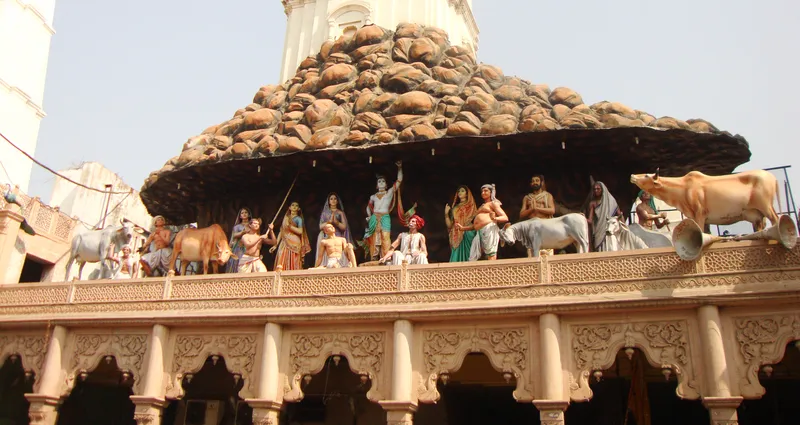
Dāna-ghāṭī
दान-घाटीDāna-ghāṭī, the pass (ghāṭī) of the toll (dāna), is the place where the road from Mathurā crosses Govardhana Hill, as the guidebooks describe it.
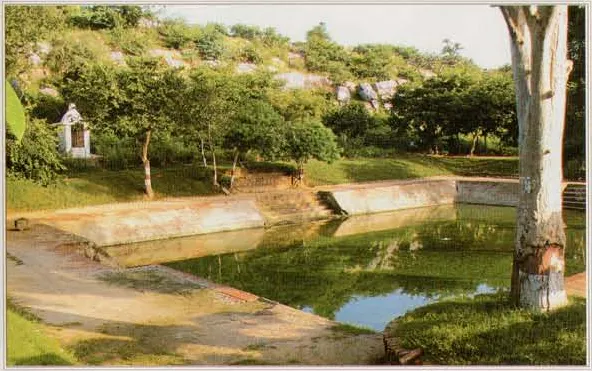
Dāna-nivartana-kuṇḍa
दान-निवर्तन-कुण्डDāna-nivartana-kuṇḍa is a lake (kuṇḍa) of Govardhana, some distance from Dāna-ghāṭī, where, according to the guidebook Govardhana Hill (2001), the stretch of the hill cal …
Dāni Raya Mandira
दानी राय मन्दिरDāni Raya is a temple on top of Govardhana Hill which, according to the guidebook Govardhana Hill (2001), is dedicated to Kṛṣṇa's pastime of taking a toll (dāna) from the …
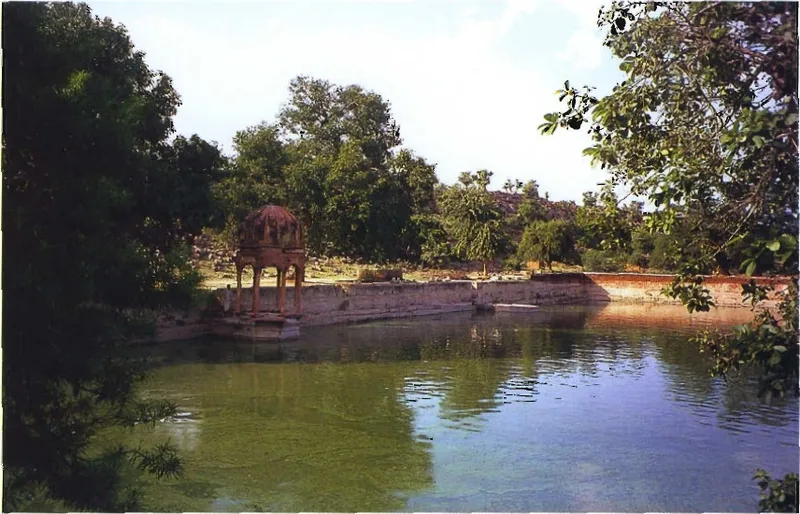
Govinda-kuṇḍa (Govardhana)
गोविन्द-कुण्ड (गोवर्धन)Govinda-kuṇḍa is a kuṇḍa (sacred pond) near the village of Aniyora on Govardhana Hill.
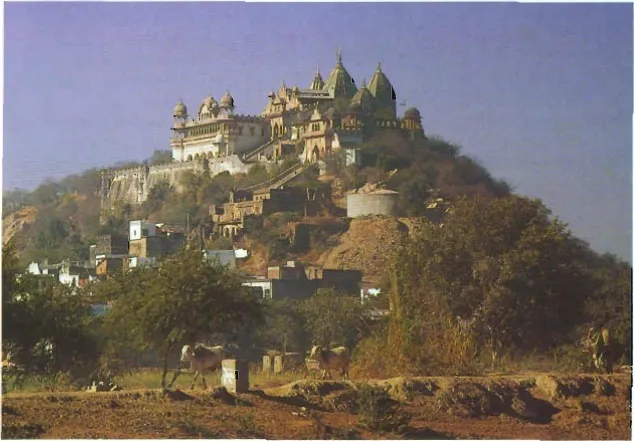
Varṣāṇā
बरसानाVarṣāṇā is the town of Vṛṣabhānu, Śrī Rādhā's father, on and around the hill of Brahma-parvata.
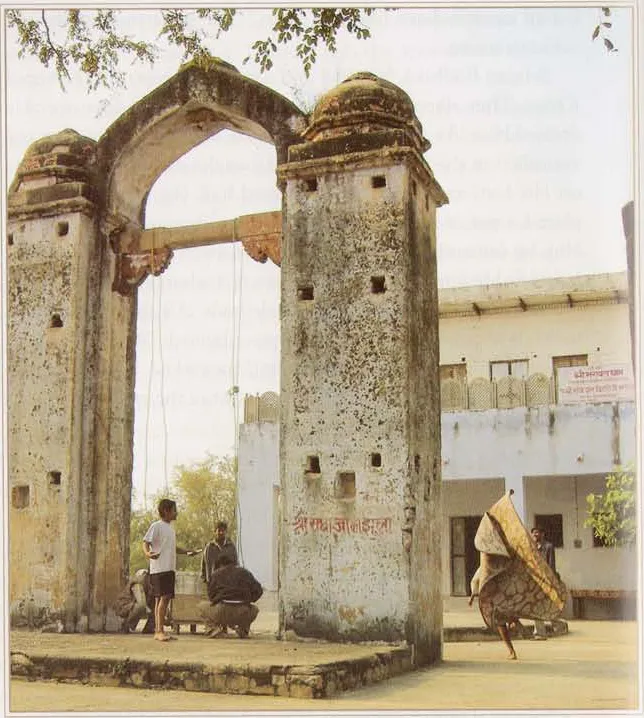
Dāna-garh
दान-गढ़Dāna-garh, the fort of the toll (dāna), is a peak on top of Brahma-parvata, the hill of Varṣāṇā, west of Sāṅkarī-khor.
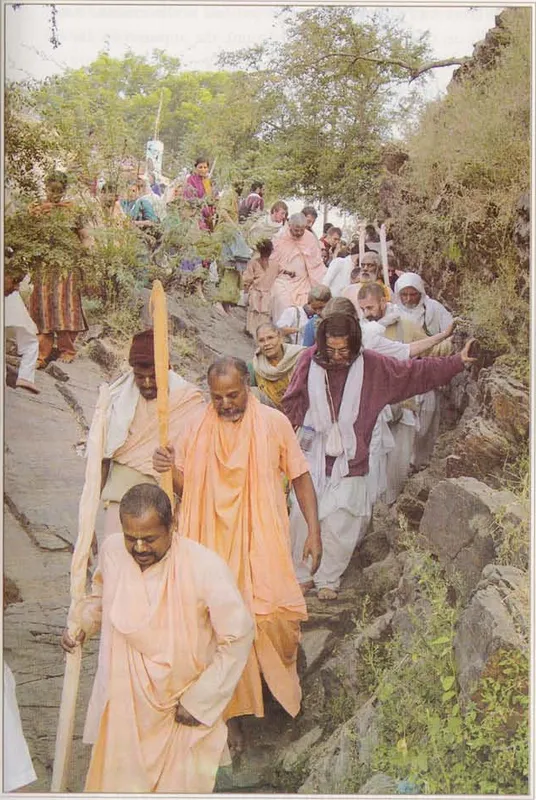
Sāṅkarī-khor
साँकरी-खोरSāṅkarī-khor, the narrow lane, is the rocky path between the two hills of Varṣāṇā, Brahma-parvata and Viṣṇu-parvata, on the way to Ciksaulī.
Dāna Mandira
दान मन्दिरThe Dāna Mandira, the temple of the toll, stands at Dāna-garh on top of Brahma-parvata, the hill of Varṣāṇā.
Daīgaon
दहगाँवDaīgaon, also written Dahīgaon, is a village three miles south of Hoḍal, according to the guidebook Śrī Vraja-maṇḍala Parikramā (2007).
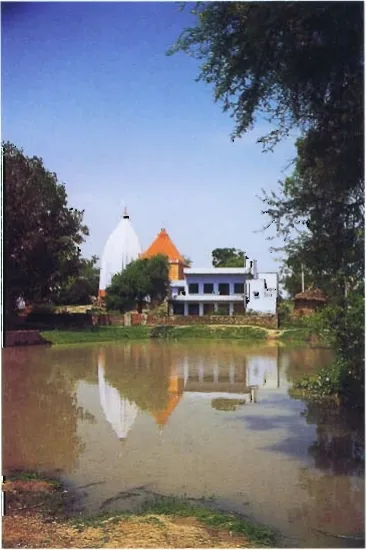
Nipa-kuṇḍa
नीप-कुण्डNipa-kuṇḍa is a kuṇḍa (sacred pond) near Aniyora and Govinda-kuṇḍa at Govardhana.
Aḍīṅga
अड़ींगAḍīṅga (Aring) is a village on the main road from Mathurā to Govardhana.
Questions and answers
Kṛṣṇa's toll pastime: He stops Śrī Rādhā and Her friends as they carry milk products and asks for a toll before He lets them pass. Śrīla Prabhupāda calls it dāna-keli-līlā.[1–4, 13]
No. The Tenth Canto does not tell it. Commentators such as Śrīla Viśvanātha Cakravartī Ṭhākura read it into the boys' game of imitating monarchs (10.18.15), without naming a place.[9 +7]
On Govardhana Hill. The Bhakti-ratnākara shows it on the walk round the hill, and the guidebooks place it where the Mathurā road crosses the hill.[1–4]
A lake on Govardhana. Śrīla Raghunātha dāsa Gosvāmī says it got its name, the place of settling the toll, because the toll matter was settled there.[5 +2]
A place on Brahma-parvata, the hill of Varṣāṇā. The Bhakti-ratnākara names a Dāna fort on the hills, and the Vraja-bhakti-vilāsa a Dāna-mandira, where Kṛṣṇa once asked Śrī Rādhā for the toll.[7 +2]
Śrīla Rūpa Gosvāmī's play Dāna-keli-kaumudī and Śrīla Raghunātha dāsa Gosvāmī's poem Dāna-keli-cintāmaṇi tell it in full; the Garga-saṁhitā, the Bhakti-ratnākara and the Vraja-bhakti-vilāsa name its places.[1 +13]
The Bhakti-ratnākara says that there He asked His brāhmaṇa companion about the toll pastimes and smiled with joy to hear them. The Caitanya-caritāmṛta does not tell this talk.[1 +3]
Sources
- Śrīla Narahari Cakravartī, Bhakti-ratnākara, Fifth Wave, 1912 ed. pp. 203-204, 2nd ed., 1912
- Govardhana Hill: India's Most Sacred Mountain (2001), Rajasekhara dasa Brahmacari, PDF p. 84
- Śrī Vraja-maṇḍala Parikramā (2007), PDF p. 122
- the undated parikramā notes Govardhana, ¶71
- Śrīla Raghunātha dāsa Gosvāmī, Vraja-vilāsa-stava, verse 78
- Śrīla Narahari Cakravartī, Bhakti-ratnākara, Fifth Wave, 1912 ed. p. 202, 2nd ed., 1912
- Śrīla Nārāyaṇa Bhaṭṭa, Vraja-bhakti-vilāsa, ch. 4 v.54, printed p. 100, 1st ed., publ. Bābā Kṛṣṇadāsa, Kusuma-sarovara, Saṁvat 2008
- Śrīla Nārāyaṇa Bhaṭṭa, Vraja-bhakti-vilāsa, ch. 2 v.47 ('ततो वृपभानुपुरलिंगानि', 'pādme'), printed p. 46, 1st ed., publ. Bābā Kṛṣṇadāsa, Kusuma-sarovara, Saṁvat 2008
- Śrīmad-Bhāgavatam 10.18.14–15, GRETIL
- Śrīmad-Bhāgavatam 10.35.14–15, GRETIL
- Śrīla Prabhupāda, Kṛṣṇa, the Supreme Personality of Godhead (Kṛṣṇa book), Chapter 18, 'Killing the Demon Pralambāsura' · vedabase.io
- Śrīla Prabhupāda, Kṛṣṇa, the Supreme Personality of Godhead (Kṛṣṇa book), Chapter 35, 'The Gopīs’ Feelings of Separation' · vedabase.io
- Śrīla Prabhupāda, Śrī Caitanya-caritāmṛta, Madhya-līlā 14.173, purport · vedabase.io
- Vaṁśīdhara, Śrīla Jīva Gosvāmī, Śrīla Viśvanātha Cakravartī Ṭhākura: commentary on ŚB 10.18.15, Bhagavata Vidya Pith edition, ed. Bhagavata Rishi and Krishna Shankar Shastri, 1996
- Śrīla Sanātana Gosvāmī: commentary on ŚB 10.18.14, Bhagavata Vidya Pith edition, ed. Bhagavata Rishi and Krishna Shankar Shastri, 1996
- Śrīla Śrīnātha Cakravartī: commentary on ŚB 10.35.14–15, Bhagavata Vidya Pith edition, ed. Bhagavata Rishi and Krishna Shankar Shastri, 1996
- Śrīla Sanātana Gosvāmī: commentary on ŚB 10.33.25
- Śrīla Rūpa Gosvāmī, Dāna-keli-kaumudī, opening scene, part 1 after v.12, after the undated edition published by Krishna Das of Kusum Sarovar
- Śrīla Rūpa Gosvāmī, Dāna-keli-kaumudī, the toll scene, part 1 after v.37, after the undated edition published by Krishna Das of Kusum Sarovar
- Śrīla Rūpa Gosvāmī, Dāna-keli-kaumudī, the toll scene, part 1 after v.85, after the undated edition published by Krishna Das of Kusum Sarovar
Show all 80 references
- Śrīla Raghunātha dāsa Gosvāmī, Dāna-keli-cintāmaṇi, verse 15
- Govardhana Hill: India's Most Sacred Mountain (2001), Rajasekhara dasa Brahmacari, PDF p. 86
- Śrīla Prabhupāda, Śrī Caitanya-caritāmṛta, Madhya-līlā 1.39-40, translation · vedabase.io
- Śrīla Narahari Cakravartī, Bhakti-ratnākara, Fifth Wave, printed p. 218 (1912 edition), 2nd ed., 1912
- Śrīla Narahari Cakravartī, Bhakti-ratnākara, Fifth Wave, 1912 ed. p. 218; Grantha Mandira text v.893–896, 2nd ed., 1912
- Śrīla Prabhupāda, Room Conversation, Vṛndāvana, 5 September 1976 · vedabase.io
- Śrīmad-Bhāgavatam 10.18.15, GRETIL
- Śrīmad-Bhāgavatam 10.35.14, GRETIL
- Śrīmad-Bhāgavatam 10.18.14-16, GRETIL
- Śrīla Prabhupāda, Śrī Caitanya-caritāmṛta, Madhya-līlā 14.171, translation · vedabase.io
- Śrīla Rūpa Gosvāmī, Ujjvala-nīlamaṇi 11.46, quoting Dāna-keli-kaumudī 1; CC Madhya 14.180, GRETIL
- Garga-saṁhitā, Vṛndāvana-khaṇḍa (2) 18.14, Sanskrit Wikisource
- Garga-saṁhitā, Vṛndāvana-khaṇḍa (2) 18.15–16, Sanskrit Wikisource
- Garga-saṁhitā, Girirāja-khaṇḍa (3), adhyāya 7, verses 15-16, Sanskrit Wikisource
- Garga-saṁhitā, Vṛndāvana-khaṇḍa (2), adhyāya 2, verse 38, Sanskrit Wikisource
- Garga-saṁhitā, Girirāja-khaṇḍa (3), adhyāya 7, verses 17-18, Sanskrit Wikisource
- Garga-saṁhitā, Girirāja-khaṇḍa (3), adhyāya 7, verse 22, Sanskrit Wikisource
- Garga-saṁhitā, Girirāja-khaṇḍa (3), adhyāya 7, verses 23-24, Sanskrit Wikisource
- Garga-saṁhitā, Girirāja-khaṇḍa (3), adhyāya 8, verse 8, Sanskrit Wikisource
- Garga-saṁhitā, Girirāja-khaṇḍa (3), adhyāya 7, verse 23, Sanskrit Wikisource
- Garga-saṁhitā, Girirāja-khaṇḍa (3), adhyāya 7, verse 24, Sanskrit Wikisource
- Garga-saṁhitā, Vṛndāvana-khaṇḍa (2), adhyāya 18, verse 14, Sanskrit Wikisource
- Garga-saṁhitā, Vṛndāvana-khaṇḍa (2), adhyāya 18, verse 15, Sanskrit Wikisource
- Garga-saṁhitā, Vṛndāvana-khaṇḍa (2) 18.17, Sanskrit Wikisource
- Śrīla Rūpa Gosvāmī, Dāna-keli-kaumudī, opening scene after the prologue, part 1 after v.8 - after v.9, after the undated edition published by Krishna Das of Kusum Sarovar
- Śrīla Rūpa Gosvāmī, Dāna-keli-kaumudī, the toll scene, part 1 after v.40, after the undated edition published by Krishna Das of Kusum Sarovar
- Śrīla Rūpa Gosvāmī, Ujjvala-nīlamaṇi 15.241, quoting Dāna-keli-kaumudī 64, GRETIL
- Śrīla Rūpa Gosvāmī, Ujjvala-nīlamaṇi 14.3, quoting Dāna-keli-kaumudī 30, GRETIL
- Śrīla Raghunātha dāsa Gosvāmī, Dāna-keli-cintāmaṇi, verses 6-7
- Śrīla Raghunātha dāsa Gosvāmī, Govardhana-vāsa-prārthanā-daśaka, verse 4
- Śrīla Raghunātha dāsa Gosvāmī, Dāna-keli-cintāmaṇi, part 1 vv.14–15
- Śrīla Raghunātha dāsa Gosvāmī, Dāna-keli-cintāmaṇi vv.161-162
- Grantha Mandira Stavāvalī of Śrīla Raghunātha dāsa Gosvāmī, Dāna-nirvartana-kuṇḍāṣṭaka, Stavāvalī, section (28) 'śrī-dāna-nirvartana-kuṇḍāṣṭakam', vv.1-2
- Govardhana Hill: India's Most Sacred Mountain (2001), Rajasekhara dasa Brahmacari, PDF p. 91
- Śrīla Narahari Cakravartī, Bhakti-ratnākara, Fifth Wave, 1912 ed. p. 204, 2nd ed., 1912
- Śrīla Raghunātha dāsa Gosvāmī, Vraja-vilāsa-stava 77 (as numbered in the quotation); Bhakti-ratnākara 1912 ed. p. 204, 2nd ed., 1912
- Śrīla Raghunātha dāsa Gosvāmī, Vraja-vilāsa-stava, verse 77
- Śrīla Raghunātha dāsa Gosvāmī, Govardhanāśraya-daśaka, verse 8
- the undated parikramā notes Govardhana, ¶70
- Śrīla Viśvanātha Cakravartī Ṭhākura, Vraja-rīti-cintāmaṇi, third sarga, verses 21-22
- Govardhana Hill: India's Most Sacred Mountain (2001), Rajasekhara dasa Brahmacari, PDF p. 85
- Śrī Vraja-maṇḍala Parikramā (2007), PDF p. 123
- Śrīla Kṛṣṇadāsa Kavirāja Gosvāmī, Śrī Caitanya-caritāmṛta, Madhya-līlā 18.19, online edition · vedabase.io
- Kṛṣṇa-caitanya-caritāmṛta of Murāri Gupta, prakrama 4, sarga 8, vv.5-7
- Śrīla Locana dāsa Ṭhākura, Caitanya-maṅgala, Śeṣa-khaṇḍa, 1903 ed. p. 174, left column
- the key of the numbered Govardhana chart, ¶32
- Śrīla Nārāyaṇa Bhaṭṭa, Vraja-bhakti-vilāsa, ch. 4 v.56 (prayer for the Dāna-mandira), printed p. 100, 1st ed., publ. Bābā Kṛṣṇadāsa, Kusuma-sarovara, Saṁvat 2008
- Śrīla Nārāyaṇa Bhaṭṭa, Vraja-bhakti-vilāsa, ch. 4 v.60 (prayer on seeing the līlā-nṛtya-maṇḍala and Sāṅkarī-khor), printed p. 101, 1st ed., publ. Bābā Kṛṣṇadāsa, Kusuma-sarovara, Saṁvat 2008
- Śrīla Nārāyaṇa Bhaṭṭa, Vraja-bhakti-vilāsa, ch. 4 v.59 (prayer for the rāsa-maṇḍala at the Mayūra-kuṭī site), printed p. 101, 1st ed., publ. Bābā Kṛṣṇadāsa, Kusuma-sarovara, Saṁvat 2008
- Śrīla Narahari Cakravartī, Bhakti-ratnākara, Fifth Wave (pañcama taraṅga), printed p. 257 (1912 ed.), 2nd ed., 1912
- Śrīla Narahari Cakravartī, Bhakti-ratnākara, Fifth Wave (pañcama taraṅga), printed p. 252 (1912 ed.), 2nd ed., 1912
- Śrī Śrī Bhaktamāla grantha, ṣaḍviṁśa-mālā, printed p. 338, right column
- Śrī Vraja-maṇḍala Parikramā (2007), PDF p. 187
- Govardhana Hill: India's Most Sacred Mountain (2001), Rajasekhara dasa Brahmacari, PDF p. 118
- Śrīla Rūpa Gosvāmī, Dāna-keli-kaumudī, opening scene, part 1 after v.12, after the undated edition published by Krishna Das of Kusum Sarovar
- Śrī Vraja-maṇḍala Parikramā (2007), PDF p. 173
- Śrī Vraja-maṇḍala Parikramā (2007), PDF p. 174
- Śrī Vraja-maṇḍala Parikramā (2007), PDF p. 171
- Śrī Vraja-maṇḍala Parikramā (2007), PDF p. 132
- Vṛndāvana-Dhāma Ki Jaya! (c. 1986), by Dhruva Mahārāja dāsa, PDF p. 43
Further sources
- Śrīmad-Bhāgavatam 10.18.14–15 and 10.35.14–15 (BBT), with the Canto 10 commentaries (Sanskrit; summarised here, not translated).
- Śrīla Prabhupāda, Kṛṣṇa, the Supreme Personality of Godhead, chapter 18; Śrī Caitanya-caritāmṛta, Madhya 1.39–40 and 14.171–173 with purports; room conversation, Vṛndāvana, 5 September 1976 (BBT).
- Garga-saṁhitā 2.2, 2.18, 3.7; Śrīla Rūpa Gosvāmī, Dāna-keli-kaumudī; Śrīla Raghunātha dāsa Gosvāmī, Dāna-keli-cintāmaṇi and Stavāvalī; Śrīla Viśvanātha Cakravartī Ṭhākura, Vraja-rīti-cintāmaṇi (summarised here, not translated).
- Bhakti-ratnākara, Fifth Wave (Bengali, 1912 edition); Vraja-bhakti-vilāsa; Kṛṣṇadāsa Bābājī, Bhaktamāla (Bengali, 1905) (summarised here, not translated).
- Guidebooks: Govardhana Hill: India's Most Sacred Mountain (2001), Śrī Vraja-maṇḍala Parikramā (2007).