Govinda-kuṇḍa (Govardhana)
गोविन्द-कुण्ड (गोवर्धन) Hindi name proposed
Also called Govinda Kunda
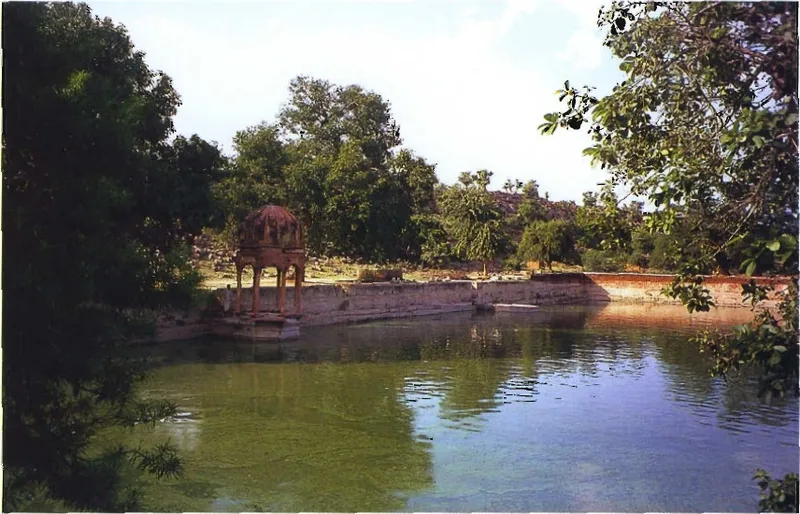
- What it is
- Govinda-kuṇḍa is a kuṇḍa (sacred pond) near the village of Aniyora on Govardhana Hill.
- Visiting
- The guidebooks name the places around the kuṇḍa: Indra Tila at its side, Śrīla Mādhavendra Purī's bhajana-kuṭī on its far bank with the Gopāla Mandira next to it, and Airāvata-kuṇḍa and …
- Parikramā
- Govardhana parikramā, station 29
- Places here
- Mādhavendra Purī's Bhajana Kuṭira (Govinda-kuṇḍa)
In short
Govinda-kuṇḍa is a kuṇḍa (sacred pond) near the village of Aniyora on Govardhana Hill.[1 +3] The sources connect it with the bath in which Surabhi, the mother of the cows, and Indra, the king of heaven, crowned Kṛṣṇa after He had lifted the hill, and gave Him the name Govinda. The Bhāgavatam tells that bath without naming a lake; Śrīla Jīva Gosvāmī places it here, the Garga-saṁhitā says that the kuṇḍa came from Surabhi's milk, and Śrīla Raghunātha dāsa Gosvāmī prays that it may always appear before his eyes.[1 +10] Śrīla Mādhavendra Purī and Śrī Caitanya Mahāprabhu bathed in it, and its water was used to install the Gopāla Deity.[15 +8]
Key facts
| Kind | kuṇḍa |
|---|---|
| Region · area | Govardhana |
| Also part of | Surabhi Vana |
| On the parikramā | Govardhana parikramā, station 29 · the route |
| Ācāryas | Śrīla Mādhavendra Purī, Śrī Caitanya Mahāprabhu, Śrīla Raghunātha dāsa Gosvāmī, Śrīla Jīva Gosvāmī, Śrīla Bhaktisiddhānta Sarasvatī Ṭhākura |
Why it is glorified
A verse that the Gosvāmīs quote from the 'Mathurā-khaṇḍa' says that Govinda-kuṇḍa arose where Indra bathed the Lord, and that one …
A verse that the Gosvāmīs quote from the 'Mathurā-khaṇḍa' says that Govinda-kuṇḍa arose where Indra bathed the Lord, and that one bath in it gives liberation. Śrīla Rūpa Gosvāmī quotes it in his Mathurā-māhātmya under the heading "of Śrī Govinda-kuṇḍa", Śrīla Jīva Gosvāmī quotes its first line, and the Bhakti-ratnākara and Śrīla Prabhupāda quote it in full.[2 +5]
śrī-govinda-kuṇḍasya mathurā-khaṇḍe yatrābhiṣikto bhagavān maghonā yadu-vairiṇā
govinda-kuṇḍaṁ taj-jātaṁ snāna-mātreṇa mokṣa-dam ||416||
“Simply by bathing in Govinda-kuṇḍa, one is awarded liberation. This lake was produced when Bhagavān Śrī Kṛṣṇa was bathed by Lord Indra.”
Translation: Śrīla A.C. Bhaktivedanta Swami PrabhupādaThe Garga-saṁhitā says that the streams of Surabhi's milk with which Kṛṣṇa was bathed became Govinda-kuṇḍa, which removes the greatest sins.[12 +1] It adds that the water of the kuṇḍa sometimes tastes of milk, that one who bathes there attains Govinda's feet, and that one who bathes there thinking of Kṛṣṇa attains a form like His.[30 +1] It counts Govinda-kuṇḍa among the chief holy waters of the hill and, describing Govardhana as a body, calls the kuṇḍa its lips.[32 +2] In his Vraja-rīti-cintāmaṇi, Śrīla Viśvanātha Cakravartī Ṭhākura describes Govardhana as a peacock and seems to place its tail to the south of Govinda-kuṇḍa, with Mānasī-gaṅgā as its neck.[35]
The Nārada Purāṇa calls Govinda-kuṇḍa the place where Indra, having come to know the truth, meditated on Govinda, and says that one who bathes there also sees something of the Lord's glory (summarised here, not translated).[36] Śrīla Nārāyaṇa Bhaṭṭa Gosvāmī's Vraja-bhakti-vilāsa gives a prayer for bathing in the kuṇḍa that calls it "born of Govinda's bath" and promises Viṣṇu's abode to one who recites it a hundred times while bathing.[37] In the pilgrimage round of the same work, Govinda-kuṇḍa forms one station with Surabhi-vana, the forest made delightful by Surabhi: the round of that forest takes in the bath at Govinda-kuṇḍa and, beside it on the hill, the places of Govardhana-nātha, the Lord of Govardhana.[38 +3]
In his Vraja-vilāsa-stava Śrīla Raghunātha dāsa Gosvāmī writes of Govinda-kuṇḍa as the lake that arose from Kṛṣṇa's coronation bath, and prays that it may always appear before his eyes. Śrīla Prabhupāda translates the verse in his purport on the kuṇḍa:[1 +1]
नीचैः प्रौढभयात्स्वयं सुरपतिः पादौ विधृत्येह यैः
स्वर्गङ्गासलिलैश्चकार सुरिभद्वाराभिषेकोत्सवम् ।
गोविन्दस्य नवं गवामधिपता राज्ये स्फुटं कौतुकात्
तैर्यत्प्रादुरभूत्सदा स्फुरतु तद्गोविन्दकुण्डं दृशोः ॥ ७४॥
nīcaiḥ prauḍhabhayātsvayaṁ surapatiḥ pādau vidhṛtyeha yaiḥ svargaṅgāsalilaiścakāra suribhadvārābhiṣekotsavam
govindasya navaṁ gavāmadhipatā rājye sphuṭaṁ kautukāt tairyatprādurabhūtsadā sphuratu tadgovindakuṇḍaṁ dṛśoḥ || 74 ||
“With humility caused by great fear, Indra took hold of the lotus feet of Lord Kṛṣṇa and, in the company of a surabhi cow, performed His coronation festival by bathing Him with the waters of the heavenly Ganges River. Thus Lord Kṛṣṇa’s kingship over the cows became splendidly manifest. I pray that Govinda-kuṇḍa, the lake created by that ceremonial bath, may eternally appear before my eyes.”
Translation: Śrīla A.C. Bhaktivedanta Swami PrabhupādaDivine pastimes
The bath that gave the name Govinda
After Kṛṣṇa had lifted Govardhana, Indra came to Him, ashamed, in a solitary place. Then Surabhi bathed Kṛṣṇa with her milk, and Indra, urged by the mothers of the demigods, bathed Him with water of the heavenly Gaṅgā brought by the trunk of his elephant Airāvata and named Him Govinda. The Bhāgavatam names no lake or kuṇḍa for this bath, and Śrīla Prabhupāda's Kṛṣṇa book, which tells it in the same way, names none either.[5 +4]
śṛī-śuka uvāca evaṃ kṛṣṇam upāmantrya surabhiḥ payasātmanaḥ / jalair ākāśa-gaṅgāyā airāvata-karoddhṛtaiḥ
indraḥ surarṣibhiḥ sākaṃ codito deva-mātṛbhiḥ / abhyasiñcata dāśārhaṃ govinda iti cābhyadhāt
Śukadeva Gosvāmī said: Having thus appealed to Lord Kṛṣṇa, mother Surabhi performed His bathing ceremony with her own milk, and Indra, ordered by Aditi and other mothers of the demigods, anointed the Lord with heavenly Gaṅgā water from the trunk of Indra’s elephant carrier, Airāvata. Thus, in the company of the demigods and great sages, Indra coronated Lord Kṛṣṇa, the descendant of Daśārha, and gave Him the name Govinda.
Translation: Śrīla Prabhupāda's disciples (BBT)The commentators place the bath on Govardhana (summarised here, not translated). Explaining the Bhāgavatam's word "there", where the singers of heaven came to the bath, Śrīla Jīva Gosvāmī names the region of Śrī Govardhana known as Śakra-kuṇḍa from the Varāha Purāṇa and as Govinda-kuṇḍa from the Skanda Purāṇa; Śrīla Sanātana Gosvāmī's printed text names the place 'Śatru-kuṇḍa'.[10 +1] For Indra's first meeting with Kṛṣṇa, Śrīla Viśvanātha Cakravartī Ṭhākura says that Kṛṣṇa had gone alone one morning to see the damage that Indra's thunderbolts had done to the hill, and he and other commentators, following the Harivaṁśa, seat Kṛṣṇa on a rock of Govardhana. None of them names Govinda-kuṇḍa for that meeting.[5 +2]
According to the Bhakti-ratnākara, its guide showed Śrīla Śrīnivāsa Ācārya Govinda-kuṇḍa as the place where Indra performed Govinda's abhiṣeka, the bathing ceremony. The book says that the Purāṇas proclaim countless fruits of bathing here, quotes Śrīla Raghunātha dāsa Gosvāmī's verse and the 'Mathurā-khaṇḍa' verse, and adds that Indra offered prayers here and that bathing and offering water (tarpaṇa) at the Śakra-tīrtha bring much fruit.[1 +3] Śrīla Prabhupāda translates its first couplet:[1]
এই শ্রীগোবিন্দকুণ্ড মহিমা অনেক । এথা ইন্দ্র কৈল গোবিন্দের অভিষেক ॥
ei śrīgobindakuṇḍa mahimā aneka
ethā indra kaila gobindera abhiṣeka ||
“Govinda-kuṇḍa is exalted for its many spiritual activities. It was here that Indra, defeated by Lord Govinda, offered prayers to Him and bathed Him.”
Translation: Śrīla A.C. Bhaktivedanta Swami PrabhupādaŚrīla Rūpa Gosvāmī's Mathurā-māhātmya also places under the heading of Govinda-kuṇḍa the Varāha Purāṇa's verse on a tīrtha made by Indra near Annakūṭa; the Varāha Purāṇa itself does not name Govinda-kuṇḍa.[26 +5]
Accounts differ Śakra-kuṇḍa: another name of Govinda-kuṇḍa, or a separate water?
- Śrīla Jīva Gosvāmī, Laghu-vaiṣṇava-toṣaṇī on ŚB 10.27.24the festival took place at one spot of Govardhana, known as Śakra-kuṇḍa from the Varāha and as Govinda-kuṇḍa from the Skanda
- Śrīla Rūpa Gosvāmī, Mathurā-māhātmya vv.416–417under the heading of Śrī Govinda-kuṇḍa: the Mathurā-khaṇḍa verse, then the Ādi-vārāha verse on the tīrtha made by Śakra near Annakūṭa
- Vaṁśīdhara, Bhāvārtha-dīpikā-prakāśa on ŚB 10.27.24the place of the bath in the region of Govardhana, known in the Varāha as Śakra-kuṇḍa and as Govinda-kuṇḍa
- Śrīla Sanātana Gosvāmī, Bṛhad-vaiṣṇava-toṣaṇī on ŚB 10.27.24the place on Śrī Govardhana known from the Skanda as Śatru-kuṇḍa (as printed)
The wording of these accounts is our summary of the sources, not a published translation.
What the kuṇḍa came from
The texts say differently what the kuṇḍa was formed from. In the Garga-saṁhitā, Surabhi's milk became Govinda-kuṇḍa and the heavenly Gaṅgā water of the same bath became Mānasī-gaṅgā.[12 +2] Śrīla Raghunātha dāsa Gosvāmī's Govardhanāśraya-daśaka says that Govinda-kuṇḍa arose at the border of Govardhana from the bath in which Surabhi, followed by the humbled Indra, bathed Hari with the water of the heavenly river.[51] In Śrīla Jīva Gosvāmī's Gopāla-campū, Airāvata brings the Gaṅgā water and Surabhi fills a lake near the hill with her milk before Indra bathes Kṛṣṇa, but that lake is not called Govinda-kuṇḍa.[52] Read more: The lifting of Govardhana Hill, Indra's homage and the name Govinda →
Accounts differ What Govinda-kuṇḍa was formed from, and who bathed Kṛṣṇa with what
- Garga-saṁhitā, Girirāja-khaṇḍa 3.4.8-9, 15-16Surabhi bathed Kṛṣṇa with milk, Airāvata with heavenly Gaṅgā water; the Gaṅgā water became Mānasī-gaṅgā and Surabhi's milk became Govinda-kuṇḍa
- Śrīla Raghunātha dāsa Gosvāmī, Vraja-vilāsa-stava 74Indra held the coronation-bath with heavenly Gaṅgā water through Surabhi; Govinda-kuṇḍa appeared from those waters
- Śrīla Raghunātha dāsa Gosvāmī, Govardhanāśraya-daśaka 2Surabhi, followed by Indra, bathed Hari with the water of the heavenly river; Govinda-kuṇḍa arose from that bath
- Śrīla Jīva Gosvāmī, Gopāla-campū, Pūrva 19 [48]Airāvata brought heavenly Gaṅgā water; Surabhi filled a lake near the hill (sura-pati-sarasī) with her milk; the lake is not named Govinda-kuṇḍa
The guidebook Śrī Vraja-maṇḍala Parikramā (2007) says that Lord Brahmā advised Indra to ask forgiveness, and that Indra then bathed Kṛṣṇa here with Surabhi's milk. The Bhāgavatam does not tell of Brahmā's advice, but Śrīla Jīva Gosvāmī infers it from Surabhi's words and tells it at length in his Gopāla-campū: Indra confessed his offence to Brahmā, who told him to worship Surabhi so as to be forgiven and then sent her to Kṛṣṇa.[6 +4]
Whether Brahmā himself came to the bath, and what he did there, is told differently.
Accounts differ Was Lord Brahmā present at Kṛṣṇa's coronation-bath, and did he bathe or crown Him?
- Śrīmad-Bhāgavatam 10.27.21–23Surabhi says that she and her company will bathe Kṛṣṇa as their Indra 'as ordered by Lord Brahmā'; Surabhi bathes Him with her milk, and Indra, with the demigods and great sages and urged by Aditi and the other mothers of the demigods, bathes Him with Gaṅgā water and names Him Govinda; Brahmā is not said to be there
- Kṛṣṇa book, chapter 27 (Śrīla Prabhupāda)the surabhi cow and Indra bathe Kṛṣṇa, then the surabhi cows and all the demigods and their mothers join Indra in bathing Him; Brahmā is not mentioned
- Śrīla Sanātana Gosvāmī, Śrīla Jīva Gosvāmī (Laghu-vaiṣṇava-toṣaṇī) and Śrīla Baladeva Vidyābhūṣaṇa on ŚB 10.27.21; Śrīla Viśvanātha Cakravartī on the same verseBrahmā did not come ('brahmā nāgamat'), fearing to offend as before; Viśvanātha: Brahmā, afraid on remembering his own earlier offence, sent Surabhi
- Śrīla Jīva Gosvāmī, Gopāla-campū, Pūrva 19Brahmā, held back by his own earlier offence, does not seek Indra's forgiveness himself but sends Indra to Surabhi and Surabhi to Kṛṣṇa; at the bath Indra with the guardians of the directions bathes Kṛṣṇa amid the cries of 'jaya' of Brahmā, Rudra and others (v.28); Brahmā gives Kṛṣṇa a lotus to play with (v.33); in Madhumaṅgala's report a five-faced and a four-faced person sing His praises and they and others bathe Him (v.42); no crowning by Brahmā
The wording of these accounts is our summary of the sources, not a published translation.
Bhāguri's sacrifice
Śrīla Rūpa Gosvāmī's play Dāna-keli-kaumudī and Śrīla Raghunātha dāsa Gosvāmī's Dāna-keli-cintāmaṇi set the sacrifice of the sage Bhāguri at a pavilion on the bank of Govinda-kuṇḍa. Vasudeva had appointed him to perform it for the welfare of Kṛṣṇa and Balarāma, and Rādhā's going there with fresh butter is the occasion of the toll pastime (dāna-keli) that the two works tell. The guidebooks give the same setting.[1 +11] Read more: Kṛṣṇa's toll pastime (dāna-līlā) at Govardhana and Varṣāṇā →
The Gosvāmīs and ācāryas
The Caitanya-caritāmṛta tells that Śrīla Mādhavendra Purī, after walking around Govardhana, bathed in Govinda-kuṇḍa and sat …
Śrīla Mādhavendra Purī
The Caitanya-caritāmṛta tells that Śrīla Mādhavendra Purī, after walking around Govardhana, bathed in Govinda-kuṇḍa and sat beneath a tree for his evening rest, and that a cowherd boy brought him milk there.[15 +1]
śaila parikramā kari’ govinda-kuṇḍe āsi’
snāna kari, vṛkṣa-tale āche sandhyāya vasi’
After circumambulating the hill, Mādhavendra Purī went to Govinda-kuṇḍa and took his bath. He then sat beneath a tree to take his evening rest.
Translation: Śrīla A.C. Bhaktivedanta Swami PrabhupādaWhen he later installed the Gopāla Deity on the hill, the village brāhmaṇas brought and filtered water from Govinda-kuṇḍa, nine hundred pots in all, for the Deity's bath.[19 +4] The Bhakti-ratnākara, on its round of Govinda-kuṇḍa and the nearby Dāna-nivartana-kuṇḍa, shows the dense forest near the kuṇḍa where Gopāla stayed hidden and the place where Śrīla Mādhavendra Purī stayed under a tree.[26 +1] The Bengali Vṛndāvana-kathā (1920) says that he brought the Deity out on the bank of Govinda-kuṇḍa.[68] The guidebook Govardhana Hill (2001) shows his bhajana-kuṭī, a hut for chanting and prayer, on the far bank of the kuṇḍa.[69 +4] Read more: The Gopāla Deity of Govardhana →
Śrī Caitanya Mahāprabhu
The Caitanya-caritāmṛta tells that on His walk around Govardhana, Śrī Caitanya Mahāprabhu bathed in Govinda-kuṇḍa, and that there He heard that the Gopāla Deity had gone to Gāṅṭhuli-grāma.[17 +1]
‘govinda-kuṇḍādi’ tīrthe prabhu kailā snāna
tāhāṅ śunilā — gopāla gela gāṅṭhuli grāma
Śrī Caitanya Mahāprabhu then took His bath in a lake called Govinda-kuṇḍa, and while He was there, He heard that the Gopāla Deity had already gone to Gāṅṭhuli-grāma.
Translation: Śrīla A.C. Bhaktivedanta Swami PrabhupādaŚrīla Prabhupāda
In his purport to Caitanya-caritāmṛta Madhya 18.37, Śrīla Prabhupāda gives Śrīla Bhaktisiddhānta Sarasvatī Ṭhākura's information …
In his purport to Caitanya-caritāmṛta Madhya 18.37, Śrīla Prabhupāda gives Śrīla Bhaktisiddhānta Sarasvatī Ṭhākura's information on the kuṇḍa:[1 +3]
Names this place“Śrīla Bhaktisiddhānta Sarasvatī Ṭhākura gives the following information about Govinda-kuṇḍa. There is a village named Āniyora on Govardhana Hill, a little distance from the village of Paiṭha. Govinda-kuṇḍa is situated near here, and there are two temples to Govinda and Baladeva there.”
Śrīla Prabhupāda, Śrī Caitanya-caritāmṛta, Madhya-līlā 18.37, purport · vedabase.io
In the same purport he quotes and translates the Bhakti-ratnākara, Śrīla Raghunātha dāsa Gosvāmī's verse and the 'Mathurā-khaṇḍa' verse shown above.[1]
Songs
Śrīla Raghunātha dāsa Gosvāmī's Govardhanāśraya-daśaka, ten verses on taking shelter of Govardhana; the second tells how …
Śrīla Raghunātha dāsa Gosvāmī's Govardhanāśraya-daśaka, ten verses on taking shelter of Govardhana; the second tells how Govinda-kuṇḍa arose from Hari's bath.[51]
indratve nibhṛtaṁ gavāṁ suranadī-toyena dīnātmanā
śakreṇānugatā cakāra surabhir yenābhiṣekaṁ hareḥ
yat-kacche 'jani tena nandita-janaṁ govinda-kuṇḍaṁ kṛtī
kas taṁ go-nikarendra-paṭṭa-śikharaṁ govardhanaṁ nāśrayet
Visiting today
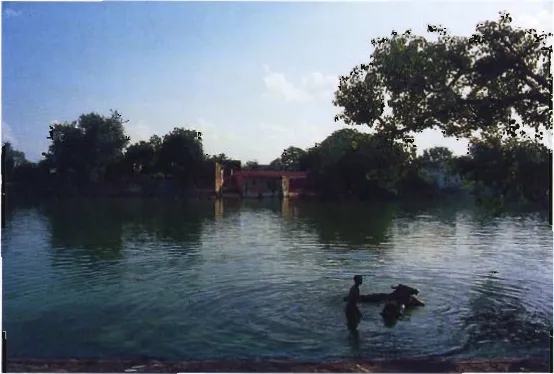
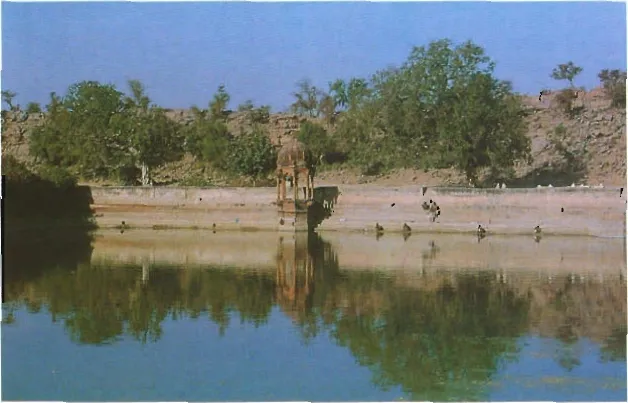
The guidebooks name the places around the kuṇḍa: Indra Tila at its side, Śrīla Mādhavendra Purī's bhajana-kuṭī on its far bank with the Gopāla Mandira next to it, and Airāvata-kuṇḍa and Surabhi-kuṇḍa, which they connect with the same bath.[69 +4]
Location
| Where it is | Surabhi Vana surrounded it; Indra Tila is 'at the side of' it[74] map: inside the parikramā loop, east side[75] |
|---|---|
| On the numbered Govardhana chart | 42 (printed as “Govinda Kund”)[76] |
Places at Govinda-kuṇḍa (Govardhana)
1 places
Nearby places
Aniyora · Indra Tila · Govardhana · Airāvata-kuṇḍa
Pictures
2 pictures
History
Śrīla Bhaktisiddhānta Sarasvatī Ṭhākura's information on the kuṇḍa, which Śrīla Prabhupāda gives, adds that according to some a Queen Padmāvatī dug the lake; no source says who she was, so this is not certain.[1 +4] The historian Prabhudayāl Mītal (1966) writes that Rājā Vīrasiṁha Deva of Orchhā built up the kuṇḍa in masonry in Saṁvat 1676 (about 1619), and that the old temples of Śrī Govindadeva and Śrī Baladeva stood on its bank. The historian A. W. Entwistle (1987) reports both names, the queen and the king of Orchhā, for the building of its masonry.[64 +1] The guidebook Śrī Vraja-maṇḍala Parikramā (2007) credits Śrī Vajranābha instead, saying that he established the kuṇḍa in memory of the bath and the naming of Govinda; no other source says so, so this too is not certain.[66]
The sources do not agree on who made the kuṇḍa.
Accounts differ Who made Govinda-kuṇḍa
- Garga-saṁhitā 3.4.16; Vraja-vilāsa-stava 74; Govardhanāśraya-daśaka 2; 'Mathurā-khaṇḍa' verse (as quoted by Śrīla Rūpa Gosvāmī and others); Vraja-bhakti-vilāsa 10.52it arose from the coronation-bath itself
- Śrī Vraja-maṇḍala Parikramā (2007)'Śrī Vajranābha established this kuṇḍa in memory of this pastime'
- CC Madhya 18.37 purport (Śrīla Bhaktisiddhānta Sarasvatī's information); Vṛndāvana-Dhāma Ki Jaya! (c. 1986) quoting it'According to some, Queen Padmāvatī excavated this lake'
- Govardhana Hill: India's Most Sacred Mountain (2001); the undated parikramā notes Govardhanathe water of the bath formed or filled the kuṇḍa
Where the sources differ
The sources do not agree on which village belonged to Gopāla and Śrīla Mādhavendra Purī: Annakūṭa-grāma, which Śrīla Prabhupāda's …
The sources do not agree on which village belonged to Gopāla and Śrīla Mādhavendra Purī: Annakūṭa-grāma, which Śrīla Prabhupāda's purport identifies with Aniyora, or Jatīpurā on the other side of the hill. Their accounts are set side by side on the page of Aniyora.[1 +4]
More on this place
The lifting of Govardhana Hill, Indra's homage and the name Govinda · The Gopāla Deity of Govardhana · Kṛṣṇa's toll pastime (dāna-līlā) at Govardhana and Varṣāṇā
References
76 references
- Śrīla Prabhupāda, Śrī Caitanya-caritāmṛta, Madhya-līlā 18.37, purport · vedabase.io
- Vṛndāvana-Dhāma Ki Jaya! (c. 1986), by Dhruva Mahārāja dāsa, PDF p. 40
- Śrī Vraja-maṇḍala Parikramā (2007), PDF p. 110
- Mathurá (1883), F. S. Growse, B.C.S., M.A. Oxon., C.I.E. (as the title page gives him, p. 83
- Śrīmad-Bhāgavatam 10.27.2, GRETIL
- Śrīmad-Bhāgavatam 10.27.22-23, GRETIL
- Harivaṁśa, HV 62.3, GRETIL
- Harivaṁśa, 62.42-43, GRETIL
- Śrīla Prabhupāda, Kṛṣṇa, the Supreme Personality of Godhead (Kṛṣṇa book), Chapter 27, Prayers by Indra, the King of Heaven · vedabase.io
- Śrīmad-Bhāgavatam 10.27.24, GRETIL
- Śrīla Jīva Gosvāmī: commentary on ŚB 10.27.24, Bhagavata Vidya Pith edition, ed. Bhagavata Rishi and Krishna Shankar Shastri, 1996
- Garga-saṁhitā, Girirāja-khaṇḍa (3), adhyāya 4, verse 16, Sanskrit Wikisource
- Garga-saṁhitā, Girirāja-khaṇḍa (3), adhyāya 4, verse 8, Sanskrit Wikisource
- Śrīla Raghunātha dāsa Gosvāmī, Vraja-vilāsa-stava, verse 74
- Śrīla Kṛṣṇadāsa Kavirāja Gosvāmī, Śrī Caitanya-caritāmṛta, CC Madhya-līlā 4.23, online edition · vedabase.io
- Śrīla Prabhupāda, Śrī Caitanya-caritāmṛta, Madhya-līlā 4.23, translation · vedabase.io
- Śrīla Kṛṣṇadāsa Kavirāja Gosvāmī, Śrī Caitanya-caritāmṛta, CC Madhya-līlā 18.35, online edition · vedabase.io
- Śrīla Prabhupāda, Śrī Caitanya-caritāmṛta, Madhya-līlā 18.35, translation · vedabase.io
- Śrīla Kṛṣṇadāsa Kavirāja Gosvāmī, Śrī Caitanya-caritāmṛta, CC Madhya-līlā 4.55, online edition · vedabase.io
- Śrīla Kṛṣṇadāsa Kavirāja Gosvāmī, Śrī Caitanya-caritāmṛta, CC Madhya-līlā 4.56, online edition · vedabase.io
Show all 76 references
- Śrīla Prabhupāda, Śrī Caitanya-caritāmṛta, Madhya-līlā 4.55, translation · vedabase.io
- Śrīla Prabhupāda, Śrī Caitanya-caritāmṛta, Madhya-līlā 4.56, translation · vedabase.io
- Govardhana Hill: India's Most Sacred Mountain (2001), Rajasekhara dasa Brahmacari, PDF p. 98
- Śrīla Rūpa Gosvāmī, Mathurā-māhātmya v.416, under the heading 'śrī-govinda-kuṇḍasya'
- Skanda Purāṇa, CC Madhya-līlā 18.37, purport (quotation), online edition · vedabase.io
- Śrīla Narahari Cakravartī, Bhakti-ratnākara, Fifth Wave, 1912 ed. p. 202, 2nd ed., 1912
- Śrīla Jīva Gosvāmī, Ṣaṭ-sandarbha, Prīti-sandarbha, anuccheda 392 (commentary on ŚB 10.31), GRETIL
- Śrīla Jīva Gosvāmī, Ṣaṭ-sandarbha, Kṛṣṇa-sandarbha, anuccheda 115 (bracketed addition marked 'vṛ.'), GRETIL
- Śrīla Rūpa Gosvāmī, Mathurā-māhātmya v.416, under the heading 'śrī-govinda-kuṇḍasya'
- Garga-saṁhitā, Girirāja-khaṇḍa (3), adhyāya 4, verse 17, Sanskrit Wikisource
- Garga-saṁhitā, Girirāja-khaṇḍa (3), adhyāya 10, verse 38, Sanskrit Wikisource
- Garga-saṁhitā, Girirāja-khaṇḍa (3), adhyāya 7, verse 7, Sanskrit Wikisource
- Garga-saṁhitā, Girirāja-khaṇḍa (3), adhyāya 8, verse 5, Sanskrit Wikisource
- Garga-saṁhitā, Mādhurya-khaṇḍa (4), adhyāya 19, verse 42, Sanskrit Wikisource
- Śrīla Viśvanātha Cakravartī Ṭhākura, Vraja-rīti-cintāmaṇi, third sarga, verse 23
- Nārada Purāṇa, Uttara-bhāga, adhyāya 80, verses 60–61a
- Śrīla Nārāyaṇa Bhaṭṭa, Vraja-bhakti-vilāsa 10.52 (in the Surabhi-vana round, 10.51–54), printed pp. 222–223, 1st ed., publ. Bābā Kṛṣṇadāsa, Kusuma-sarovara, Saṁvat 2008
- Śrīla Nārāyaṇa Bhaṭṭa, Vraja-bhakti-vilāsa, tenth chapter, Surabhīvana-pradakṣiṇā, printed p. 222, 1st ed., publ. Bābā Kṛṣṇadāsa, Kusuma-sarovara, Saṁvat 2008
- Śrīla Nārāyaṇa Bhaṭṭa, Vraja-bhakti-vilāsa, second chapter, list of the stations of the forest pilgrimage (vana-yātrā), section 54, printed p. 51, 1st ed., publ. Bābā Kṛṣṇadāsa, Kusuma-sarovara, Saṁvat 2008
- Śrīla Nārāyaṇa Bhaṭṭa, Vraja-bhakti-vilāsa, tenth chapter, end of the Surabhīvana round (section 54), printed p. 223, 1st ed., publ. Bābā Kṛṣṇadāsa, Kusuma-sarovara, Saṁvat 2008
- Śrīla Nārāyaṇa Bhaṭṭa, Vraja-bhakti-vilāsa, adhyāya 10, vv.51-54 ('the circumambulation of Surabhī-vana'), printed pp. 222-223, 1st ed., publ. Bābā Kṛṣṇadāsa, Kusuma-sarovara, Saṁvat 2008
- Śrīla Viśvanātha Cakravartī Ṭhākura: commentary on ŚB 10.27.2, Bhagavata Vidya Pith edition, ed. Bhagavata Rishi and Krishna Shankar Shastri, 1996
- Śrīla Narahari Cakravartī, Bhakti-ratnākara, Fifth Wave, 1912 ed. p. 201, last couplet, 2nd ed., 1912
- Śrīla Narahari Cakravartī, Bhakti-ratnākara, Fifth Wave, 1912 ed. p. 202, couplet after the 'Mathurā-khaṇḍa' verse, 2nd ed., 1912
- Śrīla Narahari Cakravartī, Bhakti-ratnākara, Fifth Wave, 1912 ed. p. 201, last couplet, 2nd ed., 1912
- Rūpa Gosvāmī, part 1 v.416-417, under the heading 'śrī-govinda-kuṇḍasya'; quoting the 'Mathurā-khaṇḍa' and the Ādi-varāha
- Varāha Purāṇa, adhyāya 164, verses 23b-25a, Sanskrit Wikisource
- Varāha Purāṇa, adhyāya 164, verses 23-26, Sanskrit Wikisource
- Śrīla Rūpa Gosvāmī, Mathurā-māhātmya v.417, still under the heading of Śrī Govinda-kuṇḍa
- Garga-saṁhitā, Girirāja-khaṇḍa (3), adhyāya 4, verse 15, Sanskrit Wikisource
- Śrīla Raghunātha dāsa Gosvāmī, Govardhanāśraya-daśaka, verse 2
- Śrīla Jīva Gosvāmī, Gopāla-campū, Pūrva-campū 19, prose [48], GRETIL
- Śrīmad-Bhāgavatam 10.27.21, GRETIL
- Śrīla Jīva Gosvāmī: commentary on ŚB 10.27.1, Bhagavata Vidya Pith edition, ed. Bhagavata Rishi and Krishna Shankar Shastri, 1996
- Śrīla Jīva Gosvāmī, Gopāla-campū, Pūrva-campū, pūraṇa 19, prose [22]–[24], GRETIL
- Śrī Vraja-maṇḍala Parikramā (2007), PDF p. 129
- Śrīla Rūpa Gosvāmī, Dāna-keli-kaumudī, prose after v.8 and after v.9 (Vṛndā and Subala), after the undated edition published by Krishna Das of Kusum Sarovar
- Śrīla Raghunātha dāsa Gosvāmī, Dāna-keli-cintāmaṇi, verses 6-7
- Śrī Vraja-maṇḍala Parikramā (2007), PDF p. 122
- Govardhana Hill: India's Most Sacred Mountain (2001), Rajasekhara dasa Brahmacari, PDF p. 87
- Govardhana Hill: India's Most Sacred Mountain (2001), Rajasekhara dasa Brahmacari, PDF p. 90
- Govardhana Hill: India's Most Sacred Mountain (2001), Rajasekhara dasa Brahmacari, PDF p. 91
- Govardhana Hill: India's Most Sacred Mountain (2001), Rajasekhara dasa Brahmacari, PDF p. 112
- Prabhudayāl Mītal, 'Braj-yātrā', Jatīpurā stage: 'Govind kuṇḍ', printed pp. 110–111
- A. W. Entwistle, ch. 8 §19.3 'Govind Kund' (under §19 Anyor), printed p. 351, Egbert Forsten, Groningen, 1987
- Śrī Vraja-maṇḍala Parikramā (2007), PDF p. 130
- Śrīla Narahari Cakravartī, Bhakti-ratnākara, Fifth Wave, 1912 ed. pp. 202-203, 2nd ed., 1912
- Vṛndāvana-kathā, printed p. 122, section on Govardhana
- Govardhana Hill: India's Most Sacred Mountain (2001), Rajasekhara dasa Brahmacari, PDF p. 114
- Govardhana Hill: India's Most Sacred Mountain (2001), Rajasekhara dasa Brahmacari, PDF p. 134
- Śrī Vraja-maṇḍala Parikramā (2007), PDF p. 132
- the undated parikramā notes Govardhana, ¶145
- Govardhana Hill: India's Most Sacred Mountain (2001), Rajasekhara dasa Brahmacari, PDF p. 113
- Govardhana Hill: India's Most Sacred Mountain (2001), Rajasekhara dasa Brahmacari, p. 98
- Śrī Vraja-maṇḍala Parikramā (2007), p. 232-233
- Numbered list of the Govardhana sites (key of the Govardhana chart)