Ūñcāgaon parikramā
The places of Ūñcāgaon, the “high village” on the hill of Lalitā-sthala, in the order of the guidebook Śrī Vraja-maṇḍala Parikramā: the village, then Sakhīgiri-parvata and the places on and around it, to Deha-kuṇḍa and Veṇīśaṅkara Mahādeva.[1]
On this page
Walking guide
Only 1 of the 11 stops has a position in our own map data (not from Google), so the guide can lead you to that stop only.
Your position stays on your phone; we do not store it.
About this route
| Order | As printed in the guidebook, which lists these places as points under its entry Ūñcāgaon, the last of the places it visits after the parikramā of Kāmyavana (11 places). The book does not call this a walking order, so this is the book’s order, not a checked walking route. |
|---|
Map of the stops
The interactive map uses Google Maps. It loads only when you open it. Each pin carries the number of its stop.
1 of 11 stops shown; the others have no position yet.
- confirmed position
- position not yet confirmed (preview only)
The stations
The Google Maps links open Google’s own result for each place.
- 1
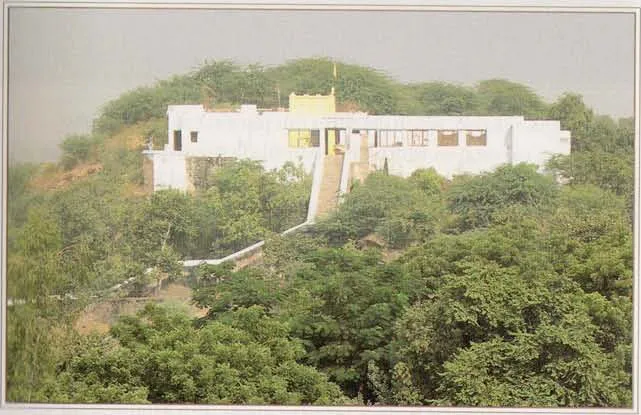
Ūñcāgaon
On the walking guideŪñcāgaon, the "high village", stands on the hill of Lalitā-sthala (Aṭorā-parvata), one mile west of Varṣāṇā, according to the guidebook Śrī Vraja-maṇḍala Parikramā (2007).
Source details
printed: “Ūñcāgaon”
- 2
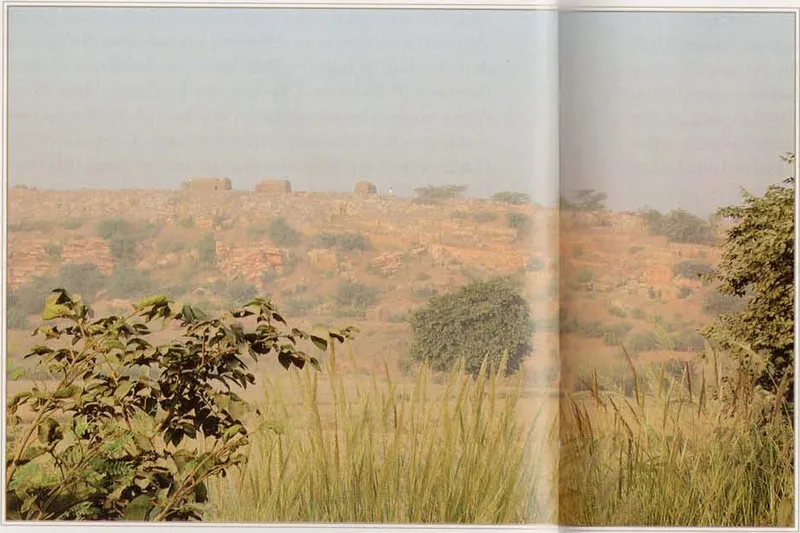
Sakhīgiri-parvata
Sakhīgiri-parvata, the hill of the sakhīs, is a low hill near Ūñcāgaon, which Śrīla Nārāyaṇa Bhaṭṭa Gosvāmī's Vraja-bhakti-vilāsa calls Lalitā-grāma, after Lalitā, Śrī Rādhā's foremost companion.
Source details
printed: “Sakhīgiri-parvata”
- 3
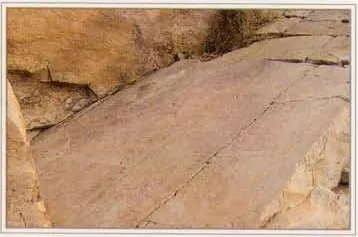
Phisalanī-śilā (Sakhīgiri-parvata)
This Phisalanī-śilā, or Khisalinī-śilā, is a stone slide on Sakhīgiri-parvata, the hill of the sakhīs near Ūñcāgaon.
Source details
printed: “Phisalanī-śilā”
- 4
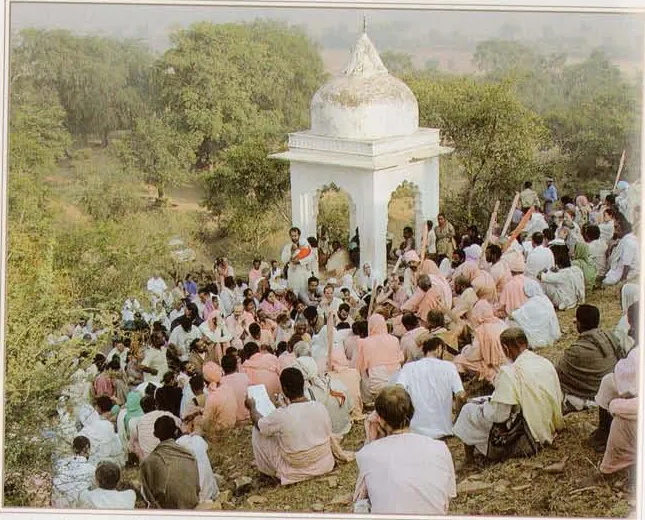
Lalitā-vivāha-maṇḍapa
Lalitā-vivāha-maṇḍapa, the pavilion of Lalitā's wedding, marks a place on Sakhīgiri-parvata, the hill of the sakhīs near Ūñcāgaon, beside the sliding stone, the Phisalanī-śilā.
Source details
printed: “Lalitā-vivāha-maṇḍapa”
- 5
Gopī-puṣkariṇī
Gopī-puṣkariṇī, "the pond of the gopīs", lies at Sakhīgiri, the hill of the sakhīs near the village of Ūñcāgaon.
Source details
printed: “Gopī-puṣkariṇī”
- 6
Sakhī-kūpa
Sakhī-kūpa, the well of the sakhīs, is a well at Sakhīgiri-parvata, the hill of the sakhīs near Ūñcāgaon.
Source details
printed: “Sakhī-kūpa”
- 7
Triveṇī-kūpa
The Triveṇī-kūpa is a well near Ūñcāgaon, on the path from Sakhīgiri-parvata; the Vraja-bhakti-vilāsa calls the village Lalitā-grāma.
Source details
printed: “Triveṇī-kūpa”
- 8
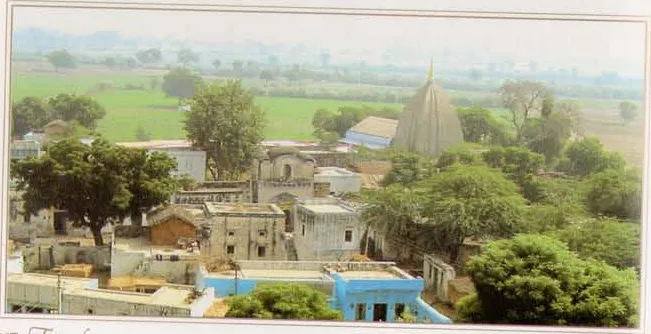
Dāūjī Mandira
The Dāūjī Mandira of Ūñcāgaon is a temple of Balarāma (Dāūjī) and His consort Revatī.
Source details
printed: “Dāūjī Temple”
- 9
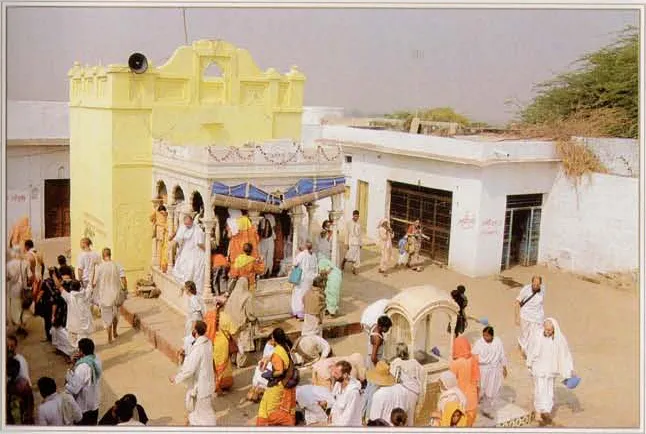
Lalitā-sthala (Aṭorā-parvata)
Lalitā-sthala, also called Aṭorā-parvata, is the hill on which the village of Ūñcāgaon is built, east of Deha-kuṇḍa and next to the temple of Dāūjī.
Source details
printed: “Lalitā-sthala (Aṭorā-parvata)”
- 10
- 11
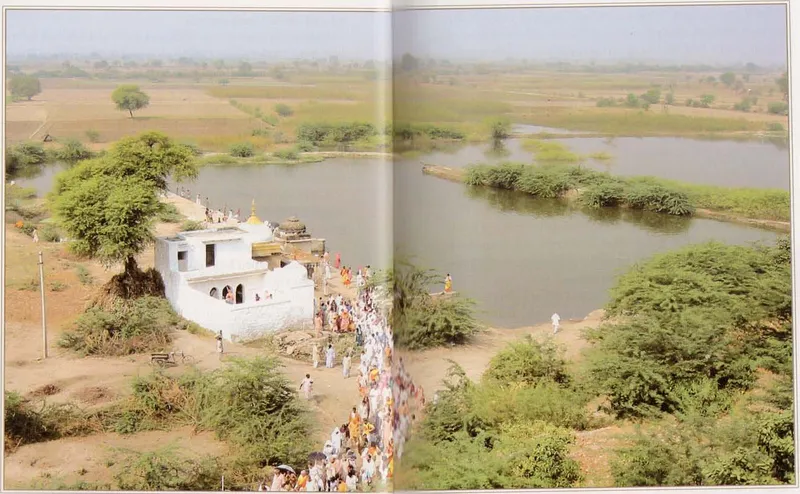
Veṇīśaṅkara Mahādeva
Veṇīśaṅkara Mahādeva is a form of Lord Śiva worshipped on the bank of Deha-kuṇḍa at Ūñcāgaon.
Source details
printed: “Veṇīśaṅkara Mahādeva”
References
- Śrī Vraja-maṇḍala Parikramā (2007), the entry Ūñcāgaon and the places listed under it, in “Pastime Places Visited After Parikramā of Kāmyavana”, pp. 298–301