Sanātana Gosvāmī's bhajana-kuṭī (Pāvana-sarovara)
सनातन गोस्वामी की भजन-कुटी (पावन-सरोवर) Hindi name proposed
Also called Śrīla Sanātana Gosvāmī's bhajana-kuṭī, Sanātana Gosvāmī's bhajana-kuṭir
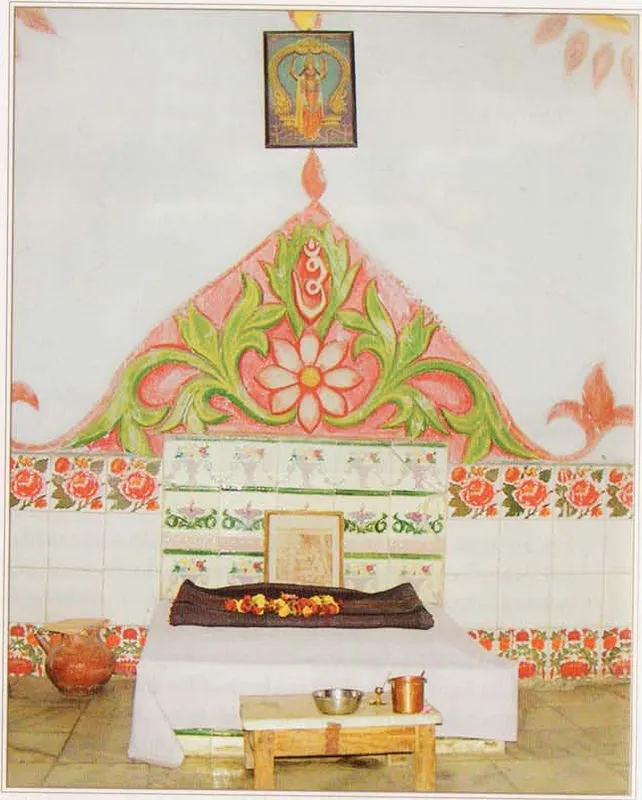
- What it is
- Śrīla Sanātana Gosvāmī's bhajana-kuṭī, his hut for chanting and prayer, stands by Pāvana-sarovara at Nandagrāma.
- Visiting
- Śrī Vraja-maṇḍala Parikramā (2007) places the kuṭī on the south-eastern bank of Pāvana-sarovara and says that Gauḍīya devotees in Śrīla Sanātana Gosvāmī's line still perform their bhajana there.
In short
Śrīla Sanātana Gosvāmī's bhajana-kuṭī, his hut for chanting and prayer, stands by Pāvana-sarovara at Nandagrāma. According to the Bhakti-ratnākara, he lived here hidden in the lonely forest, making no effort to eat, until Kṛṣṇa came as a cowherd boy with a pot of milk and had a hut built for him through a Vrajavāsī.[1 +5] His brother Śrīla Rūpa Gosvāmī stayed here from time to time, and Śrīla Śrīnivāsa Ācārya and Śrīla Narottama dāsa Ṭhākura later spent a night of kīrtana at the hut.[1 +4] The guidebooks place the kuṭī on the south-eastern bank of the lake.[9 +5]
Key facts
| Kind | bhajana-kuṭīra |
|---|---|
| Region · area | Nandagrāma · Pāvana-sarovara |
| Ācāryas | Śrīla Sanātana Gosvāmī, Śrīla Rūpa Gosvāmī, Śrīla Narahari Cakravartī Ṭhākura, Śrīla Rāghava Paṇḍita Gosvāmī of Govardhana, Śrīla Śrīnivāsa Ācārya |
Traditional accounts
Kṛṣṇa brings milk
In the Fifth Wave of the Bhakti-ratnākara, Śrīla Rāghava Paṇḍita Gosvāmī of Govardhana brings Śrīla Śrīnivāsa Ācārya back to Nandīśvara, to the bank of Śrī Pāvana-sarovara. At the sight of Śrīla Sanātana Gosvāmī's hut they weep. Śrīla Rāghava Paṇḍita then tells (summarised here, not translated) how the Gosvāmī came from Vṛndāvana to this lonely forest. Always overwhelmed with love in his worship of Kṛṣṇa, he stayed hidden and made no effort to eat, and no one knew who was there.[1 +6]
এত কহি আর নানা স্থান দেখাইয়া। পুন নন্দীশ্বরে আইলা উল্লসিত হৈয়া ॥ নন্দাদি চরিত্র কিছু কহি শ্রীনিবাসে। দাঁড়াইলা শ্রীপাবন সরোবর পাশে ॥ সনাতন গোস্বামির কুটীর দর্শনে। হইলা অধৈর্য্য অশ্রু ঝরয়ে নয়নে ॥ রাঘব পণ্ডিত কহে শ্রীনিবাস প্রতি। কহি কিছু যৈছে গোস্বামির এথা স্থিতি ॥ বৃন্দাবন হৈতে আসি এ নির্জ্জন বনে। প্রেমেতে বিহ্বল সদা কৃষ্ণ আরাধনে ॥ সঙ্গোপনে রহে ভক্ষণের চেষ্টা নাই। কেহো না জানয়ে কে আছয়ে এই ঠাই ॥
eta kahi āra nānā sthāna dekhāiẏā| puna nandīśbare āilā ullasita haiẏā
nandādi caritra kichu kahi śrīnibāse| dām̐ṛāilā śrīpābana sarobara pāśe
sanātana gosbāmira kuṭīra darśane| hailā adhairyya aśru jharaẏe naẏane
rāghaba paṇḍita kahe śrīnibāsa prati| kahi kichu yaiche gosbāmira ethā sthiti
bṛndābana haite āsi e nirjjana bane| premete bihbala sadā kṛṣṇa ārādhane
saṅgopane rahe bhakṣaṇera ceṣṭā nāi| keho nā jānaẏe ke āchaẏe ei ṭhāi ||
Kṛṣṇa then came as a cowherd boy, a turban on His head and a pot of milk in His hand. He said that He had seen the Gosvāmī while herding, asked him to drink the milk and keep the pot, and begged him to live in a hut, because the Vrajavāsīs were grieved to see him live like this. When the boy had gone, Śrīla Sanātana Gosvāmī drank the milk and wept with love. Unseen, the Lord then had a hut built for him through a Vrajavāsī (summarised here, not translated).[1 +5]
কৃষ্ণ গোপ বালকের ছলে দুগ্ধ লৈয়া ॥ দাঁড়াইলা গোস্বামি সম্মুখে হর্ষ হৈয়া ॥ গোরক্ষক বেশ মাথে উষ্ণীষ শোভয়। দুগ্ধ ভাণ্ড হাতে করি গোস্বামিরে কয় ॥ আছহ নির্জ্জনে তোমা কেহো নাহি জানে! দেখিলাম তোমারে আসিয়া গোচারণে ॥ এই দুগ্ধ পান কর আমার কথায়। লইয়া যাইব ভাণ্ড রাখিহ এথায় ॥ কুটীরে রহিলে মো সভার সুখ হবে। ঐছে রহ ইথে ব্রজবাসী দুঃখ পাবে ॥ এত কহি গোপালের হইল গমন। মুগ্ধ হৈয়া দুগ্ধপান কৈলা সনাতন ॥ দুগ্ধ পান মাত্রে প্রেমে অধৈর্য্য হইলা। নেত্রজলে সিক্ত হৈয়া বহুখেদ কৈলা ॥
kṛṣṇa gopa bālakera chale dugdha laiẏā
dām̐ṛāilā gosbāmi sammukhe harṣa haiẏā
gorakṣaka beśa māthe uṣṇīṣa śobhaẏa| dugdha bhāṇḍa hāte kari gosbāmire kaẏa
āchaha nirjjane tomā keho nāhi jāne! dekhilāma tomāre āsiẏā gocāraṇe
ei dugdha pāna kara āmāra kathāẏa| laiẏā yāiba bhāṇḍa rākhiha ethāẏa
kuṭīre rahile mo sabhāra sukha habe| aiche raha ithe brajabāsī duḥkha pābe
eta kahi gopālera haila gamana| mugdha haiẏā dugdhapāna kailā sanātana
dugdha pāna mātre preme adhairyya hailā| netrajale sikta haiẏā bahukheda kailā ||
The Hindi Bhaktamāla (1904) tells the same kind of story in other words. In Śrī Priyādāsa's verse, Śrī Sanātana stays at Pāvana in Nandagrāma, and a dark youth brings him milk. Asked where he lives, the youth says that they are four brothers and names his father, but Śrīla Sanātana Gosvāmī searches the village and cannot find Him. In Śrī Rūpakalā's prose (1904), the milk that used to come fails for three days, and on the fourth day the youth brings sweet rice. No hut is mentioned.[4 +1]
According to Śrī Vraja-maṇḍala Parikramā (2007), the undated parikramā notes Nandagrāma and The Color Guide to Vṛndāvana (2000), Kṛṣṇa as a cowherd boy brought him milk here while he was not eating, and the first two add that a kuṭī was then built for him through the Vrajavāsīs.[9 +5]
Śrīla Rūpa Gosvāmī's visits
According to the Bhakti-ratnākara, Śrīla Rūpa Gosvāmī stayed at this hut from time to time. One day he wished to cook sweet rice for his brother, and Śrī Rādhikā, as a cowherd girl, brought him ghee, milk, rice and sugar. When Śrīla Sanātana Gosvāmī tasted it and heard how it had come, he wept and forbade such efforts ever again (summarised here, not translated). Other books tell the story at Śrīla Rūpa Gosvāmī's own kuṭī at Ṭer-kadamba, or with the roles of the brothers changed; the accounts are set side by side below.[3 +2] Read more: Śrīla Sanātana Gosvāmī at Nandagrāma →
কৃষ্ণে সমর্পিয়া শ্রীগোস্বামী সনাতনে। করে পরিবেশন পরমানন্দ মনে ॥ সনাতন গোস্বামী সামগ্রী সুগন্ধিতে। না জানে কতেক সুখ উপজয়ে চিতে ॥ দুই এক গ্রাস মুখে দিয়া সনাতন। হইলা অধৈর্য্য অশ্রু নহে নিবারণ ॥ সনাতন সামগ্রী বৃত্তান্ত জিজ্ঞাসিল। শ্রীরূপ ক্রমেতে সব বৃত্তান্ত কহিল ॥ শুনিয়া গোস্বামী নিষেধয়ে বার বার। ঐছে ভক্ষদ্রব্য চেষ্টা না করিহ আর ॥ এত কহি শ্রীমহাপ্রসাদ সেবা কৈলা। শ্রীরূপ গোস্বামী অতি খেদযুক্ত হৈলা ॥ স্বপ্নছলে শ্রীরাধিকা দিয়া দরশন। প্রবোধিলা শ্রীরূপে জানিলা সনাতন ॥
kṛṣṇe samarpiẏā śrīgosbāmī sanātane| kare paribeśana paramānanda mane
sanātana gosbāmī sāmagrī sugandhite| nā jāne kateka sukha upajaẏe cite
dui eka grāsa mukhe diẏā sanātana| hailā adhairyya aśru nahe nibāraṇa
sanātana sāmagrī bṛttānta jijñāsila| śrīrūpa kramete saba bṛttānta kahila
śuniẏā gosbāmī niṣedhaẏe bāra bāra| aiche bhakṣadrabya ceṣṭā nā kariha āra
eta kahi śrīmahāprasāda sebā kailā| śrīrūpa gosbāmī ati khedayukta hailā
sbapnachale śrīrādhikā diẏā daraśana| prabodhilā śrīrūpe jānilā sanātana ||
The Gosvāmīs and ācāryas
After the stories of the two brothers, the Bhakti-ratnākara says, Śrīla Rāghava Paṇḍita Gosvāmī of Govardhana and Śrīla Śrīnivāsa …
The night of kīrtana
After the stories of the two brothers, the Bhakti-ratnākara says, Śrīla Rāghava Paṇḍita Gosvāmī of Govardhana and Śrīla Śrīnivāsa Ācārya went to the Gosvāmī's hut. There was Gopāla Miśra, the son of Śrīla Sanātana Gosvāmī's family priest and his disciple, with Śrīla Uddhava dāsa, Mādhava and others. The Vrajavāsīs brought food, there was a great festival, and all spent the night in nāma-saṅkīrtana. At dawn Śrīla Rāghava Paṇḍita set out again on the parikramā with Śrīla Śrīnivāsa Ācārya and Śrīla Narottama dāsa Ṭhākura (summarised here, not translated).[1 +2]
কি কহিব যত সুখ এই নন্দীশ্বরে। এত কহি চলে গোস্বামির শ্রীকুটীরে ॥ তথা বিপ্র শ্রীগোপাল মিশ্র সুচরিত্র। সনাতন গোস্বামির পুরোহিত পুত্র ॥ শ্রীসনাতনের শিষ্য সর্ব্বাংশে সুন্দর। এ সবে দেখিতে তাঁর উল্লাস অন্তর … শ্রীউদ্ধব দাস মাধবাদি যে যে ছিলা। পরস্পর মিলি সবে মহা হর্ষ হৈলা ॥ ব্রজবাসিগণ অতি উল্লসিত মনে। ভক্ষণ সামগ্রী আনাইলা সেই ক্ষণে ॥ সে দিবস তথা মহা মহোৎসব হৈল।
ki kahiba yata sukha ei nandīśbare| eta kahi cale gosbāmira śrīkuṭīre
tathā bipra śrīgopāla miśra sucaritra| sanātana gosbāmira purohita putra
śrīsanātanera śiṣya sarbbāṁśe sundara| e sabe dekhite tām̐ra ullāsa antara … śrīuddhaba dāsa mādhabādi ye ye chilā| paraspara mili sabe mahā harṣa hailā
brajabāsigaṇa ati ullasita mane| bhakṣaṇa sāmagrī ānāilā sei kṣaṇe
se dibasa tathā mahā mahotsaba haila|
The Bengali Bhaktamāla of Kṛṣṇadāsa Bābājī (1905) calls Śrīla Sanātana Gosvāmī's bhajana-kuṭīra at Nandagrāma a place of incomparable glory.[6]
Śrīla Prabhupāda
Śrīla Prabhupāda tells the story of the sweet rice without naming a place: Śrīla Rūpa Gosvāmī, living in the forest in Vṛndāvana …
Śrīla Prabhupāda tells the story of the sweet rice without naming a place: Śrīla Rūpa Gosvāmī, living in the forest in Vṛndāvana, cooked a feast for his elder brother with what a young girl brought, and Śrīla Sanātana Gosvāmī recognised the girl as Śrī Rādhā.[25]
General teaching (does not name the place)Then Sanātana said, “This nice girl is Rādhārāṇī. You have taken service from Rādhārāṇī, the Lord’s eternal consort. It is a great blunder.” That is their philosophy. They would not accept service from the Lord. They simply wanted to render service.
Śrīla Prabhupāda, The Science of Self-Realization, ch. 8 (Rūpa Gosvāmī's feast for Sanātana Gosvāmī) · vedabase.io
Visiting today
Śrī Vraja-maṇḍala Parikramā (2007) places the kuṭī on the south-eastern bank of Pāvana-sarovara and says that Gauḍīya devotees in Śrīla Sanātana Gosvāmī's line still perform their bhajana there.[9 +5]
Location
| Where it is | on the south-eastern bank of Pāvana-sarovara (map: dot just below box 10 at a road junction)[26] on the banks of Pāvana-sarovara[27] |
|---|
Nearby places
Pāvana-sarovara
History
The historian F. S. Growse (1883) records the inscription of a small Bihārī temple on the bank of Pāvana-sarovara, dated Saṁvat 1805 (1748–49 CE). It says that a queen of the Burdwān family built the temple at the place of Śrī Sanātana and Rūpa; A. W. Entwistle (1987) dates the temple 1748. How that temple relates to the hut shown today has not been established.[20 +1] Prabhudayāl Mītal (1966) places Śrīla Sanātana Gosvāmī's place of bhajana near Pāvana-sarovara, and in 1987 Entwistle recorded a baiṭhaka (sitting-place) shrine of his beside the lake, first mentioned, he noted, in the Bhakti-ratnākara.[21 +2]
Where the sources differ
How Kṛṣṇa fed Śrīla Sanātana Gosvāmī at Pāvana-sarovara, and what followed.
Accounts differ How Kṛṣṇa fed Śrīla Sanātana Gosvāmī at Pāvana-sarovara, and what followed.
- Bhakti-ratnākara, Fifth WaveSanātana lived hidden, making no effort to eat; Kṛṣṇa, as a cowherd boy with a turban and a pot of milk, said He had seen him while herding, asked him to drink, to keep the pot, and to live in a hut, since staying so grieved the Vrajavāsīs; Sanātana drank and wept; unseen, the Lord had a hut built for him through a Vrajavāsī.
- the Hindi Bhaktamāla (1904), Priyādāsa's kavitta 451Sanātana stayed at 'Pāvana' in 'Nandgāṁv'; a dark youth came bringing milk; asked where he lived, he said we are four brothers and named his father; Sanātana went to the village but found Hari nowhere. No hut is mentioned.
- the Hindi Bhaktamāla (1904), Rūpakalā's prose on kavitta 451Milk used to come to him by the Couple's grace; once it did not come for three days; on the fourth day a dark youth brought sweet rice (khīr) prasāda; the rest as in the kavitta.
- Śrī Vraja-maṇḍala Parikramā (2007)He went without food and water for three days, crying for darśana, and had no kuṭī; the boy said 'My mother saw you in this condition and has sent this pot of milk' and asked him to make a hut; Sanātana cried 'You gave me darśana but also cheated me'; unseen, Kṛṣṇa had a kuṭī built for him through a Vrajavāsī.
The wording of these accounts is our summary of the sources, not a published translation.
Accounts differ Where the sweet rice was made for the two brothers, who brought what, and who cooked.
- Bhakti-ratnākara, Fifth WaveAt Śrīla Sanātana's dwelling by Pāvana-sarovara, where Rūpa stayed at times: Rūpa wished to feed Sanātana; Rādhikā, as a cowherd girl, brought ghee, milk, rice and sugar (my mother told me to say this); Rūpa cooked, offered it to Kṛṣṇa and served Sanātana; Sanātana forbade such efforts; Rādhikā consoled Rūpa in a dream.
- the Hindi Bhaktamāla (1904), Priyādāsa's kavitta 448The verse names 'Nandgāṁv', Śrīla Rūpa's coming and Śrī 'Sanātana' without making clear who was staying at Nandgaon; the beloved Lāḍilī, like some girl, brought all the ingredients for khīr; who cooked and who forbade it again is not stated.
- the Hindi Bhaktamāla (1904), Rūpakalā's prose on kavitta 448Rūpa came from Nandgaon to Sanātana; Sanātana wished to feed him; Rādhikā, as a girl, brought the ingredients; Sanātana cooked and offered it; Rūpa asked the reason and ordered that it never happen again.
- Śrī Vraja-maṇḍala Parikramā (2007)At Śrīla Rūpa's kuṭī by Ṭer-kadamba, where Sanātana had come: a girl brought rice, milk and sugar, then returned and cooked the sweet rice herself, lighting dry cow-dung by her breath; Sanātana: 'do not trouble Her like this'; Rādhikā pacified Rūpa in a dream.
The wording of these accounts is our summary of the sources, not a published translation.
Accounts differ Where the bhajana-kuṭīs of Sanātana and Śrīla Rūpa Gosvāmī at Nandagrāma are.
- Śrī Vraja-maṇḍala Parikramā (2007); the undated parikramā notes Nandagrāma; Vṛndāvana-Dhāma Ki Jaya! (c. 1986)Śrīla Sanātana's on Pāvana-sarovara (Śrī Vraja-maṇḍala Parikramā (2007): its south-eastern bank); Śrīla Rūpa's beside Ṭer-kadamba (Śrī Vraja-maṇḍala Parikramā (2007): adjacent on the west), where Sanātana sometimes visited him.
- Bhakti-ratnākara, Fifth WaveŚrīla Sanātana's hut by Śrī Pāvana-sarovara, where Rūpa stayed from time to time; no hut of Rūpa is mentioned.
- F. S. Growse, Mathurá (1883), a historianThe inscription that Growse records on the Bihārī temple at Pāna-sarovara (Saṁvat 1805) says it was built at the place of Śrī Sanātana and Śrī Rūpa.
- Prabhudayāl Mītal (1966), a historianMītal lists near Pāvana-sarovara the place of bhajana of Śrīla Sanātana Gosvāmī, Muktā-kuṇḍa, Phulvārī-kuṇḍa, Vilāsa-vaṭa, the Ṭer-kadamba and the bhajana-kuṭī of Śrīla Rūpa Gosvāmī.
More on this place
Śrīla Sanātana Gosvāmī at Nandagrāma
References
27 references
- Śrīla Narahari Cakravartī, Bhakti-ratnākara, Fifth Wave, 1912 ed. p. 250; Grantha Mandira text v.1297–1302, 2nd ed., 1912
- Śrīla Narahari Cakravartī, Bhakti-ratnākara, Fifth Wave, 1912 ed. pp. 250–251; Grantha Mandira text v.1303–1309, 2nd ed., 1912
- Śrīla Narahari Cakravartī, Bhakti-ratnākara, Fifth Wave, 1912 ed. p. 251; Grantha Mandira text v.1310–1313, 2nd ed., 1912
- Bhaktamāla, Priyādāsa's kavitta '(४५१) टीका । कवित्त', ending '॥ ३६२ ॥', printed pp. 869–870
- Bhaktamāla, Rūpakalā's 'वार्तिक तिलक' on the kavitta, printed p. 870
- Śrī Śrī Bhaktamāla grantha, Bhaktamāla grantha (1905), parikramā section on Nandagrāma, printed p. 337, right column
- Śrīla Narahari Cakravartī, Bhakti-ratnākara, Fifth Wave, 1912 ed. p. 252; Grantha Mandira text v.1330–1335, 2nd ed., 1912
- Śrīla Narahari Cakravartī, Bhakti-ratnākara, Fifth Wave, 1912 ed. p. 252; Grantha Mandira text v.1336–1339, 2nd ed., 1912
- Śrī Vraja-maṇḍala Parikramā (2007), PDF p. 201
- Śrī Vraja-maṇḍala Parikramā (2007), PDF p. 202
- the undated parikramā notes Nandagrāma, ¶28
- the undated parikramā notes Nandagrāma, ¶29
- The Color Guide to Vṛndāvana (2000), Written and Photographed by Rājaśekhara dāsa Brahmacārī, PDF p. 63
- Vṛndāvana-Dhāma Ki Jaya! (c. 1986), by Dhruva Mahārāja dāsa, PDF p. 53
- Śrīla Narahari Cakravartī, Bhakti-ratnākara, Fifth Wave, 1912 ed. p. 251; Grantha Mandira text v.1314–1317, 2nd ed., 1912
- Śrīla Narahari Cakravartī, Bhakti-ratnākara, Fifth Wave, 1912 ed. pp. 251–252; Grantha Mandira text v.1318–1324, 2nd ed., 1912
- Śrīla Narahari Cakravartī, Bhakti-ratnākara, Fifth Wave, 1912 ed. p. 250; Grantha Mandira text v.1297–1302, 2nd ed., 1912
- Śrīla Narahari Cakravartī, Bhakti-ratnākara, Fifth Wave, 1912 ed. pp. 250–251; Grantha Mandira text v.1303–1309, 2nd ed., 1912
- Śrīla Narahari Cakravartī, Bhakti-ratnākara, Fifth Wave, 1912 ed. pp. 251–252; Grantha Mandira text v.1318–1324, 2nd ed., 1912
- Mathurá (1883), F. S. Growse, B.C.S., M.A. Oxon., C.I.E. (as the title page gives him, p. 315
Show all 27 references
- A. W. Entwistle, Entwistle 1987, printed p. 379, Egbert Forsten, Groningen, 1987
- Prabhudayāl Mītal, Mītal 1966, printed p. 123
- Prabhudayāl Mītal, Mītal 1966, printed p. 124
- Śrīla Narahari Cakravartī, Bhakti-ratnākara, Fifth Wave, 1912 ed. p. 252; Grantha Mandira text v.1330–1335, 2nd ed., 1912
- Śrīla Prabhupāda, The Science of Self-Realization, ch. 8 (Rūpa Gosvāmī's feast for Sanātana Gosvāmī) · vedabase.io
- Śrī Vraja-maṇḍala Parikramā (2007), p. 376-377
- Vṛndāvana-Dhāma Ki Jaya! (c. 1986), by Dhruva Mahārāja dāsa, p. 35