Śrīla Sanātana Gosvāmī at Nandagrāma
The cave Deities and Pāvana-sarovara
In short
Śrīla Sanātana Gosvāmī lived for a time beside Pāvana-sarovara, the lake below Nandīśvara Hill at Nandagrāma. The Bhakti-ratnākara tells that Kṛṣṇa came there as a cowherd boy, brought him milk and had a hut built for him. In it Śrī Rādhā came as a cowherd girl with what Śrīla Rūpa Gosvāmī needed to cook sweet rice for his brother.[1–7]
On this page
At a glance
- According to the Caitanya-caritāmṛta, Śrī Caitanya Mahāprabhu bathed in the lakes of Nandīśvara, beginning with Pāvana. He then saw the Deities (sacred images that are worshipped) of Nanda, Yaśodā and Kṛṣṇa in a cave on the hill.[8–14]
- Pāvana-sarovara: Śrīla Rūpa Gosvāmī names the lake Pāvana among Kṛṣṇa's own places, right after Nandīśvara. A sarovara is a lake.[15, 16]
- Kṛṣṇa's milk: according to the Bhakti-ratnākara, Kṛṣṇa came to the fasting Śrīla Sanātana Gosvāmī as a cowherd boy with a pot of milk.[1–3]
- Śrī Rādhā's gift: the same book says that She brought ghee, milk, rice and sugar, so that Śrīla Rūpa Gosvāmī could cook sweet rice for his brother.[7]
- Śrīla Prabhupāda tells the sweet-rice story in The Science of Self-Realization, without naming a place.[17]
- The temple Deities: a 1920 Bengali book reports this from temple manuscripts. Śrīla Sanātana Gosvāmī is said to have performed the abhiṣeka (the first sacred bathing) of the Deities of Nandagrāma in Māgha, Saṁvat 1595 (about January–February 1539).[18, 19]
Śrī Caitanya and the Deities in the cave
The story of Śrīla Sanātana Gosvāmī at Nandagrāma begins with a visit by Śrī Caitanya Mahāprabhu Himself. The Caitanya-caritāmṛta, the main life story of Śrī Caitanya, tells that at Nandīśvara He first bathed in the lakes:
‘pāvanādi’ saba kuṇḍe snāna kariyā
lokere puchila, parvata-upare yāñā
Śrī Caitanya Mahāprabhu bathed in all the celebrated lakes, beginning with Lake Pāvana. Thereafter He climbed a hill and spoke to the people.
Translation: Śrīla A.C. Bhaktivedanta Swami PrabhupādaAbout this place: At Nandīśvara Śrī Caitanya Mahāprabhu bathed in all the lakes, beginning with Pāvana, and then climbed the hill. The verse names Pāvana, and Śrīla Prabhupāda's purport quotes the Mathurā-māhātmya verse on the Pāvana lake.
In his purport (his explanation of the verse), Śrīla Prabhupāda quotes a verse from Śrīla Rūpa Gosvāmī's Mathurā-māhātmya, a book on the glories of the Mathurā region. The verse is about bathing in this lake before seeing Kṛṣṇa with His parents on the hill.[20–22]
Names this placeThe Pāvana-sarovara is described in the Mathurā-māhātmya: … “One who bathes in Pāvana Lake by Nandīśvara Hill will see Kṛṣṇa there along with Nanda and Yaśodā and will fufill all his desires.”
Śrīla Prabhupāda, Śrī Caitanya-caritāmṛta, Madhya-līlā 18.58, purport · vedabase.io
Then Śrī Caitanya climbed the hill. He asked the people whether there were Deities on top of it. They told Him that the Deities were in a cave. There was a father and a mother with well-built bodies, and between them a very beautiful child, curved in three places.[10–14]
dui-dike mātā-pitā puṣṭa kalevara
madhye eka ‘śiśu’ haya tribhaṅga-sundara
“There are a father and mother with well-built bodies, and between them is a very beautiful child who is curved in three places.”
Translation: Śrīla A.C. Bhaktivedanta Swami PrabhupādaThe book says that, hearing this, He became very happy. He opened the cave and saw the three Deities. He offered His respects to Nanda Mahārāja and mother Yaśodā, and in ecstatic love He touched the body of Kṛṣṇa.[10 +5]
vrajendra-vrajeśvarīra kaila caraṇa vandana
premāveśe kṛṣṇera kaila sarvāṅga-sparśana
Śrī Caitanya Mahāprabhu offered His respects to Nanda Mahārāja and mother Yaśodā, and with great ecstatic love He touched the body of Lord Kṛṣṇa.
Translation: Śrīla A.C. Bhaktivedanta Swami PrabhupādaThe Caitanya-caritāmṛta of Śrīla Kṛṣṇadāsa Kavirāja Gosvāmī is the earliest known account of this cave.[10, 12] The Bhakti-ratnākara of Śrīla Narahari Cakravartī Ṭhākura tells it again. In it, Śrīla Rāghava Paṇḍita shows Śrīla Śrīnivāsa Ācārya the images of Nanda and Yaśodā with their son, in a wonderful cave on the hill. He tells him that Śrī Caitanya entered the cave and bowed at the feet of Nanda and Yaśodā. He touched Kṛṣṇa's whole body and danced and sang in love.[23]
The Vṛndāvana-kathā (1920) is a Bengali history of the temples of Vraja. It says that nowhere else in Vraja did Śrī Caitanya see such a three-fold-bending image of Kṛṣṇa. That remark is the author's own.[19]
Pāvana-sarovara, the lake below the hill
Pāvana-sarovara (Pavan Sarovar) is the lake at the foot of Nandīśvara Hill. Śrīla Rūpa Gosvāmī names it among Kṛṣṇa's own places, right after Nandīśvara. He describes the lake called Pāvana with its banks shining with groves for pastimes. Śrīla Raghunātha dāsa Gosvāmī also names it.[15, 16] Śrīla Prabhupāda lists Pāvana-sarovara among the important places that Śrī Caitanya Mahāprabhu visited in Vṛndāvana.[8, 9]
The Vraja-bhakti-vilāsa of Śrīla Nārāyaṇa Bhaṭṭa Gosvāmī describes the lake. It says the lake lies in front of the village, with Yaśodā's well in its middle and the Kadamba-khaṇḍa forest beside it. It is called Pāvana, "the purifier", because it purifies the worlds.[24, 25]
Two biographies of Śrī Caitanya, by Śrīla Murāri Gupta and Śrīla Locana dāsa Ṭhākura, also mention the lake. They say that His guide Kṛṣṇadāsa showed it to Him on His Vraja tour, north of Nanda's village. They are summarised here, not quoted.[26, 27] Read more: Śrī Caitanya Mahāprabhu in the forests of Vraja →
According to the guidebook Śrī Vraja-maṇḍala Parikramā (2007), the lake lies north of the village, below the hill, beside the road to Kāmyavana. The custom is to bathe in it before going up for darśana (respectful viewing) of Nanda and Yaśodā.[4 +3]
How Kṛṣṇa brought milk to Śrīla Sanātana Gosvāmī
The Bhakti-ratnākara tells this story in its Fifth Wave (chapter). There Śrīla Rāghava Paṇḍita brings Śrīla Śrīnivāsa Ācārya back to Nandīśvara. They stand by Pāvana-sarovara, and when they see Śrīla Sanātana Gosvāmī's hut, they weep.[1 +2] Śrīla Rāghava Paṇḍita then tells how the Gosvāmī came from Vṛndāvana to this lonely forest. He was always absorbed in worship and stayed hidden. He made no effort to eat, so no one knew he was there. This is summarised here, not translated.[1–6]
According to the book, Kṛṣṇa came to him dressed as a cowherd boy, with a turban on His head and a pot of milk in His hand. He told the Gosvāmī that He had seen him while grazing the cows. He asked him to drink the milk and said that He would come back for the pot. He also asked him to live in a hut, because the Vrajavāsīs (the people of Vraja) would be sad to see him living like this.[1–3]
কৃষ্ণ গোপ বালকের ছলে দুগ্ধ লৈয়া ॥ দাঁড়াইলা গোস্বামি সম্মুখে হর্ষ হৈয়া ॥ গোরক্ষক বেশ মাথে উষ্ণীষ শোভয়। দুগ্ধ ভাণ্ড হাতে করি গোস্বামিরে কয় ॥ আছহ নির্জ্জনে তোমা কেহো নাহি জানে! দেখিলাম তোমারে আসিয়া গোচারণে ॥ এই দুগ্ধ পান কর আমার কথায়। লইয়া যাইব ভাণ্ড রাখিহ এথায় ॥ কুটীরে রহিলে মো সভার সুখ হবে। ঐছে রহ ইথে ব্রজবাসী দুঃখ পাবে ॥ এত কহি গোপালের হইল গমন। মুগ্ধ হৈয়া দুগ্ধপান কৈলা সনাতন ॥ দুগ্ধ পান মাত্রে প্রেমে অধৈর্য্য হইলা। নেত্রজলে সিক্ত হৈয়া বহুখেদ কৈলা ॥
kṛṣṇa gopa bālakera chale dugdha laiẏā
dām̐ṛāilā gosbāmi sammukhe harṣa haiẏā
gorakṣaka beśa māthe uṣṇīṣa śobhaẏa| dugdha bhāṇḍa hāte kari gosbāmire kaẏa
āchaha nirjjane tomā keho nāhi jāne! dekhilāma tomāre āsiẏā gocāraṇe
ei dugdha pāna kara āmāra kathāẏa| laiẏā yāiba bhāṇḍa rākhiha ethāẏa
kuṭīre rahile mo sabhāra sukha habe| aiche raha ithe brajabāsī duḥkha pābe
eta kahi gopālera haila gamana| mugdha haiẏā dugdhapāna kailā sanātana
dugdha pāna mātre preme adhairyya hailā| netrajale sikta haiẏā bahukheda kailā ||
The book says that when the boy had gone, Śrīla Sanātana Gosvāmī drank the milk. He was overcome by love and wept. Without being seen, the Lord had a hut built for him through a Vrajavāsī. That is how the Gosvāmī's home came to be beside the lake. The book adds that Śrīla Rūpa Gosvāmī stayed there from time to time.[1–3]
The Hindi Bhaktamāla, a book of the lives of devotees, tells the story in its own way. It says that Śrīla Sanātana Gosvāmī stayed at Pāvana in Nandagrāma and that a dark youth brought him milk. Rūpakalā's prose commentary on it adds more. For three days the milk did not come, and on the fourth day the youth brought sweet rice. Asked where he lived, he said that they were four brothers and named his father. But the Gosvāmī searched the village for him in vain.[32, 33] The Bengali Bhaktamāla of Kṛṣṇadāsa Bābājī (1905) calls the Gosvāmī's bhajana-kuṭī at Nandagrāma a place of glory beyond compare. A bhajana-kuṭī is a small hut for prayer and worship.[34]
The guidebooks place the bhajana-kuṭī on the bank of Pāvana-sarovara and tell the same story of the milk. The 2007 guidebook adds that Gauḍīya devotees still did their bhajana (worship) there in its day.[4 +5]
The Bhakti-ratnākara also describes the hut as it was when Śrīla Rāghava Paṇḍita brought his companions there. Śrīla Sanātana Gosvāmī's disciple Gopāla Miśra was living there with Uddhava dāsa, Mādhava and others. The Vrajavāsīs brought food and a festival was held. Everyone spent the night in saṅkīrtana, singing the holy names together.[36, 37]
Śrī Rādhā's gift and the sweet rice
The second scene comes right after in the Bhakti-ratnākara. One day Śrīla Rūpa Gosvāmī wished to feed his elder brother sweet rice, but then he hesitated. Śrī Rādhikā knew his mind. She came as a cowherd girl with ghee, milk, rice and sugar.[3]
ঘৃত দুগ্ধ তণ্ডুল শর্করাদিক লৈয়া। গোপবালিকার ছলে আইলা হর্ষ হৈয়া ॥ রূপ প্রতি কহে স্বামী এই সব লেহ। শীঘ্র পাক করি কৃষ্ণে সমর্পি ভুঞ্জহ ॥ মাতা মোর এই কথা কহিল কহিতে। কোনই সঙ্কোচ যেন নহে কভু চিতে ॥ এক কহি শ্রীরাধিকা কৌতুকে চলিলা। শ্রীরূপ গোস্বামী সুখে শীঘ্র পাক কৈলা ॥
ghṛta dugdha taṇḍula śarkarādika laiẏā| gopabālikāra chale āilā harṣa haiẏā
rūpa prati kahe sbāmī ei saba leha| śīghra pāka kari kṛṣṇe samarpi bhuñjaha
mātā mora ei kathā kahila kahite| konai saṅkoca yena nahe kabhu cite
eka kahi śrīrādhikā kautuke calilā| śrīrūpa gosbāmī sukhe śīghra pāka kailā ||
She told him to cook quickly, offer the food to Kṛṣṇa and eat. She said that her mother had sent her, so that he should never hesitate. Then She went away, and Śrīla Rūpa Gosvāmī cooked.[3 +3]
Śrīla Prabhupāda tells the story in The Science of Self-Realization, with different details and no place. Śrīla Rūpa and Śrīla Sanātana Gosvāmī were living apart in Vṛndāvana. Śrīla Rūpa Gosvāmī lived in the forest and had no means to cook a good meal for his brother. A girl of about twelve brought milk, flour and ghee. He cooked a feast and invited Śrīla Sanātana Gosvāmī.[17]
General teaching (does not name the place)Then Sanātana said, “This nice girl is Rādhārāṇī. You have taken service from Rādhārāṇī, the Lord’s eternal consort. It is a great blunder.” That is their philosophy. They would not accept service from the Lord. They simply wanted to render service.
Śrīla Prabhupāda, The Science of Self-Realization, ch. 8 (Rūpa Gosvāmī's feast for Sanātana Gosvāmī) · vedabase.io
Śrīla Prabhupāda draws the lesson himself. The two brothers would not accept service from the Lord; they wanted only to serve Him.[39]
The guidebooks tell the scene at another spot: Śrīla Rūpa Gosvāmī's own bhajana-kuṭī beside Ṭer-kadamba. They say he did his bhajana there and wrote many of his books.[40–42] No older source is known to name that kuṭī. Śrīla Rūpa Gosvāmī himself says, in the closing verse of his Dāna-keli-kaumudī, that he wrote it while living at Nandīśvara. The 1976 editor reads its date as 1549.[43] Read more: Kṛṣṇa's toll pastime (dāna-līlā) at Govardhana and Varṣāṇā →
The Deities of Nandīśvara Hill after Śrī Caitanya
The Caitanya-caritāmṛta tells nothing of the Deities' later history.[10–14] The Vṛndāvana-kathā (1920) quotes two temple manuscripts, called Sevā-prākaṭya and Iṣṭalābher dina-nirṇaya. It says that Śrīla Sanātana Gosvāmī brought to light four images at Nandagrāma: Nanda, Yaśodā, Balabhadra and Kṛṣṇa. This was in saṁvat 1595 of the Vikrama calendar. Their abhiṣeka took place on the sixth day of the bright half of Māgha of that year, about January–February 1539 (the book gives 1538), and a man named Haridāsa was made their priest. The book says nothing of a cave or of building a temple, and this report may not be accurate in every detail.[18, 19]
The Vraja-bhakti-vilāsa names a temple of Nanda-rāya on top of the hill. There Nanda-rāya, Yaśodā, Kṛṣṇa and Balabhadra are seen, and the book gives a prayer to all four to be said in that temple.[24, 44]
Śrīla Prabhupāda came here with his disciples on his Vraja pilgrimage of 28 November 1971. A Vrajavāsī showed the party Nanda with his turban, Yaśodā, and Kṛṣṇa and Balarāma between them. Śrī Rādhā stood in one corner, with two friends of Kṛṣṇa.[45, 46] At the same stop, Śrīla Prabhupāda told his disciples why Nanda Mahārāja had left Gokula and come here: the demons were disturbing Kṛṣṇa. That story is told in its own article.[46] Read more: Nanda's family at Nandagrāma →
Where the sources differ
Three questions in this history have different answers in different sources. Each is set out here with its source, without choosing between them.[23 +4]
The first is how the cave Deities came into the temple. The Caitanya-caritāmṛta and the Bhakti-ratnākara speak only of the cave. One modern guide says that Kṛṣṇa showed the hidden Deities to Śrīla Sanātana Gosvāmī, who dug them out and built them a temple on the hill. Another says that the Deities were moved into a temple built later. No known source from the Gosvāmīs' time tells how or when they left the cave.[49, 50]
Accounts differ How the Deities of Nanda, Yaśodā and Kṛṣṇa on Nandīśvara hill came out of the cave into worship, and who brought or installed them.
- Śrī Caitanya-caritāmṛta, Madhya 18.59–62The local people told Śrī Caitanya that the Deities were inside a cave; He saw the three after opening ('excavating', Śrīla Prabhupāda) the cave. No later history is told.
- Bhakti-ratnākara, Fifth WaveRāghava Paṇḍita shows Śrīnivāsa Nanda and Yaśodā with their son shining in a wonderful cave on the hill (present tense); Śrī Caitanya entered the cave.
- the undated parikramā notes NandagrāmaKṛṣṇa revealed the hidden Deities to Śrīla Sanātana Gosvāmī, then living at Pāvana-sarovara; he unearthed them and built them a temple on top of the hill; 'it seems' Śrī Caitanya saw them earlier in the cave.
- Vṛndāvana-Dhāma Ki Jaya! (c. 1986)When Lord Caitanya visited, the Deities were kept in a cave; later the temple was built and the Deities moved inside (no name given).
The wording of these accounts is our summary of the sources, not a published translation.
The second is how many Deities there are. The Caitanya-caritāmṛta describes three in the cave. The Vraja-bhakti-vilāsa and the Vṛndāvana-kathā name four. The altar that later pilgrims saw has more.[10 +6]
Accounts differ How many Deities there are on the hill and who they are (the cave, the old temple and the present altar).
- Śrī Caitanya-caritāmṛta, Madhya 18.60–62Three Deities in the cave: a father and a mother with a three-fold-bending child between them (Nanda, Yaśodā, Kṛṣṇa); no Balarāma.
- Vraja-bhakti-vilāsa 2.44 and 4.26In the temple of Nanda-rāya on Rudra's hill: Nanda-rāya, Yaśodā, Kṛṣṇa and Balabhadra; the prayer there addresses all four.
- Vṛndāvana-kathā (1920), citing the Sevā-prākaṭyaŚrīla Sanātana Gosvāmī brought to light four images: Nanda, Yaśodā, Balabhadra and Kṛṣṇa.
- Mītal (1966), pp. 122–123Four images: Śrī Kṛṣṇa, Baladeva, Nanda-rāya and Yaśodā.
The third is the sweet rice. In the Bhakti-ratnākara, Śrīla Rūpa Gosvāmī cooks it at his brother's hut by Pāvana-sarovara. In the Hindi Bhaktamāla, Śrīla Sanātana Gosvāmī cooks. The 2007 guidebook sets the scene at Ṭer-kadamba, with the girl cooking it herself. Śrīla Prabhupāda names no place.[3 +9]
Accounts differ Where Śrīla Rūpa Gosvāmī's sweet-rice for Śrīla Sanātana Gosvāmī was made, and who cooked it.
- Bhakti-ratnākara, Fifth WaveAt Śrīla Sanātana's dwelling by Pāvana-sarovara, where Rūpa stayed from time to time: Rādhikā, as a cowherd girl, brought ghee, milk, rice and sugar and told Rūpa to cook; Rūpa cooked.
- Śrī Vraja-maṇḍala Parikramā (2007)At Śrīla Rūpa's bhajana-kuṭī by Ṭer-kadamba, where Sanātana had come to meet Rūpa: the girl brought rice, milk and sugar, then cooked the sweet-rice herself, lighting the fire with her breath.
- the undated parikramā notes NandagrāmaAt Śrīla Rūpa's bhajana-kuṭī at Ṭer-kadamba: a girl brought milk, flour and ghee and Rūpa cooked a feast (the wording is copied from Śrīla Prabhupāda's Science of Self-Realization ch. 8).
- Śrīla Prabhupāda, The Science of Self-Realization ch. 8 (and lectures 1966, 1976)Rūpa and Sanātana lived separately 'in Vṛndāvana', Rūpa 'in the forest'; a girl brought foodstuffs and Rūpa cooked; no place is named.
Places in this article
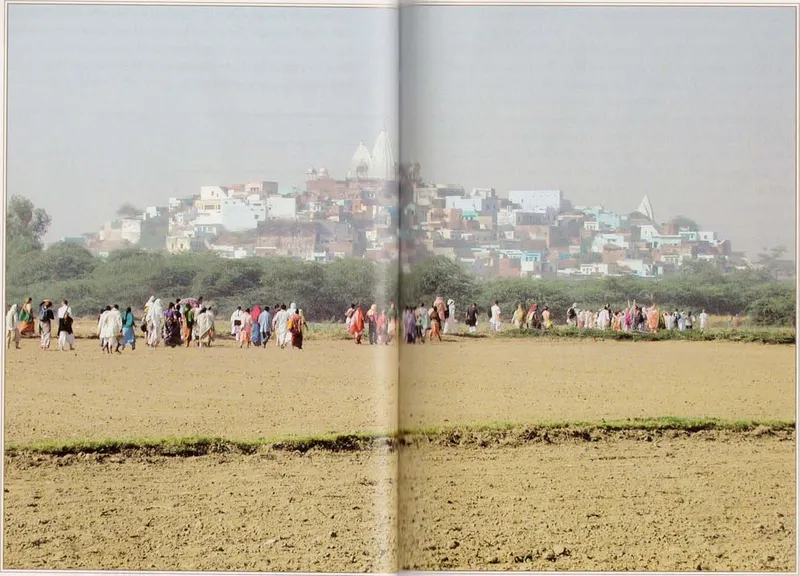
Nandīśvara Hill
नन्दीश्वर पर्वतNandīśvara is the hill of Nandagrāma, also called Rudra-parvata, "Rudra's hill".
Cave on Nandīśvara Hill
नन्दीश्वर पर्वत की गुफाOn Nandīśvara Hill, above Nandagrāma, Śrī Caitanya Mahāprabhu found the Deities of Nanda, Yaśodā and Kṛṣṇa inside a cave.
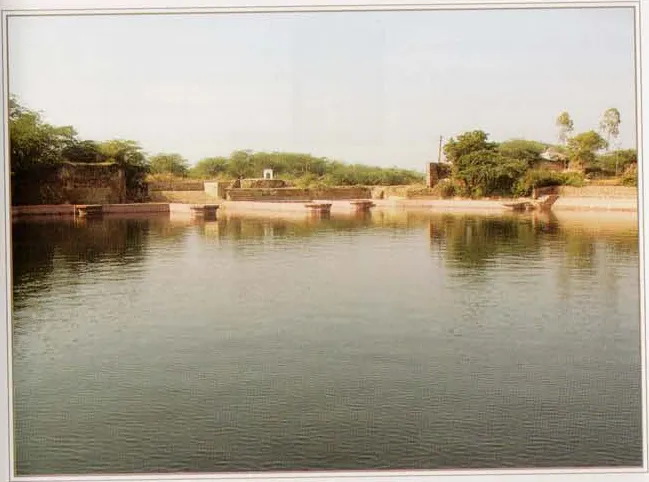
Pāvana-sarovara
पावन-सरोवरPāvana-sarovara is the lake at the foot of Nandīśvara Hill, on the north side of Nandagrāma.
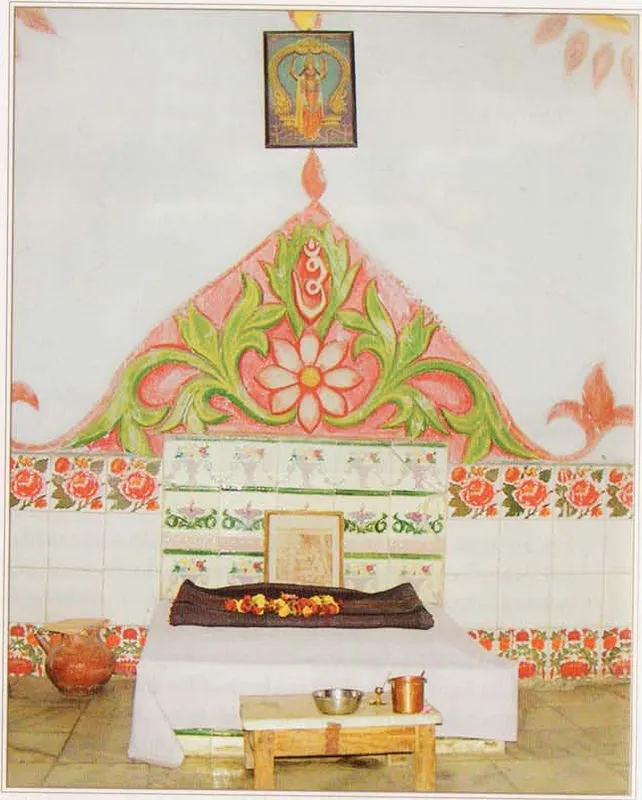
Sanātana Gosvāmī's bhajana-kuṭī (Pāvana-sarovara)
सनातन गोस्वामी की भजन-कुटी (पावन-सरोवर)Śrīla Sanātana Gosvāmī's bhajana-kuṭī, his hut for chanting and prayer, stands by Pāvana-sarovara at Nandagrāma.
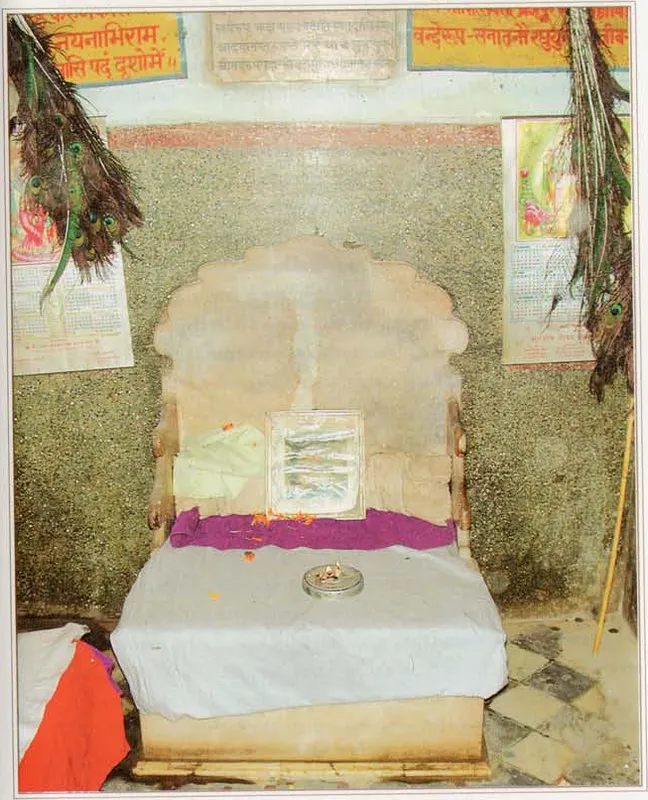
Rūpa Gosvāmī's bhajana-kuṭī (Ter-kadamba)
रूप गोस्वामी की भजन-कुटी (टेर-कदम्ब)The guidebooks show Śrīla Rūpa Gosvāmī's bhajana-kuṭī, his hut for chanting and prayer, beside the kadamba tree of Ṭer-kadamba near Nandagrāma.
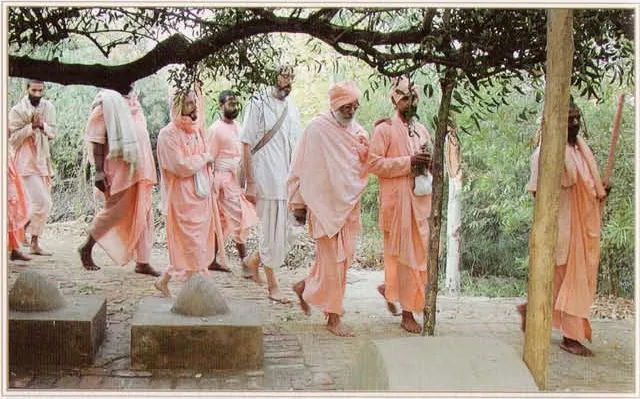
Ter-kadamba
टेर-कदम्बṬer-kadamba is a kadamba tree and grove near Nandagrāma.
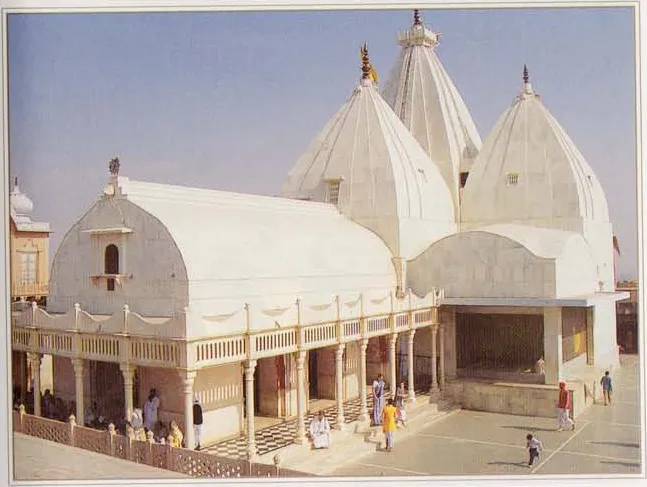
Nanda-bhavan Mandira (Nandagrāma)
नन्द-भवन मन्दिर (नन्दग्राम)The temple of Nanda-rāya, known as Nanda-bhavan, is the large temple on the summit of Nandīśvara Hill at Nandagrāma.
Sanātana Gosvāmī's temple on Nandīśvara Hill (historical)
नन्दीश्वर पर्वत पर सनातन गोस्वामी का मन्दिर (ऐतिहासिक)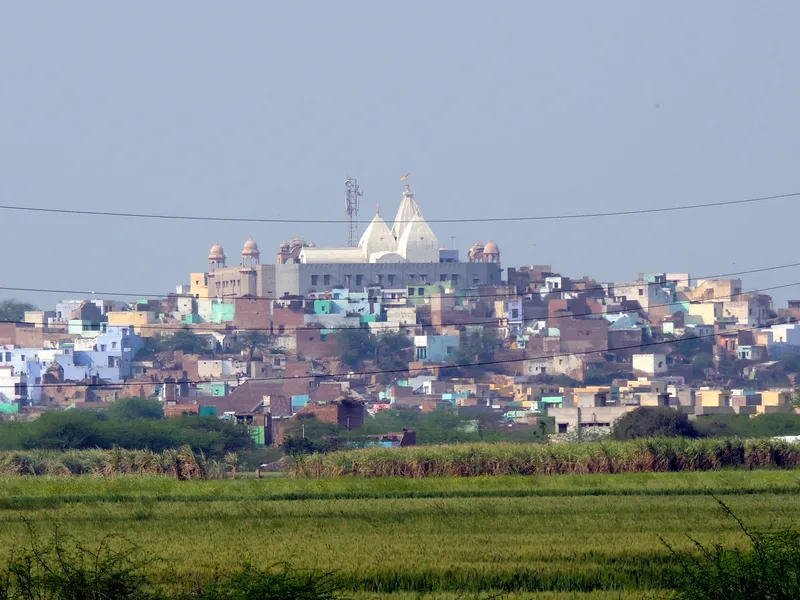
Nandagrāma
नन्दग्रामNandagrāma, today Nandagaon, is the village of Nanda Mahārāja, Kṛṣṇa's father in Vraja, on and around Nandīśvara Hill.
Questions and answers
According to the Caitanya-caritāmṛta, He saw three Deities: a father and a mother, Nanda Mahārāja and mother Yaśodā, with Kṛṣṇa between them, curved in three places. He honoured the feet of Nanda and Yaśodā and touched Kṛṣṇa's body in ecstatic love.[10–14]
According to the Bhakti-ratnākara, the Gosvāmī was fasting in the forest by Pāvana-sarovara. Kṛṣṇa came as a cowherd boy with a pot of milk and asked him to drink it and to live in a hut. Then He had a hut built for him through a Vrajavāsī.[1–3]
It is the lake at the foot of Nandīśvara Hill at Nandagrāma. Śrīla Rūpa Gosvāmī names it among Kṛṣṇa's places, and Śrī Caitanya bathed in it. The Vraja-bhakti-vilāsa says that it is called Pāvana because it purifies.[8 +5]
In the Bhakti-ratnākara and in Śrīla Prabhupāda's telling, Śrīla Rūpa Gosvāmī cooked it. He used what a girl, Śrī Rādhā, had brought him. Other tellings differ on who cooked and where.[7, 17]
The guidebooks place it on the bank of Pāvana-sarovara. This is where the Bhakti-ratnākara says the Lord had a hut built for him.[1 +8]
The sources differ. The Caitanya-caritāmṛta describes three in the cave, and the Vraja-bhakti-vilāsa names four, with Balabhadra. In 1971 a Vrajavāsī showed Śrīla Prabhupāda's party Nanda, Yaśodā, Kṛṣṇa, Balarāma, Śrī Rādhā and two friends of Kṛṣṇa.[10 +7]
Sources
- Śrīla Narahari Cakravartī, Bhakti-ratnākara, Fifth Wave, 1912 ed. p. 250; Grantha Mandira text v.1297–1302, 2nd ed., 1912
- Śrīla Narahari Cakravartī, Bhakti-ratnākara, Fifth Wave, 1912 ed. pp. 250–251; Grantha Mandira text v.1303–1309, 2nd ed., 1912
- Śrīla Narahari Cakravartī, Bhakti-ratnākara, Fifth Wave, 1912 ed. p. 251; Grantha Mandira text v.1310–1313, 2nd ed., 1912
- Śrī Vraja-maṇḍala Parikramā (2007), PDF p. 202
- The Color Guide to Vṛndāvana (2000), Written and Photographed by Rājaśekhara dāsa Brahmacārī, PDF p. 63
- the undated parikramā notes Nandagrāma, ¶28
- Śrīla Narahari Cakravartī, Bhakti-ratnākara, Fifth Wave, 1912 ed. p. 251; Grantha Mandira text v.1314–1317, 2nd ed., 1912
- Śrīla Kṛṣṇadāsa Kavirāja Gosvāmī, Śrī Caitanya-caritāmṛta, CC Madhya-līlā 18.58, online edition · vedabase.io
- Śrīla Prabhupāda, Śrīmad-Bhāgavatam, Canto 1, Introduction, Introduction (life of Śrī Caitanya Mahāprabhu) · vedabase.io
- Śrīla Kṛṣṇadāsa Kavirāja Gosvāmī, Śrī Caitanya-caritāmṛta, CC Madhya-līlā 18.59, online edition · vedabase.io
- Śrīla Kṛṣṇadāsa Kavirāja Gosvāmī, Śrī Caitanya-caritāmṛta, CC Madhya-līlā 18.60, online edition · vedabase.io
- Śrīla Kṛṣṇadāsa Kavirāja Gosvāmī, Śrī Caitanya-caritāmṛta, CC Madhya-līlā 18.61, online edition · vedabase.io
- Śrīla Kṛṣṇadāsa Kavirāja Gosvāmī, Śrī Caitanya-caritāmṛta, CC Madhya-līlā 18.62, online edition · vedabase.io
- Śrīla Prabhupāda, Śrī Caitanya-caritāmṛta, Madhya-līlā 18.61, translation · vedabase.io
- Śrīla Rūpa Gosvāmī, Rādhā-Kṛṣṇa-gaṇoddeśa-dīpikā, part 2, v.118 (sthāna-vivaraṇa)
- Śrīla Raghunātha dāsa Gosvāmī, Muktā-carita, GRETIL
- Śrīla Prabhupāda, The Science of Self-Realization, ch. 8 (Rūpa Gosvāmī's feast) · vedabase.io
- Pulinbihārī Datta, account of Sanātana Gosvāmī, printed p. 68
- Pulinbihārī Datta, eighth chapter, entry 'নন্দীশ্বর বা নন্দগ্রাম' (continued), printed p. 125
- Śrīla Rūpa Gosvāmī, Mathurā-māhātmya v.433
Show all 56 references
- Śrīla Narahari Cakravartī, Bhakti-ratnākara, Fifth Wave, 1912 ed. p. 221; Grantha Mandira text v.935–938, 2nd ed., 1912
- Śrīla Prabhupāda, Śrī Caitanya-caritāmṛta, Madhya-līlā 18.58, purport · vedabase.io
- Śrīla Narahari Cakravartī, Bhakti-ratnākara, Fifth Wave, 1912 ed. p. 222; Grantha Mandira text v.940–945, 2nd ed., 1912
- Śrīla Nārāyaṇa Bhaṭṭa, Vraja-bhakti-vilāsa, ch. 2 v.44; printed p. 45, 1st ed., publ. Bābā Kṛṣṇadāsa, Kusuma-sarovara, Saṁvat 2008
- Śrīla Nārāyaṇa Bhaṭṭa, Vraja-bhakti-vilāsa, ch. 4 v.21; printed p. 90, 1st ed., publ. Bābā Kṛṣṇadāsa, Kusuma-sarovara, Saṁvat 2008
- Kṛṣṇa-caitanya-caritāmṛta of Śrīla Murāri Gupta, prakrama 4, sarga 10, vv.15-16
- Śrīla Locana dāsa Ṭhākura, Caitanya-maṅgala, Śeṣa-khaṇḍa, 1903 ed. p. 177, right column, lines 11-12
- Śrī Vraja-maṇḍala Parikramā (2007), PDF p. 201
- Śrī Vraja-maṇḍala Parikramā (2007), PDF p. 203
- Vṛndāvana-Dhāma Ki Jaya! (c. 1986), by Dhruva Mahārāja dāsa, PDF p. 53
- Śrīla Narahari Cakravartī, Bhakti-ratnākara, Fifth Wave, 1912 ed. pp. 250–251; Grantha Mandira text v.1303–1309, 2nd ed., 1912
- Bhaktamāla, Priyādāsa's kavitta '(४५१) टीका । कवित्त', ending '॥ ३६२ ॥', printed pp. 869–870
- Bhaktamāla, Rūpakalā's 'वार्तिक तिलक' on the kavitta, printed p. 870
- Śrī Śrī Bhaktamāla grantha, Bhaktamāla grantha (1905), parikramā section on Nandagrāma, printed p. 337, right column
- the undated parikramā notes Nandagrāma, ¶29
- Śrīla Narahari Cakravartī, Bhakti-ratnākara, Fifth Wave, 1912 ed. p. 252; Grantha Mandira text v.1330–1335, 2nd ed., 1912
- Śrīla Narahari Cakravartī, Bhakti-ratnākara, Fifth Wave, 1912 ed. p. 252; Grantha Mandira text v.1336–1339, 2nd ed., 1912
- Śrīla Narahari Cakravartī, Bhakti-ratnākara, Fifth Wave, 1912 ed. p. 251; Grantha Mandira text v.1314–1317, 2nd ed., 1912
- Śrīla Prabhupāda, The Science of Self-Realization, ch. 8 (Rūpa Gosvāmī's feast for Sanātana Gosvāmī) · vedabase.io
- Śrī Vraja-maṇḍala Parikramā (2007), PDF p. 205
- the undated parikramā notes Nandagrāma, ¶50
- Vṛndāvana-Dhāma Ki Jaya! (c. 1986), by Dhruva Mahārāja dāsa, PDF p. 55
- Śrīla Rūpa Gosvāmī, Dāna-keli-kaumudī, closing verse (v.101), after the undated edition published by Krishna Das of Kusum Sarovar
- Śrīla Nārāyaṇa Bhaṭṭa, Vraja-bhakti-vilāsa, ch. 4 v.26; printed pp. 91–92, 1st ed., publ. Bābā Kṛṣṇadāsa, Kusuma-sarovara, Saṁvat 2008
- Śrīla Prabhupāda, Parikramā on the Way to Gokula, Vṛndāvana, 28 November 1971 · vedabase.io
- Śrīla Prabhupāda, Parikramā on the Way to Gokula, Vṛndāvana, 28 November 1971 · vedabase.io
- Prabhudayāl Mītal, printed p. 123, section 'नदगाँव'
- A. W. Entwistle, §40 'Nandgaon', part 1 'Nand Bhavan/Nandarayji ka Mandir', printed p. 379, Egbert Forsten, Groningen, 1987
- the undated parikramā notes Nandagrāma, ¶12
- Vṛndāvana-Dhāma Ki Jaya! (c. 1986), by Dhruva Mahārāja dāsa, PDF p. 51
- Śrīla Narahari Cakravartī, Bhakti-ratnākara, Fifth Wave, 1912 ed. pp. 251–252; Grantha Mandira text v.1318–1324, 2nd ed., 1912
- Bhaktamāla, Priyādāsa's kavitta '(४४८) टीका । कवित्त', ending '॥ ३५९ ॥', printed pp. 866–867
- Bhaktamāla, Rūpakalā's 'वार्तिक तिलक' on kavitta 448, printed p. 867
- Śrī Vraja-maṇḍala Parikramā (2007), PDF p. 206
- the undated parikramā notes Nandagrāma, ¶52
- the undated parikramā notes Nandagrāma, ¶53
Further sources
- Śrī Caitanya-caritāmṛta, Madhya-līlā 18.58–62, translation and purports by Śrīla Prabhupāda (BBT); Śrīla Prabhupāda, The Science of Self-Realization, chapter 8.
- Bhakti-ratnākara, Fifth Wave (Bengali, 1912 edition); Hindi and Bengali Bhaktamāla; Vraja-bhakti-vilāsa: summarised here, not translated.
- Pulinbihārī Datta, Vṛndāvana-kathā (Bengali, 1920), for the reported temple manuscripts.